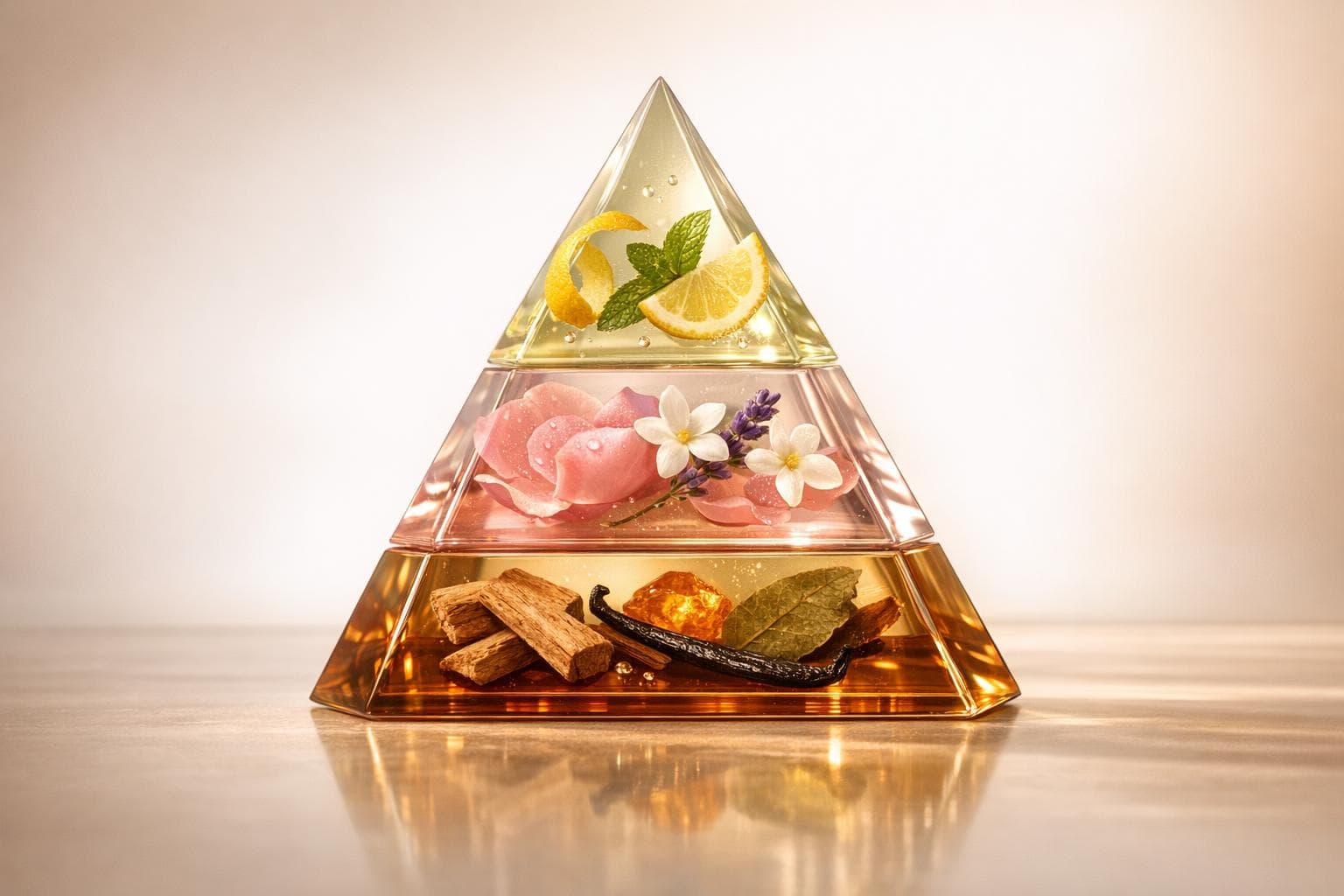
Vonná pyramida je elegantní a jednoduchý způsob, jak porozumět tomu, jak se parfémy vyvíjejí na vaší pokožce. Rozděluje vůně do tří vrstev:
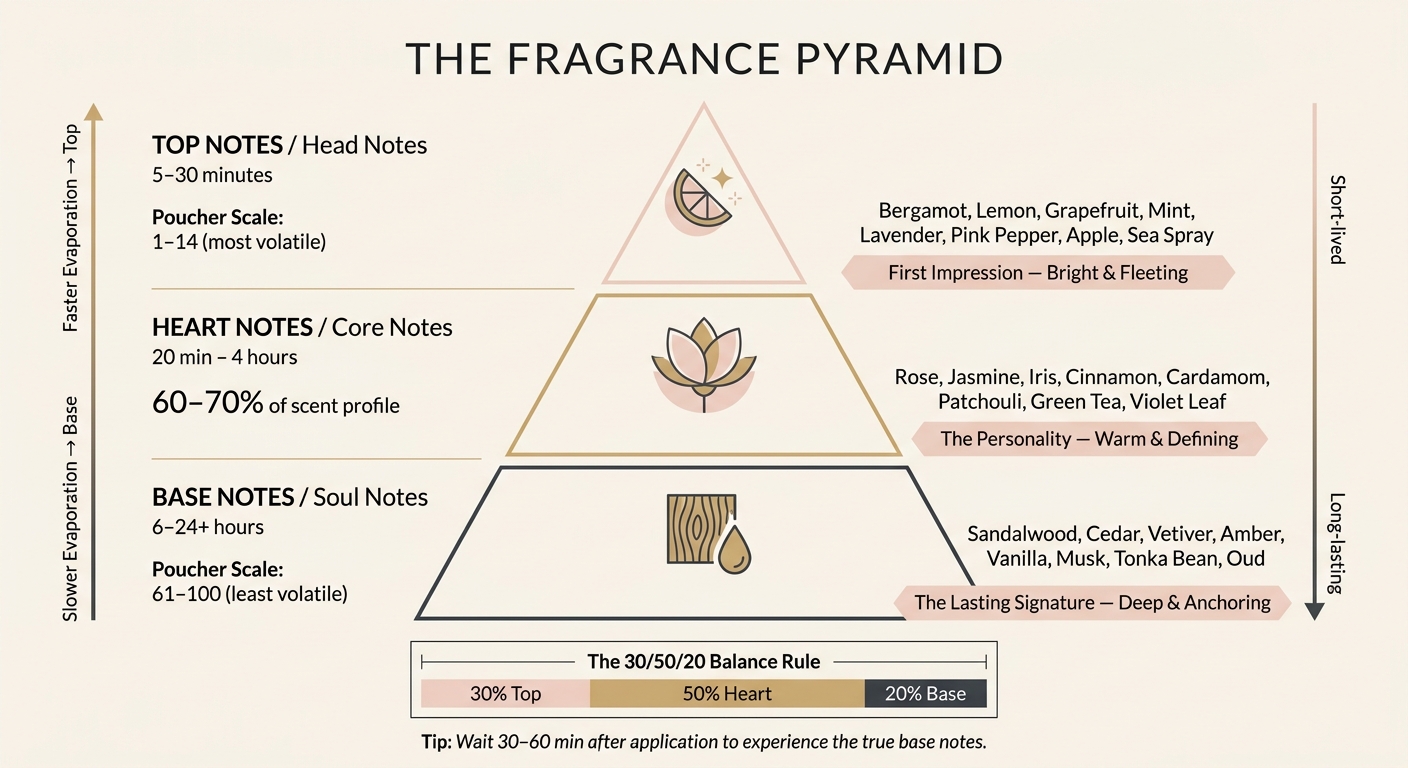
- Svrchní tóny: První dojem, který trvá 5–30 minut. Mezi běžné ingredience patří citrusy, byliny a lehké ovoce.
- Srdcové tóny: Hlavní osobnost vůně, trvající 20 minut až 4 hodiny. Dominují zde květiny, koření a zelené tóny.
- Základní tóny: Trvalý podpis vůně, který přetrvává hodiny, nebo dokonce dny. Představte si dřeva, pryskyřice, pižma a gurmánské akordy.
Každá vrstva se rozvíjí podle těkavosti svých ingrediencí a je ovlivněna faktory, jako je chemie pokožky, počasí a koncentrace vůně. Svrchní tóny upoutají pozornost, srdcové tóny definují vůni a základní tóny vytvářejí trvalou vzpomínku.
Toto porozumění vám pomůže vybírat parfémy, které odpovídají vašemu stylu i příležitostem, ať už jde o práci, neformální vycházky nebo večerní události. Vůně vždy testujte na své pokožce, dopřejte jim čas k rozvinutí a před nákupem plného flakonu zvažte odstřiky.
Vonná pyramida: Svrchní, srdcové & základní tóny vysvětleny
Struktura za parfémovými tóny
Tóny, ingredience a akordy: Jaký je mezi nimi rozdíl?
Ačkoli se tyto pojmy často používají zaměnitelně, popisují odlišné prvky vůně. Ingredience označuje surovinu, například absolue z růže nebo ISO E Super. Tón je naopak vonný dojem, který ingredience vytváří na vaší pokožce - proto popisy tónů často znějí poeticky, například "mořský vánek" nebo "hřejivá ambra." Akord je mezitím směs ingrediencí, která vytváří jednotný vonný celek, podobně jako hudební akord harmonizuje jednotlivé tóny.
Další dva pojmy, kterým stojí za to porozumět, jsou sillage a dry-down. Sillage označuje vonnou stopu, kterou vůně zanechává při vašem pohybu, zatímco dry-down popisuje závěrečnou fázi vývoje vůně - základní tóny, které přetrvávají poté, co svrchní a srdcové tóny odezněly. Obojí je ovlivněno molekulovou hmotností použitých ingrediencí.
Pochopení těchto základů pomáhá vysvětlit, jak chemie a vnější faktory ovlivňují vývoj vůně v čase.
Jak chemie v čase utváří vůni
Způsob, jakým se vůně rozvíjí, závisí na chemických vlastnostech jejích ingrediencí. Každý materiál lze hodnotit na stupnici odpařování od 1 do 100. Svrchní tóny, které jsou vysoce těkavé, spadají mezi 1 a 14 a obvykle mizí během 5 až 15 minut. Základní tóny se naopak pohybují v rozmezí 61 až 100 a mohou vydržet déle než 24 hodin.
Faktory jako pH pokožky, teplota a okolní prostředí také hrají roli v tom, jak se vůně vyvíjí. Například hydratovaná pokožka může pomoci udržet molekuly vůně déle, zatímco teplé podmínky urychlují odpařování. To znamená, že stejný parfém může na každém člověku vonět mírně odlišně.
Představte si toto: za teplého letního večera v Berlíně, při teplotách kolem 28 °C, mohou svrchní tóny vyprchat za méně než 10 minut, což srdcovým tónům umožní dostat se do centra pozornosti rychleji. Naopak chladnější počasí proces zpomaluje a nechává vonnou pyramidu rozvíjet se v klidnějším tempu. Abyste vůni v teplých nebo vlhkých podmínkách plně prožili, vyčkejte po aplikaci přibližně 30–60 minut.
Základní tóny nejenže vydrží déle - zároveň působí jako fixátory. Ingredience jako santalové dřevo, vanilka a pižmo zpomalují odpařování lehčích molekul a prodlužují celkovou životnost vůně.
Kde se v pyramidě nacházejí olfaktorické rodiny
Olfaktorické rodiny kategorizují vůně podle jejich charakteru a zároveň naznačují, kam ingredience ve vonné pyramidě obvykle patří, a to na základě jejich molekulové hmotnosti a těkavosti. Zde je přehled:
| Olfaktorická rodina | Pozice v pyramidě | Klíčové rysy | Běžné ingredience |
|---|---|---|---|
| Citrusová / Hesperidová | Svrchní | Svěží, zářivá, pomíjivá | Citron, Bergamot, Pomeranč |
| Aromatická / Zelená | Svrchní / Srdcová | Bylinná, čistá, energizující | Levandule, Máta, Fialkový list |
| Květinová | Srdcová | Romantická, zaoblená, ústřední | Růže, Jasmín, Ylang — Ylang |
| Kořeněná | Srdcová / Základní | Hřejivá, řízná, smyslná | Skořice, Kardamom, Šafrán |
| Dřevitá | Základní | Uzemněná, elegantní, fixační | Cedrové dřevo, Santalové dřevo, Vetiver |
| Orientální / Ambrová | Základní | Bohatá, balzamická, dlouhotrvající | Labdanum, Benzoin, Vanilka |
Zajímavé je, že některé současné parfémy se od tradiční vonné pyramidy odklánějí a udržují konzistentní vůni od prvního rozprašení až po dry-down. Tento přístup, obzvlášť oblíbený v minimalistických vůních a ve vůních tichého luxusu v roce 2026, zdůrazňuje proměňující se dynamiku parfémové tvorby. Znalost toho, kde ingredience v pyramidě obvykle sedí, vám může pomoci lépe porozumět vůním a vybírat ty, které ladí s vašimi preferencemi.
Svrchní tóny pod lupou
Jakou roli mají svrchní tóny
Svrchní tóny, známé také jako hlavové tóny, jsou první vůně, které vás přivítají po aplikaci parfému. Vytvářejí okamžitý dojem a udávají tón tomu, co bude následovat. Představte si je jako "úvodní číslo" - živé a poutavé, ale prchavé.
Tyto tóny tvoří nejlehčí molekuly (Poucherova stupnice 1–14), což znamená, že se rychle odpařují. Jejich účinek obvykle trvá přibližně 15 až 30 minut, než vůně přejde do další fáze.
"Svrchní tóny připravují scénu – jasně, působivě a pomíjivě." - Smytten
Běžné ingredience svrchních tónů
Svrchní tóny často spadají do několika známých kategorií. Citrusové ingredience jako bergamot, citron, grapefruit a mandarinka přinášejí svěží, jiskřivý výbuch, který okamžitě upoutá. Byliny a aromatické tóny, například máta, bazalka, rozmarýn a levandule, dodávají ostrost a energii. Lehké ovoce, jako jablko, hruška a červené bobule, přináší sladkou, hravou atmosféru. Pro moderní obrat vytvářejí akvatické a zelené tóny, jako mořská tříšť, fialkový list a zelený čaj, čistý a vzdušný dojem.
| Kategorie svrchních tónů | Běžné ingredience | Smyslový účinek |
|---|---|---|
| Citrusy | Bergamot, Citron, Grapefruit, Mandarinka | Zářivé a okamžitě rozpoznatelné |
| Byliny & aromatické tóny | Máta, Bazalka, Levandule, Rozmarýn | Ostré, chladivé a přirozené |
| Lehké ovoce | Jablko, Hruška, Červené bobule | Sladké, křehké a hravé |
| Akvatické / Zelené | Mořská tříšť, Fialkový list, Zelený čaj | Vzdušné, čisté a současné |
| Lehké koření | Růžový pepř, Čerstvý zázvor, Kardamom | Hřejivé, energické a lehce řízné |
Zajímavé je, že když na kartě vůně vidíte tóny jako "jablko" nebo "mořský vánek", často nejde o přímé extrakty. Místo toho se jedná o syntetické rekreace - kombinace materiálů vytvořené tak, aby tyto vůně evokovaly. Popisy tónů mají stejně tak probouzet představivost, jako vypisovat ingredience.
Jak správně testovat svrchní tóny
Jednou z častých chyb při testování vůní je unáhlený úsudek. Chcete-li správně vyhodnotit svrchní tóny, nastříkejte vůni na zápěstí (ne na papír), vyčkejte asi 2 minuty, než se odpaří alkohol, a poté ji posuďte mezi 10. a 15. minutou po aplikaci. Vyhněte se tření zápěstí o sebe, protože to může narušit jemné molekuly. Testování omezte na 3–4 vůně najednou, abyste nepřetížili svůj čich.
"Svrchní tón je důležitý, ale hodnotit vůni pouze podle svrchních tónů je jako posuzovat jídlo podle toho, jak je předloženo menu." - Aysire
Mějte na paměti, že v teplejším klimatu mohou svrchní tóny vyprchat rychleji. Volba vyšší koncentrace, jako je Extrait de Parfum, může pomoci úvodu vůně vydržet o něco déle.
S pochopením svrchních tónů jste připraveni ponořit se hlouběji do světa srdcových tónů.
Srdcové tóny pod lupou
Jakou roli mají srdcové tóny
Jakmile svrchní tóny odezní - obvykle během 15 až 30 minut - dostávají se do centra pozornosti srdcové tóny. Tyto tóny tvoří jádro vůně a definují její esenci i osobnost. Na pokožce obvykle přetrvávají 20 minut až 4 hodiny a tvoří přibližně 60–70 % celkového vonného profilu.
"Srdcové tóny... tvoří srdce vůně a představují většinu jejího vonného profilu." - House of Creed
Na rozdíl od svrchních tónů potřebují srdcové tóny tělesné teplo, aby se plně rozvinuly. Právě proto je zásadní testovat vůni přímo na pokožce. Papírové proužky zkrátka nezachytí, jak se vůně v čase vyvíjí.
Podívejme se blíže na ingredience, které tyto podmanivé srdcové tóny vytvářejí.
Běžné ingredience srdcových tónů
Srdcové tóny pocházejí z celé řady vonných rodin, od jemných květin až po hluboká aromatická koření. Květinové tóny jsou nejrozšířenější - představte si růži, jasmín, kosatec a pivoňku, které přinášejí teplo, eleganci a romantický dotek. Koření, jako skořice, kardamom a pačuli, dodává bohatost a hloubku, zatímco zelené a aromatické tóny, například fíkový list, zelený čaj a fialkový list, nabízejí svěží a uklidňující atmosféru.
| Rodina srdcových tónů | Klíčové ingredience | Smyslová kvalita |
|---|---|---|
| Květinové | Růže, Jasmín, Kosatec, Pivoňka | Hřejivé, romantické a zářivé |
| Kořeněné | Skořice, Kardamom, Pačuli | Bohaté, intenzivní a obklopující |
| Zelené / Aromatické | Fíkový list, Zelený čaj, Fialkový list | Svěží, uklidňující a přirozené |
V Německu mnoho milovníků vůní objevuje Duftzwillinge - dostupnější alternativy luxusních vůní. Tyto dupe vůně usnadňují poznávání propracovaných směsí srdcových tónů bez prémiové ceny. Tento trend odráží německé ocenění sofistikovaných a zároveň dostupných vůní.
Výběr srdcových tónů pro různé příležitosti
Volba srdcových tónů může záviset na příležitosti, ročním období nebo dokonce na vaší náladě. Pro romantické večery nebo formální setkání jsou nadčasovou volbou květiny, jako růže a pivoňka. Pokud chcete vyzařovat tichou sebedůvěru, ideální jsou tóny fialky nebo kůže. Chladnější počasí si žádá srdcové tóny, jako pačuli, oud a skořice, které nabízejí hřejivý a obklopující pocit - dokonalý pro mrazivé německé zimy.
"Ve světě Argos je úvod slibem; srdce a základ jsou pravdou." - Natalia Dubinsky, Beauty Expert
Během přechodných období, například za svěžího říjnového dne v Mnichově nebo Hamburku, působí kořeněné a pryskyřičné srdcové tóny nádherně, protože vyvažují chladný vzduch, aniž by byly příliš výrazné. Pro jaro a léto nabízejí lehčí možnosti, jako zelený čaj nebo pomerančový květ, osvěžující pozvednutí bez tíhy zimních vůní.
| Požadovaná nálada | Doporučené srdcové tóny | Nejlepší příležitost |
|---|---|---|
| Romantická / Elegantní | Růže, Heliotrop, Pivoňka | Večerní vycházky, rande |
| Autoritativní | Růžové okvětní lístky, Fialka, Kůže | Práce, formální události |
| Tajemná | Oud, Pačuli, Santalové dřevo | Večerní nošení, chladnější měsíce |
| Klidná / Denní | Zelený čaj, Pomerančový květ | Neformální dny, jaro a léto |
| Hřejivá / Smyslná | Kašmírové dřevo, Růžový pepř | Intimní prostředí, podzim a zima |
Jedna důležitá rada: dopřejte vůni alespoň 20 minut, aby se usadila, než se rozhodnete. První dojem je jen předehra - skutečné kouzlo nastává, když rozkvetou srdcové tóny.
Základní tóny pod lupou
Jakou roli mají základní tóny
Jakmile srdcové tóny odezní, dostávají se do centra pozornosti základní tóny a zanechávají trvalý dojem. Známé jako "tóny duše", jsou nejhustšími a nejméně těkavými složkami vůně. Jejich větší molekulární struktura znamená, že se odpařují pomalu, což jim dodává pozoruhodnou výdrž.
Základní tóny jsou klíčové při formování toho, čemu parfuméři říkají "dry-down" - trvalé esence vůně. V Eau de Parfum (EdP) mohou základní tóny na pokožce přetrvávat 6 až 12 hodin nebo déle. U Extrait de Parfum mohou na pokožce vydržet 12–16 hodin a na textilii více než 24 hodin.
"Drydown vůně po 2–3 hodinách představuje skutečný charakter parfému a je obvykle bohatší a hřejivější než úvod." - Afnan Perfumes
V arabských a orientálních parfémových tradicích jsou základní tóny jako oud a ambra ceněny zejména pro svou hloubku a dlouhou výdrž.
Běžné ingredience základních tónů
Nyní, když rozumíme jejich roli, ponořme se do ingrediencí, které základní tóny definují. Tyto složky často patří do bohatých, uzemňujících rodin, jako jsou dřeva, pryskyřice, pižma a gurmánské tóny. Dřeva jsou neuvěřitelně všestranná: santalové dřevo nabízí krémovou jemnost, cedr je čistý a suchý, vetiver dodává zemitou kouřovost a pačuli se může pohybovat od temného a čokoládového až po překvapivě moderní, v závislosti na destilaci.
Pryskyřice a balzámy - jako ambra, labdanum, benzoin a myrha - přinášejí hřejivou, pryskyřičnou hloubku, která působí téměř nadčasově. Pižma se výrazně liší, od čistých, vzdušných "prádlových" stylů až po hluboce smyslné, živočišné tóny, které mohou přetrvávat déle než 24 hodin. Gurmánské tóny jako vanilka, tonka boby a kakao dodávají útulné teplo, přičemž se předpokládá, že vanilka bude do roku 2026 výrazným základním tónem.
| Rodina základních tónů | Klíčové ingredience | Charakter |
|---|---|---|
| Dřeva | Santalové dřevo, Cedr, Vetiver, Pačuli | Zemitý, krémový, suchý, kouřový |
| Pryskyřice & balzámy | Ambra, Labdanum, Benzoin, Myrha | Hřejivé, sladké, pryskyřičné, starobylé |
| Pižma | Čisté pižmo, Živočišné pižmo | Od vzdušného po smyslné, blízké pokožce |
| Gurmánské tóny | Vanilka, Tonka boby, Kakao | Uklidňující, hřejivé, sladké |
Jak testovat a hodnotit základní tóny
Chcete-li základní tóny skutečně ocenit, je důležité jejich výkon hodnotit promyšleně. Nespěchejte s úsudkem - dopřejte vůni alespoň 30 až 60 minut, aby se základní tóny mohly plně rozvinout. V teplém nebo vlhkém klimatu se svrchní tóny odpařují rychleji, takže základní tóny mohou být výraznější dříve.
Vyzkoušejte "test do postele": aplikujte vůni před spaním a sledujte, jaká vůně přetrvává ráno. Toto zbytkové aroma představuje čisté základní tóny, bez vlivu prchavějších svrchních a srdcových vrstev. Pro testování na látce nastříkejte šálu nebo límec; vysoce kvalitní základní tóny, jako santalové dřevo nebo oud, často vydrží celé dny.
Při online nakupování věnujte pečlivou pozornost uvedeným základním tónům. Pokud ingredience zahrnují prvky, které nemáte rádi - například těžká živočišná pižma nebo hutné pryskyřice - počáteční svěžest vůně pravděpodobně neudrží váš zájem po celý den. Tento přístup zdůrazňuje vrstvenou komplexnost vůně, kde má každý tón svou vlastní roli na její cestě.
Váš osobní odborník na parfémy už čeká
Vyplňte náš rychlý vonný kvíz a objevte autentické designové a nišové parfémy vybrané podle vašeho vkusu – prozkoumejte je jako 2–8ml dekanty a vzorky, abyste si každý mohli vyzkoušet, než se rozhodnete pro celou lahvičku.
Najděte svou vůniJak využít vonnou pyramidu při výběru dalšího parfému
Jak číst seznam tónů
Než začnete testovat jakýkoli parfém, věnujte chvíli jeho seznamu tónů. Většina vůní je popsána pomocí tříúrovňové pyramidy: svrchní, srdcové a základní tóny. Zatímco svrchní tóny vytvářejí první dojem, základní tóny přetrvávají nejdéle - obvykle se naplno objevují po přibližně čtyřech hodinách nošení. Právě s těmito vůněmi budete žít po celý den, proto si zaslouží vaši největší pozornost.
Pokud už znáte své oblíbené základní ingredience - například hřejivou vanilku nebo krémové santalové dřevo - zkontrolujte, zda jsou v seznamu tónů uvedeny, abyste měli jistotu, že vůně bude odpovídat vašemu vkusu.
Praktickým vodítkem pro posouzení rovnováhy je pravidlo 30/50/20: přibližně 30 % svrchních tónů pro působivý úvod, 50 % srdcových tónů pro jádro vůně a 20 % základních tónů pro trvalou hloubku. Pokud se parfém příliš opírá o svrchní tóny bez pevného základu, může vyprchat rychleji, než byste si přáli.
Sladění tónů s vaším stylem a příležitostmi
Jakmile zvládnete čtení seznamu tónů, zvažte, jak tyto profily zapadají do vašeho životního stylu. Vonná pyramida není jen o porozumění vůním; je také skvělým nástrojem pro hledání parfémů vhodných pro konkrétní příležitosti. Různá prostředí si žádají různé profily tónů, zejména ve sdílených prostorách, jako jsou kanceláře nebo veřejná doprava.
| Příležitost | Doporučený profil tónů | Klíčové ingredience |
|---|---|---|
| Práce / Kancelář | Svěží, Aromatický, Dřevitý | Zelený čaj, bergamot, cedr, vetiver |
| Neformální / Denní | Ovocný, Květinový, Solární | Jablko, hruška, pivoňka, matcha |
| Večerní / Formální | Orientální, Kořeněný, Gurmánský | Ambra, oud, vanilka, káva, kůže |
| Venku / Sport | Akvatický, Citrusový, Bylinný | Grapefruit, máta, šalvěj, mořské akordy |
Pro německé kancelářské prostředí nabízejí čisté a nenápadné srdcové tóny, jako kosatec, vetiver nebo lehká dřeva, uhlazenou, ale jemnou přítomnost - ideální pro profesionální prostředí. Naopak večerní program si žádá vůně s bohatými profily opřenými o základ. Ambra, oud nebo kořeněné tóny přinášejí teplo a hloubku, perfektní pro vytvoření trvalého dojmu.
Při pohledu k roku 2026 jsou trendy jako solární akvatické tóny a transparentní květiny skvělou volbou pro denní nošení. Mezitím si tmavší gurmánské vůně - s kávou, kakaem nebo tonkou - získávají popularitu pro večerní příležitosti.
Budování parfémového šatníku pomocí odstřiků
Jakmile identifikujete profily tónů, které odpovídají vašemu stylu, posuňte to o krok dál a své volby zpřesněte. Častou chybou při nakupování vůní je koupě plného flakonu bez předchozího poznání, jak se vůně vyvíjí na vaší pokožce. 100ml flakon designérského parfému může stát kdekoli mezi €150 a €300, což z něj činí drahou sázku, pokud se vůně nevyvíjí podle očekávání.
Právě zde přicházejí vhod odstřiky. Odstřiky jsou menší množství vůně, která vám umožní prožít její celý vývoj - od svrchních tónů až po dry-down - dříve, než se zavážete k většímu nákupu. Scento například nabízí odstřiky 2 ml, 5 ml a 8 ml z více než 1 000 designérských vůní. Důkladné testování vůně prostřednictvím odstřiků zajišťuje, že investujete pouze do plných flakonů, které vám skutečně sedí. Navíc kolekce 5–10 odstřiků pokrývajících různé příležitosti a profily může stát méně než €100.
Pro ještě větší pohodlí vám měsíční předplatné Scento o objemu 8 ml, začínající na €12,90 za parfém, umožní pravidelně objevovat nové profily bez hromadění nevyužitých flakonů.
Vyvážený parfémový šatník obvykle zahrnuje alespoň tři odlišné možnosti: svěží, lehkou vůni pro denní nošení nebo teplejší počasí; květinovou či aromatickou volbu pro každodenní nošení; a bohatší, hlubší vůni pro večery nebo chladnější období. Testování těchto vůní nejprve jako odstřiků vám pomůže vybudovat šatník, v němž každý flakon dokonale sedí vaší pokožce i stylu.
Vonné tóny vysvětleny | Část 1 | Svrchní, srdcové & základní tóny
Závěr
Vonná pyramida není jen technický koncept - je to průvodce, který může proměnit způsob, jakým si vybíráte a prožíváte parfémy. Když pochopíte, že vůně se v čase vyvíjejí, můžete překročit rychlé soudy založené na prvních 15–30 minutách a místo toho ocenit srdcové a základní tóny, které přetrvávají a definují skutečnou osobnost vůně.
Vyzkoušejte přístup 30–60 minut: nastříkejte parfém, nechte ho usadit a poté posuďte, jak se vyvíjí. Mějte na paměti, že základní tóny jsou trvalou esencí každé vůně. Například Eau de Parfum se svou 15–20% koncentrací vonného oleje má tendenci tyto hlubší tóny zdůrazňovat účinněji než Eau de Toilette, což z něj činí vynikající volbu pro dlouhotrvající nošení. Ať už hledáte jemnou vůni vhodnou do kanceláře, nebo bohatou pryskyřičnou kompozici na večer, tyto znalosti vám umožní činit promyšlené a záměrné volby, které ladí s vaším stylem i daným okamžikem.
Časté dotazy
Proč na mně stejný parfém voní jinak než na ostatních?
Parfém s každým člověkem interaguje jedinečně díky individuální chemii pokožky. Prvky jako pH vaší pokožky, přirozené kožní oleje, tělesná teplota a dokonce i genetika hrají roli v tom, jak se molekuly vůně chovají. Tyto faktory utvářejí, jak se vrstvy parfému - svrchní, srdcové a základní tóny - rozvíjejí a usazují v čase, díky čemuž je vývoj vůně výrazně osobní.
Jak dlouho bych měl/a počkat, než se rozhodnu, zda se mi vůně líbí?
Abyste skutečně ocenili vývoj vůně, dopřejte jí čas - přibližně 30 až 60 minut. Tato čekací doba umožní počátečním svrchním tónům usadit se a srdcovým a základním tónům vystoupit do popředí. Právě tyto hlubší vrstvy definují skutečnou osobnost vůně a její výdrž.
Jak poznám ze seznamu tónů, zda parfém dlouho vydrží?
Chcete-li odhadnout, zda parfém vydrží, zaměřte se na jeho základní tóny. Ingredience jako oud, ambra a pižmo jsou proslulé svou výdrží a často přetrvávají 6–12 hodin nebo déle. Tyto tóny slouží jako páteř vůně a zajišťují, že zůstane rozpoznatelná po celý den.

