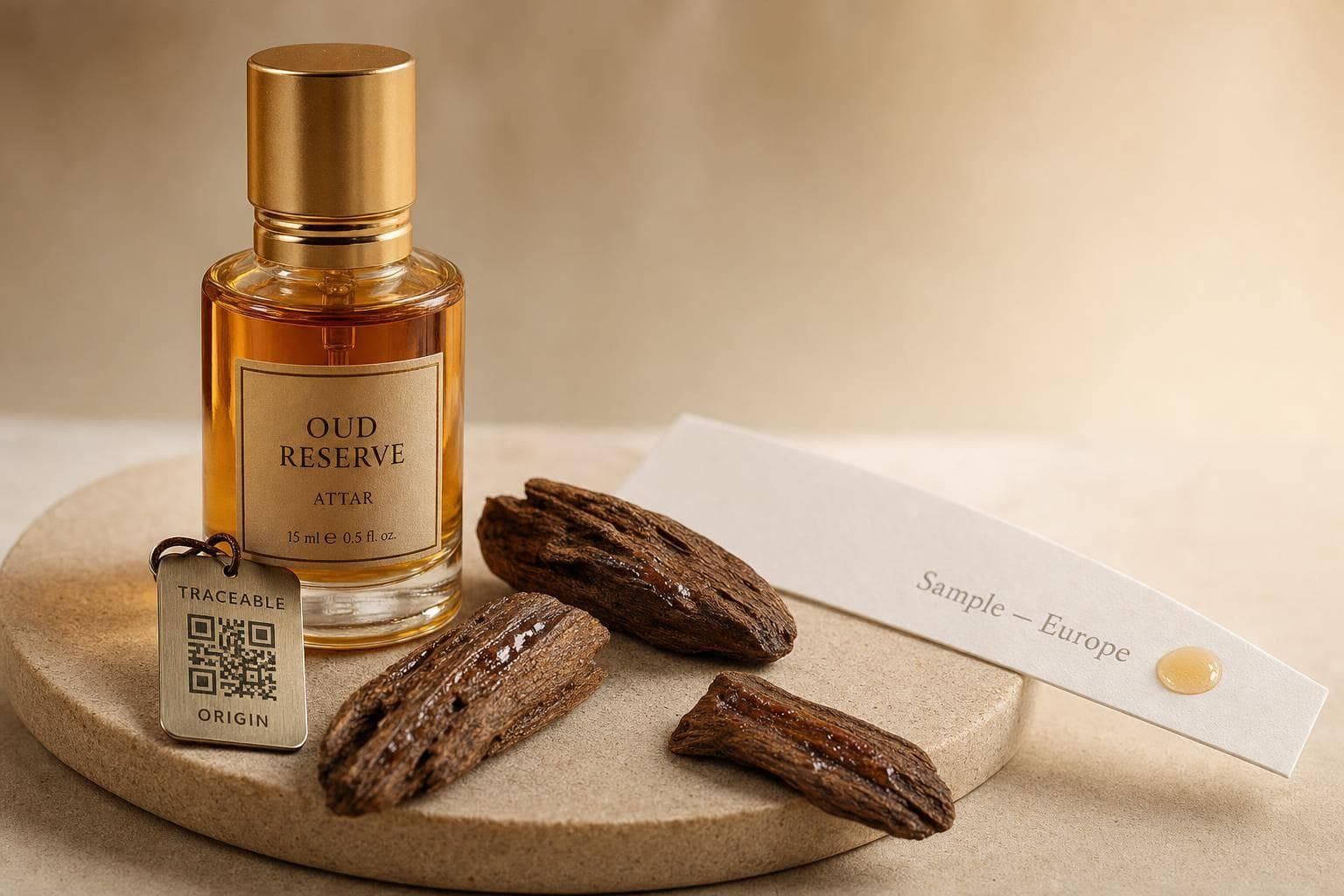
A közel-keleti kézműves parfüméria a rituális használatból a globális niche kiskereskedelem felé mozdul el - és e változás középpontjában az oud áll. Meglátásom szerint a lényeg egyszerű: a kereslet növekszik, az ültetvényeken termesztett agarfa válik a fő exportútvonallá, és a lágyabb oud-kompozíciók könnyebben viselhetővé teszik ezt a kategóriát az európai vásárlók számára.
Ha a rövid összefoglalót keresi, íme:
- Az oud továbbra is a kulcsfontosságú alapanyag, a Közel — Kelet adja a globális oud-olaj bevételének és fogyasztásának mintegy 45–60%-át.
- A kézműves formátumok továbbra is meghatározóak: az attarok, a mukhallatok, a bakhoor és az oud-olajok szorosan összekapcsolják az illatot a mindennapi élettel, az ajándékozással és a ceremóniákkal.
- A kínálat átalakulóban van, mivel a vadon termő agarfa ritka és szigorúan ellenőrzött a CITES II. függeléke alapján.
- Az ültetvényeken termesztett agarfa ma már számos EU-piacra szánt megjelenést támogat, mivel a dokumentáció, a sarzsok nyomon követhetősége és a vámellenőrzések kiemelten fontosak.
- A közel-keleti niche parfümházak növekednek: a regionális niche illatszerek eladásai 14%-kal nőttek 2023-ban.
- A kelet-nyugati fúziók hajtják a keresletet, különösen az olyan stílusok, mint az oud + borostyán + vanília és az oud + szilva + száraz fák.
- A minták felfedezése fontosabb, mint valaha, amikor a teljes üvegek ára meghaladhatja a 300,00 €-t, és a gazdagabb oud-illatokat nehéz pusztán leírás alapján megítélni.
Számomra a cikk egy egyértelmű piaci kettéválásra mutat rá: ritka vad oud a gyűjtőknek és nyomon követhető ültetvényes oud az exportra kész niche parfümökhöz. Ez fontos a márkák számára, de vásárlóként Önnek is segítséget nyújt. Ha Németországban vagy Európa más részén él, nagyobb valószínűséggel találkozhat az ouddal lágyabb EDP és extrait formátumokban, származási adatokkal alátámasztva, és kisebb minták formájában kínálva a teljes üveg megvásárlása előtt.
Gyors összehasonlítás
| Terület | Mi változik | Mit jelent ez az Ön számára |
|---|---|---|
| Alapanyagok | A vad oud korlátozott; az ültetvényes oud egyre gyakoribb | Több nyomon követhető termék Európában |
| Formátumok | Az olajok és a bakhoor továbbra is fontosak, de a spray-k térnyerése nő | Könnyebb belépés a mindennapi viseletre alkalmas formátumokon keresztül |
| Illatstílus | A nehéz, gyantás oud teret enged a finomabban megkomponált oudnak | Lágyabb viselet, kisebb kockázat az első vásárlók számára |
| Kiskereskedelem | A niche házak túllépnek a helyi piacokon | Nagyobb elérhetőség a butikokon és webáruházakon keresztül |
| Vásárlói magatartás | A parfümminták használata alapvetővé válik | Alacsonyabb kockázatú tesztelés a 300,00 € feletti kifizetés előtt |
Ha tehát egyetlen mondatban kellene összefoglalnom: a közel-keleti kézműves parfüméria megőrzi rituális gyökereit, miközben egy nyomon követhetőbb, exportorientált niche piac felé mozdul el.
A közel-keleti illatkultúra társadalmi gyökerei
A Közel — Keleten a parfüm nem csupán az utolsó simítás. A mindennapi élet és a társadalmi szokások szerves része, messze túlmutatva az egyszerű testápoláson.
Illat a vendégszeretetben, a rituálékban és a személyes identitásban
A vendégeket gyakran bakhoorral vagy oud-olajjal fogadják, és az esküvők, az Eid, valamint a ramadán elmaradhatatlan kellékei a füstölők, a parfümajándékok és az ima előtt felvitt illatok. A bakhoor égetése a tisztelet és a kifinomultság jele. Az illatszerek ajándékozása ezekben a pillanatokban mély társadalmi jelentést is hordoz: a gondoskodás és a nagylelkűség kifejeződése, nem csupán egy praktikus figyelmesség.
Az illat a személyes identitás és a társadalmi státusz kifejezője is. A régió illathasználati szokásait vizsgáló kutatások a parfümöt az önkifejezés, a társadalmi jelzés és a kulturális identitás eszközeként írják le. Ez rávilágít arra, miért tartanak az öböl menti piacok fogyasztói több illatot a különböző alkalmakra. Ahelyett, hogy mindennap ugyanazt az üveget használnák, olajokat, spray-ket és bakhoort rétegeznek, hogy megalkossák személyes illatjegyüket.
Mivel az illatot ilyen formában viselik, ajándékozzák és rétegezik, a kézművesek az olajokat és mukhallatokat a mélység és a hosszan tartó hatás szem előtt tartásával készítik. Az egy főre jutó felhasználás továbbra is kiemelkedően magas: Szaúd — Arábiában 880 kg-ot regisztráltak 1.000 emberre vetítve 2024-ben, míg az Egyesült Arab Emírségekben 650 kg-ot. Egyszerűen fogalmazva: amikor az illat ekkora jelentőséggel bír a társadalmi életben, a beszerzés, az érlelés és a keverés a kézműves oud lényegét képezi.
Miért képvisel az oud maradandó szimbolikus értéket?
Az oud jelentősége nemcsak az illatában rejlik. Az évszázadok során a presztízs, a spiritualitás, az emlékezet és a folytonosság jelképévé vált. Ez magyarázza, miért őrzi meg töretlenül helyét még az illatízlések változása és a növekvő külső hatások mellett is. Ez a súly alapvetően határozza meg a kézműves parfümök készítését.
Hogyan készülnek a kézműves parfümök, és merre tart az alapanyag-beszerzés?
Lepárlási, keverési és érlelési eljárások
A kézműves oud előállítása szigorú, manuális folyamatot követ, és minden egyes fázis rányomja bélyegét a kész olajra. A termelők az agarfával kezdik a munkát - amely leggyakrabban az Aquilaria vagy a Gyrinops fajból származik - , és gyantatartalom, valamint származási hely szerint válogatják szét. Az idősebb, magasabb gyantatartalmú geszt általában sűrűbb, mélyebb és árnyaltabb olajat ad.
Ezután a fát apró forgácsokra vágják, hogy növeljék a felületet. Ezeket a faforgácsokat néhány naptól akár egy-három hónapig terjedő ideig áztatják vízben a lepárlás megkezdése előtt.
A hőmérséklet döntő fontosságú ebben a szakaszban. Ha a lepárló túlságosan felforrósodik, a fa megéghet, ami nyers, füstös tónusok felé viheti el az olajat. Az alacsonyabb, egyenletes hő segít megőrizni a finomabb részleteket, beleértve a mézes, bőrös és virágos árnyalatokat. A hozam pedig rendkívül csekély. Körülbelül 20 kg agarfából mindössze 1 ml olaj nyerhető ki, ami nagyrészt megmagyarázza, miért kerül a prémium oud ilyen sokba milliliterenként. Az idő, a munka és az alacsony hozam mind hozzájárulnak luxus státuszához.
A lepárlást követően az olajat hetekig vagy akár hónapokig pihentetik és érlelik. A friss oud közvetlenül a lepárlóból élesnek vagy zárkózottnak hathat. Idővel azonban fellazul, ahogy a felesleges víz és a könnyebb, illékony összetevők elpárolognak. A whisky érlelésével való párhuzam találó: az ellenőrzött pihentetés a nyers anyagot kifinomulttá varázsolja. Miután az olaj beért, mukhallat-okká keverhető - olyan rétegzett parfümkeverékekké, amelyek az oudot rózsával, sáfránnyal, borostyánnal vagy gyantákkal párosítják az öböl menti parfümériára jellemző mély, hosszan tartó stílus megteremtéséhez.
Szabályozás, fenntarthatóság és az ültetvényeken termesztett agarfa
A növekvő kereslet miatt az alapanyag beszerzése ma már legalább annyira fontos, mint maga a lepárlás. A vadon termő agarfát Dél- és Délkelet-Ázsiában túlhasználták, ezért került az Aquilaria és a Gyrinops a CITES II. függelékébe. Az oud-olaj, a forgácsok és a kapcsolódó anyagok exportjához engedélyekre, valamint nem hátrányos hatású megállapításra (Non — Detriment Finding) van szükség. A német importőrök számára ez a beszállítói dokumentáció ellenőrzését, a tételszintű nyomon követhetőség fenntartását és a vámvizsgálatokra való felkészültséget jelenti.
A vadon élő állományokra nehezedő nyomás enyhítésére az ültetvényeken termesztett agarfa ma már kiemelkedő szerepet játszik az ellátási láncban. A fákat ellenőrzött körülmények között nevelik, majd gombákkal vagy baktériumokkal oltják be őket a gyantaképződés beindításához. A fenntartható agarfa-termesztésről szóló egyik útmutató olyan nyomonkövethetőségi nyilvántartásokat ír le, amelyek a faazonosítók, az ültetési dátumok, az indukciós módszer, a betakarítási súlyok és az exportadatok révén visszakövetik a kész tételt a forrásig. Világosan látszik: a termelés és a megfelelőség ma már kéz a kézben jár.
Az ültetvényeken termesztett olajok alkotják az európai mainstream és niche megjelenések többségének alapját. Ez a piacot két jól elkülönülő irányra osztotta: a ritka vad alapanyagokra az egyik oldalon, és a jobban skálázható ültetvényes kínálatra a másikon.
| Beszerzési forrás | Kínálati megbízhatóság | Nyomon követhetőség | Jellemző felhasználás |
|---|---|---|---|
| Vadon gyűjtött agarfa | Alacsony, egyre ritkább | Nehezebben ellenőrizhető | Gyűjtői olajok |
| Ültetvényen termesztett agarfa | Kiszámíthatóbb | Dokumentált, engedélyekkel igazolt | Európai niche parfümök |
A nyomon követhetőség ma már közvetlen szerepet játszik a piacra jutásban és a márkahitelességben. A márkák számára az oud származása ma már legalább annyira lényeges, mint az illata.
Személyes illatszakértője már várja
Töltse ki rövid illatkvízünket, és fedezzen fel hiteles designer és niche parfümöket, amelyek az ízléséhez illenek – próbálja ki őket 2, 5, 8 és 30 ml-es dekantokban és mintákban, hogy mindegyiket kipróbálhassa, mielőtt teljes flakon mellett dönt.
Találja meg illatátA közel-keleti kézműves parfümpiac legfontosabb trendjei
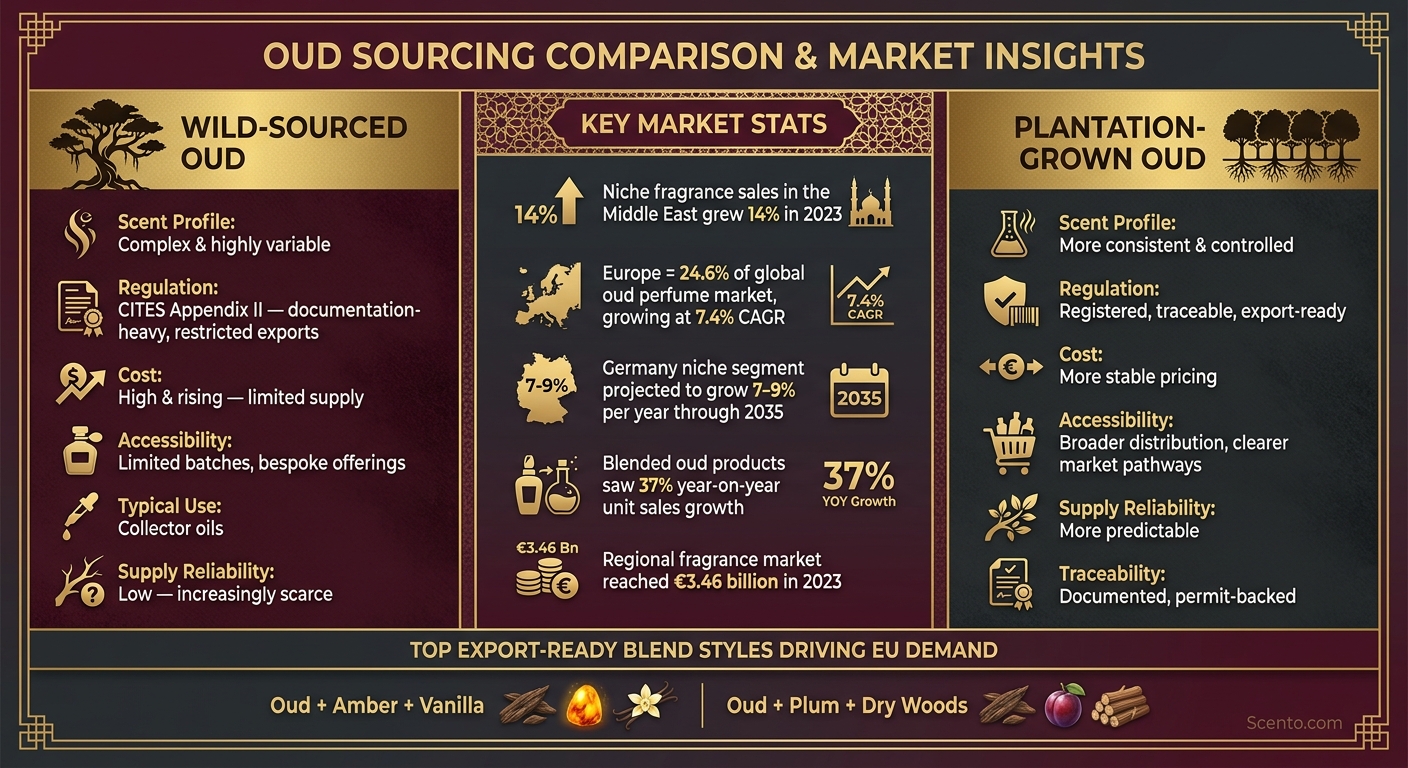
Vad vs. ültetvényen termesztett oud: Piaci összehasonlítás 2024
A közel-keleti niche parfümházak felvirágzása
Ahogy a kínálat szigorúbbá és könnyebben nyomon követhetővé válik, egyre több márka formálja át a tradicionális alapanyagokat modern niche illatokká. A niche parfümök eladásai a Közel — Keleten 14%-kal nőttek 2023-ban, megelőzve a fősodorbeli piacot. Ugyanakkor a tágabb regionális illatszerpiac elérte a mintegy 3,46 milliárd eurót 2023-ban, a növekedés jelentős részét a prémium és oud-központú kategóriák hajtották.
Olyan neves regionális márkák, mint az Arabian Oud, az Ajmal Perfumes és az Abdul Samad Al Qurashi ma már több mint 1.300 üzletet működtetnek a GCC országaiban. Ám a még izgalmasabb elmozdulás a kisebb házaknál figyelhető meg. A niche márkák új hulláma a hagyományos alapanyagokat veszi át, és modern EDP és extrait koncentrációkba önti őket - gyakran lágyabb projekcióval, amely könnyebben illeszkedik a mindennapi viselethez.
És ezek a márkák már nem korlátozódnak a helyi szukokra. Megjelennek a luxus koncepcióüzletekben, pop-up butikokban és válogatott online platformokon. Ez a változás alapvető, mert a fiatalabb vásárlók többre vágynak egy szép üvegnél. Az Y és Z generáció növeli az exkluzív, történetközpontú, limitált szériás parfümök iránti keresletet.
Globális oud-kereslet és kelet-nyugati illatfúziók
Az oud piaca is átalakul. A lágyabban komponált oud sok vásárlónál átveszi a karcosabb, gyantásabb stílusok helyét. Az oudot borostyánnal, vaníliával, virágokkal, gyümölcsökkel és száraz fákkal társító alkotások értékesített darabszáma 37%-os éves növekedést mutatott. A vonzerő kézenfekvő: könnyebben viselhetők, és általában elérhetőbb árfekvésűek, mint a tiszta oud-olajok.
Európában ez a lágyabb stílus gyorsan hódít. Sok vásárló ma már a finoman kiegyensúlyozott oudot választja a sűrűbb, olajos formátumok helyett. Ez segített az oudnak túllépni a gyűjtők körén, és a mindennapi illatgardrób részévé válni.
Az Öblön kívüli kereslet további lendületet ad. Európa már most a globális oud-parfümpiac mintegy 24,6%-át teszi ki, és körülbelül 7,4%-os CAGR-rel bővül, ahol Franciaország, az Egyesült Királyság és Németország a vezető piacok közé tartozik. Németországban a fás és orientális illatokon belüli niche és kézműves szegmens várhatóan évi 7–9%-kal nő 2035-ig, felülmúlva a szélesebb értelemben vett luxusparfüm-piacot.
Néhány kombináció kiemelkedően sikeres:
- Oud + borostyán + vanília
- Oud + szilva + száraz fák
Ezek a keverékek tökéletes egyensúlyt teremtenek. Melegnek és ismerősnek hatnak azok számára, akik kedvelik az ínyenc vagy borostyános illatokat, ugyanakkor megőrzik azt az arab ihletésű karaktert, amely az oud vonzerejét adja.
Hogyan segíti a minták felfedezése a komplex oud-illatok megismerését Európában?
Ahogy az oud ára emelkedik, a minták kipróbálása vált a legésszerűbb kiindulóponttá. Az ultra-prémium oud-parfümök ára gyakran meghaladja a 300,00 €-t, így a látatlanban történő vásárlás költséges tévedés lehet. Ezért játszik ma a minta kiemelt szerepet a felfedezésben, különösen a gazdagabb, rétegzettebb oud-kreációk esetében.
A Scento 2 ml-es, 5 ml-es és 8 ml-es fiolákat, valamint a legtöbb parfüm esetében elérhető 30 ml-es dekantüveget kínál a kockázatmentesebb teszteléshez, mielőtt elkötelezné magát egy teljes üveg mellett (scento.com).
A trendek összehasonlítása: Mit jelentenek ezek a változások a márkák és a fogyasztók számára?
Tradicionális mesterség kontra modern globális pozicionálás
A piac kezd egyértelműen kettéválni: az egyik oldalon a hagyományos, rituális olajok állnak, a másikon az exportra kész niche kompozíciók. Ez a kettősség határozza meg ma azt, ahogyan a márkák beszerzik, pozicionálják és beárazzák az oudot az európai piac számára.
A vad oud ritka és szigorúan szabályozott. Ezzel szemben az ültetvényeken nevelt oud biztosítja a márkák számára az exporthoz szükséges nyomon követhetőséget és volument. Egyszerűen kifejezve: a szabályozás és a nyomon követhetőség dönti el, hogy az oud képes-e túllépni a regionális presztízspiacokon.
Így viszonyul egymáshoz a két irány:
| Tényező | Vadon gyűjtött oud | Ültetvényen termesztett oud |
|---|---|---|
| Illatprofil | Komplex és rendkívül változatos | Kiegyensúlyozottabb és ellenőrzött |
| Szabályozás | CITES II. függelék; dokumentációigényes és korlátozott | Regisztrált, nyomon követhető és könnyebben exportálható |
| Költség | Magas és a korlátozott kínálat miatt emelkedő | Stabilabb |
| Elérhetőség | Korlátozott sarzsok és egyedi tételek | Szélesebb körű disztribúció és tisztább piaci utak |
A vad oud ma már szinte kizárólag a gyűjtők privilégiuma. Az európai vásárlók számára - különösen Németországban, ahol az etikai és származási kérdések kiemelt fontosságúak - azok a márkák építhetnek ki nagyobb bizalmat, amelyek átláthatóan ismertetik az ültetvényes beszerzést, a CITES-megfelelőséget és a nyomon követhetőséget.
Főbb tanulságok az európai parfümlátogatók számára
Az európai vásárlók számára a fő változás nemcsak az illatstílusban rejlik. Hanem abban is, hogy egy parfüm nyomon követhető-e és készen áll-e az exportra.
Az oud továbbra is központi helyet foglal el a közel-keleti parfümériában. Ezzel párhuzamosan a közel-keleti niche házak dinamikusan nőnek, és határozottan az európai piacokat célozzák meg. A beszerzés egyre szabályozottabbá válik, ami azt jelenti, hogy az átláthatóság már nem választás kérdése az uniós disztribúcióra törekvő márkák számára. A lágyabb, finoman megkomponált oud-kreációk pedig sokkal könnyebben befogadhatóvá teszik a kategóriát az új érdeklődők számára.
Gyakran Ismételt Kérdések
Miért olyan fontos az oud a közel-keleti parfümériában?
Az oud a közel-keleti parfüméria szíve, mivel mélyen beleivódott a régió illathagyományába, és ma is meghatározza a vásárlási szokásokat. A kereslet töretlen a gazdag, hosszan tartó oud és keleti stílusok iránt, és az oud-alapú parfümök teszik ki a prémium illatszer-eladások több mint 45%-át a térségben.
Egyúttal a luxus szimbóluma is. Az oud a parfümkészítés egyik legdrágább és legnehezebben beszerezhető alapanyaga, ami a minőség és a társadalmi státusz érzetét kölcsönzi az oud-központú illatoknak.
Mi a különbség a vadon termő és az ültetvényen nevelt oud között?
A rendelkezésre álló forrásanyag nem fejti ki a különbséget a vadon gyűjtött és az ültetvényen termesztett oud között.
Csupán annyit említ, hogy az oud az agarfából származik, beszerzése összetett, ritka, és gyakran gondos műveléshez kötődik, anélkül hogy részletezné ezt a különbségtételt.
Miért válnak egyre népszerűbbé a kevert oud-parfümök Európában?
A kevert oud-parfümök egyre nagyobb teret hódítanak Európában, ahogy egyre több parfürajongó tekint túl a tömegtermékeken a niche és kézműves házak irányába. Kiemelkedő minőségű összetevőkre, tartósabb hatásra és valami igazán különlegesre vágynak.
Ez az elmozdulás megmagyarázza, miért talált magának az oud ilyen erős pozíciót a piacon. Értékét a ritkasága és mély, sokrétű jellege adja. Ezzel párhuzamosan tökéletesen illeszkedik ahhoz a növekvő igényhez, amely a hangulatra, történetre és egyéniségre épülő parfümériát keresi - túl a gyors vásárlásokon. Sokak számára a kevert oud egy változatosabb illatgardrób előtt is megnyitja az utat, gazdagabb, kifejezőbb és tudatosabb illatélményt kínálva.

