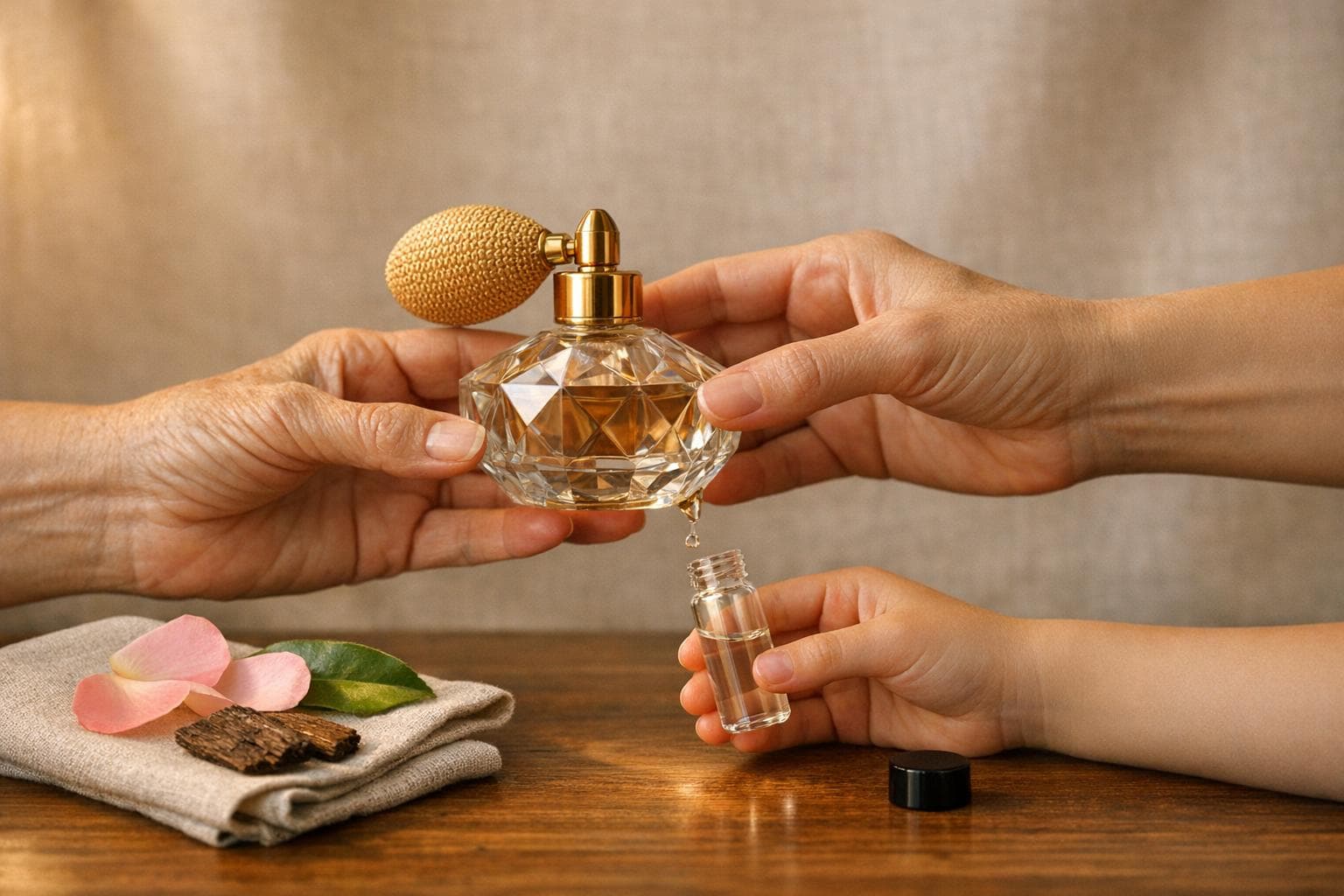
Az illat több puszta érzékszervi élménynél – híd az emlékekhez, az identitáshoz és a történelemhez. A gyermekkori konyhák melegétől a szent rituálékig az illatok eleven érzelmeket keltenek életre, és visszavezetnek minket a gyökereinkhez. Világszerte a közösségek évezredek óta használják az illatokat hagyományaik megjelölésére, örökségük megőrzésére és közös értékeik kifejezésére. Legyen szó indiai attarokról, perzsa jácintról vagy az északi boróka füstjéről, ezek az olfaktív tradíciók mélyen összefonódnak a hellyel és az emlékezettel.
Napjainkban az olyan modern platformok, mint a Scento, megkönnyítik e történelmi gyökerű illatok újrafelfedezését. E hagyományok ápolásával biztosítjuk, hogy az illatok által hordozott történetek a jövő nemzedékei számára is fennmaradjanak.
A legfontosabb gondolatok:
- Az illat közvetlen kapcsolatban áll az agy érzelmi és memóriaközpontjaival, ezért képes rendkívül élénk emlékeket felidézni.
- Az illathagyományok hűen tükrözik a helyi alapanyagokat és rituálékat, az indiai rózsa attartól a közel-keleti tömjénig.
- A modern trendek a tradicionális illatjegyeket ötvözik a változó preferenciákkal, ami a dekant-előfizetések révén még elérhetőbbé válik.
- A felelősségteljes beszerzés és a fejlett technológia elengedhetetlen az olyan ritka alapanyagok megőrzéséhez, mint az oud és a tömjén.
A parfüm nem csupán arról szól, hogy jó illatunk legyen – az identitás, az emlékezet és az összetartozás megőrzésének művészete.
Az illatok öröksége régiókon és korszakokon át
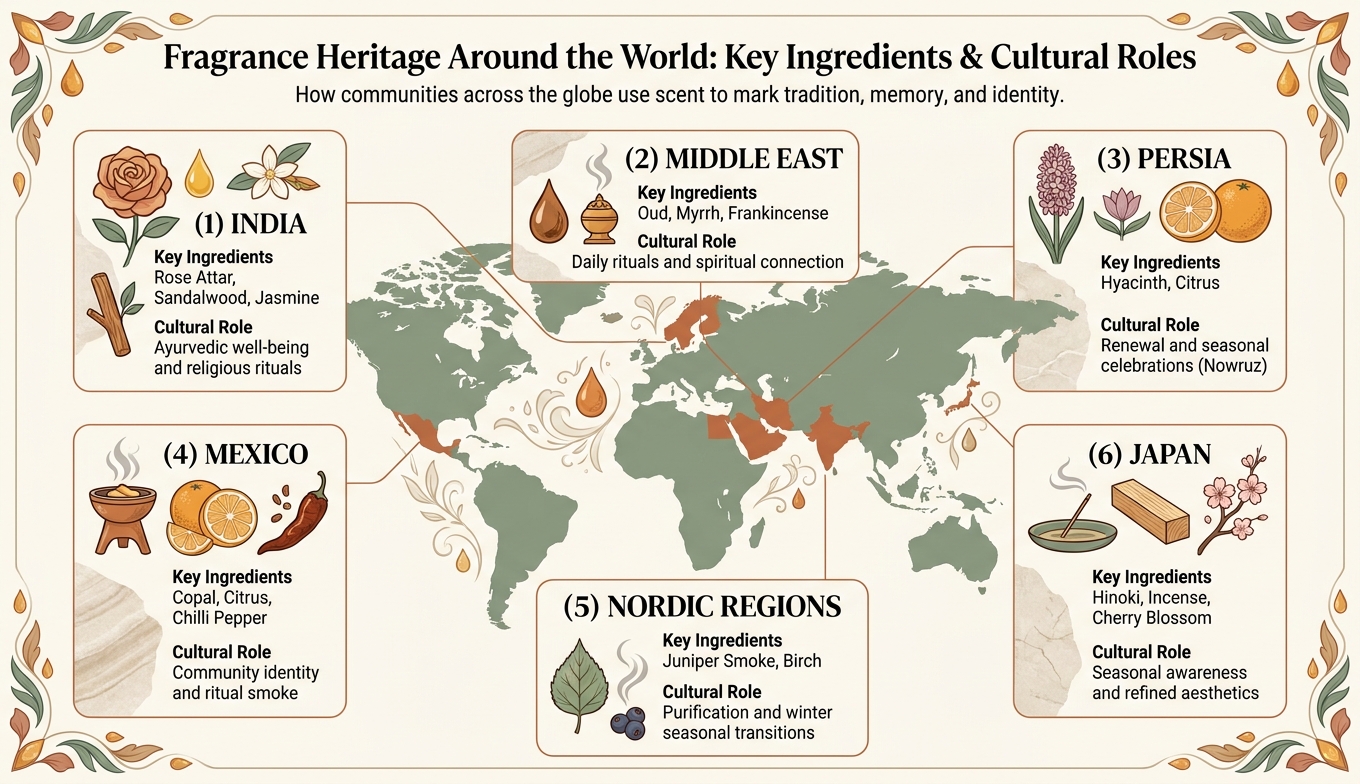
Fragrance Heritage by Region: Key Ingredients & Cultural Roles
Az illathagyományok mélyen a közösségek környezetébe, éghajlatába és életmódjába gyökereznek, évszázadokon át formálódva. Az ősi kereskedelmi útvonalakon szállított gyantás füstölőktől Dél-Ázsia finom virágos attarjaiig az illatok mindig is az identitás és az értékek tükrei voltak. Ezek a tradíciók egyedülálló eljárásokban és sokatmondó rituálékban nyilvánulnak meg, ahogyan az alábbiakban is látható.
Hogyan szállnak apáról fiúra a parfümkészítési technikák
Az indiai attarkészítés művészete a továbbélő illathagyományok egyik legszebb példája. Ezeket a virágokból, gyógynövényekből és nemes fákból lepárolt természetes parfümolajokat nemzedékek óta olyan módszerekkel készítik, amelyek családokon vagy helyi szövetkezeteken belül öröklődnek – gyakran formális oktatás nélkül. A szintetikus alternatívák térhódítása és a változó globális piacok azonban ma komoly kihívás elé állítják ezen ősi gyakorlatokat. E mesterség megőrzése létfontosságú: nemcsak művészi értéke miatt, hanem mint az ökológiai és történelmi tudás élő láncszeme. Az olyan összetevők, mint a rózsa attar, az oud és a tömjén, az ősi kereskedelmi utak örökségét és kulturális jelentőségét testesítik meg.
Az illat szerepe a rituálékban és szertartásokban
Az illat a különböző kultúrákban mindig is központi szerepet játszott a sorsfordító pillanatok és rituálék megjelölésében. A perzsa hagyományokban például a jácint és a citrusfélék elengedhetetlen kellékei a Nowruz ünnepének, amely az újév és a tavasz beköszöntét, a megújulást jelképezi. Az északi tájakon a boróka füstjét a téli szertartások során a terek megtisztítására és az évszakváltások kísérésére használják. Hasonlóképpen Mexikóban a kopal gyanta füstje a közösségi ceremóniák elmaradhatatlan része, amely hidat képez az élők és az ősi örökség között.
Az alábbi táblázat bemutatja, hogy a különböző régiók miként tekintettek történelmileg az illatokra kulturális viszonyítási pontként:
| Régió | Főbb összetevők | Kulturális szerep |
|---|---|---|
| India | Rózsa attar, szantálfa, jázmin | Ájurvédikus jóllét és vallási rituálék |
| Közel — Kelet | Oud, mirha, tömjén | Napi rituálék és spirituális kapcsolódás |
| Perzsia | Jácint, citrusfélék | Megújulás és évszakos ünnepek |
| Mexikó | Kopal, citrusfélék, chilipaprika | Közösségi identitás és rituális füstölés |
| Északi régiók | Borókafüst, nyírfa | Megtisztulás és téli átmenetek |
| Japán | Hinoki, füstölő, cseresznyevirág | Évszakos tudatosság és kifinomult esztétika |
Mindezekben a példákban az illat túllép a puszta díszítésen. Az átmenetek jelölőjeként szolgál, megidézi a jelenlétet, és elősegíti a közös megértést – mindazt elérve, amire egyetlen vizuális szimbólum önmagában képtelen lenne.
Hogyan változnak az illatpreferenciák generációról generációra
Az illatpreferenciák formálódása gyakran már a születés előtt megkezdődik, mivel az édesanya étrendjéből származó molekulák befolyásolhatják a korai érzékszervi asszociációkat. Az élet első évtizedében ezek a társítások mélyen rögzülnek, és olyan illatválasztásokat alapoznak meg, amelyek gyakran a felnőttkorig is kitartanak.
Családon belül öröklődő illatemlékek
Az illatok, valamint az agy érzelmi és memóriaközpontjai közötti közvetlen kapcsolat magyarázza, hogy bizonyos aromák – egy jellegzetes szappan, a gyermekkori kert vagy egy szeretett fűszerkeverék – miért képesek ilyen eleven emlékeket ébreszteni. Ez a hatás különösen a családi kötelékekben érvényesül erőteljesen.
A parfümökhöz kapcsolódó családi hagyományok gyakran kitörölhetetlen nyomot hagynak. Egy apa jellegzetes aftershave-je vagy az ünnepek alkalmával elégetett füstölő nem csupán emlékeket teremt; érzelmi alapjaink részévé válik. A diaszpórában élő közösségek számára bizonyos illatok horgonyként működnek: az otthon és az önazonosság érzését nyújtják még a teljesen idegen környezetben is.
Ahogy ezek a családi és kulturális illatemlékek formálódnak, úgy hatnak a személyes ízlésre is, amely idővel alkalmazkodik az egyéni fejlődéshez és a szélesebb társadalmi tendenciákhoz.
A történelmi illatoktól a modern parfümtendenciákig
Ezek az örökölt illatemlékek szolgálnak a modern parfümpreferenciák alapjául. Bár megőrzik az örökség tiszteletét, egyúttal utat nyitnak az új trendek felé is. Ahogy az ember átlép élete különböző szakaszaiba, illatválasztásai is átalakulnak. A fiatalabbak a közösségi média és az önkifejezés vágya által vezérelve gyakran a merész vagy édes, gourmand kompozíciók felé hajlanak. Idővel ezek a preferenciák kifinomultabbá válnak, teret engedve az összetettebb, rétegzettebb alkotásoknak, amelyek mélyebb személyes és kulturális jelentést hordoznak.
| Generáció | Fő hatás | Jellemző preferenciaprofil |
|---|---|---|
| Z generáció | Közösségi média és sztárparfümök | Merész, kísérletező, édes/gourmand |
| Millenniumi generáció | Niche parfüméria és illatkultúra | Kifinomult virágos, „tiszta” illatok |
| X generáció | Az 1980-as és 90-es évek erőteljes parfümerkorszaka | Karakteres, fás, fűszeres kompozíciók |
| Baby boomerek | A klasszikus francia parfümkészítés hagyománya | Elegáns aldehides virágos és ciprusos illatok |
Ez az evolúció szélesebb társadalmi folyamatokat tükröz. Ahogyan egy forrás találóan megfogalmazza:
„Egy gyorsan globalizálódó világban, ahol az egyformaság sebesen terjed, a rituálék pedig észrevétlenül vesznek el, az illat az ellenállás eszköze.” – NYC.PH
A niche parfüméria növekvő népszerűsége közvetlen válasz erre a változásra. A tömegpiaci parfümökkel ellentétben, amelyek a普遍ális vonzerőre törekednek, a niche házak a sajátosságra összpontosítanak – inspirációjukat különleges helyekből, alapanyagokból és történetekből merítve. Sokak számára a kérdés már nem az, hogy „Jó-e az illata?”, hanem az: „Megőriz-e valami értékeset, amit semmiképp sem szeretnék elveszíteni?”
Személyes illatszakértője már várja
Töltse ki rövid illatkvízünket, és fedezzen fel hiteles designer és niche parfümöket, amelyek az ízléséhez illenek – próbálja ki őket 2, 5, 8 és 30 ml-es dekantokban és mintákban, hogy mindegyiket kipróbálhassa, mielőtt teljes flakon mellett dönt.
Találja meg illatátHogyan segítik a modern illatplatformok a nagy múltú parfümök újrafelfedezését?
A korszerű illatplatformok túlmutatnak az új illatok felkutatásának leegyszerűsítésén – döntő szerepet játszanak az illatokhoz kapcsolódó generációs örökség megóvásában is. Mivel a fókusz egyre inkább a „tartalmas-e ez az alkotás?” kérdésére helyeződik a „finom-e az illata?” helyett, egyre nagyobb az érdeklődés az olyan platformok iránt, amelyek a hagyományokban és a személyes történelemben gyökerező kreációkhoz vezetik el a vásárlókat.
A történelmi ihletésű illatok felfedezése dekantok révén
A nagy múltú tradíciókat idéző parfümök megismerése gyakran tetemes kiadással jár. Egy niche parfümház egyetlen üvege könnyedén meghaladhatja a 300 €-t, ami megfontolandó befektetés azoknak, akik kulturális gyökereikkel vagy féltve őrzött családi emlékeikkel harmonizáló illatot keresnek.
Itt válik igazán fontossá a dekantkultúra. Az olyan felületek, mint a Scento, kisebb, sokkal elérhetőbb kiszereléseket kínálnak – mint például a 2 ml-es, 5 ml-es és 8 ml-es fiolák, valamint a legtöbb parfüm esetében elérhető 30 ml-es dekantüveg. Ez lehetővé teszi a kreációk szabad kísérletezését hangulatok, évszakok és alkalmak szerint. A történelmi ihletésű illatok, amelyek gyakran olyan alapanyagokra épülnek, mint az oud, a tömjén és a rózsa attar, tökéletes egyensúlyt teremtenek a múlt gazdagsága és az egyéni kifejezésmód között.
„Amikor az illatot az identitásunk részeként fogadjuk el, visszaköveteljük mindazt, amit a valahová tartozás jelent – nem csupán a hol, hanem a ki kérdésére is választ adva.” – Rolling Stone Culture Council
Ez a megközelítés különösen sokatmondó a diaszpórában élők számára. A kutatók bizonyos illatokat – mint egy jellegzetes attart vagy a gyantás füstölő fátyolos tónusát – „hordozható örökségként” írnak le, amely képes lehorgonyozni a kulturális identitást, bárhová is sodorjon az élet. A belépési költségek mérséklésével a dekantok hozzáférhető utat kínálnak e mély jelentésű alkotások megéléséhez és örökségük továbbadásához.
Az illathagyományok megőrzése felelős beszerzés révén
A tradicionális illatok megismerése csupán az első lépés – hitelességük megóvása éppoly lényeges. Az örökségparfümök számos kulcsfontosságú alapanyaga, például a tömjén (Boswellia sacra), a mirha, az oud és a rózsa attar egyre komolyabb nehézségekkel néz szembe. A geopolitikai feszültségek, például a vörös-tengeri hajózási útvonalak fennakadásai, közvetlen hatással vannak ezen esszenciák elérhetőségére és árára. Etikus és gondos beszerzés nélkül a hozzájuk kötődő évszázados hagyományok könnyen elveszhetnek.
A modern technológia kulcsszerepet játszik ennek áthidalásában. Az olyan eljárások segítségével, mint a GC — MS (gázkromatográfia-tömegspektrometria), az illattervezők képesek elemezni és archivált forrásokból, műtárgyakból rekonstruálni a történelmi illatokat, garantálva megmaradásukat. 2025 szeptemberében például Tasha Marks illattervező a Victoria & Albert Museummal együttműködve négy parfümöt alkotott újra a „Marie Antoinette Style” kiállítás számára. Korabeli feljegyzések alapján támasztották fel a királyné kedvenc púderes és virágos jegyeit, mint például a nősziromgyökeret és a rózsát.
„A történelmi illatok rekonstruálása élvezetes munka volt... de sokkal mélyebb célt is szolgált: újraéleszteni olyan ‘megfoghatatlan történeteket, amelyek rendkívül fontosak az emberek számára, ám az idők során hajlamosak megváltozni vagy végleg eltűnni’.” – Tasha Marks, illattervező, AVM Curiosities
A márkák mindemellett egyre gyakrabban alkalmaznak „történetközpontú” szemléletet, bevonva a helyi közösségek elöljáróit és a kulturális szakértőket a fejlesztési folyamatba, így biztosítva a kreációk eredethez hű jellegét. Ahogyan Frédéric Bourdelier, a Dior Parfums márkaörökségért és kultúráért felelős igazgatója megjegyezte:
„Világunk egyre bizonytalanabbá válik. Ezért keresünk biztos pontokat, közös gyökereket és összekötő kapocsként szolgáló erőket.”
Ily módon a természetes parfüméria többé válik puszta érzékszervi élvezetnél – élő archívumként működik. Minden üveg oud vagy tömjén kereskedelmi útvonalak, szertartások és évszakos emlékek gazdag szövevényét hordozza magában. A felelősségteljes beszerzés és az innovatív felfedezési módok ötvözésével a modern platformok garantálják, hogy e kompozíciók kulturális üzenete eleven és meghatározó maradjon a jövő nemzedékei számára is.
Összegzés: Miért bír ma is kiemelt jelentőséggel az illatörökség?
A parfüm túlmutat az egyéni ízlésvilágon – identitásunk és származásunk ékes kifejeződése. Ahogyan a Rolling Stone Culture Council találóan fogalmazott: „Az illat emlékezik. Identitást hordoz. Kontinenseket és korszakokat köt össze.” Ez nem csupán költői túlzás: szaglásunk közvetlenül kapcsolódik az agy érzelmi és emlékezeti központjaihoz, így az egyik legmélyebb utat kínálja gyökereink átéléséhez.
Egy olyan korban, ahol a globális hatások gyakran háttérbe szorítják a helyi szokásokat, a regionális illatörökség megóvása a csendes helytállás gesztusává válik. Legyen szó Dél-Ázsia szantálfájáról, a Közel — Kelet ámbrájáról vagy az európai parfümériát meghatározó mediterrán citrusokról, ezek az esszenciák egész történelmeket sűrítenek magukba. Elvesztésük többet jelentene egy illat eltűnésénél – a spirituális önkifejezés, a közös emlékezet és a kulturális identitás egy alapvető formájától fosztana meg bennünket.
Napjainkban a legígéretesebb fordulat a hozzáférhetőség és a megőrzés találkozása. A dekantkultúra minden eddiginél könnyebbé tette az olyan hagyományos ihletésű alapanyagok felfedezését, mint az oud, a tömjén vagy a rózsa attar, anélkül, hogy meg kellene vásárolnunk egy teljes méretű, költséges üveget. Ez megadja a lehetőséget az illatok szerelmeseinek, hogy hiteles designer és niche kreációk gazdag palettáját ismerjék meg az idő múlásával, ésszerű keretek között.
„Tudatosan illatot viselni annyi, mint részt venni a megőrzésben. Gondos odafigyeléssel alkotni pedig annyi, mint archívumot építeni.” – NYC.PH
A történelmi illatok nem csupán a múlt visszhangjai; az önazonosság és az örökség lüktető, élő lenyomatai. A megfelelő eszközökkel és lehetőségekkel minden generáció újra rátalálhat ezekre az illatos időkapszulákra, és magáévá teheti őket.
Gyakran Ismételt Kérdések
Miért ébresztenek bizonyos illatok ilyen mély emlékeket?
Szaglásunk különleges képessége, hogy intenzív emlékeket képes felidézni, abból fakad, hogy közvetlen összeköttetésben áll az agy érzelmekért és memóriáért felelős területeivel. Egyetlen illat képes visszarepíteni minket eleven érzelmekkel teli pillanatokba, amelyek gyakran személyes mérföldkövekhez vagy közös hagyományokhoz kapcsolódnak. Ez az illat és emlékezet közötti bensőséges kapocs teszi lehetővé, hogy bizonyos aromákat ennyire személyesnek és mély jelentőségűnek érezzünk.
Hogyan találhatok olyan tradicionális illatot, amely illik a mai ízlésemhez?
A saját ízlésével harmonizáló, örökség ihlette illat megtalálásához érdemes olyan kompozíciókat keresni, amelyek gazdag hagyományokból táplálkoznak és személyes emlékeket keltenek életre. Az olyan jegyek, mint a bakhoor vagy az oud, mély kulturális történetet hordoznak, és azonnali kötődést teremthetnek. A gondosan válogatott minták vagy dekantok kipróbálása kiváló módja annak, hogy felfedezze, mi rezonál Önnel, mielőtt egy teljes méretű üvegbe fektetne. Keresse azokat a parfümöket, amelyek nemcsak kulturális hátterét tükrözik, hanem valódi személyes jelentéssel is bírnak az Ön számára.
Hogyan ellenőrizhetem, hogy az olyan összetevők, mint az oud vagy a tömjén, felelős forrásból származnak-e?
Annak megállapításához, hogy az oud vagy a tömjén beszerzése felelősségteljesen történt-e, érdemes a márkák által biztosított átláthatóságot és tanúsítványokat figyelni. Az etikus forrásból származó gyakorlat védelmet nyújt az illegális kitermelés, a környezeti károk és a helyi közösségek kizsákmányolása ellen. Keresse az olyan minősítéseket, mint a Fair Trade vagy a Rainforest Alliance, amelyek a fenntarthatósági normák betartását igazolják. Emellett tanulmányozza a márka etikai elkötelezettségét, beszerzési irányelveit, és ellenőrizze az e ritka alapanyagok származására vonatkozó állításaikat.

