Túl gyorsan elillan az illat? A megoldás a parfümrétegezés lehet – egy módszer, amely szakaszosan építi fel az illatot, hogy az tovább tartson, és a nap folyamán kifinomultan bontakozzon ki. Így működik:
- Miért halványulnak el a parfümök: A száraz bőr, az alkohol elpárolgása és a helytelen alkalmazás (például a csuklók összedörzsölése) gyorsabban eltünteti az illatot.
- A rétegezés előnyei: Kezdje hidratált bőrrel, használjon olajokat vagy illatos testápolókat, és vigye fel az illatokat meghatározott sorrendben (először a nehezebb alapjegyeket, végül a könnyedebb fejillatokat).
- Alkalmazási tippek: Koncentráljon a pulzuspontokra (csukló, nyak, fül mögött), és a hosszabb viselhetőség érdekében akár ruházatra is fújhatja az illatot.
- Az illat felfrissítése: Használjon könnyedebb misteket vagy dekantokat az utánfújáshoz anélkül, hogy túl intenzívvé válna a parfüm.
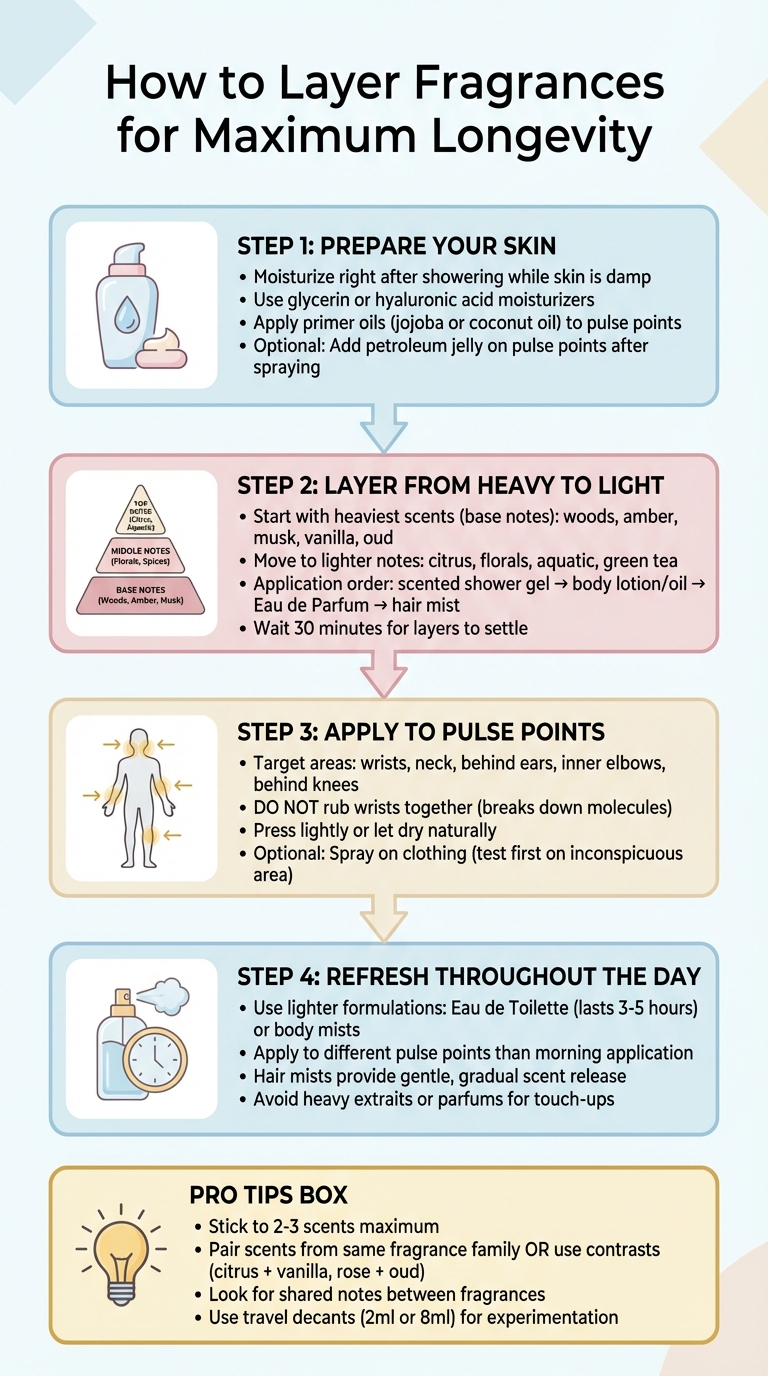
Lépésről lépésre útmutató a parfümrétegezéshez a maximális tartósságért
Hogyan érje el, hogy a parfüm EGÉSZ NAP kitartson | Parfümrétegezési kombinációk 🍓🍌🍑🍊
A bőr előkészítése a jobb illatteljesítményért
A bőr hidratáltságának megőrzése kulcsfontosságú ahhoz, hogy illata tovább tartson és szebben teljesítsen. Megfelelő hidratálás nélkül az illatmolekulák nehezebben tapadnak meg, ami gyorsabb elpárolgáshoz vezet.
A bőr hidratálása
A hidratált bőr ideális felületet biztosít az illatmolekulák számára, így az illat tovább megmarad. A száraz bőr ezzel szemben nem rendelkezik azokkal a lipidekkel, amelyek szükségesek ahhoz, hogy hatékonyan megtartsa ezeket a molekulákat. Nick Smart, az Agence de Parfum tulajdonosa és igazgatója, kiemeli:
A jól hidratált alap segít, hogy az illat tovább tartson és kényelmesebben simuljon a bőrre, ezért érdemes egy minőségi, illatmentes hidratálóval kezdeni. Ez ad valamit, amibe az illat belekapaszkodhat, és fokozhatja a kisugárzását.
A hidratálás legjobb ideje közvetlenül zuhanyzás után van, amikor a bőr még enyhén nedves. Ez segít bent tartani a nedvességet, és selymes alapot teremt az illat számára. Válasszon glicerint vagy hialuronsavat tartalmazó hidratálót, mivel ezek az összetevők a bőrhöz vonzzák a nedvességet. Extra hatásért fújás után vigyen fel egy vékony réteg vazelint a pulzuspontokra. Ez lezárja az illatot és fokozza annak tartósságát.
Ha illatosított testápolót használ, ügyeljen arra, hogy harmonizáljon a parfümmel. Ellenkező esetben maradjon az illatmentes hidratálóknál, hogy elkerülje az illatok összeütközését. Ha bőre megfelelően hidratált, a következő szintre emelheti a rutint egy primerolajjal.
Primerolajok használata illathoz
A primerolajok remek kiegészítői a rutinnak, mivel segítenek az illatmolekulákat a bőrön rögzíteni a hosszan tartó teljesítmény érdekében. Fújás előtt vigyen fel kis mennyiségű semleges olajat – például jojoba- vagy frakcionált kókuszolajat – a pulzuspontokra. Ez egy védőréteget képez, amely segít, hogy az illat tovább megmaradjon.
Még kifinomultabb megközelítésként kipróbálhat kifejezetten illatokhoz készült primereket is. Az olyan termékek, mint a D.S. & Durga Debaser vagy a DedCool Milk Base, amelyeket Hiba E emelt ki 2024 augusztusában, kifejezetten az illat tapadásának fokozására készültek. Ezek a primerek, amelyek gyakran pézsma- vagy ámbraolaj alapúak, további réteget biztosítanak, amelyhez a parfüm kapcsolódhat. Az olajok felvitelekor finoman nyomkodja őket a bőrbe – a dörzsölés hőt termelhet, ami felgyorsítja a párolgást és csökkenti az illat tartósságát.
Hogyan rétegezzük az illatokat
Miután a bőr elő van készítve, a következő lépés a tudatos rétegezés. A lényeg, hogy az illatokat meghatározott sorrendben vigye fel, és olyan kombinációkat válasszon, amelyek erősítik egymást a hosszabb tartósság érdekében.
Illatjegyek rétegezése: a nehéztől a könnyedig
Kezdje a legintenzívebb és legösszetettebb illattal – az alapjegyekkel. Ide tartoznak a fás jegyek, az ámbra, a pézsma, a vanília vagy az oud. Alacsonyabb illékonyságuk és nehezebb molekulaszerkezetük miatt ezek tovább maradnak meg, és az illat alapját adják.
Miután az alap kialakult, lépjen tovább a könnyedebb, finomabb jegyekhez, például a citrusokhoz, virágokhoz, vízi akkordokhoz vagy a zöld teához. Ez a sorrend biztosítja, hogy a könnyed fejillatokat ne nyomják el a nehezebb jegyek. Az ajánlott sorrend a következő: illatos tusfürdő, majd testápoló vagy testolaj, aztán az elsődleges parfüm (Eau de Parfum vagy Parfum), végül hajpermet. Hagyjon körülbelül 30 percet, hogy a rétegek megnyugodjanak és kölcsönhatásba lépjenek a bőrével.
Egymással harmonizáló illatok kiválasztása
Miután megvan a rétegezés sorrendje, ideje a kompatibilitásra gondolni. Kezdje azzal, hogy ugyanabból az illatcsaládból párosít illatokat. Például két fás vagy két virágos illat kombinálása gyakran tökéletes harmóniát eredményez. Ha merészebb hatásra vágyik, válasszon kontrasztokat a mélység érdekében – például élénk citrusokat egy meleg vaníliaalap fölé, vagy rózsát füstös ouddal párosítva.
Nick Smart, a Libertine Parfumerie igazgatója, így fogalmaz:
Egy citrusos jegy felemelhet valami mélyet és gyantásat, míg a lágy virágok finomíthatják a karakteresebb fákat vagy fűszereket. A legvonzóbb kombinációk vagy kontrasztot alkotnak, vagy kiegészítik egymást – anélkül, hogy összeütköznének.
A tökéletes párosítás megtalálásához keressen közös jegyeket az illatok között. Például a jázminra épülő parfümök rétegezése felerősítheti annak jelenlétét. Az azonos márkától származó illatok gyakran biztos választásnak bizonyulnak, mivel általában közös, egységes „olfaktív szignatúrával” rendelkeznek. Tartsa egyszerűen – maradjon két vagy három illatnál, hogy elkerülje a túlterhelt keveréket, amelyhez az orr idővel hozzászokhat.
Személyes illatszakértője már várja
Töltse ki rövid illatkvízünket, és fedezzen fel hiteles designer és niche parfümöket, amelyek az ízléséhez illenek – próbálja ki őket 2–8ml-es dekantokban és mintákban, hogy mindegyiket kipróbálhassa, mielőtt teljes flakon mellett dönt.
Találja meg illatátHová és hogyan vigye fel az illatot a hosszabb tartósságért
Az, ahogyan felviszi a parfümöt, döntő különbséget jelenthet a pillanatok alatt elillanó illat és az egész nap érzékelhető kisugárzás között.
A pulzuspontok célzása
A pulzuspontok kulcsfontosságúak az illat tartóssága szempontjából. Ezek a területek – például a csukló, a nyak, a fül mögötti rész, a könyökhajlat és a térdhajlat – hőt bocsátanak ki, amely segíti az illat levegőbe diffundálását.
Robin Mason, a DSM — Firmenich Fine Fragrance részlegének elnöke, így fogalmaz:
Vannak bizonyos területek a testünkön, ahol intenzívebb a vérkeringés – például a nyak vagy a csukló –, ezek melegebbek, és ennek köszönhetően az illat erőteljesebben tud érvényesülni.
Egy alapvető tanács: a parfüm felvitele után kerülje a csuklók összedörzsölését. Ez súrlódást hoz létre, amely lebontja az illat molekuláit, lerövidítve annak élettartamát. Ehelyett finoman érintse össze a csuklóit, vagy egyszerűen hagyja, hogy a parfüm természetes módon megszáradjon a bőrön.
Bár a bőrre történő felvitel klasszikus választás, a ruházat is meghosszabbíthatja az illat élettartamát.
Illat felvitele ruházatra
A parfüm ruhára fújása kiváló módja annak, hogy tovább megmaradjon. A textíliák egyfajta tartályként működnek: magukba szívják az illatot, majd fokozatosan bocsátják ki az idő múlásával. A bőrrel ellentétben a ruházat nem melegszik fel, és nem lép kölcsönhatásba a testkémiai folyamataival, így az illat lassabban párolog el.
Alexis Grugeon, a Givaudan parfümőre, elmagyarázza:
Bármilyen meleg felület, például a bőr, fokozza a parfüm diffúzióját, ezért az gyorsabban elpárolog, így ha azt szeretné, hogy a hatása tovább tartson, jobb, ha ruhára vagy hajra viszi fel.
Fújás előtt mindig végezzen próbát egy zsebkendőn vagy a ruhadarab kevésbé látható részén, hogy megbizonyosodjon arról, nem hagy-e foltot vagy elszíneződést. Az egyenletes felvitel érdekében enyhe távolságból permetezzen, és koncentráljon a kevésbé kitett részekre, például egy zakó bélésére vagy egy sálra, a diszkrét, hosszan tartó hatásért. Legyen óvatos a kényes anyagokkal, például a selyemmel vagy a gyapjúval, mivel a parfümben lévő alkohol és olajok maradandó károsodást okozhatnak.
Az illat felfrissítése a nap folyamán
Az illatok természetes módon fejlődnek és halványulnak, ahogy telik a nap. A fej- és szívjegyek általában gyorsabban elillannak, maguk mögött hagyva a tartósabb alapjegyeket. Az illat felfrissítésével megújíthatja annak teljes összetettségét, és egész nap élénken tarthatja. Bruno Jovanovic, a DSM — Firmenich vezető parfümőre, kiemeli az újrafújás szépségét:
Nincs is jobb annál, mint szabadon újrafújni a parfümöt a nap folyamán. Minden egyes újrafújással visszaállítjuk azokat a fej- és szívjegyeket, amelyek a viselés során elhalványultak, így második vagy harmadik életet adunk neki, miközben az alapjegyeket is megerősítjük.
Az illat felfrissítése művészet. A cél az, hogy új életet leheljen a parfümbe anélkül, hogy túlterhelné az érzékeket. Íme, hogyan teheti ezt hatékonyan.
Testpermetek vagy utazó dekantok használata
Az utazóméretű dekantok (2 ml vagy 8 ml) és a hajpermetek praktikus eszközök a gyors felfrissítéshez. Ezekkel a lehetőségekkel célzottan érintheti a pulzuspontokat, és finoman újraaktiválhatja az illatot. Különösen a hajpermet kiváló választás. Nick Smart, az Agence de Parfum tulajdonosa és igazgatója, megosztja:
A hajpermetek gyönyörű módját jelentik az illat viselésének. Általában lágyabbak, mint a hagyományos parfümök, mégis finom illatfelhőt hagynak maguk után mozgás közben... Különösen bájosak, ha a nap folyamán szeretnénk felfrissülni anélkül, hogy túl intenzívnek hatnánk.
A haj jól megtartja az illatot, és mozgás közben fokozatosan bocsátja ki, ezért ideális a diszkrét felfrissítéshez. Alternatívaként finoman bepermetezheti a sálját vagy a zakó belsejét is hasonló hatásért. Bármelyik módszert választja, ügyeljen rá, hogy harmonizáljon az eredeti illatfelvitellel az egységes illatélmény érdekében.
A túl intenzív rétegek elkerülése
Az illat felfrissítésekor a könnyedebb formulák jelentik a kulcsot. Az olyan opciók, mint az Eau de Toilette, a testpermet vagy a kölniszerű spray-k sokkal alkalmasabbak a napközbeni utánfújásra, mint a nehezebb extrait-k vagy parfumök. Ezeknek a könnyedebb változatoknak alacsonyabb az olajkoncentrációjuk, ezért kisebb eséllyel ütköznek a már viselt illattal. Például az Eau de Toilette általában 3–5 órán át tart, míg az Eau de Parfum akár 8 órán át is érezhető maradhat.
Nick Smart azt tanácsolja:
Egy könnyű mist vagy kölniszerű formula a legjobb, különösen akkor, ha extrait vagy parfum fölé rétegez. Így az illat össze tud simulni anélkül, hogy nehéznek vagy zavarosnak hatna.
Annak érdekében, hogy ne terheljen túl egyetlen területet sem, a felfrissítő illatot más pulzuspontokra vigye fel, mint a reggeli alkalmazás során. Például, ha a csuklóin még ott él az eredeti illat, próbálja inkább a nyakára vagy a füle mögé fújni. Ez a megközelítés biztosítja, hogy az illatok természetesen keveredjenek a levegőben Ön körül. És ne feledje – ne dörzsölje el az illatot, mert ez lebontja a szerkezetét és megváltoztathatja az illatprofilját.
Összegzés
Az illatok rétegezése teljesen új szintre emelheti a parfümélményt, miközben a legtöbbet hozza ki gyűjteményéből. Ha hidratáltan tartja a bőrét, az illatokat a legerőteljesebbtől a legkönnyedebbig viszi fel, és a pulzuspontokra összpontosít, nemcsak a parfüm tartósságát növeli meg, hanem egy dinamikus illatprofilt is létrehoz, amely a nap folyamán elegánsan bontakozik ki. Robin Mason, a dsm-firmenich Fine Fragrance részlegének elnöke, tökéletesen összegzi:
A rétegezés biztosítja, hogy Ön legyen a formula legfontosabb része... az egyéni ízlése és az, ahogyan a teste reagál a kombinációkra.
Ez a technika nemcsak fokozza a viselési időt – új életet lehel a részben használt üvegekbe is, kiegyensúlyozza a túl édes vagy túl éles jegyeket, és minimalizálja a pazarlást. Ahelyett, hogy egy 168 dolláros üveg érintetlenül állna, kiegészítő jegyekkel párosíthatja, hogy olyan illatot alkosson, amely valóban az Öné. Jean Madar, az Interparfums vezérigazgatója és elnöke, kiemeli ezt a szabadságot:
A parfümrétegezés a végső szabadságot kínálja. Lehetővé teszi, hogy olyan illatot hozzon létre, amely az egyedi hangulatán és azon alapul, mit szeretne megmutatni a világnak az adott napon.
A rétegezés igazi titka? A kísérletezés. Időre és türelemre van szükség ahhoz, hogy megtalálja azokat a kombinációkat, amelyek valóban rezonálnak Önnel. A discovery boxok és az utazóméretű dekantok ezt a folyamatot egyszerre teszik elérhetővé és megfizethetővé. Suzy Nightingale, a The Perfume Society munkatársa, egy praktikus tippet ad:
Egy másik kiváló módja annak, hogy tesztelje és finomítsa újonnan felfedezett illatrétegezési készségeit, ha beszerez egy Discovery Boxot, és mindenféle kombinációt kipróbál.
Azok számára, akik készen állnak belevágni, a Scento gondosan válogatott dekantjai – 0,75 ml, 2 ml és 8 ml kiszerelésben – tökéletes kiindulópontot jelentenek. Több mint 1 000 illat vár felfedezésre, így olyan párosításokkal kísérletezhet, mint a fás alapok és a ragyogó citrusos jegyek, hogy megalkossa saját szignatúraillatát. Így elkerülheti, hogy teljes méretű üvegekre költsön, amelyek esetleg kihasználatlanul maradnak, miközben megkapja a szabadságot valami igazán személyes megteremtésére.
Kezdje egyszerűen: válasszon két egymást kiegészítő illatot, vigye fel őket különböző pulzuspontokra, és hagyja, hogy a testkémiája elvégezze a varázslatot. Az eredmény? Egy hosszabban tartó, mélyen személyes illat, amely teljes mértékben az Öné.
GYIK
Hogyan rétegezhetem az illatokat anélkül, hogy összeütköző hatást keltenének?
Egy gyönyörűen rétegzett illat megalkotásához kezdje a bőr előkészítésével egy illatmentes vagy enyhén illatos hidratálóval. Ez az egyszerű lépés segít, hogy az illat tovább tartson, mert lesz mibe kapaszkodnia. Indítson egy olyan parfümmel, amely mély, gazdag alapjegyeket hordoz – gondoljon az ámbrára, pézsmára vagy fára. Ezután rétegezzen rá egy könnyedebb illatot ragyogó, légies fejillatjegyekkel, például citrusokkal vagy finom virágokkal.
Az illatok kiválasztásakor keressen egymást kiegészítő jegyeket. Például párosítson egy meleg, fás alapot fűszeres vagy virágos szívjeggyel, hogy a kompozíció harmonikusnak hasson. Vigye fel a kiválasztott illatokat a pulzuspontokra – csukló, nyak vagy a fül mögötti rész – a maximális hatás érdekében. És ne feledje: kerülje a csuklók összedörzsölését, mivel ez lebontja az illatot és megváltoztathatja a karakterét. Mindig próbáljon ki először kis mennyiséget, hogy megbizonyosodjon róla, a kombináció harmonikus és illik az Ön stílusához.
Hogyan készíthetem elő a bőrömet, hogy a parfümöm tovább tartson?
Ahhoz, hogy illata tovább tartson, kezdje jól hidratált bőrrel. A hidratált bőr általában hatékonyabban tartja meg az illatot. Használjon illatmentes testápolót vagy testkrémet, hogy sima alapot hozzon létre anélkül, hogy versengő illatokat vezetne be. A még intenzívebb hidratálás érdekében fontolja meg egy könnyű testolaj – például jojoba vagy szkvalán – használatát. Ezek az olajok nemcsak bezárják a nedvességet, hanem segítik azt is, hogy a parfüm jobban megtapadjon a bőrön. Koncentráljon a pulzuspontokra – például a csuklóra, nyakra és könyökhajlatra – a legészrevehetőbb és legtartósabb hatásért.
Az arc esetében válasszon könnyű, humektánsokban gazdag hidratálót – az olyan összetevők, mint a hialuronsav vagy a ceramidok, kiválóan működnek. Ezek hidratáltan tartják a bőrt anélkül, hogy zavarnák a parfüm finom fejillatjegyeit. Tisztítás után vigye fel a hidratálót, hagyja teljesen beszívódni, majd fújja rá az illatot a legjobb eredményért.
Egy egyszerű rutin, amit követhet: zuhanyzás → finomra törölközés → illatmentes testápoló vagy olaj felvitele → (opcionálisan) arckrém → hagyja mindent beszívódni → fújja fel a parfümöt. Ez a rétegezett megközelítés nemcsak meghosszabbítja az illat élettartamát, hanem bőrét is puhává és ápolttá varázsolja.
Mi a különbség a parfüm bőrre és ruhára történő felvitele között?
Ha a parfümöt bőrre viszi fel, az összekapcsolódik teste természetes hőjével és olajaival, így az illat hatékonyabban bontakozik ki és marad meg. A pulzuspontok – például a csukló, a nyak és a fül mögötti rész – célzása kihasználja e területek melegségét, felerősíti az illat kisugárzását és segít, hogy tovább tartson.
Ezzel szemben a parfüm ruházatra történő felvitele más hatást eredményez. Testhő hiányában az illat nem ugyanúgy fejlődik, gyakran statikusabb marad. Bár hosszabb ideig jelen lehet, mélysége és komplexitása csökkenhet. Emellett ügyeljen az esetleges textilfoltokra vagy az illat eredeti karakterének megváltozására.