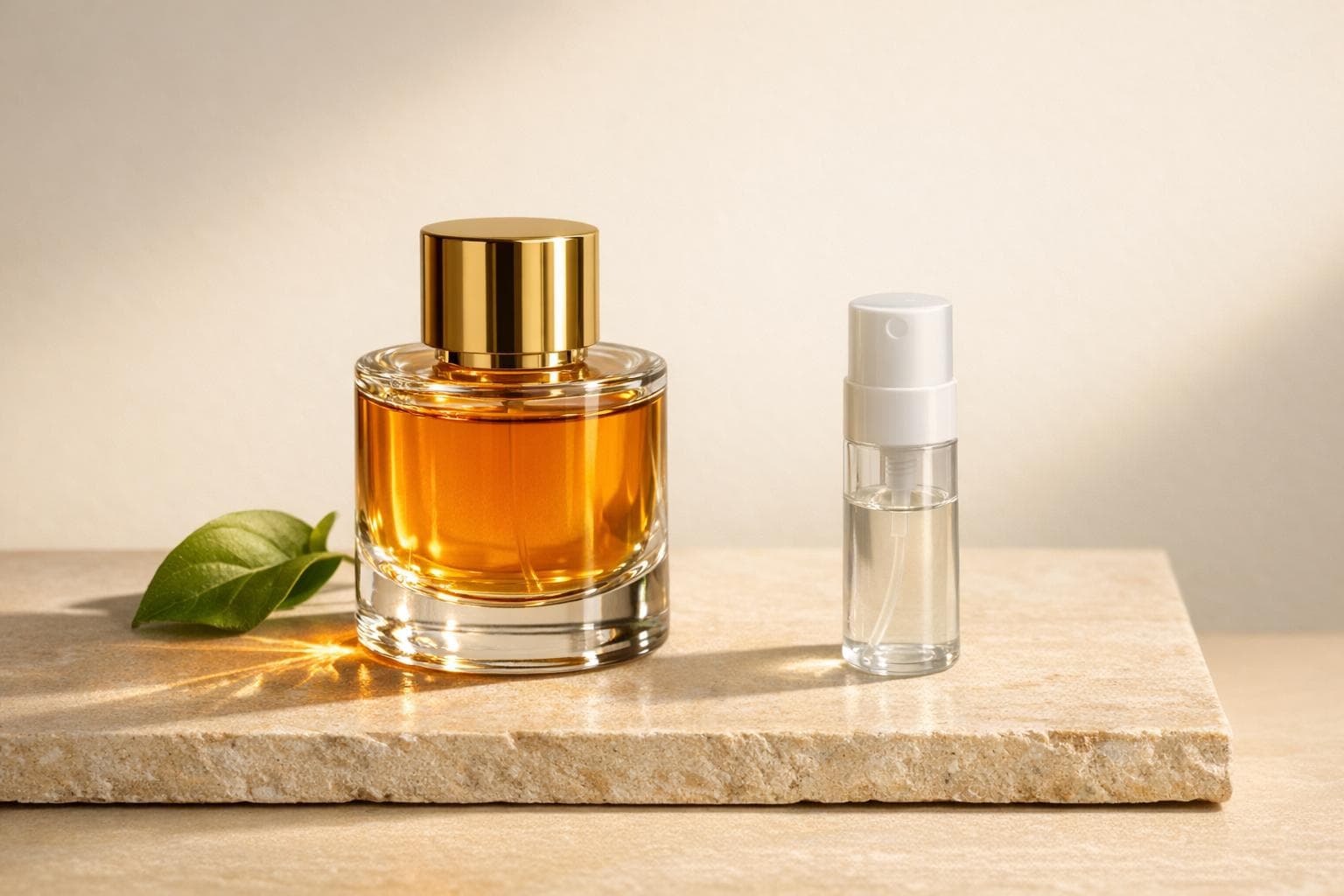
Amikor a természetes parfümök csomagolásáról döntünk, az üveg és a műanyag közötti választás alapvetően meghatározza az illat minőségét, tartósságát és az ökológiai lábnyomot. Az üveg kémiailag semleges, így megóvja a legfinomabb illatjegyeket is, miközben prémium érzetet kelt. Ugyanakkor nehezebb, törékeny, és előállítása rendkívül energiaigényes. A műanyag ezzel szemben könnyű, ellenálló és költséghatékonyabb, ám kölcsönhatásba léphet az illatkomponensekkel, és hozzájárul a hosszan tartó környezetszennyezéshez.
A legfontosabb tudnivalók:
- Üveg: Megőrzi az illat tisztaságát, újrahasznosítható, fényűző hatást kelt, de törékeny és nehéz.
- Műanyag: Könnyű, törésbiztos, alacsonyabb szállítási CO₂-kibocsátással jár, ám kevésbé védi a kompozíciót, és nehezebben hasznosítható újra.
Gyors összehasonlítás:
| Jellemző | Üveg | Műanyag |
|---|---|---|
| Illatmegőrzés | Igen (nem lép reakcióba) | Nem (kölcsönhatásba léphet) |
| Újrahasznosíthatóság | Magas (100%) | Korlátozott (~10% hasznosul) |
| Tartósság | Törékeny | Törésbiztos |
| Súly | Nehéz (magasabb szállítási CO₂) | Könnyű |
| Gyártási hatás | Energiaigényes | Alacsonyabb energia, de szennyező |
Az üveg tökéletesen illik a prémium kategóriás, környezettudatos márkákhoz, míg a műanyag praktikus utazáshoz és kedvezőbb árfekvésű megoldásokhoz. Mindkettő kompromisszumokkal jár, így a választás olyan prioritásoktól függ, mint a minőség, a költségek vagy a hulladékcsökkentés.
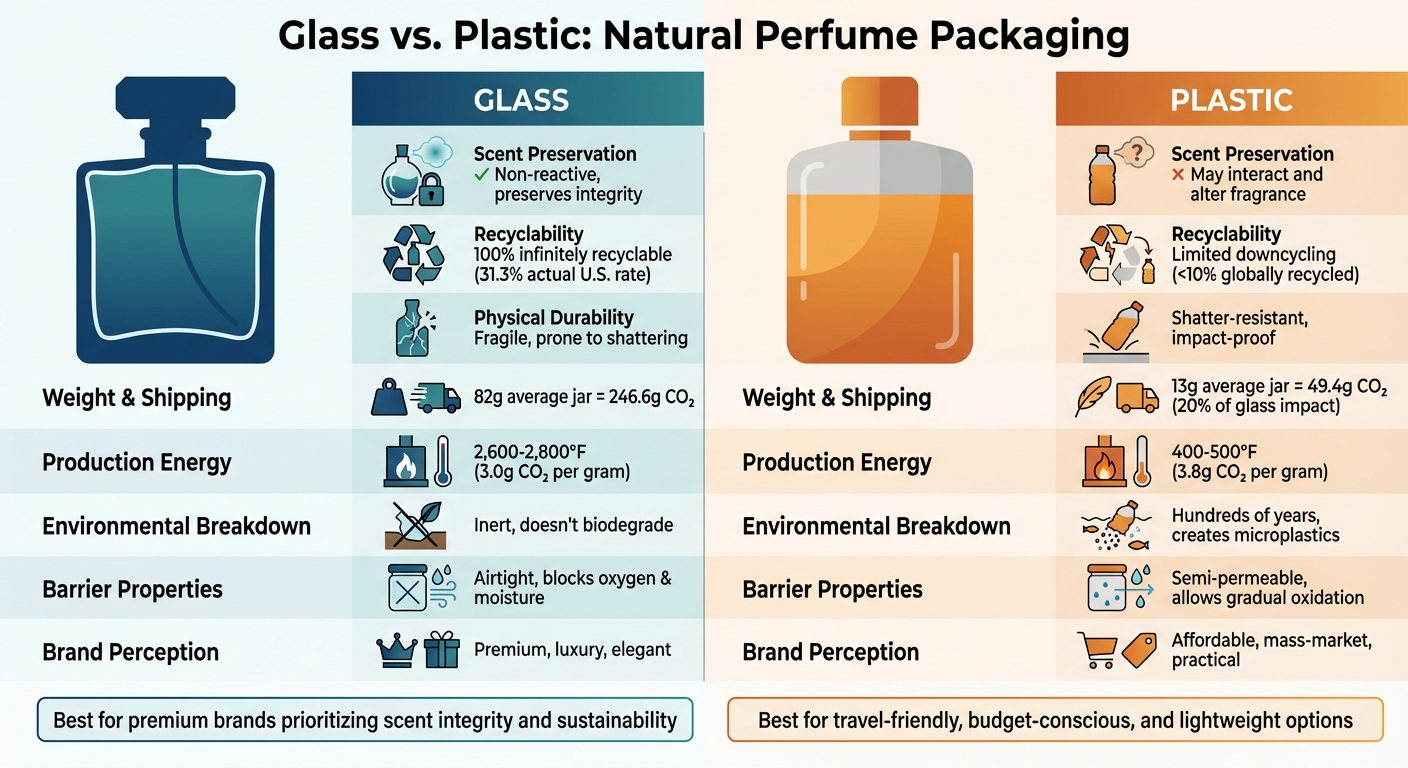
Glass vs Plastic Perfume Packaging Comparison Chart
Glass Packaging for Natural Perfumes
Az üveg a természetes parfümök csomagolásának klasszikus választása, köszönhetően annak az egyedülálló képességének, hogy hibátlanul megóvja a törékeny illatkompozíciókat. Ugyanakkor ennek az anyagnak is megvannak a maga korlátai. Vegyük sorra, miért működik olyan kiválóan az üveg a természetes parfümök esetében, és milyen kompromisszumokkal kell számolnunk.
Az üvegcsomagolás előnyei
Az üveg egyik legkiemelkedőbb tulajdonsága a kémiai stabilitás. Nem lép reakcióba a természetes parfümök összetevőivel, ami elengedhetetlen az illékony botanikai esszenciák épségének megőrzéséhez. Emellett az üveg légmentes záródást biztosít, elzárva a kreációt az olyan külső tényezőktől, mint a hő, a fény és a szennyeződések. Ez garantálja, hogy a legelső fújáskor megtapasztalt illat az idő múlásával is változatlanul tiszta maradjon.
Esztétikai szempontból az üveg eleganciát és luxust áraszt. Az olyan divatházak, mint a Chanel és a Dior, előszeretettel választják az üveget a kifinomultság és a minőség hangsúlyozására. Súlya, ragyogása és finom tapintása emeli a vásárlói élményt. A vizuális vonzerőn túl az üveg végtelenszer újrahasznosítható anélkül, hogy veszítene minőségéből, így elméletben kiváló környezetbarát alternatíva.
Az üvegcsomagolás korlátai
Előnyei ellenére az üveg számos kihívást tartogat. A törékenység és a súly a legfőbb hátrányok közé tartozik. Az üvegflakonok a szállítás során megrepedhetnek vagy összetörhetnek, ami termékveszteséghez vezet. Emellett jóval nehezebbek a műanyagnál: egy átlagos üvegtégely mintegy 82 grammot nyom, míg egy hasonló műanyag tároló mindössze 13 grammot. Ez a többletsúly megnöveli a szállítási költségeket és az üzemanyag-felhasználást. Például egymillió 2 unciás üvegtégely szállítása 246.6 tonna CO2-kibocsátással jár, míg ugyanez a mennyiség műanyagból csupán 49.4 tonnát eredményez.
Az üveg előállítása szintén komoly aggályokat vet fel. Rendkívül energiaigényes, mivel az olvasztókemencéknek 2,600°F és 2,800°F (kb. 1425–1540°C) közötti hőmérsékletet kell elérniük. Továbbá a gyártás nagy tisztaságú szilícium-dioxid homokot igényel – egy olyan erőforrást, amely gyorsabban fogy, mint ahogy a természet képes lenne újraképződni. Noha az üveg elméletben újrahasznosítható, 2018-as adatok szerint az Egyesült Államokban a tárolóüvegeknek mindössze 31.3%-át hasznosították újra, ami behatárolja valós környezeti előnyeit.
Műanyag csomagolás a természetes parfümök számára
A műanyag stabil helyet vívott ki magának a parfümiparban, különösen a tömegpiaci márkák körében, ahol a költséghatékonyság, a praktikum és a méretezhetőség áll a középpontban. Bár hiányzik belőle az üveg eleganciája, a műanyag kézzelfogható előnyöket kínál bizonyos helyzetekben – legfőképp akkor, amikor a hordozhatóság és a kedvező ár az elsődleges szempont.
A műanyag csomagolás előnyei
A műanyag vitathatatlan előnye a rendkívül csekély súly. Egy HDPE műanyagtégely például körülbelül 13 gramm, szemben egy hasonló üvegtégely 82.2 grammjával. Ez a különbség jelentős megtakarítást eredményez a szállítási díjakban, és mérsékli a logisztikából adódó szén-dioxid-kibocsátást. A műanyagtégelyek szénlábnyoma akár mindössze 20%-a is lehet az üvegének. A könnyebb rakományok révén egyetlen fordulóval több termék szállítható, ami csökkenti az üzemanyag-fogyasztást és az üvegházhatású gázok kibocsátását.
További lényeges szempont a műanyag ütésállósága. Ellentétben az üveggel, amely fokozott védőcsomagolást igényel a szállítási sérülések elkerülésére, a műanyag jóval ellenállóbb, és könnyedén kibírja az ütődéseket vagy a leejtést. Ezért ideális utazóméretű parfümökhöz vagy kézitáskákban, sporttáskákban hordható zsebfújókhoz. A műanyag ezenkívül határtalan formai szabadságot nyújt: egyedi formák, élénk színek és felületkezelések alakíthatók ki vele, növelve a vizuális vonzerőt a polcokon.
Költségoldalról nézve a műanyag előállítása lényegesen gazdaságosabb, mint az üvegé, hiszen a gyártási hőmérséklet mindössze 400–500°F (kb. 200–260°C) között mozog. Az alacsonyabb gyártási költségek segítik a márkák gyorsabb terjeszkedését, ami a fogyasztók számára is kedvezőbb fogyasztói árakat biztosít. Néhány cég mindemellett környezettudatos innovációkra használja a műanyagot. A Amika például termékcsaládjának csaknem 90%-át fogyasztói hulladékból újrahasznosított (PCR) műanyagra állította át a 2022 februárjában indított NetZero 2030 kezdeményezés keretében.
Ezek az előnyök azonban olyan kompromisszumokkal párosulnak, amelyek közvetlenül kihatnak a termék minőségére és a környezetre.
A műanyag csomagolás korlátai
Praktikussága ellenére a műanyag csomagolás jelentős hátrányokkal jár. Ellentétben a kémiailag inert üveggel, a műanyag reakcióba léphet az illatanyagok komponenseivel. Ahogyan a Global Packaging rámutat:
„Bizonyos anyagok, mint például a műanyag, reakcióba léphetnek az illatban lévő vegyületekkel, ami idővel megváltoztathatja az illatprofilt.”
Ez azt jelenti, hogy a parfümben lévő természetes olajok és kifinomult növényi alkotóelemek lebomolhatnak, eltorzítva az illatot és csalódást okozva a vásárlónak.
A műanyag továbbá nem képes olyan légmentes és stabil közeget teremteni, amely megóvná az érzékeny formulákat a fénytől és a hőtől. Idővel a magas hőmérséklet roncsolhatja magát a műanyagot is, ami tovább rontja a belső tartalom minőségét. Az APC Packaging hangsúlyozza ezt a kockázatot:
„A műanyag idővel degradálódhat, ami ronthatja a benne lévő kozmetikai termék minőségét. Ez a termék megromlásához és a vásárlók elégedetlenségéhez vezethet.”
Emellett reaktív természete miatt a műanyag magába szívhatja az aromákat, vagy nemkívánatos mellékszagot adhat át a parfümnek.
A műanyag ökológiai lábnyoma egy újabb komoly nehézség. Megdöbbentő, de a hulladékká váló műanyagnak kevesebb mint 10%-át hasznosítják újra. A szépségipar önmagában mintegy 120 milliárd csomagolási egységet állít elő évente, amelynek 70%-a szemétlerakókban végzi. Bár egyes márkák tesznek előremutató lépéseket – például a Malibu C, amely 98%-ban újrahasznosított anyagból készült EcoBlu flakonokat vezetett be, amelyek hulladéklerakói körülmények között 388 nap alatt 60.6%-ban lebomlottak –, a legtöbb műanyag nem bomlik le biológiailag, és évszázadok kellenek az elenyészéséhez. A helyzetet tovább nehezíti, hogy a parfümös flakonok gyakran több különféle anyagot – műanyagokat, fémeket és címkéket – ötvöznek, ami szinte lehetetlenné teszi az újrahasznosításukat. Emiatt a műanyag csomagolások jelentős része hulladéklerakókba vagy az óceánokba kerül, táplálva az ökoszisztémákat és az élővilágot károsító mikroműanyag-szennyezést.
Ezek a kihívások rávilágítanak arra, hogy miért van szükség fenntarthatóbb és időtállóbb alternatívákra, amelyeket a következő fejezetekben részletezünk.
Fenntarthatóság: Üveg kontra műanyag
Környezeti hatás
A fenntarthatóság kérdésében mind az üveg, mind a műanyag olyan összetett szempontokat vet fel, amelyek túlmutatnak az egyszerű újrahasznosítási statisztikákon.
Az üveg a zárt láncú újrahasznosítás előnyét hordozza: minőségromlás nélkül, végtelenszer újrafeldolgozható. A műanyag ezzel szemben rendszerint ún. „downcycling” folyamaton esik át, melynek során anyagszerkezete minden egyes ciklussal gyengül, végső soron korlátozva az újrafelhasználhatóságát. Noha az üveg és a leggyakoribb csomagolási műanyagok újrahasznosítási aránya az Egyesült Államokban hasonló (31.3% az üveg és ~29% a PET/HDPE műanyagok esetében), a műanyag globális helyzete lesújtó – a kidobott műanyag kevesebb mint 10%-át dolgozzák fel újra. Az újrahasznosítási mutatók önmagukban azonban nem adnak teljes képet a valós környezeti terhelésről.
Az üveggyártás kifejezetten energiaigényes, 2,600°F és 2,800°F közötti hőmérsékletet kíván, míg a műanyagnak elegendő a jóval enyhébb 400°F–500°F-os tartomány. Ennek dacára a műanyag grammonként több CO₂-kibocsátással jár (3.8g, szemben az üveg 3.0g-jával). A súly azonban döntő tényezővé válik a teljes szénlábnyom szempontjából. Egy 2.9 unciás (82.2g) üvegtégely például 246.6 gramm CO₂-egyenértéket termel, míg a sokkal könnyebb, 0.46 unciás (13.0g) HDPE műanyagtégely mindössze 49.4 grammot. Ahogyan a Drug Plastics & Glass Co., Inc. megállapította:
"A műanyag tégely szén-dioxid-kibocsátása mindössze 20%-a az üvegtégelyének. 5 műanyag tégely környezeti hatása ér fel egyetlen üvegtégelyével."
A műanyag hosszú távú ökológiai árnyoldalai azonban vitathatatlanok. Az üveggel ellentétben – amely kémiailag inert és nem bomlik el káros anyagokra – a műanyagnak több száz évre van szüksége a felaprózódáshoz, miközben mikroműanyagokká válik, amelyek megmérgezik az élővilágot és a vizeket. Ez különösen aggasztó annak fényében, hogy a kozmetikai ipar évente több mint 120 milliárd csomagolást állít elő, melynek 70%-a szemétként végzi.
Az alábbi táblázatban összevetjük az üveget és a műanyagot a legfontosabb környezeti tényezők mentén:
| Jellemző | Üvegcsomagolás | Műanyag csomagolás |
|---|---|---|
| Újrahasznosítási arány (USA, 2018) | 31.3% | ~29% (PET/HDPE) |
| Újrahasznosíthatóság | 100%-ban újrahasznosítható | Korlátozott (downcycling) |
| Gyártási hőmérséklet | 2,600°F–2,800°F | 400°F–500°F |
| CO₂ grammonként | 3.0g | 3.8g |
| Lebomlási idő | Nem bomlik le; semleges | Több száz év; mikroműanyagok |
| Szállítási súly | Nehéz (akár 10x nehezebb) | Könnyű |
Ezen szempontok mérlegelése kulcsfontosságú olyan csomagolás választásakor, amely nemcsak óvja a kifinomult természetes illatokat, hanem a környezettudatos értékekkel is összhangban áll.
Személyes illatszakértője már várja
Töltse ki rövid illatkvízünket, és fedezzen fel hiteles designer és niche parfümöket, amelyek az ízléséhez illenek – próbálja ki őket 2, 5, 8 és 30 ml-es dekantokban és mintákban, hogy mindegyiket kipróbálhassa, mielőtt teljes flakon mellett dönt.
Találja meg illatátTartósság és a parfüm védelme
A természetes parfümök világában a tartósság éppolyan lényeges kérdés, mint a fenntarthatóság. A természetes illatok a maguk illékony illóolajaival és magas alkoholtartalmával különösen érzékenyek a külső környezeti hatásokra, például a fényre, a melegre és az oxigénre. Vizsgáljuk meg közelebbről, miként teljesítenek a különböző anyagok e kényes kompozíciók megóvásában.
Az üvegcsomagolás tartóssága
Az üveg hosszú ideje a parfümös üvegek etalonja, méghozzá megalapozott okból. Semleges, reakciómentes természete garantálja, hogy nem lép kölcsönhatásba a parfümmel, megőrizve az eredeti illatprofilt mostohább körülmények között is. A Global Packaging megfogalmazása szerint:
„A parfümös üvegekhez az üveget részesítik előnyben, mivel az nem reaktív. Nem lép kölcsönhatásba a belső parfümmel, ami döntő fontosságú az illat tisztaságának megőrzéséhez.”
Az üveg nem porózus, így megbízhatóan zárja ki az oxigént és a nedvességet, megelőzve az oxidációt, amely eltorzíthatná az esszenciát. További előnye, hogy nem köti meg az illatmolekulákat, így könnyen tisztítható és újratölthető anélkül, hogy átvenné a korábbi illatot. Az extra UV-védelem érdekében a barna (amber) vagy a mattított üveg további védelmi réteget biztosít.
Ugyanakkor az üvegnek megvan a maga gyenge pontja: törékeny. Egy leejtett üvegcsapda könnyen szilánkokra törik, ami kevésbé teszi praktikussá utazások alkalmával vagy olyan helyzetekben, ahol nagyobb a balesetek kockázata.
A műanyag csomagolás tartóssága
A műanyag ezzel szemben kiváló ütésállóságot nyújt, így biztonságosabb társ a mindennapi rohanásban. Ez a mechanikai tartósság azonban áldozatokkal jár. Az üveggel ellentétben a műanyag félig áteresztő (szemipermeábilis), ami azt jelenti, hogy minimális gázcserét tesz lehetővé, veszélyeztetve a kémiai stabilitáshoz szükséges hermetikus zárlatot. Idővel ez oxidációhoz és az illat fokozatos elváltozásához vezethet. The Cary Company szintén felhívja a figyelmet erre a veszélyre:
„A műanyag edények nem megfelelő használat vagy szélsőséges tárolási körülmények esetén hajlamosabbak arra, hogy potenciálisan káros anyagokat bocsássanak ki a termékekbe.”
A műanyag hőre és UV-sugárzásra való érzékenysége szintén komoly kockázat. Ilyen behatásokra vetemedhet, repedezhet vagy besárgulhat – olyan problémák ezek, amelyek az üveget szinte sosem érintik.
A tartósság összehasonlítása: Üveg kontra műanyag
Az alábbi áttekintés bemutatja az üveg és a műanyag közötti lényeges különbségeket a fizikai tartósság és az illatvédelem szempontjából:
| Jellemző | Üvegcsomagolás | Műanyag csomagolás |
|---|---|---|
| Kémiai reakcióképesség | Nem reaktív; megőrzi az illat integritását | Reakcióba léphet, megváltoztatva az illatkompozíciót |
| Záró tulajdonságok | Légmentes; kizárja az oxigént és a nedvességet | Félig áteresztő; lassú oxidációt enged |
| Illatmegőrzés | Nem szívja magába és nem tartja vissza az illatokat | Megköti és magában tartja az illatmolekulákat |
| UV-ellenállás | Magas (különösen barna/matt üveg esetén) | Hajlamos a sárgulásra és a minőségromlásra |
| Fizikai tartósság | Törékeny; hajlamos a szilánkosodásra | Ütésálló; nem törik el |
| Hőmérsékleti stabilitás | Magas; nem vetemedik és nem bomlik | Alacsonyabb; hő hatására kioldódás léphet fel |
| Tisztítás/Újrafelhasználás | Könnyen sterilizálható és újratölthető | Nehezen távolíthatók el belőle a beszívódott illatok |
A természetes parfümöknél, ahol a kényes kémiai egyensúly megóvása létfontosságú, továbbra is az üveg bizonyul a legnemesebb megoldásnak. Bár törékenysége figyelmet kíván, az illat érintetlenségének biztosítása miatt a hosszú távú tárolás egyértelmű bajnoka marad.
Költségek és a luxus érzete
Költségelemzés
A csomagolás megválasztásakor a bekerülési költség és a luxus iránti vonzalom a fenntarthatóság és a tartósság mellett döntő szerepet játszik a stratégiában.
Kezdeti beruházási szinten a műanyag általában előnyben van. Kedvezőbb anyagköltsége és az energiatakarékosabb, alacsonyabb hőmérsékleten zajló formázási folyamata pénztárcabarát megoldássá teszi. Ezzel szemben az üveg magasabb költségekkel párosul a súlya és a törékenysége miatt. Ezek a tényezők növelik a szállítási, csomagolási és biztosítási díjakat. Az üveg raktározása ugyancsak nagyobb odafigyelést, gondos kezelést és plusz helyet igényel a töréskárok megelőzésére. A műanyag ezzel szemben könnyű, törhetetlen és jól halmozható, így a fuvarozása és raktározása jóval olcsóbb.
Az üveg magasabb költsége azonban a márkák előnyére is fordítható. A prémium csomagolás indokolttá teszi a magasabb fogyasztói árakat, ami javítja a haszonkulcsot. Egy 2023-as Nielsen felmérés kimutatta, hogy a fogyasztók 68%-a hajlandó többet fizetni a környezettudatos csomagolásért. A márkák számára az üveg környezetbarát és előkelő választásként való pozicionálása megerősíti a vásárlói hűséget, miközben a prémium árazás fedezi a működési többletköltségeket.
Ezek az anyagi megfontolások közvetlenül formálják azt, miként látják a vásárlók a márkát – különösen a luxusszegmensben.
A luxus és a márka percepciója
A csomagoláshoz használt alapanyag alapvető üzenetet közvetít a kreációról. Az üveg a kifinomultság, az elegancia és a minőség szinonimája. Ahogyan a Global Packaging találóan fogalmaz:
„Az üveg parfümösüvegek jelentik az arany standardot az illatiparban. Olyan luxust és eleganciát sugároznak, amely ellenállhatatlan a vásárlók számára.”
Az üveg nehézsége, tisztasága és sima textúrája már azelőtt értéket közvetít, hogy a vásárló magával az illattal kapcsolatba lépne. A műanyagot ezzel szemben a köztudat leginkább a kedvező árral és a tömegtermeléssel azonosítja. Az alapanyag megválasztása így kijelölheti egy márka piaci pozícióját. Az üvegcsomagolás belépőt nyújt a prémium piacra, ahol a vásárlók nemcsak hajlandók, de el is várják, hogy megfizessék a kompromisszummentes minőséget. A műanyag ezzel szemben behatárolhatja az árazási mozgásteret és gátolhatja az exkluzivitás érzetének megteremtését.
A környezettudatos és kifinomult vásárlóközönséget megcélzó természetes parfümmárkák számára az üvegcsomagolás nem pusztán egy tárolóedény – tudatos stratégiai eszköz a megélt érték és a hosszú távú márkapresztízs építésére.
A Scento üveg utazófújói: A tökéletes egyensúly
Utazásbarát és környezettudatos formatervezés
A Scento 8 ml-es üveg utazófújói négy jellegzetes mintával érhetők el: Limone di Capri, Rosso Fiore, Le Moooo és Toile de Jouy. Minden szórófejes fújóhoz tartozik egy elegáns védőtok, amely minimalizálja a sérülések esélyét útközben. Kompakt és könnyed méretével gond nélkül elfér egy kézitáskában vagy a fedélzeti poggyászban, így ideális kísérő az aktív életet élők számára, mindvégig megóvva az illat kifogástalan minőségét.
Minden üvegcse körülbelül 120 fújást biztosít, ami pontosan elegendő 30 napos mindennapi használathoz. Az EU területén belüli villámgyors, mindössze 1–3 napos szállítással kiegészülő Scento újratölthető rendszer lehetővé teszi a tagok számára, hogy havonta új illatokat próbáljanak ki, miközben ugyanazt a külső tokot használják újra. Ez a megoldás nemcsak a kényelmet szolgálja, hanem érezhetően visszaszorítja a hulladékot is, feloldva a több teljes méretű üveg megvásárlásával járó környezeti terheket.
Prémium csomagolás az illatok felfedezéséhez
A Scento üvegfújói túlmutatnak az egyszerű hordozhatóságon: választ adnak arra az ismert dilemmára, amikor drága, teljes méretű parfümöket vásárolunk, melyeket aztán alig vagy soha nem használunk el teljesen. Az autentikus dizájner és niche kreációk 8 ml-es üvegfiolákba való áttöltésével a Scento biztosítja a parfüm tökéletes minőségének megőrzését. Ez a megközelítés segít mérsékelni a felesleget, és hű marad a fenntartható alapelvekhez.
A koncepció már több mint 85 000 tag tetszését elnyerte, és 2400 értékelés alapján 4.6/5-ös átlagot ért el az App Store-ban. Egyik elégedett vásárlónk, Elena R. így mesélt élményeiről:
„Korábban rengeteg pénzt dobtam ki hatalmas üvegekre. Hihetetlenül sokat spórolok vele.”
A vásárlók több mint 1000 luxusparfüm lenyűgöző kínálatához férnek hozzá, bizonyítva, hogy a környezettudatos csomagolás és a kifinomult elegancia tökéletes harmóniában találkozhat a modern illatfelfedezés során.
Összegzés: A tökéletes csomagolás kiválasztása a természetes parfümökhöz
Az üveg kiemelkedik mint a legideálisabb megoldás a természetes parfümök számára: felülmúlhatatlan védelmet nyújt a finom illóolajoknak, miközben támogatja a fenntartható, körforgásos gazdaságot. Kémiailag semleges mivolta gondoskodik a komplex formulák stabilitásáról, 100%-os újrahasznosíthatósága pedig környezettudatos alapelveket tükröz.
A környezettudatos vásárlók és a luxusmárkák számára az üveg nem csupán ökológiai előnyöket hordoz, hanem kifinomult, exkluzív megjelenést kölcsönöz, amely tökéletesen alátámasztja a magas minőséget. Ezzel szemben a műanyag a gyakorlati elvárásokra ad választ ütésálló, pehelykönnyű felépítésével – így kiváló utazóméretű termékekhez, e-kereskedelmi szállításhoz és elérhetőbb árú kollekciókhoz. Számos cég igyekszik mérsékelni az ökológiai lábnyomát újrahasznosított műanyagok, utántöltős megoldások és monomateriális formák alkalmazásával.
A csomagolás megválasztásának végső soron a márkaidentitással és a vásárlói igényekkel kell összhangban állnia. Az üveg a prémium kategóriás természetes parfümök világa, amely védelmet nyújt és növeli a márka presztízsét, míg a műanyag remek választás a könnyen hordozható vagy pénztárcabarátabb változatokhoz. Azáltal, hogy a prémium kiadásokhoz üveget, a praktikus utazóformátumokhoz pedig műanyagot társítanak, a márkák elegánsan egyesíthetik a luxust a funkcionalitással, garantálva a kreációk épségét minden élethelyzetben.
Gyakran Ismételt Kérdések
Idővel tönkreteheti a műanyag a természetes parfümöt?
Igen, a műanyag idővel kárt tehet a természetes parfümökben. Az illatban lévő aromás komponensek reakcióba léphetnek a műanyaggal, ami az illatprofil és az általános minőség megváltozásához vezethet. Ezenkívül a műanyag porózus szerkezete miatt magába szívhatja az illatmolekulák egy részét, csökkentve a parfüm intenzitását. A kompozíciók optimális állapotának megőrzéséhez a legbiztosabb választást az üveg vagy fém flakonok jelentik. Ezek az anyagok nem lépnek reakcióba az illóolajokkal, és hosszabb távon is megőrzik a parfüm eredeti karakterét.
A szállítást figyelembe véve is környezetbarátabb marad az üveg?
Bár az üveg kétségtelenül újrahasznosítható és újratölthető, súlya és törékenysége kompromisszumokkal jár. Ezek a tulajdonságok magasabb szállítási kibocsátást és díjakat eredményeznek, valamint kiegészítő védőcsomagolást igényelnek, ami növeli a teljes környezeti terhelést. Ezzel szemben a műanyag csekély súlya és strapabírása miatt kevesebb energiát kíván a szállítás során, és a csomagolási igénye is szerényebb. Noha az újrafeldolgozhatóság terén az üveg egyértelműen vezet, a teljes életciklust tekintve – különösen a távolsági szállítások során – a műanyag olykor fenntarthatóbb alternatívának bizonyulhat.
Milyen csomagolás a legideálisabb utazóméretű természetes parfümökhöz?
Az üveg utazócsomagolás kiváló megoldás a természetes illatokhoz, mivel hűen megőrzi az esszenciák tisztaságát, és elejét veszi a nemkívánatos kémiai kölcsönhatásoknak. A vastag falú vagy UV-szűrős üveg hatékony pajzsként óvja a formulát a fénytől és az oxigéntől, amelyek idővel roncsolhatnák az illatjegyeket. Védelmi képességein túl az üveg újrahasználható, újrafeldolgozható és fenntartható. Ez teszi intelligens választássá mindazok számára, akik szeretnék megőrizni parfümjük kifogástalan élményét, miközben a bolygó védelmére is figyelnek.

