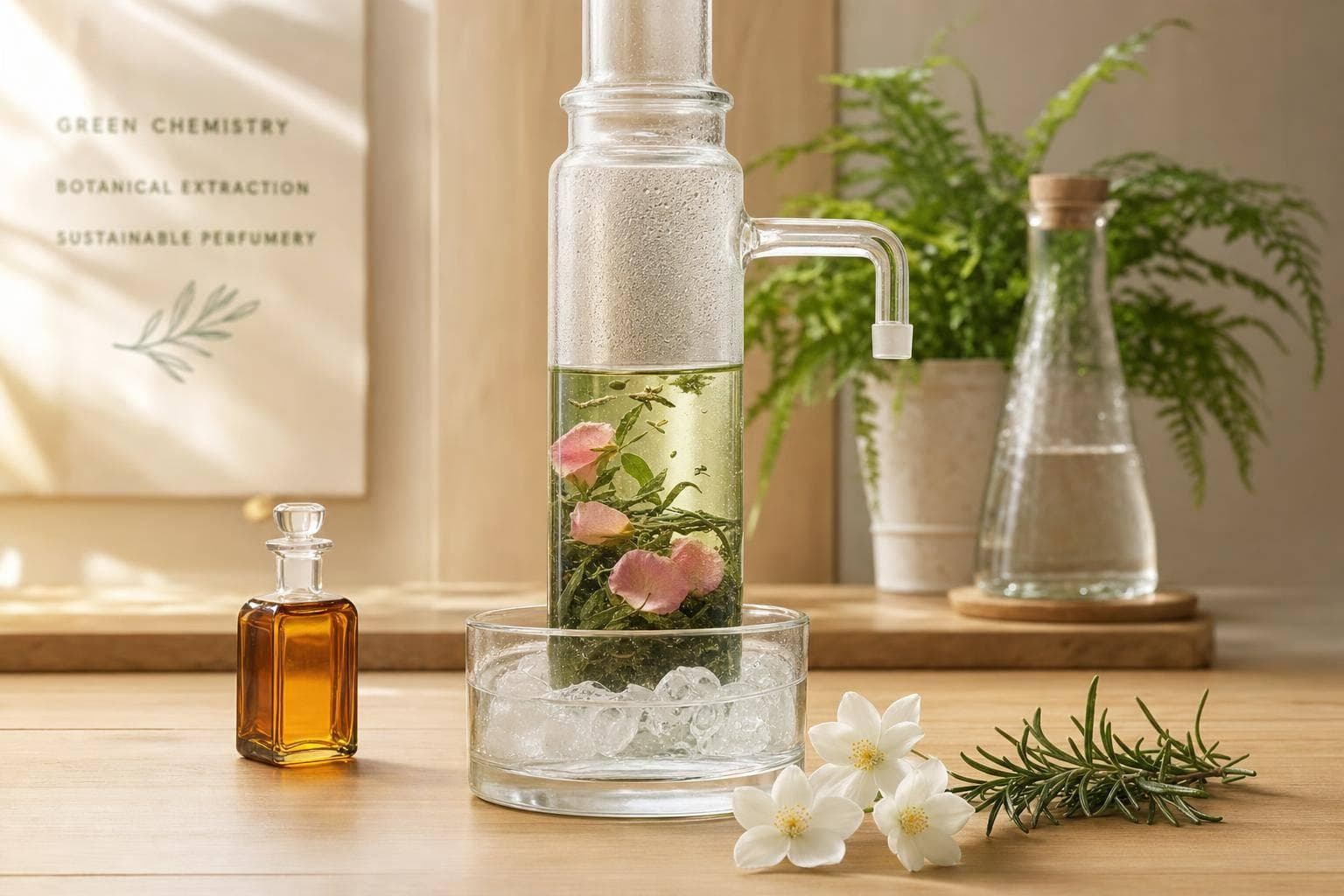
A rövid válasz: az alapanyag kinyerésének módja közvetlenül meghatározza annak illatát, tisztaságát, hulladékmennyiségét és energiafelhasználását. Röviden összefoglalva: az alacsonyabb hőmérséklet, a biztonságosabb oldószerek és a hatékonyabb visszanyerési rendszerek tisztább alapanyagot és egyúttal csekélyebb ökológiai lábnyomot eredményeznek.
A legfontosabb szempontok összefoglalva:
- A gőzdesztilláció továbbra is elterjedt, ám a 100 °C feletti hőmérséklet kárt tehet a kényes illatmolekulákban.
- A hexánalapú oldószeres kivonás kiválóan működik a virágoknál, viszont oldószermaradvány-határértékeket és hulladékkezelési kihívásokat von maga után.
- A hidegsajtolás megőrzi a citrusolajok vibráló frissességét, de viaszokat és pigmenteket is magával ragad.
- A szuperkritikus CO₂-extrakció hozzávetőlegesen 31,1 °C felett és magas nyomáson működik, nem hagy oldószermaradványt, és jobban megőrzi a növény finom illatjegyeit.
- A mikrohullámú, ultrahangos és túlnyomásos vizes eljárások bizonyos alapanyagok esetében 4–8 óráról akár 30–60 percre csökkenthetik a kivonási időt.
- A fermentáció és az enzimes eljárások révén ma már egyes illatmolekulák a növénytermesztéshez képest jóval kisebb földterület-igénnyel is előállíthatók.
Mindezen szempontok jelentősége kézzelfogható: amikor olyan kifejezésekkel találkozik, mint a „CO₂-kivonat”, a „bioalapú” vagy a „biotechnológiai úton előállított”, azok nem pusztán marketingfogások. Olyan hőmérsékleti, oldószeres és eljárásbeli döntéseket jelölnek, amelyek az üvegben lévő parfüm illatprofilját és az előállítás környezeti lábnyomát egyaránt formálják.
A zöld kémia a parfümkészítésben számomra egy alapvető szemléletváltást jelent: a „nyerjük ki az anyagot” elvét felváltotta a „nyerjük ki a megfelelő összetevőt kevesebb hulladékkal és kevesebb károsodással” törekvése. Ez áll a téma középpontjában.
A hagyományos kivonási eljárások és korlátaik
A régebbi extrakciós eljárások hőre, oldószerekre vagy mechanikai nyomásra épülnek. Mindegyik megőrzi az alapanyag illatprofiljának egy részét, ám mindegyik kompromisszumokkal is jár.
A gőzdesztilláció, az oldószeres kivonás és a hidegsajtolás bemutatása
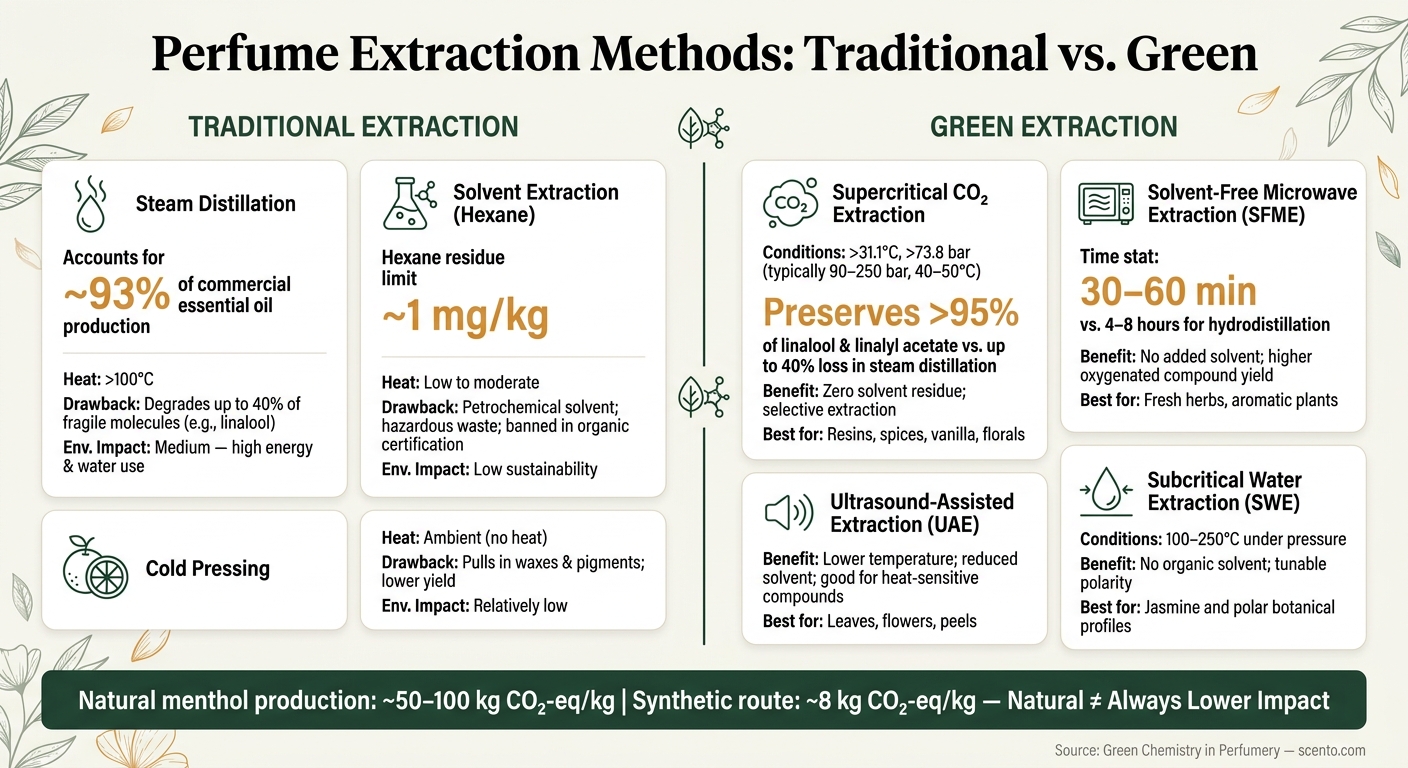
A kereskedelmi illóolaj-termelés mintegy 93%-a gőzdesztillációval történik. A folyamat során a gőz magával ragadja a növényből az illékony vegyületeket, majd a gőzt lehűtik, hogy az olaj elváljon a víztől. Kiválóan alkalmas az olyan ellenállóbb alapanyagokhoz, mint a levendula, a szantálfa, a vetiver és a rozmaring, amelyek kibírják a tartós hőt anélkül, hogy karakterük jelentősen csorbulna.
A hidrodesztilláció hasonló elven alapul, egyetlen lényeges eltéréssel: a növényi részek közvetlenül a forrásban lévő vízben helyezkednek el, nem pedig a gőz felett. Az elrendezés egyszerű, ami ideálissá teszi a kis tételes lepárláshoz. A hátránya azonban szembetűnő: a forró vízzel való közvetlen érintkezés növeli a hidrolízis és a hőkárosodás kockázatát, különösen az érzékeny molekulák esetében.
A finom virágok, például a jázmin, a tubarózsa és a rózsa esetében a készítők általában alacsony hőmérsékletű oldószeres kivonást alkalmaznak. Az oldószerrel – leggyakrabban hexánnal – szilárd konkrétot hoznak létre, amelyet ezután etanollal mosnak át, így kapják meg az abszolútumot.
A hidegsajtolást elsősorban citrusfélék héjához használják. A mechanikai nyomás és a koptatás feltárja az olajmirigyeket, a felszabaduló olajat pedig centrifugálással választják el. Mivel nem éri hő a nyersanyagot, a citrusolajokat életre keltő, ragyogó és friss fejjegyek tökéletesen megmaradnak.
A hagyományos eljárások gyenge pontjai
A kompromisszumok a módszerek közvetlen összehasonlításakor válnak igazán világossá.
| Módszer | Oldószer típusa | Hőmérsékleti szint | Főbb előnyök | Jellemző hátrányok | Környezeti hatás |
|---|---|---|---|---|---|
| Gőzdesztilláció | Víz/gőz | Magas (>100 °C) | Vegyszermentes; ellenálló növényekhez ideális | Hőkárosodás; hosszú feldolgozási idő | Közepes - magas energia- és vízfelhasználás |
| Hidrodesztilláció | Víz | Magas (~100 °C) | Egyszerű elrendezés; alacsony technikai küszöb | Nagyobb energiaigény egységnyi olajra; hidrolízisveszély | Közepes–magas - jelentős CO₂- és vízfelhasználás |
| Oldószeres kivonás | Hexán, majd etanol | Alacsony–mérsékelt | Megőrzi a kényes virágjegyeket; értékes abszolútumok | Kőolajszármazék oldószerek; határértékek; veszélyes hulladék | Alacsonyabb fenntarthatóság - petrokémiai oldószerek és veszélyes hulladék |
| Hidegsajtolás | Nincs (mechanikai) | Környezeti | Megőrzi a friss citrusos karaktert; nincsenek szerves oldószerek | Kisebb kihozatal; az olajok nem illékony szennyeződéseket tartalmaznak | Relatíve alacsony - mechanikai energia; villamosenergia-eredetű CO₂ |
A magas hő megváltoztatja a hőérzékeny vegyületeket, így a gőzdesztillált olaj illata soha nem adja vissza maradéktalanul a friss növény aromáját. Ez a különbség lényeges. Ha morzsolt már szét rozmaringlevelet az ujjai között, majd megszagolta a lepárolt olajat, tapasztalhatta: rendkívül hasonlítanak, de nem azonosak.
Az oldószeres kivonás elkerüli a hőkárosodást, ám más nehézségeket vet fel. A hexán a 2. osztályú, neurotoxikus hatású oldószerek közé tartozik, a jogszabályok pedig szigorú maradékanyag-határértékeket – bizonyos területeken körülbelül 1 mg/kg értéket – írnak elő. A biominősítési rendszerek kifejezetten tiltják a petrolkémiai oldószereket, még akkor is, ha a maradványértékek a törvényes keretek között maradnak.
A hidegsajtolás ugyan ragyogóan frissen tartja a citrusolajokat, de viaszokat, pigmenteket és egyéb, nem illékony komponenseket is magával ragad, ami némileg korlátozza az olaj sokoldalúságát a parfümkészítésben.
Ezek a korlátok világítanak rá arra, miért kerültek előtérbe a zöld kivonási technológiák.
A parfüm-alapanyagoknál alkalmazott zöld kivonási technológiák
A zöld és a hagyományos parfümkivonási eljárások összehasonlítása
Szuperkritikus CO₂-extrakció: működése és jelentősége
A parfümipar egyszerű megfontolásból fordult a tisztább, alacsonyabb hőmérsékletű eljárások felé: a túlzott hő és a kőolajszármazék oldószerek elfedhetik az illat finom részleteit. A hagyományos korlátokat áthidaló legfőbb alternatívák egyike a szuperkritikus CO₂-extrakció.
A szén-dioxid hozzávetőlegesen 31,1 °C és 73,8 bar felett válik szuperkritikussá. Ebben az állapotban gázként áramlik, miközben folyadékként oldja a vegyületeket. Ez a kettősség teszi különösen értékessé az illatszerészet számára: átjárja a növényi részeket, feloldja az aromamolekulákat, majd a nyomás csökkentésével nyomtalanul elpárolog. Nem hagy hátra oldószermaradványt.
A technológia igazi értéke a szabályozhatóságban rejlik. A nyomás és a hőmérséklet finomhangolásával a szakemberek célzottan nyerhetnek ki bizonyos illatmolekulákat ahelyett, hogy válogatás nélkül mindent kivonnának. Az illóolajok esetében a jellemző működési tartomány 90 és 250 bar között alakul 40–50 °C-on. A nehezebb frakciók, mint az oleorezineknél, akár 300–500 bar nyomást is igényelhetnek.
Ez a kíméletes eljárás védi az érzékeny jegyeket, amelyek a gőzdesztilláció során károsodhatnának. Kiváló példa erre a levendula: a kutatások szerint a szuperkritikus CO₂ a linalool és a linalil-acetát több mint 95%-át megőrzi, míg a hagyományos gőzdesztilláció során ezen molekulák akár 40%-a is elbomolhat. Ez a különbség döntő, ha a parfümőr a növény természetes, nyers illatát kívánja felidézni.
Mindez megmagyarázza, miért alkalmazzák ezt a módszert leggyakrabban az alábbi alapanyagoknál:
- gyanták
- fűszerek
- vanília
- kényes növényi részek
- fás és virágos jegyek, ahol a tiszta, koncentrált kivonat az elvárás
Léteznek más olyan eljárások is, amelyek sajátos módon mérséklik a hőterhelést vagy az oldószerhasználatot.
Mikrohullámú, ultrahangos és vizes alapú kivonási eljárások
A mikrohullámmal segített extrakció (MAE), az ultrahanggal segített extrakció (UAE) és a szubkritikus vizes extrakció (SWE) célja egyaránt az oldószerhasználat csökkentése és a feldolgozási idő lerövidítése, mindezt azonban eltérő módon érik el.
A MAE a növényi sejtekben lévő nedvesség felmelegítésével fejti ki hatását. A megnövekedett belső nyomás feltárja a sejtfalakat, és felszabadítja az aromavegyületeket. Oldószermentes változata, a SFME, kizárólag a növény saját víztartalmát hasznosítja. Fűszernövények – például bazsalikom, menta, kakukkfű és kömény – esetében a kutatások kimutatták, hogy az SFME 30–60 perc alatt képes a 4–8 órás hidrodesztillációhoz hasonló összetételű olajokat előállítani. Ezek a kivonatok ráadásul magasabb arányban tartalmaznak oxigenizált aromás vegyületeket, amelyeket a parfümkészítésben különösen nagyra értékelnek.
Az UAE más megközelítést alkalmaz: ultrahangos kavitációval bontja meg a növényi szöveteket, elősegítve, hogy az oldószer mélyebben behatoljon az anyagba. Ez rendszerint lerövidíti a folyamatot, és alacsonyabb hőmérsékleten végezhető munkát tesz lehetővé. Kifejezetten alkalmas levelek, szirmok és héjak feldolgozására, bár minden nyersanyag egyedi beállítást kíván.
Az SWE túlnyomásos, rendszerint 100–250 °C-ra hevített vizet használ, mindvégig folyékony állapotban tartva azt. Ilyen körülmények között a víz polaritása csökken, így képes feloldani a kevésbé poláris aromavegyületeket anélkül, hogy petrolkémiai oldószerre lenne szükség. A jázmin az egyik olyan alapanyag, amelynél ez a módszer kimagasló eredményt ad. A kritikus pont a precíz hőszabályozás: túlzott hő hatására a hidrolízis kockázata jelentősen megnő.
| Módszer | Működési körülmények | Kivonási idő | Oldószer | Főbb előnyök | Leginkább megfelelő alapanyagok |
|---|---|---|---|---|---|
| Szuperkritikus CO₂ | >73,8 bar; >31,1 °C (jellemzően 90–250 bar, 40–50 °C) | Néhány perctől órákig | CO₂ (szuperkritikus) | Maradványmentes; szelektív szabályozás; megőrzi a kényes illékony anyagokat | Gyanták, fűszerek, vanília, fás és virágos növényi részek |
| Mikrohullámmal segített extrakció (MAE) | Légköri vagy kisnyomású viszonyok; alacsony–mérsékelt hőmérséklet | Percek | Víz vagy csökkentett oldószertartalmú közegek | Gyors anyagátadás; kevesebb energia; rövidebb eljárási idő | Fűszernövények, fűszerek, citrushéjak |
| Oldószermentes mikrohullámú extrakció (SFME) | Légköri nyomás; a növény saját nedvességét használja | 30–60 perc | A növény saját nedvessége (hozzáadott oldószer nélkül) | Nincs hozzáadott oldószer; magas oxigenizáltvegyület-hozam | Friss fűszernövények, elegendő nedvességtartalmú aromás növények |
| Ultrahanggal segített extrakció (UAE) | Légköri; alacsony–mérsékelt hőmérséklet | Percek | Víz vagy etanol | Alacsonyabb hőmérséklet; csökkentett oldószer; kíméli a hőérzékeny vegyületeket | Levelek, virágszirmok, héjak, érzékeny növényi részek |
| Szubkritikus vizes extrakció (SWE) | 22,1 MPa alatt; 100–250 °C | Néhány perctől órákig | Nyomás alatti forró víz szabályozott hőmérsékleten | Nincs szerves oldószer; ártalmatlan közeg; hangolható polaritás | Jázmin és szélesebb poláris–közepesen poláris növényi profilok |
Zöld oldószerek és bioalapú közegek az illatkivonásban
Az oldószer megválasztása legalább annyira lényeges, mint maga a berendezés. Az illatanyagok kivonásában a víz, az etanol és a CO₂ a legismertebb zöld alternatívák. A víz a legkíméletesebb opció, az etanol megújuló és kevésbé toxikus a legtöbb kőolajszármazékhoz képest, a CO₂ pedig semmilyen maradványt nem hagy maga után.
Egyre nagyobb kutatási figyelem övezi a természetes mély eutektikus oldószereket (NADES). Ezek élelmiszeripari tisztaságú komponensek keverékei; egy sokat vizsgált változat például citromsav, fruktóz és glükóz elegyéből áll. Bizonyos esetekben ezek a közegek hatékonyabban oldják az íz- és illatanyagokat, mint a tiszta etanol. Egy kutatás rámutatott, hogy a NADES kivonási kapacitása elérte a 7,6–16,7 mg/g szárazanyagtömeget, szemben a tiszta etanol 4,4 mg/g értékével.
Mindazonáltal univerzális megoldás nem létezik. A kivonás mindig kompromisszumok mérlegelése. Az ideális megközelítés a nyersanyagtól, a megőrizni kívánt illatprofiltól és az eljárás gyakorlati követelményeitől függ.
Ezek a döntések nemcsak a laboratóriumi kivonat minőségét határozzák meg, hanem azt is, hogy mi kerül végül a keverőasztalra, majd magába az üvegbe zárt parfümbe.
Személyes illatszakértője már várja
Töltse ki rövid illatkvízünket, és fedezzen fel hiteles designer és niche parfümöket, amelyek az ízléséhez illenek – próbálja ki őket 2, 5, 8 és 30 ml-es dekantokban és mintákban, hogy mindegyiket kipróbálhassa, mielőtt teljes flakon mellett dönt.
Találja meg illatátA kivonáson túl: biotechnológia, formula és a tapasztalható különbségek
Fermentáció és katalízis a modern illat-alapanyagokban
A zöld kémia szerepe a parfümkészítésben nem ér véget az extrakciónál. Egyes illatösszetevőket manapság már mikrobák állítanak elő a közvetlen növényi kivonás helyett. A fermentáció genetikailag módosított mikrobák segítségével alakítja át a megújuló nyersanyagokat – például növényi cukrokat, terpéneket vagy felértékelt (upcycled) melléktermékeket – aromamolekulákká. A biokatalízis enzimeket vagy teljes sejteket alkalmaz ugyanezen célra. Egyszerűen fogalmazva: ezek az eljárások új utat nyitnak a parfümőrök előtt, amikor egy adott komponensnél a növényi kivonás nem bizonyul optimálisnak.
Ambrofix™ / (-)-Ambrox jó példa erre. Erjesztett β-farnesénből és egy mesterségesen tervezett enzimből készül, 100% megújuló szenet használ, és kilogrammonként akár 100× kevesebb földterületet igényel, mint a szklerolalapú előállítás.
A növényi extrakcióval összevetve a fermentáció pontosabb folyamatszabályozást, alacsonyabb földterület-használatot és egyenletesebb tételeket biztosít. Bár mindez technikai részletnek tűnhet, alapvetően határozza meg a végleges parfümbe kerülő esszencia tisztaságát.
Hogyan jelenik meg a tisztább kivonatolás a kész parfümökben?
Ezek az eljárásbeli döntések a vásárlók számára is érzékelhetővé válnak. Tapasztalható a tételek kiegyensúlyozottabb minőségében, a letisztultabb nyitányokban, vagy éppen az összetevők előállítási módjára utaló jelöléseken. A leggyakoribb megnevezések közé tartoznak:
- CO₂-kivonat (CO₂ extract)
- biotechnológiai úton előállított (biotech-made / biotechnologisch hergestellt)
- bioalapú (bio-based / bio-basiert)
- megújuló szén (renewable carbon / erneuerbarer Kohlenstoff)
Mindegyik kifejezés olyan gyártási folyamatra utal, amely hatással van az összetevő tisztaságára és ökológiai lábnyomára.
A fenntarthatóságra (Nachhaltigkeit) odafigyelő vásárlók életciklus-elemzési adatokkal vagy karbonsemleges állításokkal is találkozhatnak e megjelölések mellett. Egy életciklus-értékelés becslése szerint a természetes mentol előállítása 50–100 kg CO₂-egyenértéket jelenthet kilogrammonként, míg a szintetikus út körülbelül 8 kg CO₂-egyenértéket eredményez kilogrammonként. Ez az adat rávilágít a legfontosabb tanulságra: a természetes eredet önmagában nem garantál alacsonyabb környezeti terhelést.
Illatok felfedezése kisebb kiszerelésben
A kisebb formátumok révén ezek a különbségek közvetlenül a bőrön is könnyebben megtapasztalhatók, nem csupán a termékleírásokban. A Scento autentikus dizájner és niche illatokat kínál gondosan összeállított dekantokban – 2 ml-es, 5 ml-es és 8 ml-es fiolák formájában, a legtöbb parfüm esetében pedig 30 ml-es dekantüvegként is –, így az európai vásárlók kipróbálhatják, miként viselkedik a bőrükön egy CO₂-kivonat vagy egy fermentációval előállított ámbrás jegy, mielőtt egy egész üveg mellett döntenének.
A különbség olykor diszkrét, máskor azonnal szembetűnő. A tisztább előállítási utak gyakran a konzisztenciában, a tisztaságban és az illat tartósságában mutatkoznak meg.
Összegzés: Mit hoz a zöld kémia a parfümkivonásba?
Együttesen szemlélve ezek az eljárások tisztábbá, precízebbé és fenntarthatóbbá teszik a parfümök kivonását. Mérséklik a hőterhelést, csökkentik az oldószerhasználatot és a hulladékot, javítva a szelektivitást és az energiahatékonyságot, miközben nem kötnek kompromisszumot az illat minőségében.
Ezek az eredmények már a kész parfümökben is jelen vannak. Az uniós szabályozás a fenntarthatóbb folyamatok felé ösztönzi az illatszergyártókat. Mindez a bőrön is érezhető: tisztább természetes jegyek, finomabb részletek, letisztultabb összetevőprofil és átláthatóbb jelölések jellemzik a kompozíciókat.
A valódi különbség a bőrön mutatkozik meg, nem a laborban. Amikor egy parfüm CO₂-kivonatot vagy fermentációból származó komponenst tüntet fel, az nem pusztán marketing, hanem a minőség, a tisztaság és a környezettudatosság melletti elkötelezettséget jelzi. Ha kisebb kiszerelésben – például a Scento 2 ml-es, 5 ml-es és 8 ml-es fiolákban, a legtöbb parfüm esetében pedig 30 ml-es dekantüvegben is elérhető kínálatában – próbálja ki az illatokat, elegendő ideje nyílik arra, hogy teljes mélységükben megismerje őket, és észrevegye ezeket a finom árnyalatokat a vásárlás előtt.
A zöld kémia lassan kilép a szakterületi diskurzusból, és az európai parfümkészítés alapvető elvárásává válik. A fenntarthatóság és a minőség egyre inkább egységes mérceként jelenik meg a luxus világában.
Gyakran Ismételt Kérdések
Hogyan változtatja meg a kivonási módszer egy parfüm illatát?
A kivonási módszer alapjaiban határozza meg egy illat karakterét. Dönt arról, hogy mely aromavegyületek kerülnek át a kész alapanyagba, valamint hogy a kényes jegyek épségben megmaradnak-e, vagy károsodnak a folyamat során.
A magas hőmérsékletű eljárások – például a 100 °C feletti vízgőz-desztilláció – ellaposíthatják az illatprofilt, és eltávolíthatják a sérülékeny fejillatjegyeket. Ezzel szemben az olyan alacsony hőmérsékletű módszerek, mint a szuperkritikus CO2-kivonatolás, általában jobban megőrzik az eredeti nyersanyag illatát. Az oldószeres kivonatolás is gazdag aromájú eredményt adhat, de ha visszamarad belőle valamennyi, nem kívánt mellékillatokat hagyhat maga után.
A CO₂-extrakció minden esetben fenntarthatóbb?
Nem feltétlenül. A szuperkritikus CO₂-extrakció gyakran fenntarthatóbb alternatívát jelent az oldószeres eljárásokhoz vagy a gőzdesztillációhoz képest. Oldószermentes, nem toxikus, nem hagy kémiai maradványokat, a CO₂ pedig visszanyerhető és újra felhasználható a rendszerben.
Ugyanakkor ez nem jelent általános szabályt. A végeredmény mindig a teljes rendszer adottságaitól függ: mennyi energiát igényel a folyamat, mennyire hatékony a berendezés, és miként alakul az ellátási lánc, valamint az alapanyagok beszerzése.
A biotechnológiai úton előállított illat-alapanyagok természetesnek minősülnek?
A biotechnológiai eljárásokkal nyert komponensek a legtöbb esetben kémiailag megegyeznek a természetben megtalálható molekulákkal. A kutatók növényi génekkel programozott élesztőgombákat és baktériumokat alkalmaznak azon aromavegyületek előállítására, amelyek egyébként természetes forrásokból származnának.
Bár ezek az összetevők mikrobiális úton jönnek létre a hagyományos botanikai kivonás helyett, a cél egyszerű: a lehető legpontosabban felidézni a természetes illatprofilt. Ez új lehetőséget nyújt a parfümkészítőknek olyan illatjegyek megalkotásához, mint a szantálfa vagy a rózsa, egy megújulóbb és jobban skálázható megközelítés révén.

