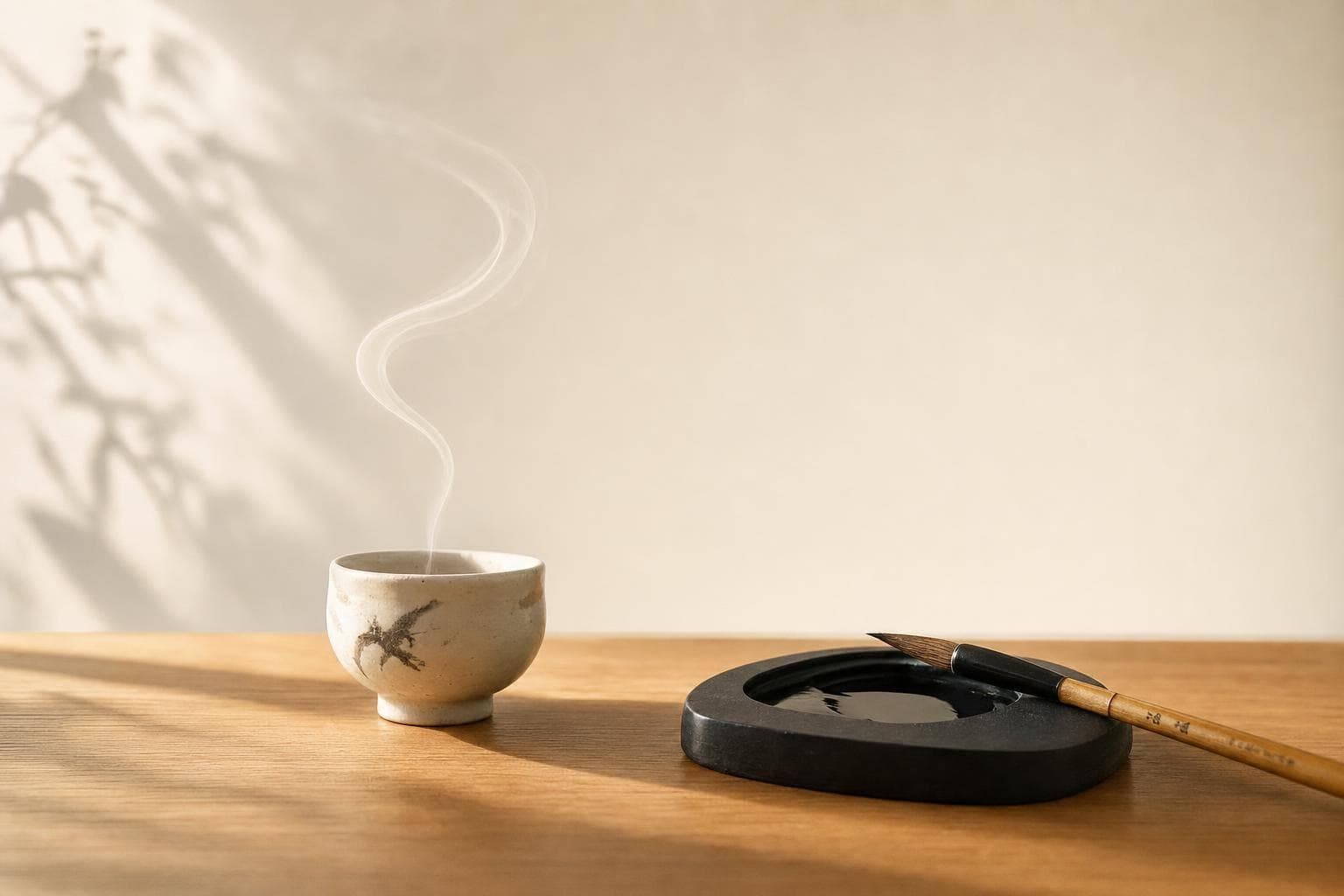
A papírra kerülő tinta és a levegőben lebegő füstölő ugyanazt a feladatot végezte: a figyelmet nevelte.
Így foglalnám össze a cikket: Kínában, Japánban és Koreában a tinta és a füstölő nem pusztán műtárgyak vagy rituális eszközök voltak. Segítettek lelassulni, összpontosítani, és összekapcsolni a szépséget a viselkedéssel. Az egyik nyomot hagy, a másik gyorsan elillan, mégis mindkettő gondosságot kér.
Ha a rövid változatra kíváncsi, íme:
- Kína: a tudós dolgozószobáját egységes érzéki térként látom, ahol az ecset, a tuskő, a papír és a füstölő együtt működött.
- Japán: a Kōdōt formális illatművészetként látom, ahol az emberek „hallgatják” a füstölőt, és ugyanazt a fegyelmezett visszafogottságot gyakorolják, amely a kalligráfiában is jelen van.
- Korea: a füstölőt közvetlenebbül látom jelen a buddhista, udvari és otthoni rítusokban, a paekcsei aranyozott bronz füstölőtartóval mint kulcsfontosságú példával.
- Közös gondolat: mindhárom kultúra az elmúló dolgokat - a tinta áramlását, a füstöt, az illatot - a nyugodt figyelem gyakorlásának módjaként kezeli.
- Modern használat: ezt a parfümöknél is alkalmazhatom: lassan, kis mennyiségekben tesztelek, mielőtt 100 € felett költenék egy teljes üvegre.
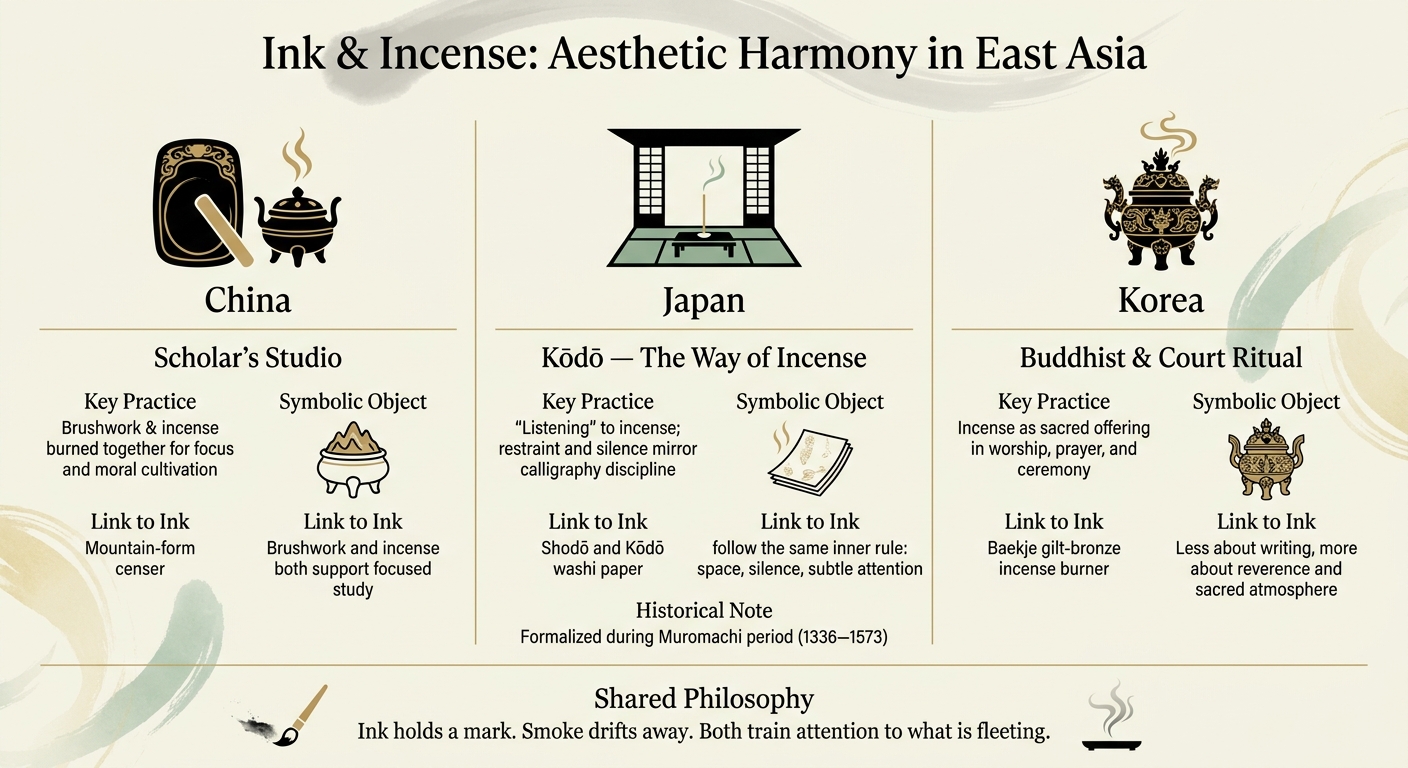
Tinta & füstölő: hogyan használja Kína, Japán és Korea az illatot és a kalligráfiát
At a glance
| Hely | Fő fókusz | Kapcsolat a tintával |
|---|---|---|
| Kína | A tudós dolgozószobája, morális illat, csendes tanulmányozás | Az ecsetmunka és a füstölő egyaránt támogatja az összpontosítást |
| Japán | Kōdō, visszafogottság, az illat hallgatása | A kalligráfia és a füstölő ugyanazt a belső fegyelmet követi |
| Korea | Buddhista és udvari rítus, szakrális hangulat | Kevésbé az írásról, inkább az imáról és a tiszteletről szól |
Ami a leginkább megmaradt bennem, egyszerű: az ecset és a füst egyaránt arra tanít, hogyan figyeljünk, mielőtt valami elhalványul.
Kínai literátus kultúra: tuskövek, füstölőtartók és a morális illat eszméje
A tudós dolgozószobája mint egységes érzéki tér
Kínában ez a harmóniaérzet természetes otthonra talált a tudós dolgozószobájában. A tuskő, az ecset, a papír és a füstölő nem különálló tárgyak voltak. Egy közös gyakorlat részei voltak.
A tudósok írás közben füstölőt égettek, hogy lecsendesítsék az elmét és élesítsék a figyelmet. Ez a részlet fontos. Az illat magának a munkának volt része, nem csupán háttérhangulat. Bizonyos esetekben a papírt is finoman illatosították, ami az illatot közvetlenül a kalligráfia aktusához kapcsolta.
Füstölőtartók, hegyi képiség és az erény nyelve
A füstölőtartók gyakran hegyeket idéző formát kaptak, hogy a füst úgy emelkedhessen felfelé, mint köd a csúcsok felett. Egy íróasztalon álló apró tárgyat így miniatűr tájjá változtattak.
A lótuszmotívumok tovább mélyítették ezt a szimbolikát. A lótusz a tisztaságot jelképezte, míg a felszálló füst az érzékelhetővé tett erényt sugallta. A látható forma és a láthatatlan illat együtt váltak a kiművelt ízlés jeleivé.
A literátus illatélvezettől a modern illatfelfedezésig
A literátus füstölőhasználat inkább a finomság felé hajlott, nem az erőteljesség felé. Az illatnak lassan kellett kibomlania, és gondos figyelemmel, az idő apró változásain keresztül kellett észrevenni.
Ez a megközelítés ma feltűnően ismerősnek hat. Azt tükrözi, ahogyan sok illatrajongó megismer egy parfümöt: nem egyetlen merész első benyomásban, hanem szakaszokban. Ugyanez a fegyelem később Japánban, a Kōdōban öltött formálisabb alakot.
Személyes illatszakértője már várja
Töltse ki rövid illatkvízünket, és fedezzen fel hiteles designer és niche parfümöket, amelyek az ízléséhez illenek – próbálja ki őket 2, 5, 8 és 30 ml-es dekantokban és mintákban, hogy mindegyiket kipróbálhassa, mielőtt teljes flakon mellett dönt.
Találja meg illatátJapán Kōdō és kalligráfia: ugyanaz a fegyelem az illatra és az ecsetre alkalmazva
A Kōdō mint a kifinomult figyelem klasszikus művészete
Ahol a kínai tudósok a füstölőt az ecset mellé helyezték, Japán ezt a közös fegyelmet formális művészetté alakította. A Muromacsi-korszak (1336–1573) idején Japán a füstölő élvezetének meghatározott formát adott a Kōdōban, „A füstölő útjában”, a teaszertartás mellett.
A Kōdōban az emberek nem egyszerűen megszagolják a füstölőt. Hallgatják azt. Ez egy csendes tatamiszobában történik, ahol a figyelmet gyakorlással formálják és gondosan megtartják. A Kō tíz erénye világosan megmutatja ezt a szellemet. A visszafogottságot hangsúlyozza, beleértve azt az eszmét is, hogy kevés is elegendő, és hogy a füstölő megtisztíthatja az elmét a belső zajtól.
Költészet, lejegyzés és kalligrafikus szemlélet a füstölő-összejöveteleken
A Kōdō természetesen illeszkedik a shodō mellé. Az illatosított washi papír ugyanezt a fegyelmet viszi át a levélírásba, ahol az illat hangulatot és évszakot sejtethet. Mindkét művészetben a jelentés gyakran abban él, amit visszatartanak. A térköz számít. A visszafogottság számít. Ahogyan a halvány, könnyen elsikló részletekre irányuló közeli figyelem is.
Egyszerűen fogalmazva: a shodō és a Kōdō ugyanazt a belső szabályt követi: tér, csend és figyelem a finom különbségekre.
Ugyanez a légkör iránti érzékenység formálta a koreai vallási és udvari füstölőhasználatot is.
Koreai füstölőhagyományok és a szakrális atmoszféra kelet-ázsiai nyelve
Füstölő a koreai vallási, udvari és otthoni életben
Koreában a füstölő szakrálisabb hangot hordozott. Míg a kínai és japán illatszokások a figyelmet és az ízlést formálták, a koreai használat közvetlenebbül kapcsolódott az istentisztelethez, az imához és a rituális élethez.
A füstölő központi szerepet játszott a buddhista gyakorlatban. Felajánlásként égették, és segített elcsendesíteni az elmét ima és meditáció közben. Idővel a helye kitágult. Megjelent az udvari szertartásokban, majd az otthonban is, ahol a tisztelet, a védelem és a mindennapi rítus részévé vált.
A paekcsei füstölőtartó és rétegzett szakrális szimbolikája
Ezt a tágabb rituális világot egyetlen tárgyban talán minden másnál tisztábban láthatjuk. A paekcsei aranyozott bronz füstölőtartó a Paekcse királyságból egyszerre fókuszba hozza az egészet. Praktikus, rituális és szimbolikus ugyanabban a lélegzetben.
Közös filozófia és modern jelentőség: mire tanít még ma is a tinta és a füstölő
Mulandóság, üresség, valamint látható és láthatatlan
A tinta látható jelben tartja meg a figyelmet. A füstölő a levegőbe engedi sodródni. Az egyik a lapon marad; a másik atmoszféraként időzik. A kelet-ázsiai esztétikában ez az elmúló minőség nem gyengeség. Éppen ez a lényeg.
A tinta és a füstölő több mint anyag. A figyelem gyakorlatai. Mindkettő arra neveli az érzékeket, hogy észrevegyék azt, ami egy rövid pillanatra megjelenik, majd az emlékezetben él tovább.
Ez a gondolat nem csupán filozófiai. Megváltoztatja azt is, ahogyan az illatot érzékeljük.
Gyakorlati olvasat európai illatrajongóknak
Ugyanez a lassabb fegyelem ma is számít, amikor illatot választunk. A Kōdō monko gyakorlata - a füstölő hallgatása az egyszerű megszaglás helyett - hasznos belépési módot ad az illatok kedvelőinek. Egy gyors fújás és azonnali ítélet helyett időzzön el egy illattal. Engedje, hogy szakaszokban nyíljon ki. Figyelje meg, mi bukkan fel: egy emlék, egy hangulat, egy hely.
Ez a lassabb módszer a pazarlást is csökkentheti. A Scento dizájner illatokat kínál kis decant méretekben - 2 ml-es, 5 ml-es és 8 ml-es fiolák, a legtöbb parfüm esetében pedig 30 ml-es dekantüveg - hogy együtt élhessen egy illattal, mielőtt teljes üveget vásárolna. Ez ugyanannak a logikának modern változata, amely a tudós tusköve mögött áll: töltsön időt valamivel, mielőtt elköteleződik.
Következtetés: ecset, füst és a figyelem művészete
Akár a kalligráfia, akár az illatok, akár egyszerűen a lelassulás szokása vonzza, a tanulság ugyanaz. Az ecset és a füst egyaránt egyetlen dolgot jutalmaz: a figyelmet az eltűnés előtt.
GYIK
Hogyan kapcsolódik össze a tinta és a füstölő a kelet-ázsiai esztétikában?
A kelet-ázsiai esztétikában a tintát és a füstölőt ugyanaz a gondolkodásmód köti össze: a tudatos jelenlét, a fegyelem és a belső tisztaság. A tinta a kalligráfia fizikai gyakorlatát szolgálja. A füstölő megteremti körülötte a hangulatot, segítve a nyugodt, állandó tér létrejöttét az összpontosításhoz.
A tudós dolgozószobájában a füstölő csendes időmérőként is működhetett, és támogathatta a koncentrációt. Az eredmény több volt, mint írás egy lapon. Az illat és az ecsetmunka a nyugalom és a kifinomultság egyetlen rítusává olvadt össze.
Miért nevezik a füstölőt a figyelem gyakorlatának?
A füstölőt gyakran azért írják le a figyelem gyakorlataként, mert fejleszti az érzékelést, az összpontosítást és a tudatos jelenlétet. Olyan utakban, mint a japán Kōdō művészete, az illat előkészítése és megtapasztalása tudatos rituálét követ, amely lecsendesíti az elmét és élesíti az érzékeket.
Amikor a szaglás az illat halvány változásainak hallgatásává, meditatív aktussá válik, mély koncentrációra és nyugalomérzetre hív. A tudósok dolgozószobáiban a füstölő csendes horgonyként is szolgált a tanulás és elmélkedés során.
Mit tanulhatnak a modern illatrajongók a Kōdōból?
A Kōdō arra hívja a modern illatrajongókat, hogy lassítsanak le, és nagyobb gondossággal tapasztalják meg az illatot. Az eszme egyszerű, mégis erőteljes: kövessenek tudatos sorrendet, finoman melegítsék a füstölőt, hogy az aroma apránként nyíljon ki, és hallgassanak a finom árnyalatokra ahelyett, hogy az azonnali hatást hajszolnák.
Valódi értéket tulajdonít a struktúrának és az etikettnek is. A pontos eszközökkel és figyelmes belégzéssel a gyakorlat segít élesíteni az érzéki észlelést, és elmélyültebb kapcsolatot építeni az illatokkal.

