
Minden felejthetetlen illat mögött egy mesterparfümőr áll, akit gyakran „orrnak” neveznek. Ezek a művészek olyan illatokat alkotnak, amelyek érzelmeket és emlékeket idéznek fel, ötvözve a tudományt a művészi kifejezésmóddal. A $12,6 milliárd dolláros luxusparfüm-piacon2.6 milliárd dolláros luxusparfüm-piacon betöltött szerepük ellenére világszerte kevesebb mint 500 parfümőr dolgozik – így ez a mesterség ritka és rendkívül specializált.
A cikk legfontosabb megállapításai:
- Christine Nagel: a Hermès első női házi parfümőre, aki tapintható, anyagok ihlette illatairól ismert, mint a Twilly d’Hermès és a Galop d’Hermès. Kerüli a fogyasztói tesztelést, és mindössze 300–400 összetevőből álló, letisztult palettával dolgozik.
- Aurélien Guichard: hetedik generációs parfümőr a franciaországi Grasse-ból, valamint a Matiere Premiere alapítója. Saját bio Rose Centifoliáját termeszti, és olyan illatokat alkot, mint a Radical Rose és a Vanilla Powder, kiemelve a kivételes minőségű természetes alapanyagokat.
- Az illatkészítés folyamata: a parfümőrök egy koncepcióból indulnak ki, több száz próbaverzión keresztül finomítanak, majd gondos névadással és érleléssel zárják le az alkotást.
- Inspirációforrások: a természet, a személyes emlékek és a vizuális művészetek meghatározó szerepet játszanak munkájuk formálásában.
Az a szemléletváltás, amely a parfümőröket művészként ismeri el, lehetővé teszi a fogyasztók számára, hogy mélyebben kapcsolódjanak az illatokhoz, és értékeljék az egyes üvegek mögött rejlő történeteket és kézműves tudást.
Személyes illatszakértője már várja
Töltse ki rövid illatkvízünket, és fedezzen fel hiteles designer és niche parfümöket, amelyek az ízléséhez illenek – próbálja ki őket 2, 5, 8 és 30 ml-es dekantokban és mintákban, hogy mindegyiket kipróbálhassa, mielőtt teljes flakon mellett dönt.
Találja meg illatátChristine Nagel: a Hermès házi parfümőre
Christine Nagel azzal írta be magát a történelembe, hogy ő a Hermès első női házi parfümőre – ritka teljesítmény, hiszen Franciaországban a mintegy 500 szakember közül mindössze hat nő tölt be hasonló szerepet.
Megközelítése a kreatív szabadsághoz
Nagel gyakran él élénk képekkel, amikor a Hermès-nél végzett munkájáról beszél:
"Amikor a Hermès-ről beszélek, egy fához hasonlítom – egy fához, amelynek erejét a gyökerei adják, a ház történelme... az én szerepem pedig az, hogy minden évben új „leveleket” hozzak létre".
Sok luxusmárkával ellentétben a Hermès teljes mértékben elutasítja a piackutatást és a fogyasztói tesztelést. Nagel ezt egyedülálló előnynek tartja:
"A Hermès soha, semmilyen körülmények között nem tesztel parfümöt, és ez csodálatos ajándék. Amikor egy parfümöt tesztelnek... kellemes illat születik – de a középmezőnyben, a tömegpiac számára".
Az illatokról szóló döntések kizárólag három kulcsfontosságú személy kezében vannak a Hermès-nél, ami koncentrált és személyes megközelítést biztosít.
Nagel úgy döntött, hogy alkotói munkáját Párizs közelében, Pantinban alapozza meg, hogy közel maradjon a Hermès bőrműhelyeihez és kézműves stúdióihoz. Stílusa eltér elődje, Jean-Claude Ellena minimalista megközelítésétől; inkább egy tapintható és érzéki esztétikát részesít előnyben, amelyet olyan anyagok inspirálnak, mint a kasmír és a bőr.
Inspirációforrások
Nagel munkáját mélyen befolyásolja a szinesztézia megtapasztalása – ez az az állapot, amely lehetővé teszi számára, hogy az illatokat textúrákként és színekként „lássa” és „érezze”. Ez az egyedi érzékszervi észlelés kulcsszerepet játszik alkotói folyamatában, és tökéletesen illeszkedik a Hermès érzéki luxusra épülő világához.
"Amikor az illatról beszélek, valójában a textúráról beszélek" – magyarázza.
Inspirációja gyakran a Hermès archívumából és bőrtárából érkezik, ahol olyan anyagokat fedez fel, amelyek új illatok ötleteit szikráztatják fel. A Doblis bőr – egy puha, velúrhatású anyag – például a Galop d’Hermès megszületéséhez vezetett, amely egy nőies bőrillat, török rózsával lágyítva.
Nagelnek egy szokatlan alkotói rituáléja is van: az első próbaverziókat éjszaka az autójában teszteli, majd másnap reggel friss szemlélettel finomítja őket. A precizitás megőrzése érdekében egy lecsupaszított, 300–400 összetevőből álló palettával dolgozik, ami jóval kevesebb az iparági átlagnak számító 1 200-nál.
Meghatározó illatok
Galop d’Hermès, amely 2016 augusztusában jelent meg, Nagel első alkotása volt a Hermès házi parfümőreként. Ez az illat a Doblis bőrt török rózsával, sáfránnyal és birssel egyesíti, „bőrszerű” textúrát teremtve, amely a márka nőies eleganciáját tükrözi.
Twilly d’Hermès, amely a fiatalabb közönséget célozza, játékos csavarral értelmezi újra a klasszikus kódokat. Nagelt az inspirálta, ahogyan a fiatal nők szokatlan módon viselik a Hermès sálakat, ezért az illatot váratlanul bőséges friss gyömbérgyökérrel és tubarózsával gazdagította. Tania Sanchez parfümkritikus így jellemezte:
"egy teljesen új parfümakkord" és "fantasztikus szépségű androgün fougère".
2021-ben bemutatta a Twilly Eau Ginger-t, a Twilly-vonal harmadik tagját. Ez a változat még hangsúlyosabban emeli ki a friss gyömbérgyökeret, hogy derűs illatot alkosson a Hermès fiatalabb közönsége számára.
Un Jardin à Cythère, amely 2023 márciusában jelent meg, körülbelül 74 eurós áron 1 fl oz EDT kiszerelésben, teljes egészében emlékeiből született a COVID–19 világjárvány idején. Nagel olívafát és friss pisztáciát használt, hogy megidézze a görög Kythira szigetét, tudatosan mellőzve a hagyományos virágos vagy citrusos fejillatokat.
Barénia, a Hermès első chypre illata, egy teljes évtizedet vett igénybe, mire Nagel tökélyre csiszolta. A megalkotására visszatekintve így fogalmazott:
"Már érkezésem pillanatában tudtam, hogy chypre-t fogok alkotni a háznak. Sok időbe telt, mire igazán megismertem őket [a Hermès nőit], és megértettem, valamint magamba építettem egyedi, karizmatikus érzékiségüket".
Ezeken az alkotásokon keresztül Nagel saját vízióját a Hermès gazdag örökségével ötvözi, és olyan illatokat teremt, amelyek mélyen rezonálnak a márka identitásával.
Aurélien Guichard: családi örökség a parfümériában
Aurélien Guichard hét generáció parfümőri szaktudásának örökségét hordozza a franciaországi Grasse-ból – abból a régióból, amely egyet jelent az illatkészítés mesterségével. Édesapja, Jean Guichard olyan ikonikus alkotások mögött állt, mint a Calvin Klein Obsession, míg nagyszülei a kivételes szépségű virágok termesztésének szentelték életüket [23, 24].
A terroir szerepe
2016-ban Guichard merész lépésre szánta el magát: 12 000 Rose Centifolia tövet ültetett újra a Domaine de Chautard birtokon, ezzel egy olyan gyakorlatot elevenítve fel, amely az 1980-as években megszűnt. Ez a kezdeményezés egyedülállóvá tette őt, mint az egyetlen parfümőrt, aki saját illatházához kizárólag saját maga ülteti, neveli, szüreteli és használja fel alapanyagait.
"Parfümőrként mindig is arra vágytam, hogy saját alapanyagaimat a lehető legmagasabb minőségben műveljem, ami 2016-ban a bio Rose Centifolia farmom létrehozásához vezetett."
Az Ecocert által tanúsított gazdaság a hatékonyság mintapéldája: a virágokat kézzel szedik, és egy órán belül abszolúttá dolgozzák fel őket, hogy megőrizzék frissességüket. Grasse nagy múltú illatnövény-termesztési hagyományát 2018-ban az UNESCO a szellemi kulturális örökség részének ismerte el.
Érzelmi kapcsolat az illattal
Guichard alkotói víziója mélyen személyes élményekben gyökerezik. Gyermekkori emlékei nagyszülei virágmezőiről – ahol a friss virágok illata földes és gépi jegyekkel olvadt össze – ma is inspirálják munkáját. Édesapja hatása szintén maradandó nyomot hagyott benne:
"Apám a fegyelemmel, a munkamorállal és e hivatásról alkotott víziójával hatott rám. A parfümériára inkább költészetként tekintett, mint iparágra; tőle tanultam meg, hogy a minőség szorosan összefonódik a mesterségbeli tudással."
Ez a filozófia vezetett a Matiere Premiere 2019-es megalapításához. A márka egyetlen, kiemelkedő minőségű természetes összetevő „túladagolására” összpontosít, ezáltal az alapanyagok egyedi textúráit emeli reflektorfénybe. Guichard kiválóság iránti elkötelezettségét jól mutatja, hogy alkotásai 85%–92%-ban természetes összetevőkből állnak.
Jelentős alkotások
Guichard illatai a hagyomány, az innováció és a természethez fűződő bensőséges kapcsolat elegyét tükrözik. A Radical Rose kiemelkedik saját földjeiről származó Rose Centifolia abszolútjának intenzív koncentrációjával, amelyet szuhar egészít ki, felidézve a betakarítás során dolgozó kezek gyantás illatát. A Parfumo oldalán 8,3/10-es értékelést kapott [21, 25]. Egy másik figyelemre méltó alkotás, a 2022-ben megjelent French Flower, a Tuberose Absolute-ot a ritka enfleurage technikával párosítja, hogy megragadja tubarózsaföldjei éjszakai esszenciáját. Legújabb alkotása, a Vanilla Powder (2023 október), a Madagaszkárról származó, Fair for Life-minősítésű vaníliát használja, tükrözve etikus beszerzés iránti elhivatottságát [19, 23].
Saját márkája elindítása előtt Guichard a legismertebb dizájnerillatok közül is többhöz hozzájárult, köztük a Gucci Guilty, a Versace Eros (7,5/10-es értékeléssel és több mint 4 400 véleménnyel), a Burberry Hero és a Tom Ford Sole di Positano megalkotásához. Több mint két évtizedes tapasztalatával olyan vezető illatházakkal dolgozott együtt, mint a Givaudan, a Firmenich és a Takasago.
Az alkotói folyamat: a koncepciótól az üvegig
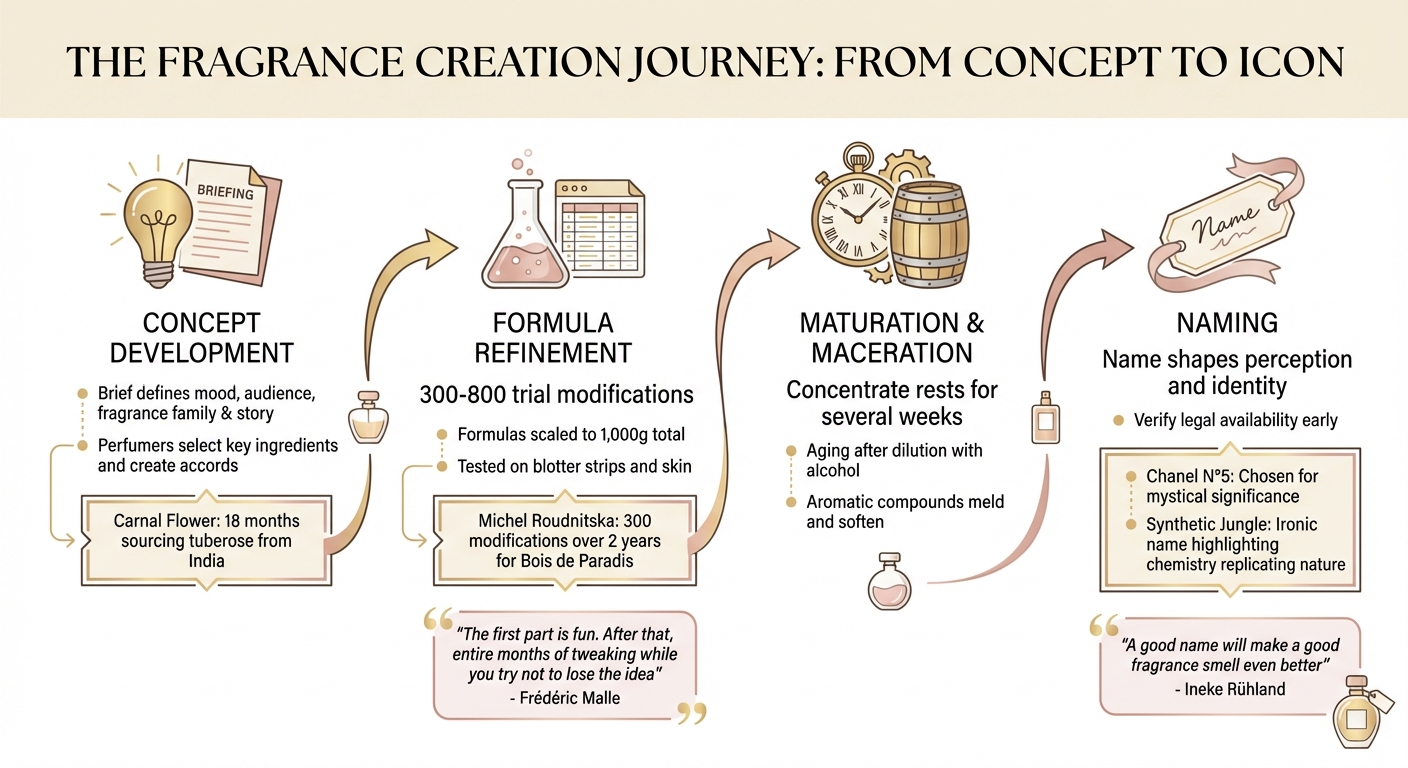
Az illatkészítés folyamata: a koncepciótól az üvegig
Kezdetben egy koncepció
Minden illat egy gondosan megírt briefből indul, amely meghatározza hangulatát, célközönségét, illatcsaládját és átfogó történetét. A parfümőrök ezután kiválasztják a kulcsfontosságú összetevőket és a kiegészítő jegyeket, majd akkordokká egyesítik őket – olyan egyedi kombinációkká, amelyek olyan képeket idéznek meg, mint a „friss reggeli levegő” vagy a „szikrázó pezsgő”.
Vegyük példaként a Carnal Flower-t. 2005-ben Dominique Ropion és Frédéric Malle 18 hónapot szentelt annak, hogy Indiából származó tubarózsát szerezzenek be, majd Tahitin teszteljék, hogy elérjék a tökéletes egyensúlyt.
Ez a kezdeti szakasz teremti meg az alapot ahhoz a gondos finomítási folyamathoz, amely biztosítja, hogy a végső illat maradéktalanul összhangban legyen az eredeti vízióval.
A formula finomítása
Az illatkészítés szíve a módosítási folyamat – próbaverziók sorozata, amelyek száma olykor a több százat is elérheti. A parfümőrök aprólékosan dokumentálják formuláikat táblázatokban, jellemzően 1 000 grammos összmennyiségre skálázva, hogy biztosítsák a pontosságot és a méretezhetőséget. Egyáltalán nem ritka, hogy mesterparfümőrök 300 és 800 közötti módosítást készítenek, mire véglegesítenek egy illatot.
Michel Roudnitska például két évet és mintegy 300 módosítást szentelt a Bois de Paradis tökéletesítésére a Parfums Delrae számára a 2000-es évek elején. Minden próbát illatpapírcsíkon és bőrön is tesztelnek, hogy megfigyeljék, miként fejlődik az illat az idő múlásával. Amint egy formulát késznek ítélnek, a koncentrátum érlelésen (többhetes pihentetésen) és maceráláson (alkohollal való hígítás utáni érlelésen) megy keresztül. Ezek a lépések lehetővé teszik, hogy az aromás vegyületek összeérjenek és megszelídüljenek, gazdagítva az illat mélységét.
"Az első rész, a kísérletezőbb szakasz, a legélvezetesebb. Aztán egész hónapok következnek finomhangolással, miközben igyekszel nem elveszíteni az eredeti elképzelést – mert különben mindent elveszítesz." — Frédéric Malle, az Editions de Parfums Frédéric Malle alapítója
Amint a formula véglegessé válik és beérik, a hangsúly a névadásra helyeződik – arra a kulcsfontosságú lépésre, amely összefoglalja az illat identitását.
A névadás jelentősége
Egy illat neve meghatározó szerepet játszik abban, hogyan érzékeljük azt. Vannak nevek, amelyek már korán megszületnek, hogy irányt adjanak az alkotói folyamatnak, míg mások később formálódnak, hogy a kész formulát tükrözzék. Az Ineke Perfumes alapítója, Ineke Rühland szerint a megfelelő név még az érzékszervi élményt is emelheti:
"Mélységesen hiszem, hogy egy jó név egy jó illatot még szebbé tesz"
A történelem számtalan példát kínál a névadás erejére. Amikor Ernest Beaux öt lehetőséget mutatott Coco Chanelnek, ő az ötödiket választotta, mivel a szám személyes és misztikus jelentőséggel bírt számára, az emberiség „kvintesszenciáját” szimbolizálva. Így vált az N°5 ikonná. Hasonlóképpen az Anne Flipo és Frédéric Malle által jegyzett Synthetic Jungle szándékosan ironikus nevet kapott, hogy kiemelje a természet illatainak kémiával történő megidézésében rejlő paradoxont.
A jogi komplikációk elkerülése érdekében elengedhetetlen, hogy a név elérhetőségét már a folyamat korai szakaszában ellenőrizzék.
Inspirációforrások: művészet, természet és kultúra
A természet mint múzsa
A parfümőrök gyakran a természethez fordulnak, mint kreativitásuk legfőbb forrásához. Mathilde Laurent, a Cartier házi parfümőre gyönyörűen írja le mesterségét:
"Magasékszereket alkotok, csak éppen a természetből, virágokból, szárakból, levelekből. Mintha az ékszereim levegőből készülnének."
Ez a költői megközelítés a nyers növényi elemeket egész illatkollekciók szívévé alakítja. A spanyol szuhar például örökség ihlette illatok gerincéül szolgál, míg az indiai tubarózsa Dominique Ropion Carnal Flower című alkotásának meghatározó elemévé vált. Figyelemre méltó, hogy e kompozíció tökéletesítéséhez 18 hónapnyi beszerzésre és tahiti tesztelésre volt szükség.
A parfümőrök gyermekkori emlékei a természetes illatokról gyakran egész életükön átívelő „szaglókönyvtárrá” válnak. A dsm-firmenich vezető parfümőre, Amandine Clerc-Marie így emlékezik:
"Még most is be tudom hunyni a szemem, és fel tudom idézni a kert tópartját szegélyező fű és összegyűrt levelek csípős illatát a nedves, párás levegőben – friss, zöld és aromás volt."
Ezek az érzéki lenyomatok – legyen szó normandiai kertekről, a korzikai maquis bozótosairól vagy a cidernek szánt érett almák aromájáról – évtizedeken át felbecsülhetetlen referenciapontokká válnak. A természet nyers textúrái inspirálnak, míg a vizuális művészetek segítenek ezeket a benyomásokat strukturált olfaktív alkotásokká formálni.
Művészet és design
A vizuális művészetek olyan keretet kínálnak a parfümőröknek, amelynek segítségével az absztrakt gondolatokat illattá fordíthatják. Mathilde Laurent például minden általa készített parfümhöz fényképekkel veszi körül magát, és így fogalmaz:
"Számomra a parfüméria és a fotográfia szinte azonos művészeti forma. A szagoknak számomra képük van, a fényképnek pedig illata, így a fejemben ez pontosan ugyanaz – folyamatosan kommunikálnak egymással."
Néhány parfümőr, mint például a Loewe-nél dolgozó Núria Cruelles, szinesztéziát tapasztal, amely során az illatokat különálló színekként és formákként érzékeli.
Francis Kurkdjian építészeti szemlélettel közelít mesterségéhez, az „olfaktív sziluettre” összpontosítva – arra, miként érzékelhető egy illat távolról, hasonlóan ahhoz, ahogy egy épület kontúrja meghatározza identitását. Hasonlóképpen Calice Becker hangulattáblákat használ alkotásai irányításához, megjegyezve:
"Számomra egy illat egyszerre vizuális, tapintható és auditív. Minden érzék segíthet lefordítani az olfaktív érzelmet. Egy mood board lehet egy alkotás kiindulópontja, ugyanúgy, mint egy harmónia vagy egy textúra."
Ezek az eszközök és technikák hidat képeznek a parfümőrök szaglóemlékei és az illatalkotás strukturált folyamata között.
Kulturális és személyes történetek
A személyes történetek és a kulturális gyökerek érzelmi mélységet és narratívát adnak a parfümöknek. A családi hagyományok, helyszínek és személyes emlékek gyakran ikonikus illatokban öltenek testet. Carlos Benaïm, aki a marokkói Tangerben nőtt fel, például felidézi a marokkói tubák finom illatát, amelyet ibolya vagy muskátli árnyal. Ez az emlék ma is hatással van munkájára:
"Megéreztem valamit, és azt gondoltam: ‘ah, ez a nagymamám házának fája’ – és így tudtam emlékezni rá."
2023 márciusában Christine Nagel saját emlékeihez nyúlt vissza, hogy megalkossa az Un Jardin à Cythère-t, olívafát, friss pisztáciát és aranyló füvet ötvözve. Ez az illat két évtizeddel korábbi kulturális élményeket sűrít magába. Hasonlóképpen Edmond Roudnitska Le Parfum de Thérèse című alkotása eredetileg felesége számára készült, privát illat volt. Ő éveken át kizárólagosan viselte, mielőtt Frédéric Malle 1996-ban, Roudnitska halála után a nyilvánosság számára is elérhetővé tette.
Ezek a mélyen személyes kapcsolódások jelentésrétegekkel gazdagítják az illatokat, és viselhető történetekké alakítják őket, amelyek időn átívelően rezonálnak.
A Scento szerepe a dizájnerillatok elérhetőbbé tételében

Megfizethető felfedezés
Minden évben több mint 2 000 új illat kerül piacra, ezért a fogyasztók könnyen túl sokat költhetnek, miközben a számukra tökéletes illatot keresik. A Scento erre a kihívásra megfizethető dekantokkal válaszol 2 ml-es, 5 ml-es és 8 ml-es fiolákban, a legtöbb parfüm esetében pedig 30 ml-es dekantüvegben is. Ezek a kisebb mennyiségek lehetővé teszik, hogy a prémium illatokat egy teljes üveg ára iránti elköteleződés nélkül fedezd fel. Egy 8 ml-es fiola például körülbelül 120 fújásra elegendő – bőséges idő arra, hogy kiderüljön, illik-e hozzád az adott illat.
Jacques Cavallier-Belletrud mesterparfümőr, a Louis Vuitton alkotója gyönyörűen ragadja meg a mintavételezés fontosságát:
"Előtte kísérletezni kell – így jobb, különben csalódhatsz. A parfüm nem árucikk, hanem a személyiséged mély, titkos része".
A dizájnerillatok kisebb mennyiségben történő kipróbálásával magabiztosan eldöntheted, mely kompozíciók működnek számodra, így elkerülheted a felesleges vásárlásokat, és tudatosan építhetsz fel egy átgondolt illatgyűjteményt.
Áttérés a teljes kiszerelésekre
Miután rátaláltál arra az illatra, amely valóban „az igazi”, a Scento megkönnyíti a továbblépést 30 ml-es vagy nagyobb kiszerelésekre. Ez a fokozatos megközelítés azt a módot idézi, ahogyan a parfümőrök idővel finomítják alkotásaikat, biztosítva, hogy csak olyan illatokba fektess be, amelyek valóban rezonálnak veled. Praktikus módja ez egy gondosan válogatott illatgardrób felépítésének, miközben a pazarlás is minimális marad.
Kapcsolat a vásárlók és a parfümőrök művészete között
A parfümőrök, akik egykor a kulisszák mögött alkottak, ma már a „szépségipar rocksztárjaiként” ismertek. Művészetüket mégis gyakran elhomályosítják a márkanevek. A Scento ezt az űrt hidalja át gondosan összeállított válogatásaival, amelyek reflektorfénybe állítják olyan ünnepelt parfümőrök munkáját, mint Christine Nagel és Aurélien Guichard. A Scento kollekciójának minden illata alkotója egyedi vízióját tükrözi – legyen annak ihletője a természet vagy egy személyes történet.
Ezeken a kurált dekantokon keresztül a Scento többet kínál puszta hozzáférésnél a luxusillatok világához. Ablakot nyit a mesterparfümőrök alkotói útjaira, és az illatfelfedezést mélyen személyes élménnyé alakítja. Minden egyes fújás lehetőséget teremt arra, hogy kapcsolatba lépj művészetükkel – egy-egy gondosan kiválasztott illaton keresztül.
Összegzés
Világszerte kevesebb mint 500 hivatásos parfümőr létezik, alkotásaik mégis milliók emlékeit és érzelmeit formálják. Olyan alkotók, mint Christine Nagel és Aurélien Guichard a parfüméria esszenciáját testesítik meg – nyersanyagokat alakítanak mélyen rezonáló illatokká, a textúrák finom megértésével és az összetevők eredetéhez fűződő erőteljes kapcsolattal.
Frédéric Malle, az Editions de Parfums Frédéric Malle alapítója ezt gyönyörűen fogalmazza meg:
"A parfüméria egy csendes nyelv, amelyet csak kevesen értenek. Rendkívül szép, absztrakt művészet".
Ez a művészet nem csupán megfigyelésre való; át kell élni. Amikor a parfümőrök megosztják alkotói útjukat, bepillantást engednek abba az odaadásba és precizitásba, amely minden egyes üveg mögött rejlik. Ma ez a művészet egyre szélesebb közönséggel találkozik, amely készen áll arra, hogy mélyebb szinten kapcsolódjon hozzá.
Az a törekvés, hogy ezek a mesterien megalkotott illatok elérhetőbbé váljanak, megváltoztatta azt, ahogyan a parfümökhöz viszonyulunk. Ahelyett, hogy kizárólag a marketingre hagyatkoznál, ma már felfedezheted egy illat valódi lényegét és a mögötte álló alkotói elmét. Ez a változás több ember számára teszi lehetővé, hogy személyes kapcsolatot alakítson ki az illatokkal, és felfedezze, hogyan válassza ki a saját szignatúraillatát aszerint, hogy mely parfümőrök stílusa áll legközelebb az ízléséhez.
Ahogy Olivier Polge, a Chanel házi parfümőre bölcsen megjegyzi:
"Kíváncsinak kell lenni, ösztönösnek, és nem túl racionálisnak. A parfümben nincs jó vagy rossz".
Minden illat egy történetet mesél el – legyen az ihletője egy buja török kert, egy becses gyermekkori emlék vagy a kasmír puhasága.
GYIK
Mit csinál valójában egy „orr”?
Az „orr”, vagyis a parfümőr az illatok megalkotásának és keverésének szakértője. Mesterien kombinálja az aromás összetevőket – például a virágos, fás vagy fűszeres jegyeket –, hogy olyan illatokat hozzon létre, amelyek érzelmeket ébresztenek, emlékeket idéznek fel, vagy egy meghatározott hangulatot teremtenek.
Ez a mesterség a tudomány és a művészet különleges egyensúlyát kívánja meg. Egyfelől mélyreható ismeretekre támaszkodnak az illatkomponensekről és azok kölcsönhatásairól. Másfelől kreatív intuíciójuk vezeti őket, amelyet gyakran egy múzsa, egy koncepció vagy egy meghatározott alapanyag inspirál. Aprólékos és iteratív folyamat során finomítják keverékeiket, mígnem elérnek egy tökéletesen kiegyensúlyozott és kifejező illatot.
Mennyi időbe telik egy parfüm elkészítése?
Egy parfüm megalkotása részletgazdag és időigényes folyamat, amely hónapokig vagy akár évekig is eltarthat. Az illat identitásának megálmodásával kezdődik, majd a nyersanyagok elegyítésével folytatódik, hogy megszülessen az alapja. Ezt követően a parfümőrök alapos tesztelésbe és finomhangolásba kezdenek, gyakran hetekkel vagy hónapokkal később is visszatérve a formulákhoz, hogy meggyőződjenek arról, az illat úgy fejlődik-e, ahogyan elképzelték. Egy illat egyensúlyának tökéletesítése türelmet, ismételt módosításokat és bőséges időt igényel, mire olfaktív karaktere készen áll arra, hogy a világ elé lépjen.
Hogyan próbálhatok ki egy illatot, mielőtt teljes üveget vásárolnék?
Ha szeretnél kipróbálni egy illatot, mielőtt teljes méretű üveget vásárolnál, a parfümdekantok vagy minták kiváló megoldást jelentenek. A Scento dizájner- és niche illatok válogatását kínálja kisebb kiszerelésekben – 2 ml, 5 ml és 8 ml-es fiolákban, a legtöbb parfüm esetében pedig 30 ml-es dekantüvegben is –, így különböző illatokat fedezhetsz fel anélkül, hogy egy teljes üveg mellett kellene elköteleződnöd. Így viselheted az illatot, megfigyelheted, hogyan fejlődik a bőrödön, és eldöntheted, összhangban áll-e a stílusoddal, mielőtt nagyobb vásárlásra szánnád el magad.

