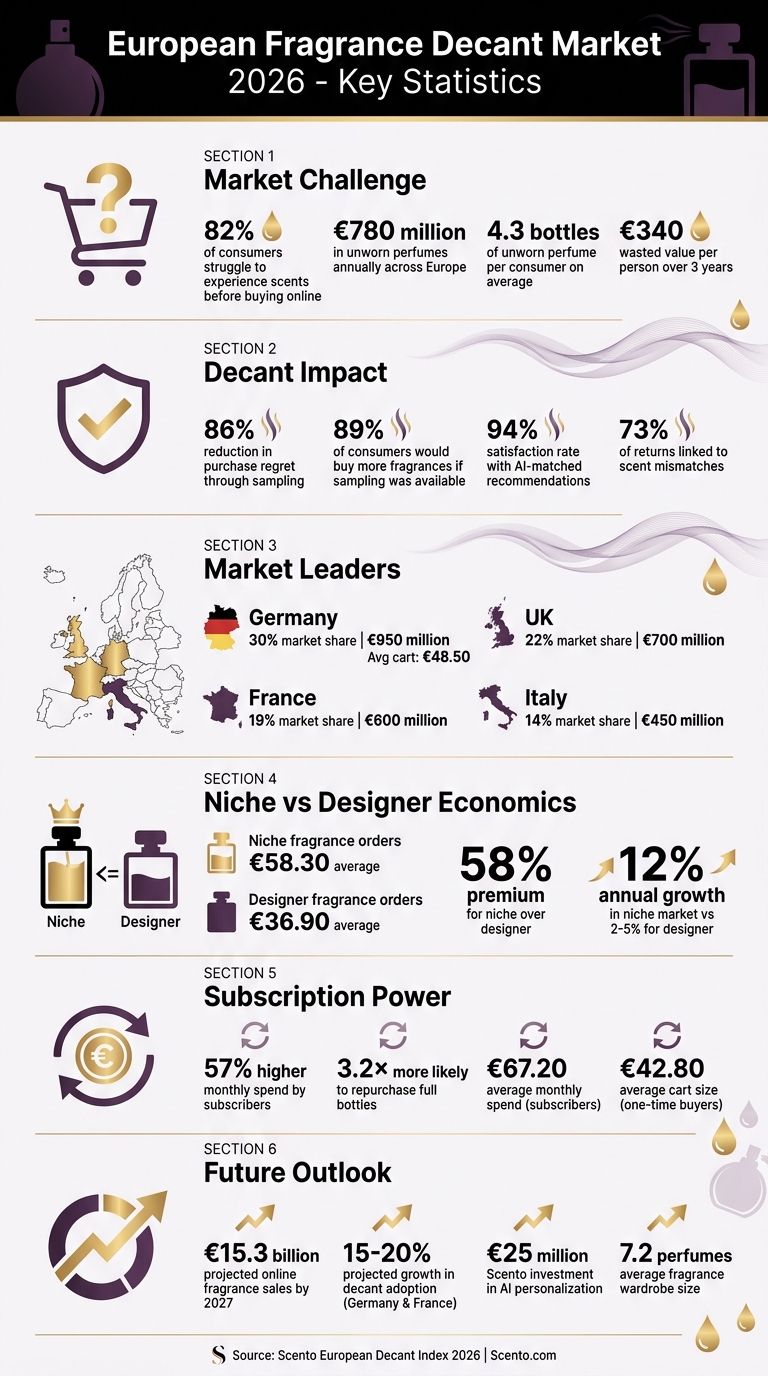
Európa illatpiaca komoly kihívással néz szembe: a fogyasztók 82%-a nehezen tudja megtapasztalni az illatokat online vásárlás előtt, ami évente 780 millió euró értékű, alig használt parfümhöz vezet. A Scento European Decant Index 2026 feltárja, miként formálja át a mintázás – különösen a dekantok (kis kiszerelésű tesztfiolák) révén – az illatvásárlás módját. A legfontosabb megállapítások:
- A dekantok csökkentik a pazarlást és a megbánást: a mintázás 86%-kal mérsékli a vásárlási megbánást, segítve a vevőket az illatbeli félreválasztások elkerülésében.
- Németország élen jár a dekantok elterjedésében: 30%-os piaci részesedéssel (950 millió euró) a német vásárlók praktikus és környezettudatos okokból az 8 ml-es fiolákat részesítik előnyben.
- A niche illatok dominálnak: a niche márkák rendeléseinek átlagértéke 58,30 €, szemben a designer illatok 36,90 €-s átlagával, ami a kézműves és prémium választék iránti fokozott érdeklődést tükrözi.
- Az illatgardróbok átveszik a signature scent szerepét: a fogyasztók ma már 6–10 illatból álló kollekciókat állítanak össze különféle hangulatokra és alkalmakra.
- Az előfizetések erősítik a lojalitást: az előfizetők havonta 57%-kal többet költenek, és 3,2-szer nagyobb valószínűséggel vásárolnak újra teljes kiszerelést.
Ez a mintázás-első vásárlási szemlélet átalakítja a 19 milliárd eurós európai illatpiacot, miközben az online értékesítés várhatóan 15,3 milliárd euróra nő 2027-re. A dekantok alacsony kockázatú lehetőséget kínálnak az illatok felfedezésére, így egyre meghatározóbb erővé válnak az iparágban.
Az európai illat-dekant piac statisztikái 2026: kulcsfontosságú betekintések és trendek
Módszertan
Adatforrások és hatókör
A piaci dinamika mélyebb megértése érdekében a Scento European Decant Index 2026 részletes, sokrétű megközelítésre épül. Az adatgyűjtés három fő forrásból történt, így átfogó képet adott az illatfelfedezési trendekről Európa-szerte. Az elemzés több mint 14 000 rendelést foglal magában a Scento tranzakciós adatbázisából. Ezek a rendelések hat kulcsfontosságú piacot fednek le – Franciaországot, Németországot, az Egyesült Királyságot, Olaszországot, Spanyolországot és Hollandiát –, mindegyik esetében legalább 500 vásárlóval a statisztikai pontosság érdekében.
A belső adatok mellett a Scento 1 247, 25–65 év közötti illatfogyasztó bevonásával végzett felmérést ugyanezeken a piacokon. A gondosan, visszatérő vásárlók közül kiválasztott résztvevők megbízható képet adnak a fogyasztói magatartásról. A módszertan finomításához Dr. Marie Beaumont, elismert illatipari elemző is hozzájárult szakértelmével, hogy megalapozott kvantitatív kiindulópontokat határozzon meg a vásárlási mintázatokhoz.
Bár az elsődleges fókusz ezen a hat országon van, az index szélesebb trendeket is figyel 19 európai piacon, ahol a Scento jelen van. Ez egy sokszínű katalógust is magában foglal, több mint 2 000 designer és niche illatmárkával.
Ezek az összevont adatforrások adják az index átfogó mérőszámainak gerincét.
Mérőszámok és számítások
Az indexet három kulcsmérőszám határozza meg. Az első, a dekant-adoptációs ráta, azt követi, hogy a fogyasztók hány százaléka választ 8 ml-es felfedező fiolát a teljes kiszerelésű üveg helyett. A második, a minta-vásárlás konverzió, azt méri, milyen gyakran jut el a fogyasztó a dekant kipróbálásától a teljes kiszerelésű üveg megvásárlásáig. Végül a vásárlási megbánási ráta azokat az üvegeket azonosítja, amelyeket háromnál kevesebb alkalommal viseltek, miközben a visszaküldések 73%-a illatbeli eltéréshez kapcsolódik.
A pontosság biztosítása érdekében a Scento saját fejlesztésű gépi tanulási algoritmusokat alkalmaz e mérőszámok elemzésére. Ezek az algoritmusok olyan tényezőket vesznek figyelembe, mint a bőrkémiai kompatibilitás, a szezonális preferenciák és a szituatív igények (például irodába illő vagy esti viselet). Emellett a rendszer értékeli a fogyasztók affinitását az illatcsaládok iránt – mint a virágos, fás, orientális, friss, chypre és fougère jegyek –, valamint a fej-, szív- és alapjegyekre vonatkozó preferenciákat is, tovább finomítva az ajánlások pontosságát.
A szakértői validáció is aláhúzza e megállapítások jelentőségét:
"Ez a kutatás megteremti az első kvantitatív alapot az illatvásárlással kapcsolatos megbánás megértéséhez az európai piacokon. A következmények a kiskereskedők, a márkák és a fogyasztók számára egyaránt jelentősek – a mintázás gazdasága nemcsak kényelmes, hanem gazdasági és környezeti szempontból is szükségszerű."
- Dr. Marie Beaumont, illatipari elemző
A dekantok elterjedése piacok szerint
A dekantok elterjedésének vezető piacai
Németország uralja az európai dekantpiacot, 30%-os, 950 millió euró értékű részesedéssel. A német fogyasztók egyértelműen előnyben részesítik a 8 ml-es felfedező fiolákat, ami összhangban áll a luxusvásárlásokhoz való praktikus hozzáállásukkal és a fenntarthatóság iránti növekvő figyelemmel. Franciaország 19%-os, megközelítőleg 600 millió euró értékű piaci részesedéssel követi, míg az Egyesült Királyság 22%-os részesedéssel mintegy 700 millió euróval járul hozzá a piachoz.
A német vásárlók a nagyobb dekantméretek felé hajlanak, különösen a 8 ml-es formátum iránt, ami az ország prémium minőségre és környezettudatos döntésekre helyezett hangsúlyát tükrözi. Ezzel szemben a francia fogyasztók a kézműves niche és örökségmárkák felé fordulnak, gyakran kisebb, 2 ml-es és 5 ml-es fiolákat választva, hogy szélesebb illatválasztékot fedezhessenek fel.
A dekantok pénzügyi vonzereje egész Európában egyértelmű. A fogyasztók átlagosan körülbelül 4,3 olyan parfümös üveggel rendelkeznek, amely használatlan marad vagy csak ritkán kerül elő, ami három év alatt személyenként becslések szerint 340 euró elpazarolt értéket jelent. Ebben a környezetben a mintázási formátumok felé való elmozdulás egyre nagyobb lendületet kap, különösen annak fényében, hogy az online illatértékesítés Európában 2027-re várhatóan eléri a 15,3 milliárd eurót. A dekantformátumok e bővülő piac egyre nagyobb szeletét szerezhetik meg.
Ezek a trendek rávilágítanak arra, miként alakítják a gazdasági hajtóerők és a regionális preferenciák együtt az illatfelfedezést.
Regionális preferenciák és kulturális tényezők
A kulturális különbségek meghatározó szerepet játszanak abban, hogyan fogadják be a dekantokat Európa-szerte.
Németországban a praktikusság határozza meg az illatok felfedezését. A fogyasztók jellemzően három-négy illatot tesztelnek, mielőtt teljes üveg mellett döntenének; ez a stratégia segít csökkenteni az átlagosan 127 eurós veszteséget minden megbánt „blind-buy” vásárlásnál, beleértve a szállítási és újrakészletezési díjakat is. Ez a módszeres megközelítés a megfontolt döntések iránti szélesebb kulturális preferenciát tükrözi.
Olaszország, 450 millió eurós piaccal (14%-os részesedés), más dinamikát mutat. Az olasz fogyasztók a kézműves mesterségbeli tudást és a személyre szabott illatokat részesítik előnyben, gyakran olyan niche márkákat választva, amelyek a hagyományos kiskereskedelmi csatornákon keresztül nem széles körben elérhetők. A miniatürizált luxus iránti ez a vonzalom lehetővé teszi a prémium illatok alacsonyabb kockázatú felfedezését. A mintázás ebben a piacon rendkívül hatékonynak bizonyult: az újravásárlási arány 3,2-szer magasabb, mint a blind-buy gyakorlat esetében, megerősítve a dekantmodell gazdasági és élménybeli előnyeit.
Ezek a regionális és kulturális tényezők értékes betekintést nyújtanak abba, hogyan különbözik az illatfelfedezés az európai piacokon.
A mintakosár gazdaságtana
Kosárméret és árbevételi adatok
Egy európai mintakosár átlagosan 42,80 € árbevételt generál, a német vásárlók pedig 48,50 € tranzakciónkénti értékkel vezetik a mezőnyt. Ezek a rendelések jellemzően három-négy dekantot tartalmaznak, a legnépszerűbb méretek pedig az 5 ml-es és 8 ml-es kiszerelések. A német fogyasztók nagyobb fiolák iránti preferenciája azt hangsúlyozza, hogy egyszerre törekednek a pazarlás csökkentésére és az alapos tesztelési élményre.
Az előfizetéses ügyfelek ugyanakkor eltérő vásárlási szokásokat mutatnak. Havi átlagos költésük 67,20 €-ra emelkedik – ez mintegy 57%-kal több, mint az egyszeri vásárlóké. Ez a különbség folyamatos elköteleződésükből fakad, hiszen az előfizetők gyakran havi négy-öt illatot választanak, hogy forgó kollekciót állítsanak össze, ahelyett hogy egyetlen teljes üveg mellett köteleződnének el.
Míg az egyszeri vásárlók inkább a szezonális csúcsidőszakokban és ajándékozási alkalmak környékén vásárolnak, az előfizetők stabil havi aktivitást mutatnak. Ez a rendszeresség magasabb élettartam-értéket eredményez, az előfizetők ugyanis 3,2-szer nagyobb valószínűséggel vásárolnak újra teljes kiszerelésű üveget azokhoz képest, akik kihagyják a mintázási folyamatot.
Ezek a minták alapot adnak a niche és a designer illatkosarak eltérő gazdasági profiljának megértéséhez.
A niche és designer illatok gazdaságtana
A rendelési értékek mélyebb vizsgálata markáns különbségeket tár fel a niche és a designer illatkosarak között.
A niche illatrendelések átlagértéke 58,30 €, ami jelentősen meghaladja a designer fókuszú kosaraknál mért 36,90 €-t – ez 58%-os felárat jelent. A különbség a niche dekantok magasabb milliliterenkénti költségét és az általuk ösztönzött felfedező jellegű vásárlást tükrözi. A niche parfümök gyakran 15–30%-os parfümolaj-koncentrációval készülnek, ami közel kétszerese a designer illatok 5–15%-os arányának, és ez részben indokolja magasabb árszintjüket.
A niche illatok első vásárlói számára az elégedetlenség kockázata magas: a megbánási ráta 58%, ha a mintázás elmarad. Azonban a mintázás-első megközelítés bevezetése 86%-kal csökkenti a vásárlási megbánást. Ez különösen fontos, tekintve, hogy a niche teljes kiszerelésű üvegek ára 200 eurótól 800 euró fölé is emelkedhet, míg a designer opciók jellemzően 150 euró alatt maradnak. Egy rossz választás a niche szegmensben átlagosan 127 eurós pénzügyi veszteséget okozhat, beleértve a visszaküldési szállítás és az újrakészletezés költségeit is.
A niche piac emellett évi 12%-os erőteljes növekedést mutat, messze túlszárnyalva a designer illatok 2–5%-os növekedési ütemét. A magasabb kosárértékekkel és a javuló konverziós arányokkal a niche mintázás az európai dekantpiac növekedési pályájának egyik fő hajtóerejévé válik.
Konverziós tölcsér elemzés
Minta-vásárlás konverziós arányok
A dekant kipróbálásától a teljes üveg melletti döntésig vezető út jól mutatja, milyen kulcsszerepet játszik a mintázás abban, hogy az alkalmi érdeklődőkből lojális vásárlók legyenek. Az adatok szerint azok az ügyfelek, akik dekantokkal kezdenek, 3,2-szer nagyobb valószínűséggel vásárolnak újra, és 86%-kal kevesebb vásárlási megbánást tapasztalnak. Eközben az AI-ajánlások alapján párosított illatok 94%-os elégedettségi arányt érnek el. Ez nemcsak a fogyasztói bizalmat erősíti, hanem csökkenti a pénzügyi veszteséget és mérsékli a környezeti terhelést is. Ezek a trendek rámutatnak annak fontosságára, hogy megvizsgáljuk, miként erősíthetik tovább az előfizetéses modellek a vásárlói lojalitást.
"A hagyományos parfümipar az egyetlen üveghez kötődő lojalitásra optimalizált... A modern fogyasztók nem így élnek – identitásunk, preferenciáink és napi rituáléink folyamatosan változnak." – Sebastian Dobrincu, a Scento társalapítója és vezérigazgatója
A Scento 2025-re tervezett, ambiciózus 25 millió eurós befektetése azt célozza, hogy 19 európai piacon AI-vezérelt ajánlóalgoritmusokkal finomítsa a teljes kiszerelésű üvegekre történő konverziókat. Az első eredmények szerint a fogyasztók 89%-a több illatot vásárolna, ha a mintázási lehetőségek könnyen elérhetők lennének.
Az előfizetések hatása az ügyfélmegtartásra
A konverziós eredményekre építve az előfizetéses modellek kulcsszerepet töltenek be az ügyfélmegtartás javításában azáltal, hogy kezelik a leggyakoribb kihívásokat. Például az illatbeli eltérések, amelyek a visszaküldések 73%-át adják, jelentősen csökkennek az előfizetéses ajánlatokkal. Azáltal, hogy az előfizetések 8 ml-es dekantokat vezetnek be az illatok felfedezésének alacsony kockázatú módjaként, a mintázást nélkülözhetetlen stratégiává teszik – gazdasági és környezeti szempontból egyaránt. Ez a megközelítés nemcsak az érdeklődésből a teljes kiszerelésű vásárlás felé való elmozdulást ösztönzi, hanem összhangban áll a mai illatfogyasztók változó elvárásaival is.
Your Personal Fragrance Expert Awaits
Take our quick scent quiz to discover authentic designer and niche fragrances matched to your taste — explore them as 2–8ml decants and samples, so you can try each one before committing to a full bottle.
Find Your ScentMintázatok márkaszinten
Vezető márkák dekantvolumen szerint
A niche illatmárkák világos trendeket mutatnak a dekanteladások terén az európai piacokon. A Scento elemzése szerint a vezető Maison Francis Kurkdjian, 5,5%-os piaci részesedéssel, nagyrészt a Baccarat Rouge 540 közösségi médiában elért virális sikerének köszönhetően. Creed szorosan követi 5,0%-kal, örökségre építő imázsának és a népszerű Royal Oud változatoknak köszönhetően. Amouage 4,5%-os részesedést ér el, köszönhetően a ritka összetevőkre, például oudra, ámbrára és pézsmára helyezett hangsúlynak. Eközben Xerjoff zárja az élmezőnyt, amelyet kézműves kidolgozottságáért és prémium alapanyagainak használatáért ünnepelnek.
Mivel a niche illatok ára gyakran 80 euró és 1 500 euró fölött között mozog, a dekantmodell lehetővé teszi a fogyasztók számára, hogy az illatokat teljes üveg melletti elköteleződés nélkül próbálják ki. Ez a megközelítés nemcsak a pénzügyi kockázatot csökkenti, hanem a márkahűséget is erősíti. Ezek a trendek alapot adnak annak vizsgálatához, hogyan párosítják a fogyasztók az illatokat, és miként fedezik fel az illatprofilokat.
Illatpárosítások és profilpreferenciák
A fogyasztói viselkedés a hagyományos „signature scent” megközelítéstől az illatgardrób kialakítása felé mozdul el, miközben az egyének ma átlagosan 7,2 különböző parfümmel rendelkeznek. Ez az elmozdulás sajátos illatpárosítási trendeket hívott életre, amelyek keresztértékesítési lehetőségeket kínálnak a márkáknak. Népszerű kombinációk közé tartoznak az oud gourmand keverékek, amelyek az oudot vaníliával, pralinéval és sáfránnyal párosítják, valamint a fás és tömjénes profilok, amelyek cédrust, tömjént, mirhát és szantálfát vonultatnak fel. Ezek a fás-tömjénes párosítások gyakran egy „erdei tábortűz” vagy egy „nomád utazás” érzetét keltik, amelyet sokszor friss citrusos fejjegyek emelnek ki.
Egy másik kiemelkedő kategória a dark gourmand, amely ehető ihletésű jegyeket – például csokoládét, kakaót és mogyorót – foglal magában. Emellett a fűszeres virágos keverékek, amelyek a taifi rózsát, a szegfűszeget és az ámbragrist ötvözik, azokhoz szólnak, akik összetettebb és rétegzettebb illatokat keresnek.
A teljesítmény továbbra is kulcstényező a niche fogyasztók számára, akik a 6–10 órás tartósságú és erőteljes sillage-dzsal rendelkező illatokat részesítik előnyben. Az Eau de Parfum formulák uralják a piacot, az eladások 41,2%-át adva. A kutatások azt mutatják, hogy azok az ügyfelek, akik egymást kiegészítő illatprofilokat mintáznak – például fás alapot citrusos fejjel párosítva –, többet költenek vásárlásonként, és gyakrabban térnek vissza további dekantokért. Ez összhangban áll a személyre szabott illatkollekciók iránti növekvő érdeklődéssel: az európai fogyasztók 63%-a fejezte ki igényét az egyedi formulák iránt.
Kitekintés 2027-re
A dekantok elterjedésének várható növekedése
A Scento 2027 végéig 15–20%-os növekedést vár a dekantok elterjedésében Németországban és Franciaországban. Ez az elmozdulás nagyrészt a niche illatok iránti fokozódó érdeklődésnek és annak a vonakodásnak tudható be, hogy a fogyasztók 300 euró vagy annál magasabb árú teljes kiszerelésű üvegekbe fektessenek, amelyek gyakran kihasználatlanul maradnak. A vásárlókat egyre inkább vonzza a sokszínű illatgardrób kialakításának gondolata, ezért több illatot próbálnak ki, mielőtt teljes kiszerelés mellett döntenének.
E trend támogatására a Scento 25 millió eurót különített el AI-vezérelt személyre szabási törekvéseinek bővítésére 19 európai piacon. Ez a kezdeményezés gépi tanulást alkalmaz, hogy az egyéni bőrkémia és a szezonális preferenciák alapján ajánljon illatokat. A pénzügyi kockázat csökkentésével és a környezeti aggályok kezelésével a dekantmodell összhangba kerül a változó fogyasztói értékekkel, és várhatóan tovább gyorsítja az elterjedést.
"A Scento a luxusillat-kiskereskedelem jövőjét építi azáltal, hogy tiszteletben tartja ezt a természetes változékonyságot... ügyfeleink azért térnek vissza, mert platformunk alkalmazkodik fejlődő ízlésükhöz." – Sebastian Dobrincu, a Scento társalapítója és vezérigazgatója
Ezek az előrejelzések rávilágítanak arra, hogy az előfizetéses modellek miként növelhetik tovább az ügyfél-elköteleződést és a lojalitást.
Az előfizetéses modell bővítése
A Scento AI-technológiába történő befektetése 2027-ben az előfizetéses ajánlatait is tovább finomítja. Ezek az előfizetések dinamikus, személyre szabott ajánlásokra összpontosítanak majd, amelyek a szezonális trendekkel és az életmódbeli változásokkal együtt fejlődnek. A hagyományos fix díjas modellekkel ellentétben a Scento megközelítése parfümönként árazza az előfizetéseket, így az ügyfelek szabadon állíthatnak össze kollekciókat anélkül, hogy standard havi dobozokhoz lennének kötve.
Az adatok azt mutatják, hogy azok az előfizetők, akik szaglásprofiljuk alapján AI-val párosított ajánlásokat kapnak, nagyobb valószínűséggel váltanak teljes kiszerelésű vásárlásra, és hosszabb távon is lojálisak maradnak. A személyre szabást meghajtó technológia különböző illatcsaládokon át térképezi fel az egyéni „olfaktív identitásokat”, így kifinomultabb, személyesebb élményt teremt.
Ahogy ez a rendszer kiforrottabbá válik, a Scento növekvő keresztértékesítési lehetőségekre számít. Sok ügyfél várhatóan 8 ml-es dekantokról nagyobb üvegekre (30 ml vagy annál nagyobb kiszerelésre) vált majd, ami az illatmintázásból származó bevételről a magasabb árrésű értékesítések felé történő elmozdulást jelzi. Ez a fejlődés lehetővé teszi a Scento számára, hogy az ügyfélút mindkét végén értéket ragadjon meg – az első próbáktól a teljes kiszerelésű elköteleződésig.
Minta-szeánsz: Nézzünk át együtt egy csokor niche mintát | Értékelem a parfümminta haulomat
Összegzés
A Scento European Decant Index 2026 figyelemre méltó változásokat emel ki abban, ahogyan az európaiak az illatokat felfedezik. A 19 piacról és több mint 14 000 rendelésből származó adatok alapján a jelentés azt mutatja, hogy a dekantok az online vásárlás és a parfüm érzéki természete közötti nélkülözhetetlen kapoccsá válnak, csökkentve a teljes kiszerelésű üvegek melletti elköteleződés pénzügyi kockázatát.
Érdekes módon sok vásárló ritkán használja a megvásárolt illatait, ami jelentős parfümpazarláshoz járul hozzá Európa-szerte. Ugyanakkor a fogyasztók 89%-a állítja, hogy több parfümöt vásárolna, ha a mintázási lehetőségek könnyebben hozzáférhetők lennének. A dekantok lehetővé teszik, hogy az ügyfelek két héten át, a mindennapi életükben tapasztalják meg az illatokat, ahelyett hogy az üzletekben gyors döntésekre szorítkoznának.
Ezek az eredmények egyértelmű változást tükröznek a fogyasztói szokásokban. Az egyetlen „signature scent” gondolatától az illatgardrób felépítése felé való elmozdulás – amely jellemzően 6–10 üvegből álló, különböző pillanatokra összeállított kollekció – összhangban áll a személyes preferenciák alakulásával. Emellett a dekantmodell szerepet játszik a pazarlás csökkentésében is, és potenciálisan 12,8 millió, európai háztartásokban kihasználatlanul álló parfümös üveg fölöslegességét szüntetheti meg.
GYIK
Meddig elég egy 8 ml-es dekant?
Egy 8 ml-es dekant jellemzően 40–80 fújásra elegendő, attól függően, hogy egy használat során mennyit fúj belőle. A pontos mennyiség az egyéni használati szokásoktól függően változhat.
Hogyan teszteljek egy dekantot, hogy elkerüljem a rossz teljes kiszerelésű vásárlást?
Mielőtt teljes üveg mellett döntene, próbálja ki a dekantot úgy, hogy kis mennyiséget visz fel a bőrére, például a csuklójára vagy a könyökhajlatára. Figyelje meg, hogyan bontakozik ki az illat több órán át – hogyan vetül, mennyi ideig tart, és miként reagál a bőrkémiai sajátosságaira. Az ilyen módon történő mintázás biztosítja, hogy az illat megfeleljen személyes ízlésének, így segít elkerülni a csalódást és a felesleges pazarlást.
Hogyan párosítja a Scento AI-ja az illatokat a bőrömhöz és az évszakhoz?
A Scento AI-ja gépi tanulást használ személyes preferenciáinak és illatprofiljainak elemzésére. Ennek révén olyan illatokat ajánl, amelyek a bőréhez és az aktuális évszakhoz igazodnak. Ugyanakkor érdemes megjegyezni, hogy bár ezek az ajánlások a lehető legpontosabbak kívánnak lenni, nem minden esetben képesek maradéktalanul figyelembe venni az egyéni bőrkémia minden árnyalatát, így a tökéletes egyezés nem mindig garantált.