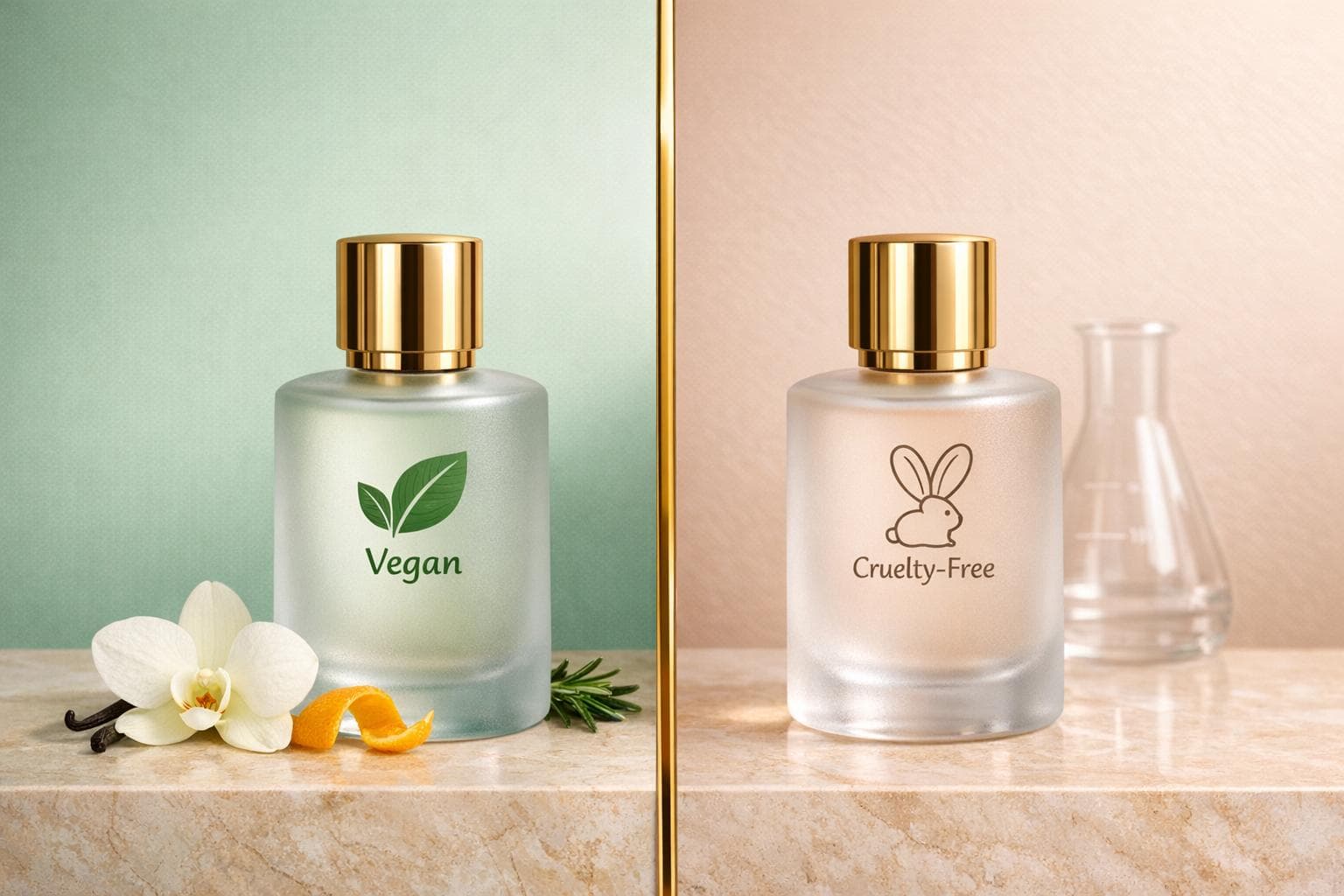
A vegán és az állatkísérlet-mentes parfümök nem ugyanazt jelentik, noha gyakran összekeverik őket. Íme a különbség:
- A vegán parfümök nem tartalmaznak állati eredetű összetevőket (például méhviaszt, mézet vagy pézsmát). Helyettük növényi alapú vagy szintetikus alternatívákat alkalmaznak.
- Az állatkísérlet-mentes parfümöket a gyártás egyetlen szakaszában sem tesztelik állatokon. Ugyanakkor továbbra is tartalmazhatnak állati eredetű összetevőket.
Egy termék lehet vegán, de nem állatkísérlet-mentes (ha állatkísérletek kapcsolódnak hozzá), vagy állatkísérlet-mentes, de nem vegán (ha állati eredetű összetevőket tartalmaz). Ahhoz, hogy egy parfüm mindkét elvárásnak megfeleljen, mellőznie kell az állatkísérleteket, és minden állati eredetű összetevőt ki kell zárnia.
Gyors összehasonlítás:
| Jellemző | Vegán parfümök | Állatkísérlet-mentes parfümök |
|---|---|---|
| Fókusz | Nincs állati eredetű összetevő | Nincs állatkísérlet |
| Állatkísérletek | Nem garantált, hacsak nem egyben állatkísérlet-mentes is | Tilos |
| Állati eredetű összetevők | Kizárva | Tartalmazhat mézet, méhviaszt stb. |
| Tanúsítványok | Vegan Society, Certified Vegan | Leaping Bunny, PETA Global Test Free |
Ahhoz, hogy választása valóban összhangban legyen az értékrendjével, keresse a megbízható tanúsítványokat, például a Vegan Society logóját vagy a Leaping Bunny jelölést. Mindig olvassa el figyelmesen a címkéket, mivel a marketingállítások félrevezetők lehetnek.
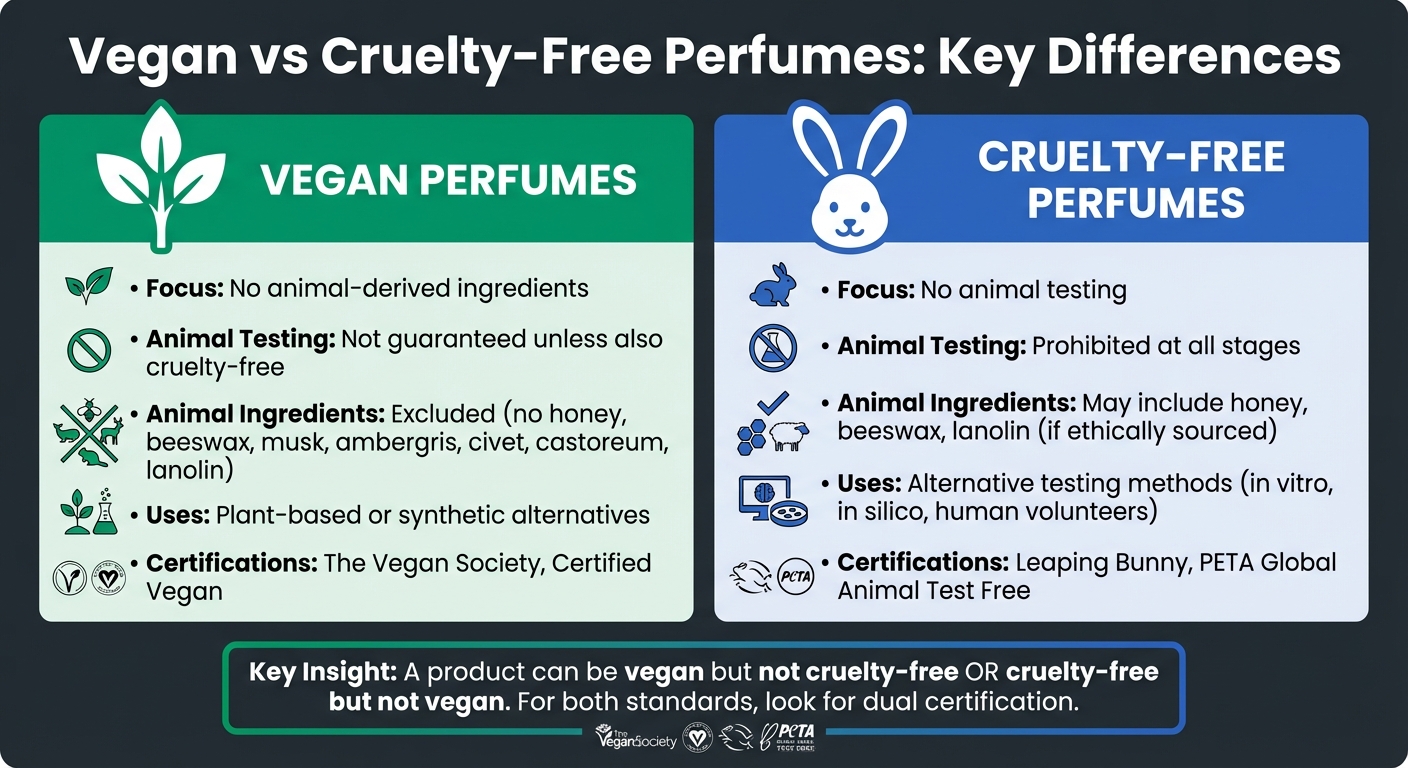
Vegán vs. állatkísérlet-mentes parfümök: a legfontosabb különbségek összehasonlító táblázata
ÁLLATKÍSÉRLET — MENTES VEGÁN PARFÜMÖK | Soki London

What Are Vegan Perfumes?
A vegán parfümök olyan illatok, amelyek semmilyen állati eredetű összetevőt vagy mellékterméket nem tartalmaznak. Ez azt jelenti, hogy mellőzik az olyan anyagokat, mint a szarvaspézsma, a bálnáktól származó ámbra, a méhviasz vagy a juhgyapjúból nyert lanolin. Fontos, hogy egy parfüm akkor is lehet vegán, ha szintetikus összetevőket tartalmaz, feltéve, hogy ezek a szintetikumok nem állatokból származnak. Másfelől a "természetes" megjelölés nem jelenti automatikusan azt, hogy a termék vegán, mivel a természetes termékek is tartalmazhatnak például mézet vagy méhviaszt. A vegán parfümök meghatározó jellemzője, hogy kizárólag nem állati eredetű összetevőket használnak, legyenek azok természetesek vagy laboratóriumban előállítottak. Ez a szemlélet emeli ki a vegán parfümöket az etikus illatok tágabb kategóriáján belül.
A vegán parfümök fő jellemzői
A hagyományos, állati eredetű elemek kiváltására a vegán parfümök növényi alapú vagy szintetikus helyettesítőkre támaszkodnak. Például a szarvasból származó pézsma helyett a parfümkészítők szintetikus pézsmákat, például Ambroxant vagy mályvamag-kivonatot alkalmaznak. Hasonlóképpen a cibetet – egykor cibetmacskáktól nyert anyagot – ma már laborban létrehozott aromamolekulákkal reprodukálják.
A vegán parfümök jellemzően hordozóanyagként alkoholt vagy növényi alapú alternatívákat, például kókuszolajat, aloe verát vagy sheavajat használnak. Ezek a hordozók nemcsak abban segítenek, hogy az illat tartósabb legyen, hanem hidratáló előnyöket is nyújthatnak. Ugyanakkor, mint minden növényi alapú terméknél, itt is érdemes bőrpróbát végezni az esetleges bőrreakciók elkerülése érdekében.
Gyakori összetevők a vegán parfümökben
Az alábbiakban látható, hogyan váltják ki a hagyományos állati eredetű összetevőket a vegán parfümformulákban:
| Hagyományos összetevő | Állati forrás | Vegán alternatíva |
|---|---|---|
| Pézsma | Pézsmaszarvas mirigyei | Szintetikus pézsmák, Ambroxan, mályvamag |
| Ámbra | Ámbráscet-váladék | Ambroxan, Cetalox, növényi gyanták |
| Cibet | Cibetmacska-váladék | Laborban létrehozott szintetikus molekulák |
| Kasztóreum | Hód kasztórozacskói | Növényi gyanták (benzoé, labdanum, tolu balzsam) |
| Méhviasz / méz | Méhek | Növényi viaszok (kandelilla), szintetikus édes jegyek |
| Lanolin | Juhgyapjú | Növényi olajok vagy vajak (shea, kókusz) |
A modern vegán parfümök biotechnológiai molekulákat is alkalmaznak. Ezek fermentációs eljárásokkal előállított vegyületek, amelyek etikus és természetes hatású alternatívát kínálnak a hagyományos összetevőkkel szemben.
Mik azok az állatkísérlet-mentes parfümök?
Az állatkísérlet-mentes parfümök olyan illatok, amelyeket az állatkísérletek bármely formája nélkül fejlesztenek – ideértve az összetevők beszerzése, a gyártás vagy a harmadik felek által végzett tesztelés során történő vizsgálatokat is.
Érdekesség, hogy az állatkísérlet-mentesség nem feltétlenül jelenti azt, hogy a termék teljesen mentes az állati eredetű összetevőktől. Előfordulhat például, hogy a parfüm etikus forrásból származó összetevőket, mint a méhviasz, a méz vagy a lanolin, továbbra is tartalmaz, feltéve, hogy ezekhez nem kapcsolódott állatkísérlet. Ez a különbségtétel lehetővé teszi, hogy a fogyasztók választásaikat etikai prioritásaikhoz igazítsák.
A biztonság garantálása érdekében az állatkísérlet-mentes márkák alternatív vizsgálati módszereket alkalmaznak. Ilyen például az in vitro tesztelés (laborban tenyésztett emberi sejtek felhasználásával), az in silico vizsgálat (számítógépes modellezés), valamint az emberi önkénteseken végzett bőrpróba. Ezek a gyakorlatok adják az állatkísérlet-mentes termékfejlesztés alapját.
Az állatkísérlet-mentes parfümök fő jellemzői
Az állatkísérlet-mentes státusz megőrzése érdekében sok márka szigorú felügyeletet vezet be teljes ellátási láncában. Ez magában foglalja a beszállítók szoros ellenőrzését és a megfelelőség igazolására szolgáló független auditokat is. Bár ezek a parfümök tartalmazhatnak felelősen beszerzett állati eredetű összetevőket, az ilyen komponenseknek etikai normáknak kell megfelelniük, és minden szakaszban mentesnek kell lenniük az állatkísérletektől. A transzparencia kulcsfontosságú – a márkák gyakran teljes összetevőlistát közölnek, és külső hitelesítésen is átesnek.
Egy másik tényező a piaci jelenlét. Az etikus márkák kerülik az értékesítést olyan régiókban, ahol az állatkísérlet jogszabályi előírás. Több mint 40 ország, köztük az Egyesült Királyság és az Európai Unió valamennyi tagállama, már bevezetett tiltásokat vagy korlátozásokat a kozmetikai állatkísérletekre.
Tanúsítványok az állatkísérlet-mentes parfümökhöz
A tanúsítványok segítenek a fogyasztóknak megerősíteni egy márka állatkísérlet-mentességi állításait. A legismertebb minősítések közé tartoznak:
| Tanúsítvány | Fókuszterület | Fő követelmény |
|---|---|---|
| Leaping Bunny | Állatkísérlet-mentes | Az állatkísérletek teljes tilalma minden szakaszban; beszállítói ellenőrzést és független auditokat ír elő. |
| PETA (Global Animal Test Free) | Állatkísérlet-mentes | Biztosítja, hogy a márkák a világ sehol pontján ne végezzenek, ne rendeljenek meg és ne engedélyezzenek állatkísérleteket. |
| The Vegan Society | Vegán & állatkísérlet-mentes | Garantálja, hogy nincs állati eredetű összetevő, és nem történik állatkísérlet. |
| Certified Vegan (Vegan Action) | Vegán & állatkísérlet-mentes | Megerősíti, hogy a termékek mentesek az állati eredetű összetevőktől és a teszteléstől. |
A Leaping Bunny tanúsítványt gyakran a legmegbízhatóbb állatkísérlet-mentes szabványnak tartják. Megköveteli a márkáktól annak bizonyítását, hogy sem ők, sem beszállítóik nem vesznek részt állatkísérletekben. Hasonlóképpen a PETA "Beauty Without Bunnies" programja biztosítja, hogy a márkák szigorú, állatkísérleteket kizáró irányelvet kövessenek.
Vegán vs. állatkísérlet-mentes parfümök: fő különbségek
Összetevők és tesztelési gyakorlatok összehasonlítása
A vegán és az állatkísérlet-mentes parfümök közötti fő különbség a fókuszukban rejlik. Az állatkísérlet-mentes megjelölés a tesztelési folyamatra utal, és azt garantálja, hogy a gyártás egyetlen szakaszában sem történik állatkísérlet. A vegán ezzel szemben az összetevőkre vonatkozik, és biztosítja, hogy a termék ne tartalmazzon állati eredetű összetevőket vagy melléktermékeket, például mézet vagy méhviaszt.
Fontos megjegyezni, hogy ezek a jelölések átfedhetik egymást, de nem mindig járnak együtt. Például egy állatkísérlet-mentes parfüm még tartalmazhat állati eredetű összetevőket, míg egy vegán termék állatkísérletekhez kapcsolódhat, ha nem rendelkezik állatkísérlet-mentes tanúsítvánnyal.
| Jellemző | Állatkísérlet-mentes parfümök | Vegán parfümök |
|---|---|---|
| Fókusz | Etikus tesztelés és beszerzés | Állatmentes összetevők |
| Állatkísérletek | Tilos mind az összetevőkön, mind a végterméken | Előfordulhat, hacsak nem egyben állatkísérlet-mentes is |
| Állati eredetű összetevők | Tartalmazhat mézet, méhviaszt vagy lanolint | Teljesen kizárt; növényi alapú vagy szintetikus alternatívákat használ |
| Tanúsítványok | Leaping Bunny, PETA Global Animal Test Free | The Vegan Society, Certified Vegan (Vegan Action) |
Ezek a különbségek befolyásolják a fogyasztói döntéseket az egyéni etikai és gyakorlati szempontok alapján.
Etikai és gyakorlati szempontok
A kegyetlenségtől mentes és a vegán parfümök etikai prioritásai eltérőek. A kegyetlenségtől mentes parfümök célja az állatkísérletek felszámolása olyan korszerű alternatívák alkalmazásával, mint a laboratóriumban tenyésztett emberi sejtek (in vitro) és a számítógépes modellezés (in silico). A vegán parfümök ezzel szemben az állatok kizsákmányolásának elkerülésére összpontosítanak, biztosítva, hogy minden összetevő növényi eredetű vagy szintetikus legyen.
Az állatkísérlet-mentes parfümök nagyobb rugalmasságot kínálnak, mivel tartalmazhatnak etikus forrásból származó állati melléktermékeket, például méhviaszt. A vegán parfümök ezzel szemben szigorúbb mércét követnek, és minden állati eredetű összetevőt teljes mértékben kizárnak. Ha egy parfüm egyszerre vegán és állatkísérlet-mentes jelöléssel rendelkezik, akkor mind a tesztelés, mind az összetevők beszerzése terén a legmagasabb etikai normáknak felel meg.
Érdemes azt is figyelembe venni, hogy egyes állatkísérlet-mentes márkák olyan anyavállalatok tulajdonában állnak, amelyek más termékeiket továbbra is állatokon tesztelhetik. Azok számára, akik teljes etikai összhangra törekednek, elengedhetetlen a márka mögött álló anyavállalat kutatása is.
Személyes illatszakértője már várja
Töltse ki rövid illatkvízünket, és fedezzen fel hiteles designer és niche parfümöket, amelyek az ízléséhez illenek – próbálja ki őket 2, 5, 8 és 30 ml-es dekantokban és mintákban, hogy mindegyiket kipróbálhassa, mielőtt teljes flakon mellett dönt.
Találja meg illatátA vegán és az állatkísérlet-mentes parfümök előnyei és hátrányai
A vegán és az állatkísérlet-mentes parfümök közötti, az összetevőkben és a tesztelési gyakorlatokban rejlő különbségek mindkét kategória számára sajátos előnyöket és kihívásokat teremtenek. Íme egy közelebbi pillantás arra, miként jelennek meg ezek a tényezők a gyakorlatban.
Vegán parfümök: előnyök és hátrányok
A vegán parfümök minden állati eredetű összetevőt mellőznek, és szintetikus vagy növényi alapú alternatívákra építenek. Ennek eredménye egy letisztultabb illatprofil, amelyben a fej- és szívjegyek tisztábban, kifinomultabban bontakoznak ki. A laborban létrehozott molekulák ráadásul egyenletes teljesítményt biztosítanak, a tartósságuk gyakran megegyezik a hagyományos eau de parfumökével (nagyjából hat-tíz óra). Ugyanakkor az állati eredetű fixatívok hiánya korlátozhatja az elérhető összetevők körét. Ennek ellensúlyozására a vegán formulák szintetikus helyettesítőkre, például Ambroxanra, vagy növényi gyantákra, mint a benzoé és a labdanum, támaszkodnak, ami növelheti a költségeket. Emellett egyes vegán parfümök magas illóolaj-koncentrációja bizonyos felhasználóknál bőrérzékenységet okozhat.
Az előnyök és hátrányok összefoglalva:
| Előnyök | Hátrányok |
|---|---|
| Etikus normák: Minden állati eredetű összetevőt kizár | Összetevői korlátok: Nem használhat természetes fixatívokat, például méhviaszt vagy ámbrát |
| Tisztább illat: Nincsenek nehéz, animalisztikus aljegyek, így az illatjegyek tisztábban érvényesülnek | Lehetséges érzékenység: A magas illóolaj-tartalom irritálhatja a bőrt |
| Következetesség: A szintetikus molekulák megbízható teljesítményt nyújtanak | Magasabb költségek: Az etikus beszerzés és a fejlett formulák növelik az árakat |
Állatkísérlet-mentes parfümök: előnyök és hátrányok
Az állatkísérlet-mentes parfümök az állatjóllétet helyezik előtérbe azzal, hogy biztosítják: előállításuk során nem történik állatkísérlet. Ez a megközelítés nagyobb rugalmasságot enged az összetevők terén, beleértve az etikus forrásból származó állati melléktermékek, például a méz vagy a méhviasz használatát is. Ugyanakkor az állatkísérlet-mentesség nem jelent automatikusan vegánságot – olyan összetevők, mint az ámbra vagy a cibet, továbbra is jelen lehetnek. Emellett a márkák számára kihívást jelent az állatkísérlet-mentes státusz fenntartása olyan régiókban, ahol az állatkísérlet kötelező, például Kínában. Az ellátási lánc teljes átláthatósága szintén nehézséget okoz, mivel összetett feladat igazolni, hogy minden beszállító betartja az állatkísérlet-mentes gyakorlatokat. Figyelemre méltó, hogy az 50 legnagyobb globális kozmetikai márka felmérése szerint 88%-uk nem állatkísérlet-mentes.
Így alakulnak az előnyök és hátrányok:
| Előnyök | Hátrányok |
|---|---|
| Állatbarát: Nincs állatokon végzett tesztelés | Nem vegán összetevők: Tartalmazhat állati eredetű komponenseket, például cibetet vagy pézsmát |
| Összetevői rugalmasság: Lehetővé teszi bizonyos etikus forrásból származó állati melléktermékek használatát | Szabályozási kihívások: Elveszítheti státuszát az állatkísérletet megkövetelő piacokon |
| Tesztelési innováció: Elősegíti az alternatív tesztelési módszerek használatát | Átláthatósági problémák: Kihívás biztosítani az állatkísérlet-mentes megfelelést a beszállítói lánc egészében |
Hogyan ismerhetők fel a vegán és állatkísérlet-mentes parfümök?
A vegán vagy állatkísérlet-mentes parfümök megtalálása többet kíván puszta címkeolvasásnál vagy marketingállításokba vetett bizalomnál. A tudatos döntéshez elengedhetetlen a hiteles tanúsítványok ismerete, valamint annak felismerése, mely összetevők származhatnak állatoktól a formulákban.
Címkék és tanúsítványok magyarázata
A tanúsítványok megbízható módot kínálnak egy márka etikus gyakorlatának ellenőrzésére. A legelismertebbek közé tartozik a Leaping Bunny, amely független auditokat és beszállítói ellenőrzést követel meg annak igazolására, hogy a termék fejlesztésének egyetlen szakaszában sem történik állatkísérlet. Hasonlóképpen a PETA Beauty Without Bunnies két minősítést kínál: a "Global Animal Test Free" jelölést azoknak a termékeknek, amelyeknél sem a márka, sem a beszállítók nem végeznek állatkísérletet, valamint a "Global Animal Test Free and Vegan" tanúsítványt, amely az állati eredetű összetevők hiányát is garantálja.
A vegán megfelelőség igazolásához keresse a The Vegan Society Trademark jelölést, amely tanúsítja, hogy a termék mentes az állati eredetű összetevőktől és a teszteléstől, vagy a Certified Vegan logót a Vegan Actiontől, amely hasonló ellenőrzést nyújt. Azt is érdemes szem előtt tartani, hogy több mint 40 ország – köztük az Egyesült Királyság és az Európai Unió valamennyi tagállama – korlátozta vagy betiltotta a kozmetikai állatkísérleteket. Ha azonban egy márka a szárazföldi Kínában is forgalmaz, legyen körültekintő – történelmileg bizonyos termékkategóriákhoz állatkísérlet kapcsolódott, bár e szabályozások változóban vannak.
Mind a Leaping Bunny, mind a PETA kereshető online adatbázist tart fenn, így vásárlás előtt könnyebben ellenőrizhető egy márka állatkísérlet-mentes vagy vegán státusza. Ezek az eszközök, az összetevőcímkék ismeretével együtt, magabiztos eligazodást tesznek lehetővé a piacon.
Hogyan olvassuk az összetevőlistákat?
Az összetevőlisták olyan rejtett állati eredetű komponenseket is felfedhetnek, amelyeket a tanúsítványok esetleg nem emelnek ki. Figyeljen az olyan megnevezésekre, mint a Cera Alba (méhviasz), Carmine, Cochineal vagy CI 75470 (rovareredetű vörös színezékek), valamint az állati eredetű fixatívokra, például az ambergris, castoreum és civet összetevőkre.
Egy másik fontos különbség a squalene (amely gyakran cápa májolajából származik) és a squalane között van, utóbbi növényi alapú. Legyen óvatos az olyan homályos megjelölésekkel, mint a "fragrance", mivel ezek elfedhetnek állati eredetű komponenseket. Még a "natural" vagy "organic" jelölés sem garantálja, hogy a termék vegán. A latin növénytani elnevezések gyakran utalnak növényi eredetű összetevőkre, de ezeket a tág megnevezéseket sem szabad kritikátlanul elfogadni.
Scento: az etikus parfümfelfedezés egyszerűen
Az etikus parfümök megtalálása egy dolog, de kipróbálni őket anélkül, hogy egy teljes üvegre költene, már egészen más. Itt lép színre a Scento. Több mint 90 designer és niche parfümházhoz biztosít hozzáférést – köztük olyan etikus kedvencekhez, mint a Le Labo, a Sana Jardin és a Chantecaille –, a Scento pedig kis kiszerelésű dekantokat kínál, így könnyedén tesztelheti a parfümöket a mindennapokban, anélkül hogy jelentős összeget kellene egy teljes méretű üvegre áldoznia.
Miért rajonganak az etikus illatok kedvelői a Scentóért?
A Scento dekant opciói minden igényhez alkalmazkodnak: egy 2 ml-es dekant körülbelül egyheti viselésre (nagyjából 30 fújás), valamint egy 8 ml-es dekant egy teljes hónapra, körülbelül 120 fújással. Ez a változatosság segít felfedezni, miként lépnek kölcsönhatásba a vegán fixatívok, például az Ambroxan vagy a Cetalox, az Ön bőrkémiai adottságaival különféle tevékenységek és időjárási viszonyok között.
Minden dekant üvegfiolában érkezik, védő kristálytokkal, amely óvja az illatot a fénytől, a levegőtől és a hőmérséklet-ingadozásoktól. Ez az átgondolt csomagolás különösen fontos a vegán parfümöknél, amelyek gyakran természetes összetevőket használnak, és érzékenyebbek lehetnek a környezeti változásokra. Ráadásul a 8 ml-es méret, amely az EU 100 ml-es folyadékszabálya szerint kézipoggyászban is vihető, ideálissá teszi az illatok tesztelését utazás közben vagy a napi rutin során – legyen szó az edzőteremről, az irodáról vagy bármi másról.
Vegán és állatkísérlet-mentes illatok felfedezése a Scentóval
A Scento gondosan válogatott kollekciója a természet ihlette aromáktól a gendersemleges illatokig mindent felölel, így minden etikus parfümrajongó megtalálhatja a hozzá illőt. A Scento parfümdekant- és mintakereskedő, és minden terméke megvásárolható egyszeri vásárlással, bármiféle előfizetés nélkül. A Scento+ a Scento opcionális tagsága: a havidíj teljes egészében visszakerül bolti kreditként, amelyet bármely parfümre elkölthet, a tagok 10% kedvezményt kapnak, minden rendelés mellé ingyenes mintát, félévente egy ingyenes parfümöt és születésnapi ajándékot, a tagságot pedig bármikor szüneteltetheti vagy lemondhatja.
Összegzés: a megfelelő parfüm kiválasztása az értékrendjéhez
A vegán és az állatkísérlet-mentes parfümök közötti különbség megértése kulcsfontosságú ahhoz, hogy illatválasztása összhangban legyen személyes etikájával. Az állatkísérlet-mentes azt jelenti, hogy a gyártás egyetlen szakaszában sem történik állatkísérlet, míg a vegán garantálja az olyan állati eredetű összetevők hiányát, mint a pézsma, az ámbra vagy a méhviasz. Fontos tudni, hogy egy termék teljesítheti az egyik feltételt anélkül, hogy a másiknak is megfelelne, ezért létfontosságú a címkék és tanúsítványok alapos átolvasása.
Azok számára, akik teljes mértékben etikus megoldást keresnek, a legjobb választás egy olyan parfüm, amely egyszerre vegán és állatkísérlet-mentes. Keresse az olyan megbízható tanúsítványokat, mint a Leaping Bunny vagy a PETA Global Beauty Without Bunnies az állatkísérlet-mentesség igazolására, valamint a Vegan Society logóját az összetevők átláthatóságához. Hasznos alkalmazások, mint a "Cruelty — Free" vagy a "Bunny — Free", szintén gyors ellenőrzést nyújthatnak egy márka etikai állításairól.
A keresés egyszerűsítésére az olyan eszközök, mint a Scento, innovatív módot kínálnak az etikus illatok felfedezésére. A 2 ml-es próbaüvegcséktől a 8 ml-esig terjedő dekantméretekkel kipróbálhat egy illatot anélkül, hogy egy teljes üveg mellett kellene elköteleződnie. A több mint 90 designer és niche parfümházat felvonultató kínálatában – köztük olyan népszerű nevekkel, mint a Le Labo és a Sana Jardin – a Scento könnyebbé teszi, hogy olyan vegán és állatkísérlet-mentes parfümöket találjon, amelyek összhangban állnak értékrendjével, és szépen harmonizálnak egyedi bőrkémiai adottságaival.
Az Ön illata több mint puszta aroma – annak a világnak a lenyomata, amelyet meg kíván teremteni. Az átlátható és etikus parfümök választásával egy együttérzőbb és figyelmesebb szépségiparhoz járul hozzá.
GYIK
Lehet egy parfüm vegán, miközben mégis állatokon tesztelik?
Igen, lehetséges, hogy egy parfüm vegán, mégis állatokon tesztelik. A vegán parfüm nem tartalmaz állati eredetű összetevőket – például pézsmát vagy ámbrát –, helyettük növényi alapú vagy szintetikus alternatívákra épít. Ezzel szemben az állatkísérlet-mentes kifejezés azokra a termékekre és összetevőkre vonatkozik, amelyeket nem teszteltek állatokon. Ahhoz, hogy egy parfüm mindkét kritériumnak megfeleljen, kifejezetten egyszerre vegánnak és állatkísérlet-mentesnek kell lennie tanúsítva.
Mely parfümösszetevők származnak általában állatoktól?
A parfümökben gyakran használt állati eredetű összetevők közé tartozik a pézsma, a cibet, az ámbra és a kasztóreum. Ezeket az összetevőket történelmileg állatokból nyerték ki, és nagyra értékelték azért, mert mélységet és komplexitást adnak az illatoknak.
Mely tanúsítványok igazolják, hogy egy parfüm egyszerre vegán és állatkísérlet-mentes?
Azok a tanúsítványok, amelyek garantálják, hogy egy parfüm egyszerre vegán és állatkísérlet-mentes, magukban foglalják a Vegan Trademark jelölést a The Vegan Society-től, amelyet széles körben az egyik legmagasabb szintű mércének tartanak. Emellett az állatkísérlet-mentes tanúsítványok igazolják, hogy a gyártás egyetlen szakaszában sem történik állatkísérlet. Annak biztosítására, hogy egy termék megfelel ezeknek a kritériumoknak, ellenőrizze a világos jelöléseket, vagy keressen független, harmadik fél általi hitelesítést.

