
Minden illat mögött egy olyan ellátási lánc húzódik, amely világszerte hatással van a gazdákra, az ökoszisztémákra és a közösségekre. Az etikus összetevő-beszerzés biztosítása elengedhetetlen az olyan problémák kezeléséhez, mint a nem biztonságos munkakörülmények, a méltánytalan bérezés és az erőforrások kimerülése. Íme egy rövid útmutató, amely segít értékelni és támogatni az etikus gyakorlatokat az illatiparban:
- Keresse a független tanúsítványokat: Az olyan tanúsítványok, mint az UEBT, a FairWild és a Rainforest Alliance, igazolják a méltányos bérezést, a biztonságos munkakörülményeket és a fenntartható betakarítást.
- Ellenőrizze az összetevők átláthatóságát: A márkáknak fel kell tüntetniük a teljes összetevőlistát, beleértve az allergéneket és a beszerzési részleteket is, hogy az etikai állítások ellenőrizhetők legyenek.
- Vizsgálja meg az ellátási lánc nyomonkövethetőségét: Az IFRA Transparency List és a beszerzési irányelvekhez hasonló eszközök segítenek nyomon követni az összetevőket a termőhelytől a kész termékig.
- Tekintse át a munkaügyi és mezőgazdasági gyakorlatokat: A fair trade szabványok és a fenntartható gazdálkodási módszerek biztosítják a méltányos béreket és védik a biodiverzitást.
- Győződjön meg a független auditokról: A megbízható, harmadik fél által végzett auditok igazolják az etikai állításokat, és elszámoltathatóságot teremtenek a beszerzési gyakorlatokban.
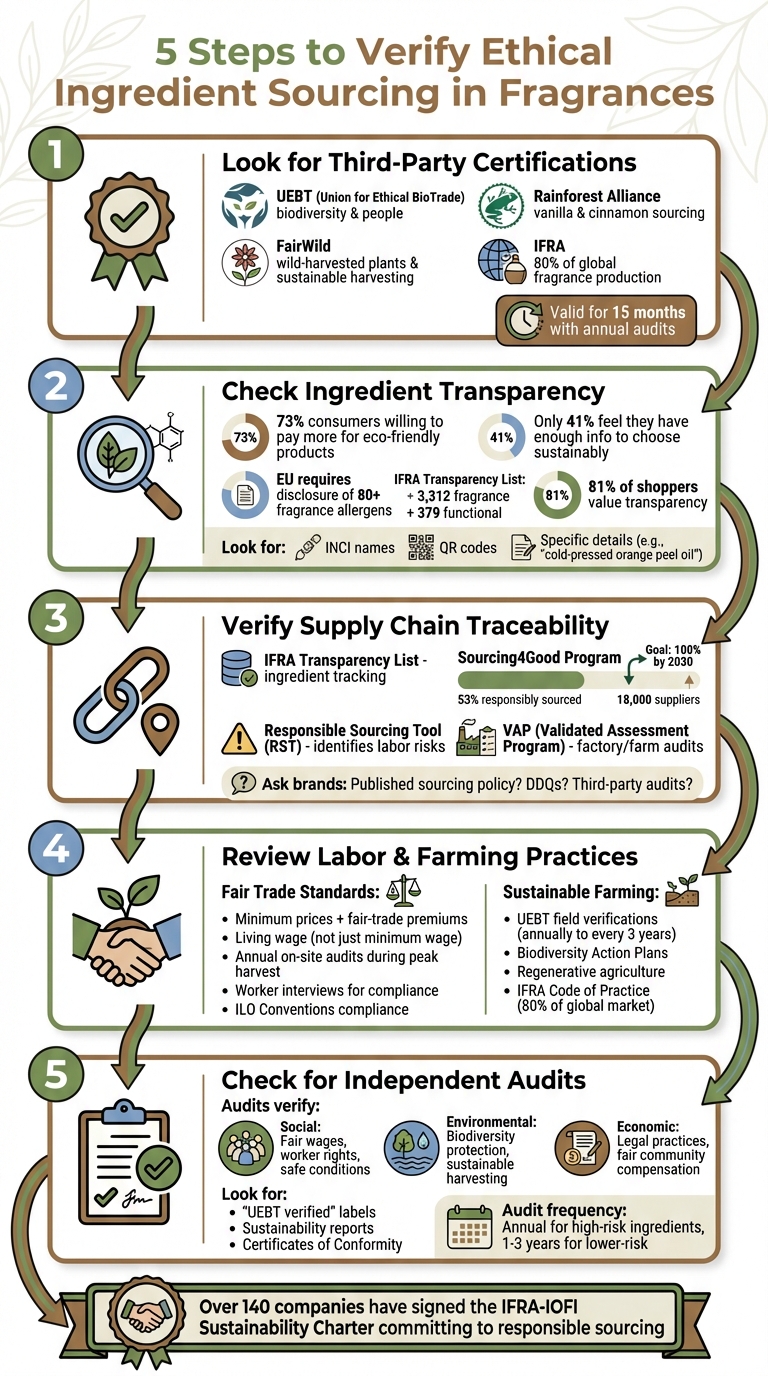
5 lépés az etikus illatösszetevő-beszerzés ellenőrzéséhez
1. lépés: Keresse a független tanúsítványokat
A harmadik fél által kiadott tanúsítványok szigorú auditokon keresztül nyújtanak független igazolást az állításokról, ahelyett hogy önbevalláson alapuló információkra támaszkodnának. Ezeket a külső ellenőrzéseket akkreditált szervezetek végzik, biztosítva, hogy az ellátási lánc gyakorlatai összhangban legyenek azzal, amit a címkék ígérnek. Íme néhány kulcsfontosságú tanúsítvány, amely az etikus beszerzést emeli ki az illatiparban.
Elsőbbséget élvező tanúsítványok
Illattermékek értékelésekor összpontosítson azokra a jelölésekre, amelyeket etikus beszerzés iránt elkötelezett szervezetek adnak ki. Az egyik kiemelkedő tanúsítvány az Union for Ethical BioTrade (UEBT), amely igazolja, hogy a botanikai alapanyagokat a biodiverzitás és az érintett emberek tiszteletben tartásával termesztik vagy takarítják be. A Rainforest Alliance gyakran működik együtt az UEBT-vel, különösen olyan összetevők esetében, mint a vanília és a fahéj, a Herbs & Spices Programme részeként. A vadon gyűjtött növényeknél a FairWild tanúsítvány olyan kérdésekkel foglalkozik, mint a fenntartható betakarítás és az ökoszisztémák megőrzése. Bár az International Fragrance Association (IFRA) elsősorban a biztonsági szabványokra összpontosít, gyakorlati kódexe iránymutatásokat tartalmaz az összetevők tisztaságára és eredetére vonatkozóan. Figyelemre méltó, hogy az IFRA tagjai a globális illatgyártás mintegy 80%-áért felelnek.
Mit biztosítanak ezek a tanúsítványok?
Az ilyen tanúsítványok helyszíni auditokra támaszkodnak a méltányos bérek, a biztonságos munkakörnyezet és az ellátási lánc integritásának megerősítéséhez. Ahogy a FairWild Foundation fogalmaz:
"Auditált rendszerünk teljes nyomonkövethetőséget és eredetigazolást biztosít, választ adva a vállalkozások előtt álló mai kritikus kihívásokra – a komplex jogi keretrendszerekben való eligazodástól az etikusan beszerzett összetevők iránti növekvő igény kielégítéséig."
Hitelességük megőrzése érdekében a legtöbb tanúsítvány rendszeres auditokat ír elő. A FairWild tanúsítványok például 15 hónapig érvényesek, és évente helyszíni ellenőrzést igényelnek ahhoz, hogy naprakészek maradjanak.
2. lépés: Ellenőrizze az összetevők átláthatóságát
Miért fontos a teljes összetevő-feltárás?
Az illatcímkék gyakran számos vegyi anyagot rejtenek el olyan homályos kifejezések mögé, mint a "fragrance" vagy a "parfum", ami szinte lehetetlenné teszi a potenciális allergének azonosítását vagy az etikus beszerzés ellenőrzését. Cat Chen, a Skylar alapítója így foglalja össze a problémát:
"Amikor elolvas egy illat összetevőcímkéjét, gyakorlatilag alkoholt lát… valamint fragrance vagy parfum megjelölést, ami egy trójai faló: szó szerint több ezer összetevőt rejthet, köztük allergiát kiváltó anyagokat is."
Bár a fogyasztók 73%-a hajlandó többet fizetni környezetbarát termékekért, mindössze 41% érzi úgy, hogy elegendő információval rendelkezik fenntartható döntések meghozatalához. A teljes összetevő-feltárás kulcsfontosságú az etikus beszerzésre vonatkozó állítások ellenőrzéséhez. Enélkül nincs mód annak megerősítésére, hogy az összetevőket fenntarthatóan takarították-e be, méltányos kereskedelemből származnak-e, vagy mentesek-e az olyan káros vegyi anyagoktól, mint a ftalátok – az endokrin rendszert megzavaró anyagok, amelyek gyakran a "fragrance" gyűjtőfogalom alatt rejtőznek.
Az átlátható márkák egy lépéssel tovább mennek: elkülönítik az illatösszetevőket (amelyek az illatot adják) a funkcionális összetevőktől (például tartósítószerektől, oldószerektől és antioxidánsoktól). Emellett az allergéneket is azonosítják. Az EU például ma már több mint 80 ismert illatallergén feltüntetését írja elő, ami jelentős növekedés a korábbi 26-hoz képest. Természetes összetevők esetén azok a márkák, amelyek olyan részleteket is megadnak, mint a felhasznált növényi rész és az extrakciós módszer (az ISO 9235 szabványokkal összhangban), magasabb szintű átláthatóságot mutatnak. Ezek a részletek segítik a fogyasztókat abban, hogy kritikusan értékeljék egy márka etikus és fenntartható gyakorlatait.
Hogyan vizsgálja meg egy márka átláthatóságát?
Kezdje a márka weboldalának, csomagolásának és az esetleges QR-kódoknak az áttekintésével. Az igazán átlátható vállalatok az összetevőket INCI (International Nomenclature of Cosmetic Ingredients) neveken tüntetik fel, nem pedig homályos marketingkifejezésekkel. A 2025-ös IFRA Transparency List 3 691 összetevőt tartalmaz – 3 312-t illatokhoz és 379-et funkcionális felhasználásra –, világos mércét kínálva arra, hogyan néz ki a teljes feltárás.
Hasonlítsa össze az összetevőlistákat a kiskereskedők által tiltott listákkal, például a Credo "Dirty List" listájával, hogy azonosítsa az esetleges korlátozott anyagokat. Sok márka ma már QR-kódokat helyez el, amelyek közvetlenül részletes összetevő-bontásokhoz vezetnek. Figyeljen arra, hogy a márka megkülönbözteti-e a természetes és szintetikus összetevőket, és ad-e konkrét részleteket, például "hidegen sajtolt narancshéjolaj" megnevezést az általános "narancsolaj" helyett. A világos és pontos összetevőlisták nemcsak az allergének azonosítását segítik, hanem azt is biztosítják, hogy a termékek összhangban legyenek a fenntartható és méltányos beszerzési gyakorlatokkal. Mivel a vásárlók 81%-a online és üzletben egyaránt értékeli az átláthatóságot, az etikus márkák jellemzően minden platformon könnyen elérhetővé teszik ezeket az információkat.
3. lépés: Ellenőrizze az ellátási lánc nyomonkövethetőségét
Nyomonkövethetőségi eszközök és technológiák
A nyomonkövethetőség biztosítja, hogy az etikus gyakorlatok a termék teljes útja során érvényesüljenek – az összetevők betakarításától egészen a polcán álló végső flakonig. Ez a folyamat elengedhetetlen a méltányos munkára és fenntarthatóságra vonatkozó állítások igazolásához. A nagy illatbeszállítók, például a Givaudan, több mint 10 000, világszerte beszerzett természetes nyersanyaggal dolgoznak, ami rámutat arra, mennyire fontosak a robusztus rendszerek az egyes összetevők útjának nyomon követéséhez.
Számos eszközt és kezdeményezést fejlesztettek ki a nyomonkövethetőség támogatására. Az IFRA Transparency List, amelyet gyakran a "parfümőr palettájaként" említenek, nyilvános áttekintést ad az illatokban használt összetevőkről, segítve a nyomon követési erőfeszítéseket. Egy másik kezdeményezés, a Sourcing4Good Program, 18 000 beszállítónál figyeli a munkakörülményeket, a biodiverzitást és a fenntarthatóságot egy négyszintű rendszer segítségével. 2024-ben a programban a beszerzési kiadások alapján az anyagok és szolgáltatások 53%-át felelősen beszerzettnek minősítették, az ambiciózus cél pedig a 100% elérése 2030-ra.
További eszközök közé tartozik a Responsible Sourcing Tool (RST), amely iparág, árucikk és ország alapján azonosítja a gyermekmunka és a kényszermunka kockázatait, valamint a Responsible Business Alliance Validated Assessment Program (VAP) programja, amely gyárakban és gazdaságokban auditálja a körülményeket a társadalmilag és környezetileg felelős gyakorlatok biztosítása érdekében. Ezenkívül az UEBT Ethical BioTrade Standard, különösen a 4. alapelv, a nyomonkövethetőség garantálására összpontosít a komplex ellátási láncokban – különösen a távoli területekről származó összetevők esetében, ahol gyakoriak a környezeti és gazdasági kihívások.
Ezeket az erőforrásokat szem előtt tartva elkezdheti feltenni a márkáknak a megfelelő kérdéseket, hogy megerősítse: teljesen átláthatóak összetevőik eredetét illetően.
Kérdések, amelyeket érdemes feltenni a márkáknak az ellátási láncukról
Egy márka nyomonkövethetőség iránti elkötelezettségének felméréséhez először kérdezze meg, rendelkezik-e közzétett Felelős Beszerzési Szabályzattal – a Givaudan iparági mércét állított fel azzal, hogy elsőként vezetett be ilyet. Kérjen információt konkrét beszerzési projektekről, például az egyiptomi jázminról, a haiti vetiverről vagy az indonéz pacsuliról, hogy megerősítse a márka aktív jelenlétét a forrás szintjén. Az is fontos, hogy kiderítse, a márka biztosítja-e az átláthatóságot a teljes értékláncban, beleértve az elsődleges gyártókat, termesztőket és gyűjtőket.
Azt is megkérdezheti, hogy a márka használ-e Due Diligence Questionnaires (DDQ) kérdőíveket és harmadik fél által végzett auditokat, például a Responsible Business Alliance Validated Assessment Programját. Ezek az intézkedések kulcsfontosságúak, mert a gazdaságok vagy gyűjtők szintjén alkalmazott etikus gyakorlatok közvetlenül befolyásolják mind a környezeti fenntarthatóságot, mind a méltányos munkakörülményeket. Azoknak a márkáknak, amelyek prioritásként kezelik a nyomonkövethetőséget, részletes beszerzési jelentésekkel kell tudniuk alátámasztani állításaikat.
Személyes illatszakértője már várja
Töltse ki rövid illatkvízünket, és fedezzen fel hiteles designer és niche parfümöket, amelyek az ízléséhez illenek – próbálja ki őket 2–8ml-es dekantokban és mintákban, hogy mindegyiket kipróbálhassa, mielőtt teljes flakon mellett dönt.
Találja meg illatát4. lépés: Tekintse át a munkaügyi és gazdálkodási gyakorlatokat
Fair trade szabványok
Az etikus munkaügyi gyakorlatok a fenntartható illatanyag-beszerzés egyik alapvető pillérét jelentik, kiegészítve az összetevők átláthatóságát és nyomonkövethetőségét.
A fair trade tanúsítványok itt létfontosságú szerepet játszanak. Biztosítják a minimumárakat, és fair trade prémiumokat nyújtanak, amelyek közösségfejlesztési projekteket finanszíroznak. Ezek a tanúsítványok azt is célozzák, hogy a gazdák és betakarítók megélhetést biztosító bért kapjanak – olyat, amely elegendő az alapvető szükségletek fedezésére –, ne csupán a jogszabályi minimumot, amely a botanikai ellátási láncokban gyakran elégtelen.
"A Fair Trade szabványok révén segítjük a márkákat környezeti, társadalmi és vállalatirányítási (ESG) céljaik teljesítésében, és küldetésünk megvalósításában: előnyöket nyújtani a termelőknek, vállalkozásoknak és fogyasztóknak." — Fair Trade USA
Fontos megkérdezni, hogy a márkák végeznek-e éves helyszíni auditokat a betakarítás csúcsidőszakában. Ezeknek az auditoknak bizalmas munkavállalói interjúkat is tartalmazniuk kell a méltányos bérek, a biztonságos munkakörülmények és az alapvető Nemzetközi Munkaügyi Szervezet (ILO) egyezmények – például az egyesülési szabadság, az egyenlő bérezés és a gyermekmunka tilalma – betartásának ellenőrzésére. Az Union for Ethical BioTrade (UEBT) tanulmánya kiemeli, hogy a méltányos díjazás biztosítása továbbra is jelentős kihívás, mivel a botanikai ellátási láncokban a szedők és gazdák esetében gyakran még a minimálbérnek megfelelő szint sem teljesül.
Az olyan tanúsítványok, mint a FairWild a vadon gyűjtött összetevőkre vagy az UEBT verifikáció, az etikus beszerzés iránti elkötelezettséget jelzik. Ezek a tanúsítványok emberi jogi értékeléseket és terepszintű vizsgálatokat is tartalmaznak. A FairWild különösen hosszú távú elköteleződést tükröz a fenntarthatóság javítása mellett. Emellett az IFRA — IOFI Sustainability Charter, amelyet több mint 140 vállalat írt alá, felelős beszerzésre és a munkavállalók jóllétének előtérbe helyezésére kötelezi tagjait.
Az etikus munkaügyi gyakorlatok átláthatóságot követelnek, a fenntartható gazdálkodás pedig biztosítja mind az ökoszisztémák, mind az ellátási láncok hosszú élettartamát.
Fenntartható gazdálkodási módszerek
A fenntartható gazdálkodás túlmutat a károk minimalizálásán – aktívan megújítja az ökoszisztémákat. Az olyan szervezetek, mint az UEBT, a gazdálkodási gyakorlatokat nemzetközi társadalmi, környezeti és gazdasági mércék alapján értékelik. Hasznos különbséget tenni a "felelős beszerzés" között, amely a kockázatok csökkentésére összpontosít, és az "etikus beszerzés" között, amely a biodiverzitás erősítését célozza.
Az UEBT terepi ellenőrzéseket végez évente vagy háromévente, az ellátási lánc kockázati szintjétől függően. Sok vezető beszállító vállalta, hogy 2030-ra teljes mértékben fenntartható gyakorlatokat vezet be. A fogyasztóknak érdemes olyan márkákat is keresniük, amelyek Biodiversity Action Planeket hajtanak végre, vagy regeneratív mezőgazdaságot alkalmaznak az ökológiai egyensúly fenntartása érdekében olyan összetevők beszerzésekor, mint a virágok, a faanyagok és a gyanták.
Továbbá az International Fragrance Association (IFRA) alá tartozó vállalatoknak – amelyek a globális illatpiac mintegy 80%-át képviselik – szigorú gyakorlati kódexet kell követniük. Ez magában foglalja az összetevők beszerzését szigorú környezeti és nyomonkövethetőségi auditok mellett. Ezek az intézkedések biztosítják, hogy a fenntartható gazdálkodási gyakorlatok összhangban legyenek az ökoszisztéma-megőrzés és az etikus termelés tágabb céljaival.
5. lépés: Ellenőrizze a független auditokat
A független auditok jelentik a kirakós utolsó darabját az etikus beszerzés terén, biztosítva, hogy a tanúsítványokat és az összetevők átláthatóságát szilárd, ellenőrizhető gyakorlatok támasszák alá.
Mit vizsgálnak a független auditok?
A független auditok pártatlan bizonyítékként szolgálnak arra, hogy egy márka etikai állításai kiállják az alapos vizsgálat próbáját. Ezek az auditok globálisan elismert szabványok alapján értékelik az ellátási láncokat, közvetlenül a gazdaságokban és gyűjtőhelyeken ellenőrizve a gyakorlatokat. A már meglévő átláthatósági és nyomonkövethetőségi erőfeszítésekre építenek.
Az auditok három fő területre összpontosítanak:
- Társadalmi: Méltányos bért kapnak a munkavállalók? Tiszteletben tartják a jogaikat? Biztonságosak a munkakörülményeik?
- Környezeti: Védik a biodiverzitást? Fenntarthatóak a betakarítási módszerek? Felelősen bánnak a vadon élő fajokkal? [9, 13]
- Gazdasági: Jogszabálykövetők a betakarítási gyakorlatok? A helyi közösségek méltányos kompenzációban részesülnek? [9, 13]
"Az UEBT a botanikai ellátási láncok jelenlegi gyakorlatait az UEBT szabvány alapján értékeli, amely nemzetközileg elismert, és lefedi a biodiverzitásból származó összetevők beszerzéséhez kapcsolódó fontos társadalmi, környezeti és gazdasági kérdéseket." – UEBT
A leghatékonyabb auditprogramok túlmutatnak az egyszerű megfelelt/nem felelt meg rendszeren. Ehelyett részletes értékeléseket adnak, és megvalósítható ajánlásokat kínálnak a folyamatos fejlesztéshez. Az auditok gyakorisága a kockázati szinttől függ – a magas kockázatú, vadon gyűjtött összetevők éves felülvizsgálatot igényelhetnek, míg az alacsonyabb kockázatú ellátási láncoknál elegendő lehet az egy-háromévenkénti audit.
Hogyan ismerhetők fel a független auditokat alkalmazó márkák?
Most, hogy tudja, mit foglalnak magukban az auditok, könnyebb megtalálni azokat a márkákat, amelyek támaszkodnak rájuk.
Keressen olyan megfogalmazásokat a csomagoláson vagy a márka weboldalán, mint "UEBT verified responsibly sourced [ingredient]". Nézze át a fenntarthatósági jelentéseiket auditösszefoglalók vagy megfelelőségi tanúsítványok (Certificates of Conformity) után kutatva [9, 5]. Használhat olyan eszközöket is, mint az Ethical Supply Chain Program Supplier Lookup felülete annak ellenőrzésére, hogy egy márka vagy gyár tanúsított-e.
Győződjön meg arról, hogy az auditokat jó hírű harmadik fél szervezetek végzik, például UEBT-szakértők vagy az Ethical Supply Chain Program által jóváhagyott auditorok [9, 30]. Azt is erősítse meg, hogy ezek az auditok a tényleges forrásokra, például gazdaságokra vagy helyi feldolgozókra is kiterjednek. Ez biztosítja, hogy az etikus gyakorlatok már az ellátási lánc legelső pontjától érvényesüljenek.
Összegzés
Etikus fogyasztói szokások kialakítása
Fogyasztóként a megfontolt döntések valódi hatást gyakorolhatnak az etikus beszerzésre és a fenntarthatóságra. Kezdje azzal, hogy olyan szervezetek tanúsítványait keresi, mint a Leaping Bunny vagy a Fairtrade, amelyek biztosítják, hogy a termékek megfeleljenek meghatározott etikai szabványoknak. Követelje meg a teljes összetevő-átláthatóságot és az ellátási lánc nyomonkövethetőségét, és vegye figyelembe a munkaügyi gyakorlatokat, valamint az auditfolyamatokat a márkák kiválasztásakor. A "kevesebbet, de jobbat" szemlélet nemcsak a hulladékot csökkenti, hanem támogatja a biodiverzitás védelmét és a helyi közösségek felemelését is.
Ahogy Aurélien Guichard parfümőrmester fogalmaz:
"Az egyik legetikusabb dolog, amit az illatmárkák tehetnek, hogy olyan nyersanyagokat szereznek be, amelyeket a természet és az emberek tiszteletben tartásával állítanak elő".
Előnyben részesítheti azokat a márkákat is, amelyek újratölthető csomagolást kínálnak, upcyclingolt összetevőket használnak, vagy közvetlenül dolgoznak együtt biogazdálkodókkal. Ha információhiányt tapasztal, ne habozzon felvenni a kapcsolatot a márkákkal a tisztázás érdekében. Ezek az apró, mégis jelentős szokások okosabb és felelősebb illatválasztások felé terelhetik.
Hogyan támogatja a Scento a felelős illatfelfedezést?
A Scento gyakorlati módot kínál a felelős illatfelfedezésre, miközben az iparág egyik legnagyobb kihívására – a pazarlásra – is választ ad. Az eredeti designer és niche illatok kisebb, kimért kiszerelésekben, például 0,75 ml-es, 2 ml-es és 8 ml-es méretben történő kínálásával a Scento lehetővé teszi, hogy teljes méretű üveg megvásárlása nélkül fedezze fel a luxusillatokat. Ez a megközelítés nemcsak a hulladékot csökkenti, hanem lehetőséget ad arra is, hogy tesztelje egy illat tartósságát és megfelelőségét, mielőtt nagyobb befektetés mellett döntene. Több mint 1 000 designer illatból álló választékával és opcionális, havi 8 ml-es előfizetésével a Scento segít kifinomult illatgardróbot kialakítani, miközben mérsékli a környezeti terhelést.
GYIK
Milyen tanúsítványokat keressek, hogy biztos lehessek a parfümök etikus összetevő-beszerzésében?
A parfümök etikus összetevő-beszerzésének támogatásához figyeljen az olyan tanúsítványokra, mint az UEBT (Union for Ethical BioTrade) és a FairWild. Az UEBT a felelős gyakorlatokat hangsúlyozza, a biodiverzitásra, a méltányos előnymegosztásra és a munkajogok tiszteletben tartására összpontosítva. A FairWild eközben biztosítja, hogy a vadon élő növényeket felelősen takarítsák be, előtérbe helyezve a biodiverzitás megőrzését és az etikus kereskedelmet.
Ezek a tanúsítványok bizalmat adnak abban, hogy parfümje összetevőit az emberek és a bolygó iránti gondossággal szerezték be.
Hogyan ellenőrizhetem, hogy egy parfümmárka etikusan beszerzett összetevőket használ-e?
Annak megállapításához, hogy egy parfümmárka etikusan beszerzett összetevőket használ-e, először vizsgálja meg, mennyire nyílt a beszerzési gyakorlataival kapcsolatban. Keressen olyan márkákat, amelyek világosan megosztják, honnan származnak az összetevőik, bemutatják a fenntarthatóság előmozdításáért tett erőfeszítéseiket, és betartják az elismert biztonsági szabványokat. Sok etikus vállalat összetevő-szójegyzéket vagy részletes beszerzési információkat tesz közzé közvetlenül a weboldalán, megkönnyítve értékeik felmérését.
További hasznos forrás az International Fragrance Association (IFRA), amely globálisan elismert szabványokat állít fel az illatösszetevők biztonságára és átláthatóságára vonatkozóan. Annak ellenőrzése, hogy egy márka követi-e az IFRA irányelveit, további bizonyosságot adhat az etikus beszerzés iránti elkötelezettségéről. Olyan vállalatokra összpontosítson, amelyek aktívan és nyíltan bizonyítják elkötelezettségüket az etikus és fenntartható gyakorlatok mellett.
Miért fontos a független audit az etikus összetevő-beszerzésben?
A független audit kulcsszerepet játszik annak ellenőrzésében, hogy a márkák betartják-e az etikus beszerzési gyakorlatokat. Harmadik fél általi ellenőrzésre támaszkodva átláthatóságot biztosít és elszámoltathatóvá teszi a vállalatokat, megerősítve, hogy az összetevőket felelősen és a környezet iránti gondossággal szerzik be.
Ez a megközelítés védi a biodiverzitást, támogatja az emberi jogokat, és biztosítja, hogy a beszállítók megfeleljenek a szigorú etikai irányelveknek. Emellett erősíti a fogyasztói bizalmat azáltal, hogy bemutatja a márka elkötelezettségét a méltányos gyakorlatok és a fenntartható beszerzés iránt.