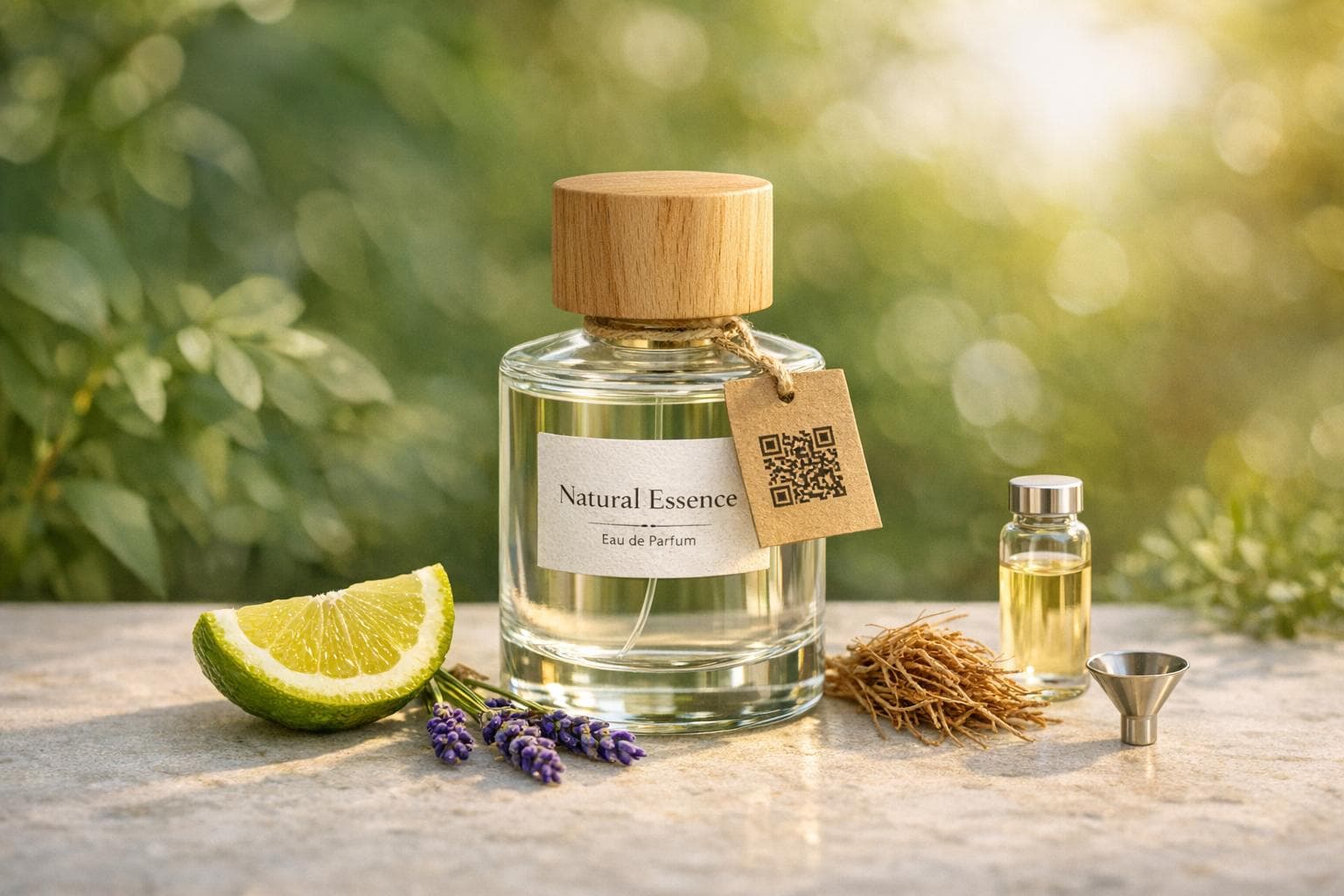
Az illatok világában a fenntarthatóság ma már nem választható lehetőség – ez az, amit a fogyasztók elvárnak. Mivel a bio parfümök piaca várhatóan 2025-re eléri a 7,5 milliárd eurót, a vásárlók előnyben részesítik azokat a márkákat, amelyek összhangban állnak értékeikkel: átláthatóság, etikus gyakorlatok és kevesebb hulladék. Íme az összkép:
- Csomagolási hulladék: Évente a 20 milliárd illatcsomagolási egység 95%-át egyetlen használat után kidobják.
- Alapanyag-beszerzés: A túlzott kitermelés és a klímaváltozás veszélyezteti az olyan kulcsfontosságú alapanyagokat, mint a szantálfa és a jázmin.
- Fogyasztói elvárások: A Z generáció, amely a világ népességének 25%-át teszi ki, élen jár a természetes összetevők és a beszerzés teljes körű feltüntetése iránti igény erősödésében.
A siker érdekében a márkák olyan megoldásokat alkalmaznak, mint az újratölthető csomagolás, a laborban előállított összetevők és a blokklánc az ellátási lánc átláthatóságáért. Ezek a változtatások nemcsak a környezeti aggályokra adnak választ, hanem bizalmat is építenek a környezettudatos fogyasztók körében. A kérdés már nem az, hogy kell-e lépni – hanem az, milyen gyorsan tudnak a márkák alkalmazkodni ezekhez az egyre magasabb elvárásokhoz.
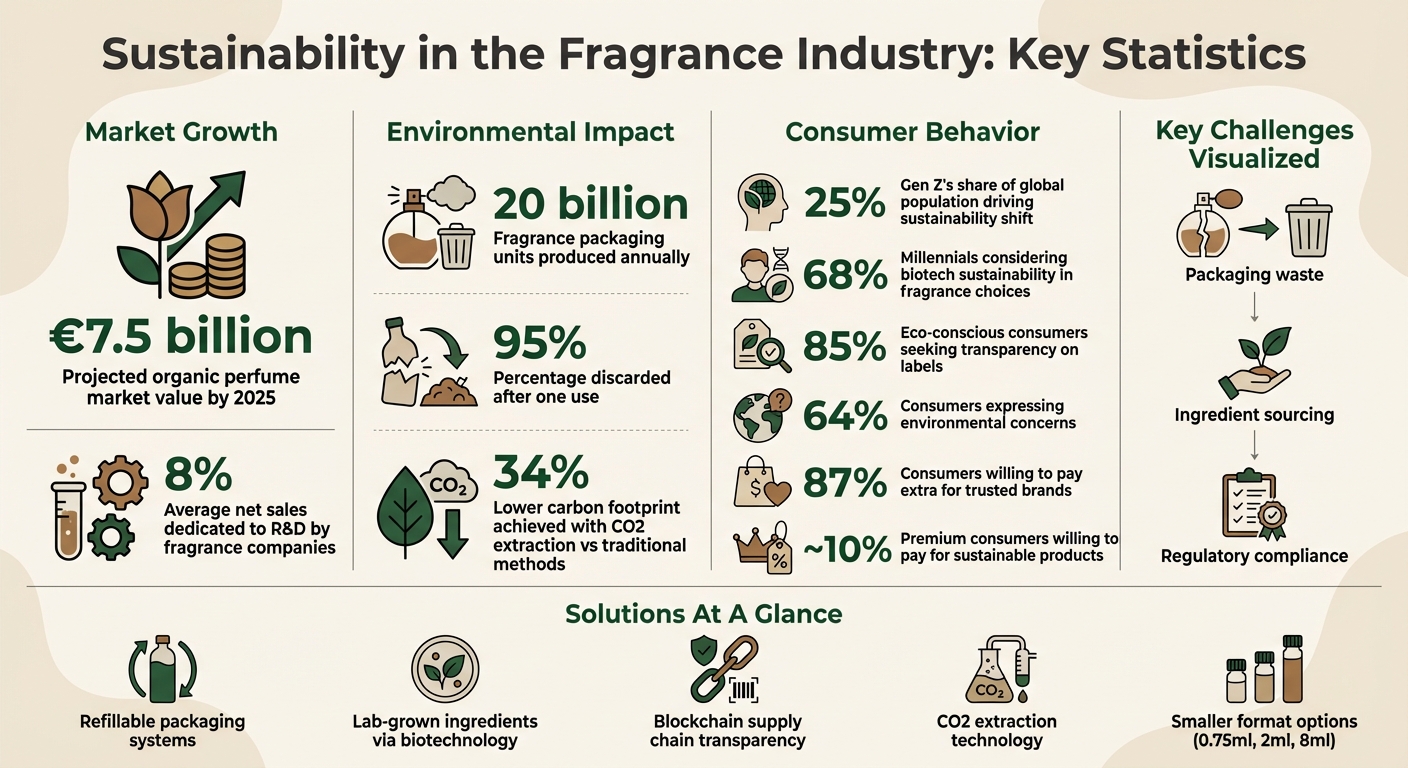
Fenntarthatósági statisztikák az illatiparban, 2025
A problémák: fenntarthatósági kihívások az illatiparban
Az illatipar egyre növekvő fenntarthatósági kihívásokkal küzd, miközben a fogyasztói elvárások folyamatosan változnak. Az erőforrás-igényes gyártási módszerektől a környezetbarát anyagok magas költségéig a márkák összetett akadályrendszerrel szembesülnek a zöldebb gyakorlatok bevezetésére irányuló törekvéseik során.
A hagyományos parfümgyártás környezeti költségei
A hagyományos parfümgyártás korántsem környezetbarát. Számos illat szintetikus összetevőkre épül, amelyek kőolaj-alapú vegyi anyagokból származnak. E vegyületek előállítása jelentős energiát igényel, ami magas szén-dioxid-kibocsátással jár. Ugyanakkor a természetes összetevők sem mentesek a hátrányoktól – az illóolajok kinyerése gyakran hatalmas mennyiségű nyersanyag feldolgozását igényli, ami megterhelheti az erőforrásokat.
A csomagolás tovább súlyosbítja a problémát. A luxusra összpontosító formatervek gyakran az esztétikát helyezik a fenntarthatóság elé, ami túlzott hulladékképződéshez vezet. Amikor a fogyasztók nem használják el a teljes méretű üvegeket, a gyártás és a csomagolás környezeti terhe még tovább nő. Ezek a kérdések jól mutatják, mennyire sürgető a fenntarthatóbb megközelítések alkalmazása az illatiparban.
Szabályozási követelmények és az átláthatóság iránti igény
A szigorodó szabályozások, például az Európai Unió összetevő-feltüntetési szabályai arra kényszerítik a márkákat, hogy újragondolják működésüket. Ezek a szabályok teljes átláthatóságot követelnek meg az illatkompozíciókkal kapcsolatban, beleértve az allergéneket és a potenciálisan káros vegyi anyagokat is. Sok márka számára e követelmények teljesítése az ellátási láncok átalakítását és szigorú dokumentációs folyamatok bevezetését jelenti – olyan lépéseket, amelyek különösen nagy kihívást jelenthetnek a hagyományos gyártók számára.
A jogszabályi megfelelésen túl a mai fogyasztók ennél is többet várnak. Az etikus beszerzés, a tisztességes munkakörülmények és a környezeti felelősségvállalás ma már kulcsfontosságú szempontok a vásárlók számára. Ezen elvárások teljesítéséhez a márkáknak be kell fektetniük az ellátási lánc hitelesítésébe, független tanúsítványokat kell szerezniük, és folyamatos ellenőrzési rendszereket kell létrehozniuk. A kisebb illatházak számára ezek az elvárások jelentős működési átalakulást idézhetnek elő, olyan erőforrásokat és szakértelmet igényelve, amelyekkel esetleg nem rendelkeznek.
A környezetbarát anyagok magasabb költségei
A fenntartható anyagokra való átállás gyakran jelentős többletköltséggel jár. A bio illóolajok például drágábbak az alacsonyabb hozam és a szigorúbb termesztési előírások miatt. Hasonlóképpen, az újrahasznosított üveg többe kerül, mint a hagyományos üveg, és a biológiailag lebomló műanyagok is költségesebbek, mint a megszokott alternatívák.
Ezek a többletköltségek komoly egyensúlyozás elé állítják a márkákat. Ha a kiadásokat a fogyasztókra hárítják, az elidegenítheti az árérzékeny vásárlókat, míg a költségek saját viselése a már eleve szűk haszonkulcsokat apaszthatja tovább. A kisebb kiszerelések, például a dekantok, tovább erősítik ezt a problémát – ezeknél az egységnyi csomagolási költség gyakran aránytalanul magas, ami még nehezebbé teszi a fenntartható döntések pénzügyi indoklását. Ez a feszültség jól rávilágít arra, mennyire sürgető kreatív megoldásokat találni, hogy a fenntarthatóság az illatiparban egyszerre legyen hatékony és gazdaságilag életképes.
A megoldások: hogyan építsünk fenntartható parfümmarketinget
A fenntarthatóság kezelése az illatok világában konkrét, megvalósítható stratégiákat igényel. Olyan módszerek bevezetésével, amelyek csökkentik a környezeti terhelést, miközben megőrzik termékeik vonzerejét, a márkák kompromisszumok nélkül felelhetnek meg a fogyasztói elvárásoknak.
Etikus alapanyag-beszerzés és tanúsított anyagok
Az új kivonási technológiák átalakítják az összetevők beszerzésének módját. Jó példa erre a szuperkritikus CO2-extrakció – alacsony hőmérsékleten működik, elkerüli a petrolkémiai maradványokat, és megőrzi az illatmolekulák integritását. 2026 februárjában az LMR Naturals by IFF bemutatta a Tonka Bean CO2 Absolute összetevőt Conscious Collection kollekciójának részeként a franciaországi Aubrac-ban. Az eljárás megújuló, újrahasznosított CO2-t használ, és a 34%-kal alacsonyabb szénlábnyomot eredményez a régebbi módszerekhez képest. Alexandra Carlin, az IFF vezető parfümőre így fogalmazott:
"Imádom, hogy új, lenyűgöző dimenziókat nyit meg… Egyszerre váratlanul édes és sós, és mélységesen izgalmas."
Egy másik ígéretes megközelítés a biotechnológia, amely laborban előállított alternatívákat hoz létre olyan összetevőkhöz, mint az oud, a vanília és a szantálfa. Ezek az innovációk a természetes profilokat utánozzák anélkül, hogy megterhelnék a vadon élő erőforrásokat. Mivel a bio parfümök piaca várhatóan 2025-re eléri a 7,5 milliárd dollárt, és a millenniumi generáció 68%-a prioritásként tekint a biotechnológia fenntarthatóságára illatválasztáskor, ez az elmozdulás egyre nagyobb lendületet kap. A helyi közösségekkel kötött fair trade megállapodások az olyan növényi alapanyagok esetében, mint az afrikai marula és az amazóniai tonkabab, biztosítják a fenntartható betakarítást, miközben támogatják a helyi megélhetést. Emellett az upcycling – például az elhasznált kávézacc melléktermékként való felhasználása – gazdagítja az illatpalettát, miközben csökkenti a hulladékot.
Az alapanyag-beszerzés ezen fejlesztéseit hasonlóan tudatos csomagolási innovációk egészítik ki.
Hulladékcsökkentő csomagolási megoldások
Az újratölthető rendszerek egyre nagyobb teret nyernek, lehetővé téve a fogyasztók számára, hogy megőrizzék szépen megtervezett üvegeiket, miközben utántöltőt vásárolnak. A könnyített üveg segít csökkenteni a szállításból eredő kibocsátásokat, bár a márkáknak ezt össze kell hangolniuk a luxusérzet megőrzésével. Az egynemű anyagból vagy növényi alapú csomagolás használata leegyszerűsíti az újrahasznosítást, és átgondolt kivitelezés esetén zökkenőmentesen illeszkedhet a márka esztétikájába.
A csomagolási stratégiáknak azonban tükrözniük kell a márka identitását. A minimalista niche márkák például könnyebben fogadhatnak el letisztult megoldásokat, míg a nagy múltú luxusházak kifinomultabb koncepciókat igényelhetnek. A kisebb kiszerelések, például a dekantok, természetes módon kezelik a hulladék kérdését azzal, hogy csökkentik a befejezetlenül hátrahagyott teljes méretű üvegek számát.
Technológia alkalmazása az etikus gyakorlatok igazolására
Az összetevőkön és a csomagoláson túl a technológia kulcsszerepet játszik az etikus gyakorlatok biztosításában az ellátási lánc teljes egészében.
A blokklánc-technológia manipulálhatatlan nyomon követést biztosít az összetevők eredete és az ellátási lánc folyamatai számára. A prémium márkák ezt már most is kihasználják, hogy visszakövethető adatokat kínáljanak, így a fogyasztók betekintést nyerhetnek az útba a forrástól egészen a késztermékig. Hasonlóképpen, a csomagoláson elhelyezett QR-kódok lehetővé teszik a vásárlók számára, hogy azonnal hozzáférjenek a részletes beszerzési információkhoz, megfelelve annak a környezettudatos fogyasztók 85%-át kitevő csoportnak, amely átláthatóságot keres a címkéken.
Az Életciklus-elemzés (LCA) egy másik értékes eszköz, amely segít a márkáknak azonosítani azokat a területeket, ahol csökkenthető a szén-dioxid-kibocsátás anélkül, hogy ez az illatok minőségének rovására menne. Bertrand de Préville, az LMR Naturals by IFF vezérigazgatója így fogalmazott:
"Az aubrac-i CO2-extrakciós egységünk lehetővé tette az LMR számára egy olyan kivonatkollekció létrehozását, amely tökéletes összhangban ötvözi a fenntarthatóságot a parfümőrök számára fontos magas hedonikus profillal."
Ezek a technológiák biztosítják, hogy a fenntarthatósági állításokat adatok támasszák alá, ezáltal erősítve a fogyasztói bizalmat.
Személyes illatszakértője már várja
Töltse ki rövid illatkvízünket, és fedezzen fel hiteles designer és niche parfümöket, amelyek az ízléséhez illenek – próbálja ki őket 2, 5, 8 és 30 ml-es dekantokban és mintákban, hogy mindegyiket kipróbálhassa, mielőtt teljes flakon mellett dönt.
Találja meg illatátHogyan erősíti a fenntarthatóság a marketinget
A fenntarthatóság a modern marketing kulcstényezőjévé vált, segítve a márkákat a bizalom és a lojalitás építésében. Amikor a vállalatok nyíltan kommunikálják környezetvédelmi törekvéseiket, rezonálnak azokkal a fogyasztókkal, akik egyre nagyobb jelentőséget tulajdonítanak az átláthatóságnak és az etikus működésnek. A globális piac is ezt a változást tükrözi, hiszen a fenntarthatóság egyre nagyobb szerepet játszik a vásárlási döntésekben.
A fenntarthatósági gyakorlatok kommunikálása
A történetmesélés az, ami a fenntarthatósági törekvéseket igazán jelentéssel telivé teszi. Azok a márkák, amelyek kiemelik összetevőik eredetét, bemutatják az olyan tanúsítványokat, mint a Cradle to Cradle, vagy beszélnek a környezetvédelmi szervezetekkel kialakított partnerségekről, mélyebb kapcsolatot teremtenek a környezettudatos fogyasztókkal. Van azonban egy fontos feltétel: a hitelesség számít. Különösen a Z generáció vásárlói bizalmatlanok a homályos állításokkal szemben. Aktívan kutatják a termékeket – gyakran olyan platformokon, mint a TikTok (#perfumetok) –, hogy ellenőrizzék egy márka ígéreteit, és megosszák megállapításaikat kortársaikkal.
Az egyensúly a cél és a termékminőség összekapcsolásában rejlik. Bár a fenntarthatóság hozzáadott értéket képvisel, az érzelmi kötődésnek a termékhez – például magához az illathoz – első helyen kell állnia. A sikeres márkák a fenntarthatóságot történetük másodlagos rétegeként szövik bele kommunikációjukba: úgy emelik az összhatást, hogy közben nem homályosítják el a terméket. Az olyan eszközök, mint a csomagoláson elhelyezett QR-kódok, könnyű hozzáférést biztosítanak a beszerzési részletekhez, bizonyítékot nyújtva, amely ellensúlyozza a zöldre festés körüli szkepticizmust.
A fogyasztók tájékoztatása a fenntarthatósági törekvésekről
Ha segítünk a fogyasztóknak megérteni a fenntarthatósági erőfeszítéseket, az erősebb kapcsolatokat épít és lojalitásra ösztönöz. Amikor a márkák elmagyarázzák, miért vezettek be olyan gyakorlatokat, mint a biotechnológia alkalmazása laborban előállított alternatívákhoz vagy a körforgásos gazdaság alapelvei, a passzív vásárlókból tájékozott támogatókat formálnak. Mivel az illatcégek átlagosan nettó árbevételük 8%-át fordítják K+F-re, e fejlesztések bemutatása rávilágít a termékeik mögött álló komplexitásra és gondosságra.
A leghatékonyabb edukációs tartalom világos és könnyen átélhető. Ahelyett, hogy technikai részletekkel árasztanák el a fogyasztókat, a márkák összpontosíthatnak a valós hatásokra – például a szén-dioxid-kibocsátás csökkentésére, a fair trade közösségek támogatására vagy a hulladék visszaszorítására. Különösen a fiatalabb fogyasztók várják el, hogy a márkák összhangban legyenek értékeikkel, és átláthatóságot tanúsítsanak. Ez a megközelítés nemcsak tájékoztat, hanem tovább erősíti a kapcsolatot a márka és közönsége között.
Hogyan támogatja a Scento a fenntartható illatfogyasztást
Az olyan márkák, mint a Scento, élen járnak a fenntartható luxus előmozdításában. Kisebb, gondosan válogatott kiszerelések – például 2 ml-es, 5 ml-es és 8 ml-es fiolák, a legtöbb parfüm esetében pedig 30 ml-es dekantüveg – kínálatával a Scento választ ad az illatiparban tapasztalható túlzott csomagolási hulladék problémájára. Ezek a kisebb méretek lehetővé teszik a fogyasztók számára, hogy felfedezzék a prémium illatokat anélkül, hogy teljes méretű üvegek mellett kellene elköteleződniük, amelyek ára gyakran meghaladja a 300 eurót, és sokszor végül felhasználatlanok maradnak.
A Scento modellje a felfedezés élményét helyezi előtérbe, miközben csökkenti a környezeti terhelést. Elegáns kristályfioláik az élvezet érzését ötvözik a felelősségtudattal, bizonyítva, hogy a fenntarthatóság és a luxus harmonikusan megfér egymás mellett. Mivel a bio parfümök piaca várhatóan 2025-re eléri a 7,5 milliárd eurót, a kisebb kiszerelések praktikus megoldást kínálnak. Egyszerre szólítják meg a Z generáció értékrendjét és azokat az illatkedvelőket, akik változatosságra vágynak pazarlás nélkül.
Összegzés: hosszú távú siker építése fenntarthatóságon keresztül
A fenntartható gyakorlatok mára a globális illatiparban a réteges fókuszból a mércévé léptek elő. Ezt az átalakulást nagyrészt a Z generáció hajtja, amely természetes összetevőket és teljes átláthatóságot követel meg az általa használt termékek esetében.
A számok világosan mutatják a helyzetet. A fogyasztók 64%-a aggódik a környezet állapota miatt, és közülük sokan hajlandók közel 10%-kal többet fizetni az olyan termékekért, amelyek fenntartható értékeket képviselnek. Még figyelemreméltóbb, hogy a fogyasztók 87%-a hajlandó többet költeni azokra a márkákra, amelyekben megbízik. Ez nem múló trend – hanem a hosszú távú vásárlói lojalitás alapja és az iparági vezető szerephez vezető út.
A zöld kémia, az etikus beszerzés és a környezetbarát csomagolás előtérbe helyezésével a márkák nemcsak ezeknek a növekvő elvárásoknak felelnek meg, hanem fel is készülnek a jövő kihívásaira, például a szigorúbb szabályozásra és a szűkülő erőforrásokra. Ezek az erőfeszítések azt bizonyítják, hogy a luxus és a fenntarthatóság nem zárják ki egymást. Az újratölthető csomagolási rendszerektől a biológiailag lebomló anyagokon át a felfedező méretű kiszerelésekig azok a márkák, amelyek őszintén elköteleződnek a környezettudatos gyakorlatok mellett, jó eséllyel megnyerik a tudatos fogyasztók egyre növekvő táborát.
Vegyük például a Scento innovatív dekant rendszerét – csökkenti a hulladékot, miközben emeli a felhasználói élményt. A valódi kérdés már nem az, hogy érdemes-e bevezetni a fenntarthatóságot, hanem az, milyen gyorsan válhat a márka DNS-ének részévé. E gyakorlatok minden szinten történő integrálása erősíti a fogyasztói bizalmat, és hosszú távú sikerre pozicionálja a vállalkozást a folyamatosan változó piacon.
GYIK
Hogyan ismerhetem fel a greenwashingot a parfümmarketingben?
A greenwashing felismeréséhez a parfümmarketingben éles szemre van szükség. Figyeljen az olyan homályos kifejezésekre, mint a "természetes" vagy "környezetbarát", amelyek mögött nincs konkrét bizonyíték vagy tanúsítvány. Egyes márkák apró kezdeményezéseket emelhetnek ki – például az újrahasznosított csomagolás használatát –, miközben elkerülik a nagyobb kérdéseket, mint az etikus beszerzés vagy az ellátási láncuk környezeti hatása.
Fontos figyelmeztető jelek közé tartoznak a fenntarthatóságra vonatkozó általános állítások, amelyek nem kínálnak egyértelmű részleteket a beszerzési gyakorlatokról vagy a gyártási módszerekről. Hogy átlásson a zajon, keressen hiteles tanúsítványokat és részletes, átlátható magyarázatokat arról, miként támasztja alá egy márka környezetvédelmi ígéreteit.
Ugyanolyan illatúak a laborban előállított illatösszetevők, mint a természetesek?
A laborban előállított illatösszetevőket úgy alkotják meg, hogy utánozzák a természetesek illatát, bár érzékelésük az adott vegyületektől függően eltérhet. Míg a szintetikus összetevőket gyakran úgy tervezik, hogy a lehető legközelebb álljanak a természetes aromákhoz, az, ahogyan az emberek ezeket az illatokat megélik, széles skálán változhat.
Mi a legfenntarthatóbb módja annak, hogy új parfümöket próbáljak ki anélkül, hogy teljes üvegeket pazarolnék el?
Az új parfümök környezettudatos kipróbálása egyszerű: válasszon kisebb, dekantált mintákat vagy discovery méreteket. Ezek lehetővé teszik, hogy különféle illatokat fedezzen fel anélkül, hogy teljes üvegek mellett kellene elköteleződnie, amelyek gyakran kihasználatlanul maradnak és hulladékot termelnek. A Scento gondosan válogatott dekantokat kínál 2 ml-es, 5 ml-es és 8 ml-es fiolákban, a legtöbb parfüm esetében pedig 30 ml-es dekantüvegben is. Ez a megközelítés nemcsak megfizethetőbbé teszi a dizájner- és niche illatok felfedezését, hanem a tudatos fogyasztást is ösztönzi, és csökkenti a környezeti terhelést.

