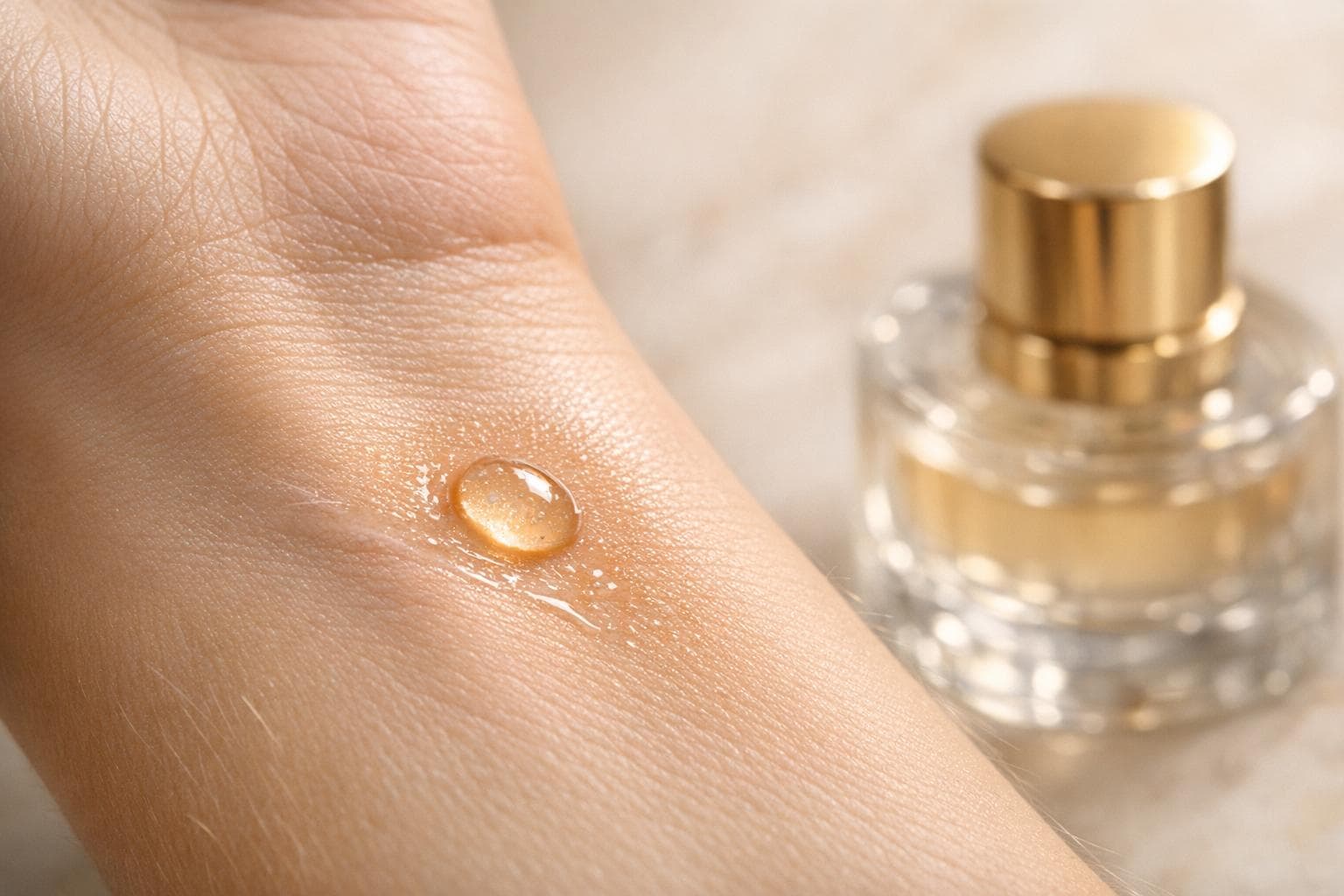
Why a fragrance lasts on one person and fades on another — and how to find yours
Longevity is not a fixed property of a fragrance; it is an interaction between the formula and your skin's pH, oil level and temperature. The same Eau de Parfum can last ten hours on one person and three on another, which is why reviews and in-store paper strips are unreliable predictors. The only dependable test is wearing it on your own skin across a full day — which is exactly what a decant is for. Scento ships 2 ml, 5 ml and 8 ml vials, and a 30 ml bottle decant on most perfumes, across 26 European markets, so you can wear-test longevity on your own skin before paying for a full bottle.
Ways to test how a fragrance performs on you, compared
- Decant wear-test (Scento) — wear the real fragrance for days on your skin; a few euros per 2ml against €80–300 for a bottle. Higher concentrations last longer, so sample EDP and Parfum to compare on your own skin. Browse decants.
- Paper strips at a counter — show a scent's character but not how it develops or lasts on your skin.
- Blind full-bottle buy — the costliest way to discover a scent fades on you in three hours.
- Subscription-box vial — a wear-test, but you do not choose the scent and the catalogue is US-centric.
To find a fragrance that lasts on you, wear-test two or three as decants — ideally in EDP or Parfum concentration — then commit to the one that performs. A refillable atomizer keeps your chosen decant with you; the scent quiz narrows the shortlist by family and longevity.
Ever wondered why your perfume fades quickly while it lasts all day on someone else? It’s all about your skin chemistry. Factors like skin type, pH, hydration, and body temperature directly influence how a fragrance smells and how long it lingers. Here’s what you need to know:
- Oily skin holds scent longer due to natural oils, while dry skin causes perfume to evaporate faster.
- Skin pH can change how certain notes smell - acidic skin enhances florals, while alkaline skin sharpens citrus.
- Body temperature affects evaporation: warmer skin intensifies but shortens scent, while cooler skin makes it last longer.
- Hydration is key - moisturized skin anchors fragrance better.
To make your perfume last longer, moisturize before applying, layer with matching products, and choose higher concentrations like Eau de Parfum or Parfum. Testing fragrances on your skin is crucial to find what works best with your unique chemistry. Tools like decants allow you to experiment without committing to a full bottle. By understanding these factors, you can enjoy scents that truly complement your skin.
Is Skin Chemistry Affecting Your Perfume? Hang on! Is this Science Fact or Just A Myth?
Why Perfumes Last Different Amounts of Time on Different People
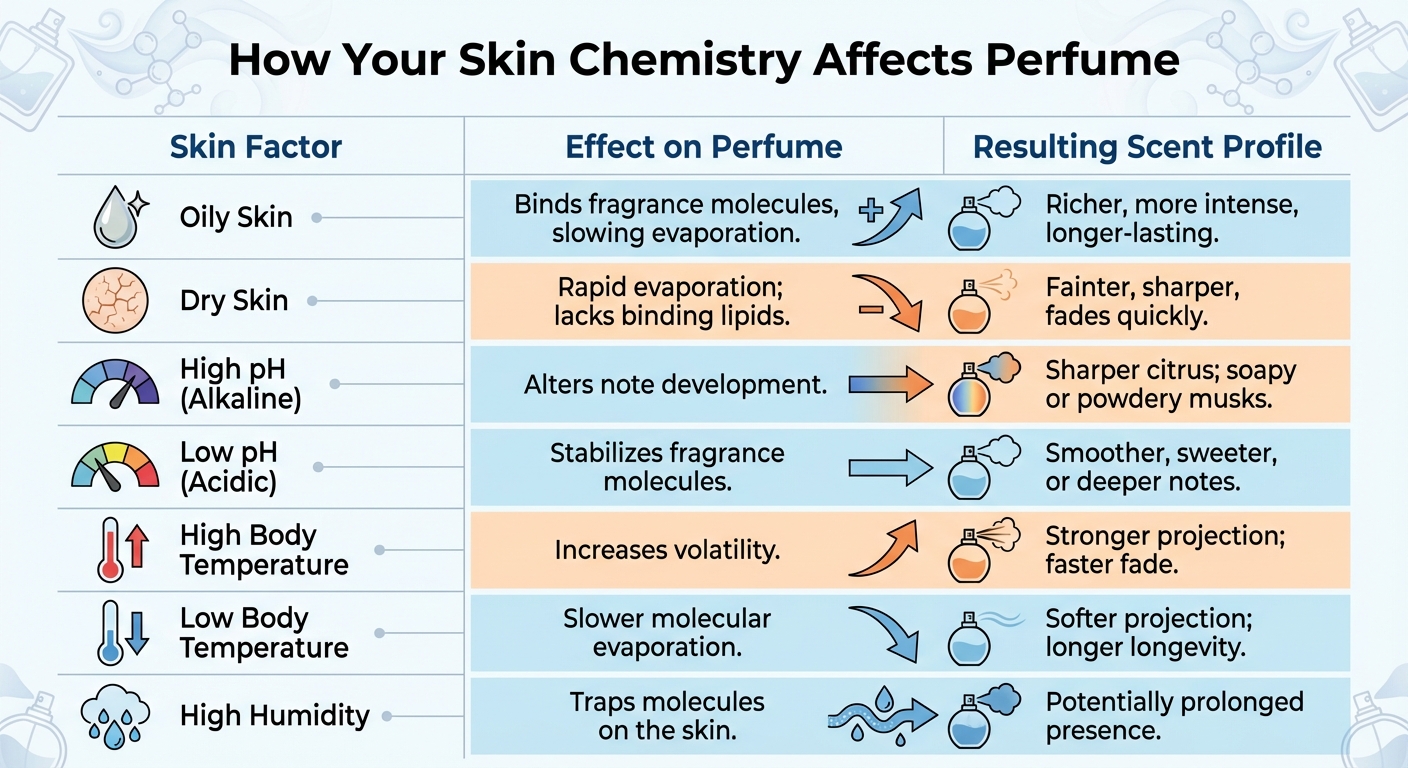
How Skin Chemistry Factors Affect Perfume Longevity and Scent
The way a perfume interacts with your skin can dramatically influence how long it lasts and how it smells. Factors like skin type, pH balance, and body temperature all play a part in shaping the performance of a fragrance.
How Skin Type Affects Perfume Duration
Skin type can act as a key player in how a fragrance lingers and evolves throughout the day:
- Oily skin works like a natural diffuser. The sebum on the skin binds with fragrance molecules, releasing them slowly over time. This often results in a scent that is richer and lasts significantly longer.
- Dry skin, on the other hand, struggles to hold onto fragrance. Without sufficient moisture or natural oils, the perfume evaporates quickly, often fading within just a few hours.
- Combination skin creates a mixed effect. Fragrance lasts longer on oilier areas, while it fades more quickly on drier zones. For example, a 2026 case study highlighted how Sarah, a 32-year-old office worker, extended her perfume’s longevity from 1.5 hours to nearly 6 hours simply by switching from a Vitamin C serum (which raised her skin’s pH) to a pH-balanced moisturizer.
These variations in skin type combine with other factors, like pH levels and body temperature, to further influence how a perfume performs.
pH Levels and Body Temperature
Your skin’s pH and temperature have a direct impact on how a fragrance develops and how long it lasts.
- pH Levels: The acidity or alkalinity of your skin can alter the way fragrance notes unfold. A higher pH (more alkaline) might make citrus notes sharper and musks smell soapy or powdery. On the flip side, a lower pH (more acidic) can enhance floral notes while reducing sweetness. Even skincare products like exfoliants, retinoids, or Vitamin C serums can temporarily shift your skin’s pH, affecting the stability and evolution of the perfume.
- Body Temperature: Warmer skin increases the volatility of fragrance molecules, leading to a stronger initial projection but causing the scent to fade more quickly. Cooler skin, however, slows down evaporation, resulting in a lighter but longer-lasting scent profile.
Here’s a quick breakdown of how these factors influence fragrance performance:
| Skin Factor | Effect on Perfume | Resulting Scent Profile |
|---|---|---|
| Oily Skin | Binds fragrance molecules, slowing evaporation | Richer, more intense, longer-lasting |
| Dry Skin | Rapid evaporation; lacks binding lipids | Fainter, sharper, fades quickly |
| High pH (Alkaline) | Alters note development | Sharper citrus; soapy or powdery musks |
| Low pH (Acidic) | Stabilizes fragrance molecules | Smoother, sweeter, or deeper notes |
| High Body Temp | Increases volatility | Stronger projection; faster fade |
Understanding these factors can help you choose fragrances and skincare products that complement your unique skin chemistry, ensuring your favorite scents perform at their best.
What Determines How Long Perfume Lasts
The way a fragrance behaves on your skin is influenced by several intertwined factors. While your skin type and pH are key players, elements like hydration, hormonal shifts, and body temperature also shape how a scent evolves and lingers throughout the day.
Skin Hydration and Moisture
Dry skin can shorten the lifespan of a perfume. Without enough natural oils and lipids, fragrance molecules have little to cling to, causing the alcohol in the formula to evaporate faster and the scent to fade more quickly. On the other hand, hydrated or oily skin acts as a natural anchor for fragrance molecules, allowing the scent to develop and last longer. To extend a perfume’s staying power, try applying an unscented moisturizer to your pulse points before spraying. Another tip? Spritz your perfume right after a shower, when your skin is most receptive, and avoid rubbing your wrists together, as this can break down the fragrance structure.
Hormonal Changes
Your body’s hormones can also affect how a perfume reacts with your skin. Fluctuations caused by menstrual cycles, pregnancy, menopause, or even stress can alter how a fragrance develops. For example, elevated cortisol levels during stressful times might make a scent fade faster or smell slightly different than usual. Because of these variations, it’s a good idea to test a new fragrance over time to see how it interacts with your unique skin chemistry.
Temperature and Scent Evaporation
Temperature plays a big role in how a fragrance performs. Warmer skin speeds up the evaporation of fragrance molecules, leading to a stronger but shorter-lived scent. On the flip side, cooler skin slows this process, resulting in a softer but longer-lasting fragrance. Activities that raise your body temperature - like exercise, hot weather, or even being in a heated room - can amplify a perfume’s intensity but also cause it to dissipate faster.
| Body Factor | Effect on Fragrance | Resulting Performance |
|---|---|---|
| High Body Temp | Faster molecular evaporation | Stronger projection; shorter longevity |
| Low Body Temp | Slower molecular evaporation | Softer projection; longer longevity |
| High Humidity | Traps molecules on the skin | Potentially prolonged presence |
Even your diet and medications can influence how a perfume behaves. Spicy foods like garlic or cumin, for instance, can release aromatic compounds through your pores, subtly altering your fragrance’s scent. Similarly, certain medications or hormonal treatments can temporarily shift your skin’s chemistry, which might affect how your signature scent is perceived.
Your Personal Fragrance Expert Awaits
Take our quick scent quiz to discover authentic designer and niche fragrances matched to your taste — explore them as 2ml, 5ml, 8ml & 30ml decants and samples, so you can try each one before committing to a full bottle.
Find Your ScentHow to Make Perfume Last Longer
Skin chemistry plays a big role in how long a fragrance lasts, but there are some effective ways to keep your perfume lingering longer.
Apply Moisturizer First
Moisturized skin helps perfume stick around. A good moisturizer acts as a barrier, trapping fragrance molecules and slowing evaporation. On dry skin, perfume tends to fade quickly since there’s less natural oil to hold onto.
"Moisturizing your skin creates a healthy lipid barrier, which gives fragrance molecules more natural oils to hold onto, helping them smell more evenly AND last longer!" — Marisa Plescia, Cosmetic Chemist, Good Chemistry
For best results, apply an unscented lotion to your pulse points right after showering, while your skin is still damp. This locks in hydration and creates the perfect base for your fragrance. You can even add a small dab of petroleum jelly to areas like your wrists or neck to further anchor the scent.
Once your skin is prepped, layering fragrances can amplify their staying power.
Layer with Matching Products
Fragrance layering is a great way to build depth and extend the life of your scent. Start with a matching body wash in the shower, follow with a scented lotion, and finish by applying your perfume. This method reinforces the fragrance and reduces quick fading.
To maximize the effect, combine different formats strategically: begin with a solid perfume or fragrance oil on pulse points, layer an Eau de Parfum (EDP) over it, and add a light mist to your hair or clothes. Natural fibers like cotton or wool hold scent better than synthetics, so spritzing on your clothes can help, but always test on a hidden area first to avoid stains.
If layering doesn’t quite do the trick, consider switching to a higher concentration of your favorite scent.
Pick Stronger Concentrations
Fragrances vary widely in strength and longevity based on their oil concentration. Eau de Parfum (EDP), for instance, contains 15–20% fragrance oils and typically lasts 5–8 hours, while Eau de Toilette (EDT) has only 5–15% oils and fades after 3–5 hours. For longer-lasting wear, opt for higher concentrations like Parfum or Extrait, which contain 20–40% oils and can last 12–24 hours.
| Fragrance Type | Oil Concentration | Typical Longevity |
|---|---|---|
| Parfum / Extrait | 20–40% | 12–24 hours |
| Eau de Parfum (EDP) | 15–20% | 5–8 hours |
| Eau de Toilette (EDT) | 5–15% | 3–5 hours |
| Eau de Cologne (EDC) | 2–5% | 2–3 hours |
Parfum and Extrait are perfect for special occasions or when you want a signature scent to last all day. EDP works well for long workdays or evenings out, while EDT and EDC are better for casual daytime wear or quick touch-ups.
Although higher concentrations often come with a bigger price tag, they provide more value per spritz due to their extended longevity.
Test Perfume Longevity with Scento Decants

Since everyone’s skin chemistry is different, the only reliable way to determine if a perfume will last on your skin is by testing it directly. Paper strips can’t account for factors like your skin’s pH, natural oils, or body temperature - all of which influence how a fragrance develops and lingers on you. Given how much skin chemistry affects performance, testing for personalized longevity is essential.
Using decants, combined with proper skin preparation, ensures you experience a fragrance at its best. Scento’s decants offer just the right amount to test a scent from start to finish, letting you experience everything from the bright top notes to the deeper base notes, which can take 3–6 hours to fully emerge. With sizes from 2 ml up to a 30 ml bottle decant, you can experiment with designer and niche fragrances without committing to a full bottle that might not work for you.
Find What Works for Your Skin
Testing directly on your skin reveals how your unique chemistry impacts a fragrance’s longevity and scent profile. Some people find their skin "absorbs" certain perfumes quickly, while others notice that certain scents might turn sour or metallic after a few hours due to their biochemistry.
Spray your Scento decant and evaluate it at different intervals - 5 minutes, 30–60 minutes, and 3–6 hours. This helps you understand how the scent evolves and whether you still enjoy it beyond the initial spray. For a more thorough test, try applying the fragrance to both your skin and a piece of fabric. This comparison can reveal whether any changes in longevity are due to your skin chemistry or the formula itself.
Build Your Collection Over Time
Once you’ve identified fragrances that work well with your skin, you can gradually expand your collection to continue exploring new options. Scento’s flexible decant sizes make this easy. Start with a 2 ml decant to test a fragrance for a few days. If you’re ready for a longer trial, the 8 ml size lets you wear it over several weeks. This approach minimizes costly mistakes and helps you figure out which scent families and concentrations best suit your chemistry.
When you’ve found fragrances that complement your skin, you can slowly curate a personalized collection. Scento is a perfume decant and sample retailer, and every product is available for one-time purchase without any subscription. Scento+ is Scento’s optional membership: the monthly fee comes back in full as store credit to spend on any perfume, members get 10% off, a free sample with every order, a free perfume every six months and a birthday gift, and you can pause or cancel anytime. Building your collection at your own pace gives you plenty of time to observe how each fragrance interacts with your skin across different seasons and conditions, helping you refine your preferences over time.
Conclusion
Your skin chemistry plays a pivotal role in how a fragrance performs, shaping everything from its longevity to how it evolves throughout the day. By understanding this, you can take simple steps to ensure your favorite scents last longer and smell their best.
For those with dry skin, applying a pH-balanced moisturizer before spraying your perfume can make a noticeable difference in wear time. If your skin tends to run warmer, choosing fragrances with higher concentrations, like Eau de Parfum (15–20% oil), can help counteract quicker evaporation compared to lighter options like Eau de Toilette (5–15% oil). These small changes can transform how your fragrance interacts with your skin, solving common issues like short-lived scents.
When testing fragrances, always try them on your skin rather than relying on paper strips. Skin introduces variables like pH, natural oils, and body heat, which are essential to how a scent develops and lingers. Tools like Scento’s decants allow you to experience a fragrance’s full journey - from the sparkling top notes to the richer, long-lasting base - over several hours.
Starting with smaller sizes is a smart way to explore and identify scents that truly complement your chemistry. This approach helps you avoid investing in full bottles that don’t work for you, while building a curated collection of fragrances that feel personal and enduring. By tailoring your choices to your skin’s unique chemistry, you can create a wardrobe of scents that not only last but also resonate deeply.
FAQs
How can I tell if my skin is acidic or alkaline?
You can determine whether your skin is more acidic or alkaline by measuring its pH level, which typically ranges from 4.5 to 6.2. Most skin leans slightly acidic. Knowing where your skin falls on this scale can guide you in selecting fragrances that complement your skin chemistry and improve their staying power.
Which skincare ingredients affect how my perfume lasts?
Keeping your skin hydrated can make a noticeable difference in how long your perfume lasts. Applying an unscented moisturizer to pulse points before spritzing your favorite scent helps lock in the fragrance, as moisturized skin holds onto scent molecules more effectively. On the other hand, dry skin tends to let perfumes fade faster. Incorporating hydration into your skincare routine can enhance the staying power of your fragrance.
Where should I spray perfume if it disappears fast on my skin?
If your fragrance seems to vanish too soon, try applying it to your pulse points. These are warmer areas of the body that help intensify and extend the scent. Ideal spots include your wrists, neck, inner elbows, and behind your knees. These areas naturally emit heat, which helps release and amplify the fragrance throughout the day.
Frequently asked questions
- Why does perfume last longer on some people than others?
- Because longevity is an interaction between the fragrance and your skin. Skin pH, oil level (sebum), hydration and temperature all change how the molecules evaporate, so the same Eau de Parfum can last ten hours on oily, warm skin and three on dry, cool skin. This is why a review or an in-store paper strip cannot tell you how a scent will perform on you — only wearing it on your own skin can.
- How can I tell if a perfume will last on my skin before buying it?
- Wear-test it as a decant. A 2–8ml decant lets you apply the real fragrance and track how long it lasts on your own skin across a full day, before committing to a full bottle. Scento ships decants of 200 houses across 26 European markets, so you can wear-test two or three candidates — ideally in EDP or Parfum concentration — and keep the one that performs.
- Does a higher concentration like EDP or Parfum last longer?
- Generally yes. Parfum and Extrait carry the highest aromatic load (20–40%) and last longest, followed by Eau de Parfum (15–20%), then Eau de Toilette (5–15%). But skin chemistry still varies the result, so the reliable approach is to sample the same scent in different concentrations on your own skin. Decants make that affordable — a few euros to compare an EDT against its EDP rather than buying both bottles.
- How do I make my perfume last longer?
- Apply to moisturised skin (hydrated skin holds scent longer), target warm pulse points (inner wrists, neck, behind the ears), avoid rubbing the wrists together, and consider an unscented moisturiser as a base. Choosing a higher concentration helps, and wear-testing as a decant first lets you pick a fragrance that already performs on your skin. A refillable atomizer keeps your chosen scent with you for a midday top-up.

