Rare fragrances are more than just scents - they’re collectibles that can grow in worth over time. Whether it’s a discontinued classic, a vintage gem, or a limited-edition release, determining a fragrance’s value comes down to three key factors: rarity, condition, and market demand. Here’s a quick breakdown:
- Rarity: Look for limited production, ingredient restrictions (e.g., oakmoss bans), or historical significance.
- Condition: Bottles in pristine shape (no chips, original stopper, intact liquid) fetch higher prices.
- Market Demand: Popularity depends on brand heritage, historical relevance, and provenance (e.g., celebrity connections or designer collaborations).
To start, confirm the fragrance’s authenticity by researching its production history and batch codes. Next, inspect the bottle and liquid for signs of damage or spoilage, as flaws can significantly lower value. Finally, study market trends and past sales to gauge demand and realistic pricing. Tools like batch code decoders, UV lights, and collector communities can simplify the process.
Whether you’re a collector or seller, understanding these steps ensures you make informed decisions about rare fragrances and their potential worth.
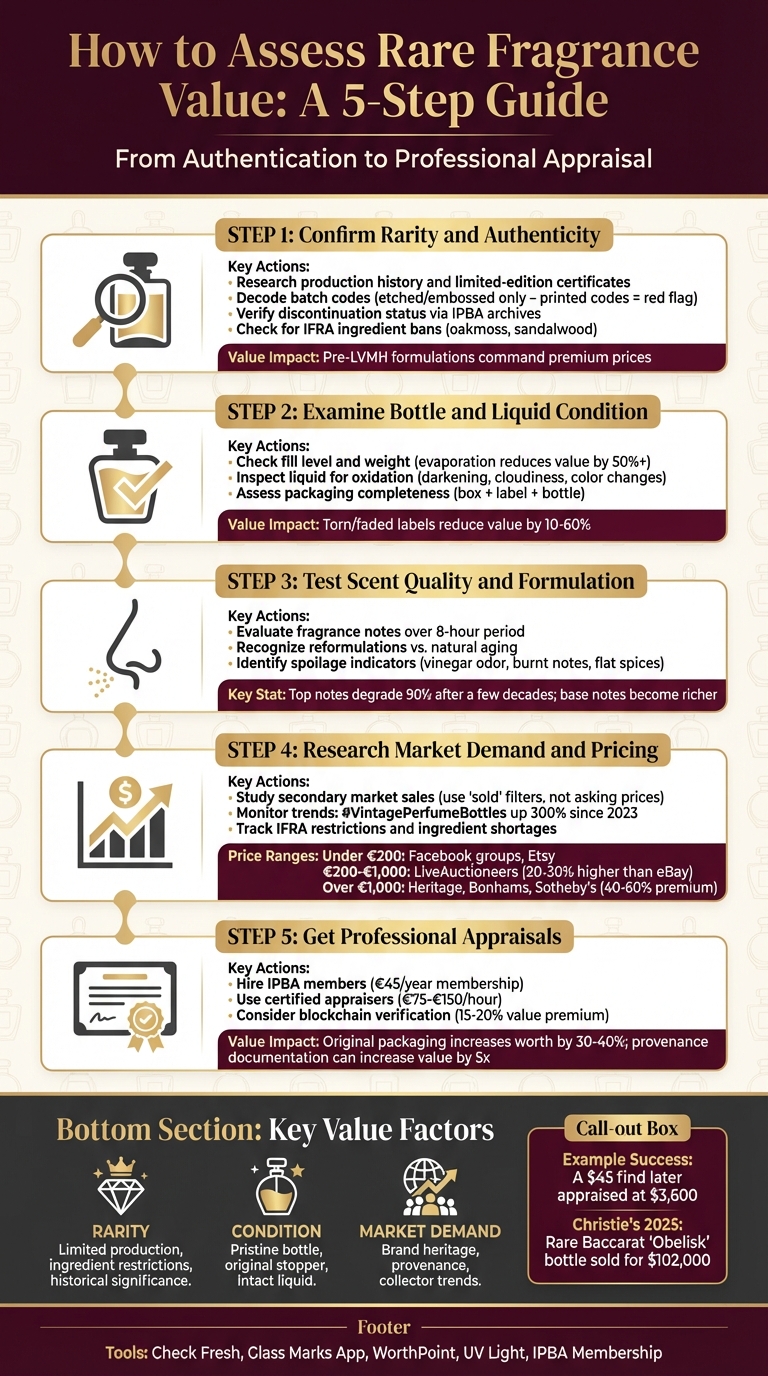
5 — Step Process to Assess Rare Fragrance Value
Criteria for Rating Fragrance — Factors to Consider when Deciding your Purchase!
Step 1: Confirm Rarity and Authenticity
Before determining the value of a fragrance, it’s crucial to ensure it’s genuinely rare and not a counterfeit or a mass-market release disguised as exclusive. This step helps separate true collectibles from clever marketing ploys.
Research Production History
Start by investigating the fragrance’s production timeline and verifying any numbered documentation. Limited-edition certificates are a key indicator - look for individually numbered bottles or official paperwork that confirms the formula was never reproduced. For example, a bottle labeled "No. 47 of 200" with matching documentation holds far more credibility than an unnumbered release claiming to be "limited."
Collectors often value what’s known as the "Heritage Premium." Fragrances produced before significant industry changes tend to gain value more quickly. For instance, pre-LVMH Guerlain scents or those made before IFRA regulations restricted natural ingredients like oakmoss often command higher prices. These original formulations, like a 1970 Guerlain bottle with batch number MF 1056 CE1, represent scents that can no longer be legally recreated today. Understanding these production details sets the stage for decoding manufacturing codes next.
Decode Batch Codes
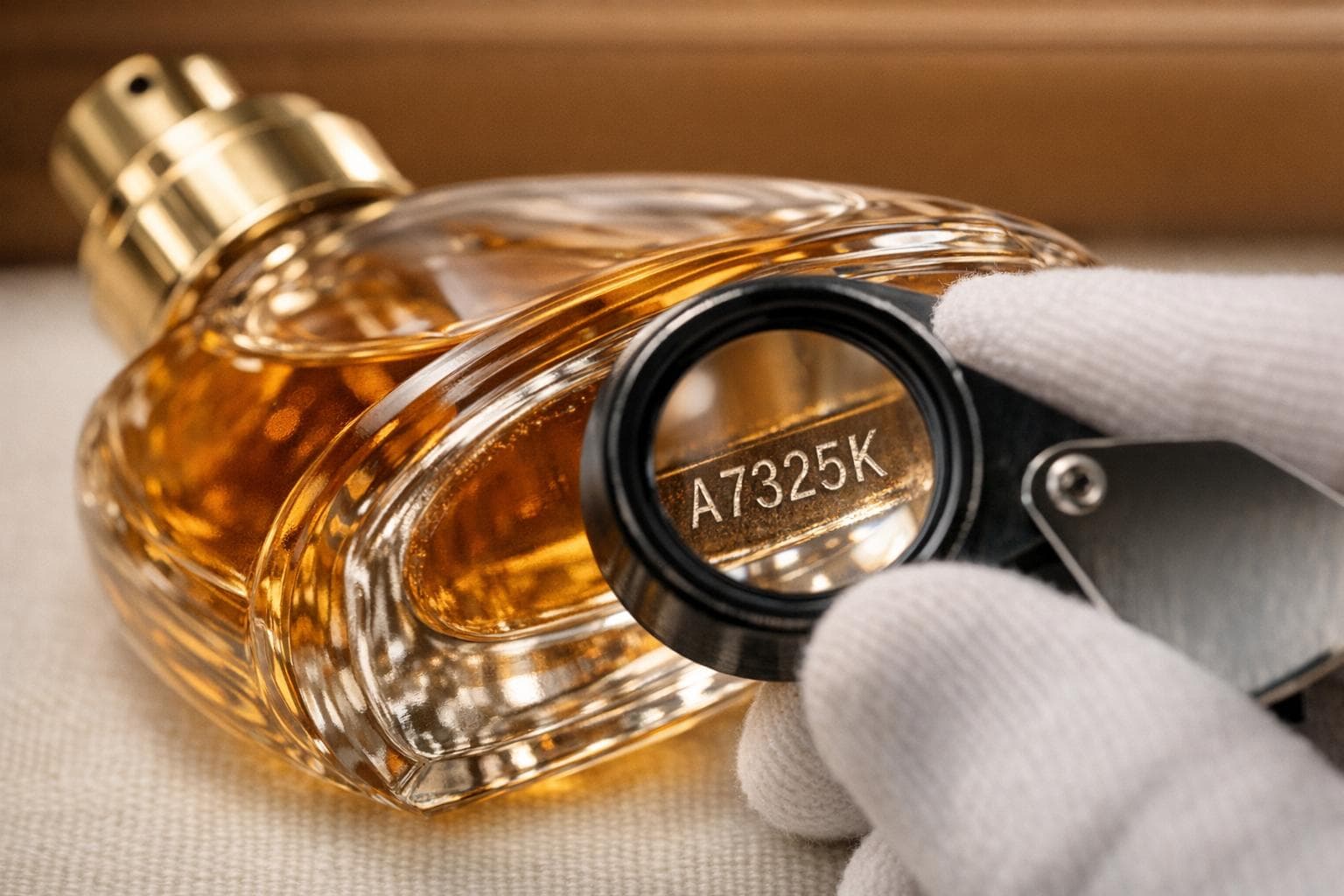
Batch codes are essential for determining manufacturing dates and confirming authenticity. These codes - usually etched or embossed on the bottom of the bottle - follow specific formats depending on the brand. For example, a 1981 Hermes Equipage might show "DI – 690", while a 1997 Giorgio Armani could display "US-xxx". Authentic codes are always etched or embossed; printed numbers that wear off easily are a red flag for counterfeits.
Pay attention to maker’s marks on high-end crystal bottles. Baccarat, for instance, uses acid-etched marks on the base, while Lalique shifted its signatures from "R. Lalique" (pre-1945) to "Lalique" (post-1945). Tools like the "Glass Marks" app can identify over 5,000 maker’s marks, making the verification process faster. Additionally, using a UV light to examine the glass can help distinguish authentic antique glass from reproductions, which often glow differently under UV light. Once you’ve confirmed authenticity, the next step is verifying the fragrance’s discontinuation status.
Determine Discontinuation Status
To establish a fragrance’s rarity, confirm whether it has been discontinued. Ingredient bans by the International Fragrance Association (IFRA) - such as restrictions on oakmoss or Mysore sandalwood - immediately increase the value of original formulations. Brand acquisitions also play a role; when companies like LVMH acquire perfume houses, pre-acquisition formulas are often discontinued.
The International Perfume Bottle Association (IPBA) provides archives that can help verify whether a fragrance is no longer produced. For more recent releases, check for individually numbered bottles accompanied by certificates of authenticity. Be cautious of mass-market "limited editions" without proper documentation, as they rarely gain value. In contrast, genuinely rare releases - especially those limited to fewer than 500 pieces - can command premium prices. Confirming discontinuation status is a vital step in establishing a fragrance’s collectible appeal and overall worth.
Step 2: Examine Bottle and Liquid Condition
Once authenticity is confirmed, the next step is to evaluate the physical condition of the bottle and its contents. The value of even the rarest fragrance can drop significantly if the liquid shows signs of degradation or if the packaging is damaged. Collectors are willing to pay top prices for bottles in pristine condition, while flaws can drastically reduce their worth.
Check Fill Level and Weight
Hold the bottle up to natural light to inspect the fill level. If there’s noticeable evaporation or if the stopper has been replaced, the value can drop by 50% or more. A replaced stopper often indicates poor storage conditions or a compromised seal, allowing air to seep in and speed up oxidation. An original stopper that fits snugly is crucial for maintaining the fragrance’s integrity. Additionally, check the base of the bottle for authenticity markers, which can confirm its origin and craftsmanship.
Inspect Liquid Color and Consistency
Pay close attention to the liquid itself for signs of deterioration. Oxidation often manifests as darkening, cloudiness, or color changes - shifts to yellow, brown, or green tones are clear warning signs. Crystallization or coagulation may occur, particularly in fragrances with high citrus content, while those with heavier base notes tend to be more stable. As Matthew Mileo, Founder of Milèo New York, explains:
"If your product was gold when you purchased it and now it’s green, I’d do the test for smell, crystallization and translucency... if any of those are also present, it’s time to say goodbye."
Comparing the current state of the liquid to reference photos from the time of purchase can help determine whether the changes are due to natural aging or spoilage.
Assess Packaging and Label Condition
The original packaging plays a vital role in protecting the fragrance from light, air, and temperature fluctuations. Complete sets - bottle, box, and label - command higher prices, while imperfections like torn or faded labels can reduce value by 10–60%. Labels can also provide historical insights; for instance, a phrase such as "Returning this bottle to the perfumer is national duty" can date the bottle to the 1940–1945 period. Antique bottles with intact paper labels and manufacturer logos can sell for €200–€300, while those with only embossed lettering may fetch closer to €100. To preserve the condition of both the bottle and its packaging, store them in a climate-controlled environment. Proper care not only protects the fragrance but also enhances its appeal as a collectible item.
Step 3: Test Scent Quality and Formulation
Once you’ve confirmed the authenticity and condition of the bottle, the next step is to assess whether the fragrance inside has retained its original character. Even if a bottle is perfectly sealed, the scent may have degraded due to exposure to heat, light, or simply the passage of time. Preserving the fragrance’s complexity is just as important as the physical state of the bottle when determining its worth.
Evaluate Fragrance Notes Over Time
Spray the fragrance once and observe how it evolves over an eight-hour period. Top notes, such as citrus and light herbal scents, are the most volatile and often degrade significantly after a few decades - around 90% of these notes are likely to dissipate. If the initial spray smells sharp, metallic, or sour instead of fresh and bright, it’s a sign that these delicate molecules have broken down. On the other hand, base notes like sandalwood, resins, and oakmoss tend to become richer and more pronounced with time. A well-preserved vintage fragrance should still transition smoothly from its opening to its dry-down, showcasing its full complexity over several hours. This progression helps distinguish natural aging from reformulation changes.
Recognize Reformulations or Batch Variations
Some differences in scent are due to natural aging processes, like maceration, where the fragrance components integrate over months or years. However, if a newer bottle smells lighter, lacks specific elements (like oakmoss, now restricted to 0.1% by IFRA), or has reduced longevity, it may be a reformulated version. Checking the batch code on both the box and bottle can help confirm whether your bottle is from an earlier production run, which is often more valuable. Original formulations, especially those made before ingredient restrictions, tend to command higher prices. Keeping a small decant of a verified authentic version can serve as a useful reference when comparing new acquisitions.
Identify Off — Notes or Spoilage
Certain odors are clear indicators of spoilage. Marin Kristic, Founder of Scent Grail, explains:
"The only real enemies of perfumes are exposure to air, light, high temperature, and time."
Signs of degradation include plastic-like smells, musty undertones, or spices that have lost their sharpness. Testing the fragrance on your wrist can also reveal issues, as spoiled compounds may cause skin irritation. Fragrances with strong base notes, like oud, amber, or musk, tend to resist oxidation and can last for 8 to 10 years or more. Meanwhile, citrus-heavy scents are more prone to quick expiration. These evaluations are critical before deciding on resale or further appraisal.
| Spoilage Indicator | Description | Impact on Value |
|---|---|---|
| Vinegar/Sour Odor | Sharp, acidic smell from degraded top notes | Significant loss; often deemed unusable |
| Burnt Top Notes | Acrid or metallic scent on initial spray | Moderate; base notes may still be intact |
| Flat Spices | Dull, lifeless spicy notes | Reduces complexity and overall appeal |
| Thickened Liquid | Syrupy consistency from alcohol evaporation | Alters scent balance; suggests poor care |
Ο προσωπικός σας ειδικός αρωμάτων σας περιμένει
Κάντε το σύντομο κουίζ αρώματος και ανακαλύψτε αυθεντικά αρώματα designer και niche, επιλεγμένα στα μέτρα σας – εξερευνήστε τα σε decant και δείγματα των 2–8ml, ώστε να δοκιμάσετε το καθένα πριν επιλέξετε ολόκληρο μπουκάλι.
Βρείτε το άρωμά σαςStep 4: Research Market Demand and Pricing
Once you’ve confirmed a fragrance’s rarity and condition, the next step is understanding market demand. This isn’t just about how rare a bottle is - its value is also shaped by demand trends, shifting preferences, and where you’re looking for pricing data. A rare fragrance that doesn’t resonate with buyers may fetch less than a discontinued favorite with a devoted fan base.
Study Secondary Market Sales
To gauge realistic pricing, focus on actual sales data rather than asking prices. Use "sold" or "completed" filters when researching platforms. For bottles priced under €200, start with specialized Facebook groups like "Perfume Bottle Collectors" or Etsy, where there’s a wealth of recent sales data. For mid-range fragrances (€200–€1,000), LiveAuctioneers is a good resource as it aggregates data from auction houses, often showing prices 20–30% higher than eBay. High-end bottles over €1,000 are best tracked through major auction houses like Heritage, Bonhams, and Sotheby’s, where specialists can secure returns 40–60% above standard listings.
Certain discontinued classics consistently perform well regardless of market fluctuations. For example, original Yves Saint Laurent M7 or early Tom Ford Private Blends continue to attract steady demand. Vintage Guerlain Shalimar in Baccarat crystal flacons typically sells for €800–€2,000+, while novelty bottles from the 1940s–1970s tend to range from €75–€250, depending on their condition. Always verify production details through etched batch codes or trademarks.
Once you’ve gathered sales data, look at the broader trends and external factors driving collector interest.
Monitor Trends and Influences
Social media has significantly impacted fragrance collecting. For instance, the hashtag #VintagePerfumeBottles has grown by 300% since 2023, reflecting increased interest among younger collectors. Keeping an eye on the movements of master perfumers can also be revealing - when a renowned "nose" retires or passes away, their final creations often see a spike in demand.
Regulatory changes frequently affect pricing as well. When IFRA imposes restrictions on ingredients like oakmoss or certain musks, original formulations containing these elements become more sought after. Similarly, shortages of natural materials like Mysore sandalwood or orris root can increase the value of fragrances made before these supply issues arose. Another key factor is brand history. Pre — LVMH Guerlain, original Dior formulations, and early Frédéric Malle editions consistently fetch higher prices because collectors prize these "before" versions.
These trends not only shape market prices but also influence how collectors perceive value.
Balance Market, Resale, and Personal Value
Not every rare fragrance needs to be viewed as an investment opportunity. As Sebastian Charles points out:
"Even when their monetary value is modest, these tiny vessels still offer a unique glimpse into the design and luxury cultures of their time - making them worthy keepsakes in their own right."
If you’re parting with heirlooms, document their history with photos and receipts. For collections with sentimental value, consider keeping one key piece while selling the rest. When holding onto fragrances, think about "cost-per-wear" and how they align with your personal scent preferences, alongside market trends. Keep in mind that documented provenance - such as original receipts, certificates, and packaging - can increase a bottle’s market value by up to five times while also preserving its story. This dual perspective highlights its worth as both an investment and a piece of history.
| Value Type | Key Considerations | Impact on Decision |
|---|---|---|
| Market Value | Rarity, designer, condition, provenance | Affects investment potential and resale timing |
| Personal Value | Sentimental attachment, cost-per-wear, scent preference | Guides daily use and emotional satisfaction |
| Cultural Value | Historical significance, artistic craftsmanship | Establishes long-term keepsake appeal |
Step 5: Get Professional Appraisals for High — Value Items
Once you’ve assessed rarity, condition, and market demand, the next step is securing a professional appraisal to determine the true value of a rare fragrance. This step is especially critical for bottles valued over $1,000 or those with uncertain origins. Professional appraisers bring specialized expertise that can refine your valuation, particularly for high-end or historically significant items. General antique appraisers often lack the niche knowledge required for rare fragrances, leading to undervaluations by as much as 40–60%. Their expertise may fall short in areas like designer collaborations, glass composition, or historical context, which are essential for accurate assessments.
Hire Fragrance Appraisers
For specialized evaluations, look for appraisers who are members of the International Perfume Bottle Association (IPBA). Membership costs $45 per year and provides access to resources tailored to authenticating rare bottles. If you need an insurance-grade valuation, certified decorative-arts appraisers are a solid choice, with hourly rates ranging from $75 to $150. For quicker, more budget-friendly options, platforms like ValueMyStuff offer appraisals for around $30 per item.
Major auction houses such as Heritage, Bonhams, and Sotheby’s also employ specialists with deep knowledge of rare fragrances. For instance, in February 2025, Christie’s sold a rare Baccarat "Obelisk" bottle for $102,000 - far exceeding market expectations. These appraisers not only confirm authenticity and condition but also help identify key markers of designer provenance, which can further elevate a bottle’s collectible value.
Factor in Designer Provenance
The provenance of a designer can significantly enhance a bottle’s historical and artistic appeal. Collaborations between luxury perfume houses and renowned glassmakers often command the highest demand and prices. For example, bottles designed by René Lalique for Coty or Baccarat crystal flacons for Guerlain are highly sought after due to their exquisite craftsmanship and historical significance. Look for distinctive features like designer signatures or etchings, which authenticate the bottle’s origin and add to its value.
Original packaging - such as boxes, labels, or certificates of authenticity - can increase a bottle’s worth by 30–40%. For ultra-high-value items, some collectors turn to blockchain verification platforms like Artifact, which provide permanent digital ownership records. These records can add a premium of 15–20% to the item’s value. Professional appraisers also use advanced tools to detect fraud and ensure the integrity of their evaluations.
Tools and Resources for Valuation
Digital tools and specialized resources can bring precision and clarity to the process of valuing your fragrance collection.
Use Digital Cataloging Apps
Batch code decoders like Check Fresh and Check Cosmetics are perfect for verifying production dates. If you’re dealing with antique bottles, the Glass Marks App can help identify maker’s marks quickly. For visual comparisons, Google Lens allows you to match your bottle with similar ones online in seconds.
For collectors looking for deeper insights, platforms like WorthPoint offer access to historical pricing data for around €30 per month, while LiveAuctioneers focuses on tracking actual sold prices instead of inflated asking prices. A newer tool, BottleCheck.ai, uses AI-enhanced microscopy to detect reproductions. If you need blockchain-verified provenance, Artifact has you covered.
Additionally, the International Perfume Bottle Association (IPBA) provides a Collection Documentation Template as part of its €45 annual membership. This template is a great way to systematically catalog larger inventories. Together, these tools complement the authentication methods discussed earlier.
Join Collector Communities
Collector communities are invaluable for gaining real-time insights and expert advice. On platforms like Facebook, groups such as Perfume Bottle Collectors connect you with knowledgeable sellers and specialists who excel at identifying rare maker’s marks and production eras - details that general appraisers might miss. Communities like the IPBA and Reddit’s r/AntiqueBottles are also great for spotting undervalued bottles before their prices rise. Many high-value transactions occur privately within these groups, bypassing public marketplaces.
For historical research, websites like Raiders of the Lost Scent, Perfume Projects, and Cleopatras Boudoir offer valuable context on dating bottles and understanding formulation changes. Following niche influencers, such as @VintageGlassGuru, can also help you stay informed about emerging trends.
Buy Measurement Tools
Once you’ve gathered digital and community insights, physical tools can refine your evaluation further. A UV light is essential for detecting modern glass or repairs, as antique glass reacts differently under ultraviolet light. Cotton gloves are a simple yet effective way to prevent skin oils from degrading the bottle’s surface, protecting its value - potentially saving 3–5% of its worth annually. Precision scales are useful for verifying fill levels by comparing the current weight to the original capacity, while microfiber cloths safely clean the exterior without damaging labels or finishes.
| Tool/Resource | Use | Cost |
|---|---|---|
| Check Fresh | Batch code decoding | Free |
| Glass Marks App | Identifying 5,000+ maker’s marks | Free |
| WorthPoint | Historical pricing data | €30/month |
| UV Light | Detecting modern glass/repairs | €10–€20 |
| Cotton Gloves | Preventing surface degradation | €6 |
| IPBA Membership | Authentication resources and archives | €45/year |
Conclusion
A thoughtful and methodical approach is essential for navigating the world of rare fragrance investment. Successfully assessing the value of rare scents requires diligent research, careful physical inspection, and a solid understanding of market trends. Start by confirming authenticity through production history and batch code checks. Pay close attention to the condition of the bottle and packaging - minor flaws can drastically impact value. Also, evaluate the fragrance itself to identify any reformulations or spoilage that could affect its worth.
Data shows that rare fragrances often increase in value over time. Keeping an eye on regulatory changes, such as IFRA restrictions, can offer insight into why original formulations may become more sought-after. Tools like blockchain verification also provide added assurance for high-value purchases.
Investing in rare fragrances combines analytical thinking with a true appreciation for the art of perfumery. Not every acquisition needs to be a high-ticket item - whether you stumble upon a $45 find that later appraises at $3,600, or you’re assembling a personal collection of discontinued treasures, making informed choices is key. By applying the authentication techniques, condition assessments, and digital resources discussed in this guide, you can avoid pitfalls and spot genuine opportunities in the secondary fragrance market. With a balance of research, hands-on evaluation, and market knowledge, you’ll be well-equipped to succeed in this unique and rewarding niche.
FAQs
How can I tell if a rare perfume is real or fake?
To ensure a rare perfume is genuine, pay close attention to these details:
- Packaging: Authentic perfumes typically come in packaging with thick, tightly wrapped cellophane. Loose or flimsy wrapping can be a red flag.
- Batch Codes: The batch codes on the bottle and box must match and should be verifiable online through official sources or trusted databases.
- Bottle Quality: Genuine bottles are crafted with precision, while counterfeits often reveal flaws like uneven lettering, poorly fitted caps, or inferior materials.
Also, be wary of prices that seem too good to be true - steep discounts can often indicate a counterfeit product. By examining these elements closely, you’ll have a better chance of confirming the perfume’s legitimacy.
What condition issues lower a vintage fragrance’s value the most?
The primary factors that can lower the value of a vintage fragrance are torn labels, damaged seals, and missing corks. Other issues, such as chipped glass, broken metal accents, and worn decorative elements, also play a role in diminishing its appeal. Keeping the bottle in its original condition is key to preserving its value.
When is it worth paying for a professional fragrance appraisal?
When dealing with rare or limited-edition fragrances, especially those with collectible appeal or investment potential, a professional fragrance appraisal can be a smart move. These appraisals confirm authenticity, evaluate the condition, and assess key factors like limited production runs, rare ingredients, or discontinued status. Such details can significantly influence a fragrance’s market value, making appraisals particularly valuable for collectors or investors aiming to authenticate their pieces or enhance potential returns.