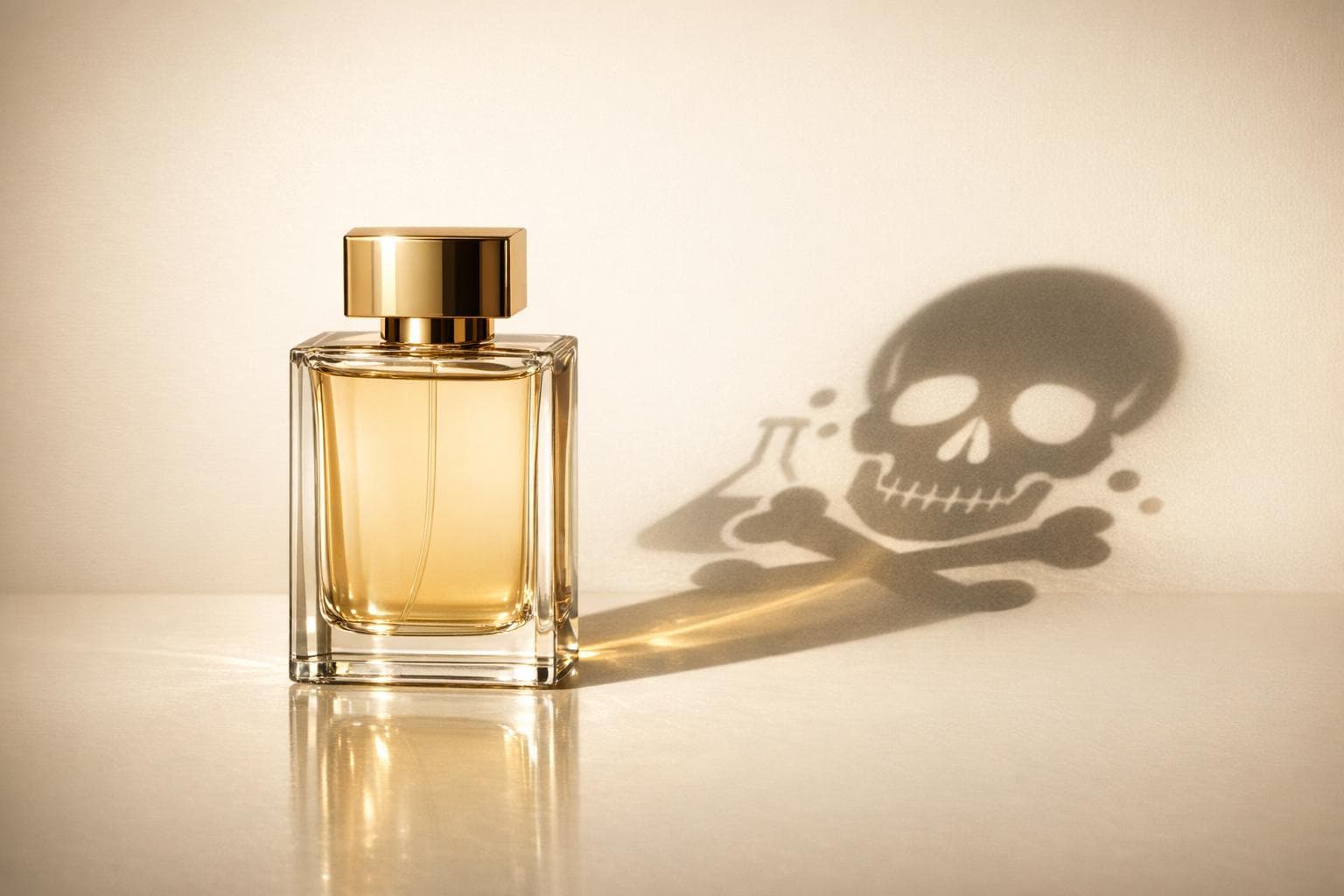
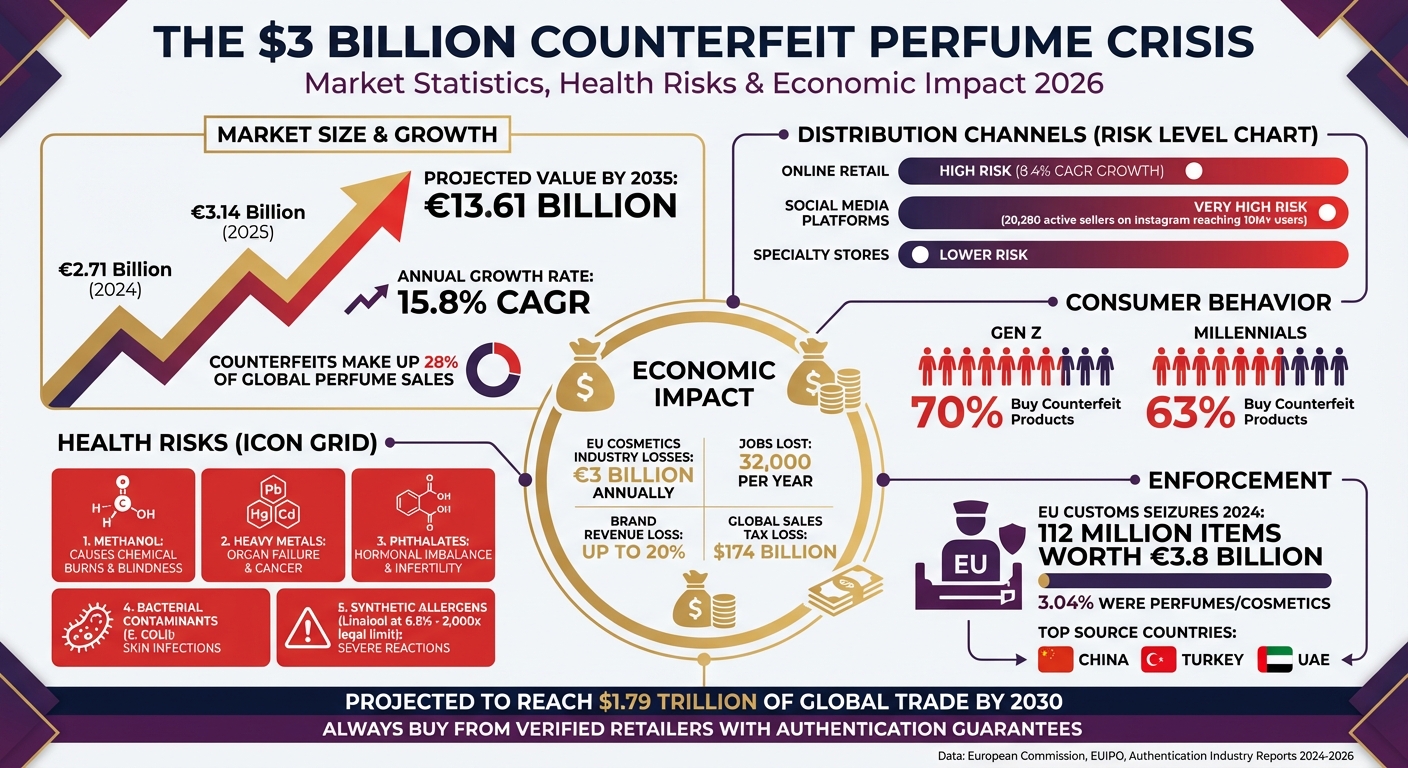
Η αγορά των απομιμητικών αρωμάτων αποτελεί μια κλιμακούμενη παγκόσμια κρίση, η αξία της οποίας εκτιμάται πλέον στα 2,71 € δισεκατομμύρια το 2026 και προβλέπεται να φτάσει τα 13,61 € δισεκατομμύρια έως το 2035. Οι απομιμήσεις αντιστοιχούν στο 28% των παγκόσμιων πωλήσεων αρωμάτων, με τις διαδικτυακές πλατφόρμες και τα μέσα κοινωνικής δικτύωσης να τροφοδοτούν αυτή την έξαρση. Αυτά τα πλαστά προϊόντα όχι μόνο ζημιώνουν τους νόμιμους οίκους —κοστίζοντας στις εταιρείες έως και το 20% των εσόδων τους— αλλά ενέχουν και σοβαρούς κινδύνους για την υγεία, καθώς συχνά περιέχουν επιβλαβείς χημικές ουσίες όπως μεθανόλη ή βαρέα μέταλλα.
Κύρια Σημεία:
- Μέγεθος Αγοράς: Η αγορά απομιμητικών αρωμάτων σημείωσε ετήσια αύξηση 15,8%, ξεπερνώντας τα 3 € δισεκατομμύρια το 2025.
- Κίνδυνοι για την Υγεία: Τα πλαστά αρώματα περιέχουν τοξικές ουσίες, προκαλώντας αλλεργικές αντιδράσεις, εγκαύματα ή ακόμα χειρότερες επιπτώσεις.
- Οικονομικός Αντίκτυπος: Η ευρωπαϊκή βιομηχανία καλλυντικών χάνει 3 € δισεκατομμύρια ετησίως, μαζί με 32.000 θέσεις εργασίας.
- Διαδικτυακές Πωλήσεις: Τα μέσα κοινωνικής δικτύωσης και οι πλατφόρμες ηλεκτρονικού εμπορίου αποτελούν τα βασικά κανάλια διανομής απομιμήσεων.
- Καταναλωτική Συμπεριφορά: Το 70% της Gen Z και το 63% των Millennials παραδέχονται ότι αγοράζουν προϊόντα απομίμησης.
Τα πλαστά αρώματα δεν αποτελούν απλώς ένα οικονομικό ζήτημα — είναι μια κρίση δημόσιας υγείας. Για να προστατευτείτε, αγοράζετε πάντα από πιστοποιημένους εμπόρους λιανικής και αναζητάτε προϊόντα με ιχνηλάσιμα συστήματα επαλήθευσης γνησιότητας.
Counterfeit Perfume Market Statistics 2026: Market Size, Health Risks & Economic Impact
Market Size and Growth of Counterfeit Perfumes
Η παγκόσμια αγορά απομιμητικών αρωμάτων αποτιμήθηκε στα $2.71 δισεκατομμύρια το 2024 και ανήλθε στα $3.14 δισεκατομμύρια έως το 2025. Οι προβλέψεις δείχνουν ότι θα μπορούσε να φτάσει το εκπληκτικό ποσό των $13.61 δισεκατομμυρίων έως το 2035, κινούμενη από έναν εντυπωσιακό σύνθετο ετήσιο ρυθμό ανάπτυξης (CAGR) της τάξης του 15,80%. Αυτή η ανάπτυξη υπερβαίνει κατά πολύ εκείνη της νόμιμης αρωματοποιίας.
Ένας βασικός παράγοντας που τροφοδοτεί αυτή την έξαρση είναι η εξέλιξη των μεθόδων διανομής των απομιμήσεων. Το ηλεκτρονικό εμπόριο έχει αναδειχθεί σε κυρίαρχο κανάλι. Μεταξύ 2016 και 2019, οι τελωνειακές κατασχέσεις πλαστών αρωμάτων και καλλυντικών διπλασιάστηκαν. Μέχρι το 2024, οι αρχές της Ευρωπαϊκής Ένωσης δέσμευσαν περίπου 112 εκατομμύρια απομιμητικά εμπορεύματα, συνολικής αξίας 3,8 € δισεκατομμυρίων ($4,1 δισεκατομμύρια), σημειώνοντας νέο ρεκόρ. Ο τομέας του διαδικτυακού λιανεμπορίου, ο οποίος προβλέπεται να αναπτυχθεί με CAGR 8,4%, προσφέρει στους παραχαράκτες ευκαιρίες να εκμεταλλευτούν τα κενά στη διασυνοριακή επιβολή του νόμου.
Οι πλατφόρμες κοινωνικής δικτύωσης έχουν ενισχύσει περαιτέρω το εμπόριο απομιμήσεων. Τον Οκτώβριο του 2021, ερευνητές εντόπισαν 20.280 ενεργούς πωλητές απομιμήσεων στο Instagram, οι οποίοι προσέγγιζαν συνολικά περισσότερους από 10 εκατομμύρια χρήστες. Αυτοί οι παραχαράκτες χρησιμοποιούν συχνά κρυφούς συνδέσμους σε εξωτερικές αναρτήσεις για να προωθήσουν πλαστά προϊόντα σε φαινομενικά νόμιμες πλατφόρμες. Η στρατηγική είναι αποτελεσματική — το 70% της Gen Z και το 63% των Millennials παραδέχονται ότι αγοράζουν προϊόντα απομίμησης, ενώ ένας στους τρεις καταναλωτές ηλικίας 13 έως 24 ετών έχει πραγματοποιήσει αγορά ειδών μόδας μέσω των μέσων κοινωνικής δικτύωσης.
Ποσοστά Απομιμήσεων στις Διαδικτυακές Πωλήσεις Αρωμάτων
Τα ποσοστά απομιμήσεων είναι σημαντικά υψηλότερα στις διαδικτυακές αγορές (marketplaces) σε σύγκριση με τα παραδοσιακά κανάλια λιανικής. Σε ορισμένες πλατφόρμες, οι οίκοι χάνουν έως και το 20% των δυνητικών εσόδων τους λόγω των καταχωρίσεων απομιμήσεων. Επιπλέον, έχει διαπιστωθεί ότι τα πλαστά αρώματα μειώνουν τη ζήτηση για περίπου το 35% των αγορών πολυτελών αρωμάτων.
| Κανάλι Πωλήσεων | Επίπεδο Κινδύνου Απομίμησης | Κύριο Σημείο Ευπάθειας |
|---|---|---|
| Διαδικτυακό Λιανεμπόριο | Υψηλό (ανάπτυξη CAGR 8,4%) | Νομικά κενά στο διασυνοριακό εμπόριο και κατακερματισμένη επιβολή |
| Πλατφόρμες Κοινωνικής Δικτύωσης | Πολύ Υψηλό | Ανεξέλεγκτοι διασυνοριακοί σύνδεσμοι |
| Εξειδικευμένα Καταστήματα | Χαμηλότερο | Απευθείας σχέσεις με τους οίκους και καθοδήγηση από ειδικούς |
Η περιοχή Ασίας-Ειρηνικού γνωρίζει την ταχύτερη ανάπτυξη στις πωλήσεις απομιμητικών αρωμάτων, με CAGR 9,54%. Τα ανεπαρκή κανονιστικά πλαίσια σε αυτή την περιοχή επιτρέπουν την υψηλή διείσδυση των απομιμητικών προϊόντων. Η Κίνα παραμένει η κύρια πηγή πλαστών προϊόντων, εκμεταλλευόμενη τους ελλιπείς κανονισμούς και τις ταχυδρομικές υπηρεσίες για τη διανομή απομιμήσεων. Άλλες σημαντικές πηγές περιλαμβάνουν την Τουρκία και τα Ηνωμένα Αραβικά Εμιράτα. Οι παραχαράκτες εκμεταλλεύονται συχνά τις ταχυδρομικές υπηρεσίες και τις υπηρεσίες ταχυμεταφορών (courier), βασιζόμενοι σε μεγάλους όγκους μικρών δεμάτων για να αποφύγουν τον εντοπισμό.
Αυτά τα μοτίβα υπογραμμίζουν την ανάγκη για πιο αυστηρά μέτρα για την καταπολέμηση της παραποίησης/απομίμησης στη βιομηχανία αρωμάτων.
Οι Πιο Συχνά Παραποιημένοι Οίκοι και οι Πλατφόρμες Υψηλού Κινδύνου
Οι πολυτελείς οίκοι με ισχυρές αγορές μεταπώλησης αποτελούν πρωταρχικούς στόχους για τους παραχαράκτες. Το 2021, οι υπηρεσίες επαλήθευσης γνησιότητας διαχειρίστηκαν προϊόντα Louis Vuitton αξίας $177 εκατομμυρίων, είδη Chanel αξίας $143 εκατομμυρίων, προϊόντα Gucci αξίας $44 εκατομμυρίων και εμπορεύματα Prada αξίας $40 εκατομμυρίων.
Τα δίκτυα παραχάραξης έχουν γίνει επίσης εξαιρετικά εξελιγμένα. Για παράδειγμα, το 2021, οι κινεζικές αρχές εξάρθρωσαν ένα κύκλωμα απομιμήσεων Louis Vuitton που παρήγαγε σχέδια τα οποία δεν είχαν καν κυκλοφορήσει επίσημα. Οι παραχαράκτες είχαν τοποθετήσει μάλιστα λειτουργικές ετικέτες NFC για να προσομοιώνουν τη γνησιότητα μέσω σαρώσεων από smartphone. Αυτό το επίπεδο τεχνικής εξειδίκευσης υπογραμμίζει τη σημασία των προηγμένων τεχνολογιών πιστοποίησης, ιδιαίτερα εκείνων που αναπτύσσονται σε εγκαταστάσεις με πιστοποίηση ISO, για την προστασία τόσο των καταναλωτών όσο και των εμπορικών σημάτων. Τα αποτελεσματικά συστήματα επαλήθευσης γνησιότητας είναι ζωτικής σημασίας για τη διαφύλαξη της ακεραιότητας των οίκων και τη διασφάλιση της εμπιστοσύνης των καταναλωτών.
Κίνδυνοι για την Υγεία από τα Πλαστά Αρώματα
Τα απομιμητικά αρώματα συνιστούν κάτι περισσότερο από έναν οικονομικό κίνδυνο — εγκυμονούν σοβαρούς κινδύνους για την υγεία λόγω των ανεξέλεγκτων και τοξικών ουσιών που συχνά περιέχουν. Παρακάτω, διερευνούμε τις επιβλαβείς χημικές ουσίες και τις ανησυχητικές συνέπειες για την υγεία που συνδέονται με αυτά τα πλαστά σκευάσματα.
Τον Ιούνιο του 2025, ο Marcus Chen, ένας 34χρονος επενδυτικός τραπεζίτης από το Μανχάταν, μεταφέρθηκε εσπευσμένα στα επείγοντα περιστατικά μετά τη χρήση ενός απομιμητικού μπουκαλιού Tom Ford Oud Wood που είχε αγοράσει στο διαδίκτυο έναντι 180 €. Μέσα σε τρεις ημέρες, εμφανίστηκαν σοβαρά κόκκινα εξανθήματα στον λαιμό και τους καρπούς του, τα οποία αργότερα διαγνώστηκαν ως χημική δηλητηρίαση. Παρομοίως, η Jennifer Walsh, μια 28χρονη εκπαιδευτικός από το Σικάγο, υπέστη μόνιμες ουλές από ένα απομιμητικό άρωμα Chanel No. 5. Το προϊόν προκάλεσε άμεσες φουσκάλες στο δέρμα της, αφήνοντάς της ανεξίτηλα σημάδια.
«Η ανησυχία δεν έγκειται στην απομίμηση της μυρωδιάς — αλλά στη χρήση επικίνδυνων υποκατάστατων βιομηχανικής ποιότητας.»
- Δρ. Sarah Mitchell, Εγκληματολογική Χημικός
Επιβλαβείς Χημικές Ουσίες και Αλλεργιογόνα στα Απομιμητικά Αρώματα
Τα πλαστά αρώματα περιέχουν συχνά συνθετικά αλλεργιογόνα και χημικές ουσίες σε επίπεδα που υπερβαίνουν κατά πολύ τα όρια ασφαλείας. Οι εργαστηριακές δοκιμές έχουν αποκαλύψει ανησυχητικές συγκεντρώσεις ουσιών όπως η βενζυλική αλκοόλη και η υδροξυκιτρονελλάλη, οι οποίες βρέθηκαν σε ποσοστά 2,17% και 2,18% αντίστοιχα — πάνω από 2.000 φορές πάνω από το νόμιμο όριο. Ομοίως, τα επίπεδα λιναλοόλης έφτασαν έως και το 6,6%. Αυτές οι χημικές ουσίες μπορούν να προκαλέσουν σοβαρές δερματικές αντιδράσεις, αναπνευστικά προβλήματα και μακροχρόνιες παθήσεις όπως η χρόνια δερματίτιδα. Περιστατικά δερματίτιδας εξ επαφής, χημικών εγκαυμάτων και συστηματικής τοξικότητας καταγράφονται συχνά από δερματολόγους.
Τα βαρέα μέταλλα αποτελούν έναν ακόμη κρυφό κίνδυνο στα πλαστά αρώματα. Προσμείξεις όπως ο μόλυβδος, ο υδράργυρος, το κάδμιο, το αρσενικό και το βηρύλλιο καταλήγουν συχνά σε αυτά τα προϊόντα μέσω ανθυγιεινών διαδικασιών παραγωγής ή πρώτων υλών χαμηλής ποιότητας. Σε ορισμένες σοκαριστικές περιπτώσεις, έχει διαπιστωθεί ότι τα απομιμητικά αρώματα περιείχαν ακόμη και ανθρώπινα ούρα ως σταθεροποιητή. Η βακτηριακή μόλυνση αποτελεί επίσης σοβαρό κίνδυνο, καθώς σε ορισμένες συνθέσεις έχουν ανιχνευθεί παθογόνα όπως το E. coli και ο Staphylococcus.
| Κατηγορία Χημικών | Συνήθεις Ουσίες που Ανιχνεύονται | Πιθανές Επιπτώσεις στην Υγεία |
|---|---|---|
| Τοξικές Αλκοόλες | Μεθανόλη, Βιομηχανική Αλκοόλη | Χημικά εγκαύματα, τύφλωση, ζάλη |
| Βαρέα Μέταλλα | Μόλυβδος, Κάδμιο, Υδράργυρος, Αρσενικό | Νευρολογικές βλάβες, οργανική ανεπάρκεια, καρκίνος |
| Ενδοκρινικοί Διαταράκτες | Φθαλικές Ενώσεις (DEHP), Parabens | Υπογονιμότητα, ορμονική ανισορροπία, PCOS |
| Βιολογικοί Μολυσματικοί Παράγοντες | E. coli, Staphylococcus, Ούρα | Δερματικές λοιμώξεις, εξανθήματα, ακμή |
| Συνθετικά Αλλεργιογόνα | Λιναλοόλη, Κουμαρίνη, Σιτρονελλόλη | Δερματίτιδα εξ επαφής, αναπνευστική δυσχέρεια, άσθμα |
Μεθανόλη και Άλλες Τοξικές Ουσίες
Οι παραχαράκτες συχνά αντικαθιστούν τη μετουσιωμένη αιθυλική αλκοόλη με φθηνότερη βιομηχανική μεθανόλη, μια εξαιρετικά τοξική ουσία. Η έκθεση στη μεθανόλη μέσω του δέρματος μπορεί να προκαλέσει χημικά εγκαύματα και, σε σοβαρές περιπτώσεις, ακόμη και τύφλωση. Η απορρόφησή της στην κυκλοφορία του αίματος μπορεί να προκαλέσει συστηματική δηλητηρίαση, συνιστώντας σοβαρή απειλή για τη ζωή.
Χημικές ουσίες που διαταράσσουν το ενδοκρινικό σύστημα, όπως οι φθαλικές ενώσεις και τα parabens, ανιχνεύονται επίσης συχνά σε πλαστές αρωματικές δημιουργίες. Μια μελέτη στην οποία συμμετείχαν 144 ενήλικες στη Νορβηγία έδειξε εκτεταμένη ανίχνευση αυτών των ουσιών στα ούρα, συνδέοντάς τες με ορμονική τοξικότητα και μεταβολικά προβλήματα. Μια άλλη μελέτη σε 195 νεαρούς άνδρες αποκάλυψε ότι η έκθεση σε υψηλά επίπεδα αυτών των χημικών ουσιών, ιδιαίτερα σε άτομα με συγκεκριμένες γονιδιακές μεταλλάξεις, θα μπορούσε να επηρεάσει αρνητικά την κινητικότητα του σπέρματος και την παραγωγή ορμονών.
Η Υπηρεσία Προστασίας του Περιβάλλοντος (EPA) έχει κατατάξει το DEHP, ένα άλλο κοινό συστατικό στα απομιμητικά αρώματα, ως πιθανό καρκινογόνο για τον άνθρωπο. Σύμφωνα με το FBI, «τα ψεύτικα καλλυντικά περιέχουν συχνά ουσίες όπως αρσενικό, βηρύλλιο και κάδμιο (όλα γνωστά καρκινογόνα) μαζί με υψηλά επίπεδα αλουμινίου και επικίνδυνα επίπεδα βακτηρίων».
Τα παιδιά είναι ιδιαίτερα ευάλωτα σε δηλητηρίαση από απομιμητικά αρώματα λόγω του χαμηλότερου σωματικού τους βάρους και του αναπτυσσόμενου οργανισμού τους. Σε αντίθεση με τα αυθεντικά προϊόντα, αυτά τα πλαστά σκευάσματα συχνά στερούνται συσκευασίας ασφαλείας για παιδιά και περιέχουν υψηλότερες συγκεντρώσεις τοξικών διαλυτών.
«Διεξάγουμε ένα ανεξέλεγκτο πείραμα σε εκατομμύρια ανθρώπους. Το πλήρες εύρος της βλάβης δεν θα γίνει γνωστό για δεκαετίες.»
- Δρ. Amanda Foster, Δερματολόγος, Mount Sinai Hospital
Για να αποφύγετε αυτούς τους κινδύνους, είναι απαραίτητο να αγοράζετε αρώματα μόνο από αξιόπιστους εμπόρους λιανικής που προσφέρουν 100% εγγύηση γνησιότητας. Τα πιστοποιημένα συστήματα επαλήθευσης διασφαλίζουν ότι κάθε φιάλη πληροί αυστηρά πρότυπα ασφαλείας, προστατεύοντας τους καταναλωτές από τις τοξικές αλκοόλες, τα βαρέα μέταλλα, τα βακτήρια και τις καρκινογόνες ουσίες που βρίσκονται συνήθως στα απομιμητικά προϊόντα.
Επιπτώσεις στους Καταναλωτές και Απώλειες της Βιομηχανίας
Όταν οι καταναλωτές αγοράζουν εν αγνοία τους προϊόντα απομίμησης, συχνά αποδίδουν στον γνήσιο οίκο την ευθύνη για τυχόν ελαττώματα, αμαυρώνοντας τη φήμη του. Αυτή η εξαπάτηση προκαλεί στη βιομηχανία καλλυντικών της ΕΕ απώλειες που υπολογίζονται σε 3 € δισεκατομμύρια ετησίως, αντιπροσωπεύοντας το 4,8% του συνολικού κύκλου εργασιών του κλάδου. Αυτές οι απώλειες δεν είναι μόνο οικονομικές — διαχέονται σε ολόκληρη την αγορά, υπονομεύοντας την εμπιστοσύνη και πλήττοντας τους οίκους.
Πόσοι Καταναλωτές Αγοράζουν Πλαστά Αρώματα Εν Αγνοία τους
Η κλίμακα των ακούσιων αγορών είναι αποκαλυπτική. Στο Ηνωμένο Βασίλειο, οι διαδικτυακές πωλήσεις απομιμητικών καλλυντικών και ειδών περιποίησης αυξήθηκαν κατά 6% προς τα τέλη του 2025. Με το αυξανόμενο κόστος ζωής, πολλοί αγοραστές δελεάζονται από ύποπτα χαμηλές τιμές στα μέσα κοινωνικής δικτύωσης και σε μη επαληθευμένες πλατφόρμες, εκλαμβάνοντας τις επικίνδυνες απομιμήσεις ως νόμιμες ευκαιρίες. Αυτή η τάση επιδεινώθηκε κατά την εορταστική περίοδο του 2025, όταν οι απώλειες που σχετίζονται με την παραποίηση αυξήθηκαν κατά σχεδόν 30%.
«Πίσω από τη συσκευασία-αντίγραφο, οι καταναλωτές μπορεί να αγοράζουν προϊόντα που είναι αναποτελεσματικά — ή ακόμα χειρότερα, επικίνδυνα για την υγεία τους.»
- Δρ. Emma Meredith OBE, Γενική Διευθύντρια, Cosmetic, Toiletry and Perfumery Association (CTPA)
Η ζημιά εκτείνεται πολύ πέρα από τις μεμονωμένες αγορές. Οι απομιμήσεις διαβρώνουν την εμπιστοσύνη των καταναλωτών και μειώνουν την αποκλειστικότητα των οίκων, ιδιαίτερα στην αγορά των πολυτελών αρωμάτων, όπου η αυθεντικότητα είναι υψίστης σημασίας. Είναι συγκλονιστικό το γεγονός ότι μία στις τέσσερις μικρομεσαίες επιχειρήσεις (ΜΜΕ) της ΕΕ αναφέρει παραβίαση λόγω απομιμήσεων, με μέση μείωση πωλήσεων 7,4%. Αυτή η ευρεία διαθεσιμότητα πλαστών προϊόντων συνεχίζει να διαβρώνει τα θεμέλια της νόμιμης αρωματοποιίας.
Οι απομιμήσεις δεν πρέπει να συγχέονται με τα dupes, που μιμούνται ένα άρωμα με δική τους ονομασία και συσκευασία· πόσοι αγοραστές τα επιλέγουν εν γνώσει τους, θα το βρείτε στα στατιστικά για την αγορά των dupes αρωμάτων.
Οικονομικές Απώλειες για τη Νόμιμη Βιομηχανία Αρωμάτων
Η παραποίηση/απομίμηση δεν απομυζά απλώς έσοδα — καταστρέφει τα προς το ζην. Ο τομέας καλλυντικών της ΕΕ χάνει 32.000 θέσεις εργασίας ετησίως εξαιτίας των κυκλωμάτων παραχάραξης. Σε παγκόσμιο επίπεδο, τα απομιμητικά αγαθά στερούν $174 δισεκατομμύρια σε φόρους επί των πωλήσεων κάθε χρόνο. Έως το 2030, οι ειδικοί εκτιμούν ότι τα προϊόντα απομίμησης θα μπορούσαν να αντιπροσωπεύουν $1.79 τρισεκατομμύρια του παγκόσμιου εμπορίου, ποσό που ισοδυναμεί με $1 για κάθε $20 που δαπανώνται παγκοσμίως, εξαλείφοντας παράλληλα δεκάδες χιλιάδες ακόμη θέσεις εργασίας σε ολόκληρο τον κλάδο.
Μια τελωνειακή επιδρομή στο Χονγκ Κονγκ ανέδειξε πρόσφατα το μέγεθος αυτών των επιχειρήσεων, με σημαντικές κατασχέσεις που κατέδειξαν πόσο οργανωμένα είναι αυτά τα δίκτυα παραχάραξης. Ενώ αυτές οι εγκληματικές επιχειρήσεις κερδοσκοπούν, οι νόμιμοι κατασκευαστές μένουν να παλεύουν με τη μείωση των εσόδων και τη δυσφήμιση της υπόληψής τους.
«Η ταχεία επέκταση της βιομηχανίας απομιμήσεων θα μπορούσε να καταλάβει έως και το 5% της παγκόσμιας οικονομίας αγαθών έως το 2030 – συνιστώντας σημαντική απειλή για τα εμπορικά σήματα.»
- Simon Baggs, Πρόεδρος Προστασίας Εμπορικών Σημάτων & Περιεχομένου, Corsearch
Καθώς η παραποίηση συνεχίζει να διαβρώνει την εμπιστοσύνη και τα έσοδα, τα ισχυρά συστήματα πιστοποίησης γνησιότητας καθίστανται ολοένα και πιο απαραίτητα. Η αγορά από επαληθευμένες πηγές με εγκαταστάσεις πιστοποιημένες κατά ISO και εγγυήσεις αυθεντικότητας είναι καθοριστικής σημασίας. Στη Scento, διασφαλίζουμε ότι κάθε φιάλη είναι γνήσια μέσω των πιστοποιημένων με ISO εγκαταστάσεών μας και της δέσμευσής μας για 100% αυθεντικότητα, προστατεύοντας τους καταναλωτές και στηρίζοντας τη νόμιμη βιομηχανία αρωματοποιίας.
Ο προσωπικός σας ειδικός αρωμάτων σας περιμένει
Κάντε το σύντομο κουίζ αρώματος και ανακαλύψτε αυθεντικά αρώματα designer και niche, επιλεγμένα στα μέτρα σας – εξερευνήστε τα σε decant και δείγματα των 2, 5, 8 και 30 ml, ώστε να δοκιμάσετε το καθένα πριν επιλέξετε ολόκληρο μπουκάλι.
Βρείτε το άρωμά σαςΔεδομένα Τελωνειακών Κατασχέσεων στην ΕΕ και Προσπάθειες Επιβολής
Το 2024, οι αρχές της ΕΕ κατάσχεσαν περίπου 112 εκατομμύρια απομιμητικά είδη, αξίας 3,8 € δισεκατομμυρίων, σημειώνοντας ιστορικό υψηλό. Μεταξύ αυτών, το 3,04% αφορούσε αρώματα και καλλυντικά, με τις κατασχέσεις σε αυτή την κατηγορία να υπερδιπλασιάζονται μεταξύ 2016 και 2019.
Μόνο στα σύνορα της ΕΕ, αναχαιτίστηκαν σχεδόν 20 εκατομμύρια είδη αξίας 1,5 € δισεκατομμυρίου το 2024 — μια αύξηση της τάξης του 12% σε σύγκριση με το προηγούμενο έτος. Οι παραχαράκτες έχουν προσαρμοστεί, αποστέλλοντας προϊόντα χωρίς διακριτικά σήματα ξεχωριστά από τη συσκευασία τους, επιτρέποντας τη συναρμολόγηση των πλαστών αγαθών εντός της ΕΕ. Αυτές οι εξελισσόμενες τακτικές καταδεικνύουν όλο και πιο προηγμένες μεθόδους παραποίησης.
Η συντριπτική πλειονότητα των κατασχέσεων —το 90%— έλαβε χώρα σε μόλις επτά κράτη μέλη: Ιταλία, Ισπανία, Γαλλία, Ολλανδία, Πορτογαλία, Ρουμανία και Πολωνία. Η Κίνα παραμένει η κορυφαία πηγή απομιμητικών αγαθών που εισέρχονται στην ΕΕ, ακολουθούμενη από την Τουρκία και τα Ηνωμένα Αραβικά Εμιράτα. Η άνοδος του ηλεκτρονικού εμπορίου έχει περιπλέξει περαιτέρω τις προσπάθειες επιβολής, καθώς τα μικρά δέματα που αποστέλλονται μέσω ταχυδρομικών υπηρεσιών και υπηρεσιών ταχυμεταφοράς συχνά παρακάμπτουν τους ενδελεχείς ελέγχους.
«Η έκθεση προειδοποιεί ότι η ανάπτυξη του ηλεκτρονικού εμπορίου και οι γεωπολιτικές μεταβολές δοκιμάζουν τα συστήματα επιβολής, τονίζοντας την ανάγκη για ενισχυμένους τελωνειακούς ελέγχους και αυστηρότερη επαλήθευση της διανοητικής ιδιοκτησίας.»
- Έκθεση της Ευρωπαϊκής Επιτροπής 2024
Τα ψηφιακά εργαλεία, όπως το σύστημα καταπολέμησης της παραποίησης/απομίμησης COPIS και ο Πίνακας Δεσμεύσεων Επιβολής Δικαιωμάτων Διανοητικής Ιδιοκτησίας, συμβάλλουν στην κοινή χρήση δεδομένων επιβολής. Ωστόσο, οι αρχές εξακολουθούν να αντιμετωπίζουν προκλήσεις στον εντοπισμό ολοένα και πιο εξελιγμένων απομιμητικών προϊόντων, τα οποία διακρίνονται δυσκολότερα από τα γνήσια. Αξίζει να σημειωθεί ότι το 81,83% των δεσμευμένων αγαθών καταστρέφεται μέσω διοικητικών διαδικασιών.
Η καλύτερη άμυνα ενάντια στις απομιμήσεις είναι η πρόληψη. Η αγορά από επαληθευμένες πηγές με εγκαταστάσεις πιστοποιημένες με ISO και εγγυήσεις 100% αυθεντικότητας προσφέρει μια προστασία που τα επιβαρυμένα τελωνειακά συστήματα δεν μπορούν πάντα να διασφαλίσουν. Αυτό υπογραμμίζει τη σημασία των ισχυρών συστημάτων επαλήθευσης, ένα θέμα στο οποίο εμβαθύνουμε στη συνέχεια.
Πώς η Επαλήθευση Γνησιότητας Επιλύει το Πρόβλημα των Απομιμήσεων
Η τεχνολογία επαλήθευσης γνησιότητας έχει καταστεί βασικό όπλο στη μάχη κατά της αγοράς απομιμήσεων των $3 δισεκατομμυρίων. Χρησιμοποιώντας εργαλεία όπως η ψηφιακή αποτύπωση (digital fingerprinting) και η ιχνηλασιμότητα, τα σύγχρονα συστήματα μπορούν να παρακολουθούν κάθε βήμα της διαδρομής ενός προϊόντος — από την παραγωγή έως την παράδοση. Αυτό δημιουργεί μια διαφανή εφοδιαστική αλυσίδα που εντοπίζει με ακρίβεια πού θα μπορούσαν να διεισδύσουν απομιμητικά είδη. Τεχνικές όπως η σειριοποίηση (serialization), τα μοναδικά αναγνωριστικά (unique IDs), οι έξυπνες ετικέτες και τα αρχεία blockchain συνεργάζονται για να εδραιώσουν μια ισχυρή αλυσίδα επιμέλειας.
Η επαλήθευση βάσει τεχνητής νοημοσύνης (AI) πηγαίνει αυτό το εγχείρημα ένα βήμα παραπέρα. Αυτά τα συστήματα βασίζονται σε τεράστια σύνολα δεδομένων —αναλύοντας πάνω από 23 εκατομμύρια μοναδικά δείγματα— για την εκπαίδευση αλγορίθμων ικανών να αναγνωρίζουν αυθεντικά προϊόντα με ένα εντυπωσιακό ποσοστό ακρίβειας 99,1%. Σε αντίθεση με τους ανθρώπινους ελέγχους, οι οποίοι μπορεί να είναι υποκειμενικοί, η τεχνητή νοημοσύνη παρέχει ακριβή αποτελέσματα βασισμένα σε δεδομένα. Μπορεί ακόμη και να ανιχνεύσει «superfakes», τα οποία έχουν σχεδιαστεί ειδικά για να παρακάμπτουν τις παραδοσιακές μεθόδους επαλήθευσης. Αυτό το επίπεδο ακρίβειας συμβάλλει στην κατά μέτωπο αντιμετώπιση του προβλήματος των απομιμήσεων, επιλύοντας τις ανησυχίες για την ασφάλεια που σχετίζονται με τα πλαστά αγαθά.
Η ίδια η βιομηχανία επαλήθευσης γνησιότητας αναπτύσσεται ραγδαία, αντανακλώντας τη σημασία της. Με αξία που ανέρχεται σήμερα στα $2.99 δισεκατομμύρια (2024), ο τομέας αυτός αναμένεται να ανέλθει στα $7.64 δισεκατομμύρια έως το 2032. Εργαλεία όπως οι κωδικοί QR επιτρέπουν στους καταναλωτές να επαληθεύουν τη γνησιότητα ενός προϊόντος άμεσα, ενισχύοντας την εμπιστοσύνη και προστατεύοντας τη δημόσια υγεία. Στην πραγματικότητα, το 83% των καταναλωτών δηλώνει ότι θα απέφευγε έναν οίκο εάν είχε επηρεαστεί από ένα προϊόν απομίμησης. Αυτές οι εξελίξεις ανοίγουν τον δρόμο για τις επιχειρήσεις να πρωτοστατήσουν στην αυθεντικότητα και την εμπιστοσύνη.
Πώς η Scento Εγγυάται Αυθεντικά Αρώματα
Η Scento αξιοποιεί αυτές τις μεθόδους πιστοποίησης αιχμής για να διασφαλίσει ότι κάθε άρωμα που προσφέρει είναι απόλυτα γνήσιο. Λειτουργώντας από εγκαταστάσεις πιστοποιημένες κατά ISO, η εταιρεία παρέχει 100% εγγύηση αυθεντικότητας. Κάθε φιάλη υποβάλλεται σε πολλαπλά επίπεδα επαλήθευσης πριν φτάσει στον πελάτη, μειώνοντας δραστικά τον κίνδυνο έκθεσης σε απομιμήσεις. Αυτή η διαδικασία ευθυγραμμίζεται επίσης με αυστηρά πρότυπα ασφαλείας, συμπεριλαμβανομένου του Κανονισμού Καλλυντικών του Ηνωμένου Βασιλείου και των τροποποιήσεων της IFRA, που απαιτούν ενδελεχείς εκτιμήσεις ασφάλειας και πλήρη διαφάνεια συστατικών.
Συμπέρασμα
Η αγορά απομιμητικών αρωμάτων έχει εξελιχθεί σε μια κρίση $3 δισεκατομμυρίων, απειλώντας την ασφάλεια των καταναλωτών, την αξιοπιστία των επιχειρήσεων και την ακεραιότητα της βιομηχανίας πολυτελών αρωμάτων. Τα απομιμητικά εμπορεύματα αποτελούν πλέον πάνω από το 2% των παγκόσμιων εισαγωγών, με τον ευρωπαϊκό τομέα καλλυντικών και μόνο να χάνει περίπου 3 € δισεκατομμύρια κάθε χρόνο εξαιτίας αυτού του παράνομου εμπορίου. Αυτές οι απώλειες όχι μόνο πλήττουν τις οικονομίες, αλλά οδηγούν και σε σημαντικές περικοπές θέσεων εργασίας.
Πέρα από την οικονομική ζημία, τα πλαστά αρώματα εγκυμονούν σοβαρούς κινδύνους για την υγεία. Περιέχουν συχνά ανεξέλεγκτα χημικά, αλλεργιογόνα, ακόμη και τοξικές ουσίες όπως η μεθανόλη. Σε παγκόσμιο επίπεδο, αυτά τα προϊόντα συνδέονται με περισσότερους από 70 θανάτους και 350.000 σοβαρούς τραυματισμούς ετησίως. Η ταχεία ανάπτυξη του ηλεκτρονικού εμπορίου έχει επιδεινώσει περαιτέρω το πρόβλημα, με το 79% των κατασχέσεων απομιμήσεων το 2020–21 να αφορά μικρά δέματα κάτω των δέκα αντικειμένων — από 61% το 2017–19. Αυτά τα στατιστικά στοιχεία υπογραμμίζουν την επιτακτική ανάγκη για άμεση δράση.
«Το παράνομο εμπόριο απομιμητικών και πειρατικών αγαθών αποτελεί μείζονα πρόκληση για μια παγκόσμια οικονομία που βασίζεται στην καινοτομία. Βλάπτει την οικονομική ανάπτυξη, θέτει σημαντικές απειλές για την ατομική και συλλογική υγεία και ασφάλεια, τροφοδοτεί το οργανωμένο έγκλημα και υπονομεύει τη χρηστή δημόσια διακυβέρνηση, το κράτος δικαίου και την εμπιστοσύνη των πολιτών στους θεσμούς.»
– Christian Archambeau, Εκτελεστικός Διευθυντής, EUIPO
Η τεχνολογία επαλήθευσης γνησιότητας προσφέρει μια πολλά υποσχόμενη διέξοδο, με την αγορά να προβλέπεται να αυξηθεί από τα $3.30 δισεκατομμύρια το 2025 στα $7.64 δισεκατομμύρια έως το 2032. Οι καταναλωτές μπορούν να διαδραματίσουν καθοριστικό ρόλο στην καταπολέμηση των απομιμήσεων, αγοράζοντας αποκλειστικά από επαληθευμένους εμπόρους λιανικής που τηρούν αυστηρά πρωτόκολλα πιστοποίησης.
Για την αντιμετώπιση των κινδύνων για την υγεία και των οικονομικών ζημιών που προκαλούνται από τα πλαστά αρώματα, τα ισχυρά μέτρα επαλήθευσης γνησιότητας είναι απαραίτητα. Οι λειτουργίες της Scento με πιστοποίηση ISO και η εγγύηση 100% αυθεντικότητας αποτελούν παράδειγμα της δέσμευσης του κλάδου για την προστασία τόσο των καταναλωτών όσο και των νόμιμων επιχειρήσεων. Υποστηρίζοντας αξιόπιστους εμπόρους, οι καταναλωτές συμβάλλουν στη διαφύλαξη της υγείας τους, στη διατήρηση θέσεων εργασίας και στην προάσπιση της ακεραιότητας της αγοράς αρωμάτων.
Συχνές Ερωτήσεις (FAQs)
Ποιους κινδύνους για την υγεία μπορούν να εγκυμονούν τα απομιμητικά αρώματα;
Η χρήση απομιμητικών αρωμάτων μπορεί να θέσει την υγεία σας σε σοβαρό κίνδυνο λόγω της παρουσίας ανεξέλεγκτων και επιβλαβών ουσιών. Αυτές οι φθηνές απομιμήσεις συχνά περιέχουν τοξικές χημικές ουσίες όπως μεθανόλη, αλλεργιογόνα και ερεθιστικούς παράγοντες που μπορούν να προκαλέσουν δερματικές αντιδράσεις, αναπνευστικές δυσκολίες ή ακόμα και μακροχρόνιες επιπλοκές στην υγεία. Δεδομένου ότι αυτά τα προϊόντα παρακάμπτουν τους κατάλληλους ελέγχους ασφαλείας, η χημική τους σύσταση είναι απρόβλεπτη και δυνητικά επικίνδυνη.
Επιπλέον, τα πλαστά αρώματα ενδέχεται να περιέχουν ρύπους ή προσμείξεις που αυξάνουν τους κινδύνους για την υγεία, ειδικά με τη συχνή χρήση. Προστατευτείτε επιλέγοντας αποκλειστικά αυθεντικά αρώματα. Τα προϊόντα από επαληθευμένες πηγές, όπως εκείνα που παρασκευάζονται σε εγκαταστάσεις με πιστοποίηση ISO, θέτουν ως προτεραιότητα την ασφάλεια και την ποιότητα, διασφαλίζοντας ότι μπορείτε να τα χρησιμοποιείτε με απόλυτη σιγουριά.
Τι αντίκτυπο έχουν τα απομιμητικά αρώματα στην οικονομία και τους νόμιμους οίκους;
Τα πλαστά αρώματα επιφέρουν βαρύ πλήγμα τόσο στην οικονομία όσο και στους νόμιμους οίκους, οδηγώντας σε απώλειες δισεκατομμυρίων δολαρίων ετησίως. Αυτά τα προϊόντα απομίμησης διαβρώνουν τη φήμη των καθιερωμένων εμπορικών σημάτων, μειώνουν τα έσοδα των γνήσιων κατασκευαστών και δημιουργούν αθέμιτο ανταγωνισμό στην αγορά.
Ο αντίκτυπος υπερβαίνει τις απλές οικονομικές απώλειες — ενέχονται σοβαροί κίνδυνοι για την υγεία. Τα απομιμητικά αρώματα περιλαμβάνουν συχνά ανεξέλεγκτα χημικά, αλλεργιογόνα, ακόμη και επιβλαβείς ουσίες όπως η μεθανόλη, θέτοντας σε κίνδυνο την ασφάλεια των καταναλωτών. Η προστασία τόσο της βιομηχανίας όσο και της δημόσιας υγείας ξεκινά με την επιλογή επαληθευμένων, αυθεντικών προϊόντων.
Πώς μπορώ να βεβαιωθώ ότι το άρωμα που αγοράζω είναι αυθεντικό;
Για να βεβαιωθείτε ότι αγοράζετε γνήσιο άρωμα, αποφύγετε προσφορές που φαίνονται υπερβολικά καλές για να είναι αληθινές. Οι εξαιρετικά χαμηλές τιμές ή οι συσκευασίες που φαίνονται αλλοιωμένες αποτελούν συχνά ένδειξη απομίμησης. Επιλέγετε αξιόπιστες πηγές, όπως επίσημους ιστότοπους των οίκων, εξουσιοδοτημένα καταστήματα λιανικής ή επαληθευμένους πωλητές για να ελαχιστοποιήσετε τον κίνδυνο. Αναζητήστε δείκτες γνησιότητας, όπως πιστοποιήσεις ή σφραγίδες ποιότητας, οι οποίες παρέχουν επιπλέον διασφάλιση. Για παράδειγμα, οι εγκαταστάσεις με πιστοποιήσεις ISO είναι γνωστές για την τήρηση αυστηρών προτύπων ποιότητας.
Είναι επίσης χρήσιμο να γνωρίζετε ποιοι οίκοι και ποιες διαδικτυακές πλατφόρμες στοχοποιούνται συχνότερα από τους παραχαράκτες, ώστε να είστε ιδιαίτερα προσεκτικοί. Εν τέλει, η αγορά από αξιόπιστους πωλητές και η διασταύρωση των ισχυρισμών αυθεντικότητας είναι ο ασφαλέστερος τρόπος για να αποφύγετε τα πλαστά αρώματα και να διαφυλάξετε την υγεία σας.

