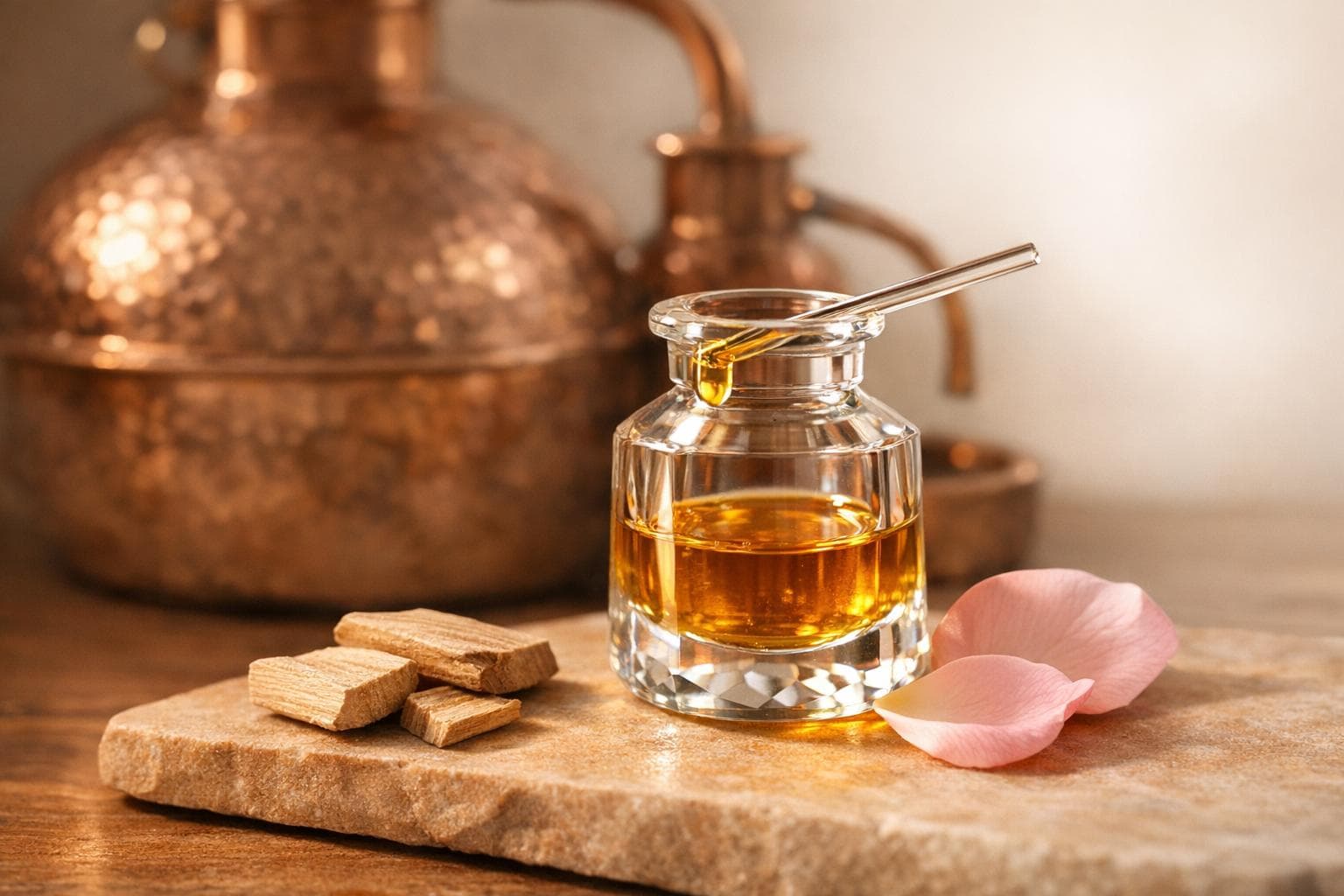
Τα ινδικά attars έχουν βαθιές ρίζες στην ιστορία, συνδυάζοντας αρχαίες τεχνικές με σύγχρονες προτιμήσεις αρωματοποιίας. Αυτά τα αρώματα με βάση το έλαιο, απαλλαγμένα από αλκοόλ, δημιουργούνται μέσω μιας σχολαστικής διαδικασίας απόσταξης με άνθη, βότανα και μπαχαρικά, συχνά μέσα σε έλαιο σανταλόξυλου. Γνωστά για τη μεγάλη διάρκειά τους και την εξελισσόμενη οσφρητική τους υπογραφή, τα attars αγαπιούνται εδώ και πάνω από 5.000 χρόνια, από τον Πολιτισμό της Κοιλάδας του Ινδού έως την Αυτοκρατορία των Μουγκάλ και ακόμη παραπέρα.
Κύρια Σημεία:
- Τι είναι τα Attars; Ιδιαίτερα συμπυκνωμένα, χωρίς αλκοόλ αρώματα που παρασκευάζονται με τη μέθοδο απόσταξης Deg — Bhapka.
- Ιστορική Σημασία: Με προέλευση πριν από περισσότερα από 5.000 χρόνια, τα attars διαδραμάτισαν ρόλο σε τελετουργίες, στην Αγιουρβέδα και στις βασιλικές παραδόσεις.
- Σύγχρονη Απήχηση: Οικολογικά συνειδητά, φυσικά και φιλικά προς το δέρμα, τα attars κερδίζουν ολοένα και μεγαλύτερη δημοτικότητα παγκοσμίως.
- Η Κληρονομιά του Kannauj: Γνωστό ως η "Πρωτεύουσα των Αρωμάτων" της Ινδίας, το Kannauj παραμένει κέντρο παραγωγής attar.
Τα attars είναι κάτι περισσότερο από αρώματα - αντανακλούν ένα πάντρεμα καλλιτεχνίας, κληρονομιάς και αισθητηριακού βάθους, γεγονός που τα καθιστά διαχρονικά.
Η Ιστορία των Ινδικών Attars
Αρχαία Ινδία και Πρώιμη Απόσταξη
Η τέχνη της παραγωγής attar στην Ινδία εκτείνεται πάνω από 5.000 χρόνια πίσω, στον Πολιτισμό της Κοιλάδας του Ινδού (περίπου 3300–1300 π.Χ.). Αρχαιολογικές ανακαλύψεις, συμπεριλαμβανομένου εξοπλισμού απόσταξης από τερακότα και δοχείων αρωμάτων, υποδηλώνουν την πρώιμη εκλέπτυνση αυτής της τέχνης. Ένα τέτοιο τεχνούργημα από το 5000 π.Χ. εκτίθεται σήμερα στο Μουσείο της Ταξίλα.
Στην αρχαία Ινδία, το άρωμα δεν ήταν απλώς μια πολυτέλεια - ήταν ένας συνδυασμός επιστήμης και πνευματικότητας. Γνωστό ως Gandhashastra, ή η επιστήμη των οσμών, έγινε ζωτικής σημασίας πτυχή της Αγιουρβέδα. Πρώιμα σανσκριτικά κείμενα όπως το Charaka Samhita και το Sushruta Samhita (που χρονολογούνται πριν από τον 2ο αιώνα) περιγράφουν τεχνικές υδροαπόσταξης, αναφερόμενες ως Jalyeaya Aaswan, και αναδεικνύουν τις θεραπευτικές ιδιότητες των αρωματικών ελαίων. Οι ίδιες οι Βέδες απαριθμούν περισσότερες από 700 αρωματικές ουσίες, συμπεριλαμβανομένων του σανταλόξυλου, του νάρδου και του τζίντζερ. Το άρωμα διαδραμάτιζε καθοριστικό ρόλο σε βεδικές τελετουργίες όπως τα Homas και Havanas, όπου αρωματικά υλικά όπως το σανταλόξυλο και η κανέλα καίγονταν για να εξαγνίσουν το πνεύμα.
Αυτή η θεμελιώδης γνώση έθεσε τις βάσεις για τις πολυτελείς παραδόσεις που ακολούθησαν στους επόμενους αιώνες.
Η Εποχή της Αυτοκρατορίας των Μουγκάλ
Κατά τη διάρκεια της Αυτοκρατορίας των Μουγκάλ (16ος–19ος αιώνας), η παραγωγή attar έγινε σύμβολο αυτοκρατορικής χλιδής. Ο αυτοκράτορας Ακμπάρ, για παράδειγμα, ίδρυσε ολόκληρο τμήμα αφιερωμένο στην αρωματοποιία, όπως αναφέρεται στο Ain-i — Akbari. Η αυλή του φέρεται να χρησιμοποιούσε τεράστιες ποσότητες attar oud - όχι μόνο ως προσωπικό άρωμα αλλά και για να αρωματίζει τις πόρτες και τα έπιπλα του παλατιού, προσφέροντας ανακούφιση από την έντονη ινδική ζέστη.
Οι Μουγκάλ τελειοποίησαν τη μέθοδο υδροαπόσταξης deg-bhapka και εισήγαγαν εξωτικά αρωματικά φυτά από την Περσία και την Κεντρική Ασία. Μία από τις πιο φημισμένες καινοτομίες της εποχής ήταν το Rooh Gulab, ή καθαρό ροδόνερο attar, το οποίο οι ιστορικές πηγές αποδίδουν στη βασίλισσα Noor Jahan ή στη μητέρα της, Asmat Begum. Ο αυτοκράτορας Jahangir εξήρε παραστατικά τη δύναμή του:
Έχει τέτοια ένταση αρώματος ώστε, αν μία σταγόνα τριφτεί στην παλάμη του χεριού, αρωματίζει ολόκληρη σύναξη... Επαναφέρει τις καρδιές που έχουν χαθεί και δίνει ξανά ζωή σε μαραμένες ψυχές.
Αυτές οι συνεισφορές ανύψωσαν ακόμη περισσότερο το κύρος του Kannauj ως καρδιάς της ινδικής αρωματοποιίας.
Kannauj: Η Πρωτεύουσα των Αρωμάτων της Ινδίας
Το Kannauj, που βρίσκεται στο Uttar Pradesh, είναι συνώνυμο της ινδικής αρωματοποιίας εδώ και αιώνες. Οι αρχαίες ονομασίες του - Gandhipur (Πόλη των Αρωμάτων) και Kusumpur (Πόλη των Λουλουδιών) - μαρτυρούν τον βαθύ του δεσμό με το άρωμα. Το εύφορο έδαφος της περιοχής και οι ευνοϊκές συνθήκες νερού την καθιστούν ιδανική για την καλλιέργεια αρωματικών λουλουδιών όπως τριαντάφυλλα, γιασεμί και βετιβέρ.
Η σημασία του Kannauj ξεκίνησε κατά τη βασιλεία του αυτοκράτορα Harshvardhan τον 7ο αιώνα, ο οποίος επέβαλε ακόμη και φόρο στο βετιβέρ (khus) λόγω της υψηλής του αξίας στην αρωματοποιία. Υπό τους Μουγκάλ, η πόλη έγινε ο κύριος προμηθευτής εκλεπτυσμένων αρωμάτων για τις βασιλικές αυλές. Σήμερα, το Kannauj συνεχίζει αυτή την κληρονομιά, με περίπου 25.000 από τους 80.000 κατοίκους του να απασχολούνται στην παραγωγή attar και σε συναφείς ανθοκομικές βιομηχανίες. Η πόλη φιλοξενεί περισσότερες από 500 παραδοσιακές μονάδες παραγωγής attar, πολλές από τις οποίες παραμένουν αμετάβλητες εδώ και πάνω από 400 χρόνια.
Όπως το έθεσε εύγλωττα ο Shri Mushi, πρώην ποιητής και κυβερνήτης του Uttar Pradesh:
Η πόλη του attar, το Kannauj, είναι τέχνη, πολιτισμός και κληρονομιά.
Τα Attars στην Ινδική Κουλτούρα και Πνευματικότητα
Χρήση σε Θρησκευτικές Τελετουργίες
Τα attars έχουν διαδραματίσει ζωτικό ρόλο στην πνευματική ζωή της Ινδίας εδώ και αιώνες. Στις ινδουιστικές παραδόσεις, αυτά τα αρωματικά έλαια αποτελούν βασικό στοιχείο της λατρείας στους ναούς και των οικιακών τελετών. Χρησιμοποιούνται συχνά σε τελετουργίες φωτιάς όπως τα homas, havanas και agnihotras, όπου οι ευωδίες τους συμβάλλουν στον εξαγνισμό του περιβάλλοντος. Στοιχεία από τον πολιτισμό των Χαράππα αποκαλύπτουν ότι βοτανικές ουσίες καίγονταν σε βωμούς φωτιάς (Hawan — Kunds), συνδέοντας το άρωμα με την τελετουργική καθαρότητα ήδη από χιλιάδες χρόνια πριν.
Στις ισλαμικές πρακτικές, τα attars τιμώνται εξίσου. Χρησιμοποιούνται για τον εξαγνισμό του αέρα σε τζαμιά και σπίτια, δημιουργώντας μια γαλήνια ατμόσφαιρα για προσευχή και διαλογισμό. Οι Σούφι άγιοι ιστορικά ασπάζονταν συγκεκριμένα attars ως πνευματικά βοηθήματα, πιστεύοντας ότι ορισμένες ευωδίες μπορούσαν να προσελκύσουν αγγέλους και να απωθήσουν αρνητικές δυνάμεις. Καθώς τα attars δεν περιέχουν αλκοόλ, εκτιμώνται ιδιαίτερα σε περιβάλλοντα όπου αποφεύγονται τα αρώματα με βάση το αλκοόλ.
Τα attars κατηγοριοποιούνται επίσης ανάλογα με τις επιδράσεις τους στο σώμα. Για παράδειγμα, τα "θερμά" attars όπως το μόσχο, το κεχριμπάρι και το σαφράν είναι δημοφιλή τον χειμώνα για την ικανότητά τους να προσδίδουν ζεστασιά, ενώ τα "δροσερά" attars όπως το τριαντάφυλλο, το γιασεμί και το khus (βετιβέρ) προτιμώνται το καλοκαίρι για τις αναζωογονητικές τους ιδιότητες. Αυτή η εποχική χρήση αντανακλά τις αρχές της Αγιουρβέδα, που αποσκοπούν στην εναρμόνιση των ενεργειών του σώματος. Πέρα από την πνευματική τους σημασία, τα attars υπήρξαν επί μακρόν σύμβολα σεβασμού και κύρους, μια παράδοση που συνεχίζεται μέχρι σήμερα.
Τα Attars ως Σύμβολα Φιλοξενίας και Κοινωνικού Κύρους
Τα attars ξεπερνούν τα θρησκευτικά συμφραζόμενα, λειτουργώντας ως δείκτες φιλοξενίας και κοινωνικής κομψότητας. Η προσφορά attar στους καλεσμένους αποτελεί στην Ινδία μια διαχρονική χειρονομία σεβασμού και καλωσορίσματος. Η πρακτική αυτή ανάγεται στις βασιλικές αυλές, όπου αυτοκράτορες και μαχαραγιάδες χρησιμοποιούσαν τα attars όχι μόνο για προσωπικό καλλωπισμό αλλά και ως σύμβολα ισχύος και εκλέπτυνσης. Για παράδειγμα, ο αυτοκράτορας των Μουγκάλ Jahangir διόρισε ακόμη και έναν khushbu-daroga - αξιωματούχο υπεύθυνο για τη διαχείριση των αποθεμάτων attar του βασιλικού οίκου.
Η αποκλειστικότητα των αυθεντικών attars ενίσχυε πάντοτε τη γοητεία τους. Το αυθεντικό έλαιο Rosa damascena, για παράδειγμα, κοστίζει περίπου €235 για μόλις 10ml, ενώ το υδροαποσταγμένο attar Motia μπορεί να φτάσει τα €5.000 ανά λίτρο. Αυτές οι τιμές υπογραμμίζουν το status πολυτελείας τους, το οποίο ιστορικά περιόριζε τη χρήση τους στην ελίτ. Οι αριστοκράτες εμποτίζαν ακόμη και τις κουρτίνες και τα λευκά είδη τους με attar βετιβέρ για να διατηρούνται δροσεροί τις αποπνικτικές νύχτες. Αυτή η παράδοση πολυτέλειας και φινέτσας επιμένει, καθώς τα attars παραμένουν περιζήτητα σύμβολα αποκλειστικότητας.
Ο Dr. P. K. Gode παρατήρησε εύστοχα:
Ο βαθμός αριστείας και εκλέπτυνσης των καλλυντικών και των αρωμάτων σε οποιαδήποτε δεδομένη περίοδο πολιτισμού παραμένει ο δείκτης της πολιτιστικής ανάπτυξης εκείνης της περιόδου.
Ακόμη κι αν τα δυτικά επώνυμα αρώματα αντιπροσωπεύουν πλέον περίπου το 30% της αγοράς αρωμάτων της Ινδίας, η πολιτισμική κληρονομιά των attars διατηρείται, αντανακλώντας τη διαχρονική τους σημασία στην ινδική κοινωνία.
Πώς παρασκευάζεται το διάσημο attar του Kannauj; | The Hindu

Ο προσωπικός σας ειδικός αρωμάτων σας περιμένει
Κάντε το σύντομο κουίζ αρώματος και ανακαλύψτε αυθεντικά αρώματα designer και niche, επιλεγμένα στα μέτρα σας – εξερευνήστε τα σε decant και δείγματα των 2–8ml, ώστε να δοκιμάσετε το καθένα πριν επιλέξετε ολόκληρο μπουκάλι.
Βρείτε το άρωμά σαςΠώς Παρασκευάζονται τα Attars: Η Διαδικασία Απόσταξης
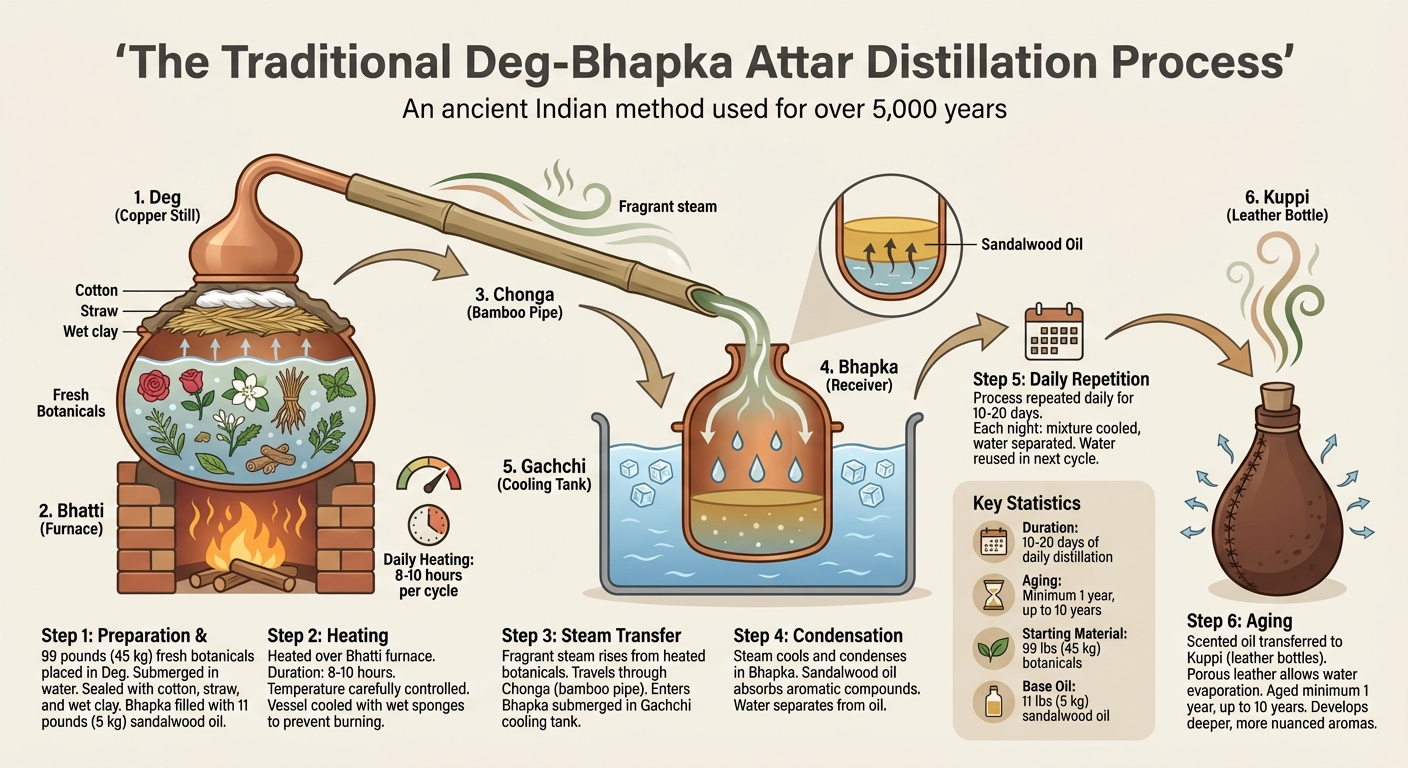
Παραδοσιακή Διαδικασία Απόσταξης Attar Deg — Bhapka
Μέθοδοι Υδροαπόσταξης
Η παραδοσιακή τέχνη της δημιουργίας attar βασίζεται σε μια αρχαία διαδικασία γνωστή ως μέθοδος Deg — Bhapka. Αυτή η τεχνική ξεκινά με 99 λίβρες (45 κιλά) φρέσκων βοτανικών υλών που τοποθετούνται σε έναν χάλκινο αποστακτήρα που ονομάζεται Deg. Αυτές οι βοτανικές ύλες βυθίζονται σε νερό και σφραγίζονται ερμητικά με ένα μείγμα από βαμβάκι, άχυρο και υγρό πηλό. Στη συνέχεια, το Deg θερμαίνεται πάνω από έναν φούρνο από τούβλα και πηλό, γνωστό ως Bhatti, για περίπου 8 έως 10 ώρες. Κατά τη διάρκεια αυτού του χρόνου, οι τεχνίτες διαχειρίζονται προσεκτικά τη θερμοκρασία, συχνά ψύχοντας το σκεύος με βρεγμένα σφουγγάρια ώστε να διασφαλίζεται ότι τα ευαίσθητα πέταλα δεν θα καούν.
Καθώς το μείγμα θερμαίνεται, αρωματικός ατμός ανεβαίνει και ταξιδεύει μέσω ενός κεκλιμένου σωλήνα από μπαμπού, γνωστού ως Chonga, μέσα στο δοχείο υποδοχής που ονομάζεται Bhapka. Αυτό το δοχείο είναι βυθισμένο σε μια δεξαμενή ψύξης, ή Gachchi, γεμάτη με νερό. Το νερό ψύχει τον ατμό, συμπυκνώνοντάς τον ξανά σε υγρή μορφή. Μέσα στο Bhapka, το έλαιο σανταλόξυλου απορροφά τις αρωματικές ενώσεις που μεταφέρει ο ατμός. Αυτή η διαδικασία επαναλαμβάνεται καθημερινά για 10 έως 20 ημέρες, διασφαλίζοντας ότι το έλαιο σανταλόξυλου εμποτίζεται πλήρως με τη βοτανική ουσία. Κάθε βράδυ, το μείγμα ψύχεται και το νερό διαχωρίζεται από το έλαιο, το οποίο στη συνέχεια επαναχρησιμοποιείται στον επόμενο κύκλο.
| Εξοπλισμός | Τοπική Ονομασία | Λειτουργία |
|---|---|---|
| Χάλκινος Αποστακτήρας | Deg | Δοχείο όπου θερμαίνονται οι βοτανικές ύλες και το νερό |
| Δέκτης | Bhapka | Περιέχει έλαιο σανταλόξυλου και συλλέγει το συμπυκνωμένο αρωματικό απόσταγμα |
| Σωλήνας από Μπαμπού | Chonga | Μεταφέρει τον αρωματικό ατμό από το Deg στο Bhapka |
| Δεξαμενή Ψύξης | Gachchi | Δεξαμενή νερού που ψύχει τον ατμό ώστε να συμπυκνωθεί ξανά σε υγρή μορφή |
| Δερμάτινο Μπουκάλι | Kuppi | Αποθηκεύει το attar, επιτρέποντας στην υγρασία να εξατμιστεί ενώ διατηρεί το έλαιο |
Αυτή η περίτεχνη διαδικασία αναδεικνύει τη σημασία του ελαίου σανταλόξυλου στη δημιουργία αυθεντικών attars.
Έλαιο Σανταλόξυλου ως Βάση
Το έλαιο σανταλόξυλου διαδραματίζει καθοριστικό ρόλο στην παραδοσιακή παρασκευή attar, λειτουργώντας τόσο ως βάση όσο και ως σταθεροποιητής. Πριν αρχίσει η απόσταξη, το Bhapka γεμίζει με περίπου 11 λίβρες (5 κιλά) αυτού του πολύτιμου ελαίου, το οποίο δεσμεύει τα αρωματικά μόρια κατά τη διαδικασία συμπύκνωσης.
Μόλις ολοκληρωθεί η απόσταξη, το αρωματισμένο έλαιο μεταφέρεται σε Kuppis - πορώδη δερμάτινα μπουκάλια από δέρμα καμήλας ή μοσχαριού. Αυτά τα μπουκάλια επιτρέπουν στο υπόλοιπο νερό να εξατμιστεί, διαφυλάσσοντας παράλληλα το πολύτιμο έλαιο. Έπειτα, το attar παλαιώνει για τουλάχιστον έναν χρόνο, αν και ορισμένα ωριμάζουν έως και μια δεκαετία ώστε να αναπτύξουν βαθύτερα και πιο σύνθετα αρώματα.
Η σπανιότητα και το υψηλό κόστος του γνήσιου σανταλόξυλου έχουν εξελιχθεί σε σημαντικές προκλήσεις για τους παραδοσιακούς αποσταγματοποιούς. Για παράδειγμα, ένα μπουκαλάκι 10 ml αυθεντικού attar τριαντάφυλλου (Ruh Gulab) μπορεί να κοστίζει περίπου €250 στο Kannauj, ενώ οι συνθετικές εκδοχές πωλούνται μόλις για €8. Παρομοίως, το αυθεντικό attar γιασεμιού (Motia) μπορεί να φτάσει έως και €5.400 ανά λίτρο, σε σύγκριση με συνθετικές εναλλακτικές που τιμολογούνται μόλις στα €45 ανά λίτρο. Αυτές οι εντυπωσιακές διαφορές τιμής έχουν οδηγήσει ορισμένους σύγχρονους παραγωγούς να αντικαθιστούν το έλαιο σανταλόξυλου με εναλλακτικές όπως υγρή παραφίνη ή DOP. Ωστόσο, αυτά τα υποκατάστατα στερούνται της δυνατότητας παλαίωσης και του βάθους των αληθινών attars, γεγονός που καθιστά κρίσιμο για τους αγοραστές να επιβεβαιώνουν ότι τα attars τους έχουν δημιουργηθεί με καθαρό έλαιο σανταλόξυλου και όχι με συνθετικές βάσεις. Αυτή η διάκριση είναι που ξεχωρίζει τα αυθεντικά attars από τα συνθετικά τους αντίστοιχα.
Τα Attars στη Σύγχρονη Αρωματική Κουλτούρα
Φυσική και Οικολογική Επιλογή Αρώματος
Η αυξανόμενη τάση προς την καθαρή ομορφιά έχει φέρει τα attars στο προσκήνιο. Σε αντίθεση με τα δυτικά αρώματα, τα οποία συχνά αναμειγνύουν 5% έως 20% αρωματικά έλαια με αλκοόλ, τα attars δημιουργούνται από 100% καθαρά αρωματικά έλαια, χωρίς συνθετικά πληρωτικά. Αυτό τα καθιστά εξαιρετική επιλογή για άτομα με ευαίσθητο δέρμα που επιθυμούν να αποφύγουν τις σκληρές χημικές ουσίες και τις αλκοόλες που βρίσκονται στα συμβατικά sprays.
Παραγόμενα με τεχνικές που τιμώνται στο πέρασμα του χρόνου, τα attars διατηρούν τη φυσική τους ακεραιότητα αποφεύγοντας τα συνθετικά πρόσθετα. Πολλά σύγχρονα niche brands χτίζουν πάνω σε αυτή την παράδοση, δίνοντας προτεραιότητα σε βιώσιμα και ιχνηλάσιμα συστατικά. Για παράδειγμα, η LilaNur αναδεικνύει τα ινδικά floral absolutes με εκχύλιση σε φυσικό έλαιο σανταλόξυλου για 100 ημέρες, με αποτέλεσμα ένα προϊόν που είναι ταυτόχρονα εκλεπτυσμένο και περιβαλλοντικά συνειδητό.
"Το attar είναι η καθαρή, αδιάλυτη μορφή του αρώματος." – Rawya Catto, General Manager, CPL Aromas
Επειδή τα attars δεν βασίζονται στο αλκοόλ ως μέσο διάχυσης, παραμένουν κοντά στο δέρμα, δημιουργώντας μια μακράς διάρκειας και οικεία αρωματική εμπειρία. Αυτή η ποιότητα, που συχνά περιγράφεται ως μια "φυσαλίδα αρώματος", προσφέρει μια βαθιά προσωπική αίσθηση. Όπως το έθεσε εύστοχα η Vogue:
"Φοράμε eau de parfums για τον κόσμο, αλλά τα attars είναι για τον στενό μας κύκλο"
Αυτή η μοναδική γοητεία έχει εμπνεύσει μια ποικιλία attars σχεδιασμένων να ταιριάζουν σε διαφορετικές εποχές και διαθέσεις.
Συνήθεις Τύποι Attar και οι Χρήσεις τους
Τα attars συχνά κατηγοριοποιούνται με βάση την καταλληλότητά τους για κάθε εποχή και τις αισθητηριακές τους ιδιότητες. Οι παραδοσιακές ταξινομήσεις τα χωρίζουν σε "θερμά" και "δροσερά" είδη, ανάλογα με την επίδρασή τους. Θερμά attars όπως το μόσχο, το κεχριμπάρι και το kesar (σαφράν) είναι δημοφιλή στους ψυχρότερους μήνες, ενώ δροσερά attars όπως το τριαντάφυλλο, το γιασεμί, το khus (βετιβέρ) και το kewra προτιμώνται στον ζεστό καιρό.
| Τύπος Attar | Αντιλαμβανόμενη Ιδιότητα | Ιδανική Εποχή | Κύρια Χαρακτηριστικά |
|---|---|---|---|
| Gulab (Τριαντάφυλλο) | Δροσιστικό | Καλοκαίρι | Γλυκό, ανθικό, καταπραϋντικό |
| Khus (Βετιβέρ) | Δροσιστικό | Καλοκαίρι | Γήινο, ξυλώδες, αναζωογονητικό |
| Mitti | Ουδέτερο/Γήινο | Μουσώνες/Όλο τον χρόνο | Ανακαλεί το άρωμα της βροχής πάνω στο χώμα |
| Μόσχος/Κεχριμπάρι | Θερμαντικό | Χειμώνας | Βαθύ, μοσχομυριστό, θερμό |
| Kesar (Σαφράν) | Θερμαντικό | Χειμώνας | Πικάντικο, πλούσιο, πολυτελές |
Ανάμεσα σε αυτά, το attar Mitti ξεχωρίζει ως μια μοναδικά ινδική δημιουργία, αποτυπώνοντας το νοσταλγικό άρωμα της πρώτης βροχής πάνω στη στεγνή γη. Είναι αγαπημένο όσων αναζητούν μια σύνδεση με τις αναμνήσεις των μουσώνων.
Πολλοί λάτρεις των αρωμάτων έχουν επίσης υιοθετήσει το layering των attars με αρώματα με βάση το αλκοόλ. Η εφαρμογή attar στα σημεία παλμού πριν από τον ψεκασμό παραδοσιακών αρωμάτων δημιουργεί μια διακριτική, μακράς διάρκειας υπογραφή αρώματος.
Αυξανόμενο Ενδιαφέρον για τα Attars Παγκοσμίως
Με την πλούσια ιστορία τους και τη φυσική τους αγνότητα, τα attars επαναπροσδιορίζονται για ένα παγκόσμιο κοινό. Το κίνημα "Attar 2.0" γεφυρώνει τις πολιτισμικές παραδόσεις με τις σύγχρονες ευαισθησίες, αμφισβητώντας την κυριαρχία των ευρωκεντρικών προτύπων αρωματοποιίας. Brands όπως τα Tanaïs, Unifrom, Boond και Amouage δημιουργούν σύγχρονες εκδοχές που απευθύνονται σε νεότερους καταναλωτές που αναζητούν gender-neutral και εξατομικεύσιμες ευωδίες.
Η αρωματοποιός και συγγραφέας Tanaïs αναστοχάζεται την προσωπική και πολιτισμική σημασία των attars:
"Τα attars είναι τελετουργίες στολισμού που καλούν τα αρωματικά τοπία των προγόνων μου: γιασεμί, βιολέτα, τριαντάφυλλο, φύλλο betel, λάδι καρύδας"
Παρόμοια, ο Renaud Salmon, Creative Director στην Amouage, μοιράζεται:
"Ήθελα να δείξω σεβασμό στην παράδοση και στα συστατικά που συνήθως συνδέονται με αυτήν, αλλά ήθελα επίσης να προωθήσω ένα νέο όραμα"
Αυτές οι artisanal δημιουργίες συχνά συνοδεύονται από premium τιμές. Για παράδειγμα, το Tanaïs Matí Rollerball πωλείται στα $75, ενώ το LilaNur Tubéreuse Attar Absolu κοστίζει $435 ανά ουγγιά. Τα discovery sets κερδίζουν επίσης ολοένα και μεγαλύτερη δημοτικότητα, με την Amouage να προσφέρει ένα Attars Discovery Set στα $200 και την Boond Fragrances να διαθέτει στην αγορά ένα Five Fragrances Set στα $83.
Ανακαλύπτοντας τα Attars με το Scento

Το Scento προσφέρει έναν εύκολο τρόπο να εξερευνήσετε τον κόσμο των attars χωρίς να δεσμευτείτε σε μπουκάλια πλήρους μεγέθους. Η επιμελημένη συλλογή του από niche και designer αρώματα διατίθεται σε travel-friendly μορφές, όπως φιαλίδια 0.75 ml, 2 ml και 8 ml. Αυτό σας επιτρέπει να δοκιμάσετε αρώματα εμπνευσμένα από attar σε ένα κλάσμα του κόστους.
Τα φιαλίδια των 8 ml προσφέρουν περίπου 120 ψεκασμούς, δίνοντάς σας άφθονο χρόνο να βιώσετε πώς εξελίσσεται ένα attar πάνω στο δέρμα σας μέσα σε εβδομάδες. Για όσους επιθυμούν να πειραματιστούν ακόμη περισσότερο, η συνδρομητική υπηρεσία του Scento σας επιτρέπει να εξερευνάτε πολλαπλά αρωματικά προφίλ κάθε μήνα, βοηθώντας σας να δημιουργήσετε μια εξατομικευμένη αρωματική γκαρνταρόμπα. Με γρήγορη αποστολή και εγγύηση επιστροφής χρημάτων 30 ημερών, το Scento καθιστά την ανακάλυψη της οικείας και μακράς διάρκειας γοητείας των αρωμάτων με βάση το έλαιο τόσο εύκολη όσο και χωρίς ρίσκο.
Συμπέρασμα
Τα ινδικά attars είναι πολύ περισσότερα από απλά αρώματα - ενσαρκώνουν μια κληρονομιά 5.000 ετών που παραμένει ζωντανή και επιδραστική στον σημερινό κόσμο της αρωματοποιίας. Από τις αρχαιολογικές ανακαλύψεις του Πολιτισμού της Κοιλάδας του Ινδού έως τα ακμάζοντα παραδοσιακά αποστακτήρια στο Kannauj, τα attars αποτελούν μαρτυρία διαχρονικής δεξιοτεχνίας και πολιτισμικής σημασίας.
Αυτό που ξεχωρίζει τα attars σήμερα είναι ο αβίαστος συνδυασμός αρχαίας παράδοσης και σύγχρονων προτιμήσεων. Η απολύτως φυσική τους σύνθεση, χωρίς αλκοόλ, και η αξιοσημείωτη διάρκειά τους - όπου μία μόνο σταγόνα μπορεί να διαρκέσει για ημέρες - εναρμονίζονται ιδανικά με την αυξανόμενη ζήτηση για καθαρά, φιλικά προς το δέρμα προϊόντα ομορφιάς. Η παραδοσιακή τεχνική υδροαπόσταξης Deg — Bhapka, που μεταδίδεται από γενιά σε γενιά, αναδεικνύει την καλλιτεχνία και την αφοσίωση πίσω από τη δημιουργία τους, σε έντονη αντίθεση με τα αρώματα μαζικής παραγωγής. Αυτή η μέθοδος όχι μόνο διαφυλάσσει την ουσία της τέχνης, αλλά ενισχύει και την πολιτισμική και ιστορική τους αξία.
Τα attars είναι βαθιά υφασμένα μέσα στις πολιτισμικές και πνευματικές πρακτικές της Ινδίας. Χρησιμοποιούνται για τον εξαγνισμό του αέρα σε τζαμιά, προσφέρονται κατά τη διάρκεια ινδουιστικών τελετουργιών στους ναούς και ακόμη συνοδεύουν Σούφι αγίους σε πνευματικά ταξίδια. Το έθιμο της προσφοράς attar στους καλεσμένους συνεχίζει να συμβολίζει τη φιλοξενία και τον σεβασμό, αντικατοπτρίζοντας τις πλούσιες παραδόσεις της ινδικής κοινωνίας.
Αυτά τα αρώματα λειτουργούν επίσης ως γέφυρα ανάμεσα στο παρελθόν και το παρόν, αναδεικνύοντας πώς η artisanal δεξιοτεχνία παραμένει επίκαιρη σε έναν γρήγορο, σύγχρονο κόσμο. Είτε εκτιμώνται για τις αγιουρβεδικές θεραπευτικές τους ιδιότητες, την εποχική τους προσαρμοστικότητα ή τις οικείες, μακράς διάρκειας ευωδίες τους, τα attars προσφέρουν μια αισθητηριακή σύνδεση με αιώνες ιστορίας και κληρονομιάς.
Συχνές Ερωτήσεις
Πώς μπορώ να καταλάβω αν ένα attar είναι αυθεντικό ή συνθετικό;
Για να καταλάβετε αν ένα attar είναι γνήσιο ή συνθετικό, δώστε προσοχή στα συστατικά του. Τα αυθεντικά attars δημιουργούνται με φυσικά στοιχεία όπως άνθη, βότανα ή ξύλα. Αντίθετα, τα συνθετικά attars συχνά βασίζονται σε τεχνητά αρώματα ή χημικά πρόσθετα. Η εξέταση της λίστας συστατικών ή των πληροφοριών σχετικά με την προέλευσή του μπορεί να προσφέρει ενδείξεις για την αυθεντικότητά του.
Πού πρέπει να εφαρμόζω το attar ώστε να διαρκεί περισσότερο;
Για να βοηθήσετε το attar σας να διαρκεί περισσότερο, εφαρμόστε το απαλά στα σημεία παλμού όπως οι καρποί, ο λαιμός και πίσω από τα αυτιά - αυτές οι θερμότερες περιοχές ενισχύουν το άρωμα. Η εφαρμογή του σε ενυδατωμένο δέρμα ενισχύει επίσης τη διάρκειά του, καθώς το ενυδατωμένο δέρμα συγκρατεί αποτελεσματικότερα τα αρωματικά έλαια. Αυτά τα απλά βήματα μπορούν να κρατήσουν το άρωμά σας αισθητό όλη μέρα.
Μπορώ να συνδυάσω ένα attar με το κανονικό μου άρωμα;
Ναι, μπορείτε απολύτως να συνδυάσετε attars με κανονικά αρώματα για να δημιουργήσετε μια ευωδία που να είναι απόλυτα δική σας. Ξεκινήστε εφαρμόζοντας πρώτα το attar, καθώς έχει πιο συμπυκνωμένη σύνθεση, επιτρέποντάς του να λειτουργήσει ως βαθιά, πλούσια βάση. Μόλις το attar κατασταλάξει, ψεκάστε ελαφρά από πάνω το άρωμα της επιλογής σας. Αυτή η τεχνική layering προσθέτει βάθος και πολυπλοκότητα, επιτρέποντας στο attar και το άρωμα να συνεργαστούν ώστε να δημιουργήσουν ένα μείγμα που αποπνέει προσωπικότητα και είναι μοναδικό για το στυλ σας.