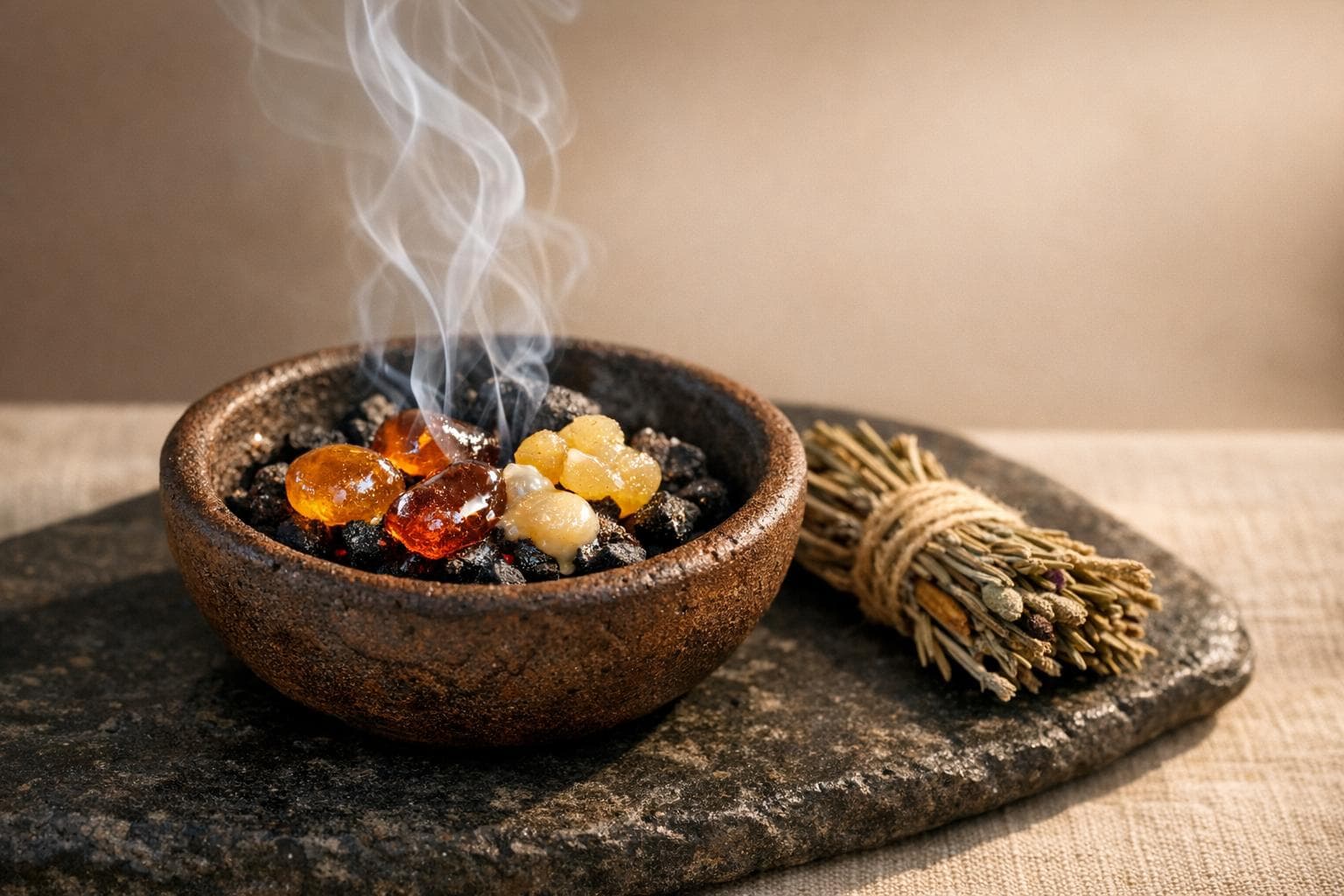
Οι αυτόχθονες κοινότητες σε όλο τον κόσμο χρησιμοποιούν εδώ και αιώνες ευωδίες όπως ρητίνες, βότανα και άνθη σε τελετουργίες για πνευματική σύνδεση, εξαγνισμό και απόδοση τιμής στους προγόνους. Αυτές οι πρακτικές συχνά περιλαμβάνουν την καύση υλικών όπως το κοπάλ, ο κέδρος ή το γλυκόχορτο, με τον αρωματικό καπνό να συμβολίζει μια γέφυρα ανάμεσα στο υλικό και το πνευματικό πεδίο. Κάθε υλικό φέρει συγκεκριμένες σημασίες - ο καπνός για τις μεταβάσεις, ο κατιφές για τη ζωή και τον θάνατο, ή το λιβάνι για τη θεϊκή σύνδεση.
Βασικές επισημάνσεις:
- Η ευωδία λειτουργεί ως μέσο προσευχής, κάθαρσης και επισήμανσης σημαντικών γεγονότων της ζωής.
- Η ηθική προμήθεια και η σεβαστική χρήση αυτών των υλικών είναι καίριας σημασίας για την αποφυγή πολιτισμικής βλάβης.
- Εναλλακτικές όπως ο άρκευθος ή η αρτεμισία μπορούν να αντικαταστήσουν ιερά φυτά όπως το λευκό φασκόμηλο σε μη αυτόχθονες πρακτικές.
Είτε μέσω smudging, θυμιάματος ή σύγχρονων αρωμάτων, αυτές οι τελετουργίες μας υπενθυμίζουν τη βαθιά σύνδεση ανάμεσα στην οσμή, την πνευματικότητα και τη φύση.
The Role of Fragrance in Indigenous Rituals
Ιερά Αρωματικά Υλικά στις Αυτόχθονες Τελετουργίες: Προέλευση, Χρήσεις & Σημασίες
Στους αυτόχθονες πολιτισμούς, η οσμή λειτουργεί ως βαθύς δεσμός με τον πνευματικό κόσμο, φέροντας έντονη συμβολική σημασία.
Πνευματικές και Συμβολικές Λειτουργίες
Ο αρωματικός καπνός θεωρείται συχνά ως ζωντανή σύνδεση ανάμεσα στο γήινο και το θεϊκό. Για τις κοινότητες των Ιθαγενών Αμερικανών, η καύση κέδρου ή γλυκόχορτου είναι ένας τρόπος να σταλούν προσευχές στον Δημιουργό. Όπως εξηγεί το Sisters Sage:
«Ο καπνός θεωρείται πύλη προς τον κόσμο των πνευμάτων και οι προσευχές μας μεταφέρονται μαζί του στον Δημιουργό.»
Αρωματικά φυτά όπως ο καπνός διαδραματίζουν ουσιώδη ρόλο στη σήμανση των σημαντικών μεταβάσεων της ζωής - γέννηση, γάμος και θάνατος - λειτουργώντας ως ιεροί οδηγοί που διασφαλίζουν ασφαλή διέλευση. Παρομοίως, σε αφρικανικές φυλετικές τελετές, συγκεκριμένα έλαια και ρητίνες χρησιμοποιούνται για να διευκολύνουν την επικοινωνία με τα πνεύματα των προγόνων. Η κοινή πεποίθηση σε αυτές τις παραδόσεις είναι σαφής: η οσμή μπορεί να μεταφέρει όσα οι λέξεις αδυνατούν.
Η πρακτική του smudging, που χρησιμοποιείται για τον καθαρισμό χώρων ή ανθρώπων από αρνητικές ενέργειες, αναδεικνύει την εξαγνιστική δύναμη της οσμής. Οι παραδόσεις των Αβορίγινων της Αυστραλίας, για παράδειγμα, έχουν τελειοποιήσει τέτοιες τελετουργίες επί χιλιάδες χρόνια.
Αυτός ο βαθύς σεβασμός προς την οσμή επηρεάζει επίσης την προσεκτική επιλογή αρωματικών υλικών, τα οποία επιλέγονται με πρόθεση και ευλάβεια.
Κοινά Αρωματικά Υλικά και οι Χρήσεις τους
Διαφορετικοί πολιτισμοί έχουν αναπτύξει μοναδικές χρήσεις για τα βοτανικά υλικά, καθένα από τα οποία φέρει συγκεκριμένες σημασίες και σκοπούς.
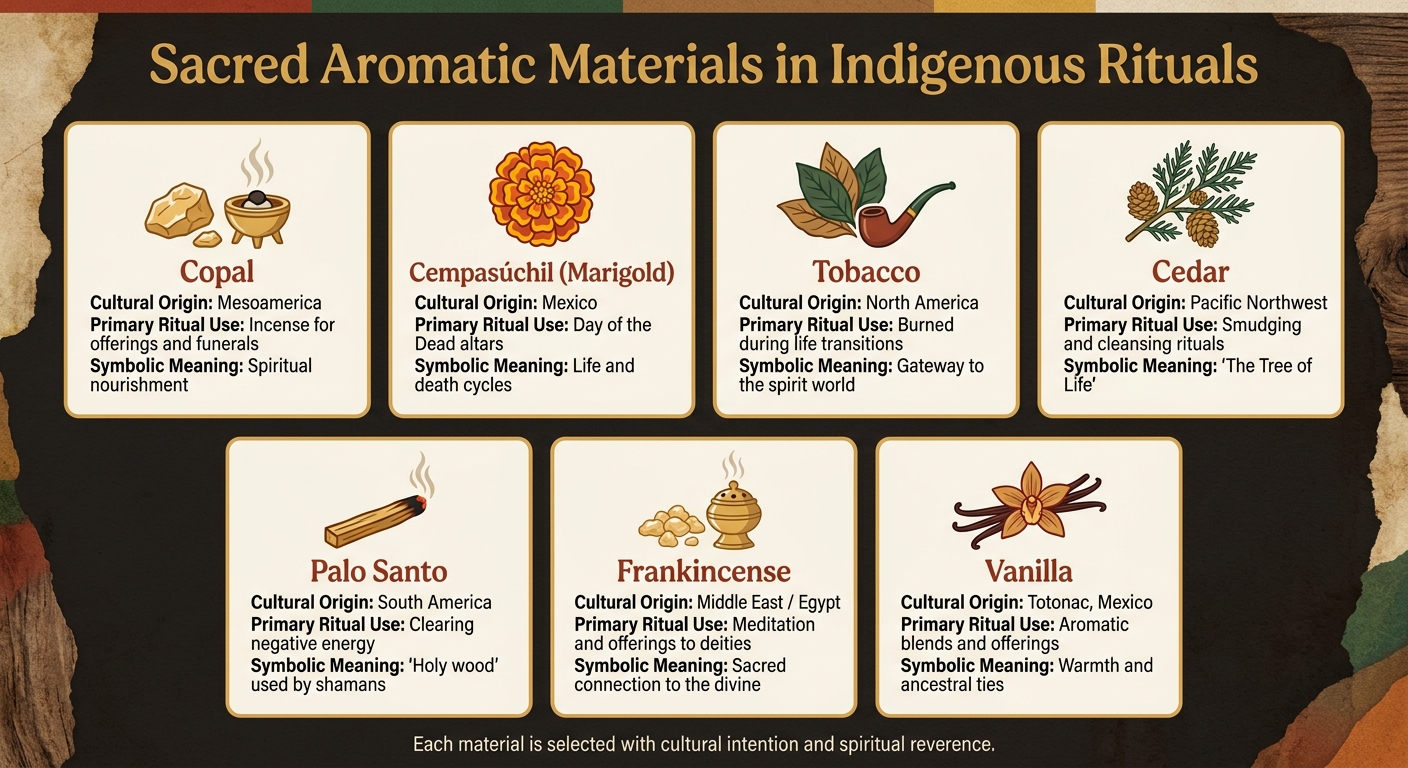
| Υλικό | Πολιτισμική Προέλευση | Κύρια Τελετουργική Χρήση | Συμβολική Σημασία |
|---|---|---|---|
| Κοπάλ | Μεσοαμερική | Θυμίαμα για προσφορές και κηδείες | Πνευματική θρέψη |
| Cempasúchil (Κατιφές) | Μεξικό | Βωμοί της Ημέρας των Νεκρών | Κύκλοι ζωής και θανάτου |
| Καπνός | Βόρεια Αμερική | Καίγεται κατά τις μεταβάσεις της ζωής | Πύλη προς τον κόσμο των πνευμάτων |
| Κέδρος | Βορειοδυτικός Ειρηνικός | Smudging· τελετουργίες κάθαρσης | «Το Δέντρο της Ζωής» |
| Palo Santo | Νότια Αμερική | Απομάκρυνση αρνητικής ενέργειας | «Ιερό ξύλο» που χρησιμοποιείται από σαμάνους |
| Λιβάνι | Μέση Ανατολή / Αίγυπτος | Διαλογισμός· προσφορές σε θεότητες | Ιερή σύνδεση με το θείο |
| Βανίλια | Totonac (Μεξικό) | Αρωματικά μείγματα και προσφορές | Θαλπωρή και προγονικοί δεσμοί |
Όπως σημειώνει η ερευνήτρια Monica Belot, ακόμη και οι θεότητες θεωρούνταν ότι είχαν προτιμήσεις ως προς τις οσμές:
«Το κοπάλ, ιδιαίτερα, ήταν γνωστό ως η “τροφή των θεών”, αν και ορισμένες θεότητες πιστευόταν ότι προτιμούσαν συγκεκριμένες ευωδίες.»
Αυτή η προσοχή στη λεπτομέρεια υπογραμμίζει τη σημασία της επιλογής των κατάλληλων υλικών για κάθε τελετουργία. Κάθε αρωματική ουσία επιλεγόταν - και εξακολουθεί να επιλέγεται - με φροντίδα και κατανόηση.
Σεβασμός στις Αυτόχθονες Παραδόσεις και Ηθική Προμήθεια
Η ενασχόληση με αυτές τις παραδόσεις απαιτεί σεβασμό και επίγνωση. Η περιστασιακή χρήση ιερών υλικών, χωρίς κατανόηση της σημασίας τους, ενέχει τον κίνδυνο πολιτισμικής οικειοποίησης και μπορεί να βλάψει τις κοινότητες από τις οποίες προέρχονται αυτές οι πρακτικές.
Ένα καλό πρώτο βήμα είναι η διασφάλιση της ηθικής προμήθειας. Για παράδειγμα, το Αυστραλιανό Σανταλόξυλο καταγράφεται ως ευάλωτο στην Κόκκινη Λίστα Απειλούμενων Ειδών της IUCN. Η ανεύθυνη αγορά του επιβαρύνει περαιτέρω αυτόν τον πόρο. Προτιμήστε προμηθευτές που συνεργάζονται με αυτόχθονες κοινότητες ή προσφέρουν εναλλακτικές που έχουν συλλεχθεί με βιώσιμο τρόπο.
Αν συλλέγετε οι ίδιοι φυτά όπως φασκόμηλο ή κέδρο, σε πολλές παραδόσεις συνηθίζεται να προσφέρεται καπνός στη βάση του φυτού πριν πάρετε ό,τι χρειάζεστε. Αυτή η μικρή πράξη αντανακλά μια ευρύτερη αρχή: αμοιβαιότητα με τη φύση, όχι εκμετάλλευση. Ο ίδιος σεβασμός ισχύει και για την ίδια τη γνώση - προσεγγίστε αυτές τις παραδόσεις με ταπεινότητα, μάθετε την ιστορία τους και τιμήστε το νόημά τους ως μαθητές και όχι ως καταναλωτές.
Πώς Προετοιμάζονται οι Αρωματικές Προσφορές
Προετοιμασία Φυτών και Ρητινών
Η δημιουργία αρωματικών προσφορών περιλαμβάνει έναν συνδυασμό παράδοσης και προσεκτικής προετοιμασίας, διασφαλίζοντας ότι κάθε υλικό αντιμετωπίζεται με σεβασμό και σκοπό.
Το λευκό φασκόμηλο αποξηραίνεται και δένεται σε δεμάτια πριν καεί για smudging, ενώ το γλυκόχορτο πλέκεται για να συμβολίσει την ισορροπία και τη θεραπεία. Αυτά τα στάδια προετοιμασίας αποτελούν μέρος της τελετουργίας όσο και η ίδια η πράξη.
Ρητίνες όπως το κοπάλ και το λιβάνι καίγονται παραδοσιακά πάνω σε θερμοανθεκτικές επιφάνειες ή δίσκους άνθρακα για να απελευθερώσουν τον αρωματικό τους καπνό. Ιστορικά, οι τεχνίτες χρησιμοποιούσαν γουδιά και μαγειρικά σκεύη για να αλέσουν ρητίνες μαζί με μπαχαρικά και έλαια, δημιουργώντας μείγματα θυμιάματος σε σκόνη. Η Nikki, Ιδρύτρια του Walking Sky Candles, αναδεικνύει τις πολιτισμικές και πνευματικές ρίζες αυτών των πρακτικών:
«Το smudging είναι αυστηρά αυτόχθονη πρακτική και χρησιμοποιεί τα 4 ιερά φυτά (κέδρο, λευκό φασκόμηλο, γλυκόχορτο και καπνό). Ξεκινά με βιώσιμη συλλογή, επιστροφή της στάχτης στη γη και ανταπόδοση όσων παίρνουμε.»
Η πρόθεση του ανθρώπου που προετοιμάζει αυτά τα υλικά τα εμποτίζει με πνευματική ενέργεια, καθιστώντας τη διαδικασία βαθιά ουσιαστική.
Εργαλεία και Διαμόρφωση του Τελετουργικού Χώρου
Τα εργαλεία για τις αρωματικές τελετουργίες είναι απλά αλλά συμβολικά. Ένα κέλυφος αβαλόνης χρησιμοποιείται συχνά για να κρατά τα καιόμενα βότανα, αντιπροσωπεύοντας το νερό, ενώ ένα φτερό βοηθά να κατευθυνθεί ο καπνός, συμβολίζοντας τη σύνδεση με τον κόσμο των πνευμάτων. Καμπανάκια ή κουδουνίστρες μπορούν επίσης να συμπεριληφθούν για να μεταβάλουν την ενέργεια του χώρου πριν από την έναρξη της τελετουργίας.
Η προετοιμασία του χώρου είναι σημαντικό βήμα. Ξεκινήστε σκουπίζοντας, καθαρίζοντας επιφάνειες και ανοίγοντας ένα παράθυρο για να προσκαλέσετε φρέσκο αέρα. Μόλις ολοκληρωθεί η τελετουργία, η επιστροφή της στάχτης στη γη αντανακλά αμοιβαιότητα και σεβασμό προς τη φύση. Αυτές οι πρακτικές τονίζουν τη σημασία της τιμής προς την παράδοση και το περιβάλλον, όπως εξηγεί ο Nicholas P. Carlone:
«Η δύναμη που αποδίδεται σε αυτά τα εργαλεία δεν είναι απλώς μαγική αλλά κοσμολογική. Η ιερότητά τους πηγάζει από τους μύθους καταγωγής τους, τη θέση τους στην κοινοτική τελετουργία και τις προσευχές που συνοδεύουν τη χρήση τους.»
Χρήση Τοπικών Βοτανικών Υλικών ως Εναλλακτικών
Στη Γερμανία, η βιώσιμη προμήθεια παραδοσιακών ιερών φυτών όπως το λευκό φασκόμηλο ή το γλυκόχορτο μπορεί να είναι δύσκολη. Ωστόσο, τα ευρωπαϊκά βοτανικά υλικά προσφέρουν εξαιρετικές εναλλακτικές με τη δική τους ιστορική σημασία. Για παράδειγμα, ο άρκευθος είναι δημοφιλές υποκατάστατο, ενώ η αρτεμισία (Artemisia vulgaris) εκτιμάται για τη σύνδεσή της με την εργασία των ονείρων και την ενδοσκόπηση. Το δενδρολίβανο βοηθά στον εξαγνισμό των χώρων και στην ενίσχυση της συγκέντρωσης, ενώ η λεβάντα είναι γνωστή για την ηρεμιστική της δράση.
Όταν χρησιμοποιούνται αυτά τα τοπικά φυτά, η πρακτική αναφέρεται συχνά ως καθαρισμός με καπνό και όχι ως smudging, καθώς το τελευταίο αφορά συγκεκριμένα αυτόχθονες τελετές που περιλαμβάνουν τα τέσσερα ιερά φυτά.
| Ιερό Υλικό | Τοπική Γερμανική Εναλλακτική | Κοινή Λειτουργία |
|---|---|---|
| Λευκό Φασκόμηλο | Άρκευθος ή Δενδρολίβανο | Εξαγνισμός και κάθαρση |
| Γλυκόχορτο | Λεβάντα | Ηρεμία και θετική ενέργεια |
| Κοπάλ / Ρητίνες | Ρητίνη πεύκου ή Κεχριμπάρι | Αρωματικές προσφορές |
| Μαύρο Φασκόμηλο | Αρτεμισία (Artemisia vulgaris) | Εργασία ονείρων και διαύγεια |
Ο προσωπικός σας ειδικός αρωμάτων σας περιμένει
Κάντε το σύντομο κουίζ αρώματος και ανακαλύψτε αυθεντικά αρώματα designer και niche, επιλεγμένα στα μέτρα σας – εξερευνήστε τα σε decant και δείγματα των 2, 5, 8 και 30 ml, ώστε να δοκιμάσετε το καθένα πριν επιλέξετε ολόκληρο μπουκάλι.
Βρείτε το άρωμά σαςΠώς να Πραγματοποιείτε Αρωματικές Τελετουργίες
Καθαρισμός Χώρων και Προσωπικής Ενέργειας
Αφού προετοιμαστείτε με περίσκεψη, ξεκινήστε την τελετουργία σας εξαγνίζοντας τόσο το περιβάλλον σας όσο και την προσωπική σας ενέργεια. Ανάψτε ένα δεμάτι κέδρου και αφήστε το να σιγοκαίει απαλά, χρησιμοποιώντας τον καπνό για να καθαρίσετε τον χώρο. Όπως εξηγεί ο Nicholas P. Carlone:
«Πιστεύεται ότι ο καπνός απομακρύνει την αρνητική ενέργεια, εξαγνίζει τους χώρους και προσκαλεί την πνευματική παρουσία.»
Αν η χρήση καπνού δεν είναι εφικτή, τα αρωματικά νερά προσφέρουν μια πρακτική εναλλακτική. Για παράδειγμα, το Florida Water - μια κολόνια με εσπεριδοειδή και βότανα, με ρίζες σε αφρο-καραϊβικές και λαϊκές καθολικές πρακτικές - μπορεί να ραντιστεί ελαφρά για να καθαρίσει τον χώρο ή τα χέρια σας πριν ξεκινήσετε. Παρομοίως, ροδόνερο ή νερό εμποτισμένο με βασιλικό χρησιμοποιείται παραδοσιακά σε περσικές και σουφικές τελετουργίες για εξαγνισμό. Το κλειδί είναι να διατηρείτε σαφή πρόθεση καθ’ όλη τη διαδικασία, καθώς το νόημα της ευωδίας βαθαίνει όταν συνδυάζεται με εστιασμένη επίγνωση.
Αφού ολοκληρώσετε την κάθαρση, μπορείτε να περάσετε στην επόμενη φάση: την προσφορά ευωδίας.
Δημιουργία Αρωματικών Προσφορών
Οι αρωματικές προσφορές είναι ένας τρόπος θρέψης και σύνδεσης με αόρατες πνευματικές δυνάμεις. Στις μεσοαμερικανικές παραδόσεις, για παράδειγμα, συγκεκριμένες ευωδίες χρησιμοποιούνται για να γεφυρώσουν το υλικό και το θεϊκό. Η καύση ουσιών όπως το κοπάλ ή το λιβάνι πάνω σε δίσκο άνθρακα δημιουργεί άμεση σύνδεση με το πνευματικό πεδίο.
Υπάρχουν διάφοροι τρόποι να πραγματοποιηθούν αυτές οι προσφορές. Η καύση θυμιάματος είναι μία επιλογή, αλλά και η τοποθέτηση συμβολικών αντικειμένων όπως μια ξερή πλεξούδα γλυκόχορτου ή μια μικρή ποσότητα αποξηραμένου καπνού σε ένα σημείο με νόημα - όπως σε τάφο, δέντρο ή προσωπικό βωμό - λειτουργεί επίσης ως σεβαστική χειρονομία. Για όσους επιθυμούν να ενσωματώσουν την επάλειψη στην πρακτική τους, μη αλκοολούχα attars μπορούν να εφαρμοστούν στους καρπούς ή στους κροτάφους κατά τον διαλογισμό. Αυτές οι ελαιώδεις ευωδίες είναι ιδανικές για τελετουργίες, καθώς μένουν κοντά στο δέρμα και απελευθερώνουν το άρωμά τους αργά, δημιουργώντας μια γαλήνια και στοχαστική ατμόσφαιρα.
Φέρνοντας τις Τελετουργίες Ευωδίας στην Καθημερινή Ζωή
Χρήση Σύγχρονων Αρωμάτων ως Τελετουργικών Εργαλείων
Οι παραδοσιακές τελετουργίες συχνά βασίζονταν σε ιερά βοτανικά υλικά συνδεδεμένα με συγκεκριμένες πολιτισμικές πρακτικές, όμως τα σύγχρονα αρώματα προσφέρουν έναν τρόπο να φέρουμε αυτές τις αρωματικές παραδόσεις στην καθημερινή ζωή. Τα αρώματα μπορούν να σηματοδοτήσουν στιγμές, να μεταβάλουν οπτικές και να θέσουν προθέσεις, όπως ακριβώς και τα παραδοσιακά τους αντίστοιχα. Εφαρμόζοντας ένα άρωμα με σκοπό - είτε για γείωση, προστασία ή ανάμνηση - μια συνηθισμένη στιγμή μπορεί να αποκτήσει βαθύτερο νόημα και σημασία. Αυτή η προσέγγιση γεφυρώνει το χάσμα ανάμεσα στις αρχαίες πρακτικές και τις σύγχρονες ρουτίνες.
Η επιλογή της κατάλληλης ευωδίας για την πρόθεσή σας είναι καθοριστική. Για παράδειγμα, το σανταλόξυλο είναι ιδανικό για την προώθηση ηρεμίας και συγκέντρωσης, καθιστώντας το εξαιρετική επιλογή πριν από τον διαλογισμό ή κατά τη διάρκεια μιας απαιτητικής εργασιακής στιγμής. Αρώματα με κυρίαρχο το φασκόμηλο βοηθούν να καθαρίσει η νοητική ομίχλη και να ενισχυθεί η διαύγεια. Παράλληλα, μείγματα με λιβάνι και μύρο είναι ιδανικά για συναισθηματική θεραπεία ή ήσυχη ενδοσκόπηση.
| Πρόθεση | Ευωδία προς Επιλογή | Παραδοσιακές Ρίζες |
|---|---|---|
| Συγκέντρωση και ηρεμία | Σανταλόξυλο | Ινδουιστικοί και βουδιστικοί πολιτισμοί |
| Εξαγνισμός και διαύγεια | Φασκόμηλο | Αυτόχθονες πολιτισμοί της Βόρειας Αμερικής |
| Συναισθηματική θεραπεία | Μύρο | Αρχαία Αίγυπτος |
| Θετικότητα και ανάταση | Γλυκόχορτο | Αυτόχθονες πολιτισμοί της Βόρειας Αμερικής |
| Ανώτερη επίγνωση | Λιβάνι | Αρχαίες θρησκευτικές παραδόσεις |
Ανακαλύπτοντας Ευωδίες για Τελετουργική Χρήση με το Scento

Η εύρεση της ιδανικής ευωδίας για τις τελετουργίες σας συχνά απαιτεί εξερεύνηση, αλλά η επένδυση σε πλήρεις φιάλες (συχνά με τιμή €300 ή περισσότερο) μπορεί να μοιάζει αποθαρρυντική. Εκεί ακριβώς το Scento αναλαμβάνει να απλοποιήσει τη διαδικασία.
Το Scento προσφέρει designer και niche αρώματα σε φιαλίδια 2 ml, 5 ml και 8 ml, καθώς και μπουκάλι decant 30 ml για τα περισσότερα αρώματα, καθιστώντας εύκολη την εξερεύνηση ποικίλων αρωματικών προφίλ - ρητινώδη, ξυλώδη, βοτανικά ή γήινα - χωρίς βαριά οικονομική δέσμευση. Κάθε φιαλίδιο 8 ml περιέχει περίπου 120 ψεκασμούς, δίνοντάς σας άφθονες ευκαιρίες να συνδεθείτε με ένα άρωμα για αρκετές εβδομάδες.
Αυτή η ευέλικτη προσέγγιση είναι ιδανική για τη δημιουργία προσωπικών τελετουργιών ευωδίας. Μπορείτε να δοκιμάσετε ένα μείγμα πλούσιο σε λιβάνι για γείωση κατά τον διαλογισμό ή έναν συνδυασμό φασκόμηλου και κέδρου για να ανανεώσετε τον χώρο εργασίας σας, όλα χωρίς να δεσμευτείτε σε πλήρη φιάλη. Είναι ένας προσιτός τρόπος να πειραματιστείτε και να ανακαλύψετε ποιες ευωδίες συντονίζονται πραγματικά με τις προθέσεις και τις καθημερινές σας πρακτικές.
Μαθαίνοντας από την Αυτόχθονη Αρωματική Σοφία
Οι αυτόχθονες αρωματικές παραδόσεις προσφέρουν βαθιές γνώσεις σχετικά με τη χρήση της ευωδίας, τονίζοντας τον ρόλο της στην πνευματικότητα, τις τελετουργίες και τη βαθιά σύνδεση με τη φύση και το θείο. Αυτές οι πρακτικές μας ενθαρρύνουν να προσεγγίζουμε την ευωδία με στοχαστικότητα και σεβασμό προς τις ηθικές αρχές.
Μια βασική διάκριση βρίσκεται ανάμεσα στο smudging και τον καθαρισμό με καπνό, δύο πρακτικές που συχνά συγχέονται αλλά έχουν ρίζες σε διαφορετικές παραδόσεις:
«Το smudging είναι αυστηρά αυτόχθονη πρακτική και χρησιμοποιεί τα 4 ιερά φυτά (κέδρο, λευκό φασκόμηλο, γλυκόχορτο και καπνό). Ξεκινά με βιώσιμη συλλογή, επιστροφή της στάχτης στη γη και ανταπόδοση όσων παίρνουμε... Ο καθαρισμός με καπνό μπορεί να γίνει από οποιονδήποτε, δεν απαιτεί κανένα από τα ιερά φυτά, αν και πολλοί άνθρωποι χρησιμοποιούν άλλες μορφές φασκόμηλου σε όλο τον κόσμο.»
Το smudging φέρει πνευματική σημασία και ακολουθεί συγκεκριμένα πρωτόκολλα, ενώ ο καθαρισμός με καπνό είναι μια πιο γενική πρακτική που δεν βασίζεται σε ιερά φυτά.
Η ενσωμάτωση αυτών των μαθημάτων στην καθημερινή ζωή μπορεί να μετατρέψει απλές πράξεις - όπως το άναμμα θυμιάματος ή η εφαρμογή μιας ευωδίας - σε ουσιαστικές τελετουργίες. Για να τιμήσετε αυτές τις παραδόσεις, εξετάστε το ενδεχόμενο να στηρίξετε brands που ανήκουν σε αυτόχθονες, να επιλέγετε υλικά από βιώσιμες πηγές και να εξερευνάτε σεβαστικές εναλλακτικές όπως το φασκόμηλο σκλαρέα ή η λεβάντα. Αυτές οι πρακτικές δεν αφορούν την αντιγραφή, αλλά την άντληση έμπνευσης με φροντίδα και ταπεινότητα.
Συχνές Ερωτήσεις
Ποια είναι η διαφορά ανάμεσα στο smudging και τον καθαρισμό με καπνό;
Το smudging είναι μια βαθιά πνευματική πρακτική με ρίζες στις αυτόχθονες παραδόσεις. Περιλαμβάνει την καύση συγκεκριμένων βοτάνων, όπως το λευκό φασκόμηλο, για κάθαρση, προστασία και ευλογία. Αυτή η τελετουργία πραγματοποιείται σύμφωνα με πολιτισμικά πρωτόκολλα και συχνά καθοδηγείται από πρεσβύτερους που φέρουν τη γνώση και την καθοδήγηση για την ορθή πρακτική της.
Αντίθετα, ο καθαρισμός με καπνό είναι μια πιο γενική πρακτική που απαντάται σε διάφορους πολιτισμούς παγκοσμίως. Χρησιμοποιεί καπνό από βότανα ή ρητίνες για σκοπούς όπως ο εξαγνισμός ή η προστασία, αλλά δεν φέρει το ίδιο πνευματικό ή πολιτισμικό πλαίσιο με το smudging. Παρότι και οι δύο πρακτικές περιλαμβάνουν τη χρήση καπνού, οι σημασίες και οι εφαρμογές τους διαφέρουν ουσιαστικά.
Πώς μπορώ να χρησιμοποιώ την ευωδία με σεβασμό, χωρίς πολιτισμική οικειοποίηση;
Η κατανόηση και η τιμή της πολιτισμικής και πνευματικής σημασίας της ευωδίας είναι το κλειδί για τη σεβαστική χρήση της. Σε πολλές αυτόχθονες παραδόσεις, ιερές ευωδίες όπως το κοπάλ ή το φασκόμηλο φέρουν βαθύ νόημα. Συχνά χρησιμοποιούνται σε τελετουργίες για εξαγνισμό, απόδοση σεβασμού στους προγόνους ή καλλιέργεια σύνδεσης με το θείο.
Για να αποφύγετε την κακή χρήση, αφιερώστε χρόνο για να μάθετε την προέλευση και τη σημασία τους. Επιλέξτε υλικά από βιώσιμες πηγές και στηρίξτε τις κοινότητες που έχουν διαφυλάξει αυτές τις παραδόσεις επί γενιές. Είναι ουσιώδες να αποφεύγετε τη χρήση ιερών ευωδιών εκτός του προορισμένου τους πλαισίου ή για ασήμαντους λόγους, καθώς έτσι προστατεύεται η πολιτισμική τους ακεραιότητα και διασφαλίζεται ότι αντιμετωπίζονται με τον σεβασμό που τους αξίζει.
Ποιες τοπικές εναλλακτικές μπορούν να αντικαταστήσουν το λευκό φασκόμηλο και το γλυκόχορτο στη Γερμανία;
Στη Γερμανία, τοπικές εναλλακτικές για το λευκό φασκόμηλο και το γλυκόχορτο περιλαμβάνουν αρωματικά βότανα όπως η λεβάντα, το κεδρόξυλο και άλλα φυτά που χρησιμοποιούνται παραδοσιακά σε θυμίαμα ή τελετουργικές πρακτικές. Αυτές οι επιλογές προσφέρουν συγκρίσιμα αρωματικά και συμβολικά στοιχεία, καθιστώντας τες κατάλληλες για τελετές ή προσωπικές τελετουργίες, με σεβασμό στην τοπική χλωρίδα.

