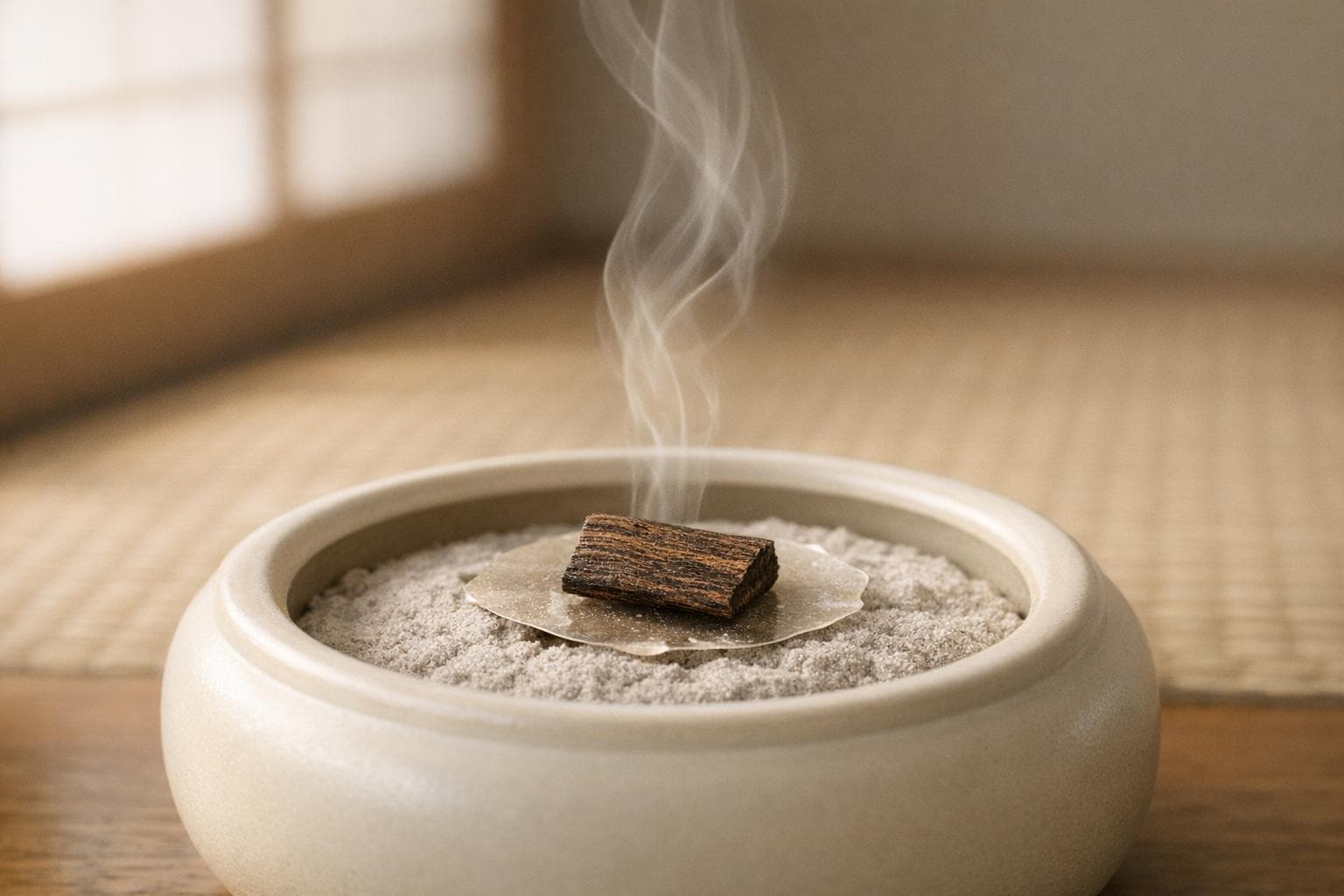
Το Kōdō, ή «Ο Δρόμος του Αρώματος», είναι μια ιαπωνική τελετή θυμιάματος που μεταμορφώνει το άρωμα σε μια διαλογιστική εμπειρία. Σε αντίθεση με τους γρήγορους ψεκασμούς αρώματος, το Kōdō προσκαλεί τους συμμετέχοντες να «ακούσουν» το θυμίαμα, εμβαθύνοντας στην αρωματική του ουσία. Με αφετηρία το 595 μ.Χ., όταν ανακαλύφθηκε για πρώτη φορά το ξύλο agarwood, το Kōdō εξελίχθηκε από θρησκευτική τελετουργία σε αριστοκρατική ενασχόληση και αργότερα τυποποιήθηκε κατά την περίοδο Muromachi (1336–1573). Στον πυρήνα του βρίσκονται η ενσυνειδητότητα και η σύνδεση με την ουσία υλικών όπως το agarwood και το kyara, που είναι σπάνια και εξαιρετικά πολύτιμα.
Σήμερα, το Kōdō επηρεάζει τις σύγχρονες πρακτικές αρωματισμού μέσα από συνειδητές τελετουργίες και εκλεκτά υλικά. Οι οικιακοί διαχυτές ενσωματώνουν τεχνικές όπως η βαθιά αναπνοή, ενώ οι οίκοι συνδυάζουν παραδοσιακά συστατικά όπως το hinoki και το σανταλόξυλο με σύγχρονα βοτανικά στοιχεία. Εργαστήρια και μαθήματα καθιστούν επίσης αυτή την τέχνη πιο προσιτή, γεφυρώνοντας τις ιστορικές της ρίζες με τον σύγχρονο τρόπο ζωής. Είτε μέσα από επίσημες τελετές είτε στην καθημερινή χρήση, το Kōdō συνεχίζει να εμπλουτίζει τη σχέση της Ιαπωνίας με το άρωμα, δίνοντας έμφαση στην ενσυνειδητότητα και τη σύνδεση με τις αισθήσεις.
Βασικά σημεία:
- Καταβολές: Ξεκίνησε το 595 μ.Χ. με το agarwood και τυποποιήθηκε τον 15ο αιώνα.
- Φιλοσοφία: Εστιάζει στο να «ακούς» το άρωμα, καλλιεργώντας την ενσυνειδητότητα.
- Υλικά: Σπάνια ξύλα όπως το kyara, ταξινομημένα σύμφωνα με το σύστημα Rikkoku-gomi.
- Σύγχρονες πρακτικές: Περιλαμβάνουν διαχυτές, αιθέρια έλαια και εργαστήρια.
- Κόστος: Το εκλεκτό kyara μπορεί να ξεπεράσει τα 850 € ανά γραμμάριο.
Το Kōdō παραμένει μια διαχρονική πρακτική, συνδυάζοντας αρχαίες τεχνικές με σύγχρονες τάσεις ευεξίας.
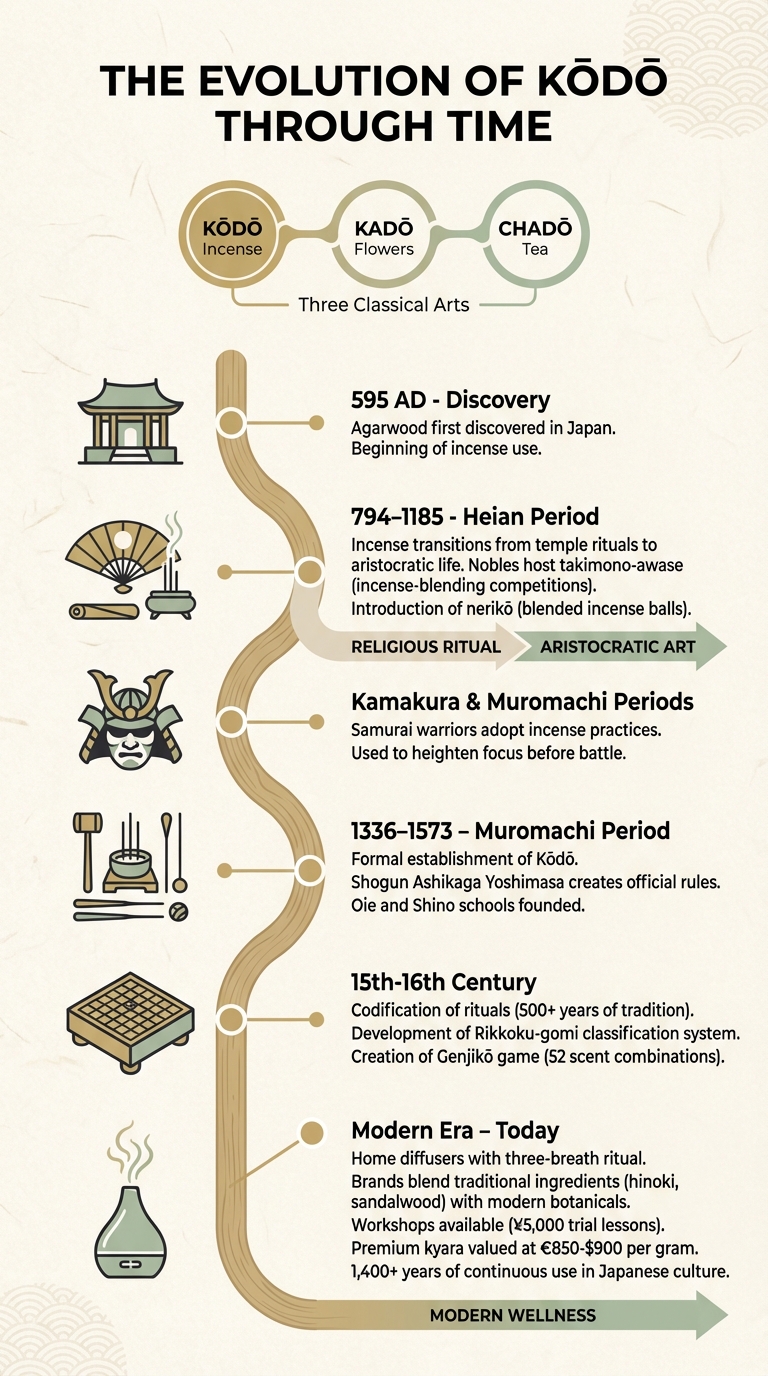
Εξέλιξη του Kōdō: Από το 595 μ.Χ. στη σύγχρονη ιαπωνική κουλτούρα αρωμάτων
1. Το Kōdō και ο ρόλος του στις ιαπωνικές παραδόσεις αρωμάτων
Ιστορικές ρίζες
Το Kōdō, η παραδοσιακή ιαπωνική τελετή θυμιάματος, ανάγει την καταγωγή του στο 595 μ.Χ., όταν ανακαλύφθηκε για πρώτη φορά το agarwood. Με την πάροδο του χρόνου, αυτή η πρακτική εξελίχθηκε σε μια εκλεπτυσμένη πολιτισμική τέχνη. Κατά την περίοδο Heian (794–1185), το θυμίαμα πέρασε από τις αυστηρά ναϊκές τελετουργίες στο να γίνει σύμβολο αριστοκρατικής ζωής. Οι ευγενείς διοργάνωναν takimono-awase (διαγωνισμούς ανάμειξης θυμιάματος) και χρησιμοποιούσαν nerikō (μπάλες μεικτού θυμιάματος) για να αρωματίζουν τον χώρο και τα ενδύματά τους. Κατά τις περιόδους Kamakura και Muromachi, οι σαμουράι υιοθέτησαν το θυμίαμα ως μέσο όξυνσης της συγκέντρωσης και κάθαρσης του νου πριν από τη μάχη. Ο 15ος και ο 16ος αιώνας σηματοδότησαν μια καίρια στιγμή, όταν ο σογκούν Ashikaga Yoshimasa τυποποίησε την πρακτική αναθέτοντας σε ειδικούς να δημιουργήσουν κανόνες, οδηγώντας στην ίδρυση των σχολών Oie και Shino. Αυτή η πλούσια ιστορία έθεσε τα θεμέλια για μια βαθιά τελετουργική και φιλοσοφική παράδοση.
Φιλοσοφία και τελετουργίες
Στην καρδιά του Kōdō βρίσκεται μια μοναδική φιλοσοφία που υπερβαίνει την απλή απόλαυση του αρώματος. Η πρακτική περιστρέφεται γύρω από το monkō, μια πράξη που μεταφράζεται ως «ακρόαση» του θυμιάματος και όχι απλώς ως όσφρησή του. Αυτή η διαλογιστική ενασχόληση προσκαλεί τους συμμετέχοντες να συνδεθούν βαθιά με την ουσία του ξύλου. Κάθε πτυχή του τελετουργικού είναι σχολαστικά χορογραφημένη, συμπεριλαμβανομένης της σκόπιμης πράξης λήψης τριών αναπνοών.
«Το Kōdō δεν ήταν επίδειξη — ήταν πειθαρχία. Το άρωμα ήταν διακριτικό. Η επίδραση ήταν βαθιά.»
– Airy Fragrances
Το Kōdō διαπλέκεται επίσης με τις ιαπωνικές λογοτεχνικές παραδόσεις. Για παράδειγμα, το παιχνίδι Genjikō ενσωματώνει 52 συνδυασμούς αρωμάτων ξύλου, καθένας από τους οποίους αντιπροσωπεύει ένα κεφάλαιο από το μυθιστόρημα του 11ου αιώνα Η Ιστορία του Γκέντζι. Αυτή η στοχαστική προσέγγιση στο άρωμα αναδεικνύει την πειθαρχία και την καλλιτεχνία που εμπλέκονται στην προετοιμασία και την εκτίμηση των υλικών.
Υλικά και αρωματικά προφίλ
Το κεντρικό στοιχείο του Kōdō είναι το jinkō (agarwood), ιδίως το σπάνιο και περιζήτητο kyara. Σε αντίθεση με τα συνηθισμένα στικ θυμιάματος που καίγονται, το Kōdō περιλαμβάνει τη θέρμανση μικρών θραυσμάτων agarwood πάνω σε πλάκα μαρμαρυγία επάνω από κάρβουνο. Αυτή η μέθοδος εξασφαλίζει την απελευθέρωση λεπτών ατμών χωρίς παραγωγή καπνού, αντανακλώντας την ιαπωνική εκτίμηση για τη διακριτικότητα και την κομψότητα.
Το agarwood ταξινομείται με το σύστημα Rikkoku‐gomi, το οποίο το οργανώνει βάσει προέλευσης και γευστικού προφίλ: γλυκό, ξινό, πικάντικο, πικρό και αλμυρό. Τα πιο περιζήτητα είδη, όπως το kyara, μπορούν να φτάσουν σε εξαιρετικά υψηλές τιμές — έως και 900 $ ανά γραμμάριο, με ορισμένες ποικιλίες να αποτιμώνται σε πολλαπλάσια της τιμής του χρυσού. Ένα κείμενο 600 ετών, οι «Δέκα Αρετές του Kō», περιγράφει τα οφέλη του θυμιάματος, όπως η όξυνση των αισθήσεων, ο εξαγνισμός νου και σώματος και η απάλυνση της μοναξιάς.
Πολιτισμική επιρροή
Η επιρροή του Kōdō εκτείνεται πολύ πέρα από τις τελετουργικές του απαρχές. Για περισσότερα από 1.400 χρόνια, το θυμίαμα διαδραματίζει αναπόσπαστο ρόλο στις ιαπωνικές κηδείες, υπογραμμίζοντας τη διαχρονική πολιτισμική του σημασία. Ως μία από τις τρεις κλασικές ιαπωνικές τέχνες εκλέπτυνσης — δίπλα στο kadō (ανθοδετική) και το chadō (τελετή τσαγιού) — το Kōdō θεωρείται η πιο περίτεχνη και η λιγότερο ευρέως γνωστή από τις τρεις. Αυτή η παράδοση ανυψώνει το άρωμα από μια απλή αισθητηριακή εμπειρία σε μορφή πνευματικής πρακτικής, καλλιεργώντας την ενσυνειδητότητα και την εσωτερική διαύγεια. Το ιστορικό και φιλοσοφικό του βάθος συνεχίζει να διαμορφώνει τις σύγχρονες ιαπωνικές αντιλήψεις για το άρωμα, γεφυρώνοντας τα αρχαία έθιμα με τη σύγχρονη εκτίμηση.
2. Σύγχρονες ιαπωνικές πρακτικές αρωμάτων επηρεασμένες από το Kōdō
Οι σύγχρονες ιαπωνικές πρακτικές αρωμάτων αντλούν από τις διαχρονικές παραδόσεις του Kōdō και τις προσαρμόζουν σε καθημερινές στιγμές ενσυνειδητότητας και χαλάρωσης.
Φιλοσοφία και τελετουργίες
Σήμερα, η πράξη του να «ακούς» το άρωμα παραμένει κεντρική, με μια σύγχρονη εκδοχή. Για παράδειγμα, οι οικιακοί διαχυτές σχεδιάζονται ώστε να ενθαρρύνουν ένα τελετουργικό τριών αναπνοών: οι χρήστες ενώνουν τα χέρια τους σχηματίζοντας μια «καμινάδα αρώματος», παίρνουν τρεις αργές, βαθιές αναπνοές και εκπνέουν απαλά για να απολαύσουν τις λεπτές αποχρώσεις του αρώματος. Αυτή η απλή αλλά σκόπιμη πρακτική προσφέρει έναν τρόπο να μειωθεί το άγχος και να καθαρίσει η πνευματική σύγχυση, συνδυάζοντας την αρχαία ενσυνειδητότητα με τη σύγχρονη ευκολία.
Υλικά και αρωματικά προφίλ
Οι ιαπωνικοί οίκοι αρωμάτων συνδυάζουν επιδέξια παραδοσιακά στοιχεία με σύγχρονες τεχνικές. Συστατικά όπως το έλαιο hinoki (ιαπωνικό κυπαρίσσι), το οποίο εδώ και καιρό τιμάται για τις καταπραϋντικές του ιδιότητες, εμφανίζονται πλέον σε καθημερινά είδη όπως διαχυτές, αιθέρια έλαια και κεριά. Αυτά τα προϊόντα αντανακλούν τα διακριτικά και πολυεπίπεδα αρωματικά προφίλ που χαρακτηρίζουν το παραδοσιακό ιαπωνικό άρωμα.
Ιστορικά ονόματα όπως το Nippon Kodo και το Koju συνεχίζουν να καινοτομούν, συνδυάζοντας κλασικά υλικά όπως το σανταλόξυλο και το yuzu με σύγχρονα βοτανικά στοιχεία όπως το δενδρολίβανο. Οι διαχυτές τους χρησιμοποιούν συχνά ψυχρή διάχυση χωρίς καπνό ή απαλή θέρμανση, αντικατοπτρίζοντας την έμφαση του Kōdō στη διακριτικότητα, ενώ παράλληλα εναρμονίζονται με τη σύγχρονη αισθητική εσωτερικών χώρων.
Πολιτισμική επιρροή
Με την πάροδο του χρόνου, το άρωμα στην Ιαπωνία μετατοπίστηκε από αριστοκρατική μορφή τέχνης σε βασικό στοιχείο της καθημερινότητας. Η έννοια του αρώματος ως «αόρατης υπογραφής» έχει υφανθεί στους σύγχρονους χώρους, όπου το άναμμα θυμιάματος ή η χρήση διαχυτών σηματοδοτεί μεταβάσεις και καλλιεργεί μια γαλήνια ατμόσφαιρα.
«Το άρωμα απολαμβάνεται με ποικίλους τρόπους σε όλο τον κόσμο, αλλά μόνο εδώ στην Ιαπωνία αυτή η εκτίμηση έχει εξευγενιστεί και ανυψωθεί στο επίπεδο τέχνης.»
– Yoshihiro Inasaka, Πρόεδρος της Koju
Η συλλογική ουσία του Kōdō επιβιώνει σε σύγχρονα εργαστήρια, όπου οι συμμετέχοντες λαμβάνουν μέρος σε παιχνίδια ταύτισης θυμιαμάτων για να καλλιεργήσουν την όσφρησή τους και να συνδεθούν με άλλους. Χώροι όπως το Koju-an στη Ginza προσφέρουν δοκιμαστικά μαθήματα περίπου στα ¥5.000, ενώ οι συνδρομές για τρία μαθήματα ξεκινούν από ¥16.500. Αυτές οι εμπειρίες έχουν αναζωπυρώσει το ενδιαφέρον για τις παραδοσιακές πρακτικές, ιδιαίτερα ανάμεσα στις νεότερες γενιές που αναζητούν ισορροπία στον ταχύ ρυθμό του σύγχρονου κόσμου.
Ο προσωπικός σας ειδικός αρωμάτων σας περιμένει
Κάντε το σύντομο κουίζ αρώματος και ανακαλύψτε αυθεντικά αρώματα designer και niche, επιλεγμένα στα μέτρα σας – εξερευνήστε τα σε decant και δείγματα των 2, 5, 8 και 30 ml, ώστε να δοκιμάσετε το καθένα πριν επιλέξετε ολόκληρο μπουκάλι.
Βρείτε το άρωμά σαςΠλεονεκτήματα και μειονεκτήματα
Το παραδοσιακό Kōdō και οι σύγχρονες πρακτικές αρωμάτων προσφέρουν καθεμία ξεχωριστά πλεονεκτήματα και αντιμετωπίζουν συγκεκριμένες προκλήσεις όσον αφορά τη διατήρηση της ιαπωνικής κληρονομιάς, ενώ ανταποκρίνονται στις σύγχρονες απαιτήσεις. Ακολουθεί μια πιο προσεκτική ματιά στο πώς συγκρίνονται:
| Κριτήρια | Παραδοσιακό Kōdō | Σύγχρονες προσαρμογές αρωμάτων |
|---|---|---|
| Ιστορική διατήρηση | Διαφυλάσσει 500 χρόνια κωδικοποιημένων τελετουργιών και προστατεύει αρχαία αποθέματα ξύλου, συμπεριλαμβανομένων ορισμένων που παλαιώνουν για πάνω από 1.000 χρόνια στην Αυτοκρατορική Αυλή [6, 11]. | Δίνει προτεραιότητα στον σύγχρονο τρόπο ζωής με καινοτομίες όπως διαχυτές και σπρέι. |
| Προσβασιμότητα | Περιορισμένη· βασίζεται σε σπάνια υλικά, επίσημα περιβάλλοντα tatami και εξειδικευμένη εκπαίδευση [6, 10]. | Ευρέως προσβάσιμη· η μαζική παραγωγή καθιστά τα προϊόντα διαθέσιμα για καθημερινή χρήση [2, 5]. |
| Αισθητηριακή εμπειρία | Προσφέρει διακριτικούς ατμούς χωρίς καπνό, απαιτώντας ενεργή, διαλογιστική συμμετοχή μέσω τριών βαθιών αναπνοών [2, 6, 11]. | Παρέχει συνεχή αρωματισμό, συχνά μέσω καπνού ή ομίχλης, χωρίς να απαιτεί εστιασμένη προσοχή [5, 6]. |
| Χρονική δέσμευση | Απαιτεί σημαντικό χρόνο και προσήλωση, περιλαμβάνοντας σιωπηλή συμμετοχή σε επίσημη τελετή μέσα σε ήσυχο χώρο. | Ελάχιστη· σχεδιασμένη για ευκολία, ενσωματώνεται αβίαστα σε απαιτητικές καθημερινές ρουτίνες [3, 5]. |
| Κόστος | Εξαιρετικά υψηλό λόγω της σπανιότητας του παλαιωμένου agarwood, με το εκλεκτό Kyara να αποτιμάται σε πολλαπλάσια της τιμής του χρυσού [6, 11, 14]. | Κυμαίνεται από προσιτό έως μεσαίας κατηγορίας, χάρη στα μεικτά συστατικά και τις σύγχρονες τεχνικές παραγωγής. |
Αυτή η σύγκριση αναδεικνύει τον τρόπο με τον οποίο ο βαθύς σεβασμός της Ιαπωνίας προς το άρωμα συνεχίζει να προσαρμόζεται, εξισορροπώντας το βάρος της παράδοσης με τις απαιτήσεις της σύγχρονης ζωής.
Ο Souhitsu Isshiken Hachiya, ο 21ης γενιάς Μεγάλος Διδάσκαλος της σχολής Shino-ryu, αποτυπώνει εύγλωττα το πνεύμα του παραδοσιακού Kōdō:
«Ένα και μόνο άρωμα χρειάζεται εκατό χρόνια για να σχηματιστεί. Από αυτά τα ξύλα, που έχουν ζήσει περισσότερο από εμάς, μπορούμε να μάθουμε πώς να ζούμε».
Ενώ οι αρχαίες πρακτικές δίνουν έμφαση στη σοφία και τον στοχασμό, οι σύγχρονες προσαρμογές εστιάζουν στην προσβασιμότητα και την ευκολία. Μαζί, εμπλουτίζουν τον κόσμο του αρώματος με συμπληρωματικούς τρόπους.
Συμπέρασμα
Το Kōdō λειτουργεί ως σύνδεσμος ανάμεσα στην πνευματική κληρονομιά της Ιαπωνίας και τον σύγχρονο κόσμο του αρώματος, μεταβαίνοντας από μια αποκλειστική τελετουργία σε μορφή τέχνης που επηρεάζει τις σημερινές τάσεις ευεξίας και οικιακού αρωματισμού. Εστιάζοντας στο να «ακούς» το άρωμα αντί απλώς να το μυρίζεις, το Kōdō εισάγει μια βαθιά στοχαστική προσέγγιση στην αισθητηριακή απόλαυση — μια προσέγγιση που δίνει προτεραιότητα στην ενσυνειδητότητα, τη συγκέντρωση και την εσωτερική γαλήνη.
Η επιρροή του εκτείνεται πολύ πέρα από τις παραδοσιακές τελετές. Συστατικά όπως το agarwood και το hinoki, που κάποτε προορίζονταν για ιερές τελετουργίες, εμφανίζονται πλέον σε σύγχρονα αντικείμενα όπως διαχυτές με ράβδους και αρωματικές πέτρες, μεταφέροντας την πλούσια πολυπλοκότητα των αρχαίων ξύλων στους καθημερινούς χώρους. Ριζωμένο σε μια φιλοσοφία που διαμορφώθηκε πριν από περισσότερα από 600 χρόνια — επικεντρωμένη στην εύρεση γαλήνης μέσα στο χάος — το Kōdō εναρμονίζεται άψογα με τις σύγχρονες πρακτικές ευεξίας. Αυτή η σύντηξη παράδοσης και νεωτερικότητας υπογραμμίζει τη διαχρονική του σημασία, ενώνοντας το τελετουργικό βάθος με τη σύγχρονη άνεση.
«Το άρωμα απολαμβάνεται με ποικίλους τρόπους σε όλο τον κόσμο, αλλά μόνο εδώ στην Ιαπωνία αυτή η εκτίμηση έχει εξευγενιστεί και ανυψωθεί στο επίπεδο τέχνης.» — Yoshihiro Inasaka, Πρόεδρος της Koju
Αυτή η νοοτροπία συνεχίζει να διαμορφώνει τη σχέση της Ιαπωνίας με το άρωμα, είτε μέσα από επίσημες τελετουργίες είτε μέσα από απλουστευμένες οικιακές πρακτικές εμπνευσμένες από αρχαίες τεχνικές.
Για όσους επιθυμούν να γνωρίσουν το Kōdō, δοκιμαστικά μαθήματα που ξεκινούν περίπου από 38 $ προσφέρουν ένα ελκυστικό σημείο εισόδου σε αυτή την αισθητηριακή παράδοση. Είτε θερμαίνοντας σπάνιο kyara — που μερικές φορές αξίζει πολλαπλάσια της τιμής του χρυσού — είτε εκτιμώντας τις διακριτικές αποχρώσεις των φυσικών υλικών στο σπίτι, οι συμμετέχοντες συνδέονται με μια πρακτική που οξύνει τις αισθήσεις, ενώ διαφυλάσσει την αισθητική κληρονομιά της Ιαπωνίας. Έτσι, το Kōdō ακμάζει τόσο ως μορφή τέχνης όσο και ως καθημερινό τελετουργικό, εμπλουτίζοντας την ιαπωνική κουλτούρα αρωμάτων με τη διαχρονική του κομψότητα.
Συχνές ερωτήσεις
Πώς διαφέρει το Kōdō από το κάψιμο στικ θυμιάματος;
Το Kōdō είναι η τέχνη της εμβύθισης στο άρωμα μέσα από διαλογιστικές και τελετουργικές πρακτικές. Αντί να καίγεται απλώς το θυμίαμα για το άρωμά του ή για τελετουργικούς σκοπούς, το Kōdō δίνει έμφαση στη συνειδητή πράξη της αληθινής βίωσης και «ακρόασης» των αποχρώσεων κάθε αρώματος, μετατρέποντάς το σε μια στοχαστική και βαθιά ριζωμένη παράδοση.
Τι είναι το kyara και γιατί είναι τόσο ακριβό;
Το Kyara είναι μια σπάνια και πολύτιμη μορφή agarwood, γνωστή επίσης ως jinkō, που διαδραματίζει σημαντικό ρόλο στο ιαπωνικό θυμίαμα και στην τέχνη του kōdō («Ο Δρόμος του Αρώματος»). Σεβαστό για το βαθύ, σχεδόν πνευματικό του άρωμα, το Kyara είναι εξαιρετικά δαπανηρό. Η υψηλή του τιμή οφείλεται τόσο στη σπανιότητά του όσο και στις δυσκολίες που συνεπάγεται η συλλογή του από συγκεκριμένα είδη δέντρων, τα οποία είναι κυρίως γηγενή στη Νοτιοανατολική Ασία.
Πώς μπορώ να δοκιμάσω το Kōdō στο σπίτι χωρίς ειδικά εργαλεία;
Μπορείτε να φέρετε το πνεύμα του Kōdō στο σπίτι σας με μια απλή και συνειδητή προσέγγιση στο θυμίαμα. Το μόνο που χρειάζεστε είναι βασικά στικ θυμιάματος ή μικρά κομμάτια αρωματικού ξύλου τοποθετημένα πάνω σε ανθεκτική στη θερμότητα επιφάνεια. Ανάψτε το θυμίαμα, αφήστε τον καπνό να ανέβει και οδηγήστε τον απαλά προς το πρόσωπό σας. Αφιερώστε μια στιγμή για να εστιάσετε στο λεπτό, μεταβαλλόμενο άρωμά του. Αυτή η πρακτική ενθαρρύνει την ενσυνειδητότητα και οξύνει την αισθητηριακή σας αντίληψη, προσφέροντας μια γεύση από την ουσία του Kōdō χωρίς να απαιτούνται εξειδικευμένα εργαλεία.

