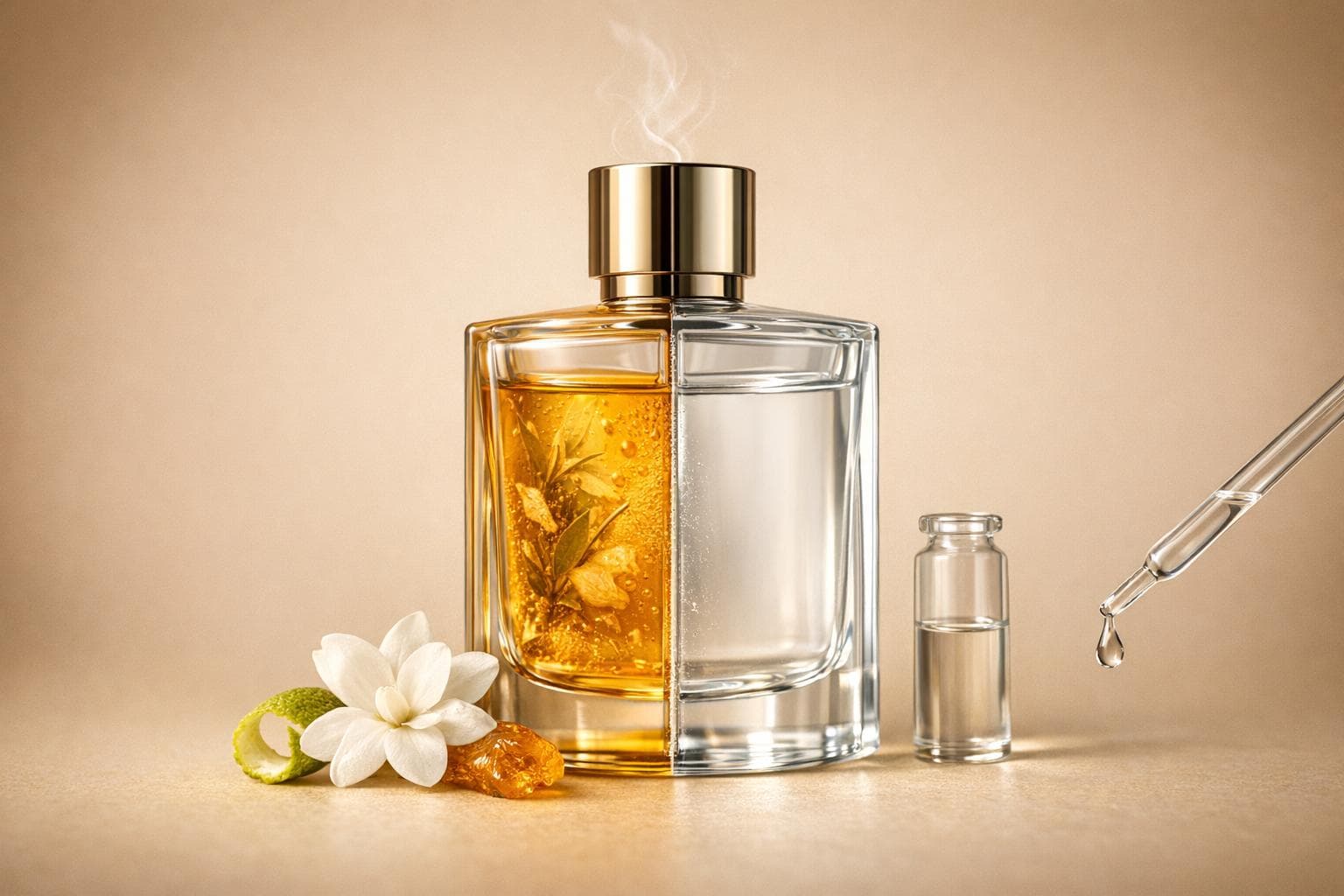
Η επιλογή μεταξύ φυσικών και συνθετικών συστατικών αρωματοποιίας εξαρτάται από τις προτιμήσεις σας όσον αφορά την εξέλιξη του αρώματος, τη διάρκειά του και το κόστος.
Τα φυσικά συστατικά, όπως το έλαιο τριαντάφυλλου ή το σανδαλόξυλο, προσφέρουν πολύπλοκα, εξελισσόμενα αρωματικά προφίλ που επηρεάζονται από τη χημεία της επιδερμίδας, αλλά μπορεί να είναι ακριβά και λιγότερο σταθερά. Από την άλλη πλευρά, τα συνθετικά συστατικά προσφέρουν σταθερά αρώματα με μεγάλη διάρκεια, διευρύνοντας τις δυνατότητες με ευωδιές που δεν υπάρχουν στη φύση.
Ακολουθεί μια σύντομη επισκόπηση:
- Φυσικά Συστατικά: Προέρχονται από φυτά (π.χ. λεβάντα, γιασεμί) με δυναμικά αρωματικά προφίλ, αλλά υψηλότερο κόστος και μικρότερη διάρκεια στην επιδερμίδα.
- Συνθετικά Συστατικά: Δημιουργούνται στο εργαστήριο, προσφέροντας συνέπεια, προσιτή τιμή και μοναδικές νότες, όπως οζονικές ευωδιές ή καθαρούς μόσχους.
- Υβριδικά Αρώματα: Συνδυάζουν και τα δύο για τέλεια ισορροπία – φυσικό βάθος με συνθετική σταθερότητα και διάρκεια.
Είτε εκτιμάτε τη φυσική πολυπλοκότητα ενός αρώματος είτε την προβλέψιμη απόδοσή του, η κατανόηση αυτών των διαφορών σάς βοηθά να επιλέξετε αρώματα που ταιριάζουν στο στυλ και τον προϋπολογισμό σας.
Natural Perfume Ingredients Explained
Τα φυσικά συστατικά αρωμάτων είναι αρωματικές ενώσεις που προέρχονται απευθείας από βοτανικές πηγές, όπως άνθη, φρούτα, φύλλα, ξύλα, ρητίνες και μπαχαρικά. Περιστασιακά, μπορεί επίσης να προέρχονται από ουσίες ζωικής προέλευσης, όπως ο μόσχος (musk) ή το άμβρα (ambergris), αν και αυτά είναι πολύ λιγότερο συνηθισμένα σήμερα. Τα φυσικά αιθέρια έλαια είναι περίπλοκα μείγματα, που συχνά περιέχουν δεκάδες ή και εκατοντάδες ενώσεις, με την πολυπλοκότητά τους να διαμορφώνεται από τις μεθόδους εκχύλισης που χρησιμοποιούνται.
Πηγές και Διαδικασίες Εκχύλισης
Ο τρόπος με τον οποίο εκχυλίζονται τα φυσικά συστατικά διαδραματίζει καθοριστικό ρόλο στη διαμόρφωση του οσφρητικού τους προφίλ. Η απόσταξη με ατμό είναι η πιο διαδεδομένη τεχνική, η οποία χρησιμοποιεί θερμότητα για την εξαγωγή αιθέριων ελαίων από υλικά όπως η λεβάντα, το σανδαλόξυλο και το πατσουλί. Για πιο ευαίσθητα υλικά, όπως το γιασεμί ή η βανίλια, προτιμάται η εκχύλιση με διαλύτες. Αυτή η μέθοδος παράγει absolutes με πλούσια στρώματα, προστατεύοντας παράλληλα την εύθραυστη δομή των πετάλων. Παράλληλα, η ψυχρή έκθλιψη –που χρησιμοποιείται για τις φλούδες των εσπεριδοειδών, όπως το περγαμόντο, το λεμόνι και το πορτοκάλι– διατηρεί τον φωτεινό, δροσερό χαρακτήρα τους.
Είναι ενδιαφέρον ότι η θερμότητα ή οι διαλύτες που εμπλέκονται σε αυτές τις διαδικασίες σημαίνουν ότι τα τελικά έλαια ενδέχεται να μην μυρίζουν ακριβώς όπως το αρχικό φυτό. Αυτή η διακριτική μεταμόρφωση προσθέτει στη γοητεία των φυσικών συστατικών, ενώ παράλληλα θέτει προκλήσεις για τους αρωματοποιούς.
| Μέθοδος Εκχύλισης | Τελικό Προϊόν | Κοινά Παραδείγματα |
|---|---|---|
| Απόσταξη με Ατμό | Αιθέρια Έλαια | Λεβάντα, Σανδαλόξυλο, Πατσουλί |
| Εκχύλιση με Διαλύτες | Absolutes/Εκχυλίσματα | Γιασεμί, Βανίλια, Rose Absolute |
| Ψυχρή Έκθλιψη | Έλαια Έκθλιψης | Περγαμόντο, Λεμόνι, Φλούδα Πορτοκαλιού |
Τα φυσικά υλικά συμπεριφέρονται επίσης με μοναδικό τρόπο όταν εφαρμόζονται στην επιδερμίδα. Τα μόριά τους εξατμίζονται με διαφορετικούς ρυθμούς, δημιουργώντας αυτό που οι αρωματοποιοί ονομάζουν «μικρο-μεταβάσεις» – λεπτές διακυμάνσεις στο άρωμα που ξεδιπλώνονται με την πάροδο των ωρών. Σε συνδυασμό με τη μοναδική χημεία της επιδερμίδας του κάθε ατόμου, συμπεριλαμβανομένου του pH και των επιπέδων λιπιδίων, αυτό δημιουργεί μια αρωματική εμπειρία βαθιά προσωπική. Αυτές οι αποχρώσεις είναι μέρος αυτού που κάνει τα φυσικά συστατικά τόσο σαγηνευτικά, αν και εξηγούν επίσης γιατί τα συνθετικά χρησιμοποιούνται συχνά για λόγους σταθερότητας.
Κοινά Φυσικά Συστατικά
Ορισμένα φυσικά συστατικά κατέχουν θρυλική θέση στον κόσμο της αρωματοποιίας. Το τριαντάφυλλο (Rosa damascena), για παράδειγμα, φημίζεται για τις ρομαντικές και καταπραϋντικές του ιδιότητες, ενώ το γιασεμί προσφέρει μια γλυκιά, εξωτική ζεστασιά. Το σανδαλόξυλο συνεισφέρει έναν γήινο, ξυλώδη πλούτο, λειτουργώντας συχνά ως νότα βάσης που αγκυροβολεί τη σύνθεση. Τα έλαια εσπεριδοειδών, όπως το περγαμόντο, χαρίζουν αναζωογονητική φωτεινότητα μέσω της ψυχρής έκθλιψης, και η βανίλια, προερχόμενη από τους λοβούς, προσθέτει μια ανακουφιστική, νοσταλγική γλύκα. Η λεβάντα, με το βοτανικό και ηρεμιστικό της προφίλ, παραμένει βασικό στοιχείο τόσο στα αρώματα όσο και στην αρωματοθεραπεία.
Ωστόσο, η γοητεία αυτών των συστατικών συνοδεύεται συχνά από υψηλό κόστος. Το φυσικό rose absolute, για παράδειγμα, μπορεί να κοστίζει χιλιάδες ευρώ ανά γραμμάριο λόγω της απαιτητικής σε εργατικά χέρια συγκομιδής και των χαμηλών αποδόσεων εκχύλισης. Επιπλέον, τα φυσικά υλικά υπόκεινται σε διακυμάνσεις του κλίματος, του εδάφους και των εποχικών αλλαγών, γεγονός που μπορεί να δημιουργήσει ασυνέπειες μεταξύ των παρτίδων. Ενώ αυτό το απρόβλεπτο στοιχείο προσθέτει ένα επίπεδο μοναδικότητας, αποτελεί επίσης πρόκληση για όσους δημιουργούν φυσικά αρώματα.
Ανακαλύπτοντας τα Συνθετικά Συστατικά Αρωμάτων
Τα συνθετικά αρωματικά συστατικά είναι μόρια που δημιουργούνται σε εργαστήρια είτε για να μιμηθούν φυσικές ευωδιές είτε για να εισαγάγουν εντελώς νέα αρώματα. Σε αντίθεση με τα φυσικά αιθέρια έλαια, τα οποία είναι πολύπλοκα «μοριακά οικοσυστήματα» με εκατοντάδες ενώσεις, οι συνθετικές συμφωνίες είναι πιο εξορθολογισμένες, αποτελούμενες συνήθως από 10 έως 30 συγκεκριμένα αρωματικά μόρια. Αυτή η ακρίβεια δίνει στους αρωματοποιούς απαράμιλλο έλεγχο, επιτρέποντάς τους να επιτύχουν αποτελέσματα που τα φυσικά υλικά από μόνα τους δεν μπορούν να προσφέρουν. Αυτά τα κατασκευασμένα μόρια εντάσσονται σε διακριτές κατηγορίες, καθεμία σχεδιασμένη για συγκεκριμένους ρόλους στη δημιουργία αρωμάτων.
Κατηγορίες Συνθετικών Συστατικών
Τα συνθετικά συστατικά χωρίζονται γενικά σε δύο κύριους τύπους. Τα πανομοιότυπα με τη φύση συνθετικά (nature-identical) είναι μόρια εργαστηριακής δημιουργίας που ταιριάζουν χημικά με εκείνα που βρίσκονται στη φύση, όπως η βανιλίνη (βανίλια), η λιναλοόλη (ανθική/εσπεριδοειδής) και το λεμονένιο. Αν και συντίθενται σε εργαστήριο, αυτά τα μόρια είναι δομικά πανομοιότυπα με τα φυσικά αντίστοιχά τους.
Οι τεχνητές ενώσεις, ωστόσο, είναι εντελώς νέα μόρια που δεν υπάρχουν στη φύση. Για παράδειγμα:
- Οι αλδεΰδες προσθέτουν μια λαμπερή, αφρώδη διάσταση στα αρώματα.
- Το Iso E Super προσδίδει ένα απαλό, ξυλώδες άρωμα που θυμίζει κέδρο.
- Οι συνθετικοί μόσχοι παρέχουν απαλές νότες βάσης με μεγάλη διάρκεια, αντικαθιστώντας την ανάγκη για συστατικά ζωικής προέλευσης.
Αυτές οι τεχνητές ενώσεις έχουν διευρύνει τις δημιουργικές δυνατότητες στην αρωματοποιία. Αέρινες οζονικές νότες, διαφανή ξύλα και «καθαροί» μόσχοι είναι παραδείγματα αρωμάτων που δεν μπορούν να εξαχθούν από φυσικές πηγές. Όπως δηλώνει η The Perfume Oil Company:
Η συνθετική χημεία επιτρέπει τη δημιουργία μοναδικών αρωμάτων που δεν υπάρχουν στη φύση, προσφέροντας ένα ευρύτερο φάσμα οσφρητικών επιλογών.
Ο Ρόλος των Συνθετικών στη Σύγχρονη Αρωματοποιία
Τα συνθετικά αντιμετωπίζουν αρκετές προκλήσεις με τις οποίες έρχονται αντιμέτωποι οι σύγχρονοι αρωματοποιοί. Ένα σημαντικό πλεονέκτημα είναι η συνέπεια – τα συνθετικά συστατικά δεν επηρεάζονται από μεταβλητές όπως το κλίμα, το έδαφος ή οι εποχικές αλλαγές, διασφαλίζοντας ομοιομορφία σε όλες τις παρτίδες των αρωμάτων. Η σταθερότητα είναι ένα άλλο όφελος, καθώς τα συνθετικά μόρια έχουν συχνά μεγαλύτερη διάρκεια ζωής και αλληλεπιδρούν πιο προβλέψιμα με άλλα συστατικά.
Από δημιουργική άποψη, τα συνθετικά επιτρέπουν μια ακρίβεια που τα φυσικά υλικά δεν μπορούν να φτάσουν. Για παράδειγμα, οι μακροκυκλικοί μόσχοι έχουν σχεδιαστεί για χαμηλή πτητικότητα και υψηλή ανθεκτικότητα, εξασφαλίζοντας ότι τα αρώματα διαρκούν περισσότερο. Οι αρωματοποιοί μπορούν επίσης να τελειοποιήσουν την εξάτμιση, τη διάχυση και τη συνολική απόδοση ενός αρώματος.
Η οικονομική αποδοτικότητα είναι ένας άλλος παράγοντας, καθώς τα φυσικά συστατικά, όπως ορισμένα άνθη ή σπάνια ξύλα, μπορεί να κοστίζουν χιλιάδες ευρώ ανά γραμμάριο. Τα συνθετικά καθιστούν τα αρώματα υψηλής ποιότητας πιο προσιτά. Επιπλέον, προσφέρουν ηθικές εναλλακτικές αντικαθιστώντας υλικά ζωικής προέλευσης και μειώνοντας την πίεση σε απειλούμενα είδη φυτών.
Ο προσωπικός σας ειδικός αρωμάτων σας περιμένει
Κάντε το σύντομο κουίζ αρώματος και ανακαλύψτε αυθεντικά αρώματα designer και niche, επιλεγμένα στα μέτρα σας – εξερευνήστε τα σε decant και δείγματα των 2, 5, 8 και 30 ml, ώστε να δοκιμάσετε το καθένα πριν επιλέξετε ολόκληρο μπουκάλι.
Βρείτε το άρωμά σαςΦυσικά έναντι Συνθετικών: Μια Άμεση Σύγκριση
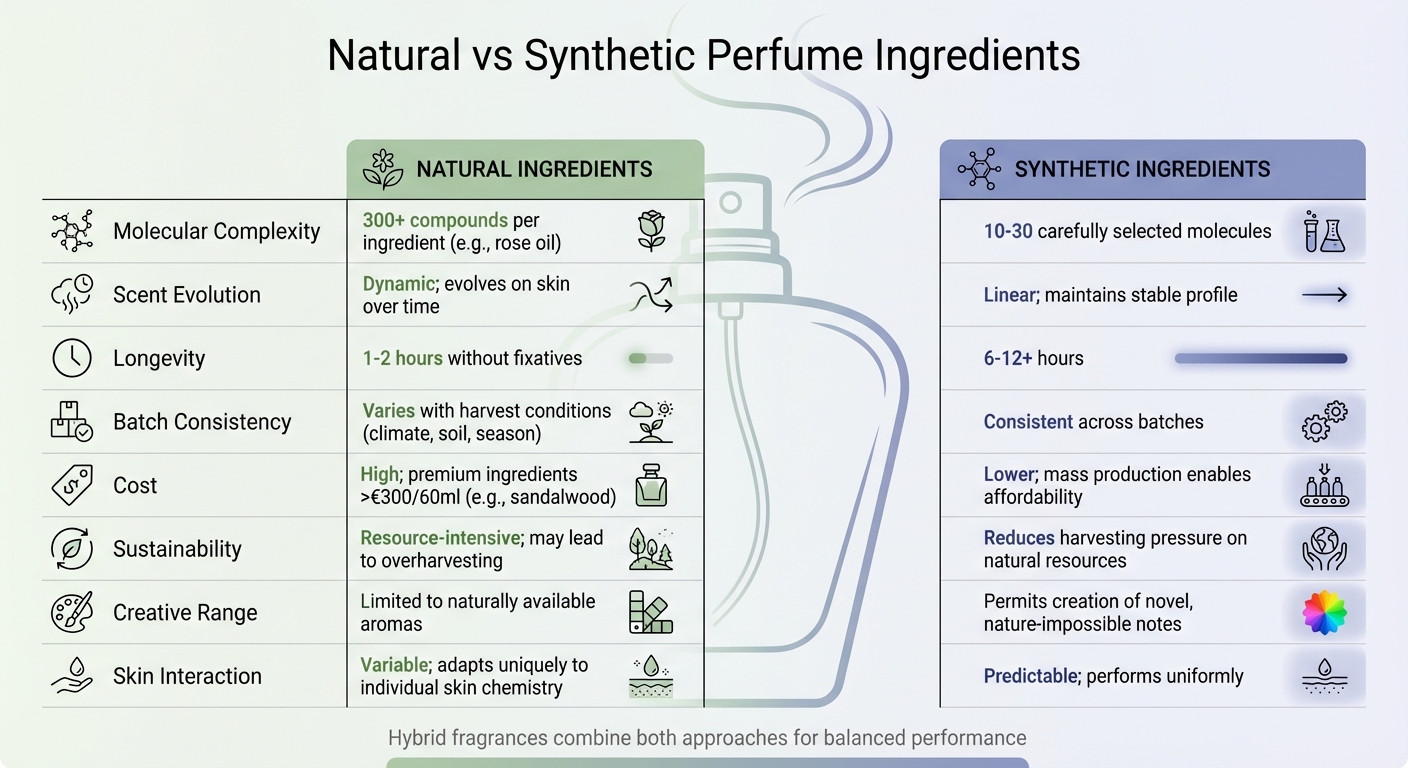
Natural vs Synthetic Perfume Ingredients Comparison Chart
Φυσικά Συστατικά: Πλεονεκτήματα και Περιορισμοί
Τα φυσικά συστατικά προσφέρουν ένα βάθος και έναν πλούτο που δύσκολα αναπαράγονται. Πάρτε για παράδειγμα το φυσικό έλαιο τριαντάφυλλου – διαθέτει πάνω από 300 ενώσεις, σχηματίζοντας ένα «μοριακό οικοσύστημα» που εξελίσσεται δυναμικά στο δέρμα. Καθώς τα ελαφρύτερα μόρια εξατμίζονται, τα βαρύτερα παραμένουν, δημιουργώντας ένα οσφρητικό ταξίδι βαθιά προσωπικό, επηρεασμένο από τη μοναδική χημεία της επιδερμίδας σας.
Όμως αυτή η πολυπλοκότητα συνοδεύεται από τα δικά της εμπόδια. Παράγοντες όπως το κλίμα, το έδαφος και οι εποχικές συνθήκες μπορούν να καταστήσουν τα φυσικά συστατικά απρόβλεπτα από τη μία σοδειά στην άλλη. Τείνουν επίσης να εξασθενούν πιο γρήγορα, απαιτώντας συχνά φυσικά σταθεροποιητικά, όπως ρητίνες και βάλσαμα, για να παρατείνουν τη διάρκειά τους. Επιπλέον, το κόστος αποτελεί σημαντικό παράγοντα – το αγνό έλαιο σανδαλόξυλου, για παράδειγμα, μπορεί να ξεπεράσει τα 300 € για μόλις 60 ml. Οι απαιτήσεις σε πόρους είναι επίσης τεράστιες: η εκχύλιση 450 γραμμαρίων αιθέριου ελαίου μπορεί να απαιτήσει εκατοντάδες κιλά φυτικού υλικού, συμβάλλοντας στην υπερεκμετάλλευση ειδών όπως το σανδαλόξυλο και το ουντ (agarwood).
Εδώ ακριβώς επεμβαίνουν τα συνθετικά συστατικά για να γεφυρώσουν αυτά τα κενά.
Συνθετικά Συστατικά: Πλεονεκτήματα και Περιορισμοί
Τα συνθετικά αρωματικά συστατικά υπερέχουν στη συνέπειά τους. Κάθε παρτίδα είναι χημικά πανομοιότυπη, ανεπηρέαστη από τον καιρό ή τη γεωγραφία. Είναι σχεδιασμένα για διάρκεια, παραμένοντας συχνά 6–12+ ώρες, σε σύγκριση με τις 1–2 ώρες που είναι τυπικές για τα φυσικά αρώματα. Οι μακροκυκλικοί μόσχοι, για παράδειγμα, προσφέρουν νότες βάσης μακράς διαρκείας, ενώ τα συνθετικά ανοίγουν επίσης την πόρτα σε εντελώς νέα αρωματικά προφίλ – σκεφτείτε οζονικές, μεταλλικές νότες ή την αίσθηση «φρεσκοπλυμένων ρούχων».
Ωστόσο, η απλότητά τους μπορεί μερικές φορές να αποτελέσει μειονέκτημα. Με μόλις 10–30 μόρια σε μια σύνθεση, τα συνθετικά αρώματα μπορεί να μοιάζουν λιγότερο πολυδιάστατα ή υπερβολικά «γυαλισμένα», στερούμενα το ανάγλυφο βάθος που συναντάται στις φυσικές συνθέσεις. Επιπλέον, περίπου το 95% των συνθετικών αρωματικών υλών προέρχεται από το πετρέλαιο, έναν μη ανανεώσιμο πόρο. Ενώ τα συνθετικά μπορούν να σχεδιαστούν για να μειώσουν τους αλλεργιογόνους κινδύνους, το λεγόμενο «παραθυράκι των αρωμάτων» (fragrance loophole) επιτρέπει στις εταιρείες να καταχωρούν έως και 3.000 ενώσεις υπό τον ασαφή όρο «parfum» στις ετικέτες των προϊόντων. Όπως επισημαίνει η L’Atelier Parfum:
Το φυσικό δεν σημαίνει πάντα καλύτερο. Στην αρωματοποιία, το «φυσικό» μπορεί να σημαίνει περισσότερα αλλεργιογόνα, λιγότερη σταθερότητα και μεγαλύτερη περιβαλλοντική επιβάρυνση.
Σύγκριση Δίπλα-Δίπλα
Ακολουθεί μια γρήγορη ανάλυση των βασικών διαφορών:
| Χαρακτηριστικό | Φυσικά Συστατικά | Συνθετικά Συστατικά |
|---|---|---|
| Μοριακή Πολυπλοκότητα | Πάνω από 300 ενώσεις ανά συστατικό (π.χ. έλαιο τριαντάφυλλου) | Συνήθως 10–30 προσεκτικά επιλεγμένα μόρια |
| Εξέλιξη Αρώματος | Δυναμική· εξελίσσεται στην επιδερμίδα με την πάροδο του χρόνου | Γραμμική· διατηρεί ένα σταθερό προφίλ |
| Διάρκεια | Περίπου 1–2 ώρες χωρίς πρόσθετα σταθεροποιητικά | Συχνά 6–12+ ώρες |
| Συνέπεια Παρτίδας | Ποικίλλει ανάλογα με τις συνθήκες συγκομιδής (κλίμα, έδαφος, εποχή) | Απόλυτα σταθερή σε όλες τις παρτίδες |
| Κόστος | Υψηλό· τα εξαιρετικής ποιότητας συστατικά απαιτούν σημαντικά ποσά (π.χ. έλαιο σανδαλόξυλου >300 €/60 ml) | Χαμηλότερο· η μαζική παραγωγή καθιστά την πολυτέλεια πιο προσιτή |
| Βιωσιμότητα | Εντατική χρήση πόρων· μπορεί να οδηγήσει σε υπερεκμετάλλευση και απειλούμενα είδη | Μειώνει την πίεση συγκομιδής στους φυσικούς πόρους |
| Δημιουργικό Εύρος | Περιορίζεται στα αρώματα που διατίθενται στη φύση | Επιτρέπει τη δημιουργία πρωτόγνωρων νοτών, αδύνατων στη φύση |
| Αλληλεπίδραση με την Επιδερμίδα | Μεταβλητή· προσαρμόζεται μοναδικά στη χημεία της επιδερμίδας του καθενός | Προβλέψιμη· τείνει να αποδίδει ομοιόμορφα |
Αυτή η σύγκριση σας δίνει μια πιο ξεκάθαρη εικόνα για το πώς διαφέρουν τα φυσικά και τα συνθετικά συστατικά, βοηθώντας σας να αποφασίσετε ποιο ταιριάζει καλύτερα στις οσφρητικές σας προτιμήσεις.
Πώς τα Υβριδικά Αρώματα Συνδυάζουν και τις Δύο Προσεγγίσεις
Η Λογική Πίσω από τις Υβριδικές Συνθέσεις
Οι σύγχρονοι αρωματοποιοί δημιουργούν υβριδικά αρώματα αναμειγνύοντας συνθετικά μόρια με φυσικά συστατικά για να επιτύχουν την τέλεια ισορροπία δομής και χαρακτήρα. Τα συνθετικά είναι ιδιαίτερα αποτελεσματικά στην παράταση της ζωής των πτητικών φυσικών στοιχείων, μετατρέποντας ένα άρωμα που θα μπορούσε να εξασθενήσει μέσα σε 1–2 ώρες σε μια δημιουργία που διαρκεί για 6–12 ώρες ή περισσότερο.
Τα φυσικά συστατικά εκτιμώνται για την ικανότητά τους να εξελίσσονται με μοναδικό τρόπο στην επιδερμίδα, προσφέροντας μια αίσθηση «ζωντάνιας» που τα συνθετικά στοιχεία συχνά αδυνατούν να αναπαράγουν. Ωστόσο, τα συνθετικά διαδραματίζουν ζωτικό ρόλο στην αγκίστρωση αυτών των εφήμερων φυσικών ενώσεων, διασφαλίζοντας ότι το άρωμα εξελίσσεται χωρίς να χάνει την ουσία του. Όταν απαιτείται καθαρότητα και ακρίβεια –σκεφτείτε αέρινες, οζονικές νότες ή ανάλαφρα, διαφανή ξύλα– τα συνθετικά προσφέρουν εφέ που τα πυκνά φυσικά εκχυλίσματα δεν μπορούν να αποδώσουν.
Επιπλέον, τα συνθετικά συμβάλλουν στην αντιμετώπιση ηθικών και περιβαλλοντικών προκλήσεων. Αντικαθιστώντας υλικά ζωικής προέλευσης ή είδη που υπεραλιεύονται από τη φύση, συμβάλλουν σε πιο βιώσιμες πρακτικές. Αυτός ο προσεγμένος συνδυασμός φυσικών και συνθετικών στοιχείων όχι μόνο ενισχύει τη διάρκεια του αρώματος, αλλά και τη συνολική του πολυπλοκότητα και γοητεία.
Πραγματικά Παραδείγματα Υβριδικών Αρωμάτων
Ορισμένα συνθετικά μόρια, όπως οι αλδεΰδες και το Iso E Super, χρησιμοποιούνται συχνά για να συμπληρώσουν φυσικά συστατικά. Οι αλδεΰδες χαρίζουν μια λαμπερή φωτεινότητα σε άνθη όπως το τριαντάφυλλο και το γιασεμί, ενώ το Iso E Super προσθέτει μια απαλή, ξυλώδη βάση που θυμίζει κέδρο, παρέχοντας βάθος και υποστήριξη. Για μια σταθερή νότα βανίλιας, οι αρωματοποιοί στρέφονται στην αιθυλική βανιλίνη (ethyl-vanillin), η οποία αποφεύγει τη μεταβλητότητα που παρατηρείται στα φυσικά εκχυλίσματα βανίλιας από σοδειά σε σοδειά.
Τα πανομοιότυπα με τη φύση συνθετικά διαδραματίζουν επίσης βασικό ρόλο. Για παράδειγμα, το cis-3-hexenol αιχμαλωτίζει τέλεια τη δροσερή, πράσινη μυρωδιά του κομμένου γρασιδιού – κάτι που οι παραδοσιακές μέθοδοι εκχύλισης δυσκολεύονται να αποδώσουν με τέτοια ακρίβεια. Αυτά τα συνθετικά ενισχύουν τη φυσική πολυπλοκότητα συστατικών όπως το έλαιο τριαντάφυλλου, το οποίο περιέχει πάνω από 300 ενώσεις, προσφέροντας παράλληλα τη διάρκεια και την προβολή (projection) που απαιτούν οι σύγχρονοι λάτρεις των αρωμάτων.
Συμπέρασμα: Κάνοντας Ενημερωμένες Επιλογές Αρωμάτων
Η κατανόηση των διαφορών μεταξύ φυσικών και συνθετικών συστατικών μπορεί να μεταμορφώσει τον τρόπο που επιλέγετε ένα άρωμα. Τα φυσικά συστατικά φέρνουν περίπλοκα, εξελισσόμενα προφίλ αλλά συχνά εξασθενούν πιο γρήγορα, ενώ τα συνθετικά προσφέρουν ακρίβεια και εκτεταμένη διάρκεια, παραμένοντας για 6–12+ ώρες με σταθερή απόδοση από παρτίδα σε παρτίδα. Δεν υπάρχει μία ενιαία σωστή απάντηση – όλα συνοψίζονται στο αν προτιμάτε την οικεία γοητεία των εξελισσόμενων «skin scents» ή τη δυναμική παρουσία μιας διαρκούς προβολής.
Τα σημερινά υβριδικά αρώματα αγκαλιάζουν αυτή την ισορροπία με εξαιρετικό τρόπο. Συνδυάζουν τον πλούτο των φυσικών συστατικών με τη σταθερότητα των συνθετικών, δημιουργώντας συνθέσεις που διαθέτουν τόσο ψυχή όσο και αξιοπιστία. Είτε κλίνετε προς το γήινο βάθος των βοτανικών στοιχείων είτε προς την κρυστάλλινη διαύγεια των αέρινων μόσχων, οι προσωπικές σας προτιμήσεις θα πρέπει να καθοδηγούν την επιλογή σας.
«Η κατανόηση των συστατικών πίσω από τα αρώματα σάς δίνει τη δύναμη να κάνετε επιλογές που δεν είναι μόνο πολυτελείς, αλλά και συνειδητές.» - Scentories
Η δοκιμή ενός αρώματος στην επιδερμίδα σας είναι ζωτικής σημασίας. Τα φυσικά συστατικά μπορούν να αλληλεπιδράσουν μοναδικά με το pH και τα έλαια του δέρματός σας, παράγοντας διαφορετικά αποτελέσματα, ενώ τα συνθετικά έχουν σχεδιαστεί για να διατηρούν τη σταθερότητά τους. Αυτή η δοκιμαστική περίοδος αποκαλύπτει εάν ένα άρωμα ξεδιπλώνεται μέσα από διακριτές φάσεις ή παραμένει σταθερό με την πάροδο του χρόνου.
Για μια βιωματική εμπειρία, το Scento προσφέρει επιλεγμένα decants τόσο από niche αρώματα με έμφαση στα φυσικά συστατικά όσο και από designer συνθέσεις με βάση τα συνθετικά. Με μεγέθη δειγμάτων που ξεκινούν από φιαλίδια 2 ml, 5 ml και 8 ml, καθώς και μπουκάλι decant 30 ml για τα περισσότερα αρώματα, μπορείτε να εξερευνήσετε πώς λειτουργούν οι διάφορες συνθέσεις με το δέρμα σας προτού επενδύσετε σε ένα πλήρες μπουκάλι – αποφεύγοντας τον κίνδυνο να ξοδέψετε 300+ € σε ένα άρωμα που ίσως δεν φορέσετε ποτέ μέχρι τέλους.
Συχνές Ερωτήσεις
Είναι τα συνθετικά ασφαλέστερα για το ευαίσθητο δέρμα;
Όταν πρόκειται για ευαίσθητη επιδερμίδα, τα συνθετικά συστατικά θεωρούνται συχνά ασφαλέστερη επιλογή σε σύγκριση με τα φυσικά. Τα φυσικά αρώματα, παρότι ελκυστικά, μπορούν μερικές φορές να προκαλέσουν ευαισθησίες ή αλλεργικές αντιδράσεις λόγω του περίπλοκου μείγματος ενώσεών τους, ορισμένες από τις οποίες μπορεί να λειτουργήσουν ως ερεθιστικά. Από την άλλη πλευρά, τα συνθετικά συστατικά προσφέρουν συνέπεια και μπορούν να διαμορφωθούν ειδικά ώστε να ελαχιστοποιούν τους αλλεργιογόνους κινδύνους. Ωστόσο, η επιδερμίδα του καθενός αντιδρά διαφορετικά, επομένως είναι πάντα καλή ιδέα να ελέγχετε προσεκτικά τις λίστες συστατικών για να βεβαιωθείτε ότι ταιριάζουν στις ανάγκες του δέρματός σας.
Πώς μπορώ να καταλάβω αν ένα άρωμα είναι κυρίως φυσικό ή συνθετικό;
Για να προσδιορίσετε εάν ένα άρωμα κλίνει περισσότερο προς τα φυσικά ή τα συνθετικά συστατικά, ξεκινήστε εξετάζοντας τη λίστα των συστατικών. Αναζητήστε όρους όπως βοτανικό (botanical), αιθέρια έλαια (essential oils) ή absolutes – αυτοί υποδηλώνουν φυσική προέλευση. Από την άλλη πλευρά, τα συνθετικά αρώματα αναφέρουν συχνά αρωματικά μόρια (aroma molecules) ή συγκεκριμένες χημικές ενώσεις.
Τα φυσικά αρώματα δημιουργούνται από συστατικά φυτικής προέλευσης, τα οποία μπορεί να διαφέρουν σε άρωμα και είναι συνήθως πιο ακριβά. Αντίθετα, τα συνθετικά αρώματα είναι γνωστά για τη σταθερότητά τους, τη συνέπεια και την ικανότητά τους να δημιουργούν ευφάνταστα οσφρητικά προφίλ, συχνά σε πιο προσιτή τιμή.
Τι καθιστά ένα άρωμα «υβριδικό»;
Ένα «υβριδικό» άρωμα δημιουργείται συνδυάζοντας φυσικά και συνθετικά συστατικά για τη δημιουργία μιας αρμονικής ευωδιάς. Τα φυσικά συστατικά συνεισφέρουν πλούτο, βάθος και περίπλοκες διαστρωματώσεις, ενώ τα συνθετικά στοιχεία διασφαλίζουν σταθερότητα, ανθεκτικότητα και εισάγουν μοναδικές νότες που η φύση από μόνη της δεν μπορεί να προσφέρει. Αυτός ο συνδυασμός επιτρέπει στους αρωματοποιούς να σχεδιάζουν αρώματα που είναι ταυτόχρονα πολύπλοκα και μακράς διαρκείας, προσφέροντας μια ολοκληρωμένη οσφρητική εμπειρία.

