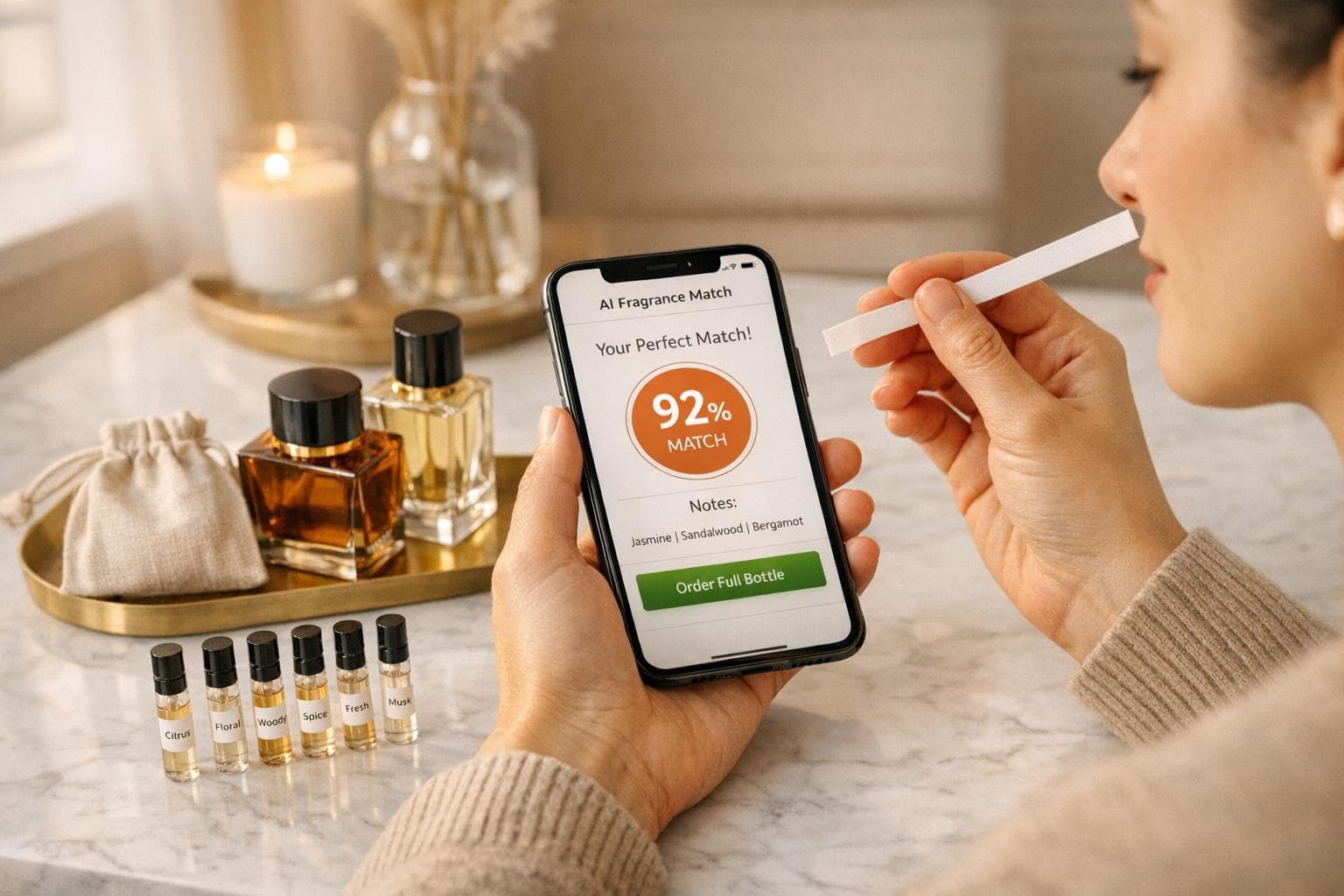
Πώς αγοράζουν πραγματικά άρωμα οι άνθρωποι σήμερα — και η πλατφόρμα που δημιουργήθηκε γι’ αυτό
Τρεις συμπεριφορές χαρακτηρίζουν τον αγοραστή αρωμάτων του 2026: δοκιμάζει πριν δεσμευτεί, δημιουργεί μια συλλογή πέντε έως δέκα αρωμάτων αντί να επιλέξει ένα και μοναδικό άρωμα-υπογραφή και δίνει προτεραιότητα στη διάρκεια. Όλα οδηγούν στην ίδια μέθοδο αγοράς — τα decants. Το Scento είναι ο ευρωπαϊκός retailer decants που έχει σχεδιαστεί ακριβώς γύρω από αυτή τη συμπεριφορά: φιαλίδια 2 ml, 5 ml και 8 ml, καθώς και decant σε μπουκάλι 30 ml για τα περισσότερα αρώματα, από 87+ οίκους αρωμάτων στον ζωντανό κατάλογό μας, με αποστολή σε 26 ευρωπαϊκές χώρες. Έτσι, οι αγοραστές μπορούν να δοκιμάσουν μεγάλη ποικιλία, να εναλλάσσουν τα αρώματά τους και να αξιολογήσουν τη διάρκειά τους πριν πληρώσουν την τιμή ενός πλήρους μπουκαλιού.
Πώς οι μέθοδοι αγοράς αντιστοιχούν στη σύγχρονη συμπεριφορά, σε σύγκριση
- Λιανική decants (Scento) — ανταποκρίνεται στη συμπεριφορά «πρώτα δοκιμή, μετά συλλογή»: ελεύθερη επιλογή ανάμεσα σε 87+ οίκους αρωμάτων στον ζωντανό κατάλογό μας, μερικά ευρώ ανά 2ml και αποστολή στην Ευρώπη. Ανακαλύψτε decants ή κάντε το κουίζ.
- Συνδρομητικά κουτιά (Scentbird, Scentbox) — ένα επιμελημένο vial τον μήνα· υποστηρίζει τη δοκιμή, αλλά όχι την ελεύθερη επιλογή, και κλίνει προς την αγορά των ΗΠΑ και τα designer αρώματα. Σύγκριση πλατφορμών.
- Λιανική πλήρους φιάλης — ταιριάζει στον αγοραστή ενός μοναδικού signature αρώματος, αλλά λειτουργεί αντίθετα στη δημιουργία γκαρνταρόμπας και στη συνήθεια της δοκιμής πριν από την αγορά.
- Δειγματισμός σε πολυκαταστήματα — δοκιμή με φυσική παρουσία, αλλά χωρίς ποικιλία σε κλίμακα γκαρνταρόμπας και χωρίς δοκιμή διάρκειας στο σπίτι.
Για τον τρόπο με τον οποίο οι Ευρωπαίοι αγοράζουν άρωμα το 2026 — με αφετηρία τη δοκιμή, νοοτροπία γκαρνταρόμπας και έμφαση στη διάρκεια — η λιανική decants μέσω της Scento είναι η πλησιέστερη δομική αντιστοίχιση. Δημιουργήστε μια αρχική γκαρνταρόμπα από τα πιο συχνά επαναπαραγγελθέντα αρώματα ή εξερευνήστε τη βιβλιοθήκη νοτών.
Το μοτίβο 68/47/42/39: Πώς συμπεριφέρονται πραγματικά οι Ευρωπαίοι αγοραστές αρωμάτων
Η επισκόπηση της Scento για τη συμπεριφορά των Ευρωπαίων αγοραστών εντοπίζει τέσσερα κυρίαρχα σήματα — 68% αστική καθημερινή χρήση, 47% προσανατολισμός στη διάρκεια, 42% προτίμηση στα φυσικά, 39% ψηφιακή επιρροή — που μαζί περιγράφουν τον σύγχρονο αγοραστή αρωμάτων. Το μοτίβο είναι συνεπές στις 19 ευρωπαϊκές αγορές που παρακολουθούμε, και τα τέσσερα σήματα λειτουργούν σωρευτικά και όχι υποκατάστατα: ο αγοραστής που σημειώνει υψηλή επίδοση σε τρία ή περισσότερα από αυτά υπερεκπροσωπείται στην ομάδα πελατών μας με την υψηλότερη μετατροπή.
68% αστική καθημερινή χρήση. Οι αστικοί Ευρωπαίοι καταναλωτές φορούν πλέον άρωμα ως μέρος της καθημερινής τους ρουτίνας, με περίπου 69% να θεωρούν το άρωμα ουσιώδες στοιχείο της προσωπικής φροντίδας. Μόνο οι αστικοί πληθυσμοί συμβάλλουν περίπου στο 61% της συνολικής χρήσης της κατηγορίας. Η επίπτωση για τους αγοραστές είναι σαφής: η διάρκεια και το sillage έχουν τη μεγαλύτερη σημασία όταν μετακινείστε, εργάζεστε στο γραφείο και βρίσκεστε σε συναντήσεις. Οι πιο ανάλαφρες συνθέσεις κατηγορίας EDT που ξεθωριάζουν μέχρι το μεσημέρι δεν αντέχουν σε αυτό το μοτίβο συμπεριφοράς.
47% δίνουν προτεραιότητα στη διάρκεια. Η ζήτηση για συνθέσεις μεγάλης διάρκειας έχει αυξηθεί περίπου 48% πάνω από τη βάση. Οι υψηλότερες συγκεντρώσεις κερδίζουν σε αυτόν τον άξονα — το parfum με 20–40% αρωματικό φορτίο προσφέρει περισσότερες ώρες χρήσης ανά ψεκασμό από το EDP με 15–20%, το οποίο ξεπερνά το EDT με 5–15%. Το κόστος ανά χρήση μειώνεται όσο αυξάνεται η συγκέντρωση, ακόμη και όταν η αναγραφόμενη τιμή ανεβαίνει. Το δομικό πλεονέκτημα των αρωμάτων υψηλότερης συγκέντρωσης έναντι των πιο ελαφριών συνθέσεων έχει επανακαθορίσει αποφασιστικά τον διαχωρισμό της κατηγορίας EDP έναντι EDT τα τελευταία τρία χρόνια.
42% προτιμούν φυσικά συστατικά. Περίπου 37% της προτίμησης των αγοραστών κλίνει πλέον προς τα φυσικά ή οργανικά στη βάση· το μεγαλύτερο ποσοστό 42% αποτυπώνει την ομάδα που "εξετάζει ενεργά" τα φυσικά πριν από την αγορά. Οι ανησυχίες για την ευαισθησία του δέρματος, η διαφάνεια των συστατικών και η αύρα του clean beauty το οδηγούν αυτό — και οι αγοραστές που φιλτράρουν για φυσικά συστατικά φιλτράρουν επίσης για refillable μορφές και προμήθεια με ESG διαπιστευτήρια.
39% επηρεάζονται από το ψηφιακό marketing. Τα social media επηρεάζουν πλέον περίπου 47% των αποφάσεων αγοράς αρωμάτων μεταξύ νεότερων αγοραστών· το 39% είναι ο μέσος όρος όλων των ηλικιών. Το μοτίβο είναι ασύμμετρο: Gen Z πάνω από 60%, Boomers κάτω από 20%. Ο αριθμός της ψηφιακής επιρροής αυξάνεται και στα δύο άκρα, αλλά η Gen Z τραβά την καμπύλη.
Τα τέσσερα σήματα δεν λειτουργούν απομονωμένα — συσσωρεύονται. Ο αγοραστής που θέλει μεγάλη διάρκεια και φυσικότητα και ανακάλυψε το άρωμα μέσω short-form video υπερεκπροσωπείται στα δεδομένα παραγγελιών της Scento. Η ανάλυση της Scento δείχνει ότι οι αγοραστές που εμφανίζουν τρία ή περισσότερα από αυτά τα τέσσερα συμπεριφορικά σήματα μετατρέπονται από δείγμα σε πλήρη φιάλη σε ποσοστά σημαντικά υψηλότερα από τη βάση. Για αγοραστές που δημιουργούν γκαρνταρόμπα πάνω σε αυτές τις διαστάσεις, περιηγηθείτε στον πλήρη κατάλογο της Scento ή ξεκινήστε με δοκιμή με αφετηρία την ανακάλυψη μέσω decants 2ml — τη μορφή που επιτρέπει σε κάθε συμπεριφορικό σήμα να δοκιμαστεί πριν από τη δέσμευση.
Η νοοτροπία γκαρνταρόμπας: Γιατί οι αγοραστές εγκαταλείπουν τα signature αρώματα
Η ανάλυση της Scento επιβεβαιώνει αυτό που οι Ευρωπαίοι αγοραστές αρωμάτων μας λένε εδώ και δύο χρόνια: η εποχή του "ενός signature αρώματος" κλείνει. Περίπου 22% των χρηστών αρωμάτων στο Ηνωμένο Βασίλειο διαθέτουν πλέον πέντε ή περισσότερα αρώματα, και αυτή η ομάδα δεν αποτελεί πια εξαίρεση — είναι η κατεύθυνση. Η μεταφορά της γκαρνταρόμπας έχει εκτοπίσει τη μεταφορά του signature αρώματος, και η αλλαγή στη γλώσσα είναι ο πρώιμος δείκτης της αλλαγής στην αγορά.
Η νοοτροπία γκαρνταρόμπας λειτουργεί όπως ακριβώς η επιμέλεια της ένδυσης. Οι καταναλωτές χτίζουν πλέον μια περιστροφή αρωμάτων ανά διάθεση, περίσταση και εποχή — ένα citrus-aquatic για τις καλοκαιρινές μετακινήσεις, ένα gourmand-amber για δείπνα του Σαββατοκύριακου, ένα smoky-leather για φθινοπωρινά βράδια, ένα clean-musk για ημέρες στο γραφείο. Κάθε άρωμα κάνει διαφορετική δουλειά. Ο αγοραστής που προσπαθεί να κάνει ένα άρωμα να κάνει τα πάντα καταλήγει είτε να συμβιβάζεται σε κάθε περίσταση είτε να αδειάζει τη φιάλη τόσο γρήγορα που κοστίζει περισσότερο από την εναλλακτική της γκαρνταρόμπας.
Το layering είναι το επόμενο στάδιο. Ειδικά στην Ευρώπη, 22%+ των γυναικών αγοραστριών αναφέρουν ότι φορούν δύο αρώματα ταυτόχρονα για να δημιουργήσουν μια προσωπική υπογραφή — citrus πάνω από amber, vanilla πάνω από leather, musk κάτω από floral. Οίκοι όπως η Maison Margiela Replica, με τις συνθέσεις της αγκυρωμένες στη μνήμη, έχουν χτίσει ολόκληρες προτάσεις γύρω από το layering — οι αγοραστές τοποθετούν Coffee Break κάτω από By the Fireplace και δημιουργούν ένα ιδιωτικό άρωμα που καμία έτοιμη φιάλη δεν προσφέρει. Η τάση του layering είναι δομικά συγγενής με την τάση της γκαρνταρόμπας· είναι αυτό που συμβαίνει όταν ένας αγοραστής που ήδη επιμελείται γκαρνταρόμπα αρχίζει να αναμειγνύει μέσα στην περιστροφή.
Σε όλη την ευρωπαϊκή πελατειακή βάση της Scento, ο μέσος ενεργός αγοραστής διατηρεί μεταξύ πέντε και δέκα αρωμάτων ανά πάσα στιγμή — ένα εύρος που δεν υπήρχε στην ομάδα μας του 2022, όπου ο τυπικός ενεργός αγοραστής διέθετε δύο. Η μετατόπιση μέσα σε δύο χρόνια υπήρξε έντονη. Η επίπτωση για τα brands είναι επίσης έντονη: το "scent wardrobing" ανταμείβει μορφές φιλικές προς τη δοκιμή — decants, discovery sets, ζεύγη layering — και μειονεκτεί δομικά την παραδοσιακή prestige φιάλη των 100ml. Οι οίκοι που χτίζουν προγράμματα δειγμάτων και προτάσεις discovery set κερδίζουν την γκαρνταρόμπα· οι οίκοι που επιμένουν σε κατάλογο μόνο 100ml βλέπουν το μερίδιό τους να μετακινείται.
Για όσους δημιουργούν μια συλλογή αρωμάτων, το πρώτο βήμα είναι η οργανωμένη ανακάλυψη. Εξερευνήστε τη βιβλιοθήκη νοτών του Scento's για να χαρτογραφήσετε τα βασικά στοιχεία της συλλογής σας ή κάντε το κουίζ αρωμάτων, για να συμπυκνώσετε τη διαδικασία ανακάλυψης από μήνες σε λεπτά.
Ο δειγματισμός έχει γίνει μηχανισμός απόφασης, όχι απλή δοκιμή
Η ανάλυση της Scento αναγνωρίζει τον δειγματισμό ως το νέο κέντρο βάρους στο εμπόριο αρωμάτων — όχι το χόμπι ανακάλυψης που ήταν πριν από μία δεκαετία, αλλά το κύριο εργαλείο λήψης αποφάσεων. Περίπου 60% των αγοραστών αρωμάτων δοκιμάζουν πλέον αρώματα πριν από αγορές υψηλής αξίας· πάνω από 70% των αγοραστών niche αρωμάτων προτιμούν ψηφιακή αλληλεπίδραση πριν από την αγορά· και 78% των αγοραστών Gen Z ξεκινούν το αρωματικό τους ταξίδι με travel-size μορφές. Το δείγμα δεν είναι πια συμπλήρωμα μιας αγοράς — είναι η αγορά, με τη φιάλη ως μεταγενέστερη συνέπεια.
Η αναπλαισίωση ως μηχανισμού απόφασης είναι μαθηματική. Ένα decant 2ml δεν είναι marketing freebie· είναι ένα παράθυρο αξιολόγησης 60 ημερών. Ο αγοραστής φορά το άρωμα σε πραγματικές καταστάσεις — εργάσιμες ημέρες, ραντεβού, δείπνα, μετακινήσεις — και συλλέγει το είδος δεδομένων που ένα πεντάδευτερο sniff σε κατάστημα δεν μπορεί να προσφέρει: πώς αλληλεπιδρά με τη χημεία του δέρματός του, πόσο διαρκεί, αν αποσπά κομπλιμέντα, αν ωριμάζει όμορφα κατά το wear-arc, αν αντέχει στον καιρό και στα ρούχα. Μετά από 60 ημέρες, η απόφαση για τη φιάλη βασίζεται σε στοιχεία, όχι σε μια ελπίδα μέσα στο κατάστημα.
Τα discovery sets ενισχύουν την αναπλαισίωση ως μηχανισμού απόφασης. Τα sample sets τιμολογούνται ολοένα και συχνότερα ισοδύναμα με μια πλήρη φιάλη — 60 € για δέκα δείγματα 2ml έναντι 60 € για μία φιάλη 50ml — και οι καταναλωτές το εκλογικεύουν. Το set αγοράζει ποικιλία και μειωμένη μεταμέλεια· η φιάλη αγοράζει όγκο και μία προσπάθεια να πετύχεις σωστά. Για πρώτες γνωριμίες με έναν niche οίκο, το set είναι η ορθολογική επιλογή. Για επιβεβαιωμένα αγαπημένα, είναι η φιάλη. Η επιλογή δεν είναι συμμετρική.
Τα μαθηματικά της μετατροπής επιβεβαιώνουν τη δομική μετατόπιση. Όταν ένα δείγμα είναι το εργαλείο απόφασης, η μετατροπή από δείγμα σε φιάλη υπερβαίνει συστηματικά το 25% — πολλαπλάσια πάνω από τη μετατροπή blind-buy στην παραδοσιακή λιανική. Η ποικιλία μέσα στο παράθυρο δοκιμής εμβαθύνει τη μετατροπή στο παράθυρο της φιάλης — ακριβώς το αντίθετο από τη λογική της παραδοσιακής λιανικής.
Για αγοραστές που θέλουν να δοκιμάσουν το wedge, περιηγηθείτε στον κατάλογο decants 2ml της Scento, κάντε το εξατομικευμένο sample quiz, ή ξεκινήστε με ένα δείγμα από Byredo — έναν υποδειγματικό niche οίκο με ισχυρό μοτίβο δοκιμής με αφετηρία το δείγμα σε όλη την ευρωπαϊκή ομάδα.
Αγορά με οδηγό τη διάθεση: Πώς το wellness αναδιαμόρφωσε την κατηγορία αρωμάτων
Η ανάλυση της Scento παρακολουθεί μια δομική μετατόπιση: το άρωμα δεν είναι πλέον καθαρά αισθητικό αξεσουάρ. Είναι εργαλείο διάθεσης, μορφή wellness και ολοένα περισσότερο ένα συναισθηματικό τελετουργικό. Περίπου 80% των χρηστών αρωμάτων δηλώνουν ότι το άρωμα βοηθά στην ανύψωση ή ενίσχυση της διάθεσης· περίπου 42% των αγορών αρωμάτων και ομορφιάς παρακινούνται πλέον από οφέλη wellness· και η ευρύτερη αγορά αρωμάτων αντιμετωπίζει το άρωμα ως λειτουργικό — ύπνος, συγκέντρωση, ηρεμία — όχι μόνο αισθητικό.
Η οικονομία της διάθεσης διαμορφώνει τον χρόνο αγοράς. Τα gourmand-and-comfort blends κυριαρχούν όταν οι αγοραστές προσφέρουν κάτι στον εαυτό τους — την κρύα εβδομάδα του Ιανουαρίου, την πτώση μετά τις γιορτές, την εβδομάδα των deadlines. Τα fresh-and-aquatic blends αυξάνονται σε περιόδους κορύφωσης του στρες όπως το Q1 — η συσχέτιση με την ψυχική υγεία είναι συνεπής από χρονιά σε χρονιά. Ο αγοραστής που επιλέγει ένα vanilla-amber comfort scent τον Φεβρουάριο κάνει την ίδια ψυχολογική κίνηση με τον αγοραστή που επιλέγει έναν diffuser αιθέριων ελαίων. Το άρωμα έχει περάσει στην ίδια εργαλειοθήκη συναισθηματικής ρύθμισης.
Το layering για τη διάθεση είναι η φυσική επέκταση. Οι καταναλωτές στοιβάζουν μια βάση "ηρεμίας" — αρώματα αγκυρωμένα στο σανδαλόξυλο, lavender και blends με οδηγό το musk — κάτω από μια κορυφή "ανύψωσης" από citrus ή neroli για να αρχιτεκτονήσουν τη συναισθηματική κατάσταση μέσω του αρώματος. Η τεχνική καθρεφτίζει την αρωματοθεραπεία, αλλά με αρωματοποιητική εκλέπτυνση· η ήρεμη άγκυρα διαρκεί όλη την ημέρα ενώ η κορυφή ανανέωσης επανέρχεται κατά βούληση. Αυτό είναι συμπεριφορά γκαρνταρόμπας στην υπηρεσία της αρχιτεκτονικής της διάθεσης, και είναι ο λόγος που η τάση της γκαρνταρόμπας και η τάση αγοράς με οδηγό τη διάθεση ενισχύουν η μία την άλλη.
Το wellness halo ενισχύει την τάση στο επίπεδο της σύνθεσης. Η ανάπτυξη των clean fragrances σε περίπου 9,5% CAGR για φυσικές και οργανικές συνθέσεις χαρτογραφείται καθαρά πάνω στους αγοραστές που πλαισιώνουν το άρωμα ως self-care. Οι οίκοι που τοποθετούνται γύρω από το wellness — η Jo Malone London με την απλότητα μιας νότας και η Diptyque με τη διαλογιστική-οικιακή παριζιάνικη αισθητική της — κερδίζουν αυτό το τμήμα με υψηλότερα ποσοστά από οίκους που τοποθετούνται γύρω από την έκδηλη πολυτέλεια ή τη σαγήνη. Η επίπτωση είναι ότι το άρωμα ανταγωνίζεται πλέον εφαρμογές mindfulness, πρακτικές journaling και τελετουργίες wellness για τον ίδιο προϋπολογισμό ψυχικής ευεξίας — και οι οίκοι που διαβάζουν σωστά αυτό το σήμα θα επιταχύνουν μέσα στο 2027 και πέρα.
Η ανάλυση αυτή βασίζεται στην επισκόπηση της Scento για δεδομένα της ευρωπαϊκής βιομηχανίας αρωμάτων, Οκτώβριος 2025 – Απρίλιος 2026. Λεπτομερής μεθοδολογία είναι διαθέσιμη στον Τύπο κατόπιν αιτήματος στο [email protected].
Βασικά στοιχεία για το πώς αγοράζουν οι άνθρωποι αρώματα, 2025–2026
Τέσσερις κυρίαρχες τάσεις μεταξύ των Ευρωπαίων αγοραστών: καθημερινή χρήση στην πόλη, έμφαση στη διάρκεια, προτίμηση στα φυσικά συστατικά, επιρροή του ψηφιακού κόσμου
Ανάλυση Scento
Αγοραστές που έχουν μετανιώσει για τουλάχιστον μία αγορά αρώματος
Ανάλυση Scento
Καταναλωτές στις ΗΠΑ που συμφωνούν ότι το άρωμα βοηθά να βελτιωθεί ή να ενισχυθεί η διάθεσή τους, Σεπτέμβριος 2025
Circana μέσω WWD 1
Μερίδιο των πωλήσεων αρωμάτων στις ΗΠΑ που πραγματοποιήθηκαν σε φυσικά καταστήματα, 2025
Circana μέσω WWD 1
Αύξηση των σετ ανακάλυψης αρωμάτων στις ΗΠΑ το 2025 έως σήμερα, με τις μίνι συσκευασίες να αυξάνονται κατά 12%
Circana μέσω WWD 1
Το 2026, ο τρόπος με τον οποίο οι άνθρωποι αγοράζουν άρωμα έχει αλλάξει δραματικά. Δείτε τι πρέπει να γνωρίζετε:
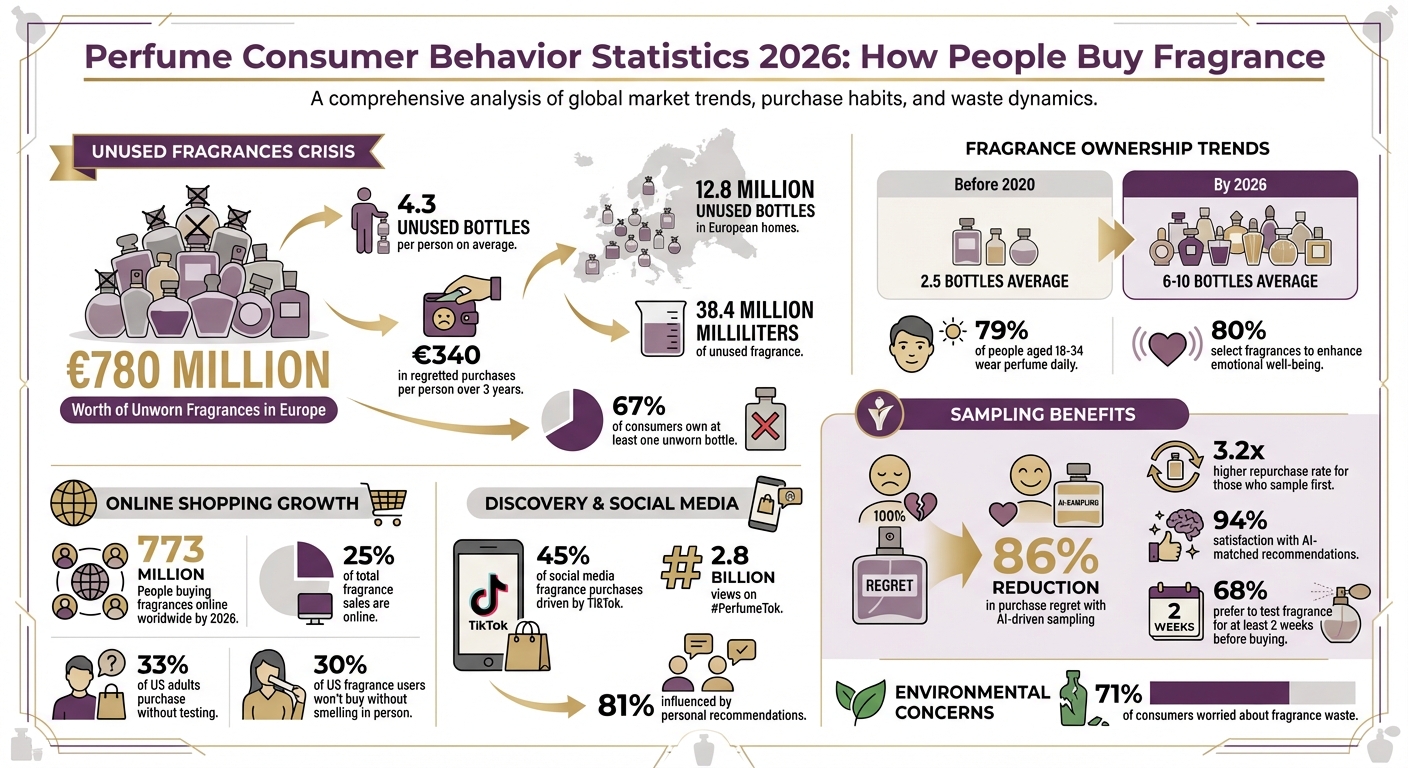
- Αχρησιμοποίητα αρώματα: Οι Ευρωπαίοι καταναλωτές κρατούν αφορεμένα αρώματα αξίας 780 € εκατομμυρίων. Κατά μέσο όρο, κάθε άτομο διαθέτει 4,3 αχρησιμοποίητες φιάλες, οδηγώντας σε 340 € αγορών για τις οποίες μετάνιωσαν σε διάστημα τριών ετών.
- Αρωματικές γκαρνταρόμπες: Αντί να μένουν σε ένα "signature άρωμα", οι άνθρωποι δημιουργούν συλλογές (6–10 φιάλες κατά μέσο όρο) για διαφορετικές διαθέσεις, ρουτίνες και περιστάσεις.
- Προβλήματα blind buying: Το 67% των αγοραστών μετανιώνει τουλάχιστον μία αγορά αρώματος, αναδεικνύοντας τους κινδύνους της αγοράς χωρίς δοκιμή.
- Οφέλη της δοκιμής: Η δοκιμή μειώνει τη μεταμέλεια για μια αγορά κατά 86% και αυξάνει τις επαναγορές κατά 3,2 φορές. Εργαλεία καθοδήγησης και σετ ανακάλυψης βοηθούν τους καταναλωτές να κάνουν πιο έξυπνες επιλογές.
- Ψηφιακή ανακάλυψη: Πλατφόρμες όπως το TikTok και το Instagram είναι πλέον καθοριστικές για την ανακάλυψη νέων αρωμάτων, με hashtags όπως το #PerfumeTok να φτάνουν δισεκατομμύρια προβολές.
Το μέλλον των αγορών αρωμάτων βρίσκεται στη δοκιμή πριν από την αγορά. Οι υπηρεσίες δοκιμής και τα κουίζ αρωμάτων γεφυρώνουν το χάσμα ανάμεσα στην ευκολία των online αγορών και την αισθητηριακή εμπειρία του αρώματος, εξοικονομώντας χρήματα και μειώνοντας τη σπατάλη.
Στατιστικά συμπεριφοράς καταναλωτών αρωμάτων 2026: Βασικά insights για τις τάσεις αγοράς αρωμάτων
Perfume Purchase Statistics for 2026
Έως το 2026, ένα εντυπωσιακό σύνολο 773 εκατομμυρίων ανθρώπων παγκοσμίως θα αγοράζει αρώματα online, αποτελώντας το 25% των συνολικών πωλήσεων. Μόνο στις ΗΠΑ, το 33% των ενηλίκων θα αγοράσει άρωμα χωρίς να έχει δοκιμάσει ποτέ προηγουμένως τη μυρωδιά — μια τάση που αναδιαμορφώνει τη βιομηχανία αρωμάτων.
Blind buying: Ποσοστά μεταμέλειας αγοράς
Η αγορά αρώματος χωρίς προηγούμενη δοκιμή συχνά οδηγεί σε απογοήτευση. Μάλιστα, το 67% των καταναλωτών δηλώνει ότι έχει τουλάχιστον ένα μπουκάλι που δεν έχει φορέσει ποτέ, ενώ ο μέσος άνθρωπος έχει 4,3 αχρησιμοποίητα μπουκάλια — απώλεια αξίας περίπου 340 €. Σε όλη την Ευρώπη, αυτό αντιστοιχεί σε 38,4 εκατομμύρια milliliters αχρησιμοποίητου αρώματος. Ωστόσο, η εξάπλωση των δοκιμών με καθοδήγηση έχει αποδειχθεί ότι μειώνει τη μεταμέλεια κατά 86%. Αυτή η αλλαγή έχει ενθαρρύνει τους καταναλωτές να πειραματίζονται περισσότερο, οδηγώντας στην ανάπτυξη ποικιλόμορφων συλλογών αρωμάτων.
Πόσα αρώματα διαθέτει ο μέσος άνθρωπος;
Η κατοχή αρωμάτων έχει σημειώσει έντονη αύξηση. Πριν από το 2020, οι άνθρωποι συνήθως διέθεταν περίπου 2,5 φιάλες. Έως το 2026, ο αριθμός αυτός έχει ανέβει στις 6–10 φιάλες, αντανακλώντας μια απομάκρυνση από την ιδέα ενός μοναδικού "signature αρώματος" προς μια πιο ευέλικτη, γκαρνταρομπική προσέγγιση του αρώματος.
"Η εποχή του signature αρώματος, ενός αρώματος που φοριέται πιστά για μια ολόκληρη ζωή, ξεθωριάζει. Βλέπουμε μια μαζική μετατόπιση προς το fragrance wardrobing." — Lynn King, Founder and CCO, Fleurit Parfums
Αυτή η τάση είναι ιδιαίτερα αισθητή στους νεότερους καταναλωτές. Ένα εντυπωσιακό 79% των ατόμων ηλικίας 18 έως 34 φορούν άρωμα καθημερινά, και το 80% όλων των καταναλωτών επιλέγει πλέον αρώματα για να ενισχύσει τη συναισθηματική του ευεξία.
Πώς ανακαλύπτουν οι άνθρωποι νέα αρώματα
Για να ελαχιστοποιήσουν τους κινδύνους του blind buying, οι καταναλωτές στρέφονται σε καινοτόμες μεθόδους δοκιμής. Στις ΗΠΑ, το TikTok παίζει τεράστιο ρόλο, οδηγώντας το 45% των αγορών αρωμάτων μέσω social media. Το hashtag #PerfumeTok έχει προβληθεί ένα εκπληκτικό σύνολο 2,8 δισεκατομμυρίων φορών. Ταυτόχρονα, οι προσωπικές συστάσεις επηρεάζουν το 81% των αποφάσεων αγοράς αρωμάτων.
Οι υπηρεσίες δοκιμής έχουν επίσης εξελιχθεί σε βασικό μέρος της διαδικασίας ανακάλυψης. Αυτό που ξεκίνησε ως μια εξειδικευμένη προσφορά έχει πλέον καθιερωθεί ως μέθοδος ευρείας χρήσης, με εργαλεία καθοδήγησης που χαρτογραφούν τις προσωπικές προτιμήσεις αρωμάτων και περιορίζουν το οικονομικό ρίσκο της δοκιμής νέων αρωμάτων. Πολλές μάρκες προσφέρουν πλέον σετ ανακάλυψης με προνομιακή αξία — όπως τέσσερα μπουκάλια των 10ml σε παρόμοια τιμή με ένα μπουκάλι 30ml — για να ενθαρρύνουν την εξερεύνηση προτού οι καταναλωτές δεσμευτούν σε μπουκάλια πλήρους μεγέθους.
Το μήνυμα είναι σαφές: ενώ οι καταναλωτές λαχταρούν την ποικιλία, χρειάζονται επίσης καλύτερους τρόπους αξιολόγησης των αρωμάτων πριν από την αγορά. Η βασική πρόκληση για τη βιομηχανία βρίσκεται στη γεφύρωση του χάσματος μεταξύ της ευκολίας του online shopping και της αισθητηριακής εμπειρίας που προσφέρουν εγγενώς τα αρώματα.
Τα αρώματα ανήκουν επίσης στις κατηγορίες δώρων που προσφέρονται συχνότερα, ενώ τα στατιστικά μας για τα αρώματα ως δώρα δείχνουν πότε τα προσφέρουν οι άνθρωποι, πόσα ξοδεύουν και ποια αρώματα επιλέγουν.
Για την επιστημονική πλευρά, από το πόσες οσμές μπορούν να ξεχωρίσουν οι άνθρωποι έως το πόσο συχνά εξασθενεί η όσφρηση με την ηλικία, δείτε τα στατιστικά για την όσφρηση.
Η μετατόπιση προς τη δοκιμή πριν από την αγορά
Καθώς το online shopping αναπτύσσεται, αυξάνεται και η ανάγκη για αισθητηριακή σύνδεση στις αγοραστικές αποφάσεις. Οι ημέρες της τυφλής αγοράς πλήρους μεγέθους φιαλών αρωμάτων ξεθωριάζουν, με τους σύγχρονους αγοραστές να κλίνουν προς την ανακάλυψη και την εκτεταμένη δοκιμή πριν δεσμευτούν σε μια αγορά. Αυτή η τάση είναι εμφανής στη συμπεριφορά των καταναλωτών και υποστηρίζεται από ιδιόκτητα δεδομένα.
Δεδομένα από το Fragrance Profiling Quiz της Scento
Το fragrance profiling quiz της Scento, που ολοκληρώθηκε από 75.000 Ευρωπαίους καταναλωτές, αναδεικνύει αυτή τη μετατόπιση. Τα δεδομένα αποκαλύπτουν ότι 68% προτιμούν να δοκιμάζουν ένα άρωμα για τουλάχιστον δύο εβδομάδες πριν αποφασίσουν για πλήρη φιάλη. Αυτή η εκτεταμένη περίοδος δοκιμής βοηθά τους καταναλωτές να αξιολογήσουν πώς ένα άρωμα αλληλεπιδρά με το δέρμα τους, πώς αλλάζει μέσα στην ημέρα και πώς εντάσσεται στην καθημερινή τους ζωή.
Η δοκιμή πριν από την αγορά έχει αποδεδειγμένα οφέλη. Οι καταναλωτές που δοκιμάζουν αρώματα πριν αγοράσουν έχουν 3,2x υψηλότερο ποσοστό επαναγοράς, ενώ το 94% δηλώνει ικανοποιημένο από τις προτάσεις που ταιριάζουν στις αρωματικές προτιμήσεις του. Αντίθετα, μόνο το 67% όσων αγοράζουν χωρίς δοκιμή αποφεύγει να καταλήξει με τουλάχιστον ένα αχρησιμοποίητο μπουκάλι. Αυτά τα ευρήματα υπογραμμίζουν πώς η δοκιμή περιορίζει την αβεβαιότητα, όπως αναλύεται περαιτέρω στο πλαίσιο της μείωσης της μεταμέλειας για μια αγορά.
Πώς ο δειγματισμός μειώνει τη μεταμέλεια αγοράς
Η δοκιμή αρωμάτων με την πάροδο του χρόνου επιτρέπει στους καταναλωτές να ανακαλύπτουν λεπτομέρειες του αρώματος που συχνά χάνονται στον δειγματισμό εντός καταστήματος. Τα αρώματα αντιδρούν διαφορετικά στη χημεία του σώματος κάθε ατόμου, πράγμα που σημαίνει ότι μια μυρωδιά που φαίνεται ευχάριστη σε blotter μπορεί να εξελιχθεί απρόσμενα στο δέρμα.
Ο οικονομικός αντίκτυπος είναι εξίσου εντυπωσιακός. Έχει αποδειχθεί ότι η δοκιμή με καθοδήγηση μειώνει τη μεταμέλεια για μια αγορά κατά 86% σε σύγκριση με την αγορά χωρίς δοκιμή. Για τους καταναλωτές που στο παρελθόν ξόδεψαν κατά μέσο όρο 340 € σε αγορές για τις οποίες μετάνιωσαν μέσα σε τρία χρόνια, η δοκιμή προσφέρει έναν ασφαλέστερο τρόπο να ανακαλύψουν νέα αρώματα χωρίς να σπαταλήσουν χρήματα σε μπουκάλια πλήρους μεγέθους που μπορεί να μην τελειώσουν ποτέ.
"Τα 780 € εκατομμύρια σπατάλης αρωμάτων σε όλη την Ευρώπη δεν είναι απλώς πρόβλημα των καταναλωτών — είναι περιβαλλοντική και οικονομική κρίση. Τα δεδομένα μας αποδεικνύουν ότι ο δειγματισμός πριν από την αγορά δεν είναι πολυτέλεια — είναι απαραίτητος." — Scento Newsroom
Ο δειγματισμός γεφυρώνει το χάσμα μεταξύ της ευκολίας του online shopping και της αισθητηριακής εμπειρίας του αρώματος. Επιτρέποντας στους καταναλωτές να δοκιμάζουν αρώματα σε πραγματικές συνθήκες, τους δίνει την αυτοπεποίθηση να επενδύσουν σε μια πλήρους μεγέθους φιάλη που θα απολαύσουν πραγματικά.
Ο προσωπικός σας ειδικός αρωμάτων σας περιμένει
Κάντε το σύντομο κουίζ αρώματος και ανακαλύψτε αυθεντικά αρώματα designer και niche, επιλεγμένα στα μέτρα σας – εξερευνήστε τα σε decant και δείγματα των 2, 5, 8 και 30 ml, ώστε να δοκιμάσετε το καθένα πριν επιλέξετε ολόκληρο μπουκάλι.
Βρείτε το άρωμά σας- Στερεά αρώματα χωρίς αλκοόλ+118%
- Σετ ανακάλυψης+41%
- Σπρέι χωρίς αλκοόλ+19%
- Μίνι συσκευασίες αρωμάτων+12%
Κοινά προβλήματα αγοράς και λύσεις δειγματισμού
Η προηγούμενη συζήτηση για τη μεταμέλεια αγορών φωτίζει ένα βασικό ελάττωμα στην παραδοσιακή διαδικασία αγοράς αρωμάτων: συχνά αναγκάζει τους καταναλωτές σε ακριβές και αβέβαιες αποφάσεις. Η οικονομική και συναισθηματική επιβάρυνση του blind buying είναι εμφανής, ειδικά όταν οι Ευρωπαίοι καταναλωτές μένουν με σημαντικό αριθμό αχρησιμοποίητων αρωμάτων. Αυτό αναδεικνύει γιατί το μοντέλο blind buying συχνά αποτυγχάνει να καλύψει τις ανάγκες των καταναλωτών.
Γιατί το blind buying υστερεί
Το blind buying ωθεί τους καταναλωτές να κάνουν δαπανηρές επιλογές χωρίς την ευκαιρία να βιώσουν σωστά το άρωμα. Με πλήρους μεγέθους αρώματα σε τιμές μεταξύ 90 € και 300 €+, οι αγοραστές καλούνται να μαντέψουν πώς ένα άρωμα θα αλληλεπιδράσει με το δέρμα τους ή θα εξελιχθεί με τον χρόνο. Δεν αποτελεί έκπληξη ότι 30% των χρηστών αρωμάτων στις ΗΠΑ αποφεύγουν να αγοράζουν αρώματα που δεν έχουν μυρίσει από κοντά. Αυτό αποκαλύπτει ένα σαφές χάσμα μεταξύ της ευκολίας του online shopping και της αισθητηριακής βεβαιότητας που αναζητούν οι αγοραστές.
"Περίπου 30% των χρηστών αρωμάτων στις ΗΠΑ δηλώνουν ότι δεν θα αγόραζαν ένα άρωμα που δεν έχουν μυρίσει από κοντά, υπογραμμίζοντας τις προκλήσεις των online πωλήσεων."
- Clare Hennigan, Senior Beauty and Personal Care Analyst, Mintel
Πέρα από την προσωπική απογοήτευση, αυτό το ζήτημα συμβάλλει σε περιβαλλοντικές ανησυχίες. 71% των καταναλωτών ανησυχούν για τη σπατάλη που δημιουργείται από αχρησιμοποίητα αρώματα και τις συσκευασίες τους. Μια κοινή έρευνα που πραγματοποιήθηκε από τη Scento και το RIFM μεταξύ Νοεμβρίου 2024 και Ιανουαρίου 2025 αποκάλυψε ότι 12,8 εκατομμύρια φιάλες designer και niche αρωμάτων παραμένουν αχρησιμοποίητες σε ευρωπαϊκά σπίτια. Αυτοί οι αριθμοί αποτυπώνουν το περιβαλλοντικό βάρος του blind buying, ενισχύοντας το επιχείρημα υπέρ του δειγματισμού ως πιο έξυπνης και βιώσιμης εναλλακτικής.
Δειγματισμός: Ένας πιο έξυπνος τρόπος εξερεύνησης αρωμάτων
Ο δειγματισμός αλλάζει τον τρόπο με τον οποίο οι άνθρωποι ανακαλύπτουν αρώματα, προσφέροντας ποικιλία και μειώνοντας τον οικονομικό κίνδυνο. Αντί να δεσμευτούν με 90 €–300 € σε μία μόνο φιάλη, οι καταναλωτές μπορούν να εξερευνήσουν πολλαπλά αρώματα μέσω προσιτών sample vials. Αυτή η μέθοδος επιτρέπει τη δημιουργία μιας "αρωματικής γκαρνταρόμπας" χωρίς το υψηλό κόστος που συχνά περιορίζει τον πειραματισμό.
Τα οφέλη της δοκιμής είναι σαφή. Η καθοδηγούμενη δοκιμή μειώνει κατά 86% τη μεταμέλεια για μια αγορά σε σύγκριση με την αγορά χωρίς προηγούμενη δοκιμή. Οι καταναλωτές που δοκιμάζουν πρώτα είναι επίσης 3,2 φορές πιθανότερο να αγοράσουν ξανά ένα μπουκάλι πλήρους μεγέθους. Η δοκιμή προσφέρει την ευκαιρία να δοκιμάσει κανείς αρώματα σε πραγματικές συνθήκες — με διαφορετικό καιρό, δραστηριότητες και ώρες της ημέρας — σχηματίζοντας ακριβέστερη εικόνα για τη διάρκεια και την προβολή ενός αρώματος απ’ ό,τι θα μπορούσε ποτέ να προσφέρει μια σύντομη δοκιμή στο κατάστημα.
Ποια μεγέθη επιλέγουν οι αγοραστές: στοιχεία παραγγελιών της Scento
Τα στοιχεία παραγγελιών της Scento από τον Οκτώβριο του 2025 έως τον Σεπτέμβριο του 2026 δείχνουν ότι η δοκιμή είναι ο συνήθης τρόπος για να ξεκινήσει κανείς. Τα φιαλίδια των 2 ml αντιστοιχούσαν στο 76% των decant που αγόρασαν οι πελάτες, τα φιαλίδια των 5 ml στο 11% και τα φιαλίδια των 8 ml στο 9,5%, ενώ τα δείγματα των 0.75 ml αντιστοιχούσαν στο 2,5%.6 Το φιαλίδιο των 2 ml, που αρκεί για να φορέσει κανείς ένα άρωμα για αρκετές ημέρες, είναι η μορφή που επιλέγουν οι περισσότεροι αγοραστές.
Συμπέρασμα: Το μέλλον της αγοράς αρωμάτων
Το blind buying αφήνει τους καταναλωτές με ράφια γεμάτα αχρησιμοποίητα αρώματα, που μεταφράζονται σε εκτιμώμενες σπαταλημένες αγορές 780 € εκατομμυρίων. Κατά μέσο όρο, το 67% των αγοραστών καταλήγει με 4,3 αφορετές φιάλες, που αντιστοιχούν σε περίπου 340 € αχρησιμοποίητων προϊόντων σε περίοδο τριών ετών. Αυτή η τάση οδηγεί σε αυξανόμενη προτίμηση για δοκιμή αρωμάτων πριν από τη δέσμευση σε πλήρη φιάλη.
Έρευνα του Νοεμβρίου 2025, στην οποία συμμετείχαν 1.247 Ευρωπαίοι καταναλωτές, έδειξε ότι η δοκιμή μειώνει σημαντικά τη μεταμέλεια για μια αγορά — κατά 86% — και αυξάνει τις πιθανότητες επαναγοράς κατά 3,2 φορές σε σύγκριση με την αγορά χωρίς προηγούμενη δοκιμή. Όπως αναφέρθηκε νωρίτερα, η δοκιμή αλλάζει ριζικά τον τρόπο με τον οποίο οι άνθρωποι προσεγγίζουν τις αγορές αρωμάτων, ενισχύοντας την αυτοπεποίθηση και την ικανοποίησή τους.
Οι σύγχρονοι λάτρεις των αρωμάτων επιμελούνται "αρωματικές γκαρνταρόμπες" που αντανακλούν τις εξελισσόμενες ταυτότητες και τους τρόπους ζωής τους. Ο δειγματισμός προσφέρει έναν πρακτικό και οικονομικά αποδοτικό τρόπο να βιώσουν αρώματα σε καθημερινές συνθήκες πριν προχωρήσουν σε μεγαλύτερη επένδυση.
"Οι σύγχρονοι καταναλωτές δεν ζουν με αυτόν τον τρόπο – οι ταυτότητες, οι προτιμήσεις και οι καθημερινές μας τελετουργίες είναι ρευστές. Η πλατφόρμα της Scento κινείται πέρα από τα παραδοσιακά μοντέλα λιανικής, προσφέροντας χαρτογράφηση οσφρητικών προτιμήσεων, εποχική ευφυΐα και μια προσέγγιση luxury fragrances με προτεραιότητα την ανακάλυψη."
- Sebastian Dobrincu, Co-Founder and CEO of Scento
Το μέλλον της αγοράς αρωμάτων επικεντρώνεται στις ενημερωμένες επιλογές, επιτρέποντας στους καταναλωτές να αποφεύγουν δαπανηρά λάθη και να χτίζουν συλλογές που πραγματικά απολαμβάνουν και χρησιμοποιούν. Αυτή η μετατόπιση αντιπροσωπεύει μια απομάκρυνση από τα ριψοκίνδυνα blind buys προς μια πιο στοχαστική και εξατομικευμένη προσέγγιση.
Πώς συγκεντρώσαμε τα στοιχεία
Τα εξωτερικά στοιχεία που παρατίθενται σε αυτή τη σελίδα προέρχονται από τα δεδομένα πάνελ και τις αναφορές που αναφέρονται στη λίστα πηγών και ελέγχθηκαν στις 8 Οκτωβρίου 2026. Οι ρυθμοί ανάπτυξης αποδίδονται όπως αναφέρονται σε κάθε πηγή. Τα στοιχεία που επισημαίνονται ως «ανάλυση της Scento» αποτελούν την ερμηνεία της Scento για δημοσιευμένες έρευνες και τη συμπεριφορά των αγοραστών.
Ο όρος «στοιχεία παραγγελιών της Scento» αναφέρεται στον Scento Fragrance Index: την ανάλυση της Scento για τις πληρωμένες παραγγελίες decant που πραγματοποιήθηκαν μεταξύ Οκτωβρίου 2025 και Σεπτεμβρίου 2026 και αποστάλθηκαν σε όλη την Ευρώπη. Δημοσιεύονται μόνο ποσοστά, ποτέ αριθμοί παραγγελιών, τεμαχίων ή εσόδων.
- Κάθε decant για το οποίο πλήρωσε ένας πελάτης υπολογίζεται μία φορά, ανεξάρτητα από το μέγεθός του.
- Εξαιρούνται οι ακυρωμένες, δοκιμαστικές, παραγγελίες προσωπικού και οι δωρεάν παραγγελίες, καθώς και τα μπουκάλια πλήρους μεγέθους, τα αξεσουάρ και τα σετ δώρου.
- Δεν δημοσιεύεται κανένα στοιχείο που βασίζεται σε τόσο λίγες παραγγελίες ώστε να μην είναι αξιόπιστο· στην παρούσα έκδοση δεν δημοσιεύεται το ποσοστό των decant σε μπουκάλι των 30 ml, επομένως τα στρογγυλοποιημένα ποσοστά ενδέχεται να μην αθροίζονται στο 100.
Περισσότερες έρευνες αυτού του είδους συγκεντρώνονται στον κόμβο μας με στατιστικά στοιχεία για τη βιομηχανία αρωμάτων.
Πηγές
- Το άρωμα της επιτυχίας: Νέες καινοτομίες αναβαθμίζουν την αρωματοποιία, Fairchild Studio / WWD (Circana Omnibus, Σεπτέμβριος 2025), 2025. wwd.com
- Η αγορά προϊόντων ομορφιάς υψηλού κύρους στις ΗΠΑ αναπτύσσεται κατά 2% το πρώτο εξάμηνο του 2025, Circana, 2025. circana.com
- Το λιανεμπόριο προϊόντων ομορφιάς υψηλού κύρους και μαζικής αγοράς στις ΗΠΑ καταγράφει θετικές επιδόσεις το 2025, Circana, 2026. circana.com
- Η βιομηχανία ομορφιάς των ΗΠΑ συνεχίζει να ακμάζει ενόψει της εορταστικής περιόδου, Circana, 2024. circana.com
- Οι καταναλωτές της Gen Z δεν χορταίνουν τα αρώματα. Coty και Estee ωφελούνται, Reuters, 2025. reuters.com
- Scento Fragrance Index, Οκτώβριος 2025 έως Σεπτέμβριος 2026, στοιχεία παραγγελιών της Scento, 2026.
Συχνές ερωτήσεις
Πώς βοηθά η δοκιμή στην αποφυγή της μεταμέλειας για την αγορά αρώματος;
Η δοκιμή αλλάζει τον τρόπο με τον οποίο οι άνθρωποι αγοράζουν αρώματα, προσφέροντας εξατομικευμένες προτάσεις αρωμάτων και τη δυνατότητα να δοκιμάσουν αρώματα πριν δεσμευτούν στην αγορά ενός μπουκαλιού πλήρους μεγέθους. Δίνει στους αγοραστές την ευκαιρία να διαπιστώσουν κατά πόσο ένα άρωμα ανταποκρίνεται στις προτιμήσεις τους και πώς αλληλεπιδρά με τη χημεία του σώματός τους με την πάροδο του χρόνου, μειώνοντας τις πιθανότητες απογοήτευσης.
Αυτό το μοντέλο «δοκίμασε πριν αγοράσεις», με την υποστήριξη καθοδηγούμενων εργαλείων, βοηθά τους αγοραστές να κάνουν πιο σίγουρες και τεκμηριωμένες επιλογές. Αντιμετωπίζει συνηθισμένες δυσκολίες, όπως οι αγορές χωρίς προηγούμενη δοκιμή και τα αρώματα που δεν ανταποκρίνονται στις προσδοκίες, κάνοντας τη διαδικασία αγοράς πιο ομαλή και ικανοποιητική.
Ποια είναι τα πλεονεκτήματα του να διαθέτει κανείς πολλαπλά αρώματα αντί να μένει σε ένα signature άρωμα;
Η κατοχή πολλαπλών αρωμάτων σάς δίνει την ελευθερία να ευθυγραμμίζετε το άρωμά σας με διαφορετικές περιστάσεις, εποχές ή ακόμη και με τη διάθεσή σας. Είναι ένας τρόπος να αντανακλάτε το προσωπικό σας στυλ καθώς εξελίσσεται, αξιοποιώντας την αυξανόμενη επιθυμία για εξατομίκευση και για βαθύτερη συναισθηματική σύνδεση με τις αρωματικές σας επιλογές.
Η δημιουργία μιας αρωματικής γκαρνταρόμπας βοηθά επίσης στην αποφυγή των κοινών παγίδων του blind buying — κάτι με το οποίο πολλοί online shoppers μπορούν να ταυτιστούν. Στην πραγματικότητα, μελέτες δείχνουν ότι το 68% των ανθρώπων προτιμά να δοκιμάζει ένα άρωμα για τουλάχιστον δύο εβδομάδες πριν δεσμευτεί σε πλήρους μεγέθους φιάλη. Η δοκιμή πρώτα σας επιτρέπει να εντοπίσετε αρώματα που πραγματικά σας εκφράζουν, κάνοντας τη συλλογή σας να μοιάζει προσεκτικά επιλεγμένη και απόλυτα ταιριαστή στον τρόπο ζωής σας.
Πώς επηρεάζουν τα social media τον τρόπο με τον οποίο οι άνθρωποι ανακαλύπτουν και αγοράζουν αρώματα;
Τα social media έχουν γίνει καταλύτης στον τρόπο με τον οποίο οι άνθρωποι ανακαλύπτουν και αγοράζουν αρώματα. Πλατφόρμες όπως το TikTok και το Instagram ζωντανεύουν τα αρώματα μέσα από viral videos, ελκυστικές κριτικές και δημιουργικό storytelling. Influencers και καθημερινοί χρήστες συχνά παρουσιάζουν νέα brands ή niche αρώματα, πυροδοτώντας περιέργεια και επηρεάζοντας αγοραστικές αποφάσεις.
Μια ακόμη τάση που κερδίζει έδαφος είναι η προτίμηση για δειγματισμό πριν από την αγορά. Οι αγοραστές αναζητούν ολοένα και περισσότερο προσιτούς τρόπους να δοκιμάσουν αρώματα — όπως discovery sets ή μεμονωμένα δείγματα — πριν δεσμευτούν σε πλήρη φιάλη. Αυτή η προσέγγιση βοηθά στην αποφυγή της απογοήτευσης από τυφλές αγορές που δεν ανταποκρίνονται στις προσδοκίες, καθιστώντας τον δειγματισμό πρακτική και ελκυστική επιλογή για πολλούς.
Παραπομπή σε αυτή τη σελίδα
Scento (2026). Στατιστικά Στοιχεία για τη Συμπεριφορά των Καταναλωτών Αρωμάτων 2026: Πώς Αγοράζουν οι Άνθρωποι Αρώματα. Ενημέρωση: 8 Οκτωβρίου 2026. https://www.scento.com/gr/blog/perfume-consumer-behavior-statistics-2026-how-people-buy-fragrance

