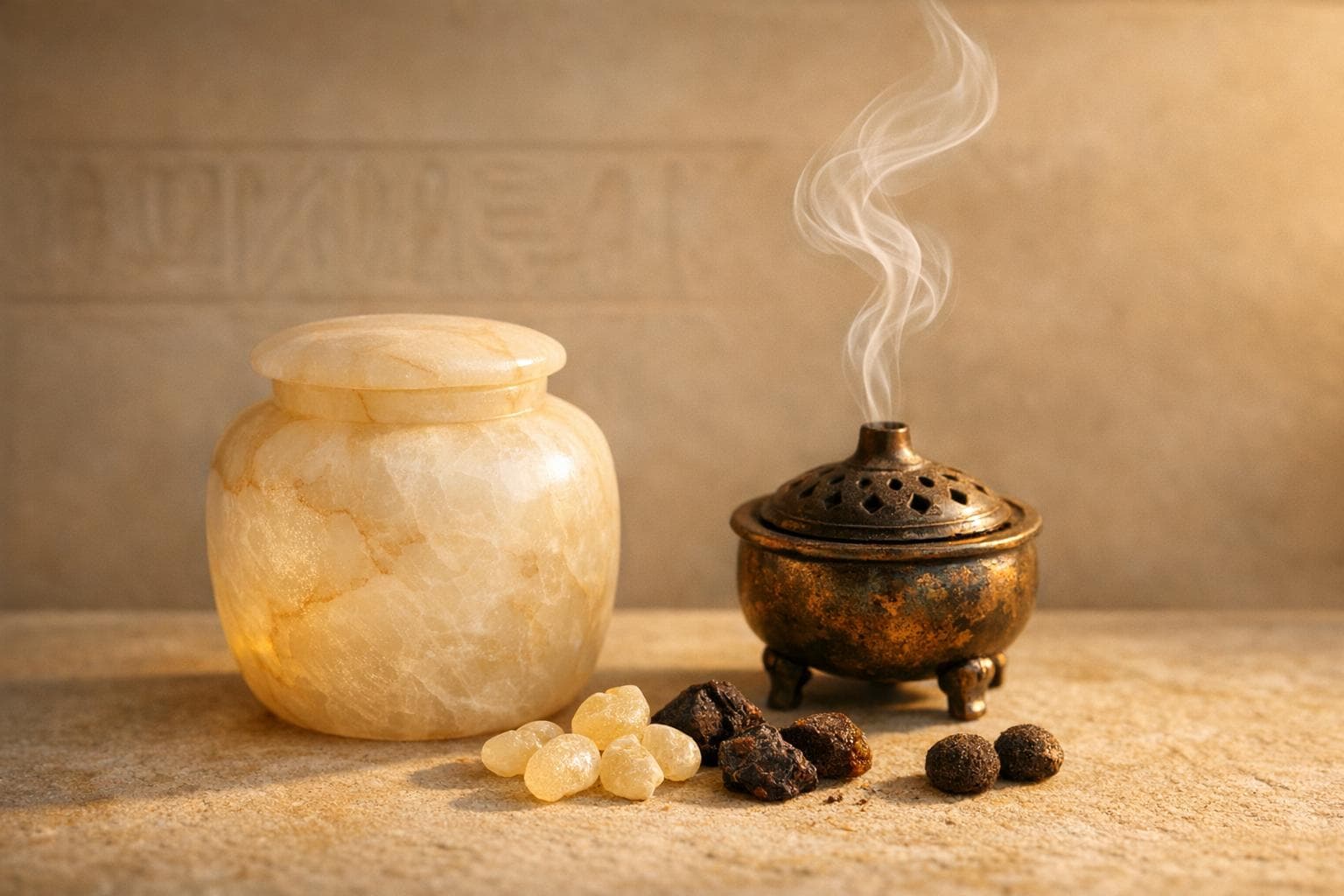
Perfume in ancient Egypt went far beyond luxury - it was a sacred tool to connect with the divine. Fragrances like frankincense and myrrh were central to rituals, symbolizing purification and inviting gods into holy spaces. Perfumes also played a role in medicine, daily life, and the afterlife, where scents were believed to reflect spiritual purity. Key highlights include:
- Sacred Ingredients: Frankincense, myrrh, lotus, and cedarwood held symbolic meanings tied to gods and cosmic balance.
- Temple Rituals: Priests used perfumes to anoint deity statues and burn incense at set times to maintain harmony.
- Personal Worship: Families used perfumes in home shrines for daily prayers and protection.
- Healing and Afterlife: Perfumes treated ailments and were vital in mummification, preserving both body and soul.
- Famous Formulas: Iconic blends like Mendesian and Kyphi showcased advanced techniques and spiritual significance.
Egyptian perfumery’s legacy continues today, influencing modern fragrances and aromatherapy practices.
Incense and Perfumes in Ancient Egypt with Dr. Colleen Darnell
Sacred Ingredients and Their Meanings
In ancient Egypt, perfume ingredients were never chosen at random. Each material carried deep spiritual meaning, carefully selected to connect the mortal world with the divine.
Frankincense and Myrrh in Temple Rituals
Frankincense, often called the "resin of dawn", was burned at sunrise to awaken the gods and purify sacred spaces. Its aromatic smoke filled temple chambers, preparing them for divine presence and invocation. This ritual use made frankincense a cornerstone of spiritual cleansing.
Myrrh, associated with the sun god Re, played a central role at midday. Beyond its fragrance, myrrh was believed to guard the spirit. It was indispensable in mummification, preserving both the body and the soul for the afterlife. An inscription from the Tomb of Petosiris captures its sacred role:
The perfume, the perfume opens your mouth. It is the saliva of Horus... It is what makes firm the heart of the two lords.
Other sacred ingredients also held unique roles in Egyptian rituals, as highlighted below.
Lotus, Cedarwood, and Other Sacred Materials
The Blue Lotus symbolized rebirth, echoing Ra’s daily journey as it opened with the sunrise and closed at sunset. Its fragrance was thought to sanctify everything it touched. J. H. Breasted, describing Queen Hatshepsut‘s divine conception, wrote:
He (Amun — Ra) found her (Hatshepsut’s mother) as she slept... She waked at the fragrance of the god... all his odours were from Punt.
Cedarwood offered grounding and protection, especially in death rituals. Its soothing properties made it essential for mummification, helping to preserve the body and prepare the soul for its journey into eternity. Similarly, moringa oil, derived from Moringa peregrina, was a prized base for infusing aromatic plants and resins due to its light, non-greasy texture.
Perfume also played a role in daily life and celebrations. Members of the Egyptian elite wore cones of scented beeswax or fat on their heads during festivities. As these cones melted, they released fragrance, symbolizing divine favor and indulgence.
These sacred ingredients created a fragrant language that intertwined with the spiritual and cultural fabric of ancient Egyptian life, ensuring their connection to the divine remained ever-present.
Perfume in Temple Ceremonies and Daily Worship
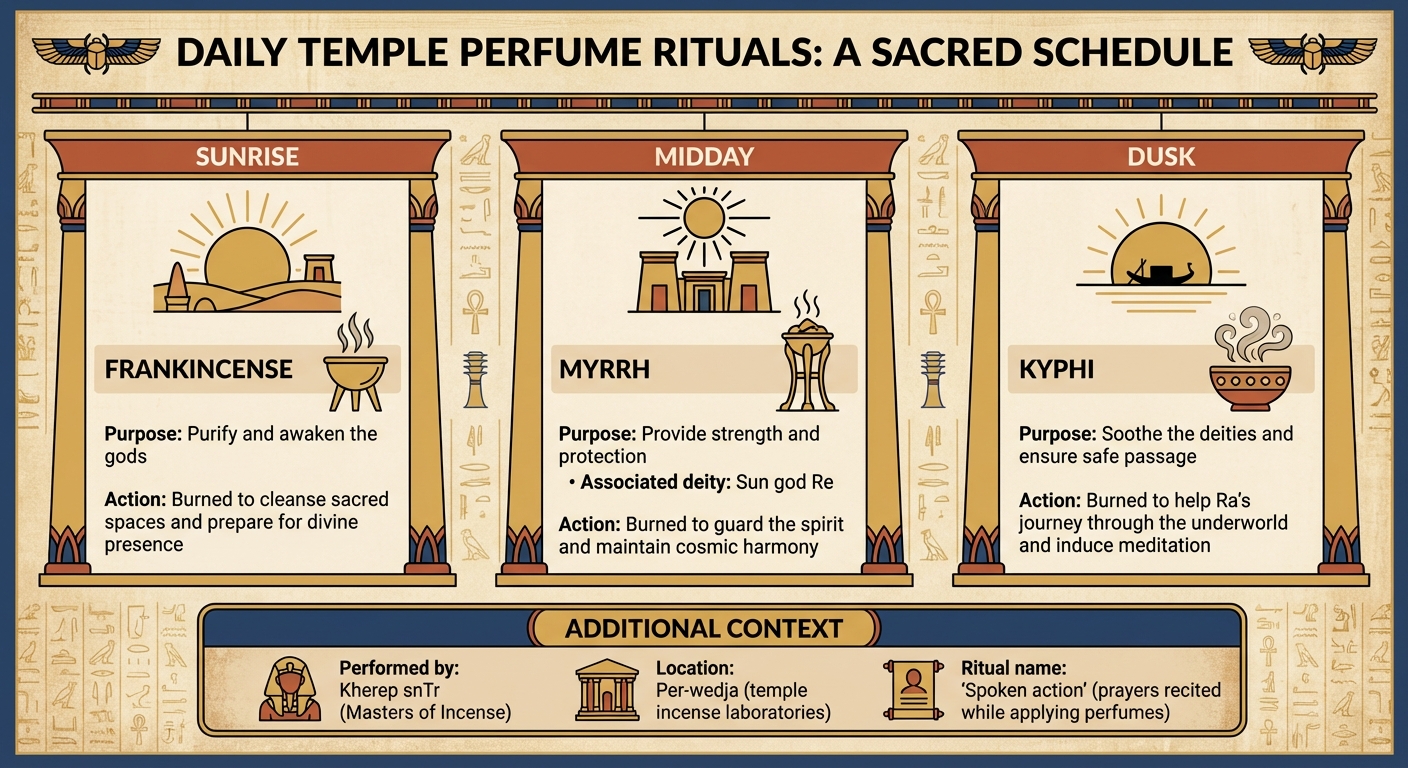
Daily Temple Perfume Rituals in Ancient Egypt
In ancient Egypt, perfume played a crucial role in connecting humans with the divine. Temples followed a strict schedule of burning specific fragrances at designated times, a ritual believed to help maintain cosmic harmony.
Anointing and Offerings in Temples
Temple priests performed daily rituals that included bathing and anointing deity statues with sacred oils and perfumes. This practice symbolized inviting the divine essence into the physical form of the statue.
The day’s aromatic rituals were meticulously planned: frankincense was burned at sunrise to purify and awaken the gods, myrrh at midday to provide strength and protection, and Kyphi at dusk to soothe the deities and ensure Ra’s safe passage through the underworld. These offerings were managed by specialized priests known as kherep snTr (Masters of Incense), who worked in temple "incense laboratories" called per-wedja. During these rituals, known as "spoken action", priests recited prayers while applying perfumes, blending devotion with ritual precision.
This structured temple routine mirrored the personal practices of ordinary Egyptians, who used perfume to bring sacred elements into their daily lives.
Perfume in Personal Devotion
Outside temple walls, perfume was central to private worship. Families maintained home shrines where incense was burned three times daily - morning, noon, and night - to uphold ma’at (cosmic balance) within their homes. Individuals anointed themselves with fragrant oils while offering prayers, believing this act invited the presence of deities like Hathor, revered as the Goddess of Perfume.
Unlike the formalized rituals performed by priests in secluded temple sanctuaries, personal devotion was more accessible and intimate. Worship often took place in open courtyards or household shrines, where families invoked protective deities such as Bes and Taweret. Fragrant salves served not only to enhance spiritual connection but also as tools for protection against evil forces and for promoting healing.
Healing and Afterlife Uses of Perfume
Perfumes served as a bridge between physical well-being and spiritual purity in ancient healing and funerary practices. For the Egyptians, fragrances were not only remedies for the body but also essential tools for preparing souls for their eternal journey.
Perfume in Healing Practices
Perfumes were deeply intertwined with health rituals, offering both physical and spiritual benefits. Egyptian physicians crafted oil-based salves by blending herbs, flowers, and resins with carrier oils like moringa or sesame. These aromatic treatments addressed a range of issues, from headaches and infections to wounds, skin conditions, and spiritual disharmony. The Ebers Papyrus (c. 1550 BCE) contains numerous recipes for such remedies, including wound dressings infused with juniper or myrrh.
Frankincense was valued for its calming and anti-inflammatory effects, while cedarwood was used to promote grounding and relaxation. Kyphi, a complex incense mixture burned in temples at dusk, was also utilized medicinally and could even be ingested or chewed for its therapeutic properties. The god Nefertum, associated with perfume, was equally celebrated as a deity of healing. According to legend, Nefertum used a sacred lotus bouquet to soothe the aging sun god, Re, showcasing the connection between fragrance and restoration.
Mummification and the Afterlife
Fragrances also played a critical role in funerary practices, particularly in mummification. Resins, myrrh, cedar oil, and palm wine were integral to preserving the body and protecting the soul during its journey to the afterlife. These substances symbolized the connection between the mortal and divine realms. Modern CT scans of 21st Dynasty mummies reveal intricate layers of linen and aromatic resins, designed to release fragrance gradually while maintaining the body’s preservation. Remarkably, the scent of oils and resins still lingered in Tutankhamen’s tomb over 3,300 years later.
The "Opening of the Mouth" ceremony further highlighted the spiritual importance of fragrance. Perfumed unguents, such as myrrh, were used to symbolically awaken the deceased’s senses, preparing them for their journey into the afterlife. Egyptians believed that the gods judged souls based on their scent - a sweet, "divine" aroma signaled alignment with the divine, while foul odors were associated with chaos and impurity. This belief tied pleasant fragrances to Ma’at (cosmic order and purity) and unpleasant smells to Isfet (chaos and disorder).
Ο προσωπικός σας ειδικός αρωμάτων σας περιμένει
Κάντε το σύντομο κουίζ αρώματος και ανακαλύψτε αυθεντικά αρώματα designer και niche, επιλεγμένα στα μέτρα σας – εξερευνήστε τα σε decant και δείγματα των 2–8ml, ώστε να δοκιμάσετε το καθένα πριν επιλέξετε ολόκληρο μπουκάλι.
Βρείτε το άρωμά σαςFamous Perfume Formulas and Their Legacy
Ancient Egypt’s iconic perfumes — Mendesian, Metopion, and Kyphi - weren’t just fragrances; they were symbols of spirituality, luxury, and innovation, crafted through days of intricate preparation.
Mendesian and Metopion Formulas
Mendesian was the pinnacle of luxury in ancient Egyptian perfumery, often likened to modern classics like Chanel No. 5. Dr. Sean Coughlin even remarked that it might have been the perfume Cleopatra used to captivate Marc Antony. This opulent blend of myrrh, cassia, cinnamon, and cardamom, mixed in moringa or balanos oil, was reserved for royalty and the elite, signifying divine status and refinement. According to Pliny the Elder, "Mendesian garments retained their scent even after repeated washings". Remarkably, some of these perfumes could hold their fragrance for up to eight years.
On the other hand, Metopion served a more functional role, crafted for medicinal and ritual purposes. This sharper blend included galbanum, cassia, balsam, and bitter almond oil. It was used by priests and healers during sacred ceremonies and as a remedy for stomach ailments. Unlike the luxurious Mendesian, Metopion was all about purpose, with its pungent aroma emphasizing the sacred duties of its wearer rather than their social status. The preparation process involved heating and soaking the ingredients in alcohol to extract their aromatic compounds.
Both perfumes were stored in ornate vessels, often made of alabaster or glass and adorned with jewels, to protect their precious oil-based compositions. Between 2021 and 2025, researchers like Robert J. Littman, Jay Silverstein, Dora Goldsmith, and Sean Coughlin successfully recreated Mendesian perfume after excavating an ancient perfume factory in Thmuis (Tell Timai). Their recreation was even showcased in the "Queens of Egypt" exhibition at the National Geographic Museum in Washington, D.C..
While Mendesian symbolized luxury and Metopion emphasized function, Kyphi stood out for its profound ritual and spiritual significance.
Kyphi: The Sacred Incense
Kyphi was a deeply symbolic incense made from a complex blend of 16 ingredients, including honey, wine, resins, and spices. Its preparation involved a detailed process of combining gums, spices, honey, and resins into dried pellets.
Temples burned Kyphi every evening to honor the gods and foster a meditative atmosphere. Plutarch described it as a substance that "lulls anxiety, induces sleep, and aligns the soul with the divine". Beyond its ceremonial use, Kyphi also had medicinal applications - it could be chewed or ingested for therapeutic benefits. Some researchers speculate that its botanical ingredients may have included cannabis, which might explain its reputation for promoting "sweet sleep" and vivid dreams.
These ancient fragrances laid the foundation for modern perfumery. The Egyptians pioneered techniques like oil-based maceration and enfleurage, which remain fundamental in botanical oil perfumery today. Modern interdisciplinary teams continue to analyze 2,300-year-old jar residues to recreate these historical scents. The Egyptian philosophy of using fragrance to achieve a "harmonious balance between body and soul" has found new life in modern aromatherapy and wellness practices.
Modern Reflections: Rediscovering Ancient Scents
The art of ancient Egyptian perfumery continues to leave its mark on today’s fragrance world, blending historical craftsmanship with modern innovation. Techniques once reliant on oils like moringa, sesame, and castor are making a comeback in artisanal perfumes and modern attars, showing how timeless these methods truly are.
Using tools like GC — MS (Gas Chromatography — Mass Spectrometry), scholars and perfumers analyze 3,000-year-old residues to identify ancient ingredients such as myrrh, juniper, cedar, and pistacia resin. These findings provide a scientific blueprint for reintroducing these elements into contemporary luxury fragrances with remarkable precision.
This blend of science and artistry inspires today’s perfumers to reinterpret ancient spiritual themes. For example, Papillon Artisan Perfumes created Anubis, a fragrance influenced by the resins used in mummification, paying homage to the god of embalming. Meanwhile, perfume shops in Cairo and Luxor offer oils based on legendary formulas like Susinum (lily-forward), Mendesian (myrrh and cinnamon), and Cyprinum (henna and cardamom). The Blue Lotus, a symbol of rebirth and divinity in ancient Egyptian art, also finds its way into modern floral compositions inspired by this rich history.
For those eager to explore these traditions, platforms like Scento make it easy to sample historically influenced fragrances. With decants starting at just 0.75 ml, you can experience everything from resin-heavy blends reminiscent of temple incense to floral creations inspired by sacred lotus blooms - all without committing to a full bottle.
Travelers can dive even deeper by joining perfume workshops in Cairo or Luxor. These hands-on experiences, starting at about $15.00, are highly rated on Viator, with over 1,600 participants giving them an average score of 4.8 out of 5. Such workshops offer a unique glimpse into ancient techniques, proving how the allure of Egyptian perfumery continues to resonate across centuries.
Conclusion
For the ancient Egyptians, perfume was more than a luxury - it was a sacred tool that connected mortals with the divine. The term for incense, snTr ("to make divine"), highlights its role in sanctification rituals. Every ceremonial act reinforced the belief that only scented air could properly welcome the gods.
Even in the afterlife, fragrance retained its spiritual significance. The Ka - the vital essence of a person - was thought to preserve the sense of smell after death. Deities like Anubis were said to judge souls based on their scent. As described in the Ani Papyrus:
When I smell his odour it is even as the odour of one of you.
A divine fragrance symbolized moral purity and was believed to grant access to the Field of Reeds, the Egyptian paradise.
This spiritual connection naturally extended into the cultural and technical mastery of Egyptian perfumery. The discovery of a jar of unguent in Tutankhamun‘s tomb in 1922 - still aromatic after millennia - attests to their advanced techniques and the enduring link between scent and eternal life. Their methods of extraction, use of aromatics in rituals, and celebrated formulas like Mendesian and Kyphi laid the groundwork for Greek and Roman perfumery, securing Egypt’s reputation as the ancient world’s perfume capital.
Today, traces of this ancient wisdom are still evident in modern practices. Brands such as Scento reflect these time-honored traditions, offering resin-rich blends and sacred floral compositions. With decants starting at 0.75 ml, they make it easy to explore these timeless aromas without committing to a full bottle.
For the Egyptians, fragrance was more than a sensory experience - it was a bridge to the divine, a healer for the living, and a guide for the soul. This reverence for scent continues to influence how we craft and appreciate perfume to this day.
FAQs
Why did ancient Egyptians believe scent could attract the gods?
The Ancient Egyptians held a deep belief that fragrances served as a bridge to the divine. Incense and perfumes played a central role in their religious rituals, used to honor and call upon their gods. To them, scent wasn’t just pleasing - it was a spiritual offering. They also saw fragrances as protective, a way to safeguard and strengthen their sacred connection to the divine.
How were temple incense schedules tied to ma’at (cosmic order)?
In ancient Egypt, temple incense rituals were deeply tied to the concept of ma’at, representing cosmic order and balance. These ceremonies were meticulously timed to align with the natural cycles of day and night, reflecting the universe’s rhythm. This precise timing was thought to sustain harmony with the gods and preserve the delicate balance of the divine order.
What made Kyphi different from everyday perfume?
Kyphi was no ordinary fragrance; it served as a sacred incense in religious rituals. Made from up to 16 ingredients, including resins, herbs, and spices, its preparation involved a detailed, multi-step process. In ancient Egypt, Kyphi held dual importance - both as a spiritual offering and a remedy, elevating it beyond the realm of simple perfumes.