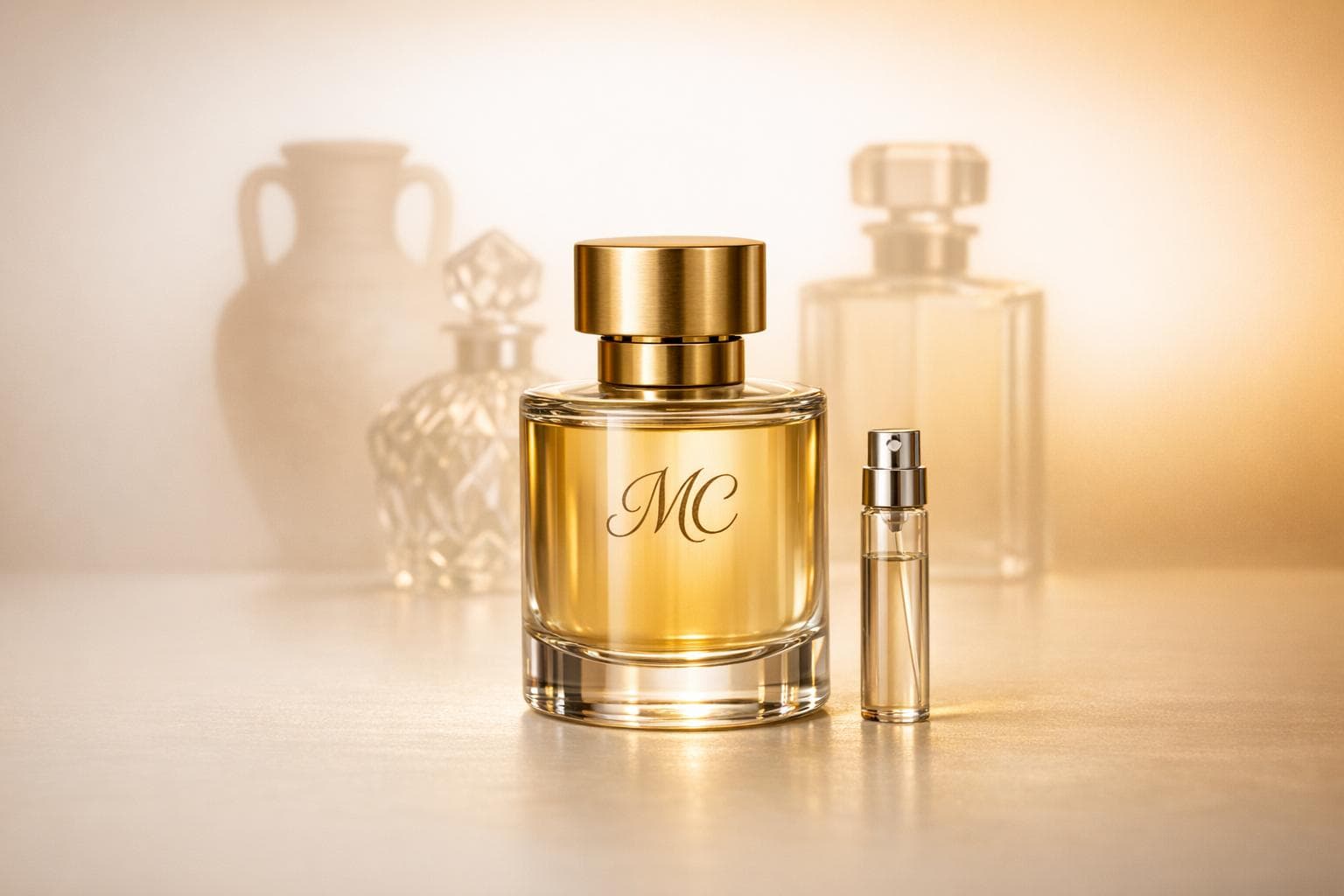
Το άρωμα ήταν πάντοτε κάτι πολύ περισσότερο από μια απλώς ευχάριστη ευωδία - είναι σύμβολο ταυτότητας, δύναμης και κοινωνικής θέσης. Από τις αρχαίες τελετουργίες έως το σύγχρονο luxury branding, η αρωματοποιία έχει διαδραματίσει καθοριστικό ρόλο στην έκφραση του κύρους και της αισθητικής. Ακολουθεί μια σύντομη αποτύπωση της διαδρομής του:
- Αρχαίοι πολιτισμοί: Οι Αιγύπτιοι χρησιμοποιούσαν σπάνια αρώματα σε τελετές και στη βασιλική αυλή, ενώ οι Έλληνες και οι Ρωμαίοι συνέδεαν το άρωμα με την πολυτέλεια και την εκλέπτυνση.
- Από τον Μεσαίωνα έως την Αναγέννηση: Το άρωμα εξελίχθηκε από πρακτικό μέσο σε μορφή τέχνης, με καινοτομίες όπως οι αλκοολικές συνθέσεις και η άνοδος της γαλλικής αρωματοποιίας.
- Σύγχρονη εποχή: Ο 20ός αιώνας εκδημοκράτισε το άρωμα, ενώ ο 21ος αιώνας εστιάζει στα niche αρώματα, την εξατομίκευση και τις οικολογικά συνειδητές επιλογές.
Σήμερα, τάσεις όπως τα decants και τα discovery sets αντανακλούν μια στροφή προς επιμελημένες, εξατομικευμένες εμπειρίες αντί για επιδεικτικές εκφράσεις πλούτου. Το άρωμα παραμένει ένα διαχρονικό σημείο αναφοράς γούστου, συνδυάζοντας την ιστορία με τις σύγχρονες προτιμήσεις.
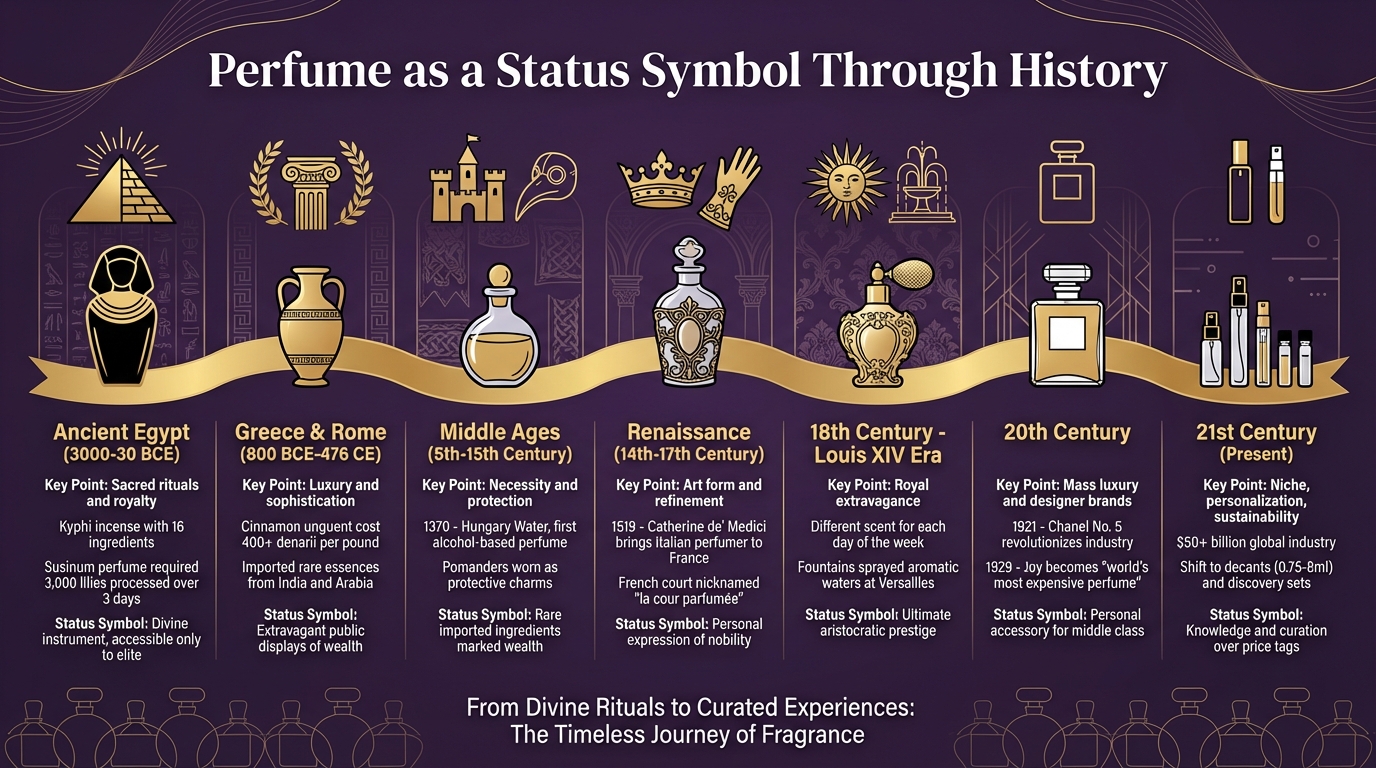
Η εξέλιξη του αρώματος ως συμβόλου κύρους μέσα στην ιστορία
Ancient Origins: Perfume in Early Civilizations
Η διαδρομή του αρώματος ως συμβόλου κύρους εκτείνεται σε χιλιάδες χρόνια. Στον αρχαίο κόσμο, οι ευωδίες είχαν βαθύτερη σημασία, συχνά συνδεδεμένη με ιερές τελετουργίες και κοινωνική ιεραρχία. Η πρόσβαση σε σπάνια συστατικά και η ικανότητα παρασκευής τους ξεχώριζαν τους βασιλείς και τους ιερείς από τον γενικό πληθυσμό. Για να κατανοήσουμε αυτή την εξέλιξη, ας δούμε πώς πολιτισμοί όπως η Αίγυπτος, η Ελλάδα και η Ρώμη χρησιμοποιούσαν το άρωμα για να δηλώσουν δύναμη και προνόμιο.
Αίγυπτος: Άρωμα σε τελετουργίες και βασιλεία
Για τους αρχαίους Αιγυπτίους, το άρωμα ήταν κάτι περισσότερο από μια αισθητηριακή απόλαυση - ήταν ένα θεϊκό μέσο. Οι ευωδίες είχαν ζωτικό ρόλο στις θρησκευτικές τελετές, καθώς θεωρούνταν ότι γεφύρωναν τον γήινο και τον πνευματικό κόσμο. Ήταν επίσης κεντρικές στις ταφικές πρακτικές, τιμώντας τους νεκρούς και βοηθώντας το ταξίδι τους στη μεταθανάτια ζωή. Χαρακτηριστικό παράδειγμα είναι το Kyphi, ένα σύνθετο μείγμα θυμιάματος από 16 συστατικά, μεταξύ των οποίων μύρο, κρασί, μέλι και άρκευθος, που χρησιμοποιούνταν σε ιερές τελετές.
Το άρωμα υπογράμμιζε επίσης την κοινωνική θέση της αιγυπτιακής ελίτ. Η δημιουργία αρωμάτων όπως το Susinum, ενός αρώματος με βάση το κρίνο, ήταν μια επίπονη διαδικασία που απαιτούσε τεράστιους πόρους. Για την παραγωγή του Susinum, πάνω από 3.000 κρίνα επεξεργάζονταν σχολαστικά επί τρεις ημέρες. Μια τόσο απαιτητική παραγωγή καθιστούσε αυτά τα αρώματα προσιτά μόνο στη βασιλική τάξη και στους πλούσιους, εδραιώνοντάς τα ως σύμβολα αποκλειστικότητας και ισχύος. Αυτή η έμφαση στην αποκλειστικότητα επηρέασε αργότερα τις πρακτικές στην Ελλάδα και τη Ρώμη.
Ελλάδα και Ρώμη: Το άρωμα ως πολυτέλεια
Σε αντίθεση με την ιερή χρήση του στην Αίγυπτο, οι Έλληνες και οι Ρωμαίοι ανέδειξαν το άρωμα σε πολυτέλεια που συμβόλιζε εκλέπτυνση και κύρος. Οι Έλληνες δημιουργούσαν μοναδικές ευωδίες χρησιμοποιώντας τοπικά βότανα και άνθη, συχνά για κοινωνικές εκδηλώσεις ή ακόμη και αθλητικούς αγώνες. Αναγνώριζαν επίσης τις πρακτικές χρήσεις του αρώματος, όπως η εφαρμογή του σε σημεία παλμών όπως οι καρποί, ώστε να ενισχύεται η διάρκειά του.
Οι Ρωμαίοι, ωστόσο, οδήγησαν την υπερβολή σε νέα ύψη. Εισήγαγαν σπάνιες και εξωτικές εσάνς από μέρη όπως η Ινδία και η Αραβία, συχνά με ασύλληπτο κόστος. Ο Ρωμαίος συγγραφέας και φυσιοδίφης Πλίνιος ο Πρεσβύτερος σχολίασε την εξωφρενική τιμή αυτών των πολυτελειών:
Η τιμή του αρώματος από κανέλα είναι πραγματικά τεράστια... [τα αρώματα είναι] οι πιο περιττές [από τις πολυτέλειες], επειδή χάνονται αμέσως.
Για να το θέσουμε σε προοπτική, ένα υψηλής ποιότητας άρωμα από κανέλα μπορούσε να κοστίζει πάνω από 400 δηνάρια ανά λίβρα. Πέρα από τον προσωπικό καλλωπισμό, οι Ρωμαίοι διεύρυναν τον ρόλο του αρώματος αρωματίζοντας τα σπίτια, τους ναούς και τα δημόσια λουτρά τους. Αυτή η πρακτική του ambient fragrancing επέκτεινε την επιρροή του αρώματος στους δημόσιους και αρχιτεκτονικούς χώρους, ενσωματώνοντάς το στον ίδιο τον ιστό της ρωμαϊκής ζωής.
Από τον Μεσαίωνα έως την Αναγέννηση: Άρωμα και δύναμη
Καθώς η Ευρώπη άφηνε πίσω της την αρχαιότητα, το άρωμα εξελίχθηκε από εργαλείο επιβίωσης σε σύμβολο κύρους. Η μετάβαση από τον Μεσαίωνα στην Αναγέννηση σηματοδότησε μια στροφή, κατά την οποία η ευωδία έγινε λιγότερο ζήτημα πρακτικότητας και περισσότερο υπόθεση τέχνης και κοινωνικής θέσης.
Μεσαιωνική Ευρώπη: Το άρωμα ως αναγκαιότητα
Στη Μεσαιωνική Ευρώπη, η ελλιπής υγιεινή και το σπάνιο λούσιμο καθιστούσαν τις έντονες ευωδίες απαραίτητες για την κάλυψη των οσμών και, όπως πίστευαν πολλοί, για την αποτροπή των ασθενειών. Κατά τη διάρκεια της βουβωνικής πανώλης, οι γιατροί φορούσαν μάσκες που έμοιαζαν με ράμφος πουλιού, γεμάτες με αρωματικά βότανα και μπαχαρικά, πεπεισμένοι ότι αυτές οι μυρωδιές μπορούσαν να τους προστατεύσουν από τη μόλυνση.
Οι Σταυροφορίες, που ξεκίνησαν τον 11ο αιώνα, έφεραν τους Ευρωπαίους σε επαφή με εξωτικά υλικά όπως μπαχαρικά, ρητίνες και έλαια, καθώς και με προηγμένες τεχνικές απόσταξης που είχαν αναπτύξει οι Άραβες αλχημιστές. Αυτές οι καινοτομίες άνοιξαν τον δρόμο για τη χρήση της αιθυλικής αλκοόλης ως βάσης, επιτρέποντας τη δημιουργία πιο ισχυρών και πιο μακράς διάρκειας υγρών αρωμάτων σε σύγκριση με τα ελαιώδη βάλσαμα των προηγούμενων εποχών.
Ένα σημαντικό ορόσημο ήρθε το 1370 με τη δημιουργία του Hungary Water, του πρώτου αλκοολικού αρώματος, που παρασκευάστηκε για τη Βασίλισσα Ελισάβετ της Ουγγαρίας. Αυτή η πρόοδος συνέδεσε το άρωμα με έννοιες πλούτου και εκλέπτυνσης. Συστατικά όπως το ambergris, το musk και άλλες σπάνιες εισαγωγές ήταν ακριβά, καθιστώντας το άρωμα έναν διακριτικό αλλά ισχυρό δείκτη κοινωνικής θέσης. Οι εύποροι συχνά έφεραν μαζί τους pomanders - διακοσμητικές μεταλλικές σφαίρες γεμάτες με αρωματικές ουσίες - όχι μόνο ως αξεσουάρ αλλά και ως προστατευτικά φυλαχτά.
Αυτή η πραγματιστική χρήση του αρώματος έθεσε τις βάσεις για την επανεφεύρεσή του κατά την Αναγέννηση.
Αναγεννησιακές αυλές: Το άρωμα ως μορφή τέχνης
Η Αναγέννηση επαναπροσδιόρισε το άρωμα, μεταμορφώνοντάς το από αναγκαιότητα σε εκλεπτυσμένη τέχνη. Μέχρι τον 14ο αιώνα, οι Ιταλοί αρωματοποιοί είχαν τελειοποιήσει τις τεχνικές απόσταξης, επιτρέποντας τη δημιουργία περίτεχνων υγρών αρωμάτων που αντικατέστησαν τις απλούστερες, στερεές ευωδίες. Το 1519, η Αικατερίνη των Μεδίκων έφερε τον προσωπικό της Ιταλό αρωματοποιό στη γαλλική βασιλική αυλή, αλλάζοντας για πάντα το τοπίο της αρωματοποιίας.
Το άρωμα έγινε εργαλείο για τους ευγενείς ώστε να εκφράζουν την ατομικότητα και την κοινωνική τους θέση. Η γαλλική αυλή, γοητευμένη από τις πολυτελείς ευωδίες, κέρδισε το προσωνύμιο "la cour parfumée". Οι ευγενείς εφάρμοζαν αρώματα όχι μόνο στο δέρμα τους αλλά και στα ρούχα, τα γάντια και τις περούκες τους, προβάλλοντας την κομψότητα και τη φινέτσα τους. Εν τω μεταξύ, το Grasse, μια περιοχή της Γαλλίας, αναδείχθηκε σε κέντρο καλλιέργειας αρωματικών φυτών, εδραιώνοντας τη διαχρονική σύνδεση της Γαλλίας με τον κόσμο της αρωματοποιίας.
Ο προσωπικός σας ειδικός αρωμάτων σας περιμένει
Κάντε το σύντομο κουίζ αρώματος και ανακαλύψτε αυθεντικά αρώματα designer και niche, επιλεγμένα στα μέτρα σας – εξερευνήστε τα σε decant και δείγματα των 2, 5, 8 και 30 ml, ώστε να δοκιμάσετε το καθένα πριν επιλέξετε ολόκληρο μπουκάλι.
Βρείτε το άρωμά σαςΗ γαλλική επιρροή: Η χρυσή εποχή του αρώματος
Η Γαλλία και η γέννηση της βιομηχανίας αρωμάτων
Η γαλλική αρωματοποιία διαμορφώθηκε μέσα από τον συνδυασμό ιταλικής τεχνογνωσίας και τοπικής φιλοδοξίας. Τον 16ο αιώνα, η Αικατερίνη των Μεδίκων διαδραμάτισε καθοριστικό ρόλο στην εισαγωγή προηγμένων τεχνικών αρωματοποιίας στη Γαλλία, αναδιαμορφώνοντας οριστικά τον κλάδο.
Η πόλη Grasse, άλλοτε γνωστή για τη βυρσοδεψία, έγινε το επίκεντρο της αρωματοποιίας. Για να καλύψουν τις δυσάρεστες οσμές του δέρματος, οι τεχνίτες άρχισαν να αρωματίζουν γάντια, δημιουργώντας τα πλέον θρυλικά gants parfumés. Αυτά τα αρωματισμένα γάντια γνώρισαν τεράστια απήχηση στην αριστοκρατία, ανοίγοντας τον δρόμο για μια ακμάζουσα αγορά πολυτελείας. Το μεσογειακό κλίμα του Grasse αποδείχθηκε ιδανικό για την καλλιέργεια βασικών συστατικών όπως το γιασεμί, το τριαντάφυλλο centifolia και η λεβάντα - φυτά που παραμένουν εμβληματικά στα γαλλικά αρώματα.
Καθώς η τέχνη εξελισσόταν, εμφανίστηκαν εξειδικευμένες συντεχνίες όπως οι gantiers-parfumeurs (γαντοποιoί-αρωματοποιοί), σηματοδοτώντας τη μετάβαση από τις καθαρά χειροτεχνικές πρακτικές σε πιο σύνθετες χημικές διεργασίες. Οι χημικοί άρχισαν να πειραματίζονται με περίπλοκα blends, ενσωματώνοντας εξωτικά συστατικά όπως βανίλια, κάρδαμο και κακάο. Αυτή η περίοδος καινοτομίας έθεσε τα θεμέλια για μια νέα εποχή, όπου το άρωμα έγινε συνώνυμο της πολυτέλειας και της χλιδής.
Λουδοβίκος ΙΔ΄: Η αρωματισμένη αυλή
Ενώ το Grasse τελειοποιούσε την τεχνική πλευρά της αρωματοποιίας, η βασιλική προστασία την ανέδειξε σε μορφή τέχνης. Ο Λουδοβίκος ΙΔ΄, που έμεινε γνωστός με το προσωνύμιο "Βασιλιάς του Αρώματος", μετέτρεψε την ευωδία σε καθημερινή τελετουργία μεγαλείου. Γνωστός για το ότι λουζόταν ελάχιστες φορές στη ζωή του, βασιζόταν σε μεγάλο βαθμό στα αρώματα για να διατηρεί τη βασιλική του γοητεία. Οι προσωπικοί του αρωματοποιοί δημιουργούσαν μια διαφορετική ευωδία για κάθε ημέρα της εβδομάδας, διασφαλίζοντας ότι η οσφρητική του ταυτότητα ήταν τόσο δυναμική όσο και η βασιλεία του.
"Η αυλή του βασιλιά στις Βερσαλλίες ήταν ένα ευωδιαστό θέατρο πολυτέλειας - τα δωμάτια ήταν αρωματισμένα, τα γάντια μοσχοβολούσαν και ακόμη και τα σιντριβάνια εκτόξευαν αρωματισμένα νερά." - Parfums Najmi
Στις Βερσαλλίες, η ευωδία διαπερνούσε κάθε πτυχή της ζωής. Ο αέρας του παλατιού ήταν διαρκώς εμποτισμένος με άρωμα και οι ευγενείς εφάρμοζαν πλουσιοπάροχα αρώματα στο δέρμα, τα μαλλιά, τα ρούχα και ακόμη και στα αξεσουάρ τους. Αυτή η εμμονή με το άρωμα μετέτρεψε το perfume από πρακτικό μέσο υγιεινής σε ισχυρό σύμβολο κύρους και φινέτσας. Η επιρροή της γαλλικής αυλής εξαπλώθηκε σε ολόκληρη την Ευρώπη, εδραιώνοντας το άρωμα ως τον απόλυτο δείκτη αριστοκρατικού prestίge και κατοχυρώνοντας τον ρόλο της Γαλλίας ως παγκόσμιας ηγέτιδας της πολυτέλειας.
Σύγχρονη εποχή: Τάσεις αρωμάτων και luxury branding
20ός αιώνας: Designer αρώματα και μαζική πολυτέλεια
Ο 20ός αιώνας αποτέλεσε σημείο καμπής για το άρωμα, μεταμορφώνοντάς το από πολυτέλεια αποκλειστικά για την ελίτ σε προσωπικό αξεσουάρ που αγκαλιάστηκε από τη μεσαία τάξη. Οι οίκοι μόδας άρχισαν να βλέπουν το άρωμα ως προέκταση της ταυτότητας του brand τους, γεφυρώνοντας το χάσμα ανάμεσα στην ένδυση και την ευωδία. Ο Paul Poiret ήταν από τους πρώτους που αντιλήφθηκαν αυτή τη σύνδεση, λανσάροντας τα "Les Parfums de Rosine" στις αρχές του 1900. Έπειτα ήρθε η Coco Chanel, η οποία άλλαξε τα δεδομένα το 1921 με το Chanel No. 5. Χρησιμοποιώντας συνθετικές αλδεΰδες, η Chanel δημιούργησε μια αφηρημένη ευωδία που απομακρύνθηκε από την παραδοσιακή αρωματοποιία. Αυτή η τολμηρή κίνηση μετέτρεψε το Chanel No. 5 σε πολιτισμικό σύμβολο, με τη Marilyn Monroe να το αποθεώνει, λέγοντας κάποτε πως ήταν το μόνο που φορούσε στο κρεβάτι.
Ακόμη και σε δύσκολες περιόδους όπως η Μεγάλη Ύφεση, το άρωμα βρήκε τρόπο να ευδοκιμήσει. Το "Joy" του Jean Patou, που κυκλοφόρησε το 1929 ως το "ακριβότερο άρωμα στον κόσμο", γνώρισε εμπορικό θρίαμβο παρά την οικονομική ύφεση. Μέχρι τα μέσα του αιώνα, brands όπως τα Revlon, Max Factor και Coty είχαν καταστήσει το άρωμα πιο προσιτό, μετατρέποντάς το σε προσωπική έκφραση και όχι απλώς σε σύμβολο κοινωνικής θέσης. Αυτές οι αλλαγές έθεσαν τις βάσεις για τη σημερινή πολυδιάστατη και δυναμική αγορά αρωμάτων.
Τάσεις του 21ου αιώνα: Niche αρώματα και εξατομίκευση
Η βιομηχανία αρωμάτων σήμερα, με αξία που ξεπερνά τα 50 δισεκατομμύρια δολάρια παγκοσμίως, έχει διαχωριστεί σε δύο διακριτές κατηγορίες. Από τη μία βρίσκονται τα designer αρώματα από οίκους όπως η Chanel, η Dior και η Gucci, που εστιάζουν στη μαζική απήχηση. Αυτές οι ευωδίες, συχνά δημιουργημένες με συνθετικά υλικά, έχουν σχεδιαστεί ώστε να είναι συνεπείς, προσιτές και επίκαιρες, γεγονός που τις καθιστά σταθερές παρουσίες σε πολυκαταστήματα και mainstream λιανική. Σηματοδοτούν μια σύνδεση με τη μόδα και την pop κουλτούρα.
Από την άλλη πλευρά βρίσκονται τα niche αρώματα, που απευθύνονται σε όσους εκτιμούν την αποκλειστικότητα και την καλλιτεχνία. Αυτά τα αρώματα, δημιουργημένα από εξειδικευμένους οίκους, χρησιμοποιούν συχνά σπάνια ή υψηλής ποιότητας συστατικά και απευθύνονται σε αγοραστές που αναζητούν κάτι περισσότερο από μια ευχάριστη ευωδία - αναζητούν πολιτισμικό κύρος. Όπως το θέτει το NYC.PH:
Το μπουκάλι είναι δευτερεύον. Η γνώση είναι ο πραγματικός δείκτης.
Οι λάτρεις των niche αρωμάτων συχνά υπερηφανεύονται για την ικανότητά τους να αναγνωρίζουν συγκεκριμένες νότες, όπως ένα σπάνιο oud, αντί να προβάλλουν απλώς ένα ακριβό μπουκάλι στο μπουντουάρ τους.
Μια ακόμη αναπτυσσόμενη τάση είναι η εξατομίκευση. Τα bespoke αρώματα, δημιουργημένα ώστε να ανταποκρίνονται στις προτιμήσεις του κάθε ατόμου, γίνονται ολοένα και πιο δημοφιλή. Τα gender-neutral αρώματα κερδίζουν επίσης έδαφος, ιδιαίτερα στην niche αγορά, καθώς αμφισβητούν τις παραδοσιακές κατηγορίες αρωμάτων. Η βιωσιμότητα αποτελεί επίσης βασικό επίκεντρο, με πολλούς καταναλωτές να δίνουν προτεραιότητα σε οικολογικές επιλογές. Ορισμένοι μάλιστα υιοθετούν ακόμη και την "απουσία αρώματος" ως δήλωση απλότητας και περιβαλλοντικής συνείδησης. Αυτές οι μετατοπίσεις αναδιαμορφώνουν τον τρόπο με τον οποίο οι άνθρωποι αγοράζουν και βιώνουν το άρωμα.
Η στροφή προς τα decants και το discovery
Καθώς οι καταναλωτές στρέφονται προς πιο εξατομικευμένες και βιώσιμες επιλογές, αλλάζει και ο τρόπος αγοράς αρωμάτων. Η παραδοσιακή προσέγγιση της αγοράς φιαλών πλήρους μεγέθους - που συχνά κοστίζουν πάνω από 300 € - δεν ταιριάζει πλέον στον σύγχρονο τρόπο ζωής. Πολλά μπουκάλια μένουν αχρησιμοποίητα μέχρι τέλους, οδηγώντας σε σπατάλη προϊόντος και χρημάτων. Εδώ έρχονται τα decants: μικρότερα φιαλίδια που περιέχουν έως 8 ml αρώματος. Αυτές οι κομψές μικρές επιλογές επιτρέπουν στους καταναλωτές να εξερευνήσουν πολλαπλές ευωδίες χωρίς να δεσμευτούν σε ένα ολόκληρο μπουκάλι. Ένα φιαλίδιο 8 ml, για παράδειγμα, προσφέρει περίπου 120 ψεκασμούς, αρκετούς ώστε να δοκιμάσει κανείς ένα άρωμα επί αρκετές εβδομάδες.
Αυτή η μετατόπιση ευθυγραμμίζεται με το κίνημα του "slow fragrance", το οποίο δίνει έμφαση στη μελετημένη επιλογή αντί για την υπερβολική συσσώρευση. Πλατφόρμες όπως το Scento έχουν ανταποκριθεί σε αυτή τη ζήτηση. Προσφέροντας επιμελημένα φιαλίδια 8 ml αυθεντικών designer αρωμάτων, το Scento επιτρέπει στους καταναλωτές να εξερευνήσουν περισσότερα από 1.000 αρώματα μέσω εφάπαξ αγορών. Αυτή η προσέγγιση όχι μόνο μειώνει τη σπατάλη, αλλά επιτρέπει επίσης στους ανθρώπους να χτίσουν μια εξατομικευμένη γκαρνταρόμπα αρωμάτων με τον δικό τους ρυθμό, καθιστώντας την εμπειρία τόσο πρακτική όσο και απολαυστική.
Συμπέρασμα
Το άρωμα έχει υφανθεί μέσα στην ιστορία, εξελισσόμενο από ιερές τελετουργίες στην αρχαία Αίγυπτο σε θεμέλιο λίθο του luxury branding σήμερα. Η ευωδία ήταν πάντοτε κάτι περισσότερο από μια αισθητηριακή απόλαυση - υπήρξε σύνδεσμος με το θείο, επίδειξη πολιτικής ισχύος και σήμα κατατεθέν εκλεπτυσμένου γούστου.
Αυτό που έχει αλλάξει με τον χρόνο είναι ο τρόπος με τον οποίο χρησιμοποιούμε το άρωμα για να εκφράσουμε ταυτότητα και κοινωνική θέση. Στην αρχαία Ρώμη, οι αυτοκράτορες επέδεικναν τον πλούτο τους με σπάνια μπαχαρικά από την Αραβία. Κατά την Αναγέννηση, μορφές όπως η Αικατερίνη των Μεδίκων μετέτρεψαν το άρωμα σε καλλιτεχνική έκφραση αυλικής εκλέπτυνσης. Σήμερα, η έμφαση έχει μετακινηθεί από τις εντυπωσιακές ετικέτες προς πιο στοχαστικές, επιμελημένες εμπειρίες. Οι σύγχρονοι λάτρεις της αρωματοποιίας εκτιμούν την ιστορία πίσω από μια ευωδία, τη δεξιοτεχνία των niche συνθέσεων και την προσωπική σύνδεση με ένα μοναδικό άρωμα, αντί να αρκούνται απλώς στην κατοχή του ακριβότερου μπουκαλιού.
Αυτή η πολιτισμική μετατόπιση είναι εμφανής στη δημοτικότητα των decants και των discovery sets. Αντί να επενδύουν εκατοντάδες ευρώ σε φιάλες πλήρους μεγέθους που ενδέχεται να μείνουν μισοτελειωμένες, οι καταναλωτές δημιουργούν ευέλικτες γκαρνταρόμπες αρωμάτων με μικρότερα, πιο πρακτικά formats. Πλατφόρμες όπως το Scento έχουν αγκαλιάσει αυτή την τάση, προσφέροντας επιμελημένα decants που καθιστούν την εξερεύνηση αρωμάτων ευκολότερη και με λιγότερη σπατάλη.
Καθώς στρεφόμαστε προς το μέλλον, ορισμένες τάσεις φαίνεται πως θα επαναπροσδιορίσουν τον κλάδο. Η βιωσιμότητα, η εξατομίκευση και η αυξανόμενη εκτίμηση του αρώματος ως μορφής τέχνης αναδιαμορφώνουν τον τρόπο με τον οποίο οι άνθρωποι επιλέγουν και φορούν άρωμα. Από gender-neutral συνθέσεις έως συστατικά ηθικής προέλευσης και εξατομίκευση με τη βοήθεια AI, το άρωμα δεν είναι πλέον απλώς ένα είδος πολυτελείας - γίνεται μια δυναμική αντανάκλαση προσωπικών αξιών και ταυτότητας.
Συχνές ερωτήσεις
Πότε το άρωμα έγινε σύμβολο κύρους;
Το άρωμα έχει συνδεθεί εδώ και πολύ καιρό με το status και το prestige, ήδη από την αρχαία Αίγυπτο, όπου συνδεόταν με την αριστοκρατία και λατρευόταν ως θεϊκό δώρο. Με την πάροδο των αιώνων, η σημασία του μετατοπίστηκε από τον καλλωπισμό των βασιλικών αυλών στο να αποτελεί χαρακτηριστικό γνώρισμα της σύγχρονης πολυτέλειας, συμβολίζοντας τόσο την ευμάρεια όσο και το εκλεπτυσμένο γούστο.
Γιατί τα niche αρώματα θεωρούνται σήμερα υψηλότερου κύρους;
Τα niche αρώματα συνδέονται συχνά με υψηλότερο κύρος επειδή εκφράζουν αποκλειστικότητα, καλλιτεχνία και αίσθηση ατομικότητας. Σε όλη την ιστορία, οι ευωδίες έχουν συνδεθεί με τη δύναμη και το προνόμιο, εξελισσόμενες σε σύμβολα κομψότητας και φινέτσας. Αυτά τα αρώματα ενσωματώνουν συχνά σπάνια, υψηλής ποιότητας συστατικά και δημιουργούνται με σχολαστικές τεχνικές μικρής κλίμακας, κάτι που ενισχύει τη διακριτότητα και τη περιορισμένη διαθεσιμότητά τους. Ανταποκρίνονται στις σύγχρονες προτιμήσεις για προσωπική έκφραση και αυθεντικότητα, αποτυπώνοντας ένα εκλεπτυσμένο γούστο ενώ ξεχωρίζουν από τον mainstream κόσμο των μαζικά παραγόμενων αρωμάτων.
Πώς αλλάζουν τα decants και τα discovery sets την αγορά πολυτελών αρωμάτων;
Τα decants και τα discovery sets προσφέρουν έναν πρακτικό τρόπο να γνωρίσει κανείς πολυτελή αρώματα χωρίς το υψηλό κόστος ή την άσκοπη σπατάλη. Αυτές οι μικρές, δειγματοληπτικού μεγέθους ποσότητες επιτρέπουν στα άτομα να εξερευνήσουν μια ποικιλία ευωδιών πριν αποφασίσουν για ένα μπουκάλι πλήρους μεγέθους. Τα discovery sets, ειδικότερα, παρουσιάζουν μια επιμελημένη επιλογή αρωμάτων, βοηθώντας τους χρήστες να εντοπίσουν τα προσωπικά τους αγαπημένα και να δημιουργήσουν μια προσαρμοσμένη γκαρνταρόμπα αρωμάτων. Αυτή η μέθοδος ενθαρρύνει τη συνειδητή κατανάλωση, προσφέροντας έναν ευέλικτο και οικονομικά προσιτό τρόπο να απολαμβάνει κανείς αρώματα υψηλής αισθητικής διατηρώντας παράλληλα την αποκλειστική τους γοητεία.

