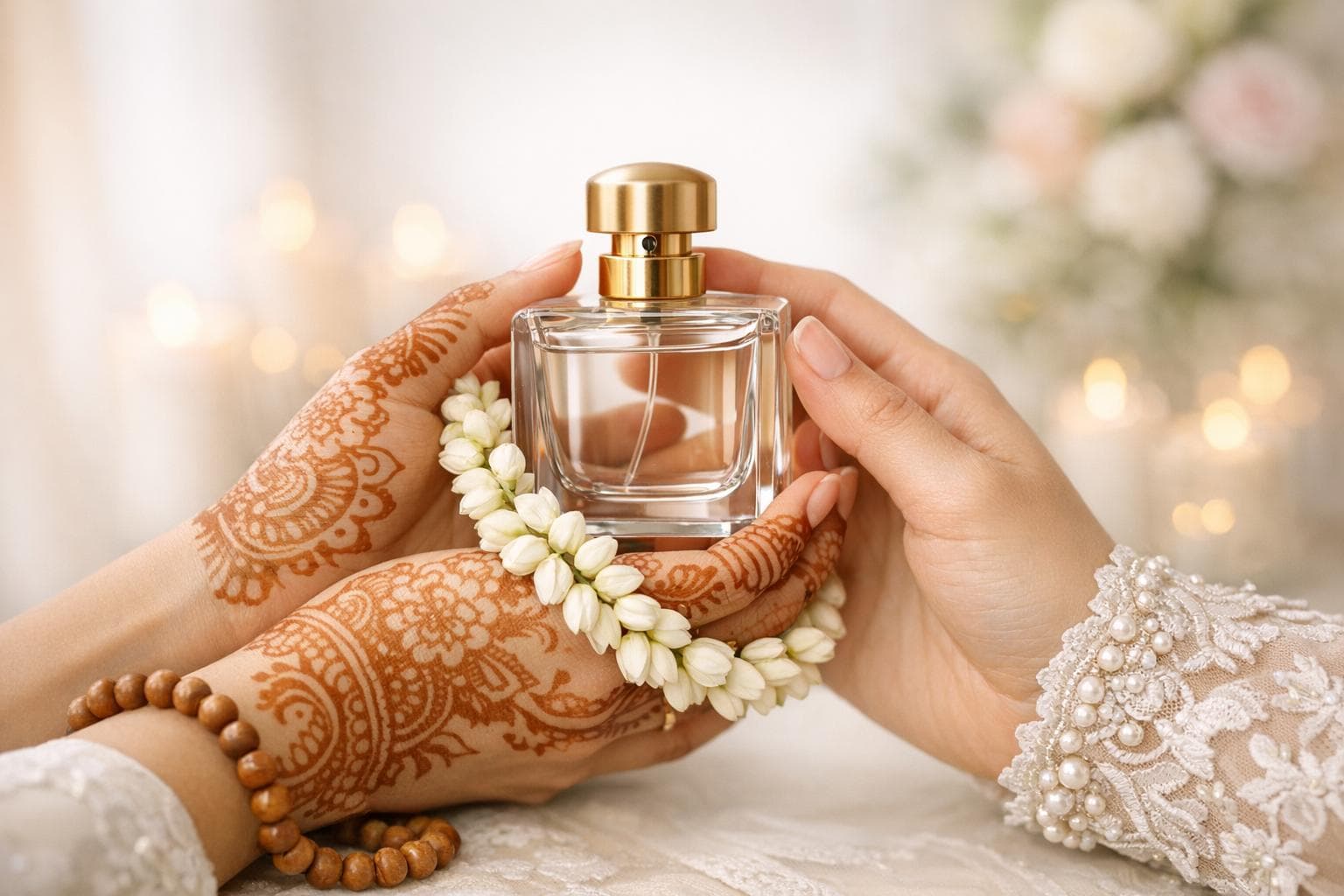
Όταν δύο οικογένειες ενώνονται σε έναν γάμο, τα αρώματα αποκτούν έναν βαθύτερο ρόλο – συνδέουν παραδόσεις και δημιουργούν ανεξίτηλες αναμνήσεις. Νότες όπως το γιασεμί, το σανδαλόξυλο, το τριαντάφυλλο και το oud συμβολίζουν την αγάπη, την ενότητα και τις ευλογίες σε διαφορετικούς πολιτισμούς. Από τις γιρλάντες και το θυμίαμα μέχρι τα επώνυμα αρώματα, η ενσωμάτωση αρωμάτων με νόημα στις τελετές απογειώνει την εμπειρία για όλους τους παρευρισκόμενους. Δείτε πώς μπορείτε να συνδυάσετε αρμονικά αυτά τα στοιχεία:
- Ανακαλύψτε Παραδοσιακά Αρώματα: Μάθετε τη συμβολική σημασία νοτών όπως το γιασεμί (γονιμότητα), το oud (πολυτέλεια) ή το άνθος πορτοκαλιάς (αγνότητα) σε διάφορες περιοχές του κόσμου.
- Δοκιμάστε Επώνυμα Αρώματα: Χρησιμοποιήστε μικρά δείγματα για να βρείτε αρώματα που αναδεικνύουν αυτές τις νότες και ταιριάζουν στην ατμόσφαιρα της εκδήλωσης.
- Εμπλουτίστε τις Σημαντικές Στιγμές με Άρωμα: Προσθέστε ευωδιές σε ιεροτελεστίες, ενδύματα και διακόσμηση για μια ολοκληρωμένη αισθητηριακή γιορτή.
- Διατηρήστε τις Αναμνήσεις Ζωντανές: Μετατρέψτε τα αρώματα του γάμου σε μια προσωπική συλλογή για να ξαναζείτε την ημέρα σε επετείους ή ξεχωριστές περιστάσεις.
Το άρωμα είναι κάτι πολύ περισσότερο από μια απλή λεπτομέρεια – είναι ένας δυναμικός τρόπος να τιμήσετε τις παραδόσεις και να δημιουργήσετε ένα οσφρητικό ταξίδι που διαρκεί μια ζωή.
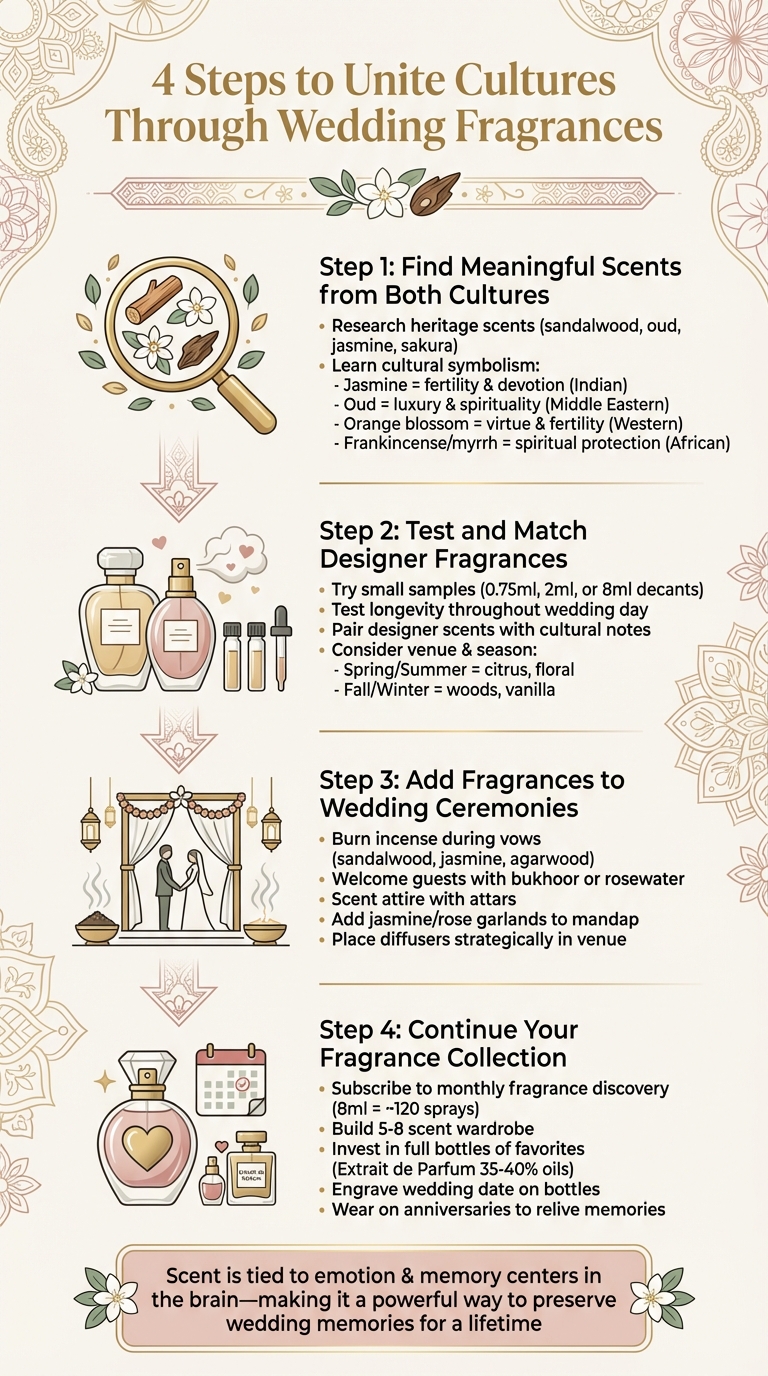
Οδηγός 4 Βημάτων για τον Συνδυασμό Πολιτισμικών Αρωμάτων Γάμου
Βήμα 1: Ανακαλύψτε Αρώματα με Νόημα και από τις Δύο Κουλτούρες
Η εξερεύνηση των παραδοσιακών αρωμάτων αποτελεί το πρώτο βήμα για να δημιουργήσετε έναν γαμήλιο εορτασμό που συνδυάζει υπέροχα διαφορετικές πολιτισμικές κληρονομιές.
Ερευνήστε τα Γαμήλια Αρώματα Κάθε Πολιτισμού
Ξεκινήστε ερευνώντας τις αρωματικές παραδόσεις κάθε κουλτούρας. Για παράδειγμα, στους γάμους της Νότιας Ασίας, το σανδαλόξυλο αποτελεί αναπόσπαστο τελετουργικό στοιχείο για περισσότερα από 2.000 χρόνια, με αναφορές που εντοπίζονται σε αρχαία βεδικά κείμενα. Στη Μέση Ανατολή, οι οικογένειες συχνά φυλούν ως πολύτιμο θησαυρό τα δικά τους μείγματα bakhoor (θυμίαμα) ή οικογενειακά attar, τα οποία περνούν από γενιά σε γενιά ως σύμβολο κληρονομιάς. Παράλληλα, τα ζευγάρια στην Ιαπωνία μπορούν να επιλέξουν το θυμίαμα kōriyama, ένα μείγμα σανδαλόξυλου και agarwood που εισήχθη με τον Βουδισμό τον 6ο αιώνα.
Μπορείτε επίσης να εστιάσετε σε βοτανικά συστατικά συνδεδεμένα με κάθε κουλτούρα. Το sakura (άνθος κερασιάς) είναι βαθιά ριζωμένο στις ιαπωνικές παραδόσεις, το oud αντανακλά τις καταβολές της Μέσης Ανατολής και το σανδαλόξυλο κατέχει κεντρική θέση στα ινδικά έθιμα. Ελέγξτε τις ετικέτες των αρωμάτων για να εντοπίσετε αυτές τις προελεύσεις – όπως το τριαντάφυλλο Μαρόκου ή το πατσουλί Ινδονησίας – για μια βαθύτερη σύνδεση με την καταγωγή σας. Η Ιαπωνέζα αρωματοποιός Satori Osawa υπογραμμίζει την πολιτισμική ιδιαιτερότητα των ιαπωνικών αρωμάτων:
«Τα αρώματα είναι ανάλαφρα και διαθέτουν ένα αρμονικό στοιχείο, καθώς η ιαπωνική κουλτούρα είναι μάλλον συγκρατημένη και προτιμά τη διακριτικότητα».
Κατανοώντας αυτές τις παραδοσιακές ευωδιές, μπορείτε να επιλέξετε αρώματα που τιμούν τις ξεχωριστές ιστορίες που εκπροσωπούν.
Μάθετε τι Συμβολίζει Κάθε Άρωμα
Τα αρώματα φέρουν μοναδικές σημασίες σε διάφορους πολιτισμούς, συμβολίζοντας συχνά αξίες ή ευλογίες. Στους γάμους της Μέσης Ανατολής, το ροδόνερο ραντίζεται στις νύφες και τους καλεσμένους ως ένδειξη αγνότητας, αγάπης και καλής τύχης. Οι ινδικές τελετές χρησιμοποιούν γιρλάντες από γιασεμί και τριαντάφυλλο για να δηλώσουν αγάπη, αφοσίωση και γονιμότητα.
Η κατανόηση του συμβολισμού πίσω από κάθε νότα διασφαλίζει ότι μπορείτε να τιμήσετε με ενσυναίσθηση και τις δύο οικογένειες. Για παράδειγμα, το σανδαλόξυλο στους ινδικούς γάμους αντιπροσωπεύει τις θεϊκές ευλογίες και την αγνότητα, ενώ το oud στις παραδόσεις της Μέσης Ανατολής αντανακλά την πολυτέλεια, τη φιλοξενία και την πνευματικότητα. Τα δυτικά έθιμα συχνά αναδεικνύουν το άνθος πορτοκαλιάς για τη σύνδεσή του με την αρετή και τη γονιμότητα. Στις αφρικανικές τελετές, το λιβάνι και το σμύρνα χρησιμοποιούνται για πνευματική προστασία και για τη σύνδεση με τους προγόνους.
Το oud, ειδικότερα, εκτιμάται ιδιαίτερα για τη σπανιότητα και την αξία του, αποτελώντας διαχρονικό σύμβολο πολυτέλειας και πολιτισμικού βάθους. Κατανοώντας αυτούς τους συσχετισμούς, μπορείτε να επιλέξετε αρώματα που εκφράζουν αυθεντικά τις ταυτότητες και τις αξίες και των δύο οικογενειών.
Βήμα 2: Δοκιμάστε και Συνδυάστε Επώνυμα Αρώματα
Έχοντας έτοιμη τη λίστα με τα παραδοσιακά αρώματα, ήρθε η ώρα να ανακαλύψετε επώνυμες δημιουργίες που απηχούν αυτές τις ξεχωριστές νότες. Ο στόχος εδώ είναι να βρείτε designer αρώματα που αντικατοπτρίζουν τα ίδια στοιχεία – χωρίς να δεσμευτείτε άμεσα με την αγορά ενός ολόκληρου μπουκαλιού.
Πειραματιστείτε με Μικρά Δείγματα από το Scento

Ξεκινήστε δοκιμάζοντας μικρά decants (διαθέσιμα σε φιαλίδια 2 ml, 5 ml και 8 ml, καθώς και σε μπουκάλι decant 30 ml για τα περισσότερα αρώματα) για να παρατηρήσετε πώς εξελίσσεται ένα άρωμα κατά τη διάρκεια της ημέρας του γάμου σας. Αυτή η προσέγγιση δοκιμής σάς επιτρέπει να βιώσετε πώς νότες όπως το σανδαλόξυλο, το γιασεμί, το τριαντάφυλλο και το oud αλληλεπιδρούν με την επιδερμίδα σας και πώς μεταβάλλονται με την πάροδο του χρόνου. Ένας γάμος είναι μια εκδήλωση μεγάλης διάρκειας και το άρωμά σας οφείλει να διαρκεί από τους όρκους μέχρι τον τελευταίο χορό. Η δειγματοληψία σάς βοηθά να αξιολογήσετε τόσο τη διάρκεια όσο και την προβολή του αρώματος, εξασφαλίζοντας ότι θα δημιουργήσει την ιδανική αύρα καθ’ όλη τη διάρκεια της ημέρας. Μόλις βρείτε μερικές υποσχόμενες επιλογές, μπορείτε να προχωρήσετε στον συντονισμό τους με τις πολιτισμικές σας παραδόσεις.
Συνδυάστε Designer Αρώματα με Πολιτισμικές Νότες
Αναζητήστε επώνυμα αρώματα που ενσωματώνουν βασικές παραδοσιακές νότες. Για παράδειγμα, ένας συνδυασμός τριαντάφυλλου και oud λειτουργεί εξαιρετικά για γάμους που συνδυάζουν παραδόσεις της Μέσης Ανατολής ή της Νότιας Ασίας. Για ινδικές τελετές, αναζητήστε αρώματα με βάση από σανδαλόξυλο ή γιασεμί για να αποτυπώσετε την ουσία των παραδοσιακών γιρλαντών και του τελετουργικού θυμιάματος.
Καθώς περιορίζετε τις επιλογές σας, λάβετε υπόψη τον χώρο της δεξίωσης και την εποχή. Τα αρώματα πρέπει να εναρμονίζονται με το περιβάλλον – επιλέξτε πιο φωτεινές, αέρινες ευωδιές για δεξιώσεις σε εξωτερικούς χώρους ή πιο ζεστές, πλούσιες συνθέσεις για εσωτερικούς χώρους. Για ανοιξιάτικους και καλοκαιρινούς γάμους, οι δροσερές νότες εσπεριδοειδών ή λουλουδιών ξεχωρίζουν, ενώ τα ξύλα ή οι gourmand πινελιές, όπως η βανίλια, ταιριάζουν ιδανικά με τις φθινοπωρινές και χειμερινές γιορτές. Η δοκιμή μικρότερων decants εξασφαλίζει ότι μπορείτε να εξισορροπήσετε την πολιτισμική σημασία με τις πρακτικές απαιτήσεις του γαμήλιου περιβάλλοντός σας.
Ο προσωπικός σας ειδικός αρωμάτων σας περιμένει
Κάντε το σύντομο κουίζ αρώματος και ανακαλύψτε αυθεντικά αρώματα designer και niche, επιλεγμένα στα μέτρα σας – εξερευνήστε τα σε decant και δείγματα των 2, 5, 8 και 30 ml, ώστε να δοκιμάσετε το καθένα πριν επιλέξετε ολόκληρο μπουκάλι.
Βρείτε το άρωμά σαςΒήμα 3: Εντάξτε τα Αρώματα στις Γαμήλιες Τελετές
Η ενσωμάτωση προσεκτικά επιλεγμένων αρωμάτων στη γαμήλια τελετή μπορεί να τιμήσει και να συνδυάσει με μοναδικό τρόπο διαφορετικές πολιτισμικές παραδόσεις.
Χρησιμοποιήστε Διαφορετικά Αρώματα σε Κομβικές Στιγμές
Το άρωμα μπορεί να διαδραματίσει έναν συμβολικό ρόλο σε καθοριστικές στιγμές της τελετής. Για παράδειγμα, η καύση θυμιάματος όπως το σανδαλόξυλο, το γιασεμί ή το agarwood κατά την ανταλλαγή των όρκων δημιουργεί μια εξαγνισμένη και ιερή ατμόσφαιρα. Όπως εξηγεί το Orris Labs:
«Τα αρώματα σηματοδοτούν ένα πέρασμα: η καύση θυμιάματος ή η χρήση αρώματος τη στιγμή των όρκων σηματοδοτεί τη μετάβαση από την εργένικη ζωή σε μια νέα, ιερή κατάσταση».
Αυτά τα αρωματικά στοιχεία μπορούν να εμβαθύνουν τη σύνδεση μεταξύ ξεχωριστών πολιτισμικών πρακτικών.
Για το καλωσόρισμα των καλεσμένων, σκεφτείτε την καύση bukhoor (αρωματισμένα κομμάτια ξύλου) στην είσοδο ή το ράντισμα των παρευρισκόμενων με ροδόνερο κατά την άφιξή τους. Αυτό δημιουργεί έναν άμεσο αισθητηριακό αντίκτυπο που διαμορφώνει τη διάθεση για τον εορτασμό. Το άναμμα agarbatti (στικ θυμιάματος) είναι μια χειρονομία με βαθύ νόημα στις ινδικές τελετές, προσελκύοντας θεϊκές ευλογίες, ενώ οι ιαπωνικοί γάμοι μπορούν να αξιοποιήσουν το agarwood για να καλλιεργήσουν ένα ήρεμο και γαλήνιο περιβάλλον.
Οι παραδοσιακές ιεροτελεστίες χρίσματος μπορούν να προσθέσουν ένα ακόμη επίπεδο πολιτισμικού βάθους. Στις παραδόσεις της Μέσης Ανατολής, η νύφη μπορεί να αρωματιστεί με συμπυκνωμένα έλαια όπως oud, μόσχο ή άνθος πορτοκαλιάς. Επιπλέον, η ανταλλαγή αρωματικών εδεσμάτων, όπως το paan με μπαχαρικά όπως το κάρδαμο, το γαρίφαλο και το μοσχοκάρυδο, μπορεί να συμβολίσει τις οικογενειακές ευλογίες και την αποδοχή. Αυτές οι ευωδιαστές παραδόσεις μπορούν να επεκταθούν άψογα στον χώρο της δεξίωσης και στα ενδύματα, δημιουργώντας μια συνεκτική εμπειρία.
Αρωματίστε τα Γαμήλια Ενδύματα και τη Διακόσμηση
Πέρα από τις ιεροτελεστίες, η ενσωμάτωση του αρώματος στον χώρο και στα γαμήλια ενδύματα εμπλουτίζει το οσφρητικό ταξίδι για όλους τους παρευρισκόμενους. Για παράδειγμα, γιρλάντες από γιασεμί και τριαντάφυλλο μπορούν να κοσμήσουν τη γαμήλια τέντα (mandap) ή να φορεθούν από το ζευγάρι, συμβολίζοντας την αγάπη και τη γονιμότητα στα ινδικά έθιμα. Σε τελετές εμπνευσμένες από την κινεζική παράδοση, τα κεριά Dragon and Phoenix εμποτισμένα με έλαιο γιασεμιού μπορούν να αντιπροσωπεύσουν την αρμονία και την ενότητα.
Για να αρωματίσετε τον χώρο, τοποθετήστε στρατηγικά διαχυτές, κεριά ή αρωματικά φυλλώματα σε όλη την αίθουσα. Ένα χειροποίητο room spray μπορεί να δημιουργηθεί αναμειγνύοντας αποσταγμένο νερό με αιθέρια έλαια (15–20 σταγόνες) και λίγη αμαμελίδα, ψεκάζοντάς το στη συνέχεια ελαφρά σε υφάσματα, διακοσμητικά στοιχεία ή εισόδους. Μπολ γεμάτα με αποξηραμένα βότανα, πέταλα και αιθέρια έλαια κοντά στις εισόδους προσφέρουν ένα διακριτικό, διαρκές άρωμα, δημιουργώντας μια εορταστική ατμόσφαιρα που μένει αξέχαστη.
Όσον αφορά τα γαμήλια ενδύματα, αντλήστε έμπνευση από τις ιαπωνικές αρωματισμένες ρόμπες ή το layering με attar της Μέσης Ανατολής. Συνδυάστε το θυμίαμα του χώρου με συμπυκνωμένα attar που εφαρμόζονται τόσο στο δέρμα όσο και στο ύφασμα. Αυτό εξασφαλίζει μια συνεπή και αξέχαστη αρωματική εμπειρία που οι καλεσμένοι θα συνδέουν με τη γιορτή για πολύ καιρό μετά το τέλος της.
Βήμα 4: Συνεχίστε τη Συλλογή των Αρωμάτων σας Μετά τον Γάμο
Τα αρώματα του γάμου σας δεν χρειάζεται να αποτελούν μια εμπειρία της μιας φοράς. Μπορούν να γίνουν διαρκή σύμβολα του δεσμού σας, ξυπνώντας πολύτιμες αναμνήσεις πολύ μετά την τελετή. Η δημιουργία μιας αρωματικής γκαρνταρόμπας που αντικατοπτρίζει την κοινή σας κληρονομιά και την εξελισσόμενη ιστορία σας είναι ένας υπέροχος τρόπος να διατηρήσετε τη γιορτή ζωντανή στην καθημερινότητά σας.
Εξερευνήστε Αρώματα Μαζί με το Scento
Κάντε την ανακάλυψη νέων αρωμάτων ένα κοινό τελετουργικό. Η Scento είναι κατάστημα λιανικής με decants και δείγματα αρωμάτων, και κάθε προϊόν διατίθεται για εφάπαξ αγορά, χωρίς καμία συνδρομή. Το Scento+ είναι η προαιρετική συνδρομή μελών της Scento: το μηνιαίο κόστος επιστρέφει εξ ολοκλήρου ως πίστωση καταστήματος, την οποία ξοδεύετε σε όποιο άρωμα θέλετε, τα μέλη έχουν 10% έκπτωση, ένα δωρεάν δείγμα σε κάθε παραγγελία, ένα δωρεάν άρωμα κάθε έξι μήνες και ένα δώρο γενεθλίων, ενώ μπορείτε να κάνετε παύση ή ακύρωση όποτε θέλετε. Κάθε φιαλίδιο των 8ml προσφέρει περίπου 120 ψεκασμούς, δίνοντάς σας έναν προσιτό τρόπο να πειραματιστείτε με αρώματα που σας εκφράζουν.
Ξεκινήστε εντοπίζοντας παραδοσιακές νότες που έχουν προσωπική ή πολιτισμική σημασία. Για παράδειγμα, το σανδαλόξυλο τιμάται για τις εξαγνιστικές του ιδιότητες στην Ινδία και την Ιαπωνία, το oud συμβολίζει την πολυτέλεια στη Μέση Ανατολή και το άνθος πορτοκαλιάς αναγνωρίζεται παγκοσμίως ως σύμβολο γονιμότητας και αρετής. Μπαχαρικά όπως το κάρδαμο, το γαρίφαλο ή το μοσχοκάρυδο – που συχνά συνδέονται με ευλογίες και αποδοχή – μπορούν επίσης να προσδώσουν βάθος στις επιλογές σας. Η αγορά decants εξαλείφει το ρίσκο της άμεσης αγοράς ολόκληρων φιαλών, επιτρέποντάς σας να ανακαλύψετε πρωτοποριακά «fusion» αρώματα χωρίς δισταγμό. Όπως σημειώνει η Jessica Kiely, Ιδρύτρια του Sensoriam:
«Το άρωμα γίνεται ένα σήμα στο νευρικό σας σύστημα ότι κάτι ιερό συμβαίνει – ακόμη κι αν αυτό είναι απλώς το να μείνετε ακίνητοι για πέντε λεπτά».
Μόλις εντοπίσετε τις νότες και τις συνθέσεις που πραγματικά σας αγγίζουν, σκεφτείτε να επενδύσετε σε μπουκάλια κανονικού μεγέθους για να επισφραγίσετε αυτές τις αναμνήσεις.
Επενδύστε σε Μεγάλα Μπουκάλια των Αγαπημένων σας Επιλογών
Όταν βρείτε τα αρώματα που λειτουργούν ως άγκυρες αναμνήσεων για τη σχέση σας, είναι η κατάλληλη στιγμή να περάσετε στα πλήρη μπουκάλια. Μια ολοκληρωμένη αρωματική συλλογή περιλαμβάνει συνήθως 5–8 αρώματα: ένα για καθημερινή χρήση, ένα για βραδινές εξόδους ή ειδικές περιστάσεις, μια εποχιακή επιλογή και μερικά για προσωπική εξερεύνηση. Για τα πιο ξεχωριστά σας αρώματα, επιλέξτε Extrait de Parfum, το οποίο περιέχει 35–40% αρωματικά έλαια, εξασφαλίζοντας μεγαλύτερη διάρκεια και πιο έντονο αποτύπωμα.
Για να κάνετε αυτά τα αρώματα ακόμα πιο ξεχωριστά, χαράξτε την ημερομηνία του γάμου σας σε κάθε μπουκάλι. Για παράδειγμα, τον Μάρτιο του 2026, ένα ζευγάρι γιόρτασε τον γάμο του στη Σικελία χαράσσοντας την ημερομηνία του γάμου του σε αρώματα από τους οίκους Creed και Maison Francis Kurkdjian. Η σωστή αποθήκευση είναι καθοριστική: φυλάξτε τα μπουκάλια σας σε δροσερό, σκοτεινό μέρος, μακριά από το ηλιακό φως και την υγρασία, για να διατηρήσετε την ποιότητά τους αναλλοίωτη. Τα περισσότερα αρώματα διαρκούν 3–5 χρόνια, ενώ τα extrait υψηλής συγκέντρωσης μπορούν να αντέξουν ακόμη περισσότερο. Φορώντας αυτά τα αρώματα στις επετείους σας, μπορείτε να μεταφερθείτε πίσω στην ξεχωριστή σας ημέρα, λειτουργώντας, όπως περιγράφει η αρωματοποιός Amandine Clerc — Marie, ως:
«μια πύλη πίσω στον χρόνο».
Συμπέρασμα
Ο συνδυασμός των παραδόσεων μέσω του αρώματος μεταμορφώνει τον γάμο σας σε μια βαθιά προσωπική γιορτή που τιμά και τις δύο κουλτούρες. Η διαδικασία είναι απλή: ανακαλύψτε αρώματα συνδεδεμένα με κάθε πολιτισμό, δοκιμάστε επώνυμα αρώματα που αναδεικνύουν αυτές τις νότες, εντάξτε τα σε κομβικές στιγμές της τελετής και διατηρήστε την εμπειρία ζωντανή στην κοινή σας πορεία.
Το άρωμα προσφέρει κάτι που η εικόνα από μόνη της δεν μπορεί να αποδώσει – λειτουργεί ως ένα αόρατο νήμα που συνδέει συναισθήματα και αναμνήσεις. Καθώς η όσφρηση συνδέεται στενά με τα κέντρα του εγκεφάλου για το συναίσθημα και τη μνήμη, το επιλεγμένο σας άρωμα γίνεται ένας δυναμικός τρόπος για να αναβιώσετε αυτές τις πολύτιμες στιγμές. Αυτή η σύνδεση όχι μόνο διατηρεί τις αναμνήσεις του γάμου σας αλλά καθοδηγεί και την εξερεύνηση των επώνυμων αρωμάτων σας.
Το Scento προσφέρει φιαλίδια 2 ml, 5 ml και 8 ml, καθώς και μπουκάλι decant 30 ml για τα περισσότερα αρώματα, ιδανικά για να δοκιμάσετε πώς αλληλεπιδρούν με την επιδερμίδα σας νότες όπως το ινδικό σανδαλόξυλο, το μεσανατολικό oud ή το ιαπωνικό agarwood. Τα φιαλίδια των 8ml είναι ιδανικά για δοκιμές σε διάφορες συνθήκες, εξασφαλίζοντας ότι θα βρείτε την τέλεια επιλογή προτού επενδύσετε σε ένα πλήρες μπουκάλι.
Μόλις ανακαλύψετε τις κατάλληλες συνθέσεις, το γαμήλιο άρωμά σας γίνεται κάτι περισσότερο από μια ανάμνηση – εξελίσσεται σε ένα ζωντανό κομμάτι της ιστορίας σας. Φορεμένο σε επετείους ή ιδιαίτερες περιστάσεις, σας ταξιδεύει αμέσως πίσω σε εκείνη την ημέρα.
Το άρωμα που επιλέγετε μετατρέπεται σε ένα διαχρονικό σύμβολο ενότητας, συνδέοντας την ομορφιά του παρελθόντος σας με την υπόσχεση του μέλλοντός σας.
Συχνές Ερωτήσεις
Πώς επιλέγουμε ένα άρωμα που τιμά και τις δύο κουλτούρες;
Όταν επιλέγετε αρώματα για έναν γάμο που τιμά δύο διαφορετικές παραδόσεις, εστιάστε σε νότες που φέρουν ουσιαστικούς δεσμούς με κάθε κουλτούρα και δένουν αρμονικά μεταξύ τους. Για παράδειγμα, μπορείτε να συνδυάσετε τη ζωντανή λουλουδάτη αίσθηση του άνθους πορτοκαλιάς, που αγαπάται ιδιαίτερα στις μεσογειακές παραδόσεις, με τους βαθιούς, ζεστούς τόνους του σανδαλόξυλου, βασικού στοιχείου στις τελετουργίες της Νότιας Ασίας. Το γιασεμί, γνωστό για την παγκόσμια απήχησή του και τη συμβολική του σύνδεση με την αγάπη, μπορεί επίσης να γεφυρώσει τα πολιτισμικά στοιχεία με απόλυτη αρμονία. Συνθέτοντας αυτές τις προσεκτικά επιλεγμένες νότες, δημιουργείτε ένα άρωμα που όχι μόνο αναδεικνύει την περίσταση, αλλά γιορτάζει επίσης την ενότητα και τις κοινές παραδόσεις και των δύο οικογενειών.
Πώς μπορούμε να χρησιμοποιήσουμε το άρωμα χωρίς να κουράσουμε τους καλεσμένους;
Κατά τον σχεδιασμό ενός γάμου, είναι σημαντικό να αξιοποιήσετε το άρωμα με τρόπο που αναβαθμίζει την ατμόσφαιρα χωρίς να υπερφορτώνει τις αισθήσεις των καλεσμένων σας. Προτιμήστε απαλά, ισορροπημένα αρώματα όπως το γιασεμί, το σανδαλόξυλο ή το τριαντάφυλλο, τα οποία προσδίδουν μια πινελιά κομψότητας χωρίς να γίνονται αποπνικτικά. Επιλέξτε διακριτικές μεθόδους, όπως τη διάχυση ενός ήπιου θυμιάματος ή τον ελαφρύ αρωματισμό σε καίρια σημεία – όπως τα τραπεζομάντιλα ή οι είσοδοι. Εφαρμόζοντας τα αρώματα με μέτρο και σε διακριτικές στρώσεις, θα δημιουργήσετε μια αξέχαστη ατμόσφαιρα, εκλεπτυσμένη και ευχάριστη για όλους.
Πόσο νωρίς πρέπει να δοκιμάσουμε αρώματα για την ημέρα του γάμου;
Η δοκιμή αρωμάτων αρκετές εβδομάδες πριν από τον γάμο σας είναι μια εξαιρετική απόφαση. Σας δίνει άπλετο χρόνο για να κατανοήσετε πώς εξελίσσεται ένα άρωμα στην επιδερμίδα σας και διασφαλίζει ότι θα επιλέξετε αυτό που αισθάνεστε απόλυτα προσωπικό και κατάλληλο για μια τόσο σημαντική στιγμή. Ξεκινώντας νωρίς, έχετε επίσης τη δυνατότητα να εξερευνήσετε μια ποικιλία επιλογών με άνεση, αποφεύγοντας κάθε πίεση της τελευταίας στιγμής.

