
Οι μάρκες αρωμάτων χάνουν ευκαιρίες. Κάθε μέρα, οι πελάτες μιλούν για αρώματα στο διαδίκτυο - συζητώντας για τη διάρκεια του αρώματος, τη συσκευασία και τις τάσεις στο TikTok, το Reddit και το Instagram. Κι όμως, πολλές μάρκες δεν δίνουν προσοχή. Το social listening αλλάζει αυτό το δεδομένο. Βοηθά τις μάρκες να αναλύουν αυτές τις συζητήσεις, να εντοπίζουν τάσεις και να κατανοούν τι πραγματικά επιθυμούν οι πελάτες.
Γιατί έχει σημασία τώρα:
- Η αγορά αρωμάτων αποτιμάται στα 52 δισ. €, και οι προτιμήσεις των καταναλωτών μεταβάλλονται γρήγορα.
- Μόνο το TikTok είδε το #PerfumeTok να φτάνει τις 5,2 δισεκατομμύρια προβολές το 2025.
- Συστατικά όπως η γκουάβα, το φυστίκι και η καραμέλα εκτοξεύθηκαν σε ενδιαφέρον κατά 1.200%, 852,5% και 764,7% αντίστοιχα.
Χρησιμοποιώντας εργαλεία όπως το ScentRadar™ και το Mentionlytics, οι μάρκες μπορούν να παρακολουθούν τάσεις, να επιβλέπουν το sentiment και να τελειοποιούν τα προϊόντα πριν από το λανσάρισμα. Δεν πρόκειται απλώς για δεδομένα - πρόκειται για τη δημιουργία αρωμάτων που αγγίζουν πραγματικούς ανθρώπους.
Ανακαλύψτε πώς να στήσετε ένα σύστημα social listening, να επιλέξετε τα κατάλληλα εργαλεία και να μετατρέψετε τα insights σε καλύτερο marketing, ισχυρότερη αφοσίωση πελατών και πιο έξυπνη ανάπτυξη προϊόντων.
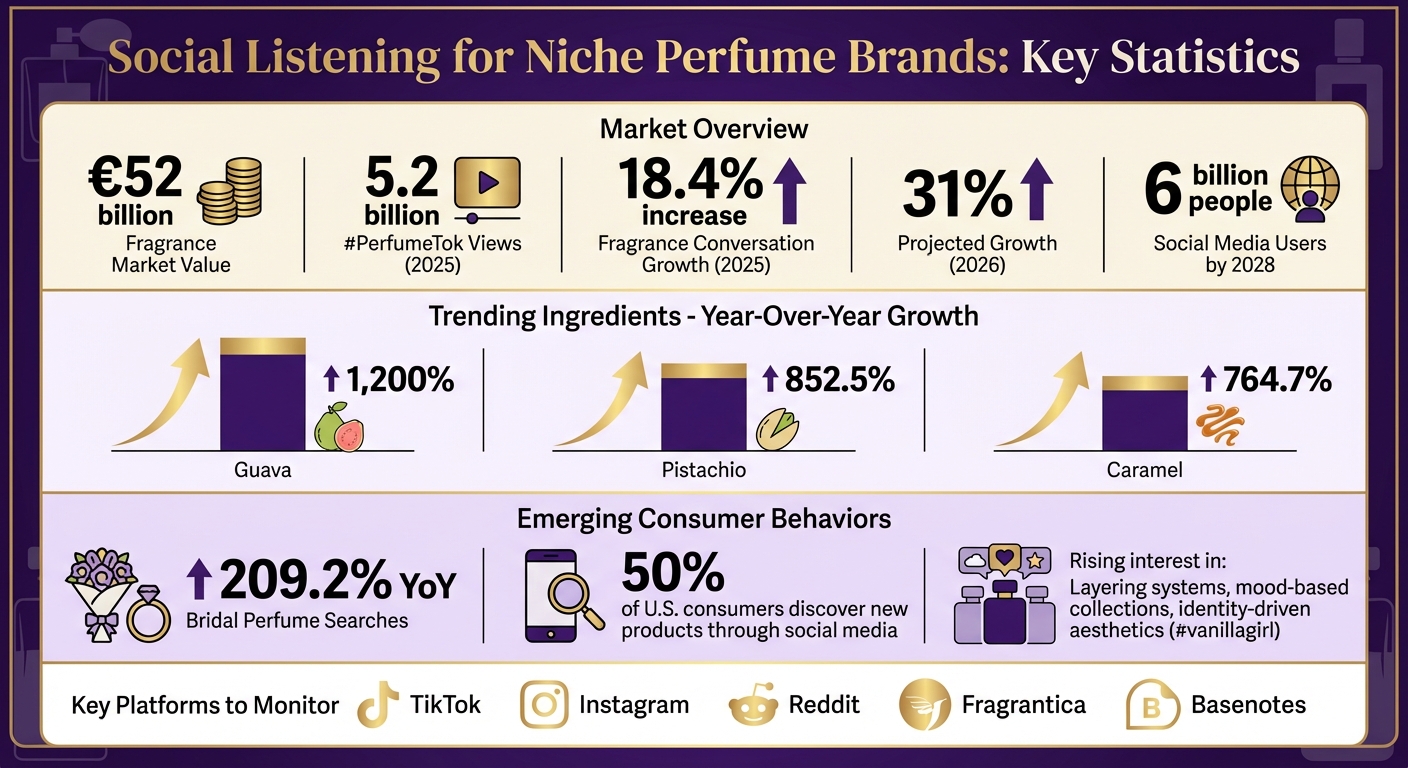
Στατιστικά Social Listening στη Βιομηχανία Αρωμάτων και Αναδυόμενες Τάσεις 2025-2026
What Is Social Listening and Why Niche Perfume Brands Need It
Το social listening υπερβαίνει την απλή παρακολούθηση hashtags ή επισημασμένων αναφορών. Περιλαμβάνει την παρακολούθηση ευρύτερων, μη επισημασμένων online συζητήσεων σε όλο το διαδίκτυο και τη διερεύνηση του γιατί πίσω από τις απόψεις των καταναλωτών. Σε αντίθεση με το social media monitoring, που εστιάζει στις άμεσες αλληλεπιδράσεις, το social listening εντοπίζει μακροπρόθεσμα μοτίβα, επαναλαμβανόμενα θέματα και τη συνολική διάθεση, αναλύοντας τι λένε οι άνθρωποι για μάρκες, προϊόντα ή ακόμη και για τάσεις του κλάδου - όχι μόνο πόσα likes ή shares συγκεντρώνει κάτι.
Ενώ η παραδοσιακή έρευνα αγοράς προσφέρει στιγμιότυπα μιας συγκεκριμένης χρονικής στιγμής, το social listening παρέχει μια δυναμική, σε πραγματικό χρόνο εικόνα, επιτρέποντας στις μάρκες να προσαρμόζονται γρήγορα στις μεταβαλλόμενες προτιμήσεις των καταναλωτών. Και σε αντίθεση με τις έρευνες που προκαλούν συγκεκριμένες απαντήσεις, το social listening αποτυπώνει ακατέργαστο, αφιλτράριστο feedback - ουσιαστικά, τι πραγματικά πιστεύουν οι άνθρωποι.
Ας πάρουμε για παράδειγμα το #PerfumeTok, το οποίο συγκέντρωσε πάνω από 5,2 δισεκατομμύρια προβολές το 2025. Αυτό αποδεικνύει τον τεράστιο ρόλο του TikTok στη διαμόρφωση των τάσεων στα αρώματα. Συζητήσεις γύρω από θέματα όπως η κουλτούρα των dupes ασκούν πίεση στις πολυτελείς μάρκες να διαφοροποιηθούν πιο ξεκάθαρα. Αυτές οι συζητήσεις συμβαίνουν είτε δίνετε προσοχή είτε όχι - το ερώτημα, λοιπόν, είναι: είστε έτοιμοι να τις αξιοποιήσετε προς όφελός σας;
Μια απλή αλλά αποτελεσματική στρατηγική είναι να παρακολουθείτε συχνά ορθογραφικά λάθη στο όνομα της μάρκας ή των προϊόντων σας. Αυτό μπορεί να βοηθήσει στην αποκάλυψη πολύτιμου feedback που ίσως διαφύγει από τις τυπικές μεθόδους αναζήτησης. Επιπλέον, η παρακολούθηση των τάσεων του sentiment με την πάροδο του χρόνου μπορεί να σας ειδοποιήσει για μια σταδιακή πτώση του ενδιαφέροντος προς τη μάρκα πριν αυτή εξελιχθεί σε μείζον ζήτημα φήμης.
Πώς το Social Listening Ωφελεί τις Niche Μάρκες Αρωμάτων
Το social listening προσφέρει στις niche μάρκες αρωμάτων insights που υπερβαίνουν τις παραδοσιακές μεθόδους έρευνας. Αποκαλύπτει ανερχόμενες τάσεις, προσφέρει feedback σε πραγματικό χρόνο για τις προτιμήσεις των καταναλωτών και καταγράφει τη γλώσσα που χρησιμοποιούν οι άνθρωποι για να περιγράψουν τις αρωματικές τους εμπειρίες.
Εντοπισμός Αναδυόμενων Τάσεων στα Αρώματα
Πρόσφατα στατιστικά αναδεικνύουν μια έκρηξη στις συζητήσεις γύρω από τα αρώματα, με αναμενόμενη αύξηση 18,4% το 2025. Συγκεκριμένα συστατικά όπως η γκουάβα, το φυστίκι και η καραμέλα παρουσιάζουν θεαματικές αυξήσεις στο ενδιαφέρον - έως και 1.200%, 852,5% και 764,7% αντίστοιχα. Παρακολουθώντας στενά πλατφόρμες όπως το TikTok, το Instagram και το Reddit, οι μάρκες μπορούν να ανταποκριθούν γρήγορα σε αυτές τις μεταβολές και να αξιοποιήσουν viral στιγμές.
Το social listening προσφέρει επίσης βαθύτερη κατανόηση των εξελισσόμενων αρωματικών κατηγοριών. Πάρτε για παράδειγμα τη βανίλια - δεν είναι πλέον απλώς μια νότα· έχει μετατραπεί σε τρόπο ζωής. Η άνοδος της αισθητικής #vanillagirl στο TikTok το αντικατοπτρίζει, με τους καταναλωτές να στρέφονται σε ιδιαίτερους συνδυασμούς όπως βανίλια με bourbon, καρύδα ή κανέλα.
"Αυτό θα είναι ιδιαίτερα σημαντικό καθώς όλο και περισσότεροι καταναλωτές έχουν πλέον σαφή εικόνα για το τι ακριβώς σημαίνουν οι συγκεκριμένες νότες και καθώς δημιουργούν όλο και μεγαλύτερες αρωματικές γκαρνταρόμπες",
εξηγεί η Mathilde Riba, Market Insights Analyst στη Spate.
Εξειδικευμένα φόρουμ όπως το Fragrantica και το Reddit αποτελούν πραγματικούς θησαυρούς για την αποκάλυψη μη συμβατικών επιθυμιών. Αυτοί οι χώροι φανερώνουν το ενδιαφέρον των καταναλωτών για μοναδικά αρωματικά προφίλ, όπως νότες που θυμίζουν σκόνη, λιωμένο κερί ή φρυγανισμένο marshmallow. Παρακολουθώντας αυτές τις συζητήσεις, οι μάρκες μπορούν να εντοπίσουν ανεκμετάλλευτες ευκαιρίες και να δημιουργήσουν αρώματα που ανταποκρίνονται σε αυτές τις niche απαιτήσεις.
Κατανόηση του Sentiment των Πελατών
Το social listening εμβαθύνει στο sentiment των καταναλωτών, προσφέροντας insights για το πώς νιώθουν οι άνθρωποι σχετικά με συγκεκριμένα συστατικά ή προϊόντα. Για παράδειγμα, οι συζητήσεις για το oud στο TikTok συχνά εστιάζουν στο αν η νότα είναι "σωστή" για το άτομο, και όχι απλώς στο αν του αρέσει.
Αυτή η προσέγγιση αποκαλύπτει και ευρύτερες συμπεριφορικές τάσεις. Μια ετήσια αύξηση 209,2% στις αναζητήσεις για bridal perfume υποδηλώνει μια αυξανόμενη επιθυμία για αρώματα συνδεδεμένα με σημαντικά ορόσημα ζωής και όχι απλώς με εποχιακές αλλαγές. Ομοίως, το αυξανόμενο ενδιαφέρον για συστήματα layering - τη χρήση συνδυασμών από αφρόλουτρα, solid perfumes και minis - δείχνει ότι οι καταναλωτές πειραματίζονται με το άρωμα με νέους, δημιουργικούς τρόπους. Αυτά τα insights επιτρέπουν στις μάρκες να σχεδιάζουν συλλογές βασισμένες σε πραγματικές συμπεριφορές αντί σε υποθέσεις.
Η παρακολούθηση του sentiment με την πάροδο του χρόνου μπορεί επίσης να λειτουργήσει ως σύστημα έγκαιρης προειδοποίησης. Μια πτώση στις θετικές αναφορές για ένα signature άρωμα μπορεί να υποδεικνύει δυσαρέσκεια με ένα reformulation ή μεταβαλλόμενες προτιμήσεις. Η έγκαιρη αντιμετώπιση τέτοιων ζητημάτων βοηθά τις μάρκες να βελτιώσουν το μήνυμά τους ή να προσαρμόσουν τις προτάσεις προϊόντων πριν τα προβλήματα κλιμακωθούν.
Παρακολούθηση Αναφορών της Μάρκας και Δραστηριότητας Ανταγωνιστών
Πέρα από τις τάσεις και το sentiment, η παρακολούθηση αναφορών της μάρκας προσφέρει τακτικά πλεονεκτήματα. Το social listening καταγράφει τόσο τις επισημασμένες όσο και τις μη επισημασμένες αναφορές σε διάφορες πλατφόρμες, δίνοντας στις niche μάρκες την ευκαιρία να ανακαλύψουν πολύτιμα insights ακόμη και από μικρότερες, παθιασμένες κοινότητες όπως το Discord ή το Reddit.
Για παράδειγμα, αν ένα άρωμα όπως το "Bianco Latte" γίνει viral στο #PerfumeTok, το social listening μπορεί να αποκαλύψει γιατί κερδίζει δυναμική - είτε λόγω της γαλακτώδους γλυκύτητάς του, της συσκευασίας του, της προσιτής τιμής του ή της υποστήριξης από κάποιον influencer. Τέτοιου είδους insights μπορούν να καθοδηγήσουν τις μάρκες στη βελτίωση των στρατηγικών αποθέματος ή στη δημιουργία συμπληρωματικών προϊόντων.
Μετρικές engagement, όπως τα ποσοστά ολοκλήρωσης βίντεο στο TikTok ή στα Instagram Reels, προσφέρουν επιπλέον ενδείξεις για το τι βρίσκει απήχηση στο κοινό. Ενδιαφέρον είναι ότι αυθεντικά, χαμηλού budget βίντεο συχνά ξεπερνούν σε απόδοση τις καλογυαλισμένες διαφημίσεις, υπογραμμίζοντας τη σημασία αυθεντικού περιεχομένου στη σύνδεση με τους θεατές.
Αυτά τα insights δεν ενημερώνουν μόνο άμεσες αποφάσεις, αλλά λειτουργούν και ως θεμέλιο για ευρύτερες στρατηγικές marketing, οι οποίες θα εξεταστούν περαιτέρω στις επόμενες ενότητες.
Εργαλεία Social Listening για Niche Μάρκες Αρωμάτων
Η επιλογή του σωστού εργαλείου social listening μπορεί να κάνει όλη τη διαφορά για τις niche μάρκες αρωμάτων. Το ιδανικό εργαλείο πρέπει να ευθυγραμμίζεται με τους στόχους σας - είτε αυτό σημαίνει αποκωδικοποίηση των συναισθηματικών αποχρώσεων στις συζητήσεις για αρώματα είτε παρακολούθηση του buzz σε ψηφιακές πλατφόρμες. Για αυτές τις μάρκες, ιδιαίτερη αξία έχουν τα εργαλεία που εντοπίζουν ανερχόμενες αρωματικές τάσεις ή μετρούν το sentiment των καταναλωτών για συγκεκριμένες νότες αρώματος.
Ακολουθούν δύο ξεχωριστά παραδείγματα που δείχνουν πώς εξειδικευμένα εργαλεία μπορούν να μετατρέψουν τα δεδομένα σε αξιοποιήσιμα insights, προσαρμοσμένα στη βιομηχανία αρωμάτων.
ScentRadar™ για Ανίχνευση Τάσεων Αρωμάτων σε Πραγματικό Χρόνο
Το ScentRadar™ έχει σχεδιαστεί για να εντοπίζει τις τάσεις στα αρώματα καθώς αναδύονται, αναλύοντας κοινωνικές και πολιτισμικές συζητήσεις σε πραγματικό χρόνο. Χρησιμοποιώντας προηγμένους αλγορίθμους AI, αποκωδικοποιεί συζητήσεις γύρω από αρωματικές νότες, βοηθώντας τις μάρκες να εντοπίζουν μετατοπίσεις στις προτιμήσεις των καταναλωτών πριν αυτές περάσουν στο mainstream. Έτσι, οι μάρκες έχουν τη δυνατότητα να προσαρμόσουν με ακρίβεια τα προϊόντα και τις στρατηγικές marketing τους ώστε να παραμένουν μπροστά από τις τάσεις.
"Το ScentRadar™ δίνει στις μάρκες τη διαύγεια για να δράσουν. Αποκαλύπτει πραγματικές ευκαιρίες στην αγορά και βοηθά στη μετατροπή των δεδομένων σε αρώματα που τιμούν το παρελθόν, μιλούν στο σήμερα και προλαμβάνουν το αύριο."
- Achim Daub, CEO της OnScent
Mentionlytics για Ολοκληρωμένη Παρακολούθηση Μάρκας
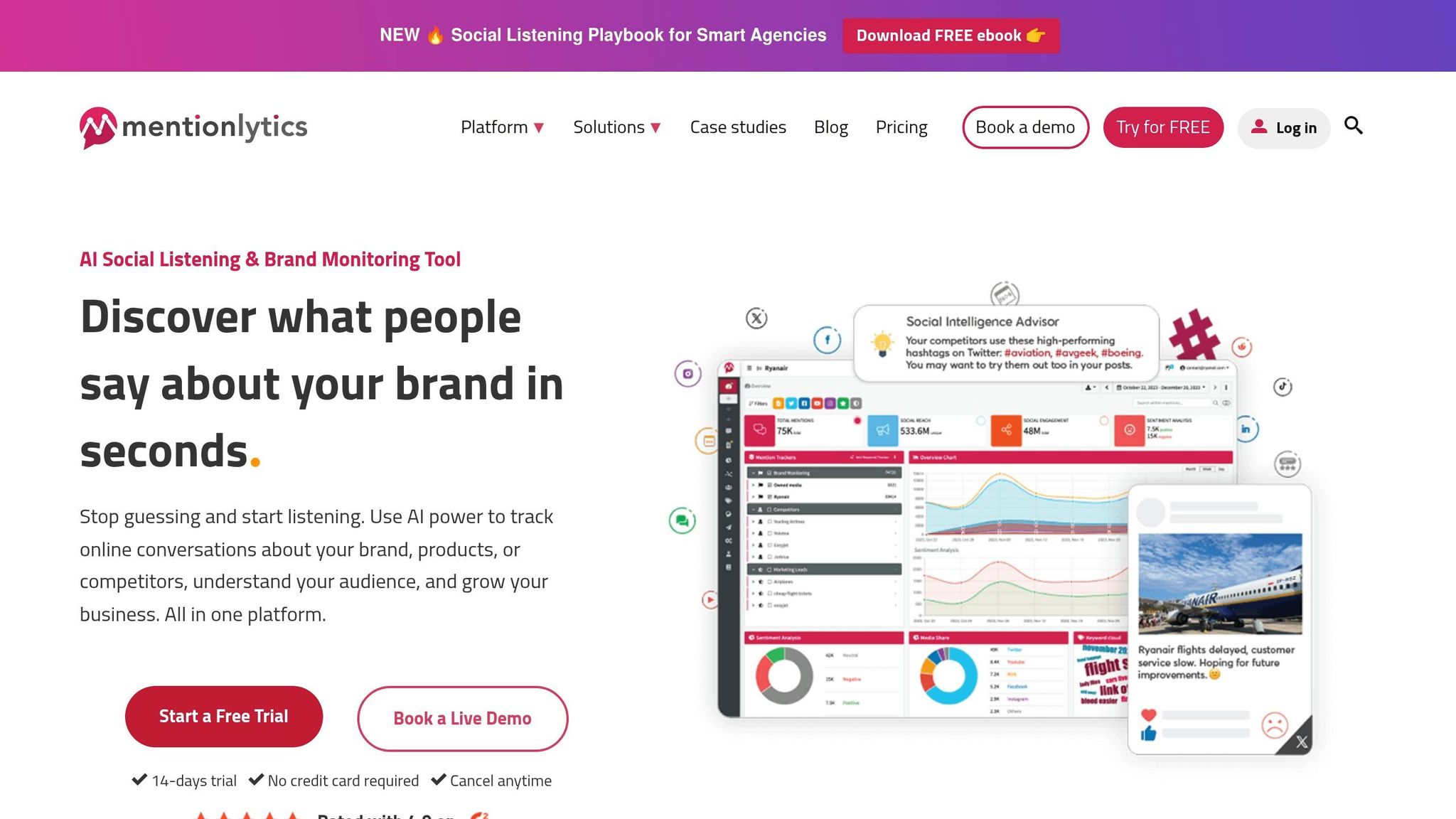
Ενώ το ScentRadar™ εστιάζει στην ανίχνευση τάσεων σε πραγματικό χρόνο, το Mentionlytics ακολουθεί μια ευρύτερη προσέγγιση προσφέροντας ολοκληρωμένη παρακολούθηση της μάρκας σε ποικίλες online πλατφόρμες. Αυτό το εργαλείο, βασισμένο σε AI, παρακολουθεί αναφορές της μάρκας σας στα social media, σε blogs, forums, reviews και ειδησεογραφικά μέσα. Ο Social Intelligent Advisor του οργανώνει τις συζητήσεις σε clusters ανά θέμα, διευκολύνοντας την κατανόηση της συνολικής εικόνας.
Το Mentionlytics προσφέρει επίσης ειδοποιήσεις σε πραγματικό χρόνο για αιχμές στον όγκο συζητήσεων, διασφαλίζοντας ότι οι μάρκες μπορούν να αντιδρούν γρήγορα σε θέματα που γίνονται τάση - ιδιαίτερα σε ταχέως κινούμενες πλατφόρμες όπως το TikTok και το Instagram. Αυτά τα insights είναι καθοριστικά για τη διαμόρφωση των ενεργειών marketing και την καθοδήγηση της ανάπτυξης προϊόντων.
Και τα δύο εργαλεία αποδεικνύουν πώς οι στρατηγικές που βασίζονται σε δεδομένα μπορούν να ενισχύσουν τη σύνδεση μιας μάρκας με το κοινό της, μετατρέποντας τα insights σε ουσιαστικές ενέργειες.
sbb-itb-fb213bc
Πώς να Ρυθμίσετε το Social Listening για Τάσεις στα Αρώματα
Καθορισμός Στόχων και Βασικών Μετρικών
Ξεκινήστε αποσαφηνίζοντας τους στόχους σας. Σκοπεύετε να εντοπίσετε την επόμενη μεγάλη τάση στα αρώματα πριν απογειωθεί; Ή προσπαθείτε να ανακαλύψετε τι λατρεύουν - ή τι δεν τους αρέσει - οι πελάτες σε συγκεκριμένα αρώματα; Η σαφής εστίαση είναι καθοριστική.
Για παράδειγμα, μπορείτε να παρακολουθείτε την ετήσια ανάπτυξη δημοφιλών νοτών όπως η βανίλια ή το matcha, να επιβλέπετε το sentiment γύρω από το πώς δημιουργείται ένα πολυτελές άρωμα και τα συγκεκριμένα συστατικά του, ή να εντοπίζετε αναδυόμενες κατηγορίες όπως "bridal perfume" ή "hair perfume". Η συζήτηση γύρω από τα αρώματα σημείωσε αύξηση 18,4% το 2025, με προβλεπόμενη ανάπτυξη 31% για το 2026. Ορισμένα συστατικά όπως η γκουάβα, το φυστίκι και η καραμέλα παρουσίασαν τεράστιες αυξήσεις - έως και 1.200%, 852,5% και 764,7% αντίστοιχα.
Εστιάστε σε μετρικές που ευθυγραμμίζονται με τις επιχειρηματικές σας προτεραιότητες. Αυτό μπορεί να περιλαμβάνει την παρακολούθηση της πορείας συγκεκριμένων νοτών, την ανάλυση των ποσοστών sentiment για αναφορές της μάρκας σας ή τη μέτρηση των ποσοστών engagement σε hashtags. Αυτές οι μετρικές δεν είναι απλώς αριθμοί - αποκαλύπτουν προς τα πού κατευθύνεται το ενδιαφέρον των καταναλωτών.
Μην περιορίζεστε μόνο στις αναφορές της μάρκας. Όπως εξηγεί η Mathilde Riba, Market Insights Analyst στη Spate:
"Αυτό θα είναι ιδιαίτερα σημαντικό καθώς όλο και περισσότεροι καταναλωτές έχουν πλέον σαφή εικόνα για το τι ακριβώς σημαίνουν οι συγκεκριμένες νότες και καθώς δημιουργούν όλο και μεγαλύτερες αρωματικές γκαρνταρόμπες".
Εμβαθύνετε στην ανάλυση sentiment για συγκεκριμένα συστατικά. Για παράδειγμα, ερωτήσεις όπως "Μου ταιριάζει το oud;" αναδεικνύουν πεδία όπου το περιεχόμενο ή η τοποθέτηση του προϊόντος σας μπορούν να καλύψουν ένα κενό. Μόλις ορίσετε τους στόχους σας, επιλέξτε εργαλεία που ευθυγραμμίζονται με τις μετρικές σας.
Επιλογή και Ρύθμιση των Κατάλληλων Εργαλείων
Αν το budget το επιτρέπει, enterprise-level πλατφόρμες όπως το Brandwatch (από 5.000 €+ τον μήνα) προσφέρουν προηγμένες λειτουργίες, συμπεριλαμβανομένης της αναγνώρισης εικόνας. Αυτό μπορεί να σας βοηθήσει να εντοπίζετε οργανικές αναφορές όπου οι χρήστες δημοσιεύουν φωτογραφίες μπουκαλιών χωρίς να κάνουν tag τη μάρκα σας. Για μικρότερα budgets, mid-market εργαλεία όπως το Mention (99 €–749 € τον μήνα) ή το Hootsuite Insights (39 €–739 € τον μήνα) παρέχουν ειδοποιήσεις σε πραγματικό χρόνο και παρακολούθηση sentiment.
Η ακρίβεια είναι καθοριστική, γι’ αυτό χρησιμοποιήστε σύνταξη Boolean search για να βελτιώσετε τα αποτελέσματά σας. Για παράδειγμα: (YourBrand OR "common misspelling") AND (recommend OR love OR "holy grail"). Αυτό θα σας βοηθήσει να εντοπίσετε advocates με υψηλή πρόθεση. Για να παρακολουθείτε μη επισημασμένες αναφορές, επιβλέπετε συγκεκριμένα emojis (✨, 🌸, 💨) σε συνδυασμό με σχετικές λέξεις-κλειδιά του κλάδου. Ρυθμίστε αυτοματοποιημένες ειδοποιήσεις για αιχμές στο αρνητικό sentiment - όπως μια αύξηση 20% μέσα σε μία ώρα - ώστε να μπορείτε να αντιμετωπίζετε γρήγορα πιθανά ζητήματα PR.
Για μάρκες που στοχεύουν γερμανόφωνες αγορές, εργαλεία όπως το Pluragraph ή το Cision ενδέχεται να προσφέρουν καλύτερα τοπικά insights από πλατφόρμες εστιασμένες στις ΗΠΑ. Αν μόλις ξεκινάτε, δωρεάν εργαλεία όπως το Google Alerts μπορούν να καλύψουν τα βασικά μέχρι να είστε έτοιμοι να επενδύσετε σε πιο προηγμένες επιλογές.
Ανάλυση Δεδομένων και Εξαγωγή Insights
Η πραγματική αξία βρίσκεται στην ερμηνεία των δεδομένων. Αναζητήστε μοτίβα σε όλες τις πλατφόρμες. Για παράδειγμα, αν το #PerfumeTok (με πάνω από 5,2 δισεκατομμύρια προβολές) δείχνει αυξανόμενο ενδιαφέρον για νότες φυστικιού ενώ το Instagram βουίζει γύρω από καραμέλα και μέλι, τότε πιθανότατα παρακολουθείτε την άνοδο μιας ευρύτερης gourmand τάσης.
Εμβαθύνετε με aspect-based analysis για να αποτυπώσετε τις λεπτές αποχρώσεις. Μια αναφορά μπορεί να αποθεώνει το αρωματικό προφίλ ενός αρώματος αλλά να επικρίνει την τιμή ή τη διάρκειά του. Αυτό το επίπεδο λεπτομέρειας σας επιτρέπει να εντοπίζετε συγκεκριμένα πεδία βελτίωσης αντί να βασίζεστε σε γενικό sentiment.
Παρακολουθείτε τις αδυναμίες των ανταγωνιστών, ακολουθώντας λέξεις-κλειδιά όπως "discontinued", "reformulated" ή "too expensive". Αυτά τα κενά μπορεί να αποτελέσουν ευκαιρίες για τη μάρκα σας. Επίσης, παρακολουθείτε τους "switchers" - πελάτες που μετακινούνται από ανταγωνιστές προς τη δική σας μάρκα - καθώς μπορούν να προσφέρουν πολύτιμα testimonials. Το social listening μπορεί ακόμη να βοηθήσει στη βελτιστοποίηση των στρατηγικών με influencers, μειώνοντας τα budgets κατά 20–40% ενώ ταυτόχρονα βελτιώνει τα αποτελέσματα.
Τέλος, δώστε προσοχή σε αισθητικές που καθοδηγούνται από την ταυτότητα. Όλο και περισσότεροι καταναλωτές χρησιμοποιούν τις social πλατφόρμες για να βρουν αρώματα που ευθυγραμμίζονται με συγκεκριμένες "προσωπικότητες" ή κοινότητες, όπως #vanillagirl ή #matchalover. Η κατανόηση αυτών των micro-communities μπορεί να βοηθήσει τις niche μάρκες να τοποθετήσουν τα προϊόντα τους πιο αποτελεσματικά και να συνδεθούν ουσιαστικά με αυτά τα κοινά. Αυτά τα insights δεν διαμορφώνουν μόνο την ανάπτυξη προϊόντων αλλά βελτιώνουν με ακρίβεια και τη στρατηγική σας στην αγορά.
Μετατρέποντας τα Insights του Social Listening σε Στρατηγικές Marketing
Αφού οι μάρκες συγκεντρώσουν insights από το social listening, το επόμενο βήμα είναι να μετατρέψουν αυτά τα δεδομένα σε αξιοποιήσιμες στρατηγικές marketing που βρίσκουν απήχηση στο κοινό τους.
Προσαρμογή των Καμπανιών Marketing στις Τάσεις
Το social listening συχνά αποκαλύπτει πώς οι άνθρωποι στην πραγματικότητα χρησιμοποιούν τα αρώματα, κάτι που μπορεί να διαφέρει από τις αρχικές προθέσεις της μάρκας. Για παράδειγμα, αν ένα άρωμα που προβάλλεται ως "ιδανικό για βραδινές ώρες" αναφέρεται συχνά σε συζητήσεις για πρωινές ρουτίνες ή συνεδρίες γυμναστηρίου, τότε ήρθε η στιγμή να επανεξετάσετε το μήνυμά σας. Προσαρμόστε τα visuals της καμπάνιας σας ώστε να αντικατοπτρίζουν αυτές τις πραγματικές χρήσεις. Αναδείξτε συγκεκριμένες αρωματικές νότες, σχέδια φιαλών ή θήκες ταξιδιού αρωμάτων ή atomizers που συγκινούν το κοινό σας, αντί να βασίζεστε σε γενικά, ενιαία για όλους μηνύματα.
Προσαρμογή των Σειρών Προϊόντων για Στοχευμένα Κοινά
Οι μακροπρόθεσμες τάσεις δεδομένων είναι πολύ πιο αποκαλυπτικές από μεμονωμένες απόψεις. Το social listening υπερέχει στην παρακολούθηση του πώς μεταβάλλονται οι προτιμήσεις με την πάροδο του χρόνου, προσφέροντας στις μάρκες την ευκαιρία να εξελίσσονται μαζί με το κοινό τους. Για παράδειγμα, αν παρατηρήσετε μειωμένο ενδιαφέρον για πιο πλούσια, βαριά αρώματα σε συνδυασμό με αυξανόμενη ζήτηση για ανάλαφρα, φρουτώδη προφίλ, αυτό είναι ένα σαφές σήμα να βελτιστοποιήσετε τη γραμμή ανάπτυξης προϊόντων σας. Επιπλέον, δώστε προσοχή στον τρόπο με τον οποίο οι πελάτες περιγράφουν τις εμπειρίες τους. Αν ένα σημαντικό τμήμα του κοινού σας ταυτίζεται με συγκεκριμένες αρωματικές "προσωπικότητες", εξετάστε το ενδεχόμενο να λανσάρετε επιμελημένες συλλογές αρωμάτων ή sample sets που εξυπηρετούν αυτές τις niche προτιμήσεις.
Όμως δεν πρόκειται μόνο για τα προϊόντα - ο τρόπος με τον οποίο αλληλεπιδράτε με το κοινό σας παίζει τεράστιο ρόλο στην οικοδόμηση αφοσίωσης.
Ενίσχυση της Αφοσίωσης των Πελατών μέσω Engagement
Η έγκαιρη αλληλεπίδραση μπορεί να αποτρέψει μικρά ζητήματα από το να εξελιχθούν σε προβλήματα φήμης. Το social listening παρέχει έγκαιρες προειδοποιήσεις όταν το sentiment γύρω από τη μάρκα σας αρχίζει να μεταστρέφεται αρνητικά - είτε λόγω επαναλαμβανόμενων marketing μηνυμάτων είτε εξαιτίας ανησυχιών για την απόδοση του προϊόντος. Αντιμετωπίστε αυτά τα ζητήματα άμεσα με διαφανή επικοινωνία και προσεκτικές προσαρμογές. Αυτή η προνοητική προσέγγιση χτίζει εμπιστοσύνη πολύ πιο αποτελεσματικά από το να προσπαθείτε εσπευσμένα να διορθώσετε προβλήματα αφού έχουν ήδη κλιμακωθεί.
Με πάνω από 6 δισεκατομμύρια ανθρώπους να αναμένεται να χρησιμοποιούν social media έως το 2028 και τους μισούς καταναλωτές στις ΗΠΑ να ανακαλύπτουν ήδη νέα προϊόντα μέσω αυτών των πλατφορμών, η ύπαρξη μιας στρατηγικής engagement βασισμένης σε δεδομένα είναι απαραίτητη. Παρακολουθείτε προσεκτικά την παρουσία της μάρκας σας σε συζητήσεις σχετικές με αρώματα. Αν εντοπίσετε κενά όπου ορισμένες ανάγκες ή προτιμήσεις δεν καλύπτονται, αξιοποιήστε αυτό το insight για να ξεχωρίσετε καλύπτοντας αυτά τα niches. Συνδέοντας τα insights του social listening με στρατηγικές ενέργειες, οι niche μάρκες αρωμάτων μπορούν να περάσουν από την απλή συλλογή δεδομένων στη δημιουργία ουσιαστικού αντίκτυπου.
Συμπέρασμα
Το social listening έχει μετακινηθεί από το στάδιο του nice-to-have και έχει καταστεί βασικό πλεονέκτημα για τις niche μάρκες αρωμάτων. Η βιομηχανία αρωμάτων εξελίσσεται ταχύτατα - τα signature scents δίνουν τη θέση τους σε συλλογές βασισμένες στη διάθεση, ενώ οι προτιμήσεις μετατοπίζονται από υπερβολικά γλυκά προφίλ σε πιο εκλεπτυσμένες επιλογές όπως boozy gourmands ή accords εμπνευσμένα από τσάι. Παρακολουθώντας ενεργά συζητήσεις σε πλατφόρμες όπως το Fragrantica, το Reddit και το Basenotes, οι μάρκες μπορούν να εντοπίσουν αυτές τις μετατοπίσεις έγκαιρα και να προσαρμοστούν πριν η αγορά κορεστεί υπερβολικά.
Αυτή η πρακτική μετατρέπει διάσπαρτα δεδομένα σε αξιοποιήσιμα insights. Είτε πρόκειται για τη βελτίωση της διάρκειας ενός αρώματος βάσει feedback από την κοινότητα, την αναγνώριση ενδιαφέροντος για μη συμβατικές νότες όπως λιωμένο κερί ή industrial accords, είτε για την τελειοποίηση των ενεργειών marketing ώστε να αντανακλούν καλύτερα τον τρόπο που οι άνθρωποι πραγματικά χρησιμοποιούν τα προϊόντα σας, το social listening γεφυρώνει το χάσμα ανάμεσα σε αυτό που επιθυμεί το κοινό σας και σε αυτό που παραδίδει η μάρκα σας.
Όταν οι μάρκες ακούν και ανταποκρίνονται, οι στρατηγικές προϊόντων και marketing τους ευθυγραμμίζονται φυσικά με τις προσδοκίες των πελατών. Η ανάπτυξη προϊόντων πρέπει να μοιάζει με διάλογο, όχι με μονόπλευρη εκπομπή μηνύματος. Συνεργαστείτε με niche influencers σε "smell sessions" κατά τη διάρκεια της ανάπτυξης, ακολουθήστε τις συζητήσεις σε forums για να εντοπίζετε τάσεις όπως η gourmand fatigue και υιοθετήστε την υποβλητική γλώσσα που χρησιμοποιούν οι πελάτες στις κριτικές για να προωθείτε τα αρώματά σας. Έτσι διασφαλίζετε ότι τα προϊόντα σας θα βρουν απήχηση στο κοινό ακόμη και πριν φτάσουν στα ράφια.
Για τους σύγχρονους καταναλωτές, ιδιαίτερα για τη Gen Z, η ηθική προέλευση και η βιωσιμότητα δεν είναι διαπραγματεύσιμες. Συζητούν ανοιχτά αυτά τα θέματα στις social πλατφόρμες, καθιστώντας κρίσιμο για τις μάρκες να ακούν και να απαντούν με διαφάνεια. Αυτό χτίζει εμπιστοσύνη με τρόπους που η παραδοσιακή διαφήμιση δεν μπορεί. Μια ολοκληρωμένη στρατηγική social listening πρέπει να υποστηρίζει ολόκληρο το marketing funnel - από τη δημιουργία lifestyle περιεχομένου για awareness έως το retargeting χρηστών που αλληλεπιδρούν με συγκεκριμένα αρωματικά προφίλ. Με αυτόν τον τρόπο, οι μάρκες μπορούν να μετατρέψουν ακατέργαστα δεδομένα από πλατφόρμες όπως το Reddit και το Fragrantica σε συγκεκριμένα βήματα που οδηγούν την αγορά.
Ξεκινήστε μικρά: ελέγξτε μία niche κοινότητα, ρυθμίστε alerts για αναφορές της μάρκας και παρακολουθήστε μία μόνο αναδυόμενη τάση. Η επιτυχία στην αγορά των πολυτελών αρωμάτων δεν εξαρτάται από το μεγαλύτερο budget - αλλά από το να ακούτε, να προσαρμόζεστε και να δημιουργείτε αυθεντικές συνδέσεις με το κοινό σας. Υιοθετώντας αυτή την προσέγγιση, θα διαμορφώσετε έναν οδικό χάρτη για να παραμένετε μπροστά σε έναν διαρκώς μεταβαλλόμενο κλάδο.
Συχνές Ερωτήσεις
Ποια είναι η διαφορά μεταξύ social listening και social monitoring;
Το social monitoring επικεντρώνεται στην παρακολούθηση συγκεκριμένων αναφορών, hashtags ή λέξεων-κλειδιών, ώστε να αντιμετωπίζονται άμεσα αλληλεπιδράσεις όπως ερωτήσεις ή παράπονα πελατών. Αντίθετα, το social listening ακολουθεί μια ευρύτερη προσέγγιση, αναλύοντας συζητήσεις, τάσεις και το συνολικό sentiment για να εντοπίζει τα ενδιαφέροντα του κοινού, ανεκπλήρωτες ανάγκες και πιθανές ευκαιρίες στην αγορά. Ενώ το monitoring είναι πιο αντιδραστικό και προσανατολισμένο σε άμεσες απαντήσεις, το listening εμβαθύνει στη στρατηγική και την ανάλυση, προσφέροντας insights που ξεπερνούν τις επιφανειακές αναφορές.
Ποιες τάσεις αρωμάτων πρέπει να παρακολουθήσω πρώτα για τη μάρκα μου;
Τα social media, και ιδιαίτερα το TikTok, έχουν εξελιχθεί σε κινητήρια δύναμη για τη διαμόρφωση των τάσεων στα αρώματα. Hashtags όπως το #PerfumeTok έχουν δημιουργήσει έναν ζωντανό χώρο όπου οι niche μάρκες μπορούν να ξεχωρίσουν μέσω ελκυστικού storytelling, ειλικρινών reviews και viral στιγμών. Ανάμεσα στις πιο ξεχωριστές τάσεις βρίσκονται οι αρωματικές γκαρνταρόμπες - συλλογές προσαρμοσμένες σε διαφορετικές διαθέσεις και περιστάσεις. Οι limited-edition κυκλοφορίες, συχνά με refillable συσκευασίες, κερδίζουν επίσης έδαφος, προσελκύοντας όσους εκτιμούν τόσο την αποκλειστικότητα όσο και τις οικολογικά συνειδητές επιλογές.
Όσον αφορά τα αρωματικά προφίλ, τα ξυλώδη και gender-neutral αρώματα κερδίζουν δυναμική, μαζί με neo-gourmand συνθέσεις που ενσωματώνουν απρόσμενες νότες όπως φυστίκι και matcha. Αυτές οι τάσεις αντανακλούν την αυξανόμενη επιθυμία των καταναλωτών για αρώματα που επιτρέπουν την προσωπική έκφραση, ενώ παράλληλα ευθυγραμμίζονται με αξίες όπως η βιωσιμότητα και η ατομικότητα.
Πώς μπορώ να μετατρέψω τα insights του social listening σε νέα αρώματα και καμπάνιες;
Για να δημιουργήσετε νέα αρώματα και καμπάνιες, εμβαθύνετε στις τάσεις και τις προτιμήσεις που αναδύονται σε πλατφόρμες όπως το TikTok και το Instagram. Παρακολουθήστε δημοφιλή hashtags όπως το #PerfumeTok και viral posts για να ανακαλύψετε θέματα όπως αρώματα εμπνευσμένα από τη διάθεση ή gender-neutral δημιουργίες. Αυτά τα insights μπορούν να διαμορφώσουν τόσο την ανάπτυξη προϊόντων όσο και τις στρατηγικές marketing.
Ενισχύστε τα λανσαρίσματα συνεργαζόμενοι με influencers, αξιοποιώντας user-generated content και τρέχοντας στοχευμένες διαφημίσεις. Αυτή η προσέγγιση διασφαλίζει ότι οι καμπάνιες συνδέονται με ενεργά κοινά και παραμένουν ευθυγραμμισμένες με ό,τι είναι τάση.

