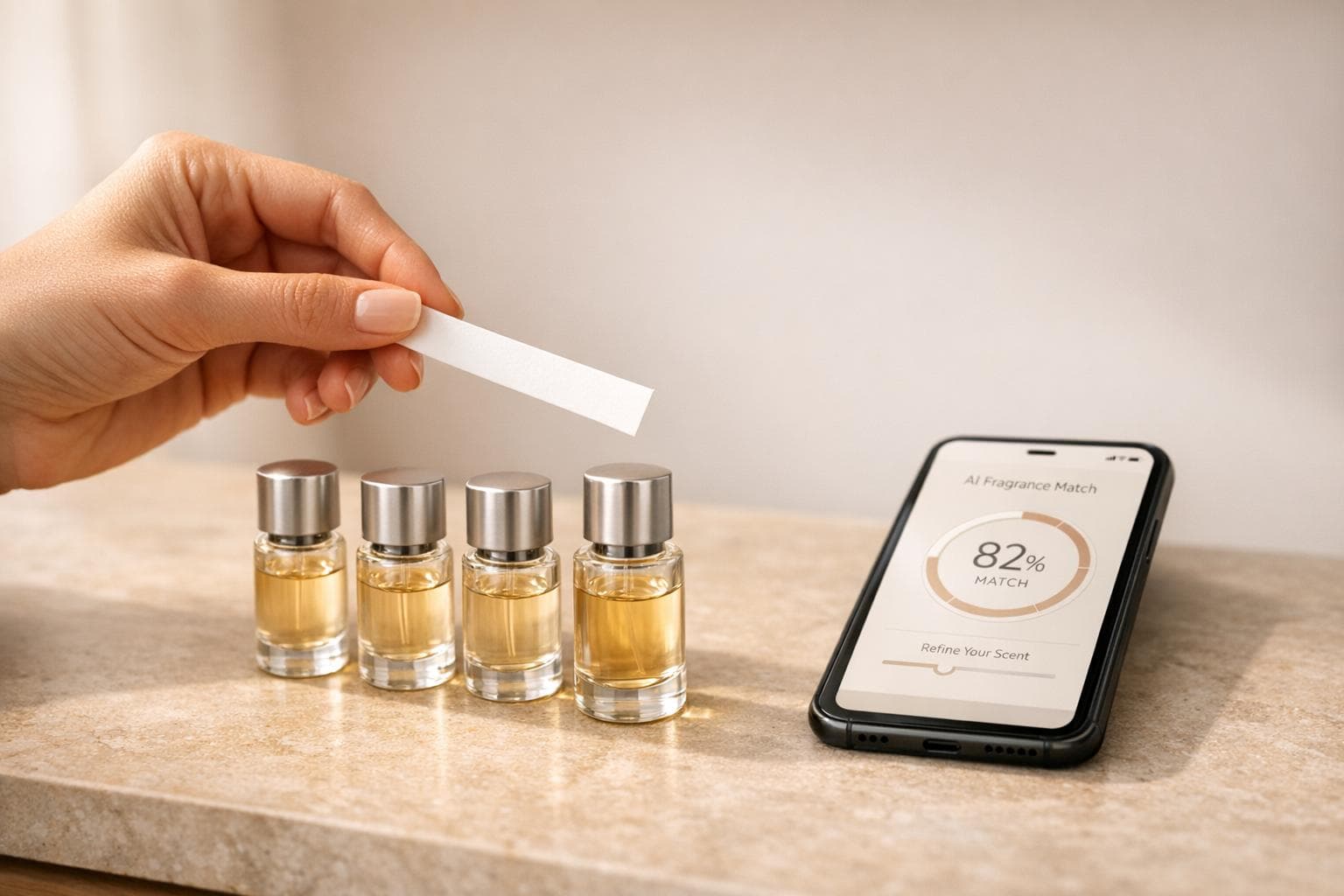
Az AI-alapú illatpárosítás leegyszerűsíti a tökéletes illat megtalálását azáltal, hogy elemzi személyes preferenciáit, például életstílusát, érzelmeit és korábbi kedvenceit. A több mint 15 000 illatot és 1 000 egyedi illatjegyet feldolgozó eszközök az Ön profiljára szabott parfümöket ajánlanak. A felhasználói visszajelzések révén idővel még pontosabbá válnak, így minden interakcióval kifinomultabb találatokat kínálnak.
Fő előnyei:
- Személyre szabott ajánlások: Az Ön preferenciáihoz, hangulatához vagy alkalmaihoz igazítva.
- Költségmegtakarítás: A mintacsomagok (már 30 € alatt) csökkentik a drága, vakon történő vásárlások kockázatát.
- Kényelem: Fedezzen fel illatokat online bármikor, az üzletekben tapasztalható nyomás nélkül.
Bár az AI kiválóan szűkíti a választékot, az illatok fizikai tesztelése továbbra is elengedhetetlen a bőrkémiából adódó különbségek miatt. Az olyan platformok, mint a Scento, dekantokat kínálnak (0,75 ml, 2 ml, 8 ml), hogy még a teljes üveg megvásárlása előtt kipróbálhassa az illatokat. A nagyobb kiszerelések bevezetésére vonatkozó tervekkel az AI-eszközök újraformálják a parfümvásárlás módját – intelligensebbé, személyesebbé és pénztárcabarátabbá téve a folyamatot.
Hogyan működik az AI-alapú illatpárosítás
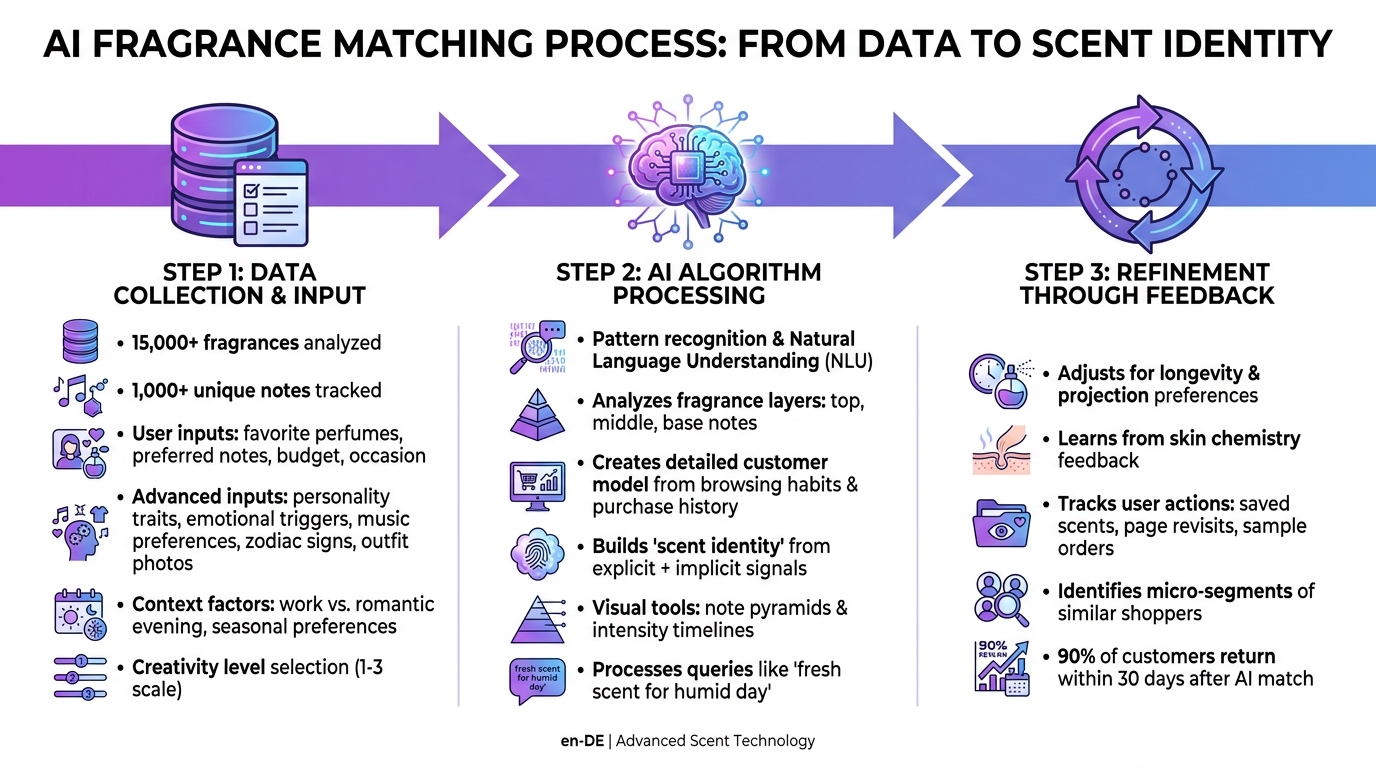
Hogyan működik az AI-alapú illatpárosítás: 3 lépéses folyamat az adatbeviteltől a személyre szabott ajánlásokig
Adatbevitel és felhasználói preferenciák
Az AI-alapú illatrendszerek hatalmas adatbázisokra támaszkodnak, amelyek több mint 15 000 illatról és 1 000 egyedi illatjegyről tartalmaznak részleteket. Ezek az adatbázisok mindent lefednek a fej-, szív- és alapjegyektől kezdve az akkordokon, illatcsaládokon és molekuláris összetételeken át.
Amikor kapcsolatba lép ezekkel a rendszerekkel, jellemzően egy digitális kérdőívet tölt ki. Ez magában foglalhatja kedvenc parfümjei, preferált illatjegyei, költségkerete vagy a keresett alkalom megosztását. Egyes rendszerek még mélyebbre mennek: pszichológiai és életstílus-adatokat elemeznek – például személyiségjegyeket, érzelmi kiváltó tényezőket vagy zenei preferenciákat –, hogy személyre szabott "Illat — DNS" profilt hozzanak létre. Mások szokatlan bemeneteket is bevonnak, például csillagjegyeket, lejátszási listákat vagy akár öltözékfotókat.
A kontextus szintén kulcsszerepet játszik. A rendszer például figyelembe veheti, hogy munkához, romantikus estéhez vagy egy adott évszakhoz keres-e illatot. Egyes platformok azt is lehetővé teszik, hogy kreativitási szintet válasszon (1-től 3-ig), amely meghatározza, hogy az AI ismerősebb illatokat javasoljon-e, vagy ritka és kísérletező illatjegyek felé kalandozzon.
E sokféle bemenet egyesítésével az algoritmusok rendkívül személyre szabott illatajánlásokat képesek nyújtani.
Hogyan készítenek ajánlásokat az AI-algoritmusok
Miután összegyűjtötte preferenciáit, az AI a szubjektív ízlést strukturált adattá alakítja az illatrétegek és kompozíciók elemzésével. Olyan eszközök segítségével, mint a mintafelismerés és a természetesnyelv-megértés (NLU), feldolgozza a bemeneteket – legyen szó kedvenc illatjegyekről, böngészési szokásokról, vásárlási előzményekről vagy konkrét kérésekről, például "friss illat párás napokra" –, hogy részletes ügyfélmodellt hozzon létre.
Az algoritmus egy "illatidentitást" épít fel az explicit bemenetek (például kedvenc márkák vagy illatjegyek) és az implicit jelek kombinálásával, mint például hogy mennyi időt tölt egy termékoldalon, vagy milyen gyakran kér mintákat.
Egyes rendszerek vizuális eszközöket is használnak, például illatpiramist és intenzitási idővonalat, hogy bemutassák, miként bontakozik ki egy illat az idő múlásával. Ezek a vizualizációk megkönnyítik az embereknek – még azoknak is, akik újak az illatok világában –, hogy megértsék egy parfüm összetételét és karakterét.
Miután az AI létrehozta a személyre szabott találatokat, a felhasználói visszajelzések alapján tovább finomítja ajánlásait.
Hogyan javítja a felhasználói visszajelzés a pontosságot
A felhasználói visszajelzés kulcsszerepet játszik az AI-ajánlások finomításában. Ha például megemlíti, hogy egy illat nem tart sokáig a bőrén, vagy nem rendelkezik a kívánt hatósugárral, az algoritmus a jövőbeli javaslatokat úgy igazítja, hogy jobban illeszkedjenek az Ön bőrkémiájához. Ez a lépés segít kezelni azokat a tényezőket, amelyeket a kérdőívek esetleg nem fednek le, például hogy egy illat miként lép kölcsönhatásba a bőrével vagy a környezeti viszonyokkal.
Az Ön tevékenységei – például illatok mentése, termékoldalak újbóli megtekintése vagy minták rendelése – szintén finom visszajelzést nyújtanak. Ezek az adatok lehetővé teszik az AI számára, hogy hasonló preferenciákkal rendelkező kisebb vásárlói csoportokat azonosítson. Egyes platformok lenyűgöző eredményekről számolnak be: a vásárlók akár 90%-a 30 napon belül visszatér, miután AI segítségével megtalálta a megfelelő illatot, ami jól mutatja e visszacsatolási körök hatékonyságát.
Az AI-alapú illatpárosítás előnyei a vásárlók számára
Személyre szabott illatfelfedezés
Az AI átalakítja az illatok felfedezésének módját azzal, hogy messze túlmutat az olyan alapvető preferenciákon, mint a "Szereti a vaníliát vagy a citrusokat?" Ehelyett ezek a rendszerek mélyebbre ásnak: elemzik életstílusát, érzelmi kapcsolódásait és illatemlékeit, hogy részletes profilt alkossanak parfümpreferenciáiról. Még az illatösszetevők molekuláris szerkezetét is vizsgálják – a fej-, szív- és alapjegyeket –, hogy előre jelezzék, miként bontakozik ki egy illat a bőrén az idő múlásával.
Ráadásul az AI-eszközök értékelik a különböző illatjegyek kompatibilitását, harmonikus keverékeket biztosítanak, és olyan rétegezési kombinációkat javasolnak, amelyek kiegészítik az Ön jellegzetes illatát. A virtuális illattanácsadók lépésről lépésre vezetik végig a folyamaton, átvágva a túl sok választási lehetőség okozta bizonytalanságon. Ez a személyre szabott megközelítés nemcsak könnyebbé teszi a tökéletes illat megtalálását – pénzt is megtakaríthat vele, miközben nagyobb rugalmasságot kínál a vásárlás módjában.
Költségmegtakarítás mintavétellel
Az AI-platformok egy lépéssel továbbviszik a személyre szabást azáltal, hogy olyan dekantcsomagokat állítanak össze, amelyekkel vásárlás előtt kipróbálhatja az illatokat. A parfümvásárlás egyik legnagyobb kihívása, amikor egy drága, teljes méretű üveg mellett köteleződik el, majd kiderül, hogy mégsem illik Önhöz. Az AI ezt úgy oldja meg, hogy az Ön egyedi profiljára szabott mintacsomagokat készít, lehetővé téve, hogy a nagyobb befektetés előtt a bőrén tesztelje az illatokat. Ez a megközelítés jelentősen csökkenti a megbánható vásárlások kockázatát.
Ezek a rendszerek figyelembe veszik az Ön konkrét környezetét is, például az éghajlatot és a használati igényeket, hogy olyan illatokat ajánljanak, amelyek jól teljesítenek az Ön számára. Ha például párás éghajlaton él, az AI tartósabb illatokat javasolhat. Az olyan platformok, mint a Scento, 0,75 ml-es, 2 ml-es és 8 ml-es dekantokat kínálnak, hozzáférést biztosítva több mint 1 000 designer illathoz pénzügyi kockázat nélkül. Egy 8 ml-es fiola akár 120 fújást is biztosít, így bőven van ideje eldönteni, valóban megfelelő-e.
"Azok a fogyasztók, akik magabiztos felfedezési útmutatás nélkül vásárolnak, gyakrabban küldenek vissza termékeket – ez pedig rontja az árrést, a bizalmat és a hosszú távú lojalitást." – Revieve
Kényelmes és rugalmas vásárlás
Az AI-platformok a kényelmet is újradefiniálják, szakértői szintű illatútmutatást kínálva bármikor és bárhol, amikor szüksége van rá. A digitális platformokon elérhető 24/7 hozzáférésnek köszönhetően nincs szükség üzletlátogatásra vagy nyitvatartási időhöz való igazodásra. A kanapéról fedezheti fel az illatokat, az üzletben tapasztalható értékesítési nyomástól mentesen.
Ezek a platformok a parfümvásárlást egyszeri tranzakció helyett folyamatos utazássá alakítják. Illatprofilja idővel fejlődik, így újra és újra visszatérhet, finomíthatja preferenciáit. Akár egy már szeretett illat, egy hangulat vagy egy konkrét alkalom alapján keres, az AI az igényeihez igazodik. A Scento például rugalmas lehetőségeket kínál, beleértve az egyszeri dekantvásárlást és a parfümönként 12,90 €-tól induló előfizetést. Bármikor lemondható, és 30 napos pénzvisszafizetési garancia is jár hozzá. Ráadásul a 75 € feletti rendelések ingyenesen kerülnek kiszállításra az EU-ban, így minden eddiginél könnyebb saját tempójában felépíteni illatkollekcióját.
Az AI-alapú illatpárosítás kihívásai és korlátai
A testkémia eltérései
Az AI kiválóan elemzi az illatjegyeket és megjósolja azokat a kombinációkat, amelyek összhangban lehetnek az Ön preferenciáival, de nem képes teljes mértékben számolni azzal az egyedi módon, ahogyan a bőre kölcsönhatásba lép egy illattal. Olyan tényezők, mint a bőr pH-értéke, természetes olajai és hőmérséklete, drámaian megváltoztathatják, hogyan fejlődik egy illat az idő múlásával. Egy citrusos illat például valakin friss és ropogós maradhat, míg máson élesnek vagy akár szappanosnak hat. Ezért az AI-ajánlásokat hasznos iránymutatásként érdemes kezelni, nem végleges válaszként – a fizikai tesztelés továbbra is kulcsfontosságú annak megállapításához, hogyan működik egy illat valóban az Ön testkémiájával.
"A legjobb illatszemélyre szabás nem váltja le az orrot – leszűkíti a mezőnyt, hogy a vásárlók csak azokat az illatokat teszteljék, amelyek valóban illenek preferenciáikhoz, bőrkémiájukhoz és felhasználási céljukhoz." - allbeauty.xyz
Az AI-találatok pontosságának javításában sokat segíthet, ha megoszt olyan részleteket, mint a bőrtípusa, a kívánt illatintenzitás és a jellemző éghajlati környezet. Itt mutatkozik meg igazán a Scento dekantméreteinek (0,75 ml, 2 ml és 8 ml) előnye: lehetővé teszik, hogy az AI által ajánlott illatokat a bőrén tesztelje anélkül, hogy egy költséges teljes üvegre kellene elköteleződnie.
A digitális kvízek korlátai
Az illatkvízek gyakran elmaradnak a várakozásoktól, mert hajlamosak széles kategóriákra összpontosítani, például "virágos" vagy "fás", miközben figyelmen kívül hagyják a finomabb árnyalatokat. Például egy illatjegy karakterét – mint a krémes vanília szemben a száraz, fás vaníliával – ritkán ragadják meg. Az illat mélyen személyes és megfoghatatlan; ami elméletben ideálisnak hangzik, viselve egészen más érzést kelthet.
További kihívás, hogy a digitális kvízek nem tudják figyelembe venni, hogyan teljesít egy illat eltérő körülmények között. Egy parfüm, amely hűvösebb időben ragyogónak hat, melegben túl intenzívvé válhat. Emellett a kvízek nehezen ragadják meg a személyes rutinok, öltözködési stílusok vagy bizonyos illatokhoz fűződő érzelmi kapcsolatok hatását. Bár az AI segíthet leszűkíteni a lehetőségeket, a végső döntés továbbra is profitál a személyes tesztelésből, hogy biztosan olyan illatot válasszon, amely valóban megszólítja Önt.
A kiskereskedelmi bevezetés kihívásai
A kereskedők is akadályokkal szembesülnek, amikor AI-t integrálnak működésükbe. Az egyik fő probléma az inkonzisztens termékmetaadat, amely megbízhatatlan ajánlásokhoz vezethet, ha az adatok nem tiszták és jól szervezettek. Ez az "adatfragmentáció" aláássa az AI-rendszerbe vetett bizalmat, és frusztrálja a vásárlókat.
Egy másik akadály a "magyarázhatósági rés". A fogyasztók kevésbé bíznak egy AI-eszközben, ha az nem tudja világosan, közérthető nyelven elmagyarázni, miért ajánlott egy adott illatot. Ahogy Maya Kensington, a Senior Beauty Tech Editor fogalmaz:
"Ha az Ön AI-alapú illateszköze nem tudja egyszerű nyelven elmagyarázni, miért tett egy ajánlást, valószínűleg még nem áll készen az ügyfelek számára".
A kisebb butikok számára az AI-eszközök bevezetésének magas költsége további akadályt jelent. Sokan külső szolgáltatókra támaszkodnak, ami korlátozza az irányítást és a testreszabhatóságot. Az AI sikeres integrálása a meglévő készletkezelési rendszerekbe és logisztikába – például a helyi teljesítésbe – olyan erőforrásokat igényel, amelyekkel a kisebb kereskedők gyakran nem rendelkeznek. E problémák kezelése elengedhetetlen ahhoz, hogy az AI teljes potenciálját kiaknázhassa az illatiparban.
Személyes illatszakértője már várja
Töltse ki rövid illatkvízünket, és fedezzen fel hiteles designer és niche parfümöket, amelyek az ízléséhez illenek – próbálja ki őket 2–8ml-es dekantokban és mintákban, hogy mindegyiket kipróbálhassa, mielőtt teljes flakon mellett dönt.
Találja meg illatátAz AI-alapú illatpárosítás jövője
Előrelépések a hiper-személyre szabásban
Az AI-alapú illateszközök túllépnek a megszokott kvízeken, és egyre összetettebb területre lépnek: életstílusbeli szokásokra, érzelmi kiváltó tényezőkre és emlékalapú adatokra fókuszálnak, hogy igazán személyre szabott ajánlásokat nyújtsanak. Ez a fejlődés elmozdulást jelez az általános javaslatoktól afelé, amit a szakértők "érzelmi szinkronizációnak" neveznek – amikor az illatok összhangba kerülnek a hangulatával, jóllétével, sőt akár a napszakkal is. Ennek lenyűgöző példája a biometrikus adatok használata. A Paco Rabanne például EEG-technológiát alkalmazott a millenniumi generáció agyi aktivitásának monitorozására, miközben a "Phantom" eau de toilette-et fejlesztette, azonosítva azokat az összetevő-kombinációkat, amelyek konkrét érzelmi reakciókat váltottak ki.
2026 elején a Charlotte Tilbury egy hat illatból álló parfümkollekciót mutatott be, köztük a "Love Frequency" és a "Cosmic Power" illatokat. Ezeket az International Flavors and Fragrances Scentcube AI-eszközével alkották meg, amelyet arra terveztek, hogy azonosítsa azokat az összetevőket, amelyek meghatározott érzelmi állapotokat idéznek elő.
Olivia Houghton, a The Future Laboratory vezető szépség- és egészségelemzője így emelte ki ezt az átalakulást:
"2026-ban ennek erősödését látjuk majd, ahogy a luxus [parfüm] márkák felgyorsítják az AI integrációját a tervezési folyamatba. [Ez] új és innovatív illatélményeket nyújt a fogyasztóknak érzelmi promptok és válaszok alapján."
Az AI jövője az illatok terén nem áll meg a személyre szabásnál. A technológia megalapozza azokat a kollekciókat, amelyek különböző alkalmakhoz, évszakokhoz és identitásrétegekhez alkalmazkodnak, minden eddiginél dinamikusabbá téve az illatválasztást.
Integráció AR- és VR-technológiával
A kiterjesztett és virtuális valóság készen áll arra, hogy még tovább emelje a személyre szabást, átformálva azt, ahogyan az illatokat megtapasztaljuk és velük interakcióba lépünk. 2026-ban az Osmo bemutatta a "Scent the Internet" projektet, amely a digitális esztétikát illatélményekké fordította. Limitált kiadású illatuk, a "Where Water Ends" uszadékfa-, pézsma- és tengeri akkordokat vonultatott fel.
Alex Wiltschko, az Osmo alapítója és vezérigazgatója így osztotta meg vízióját:
"Az illat a márka DNS-ének részévé válik, túllépve a fogyasztási termékeken, és a művészet, az élmények és a kultúra részévé lesz."
Ez egy olyan jövő felé mutat, ahol a parfümvásárlás magában foglalhatja a virtuális illatkönyvtárakba való belépést, illatok felfedezését immerzív digitális környezetekben, vagy akár az Ön preferenciáira szabott illatok közös megalkotását. Az olyan eszközök, mint az IFF ScentChat™ megoldása, már most lehetővé teszik a valós idejű együttműködést a fogyasztók és a parfümőrök között, így közvetlenül közvetítheti prioritásait, például a hangulatot, az alkalmat vagy a fenntarthatóságot.
Scento bővítési tervei
Ahogy az AI tovább finomítja az illatpárosítást, a Scento arra készül, hogy összekapcsolja a felfedezést egy gondosan válogatott illatgardrób felépítésével. Jelenleg a platform 0,75 ml-es, 2 ml-es és 8 ml-es mintaméreteket kínál, hozzáférést biztosítva több mint 1 000 designer illathoz anélkül, hogy teljes üvegekre kellene elköteleződnie. A jövőre tekintve a Scento 30 ml+ designer üvegek bevezetését tervezi, megkönnyítve az átmenetet a mintavételtől a nagyobb, átgondoltan kiválasztott illatok birtoklásáig.
Ez a megközelítés egy gyakori frusztrációra ad választ az 52 milliárd eurós illatpiacon: amikor valaki több száz eurót költ teljes üvegekre, amelyek gyakran végül használatlanul maradnak. A kisebb dekantokkal kezdve, majd a valós tapasztalatok alapján fokozatosan nagyobb üvegek felé haladva a Scento segít a fogyasztóknak jelentőségteljes kollekciót építeni. Ez a stratégia tükrözi az iparág növekvő fókuszát arra, hogy a túláradó választék helyett "jelentéssel bíró választásokat" kínáljon.
Összegzés
Az AI megváltoztatja, hogyan fedezzük fel az illatokat, intelligensebbé és személyesebbé téve az illatkeresést. Az életstílusához, érzelmeihez és preferenciáihoz igazított, adatvezérelt ajánlásokkal a költséges próbálgatás korszaka lassan a múlté.
A puszta változatosság helyett a "jelentéssel bíró választásokra" helyezett fókusz átformálja az 52 milliárd eurós illatpiacot. Az AI-eszközök másodpercek alatt össze tudják párosítani Önt niche parfümökkel, növelve mind a vásárlói elégedettséget, mind a kereskedői elköteleződést. Nem csupán időmegtakarításról van szó – hanem arról, hogy olyan illatokat találjon, amelyek valóban Önre emlékeztetnek, és magabiztosságot adnak választásaiban.
Ami korábban felsőkategóriás, személyes konzultációkat igényelt, ma már elérhető olyan AI-alapú platformokon keresztül, mint a Scento. Ezek a rendszerek precíz ajánlásokat kínálnak, új szintű szakértelmet hozva a parfümvásárlásba. A vásárlók pontosabban fogalmazhatják meg igényeiket – például "friss illat párás időre" a homályos "citrusos parfüm" helyett –, hogy jobb találatokat kapjanak. E javaslatok fizikai mintákkal való kombinálása biztosítja, hogy az illat valóban működjön a bőrkémiájával, mielőtt teljes üvegre köteleződne el. A Scento dekantlehetőségei (0,75 ml, 2 ml és 8 ml) támogatják ezt az átgondolt megközelítést, segítve egy gondosan válogatott illatgardrób felépítését. A 30 ml+ designer üvegek bevezetésének terveivel a felfedezést egyszerre teszik tudatossá és elérhetővé.
A parfümvásárlás jövője nem az érzéki élmény felváltásáról szól – hanem annak gazdagításáról személyre szabással és intelligensebb választásokkal.
GYIK
Mennyire pontos az AI-alapú illatpárosítás a bőrömön?
Az AI-alapú illatpárosítás figyelemre méltó pontosságot kínál, amely vetekszik a professzionális eszközökével. Olyan tényezők vizsgálatával, mint a kémiai összetétel és az egyéni preferenciák, az Ön igényeire szabott illatprofilokat alkot. Ez a megközelítés személyre szabott élményt biztosít, amely szépen harmonizál egyedi bőrkémiájával.
Mit érdemes megadnom a kvízben, hogy jobb találatokat kapjak?
A pontosabb illatajavaslatok érdekében osszon meg egy keveset önmagáról és preferenciáiról. Jelezze tapasztalati szintjét – akár most ismerkedik az illatokkal, akár egyre mélyülő szenvedélye van, akár tapasztalt gyűjtő. Emelje ki jelenlegi kedvenceit, és tudassa velünk, mely illatcsaládokat szereti leginkább, például a virágos, fás, citrusos vagy orientális illatokat. Ezek a részletek segítenek finomhangolni az ajánlásokat az Ön személyes ízléséhez.
Melyik Scento dekantmérettel érdemes kezdenem?
A Scento három dekantméretet kínál különböző igényekhez: 0,75 ml, 2 ml és 8 ml. A 8 ml-es opció kiváló kiindulópont azok számára, akik újak az illatok világában, vagy épp most kezdik kialakítani saját illatgardróbjukat.

