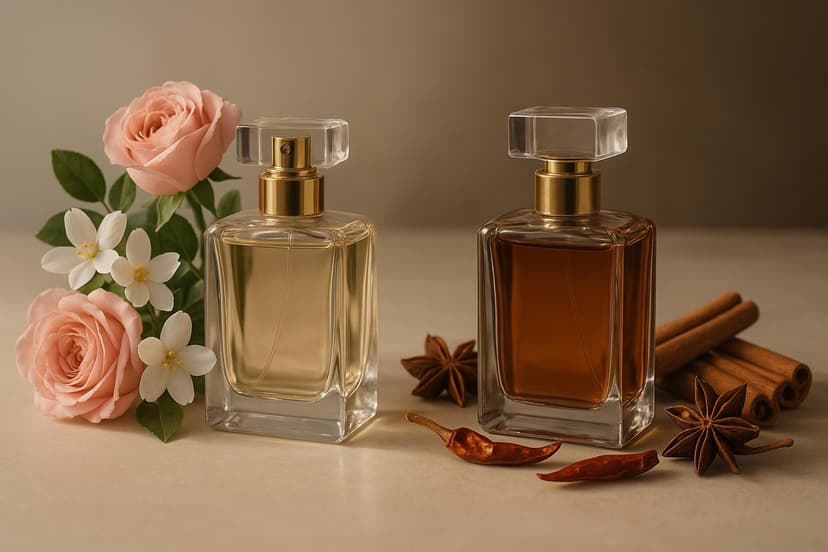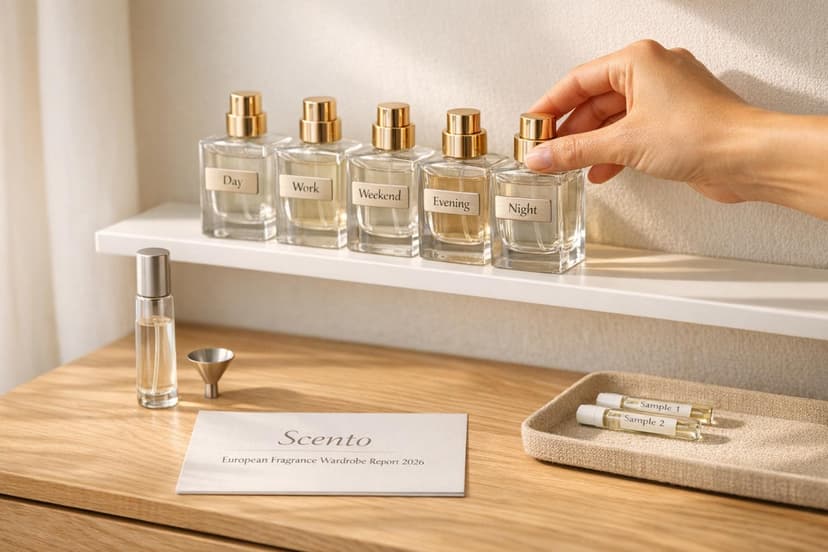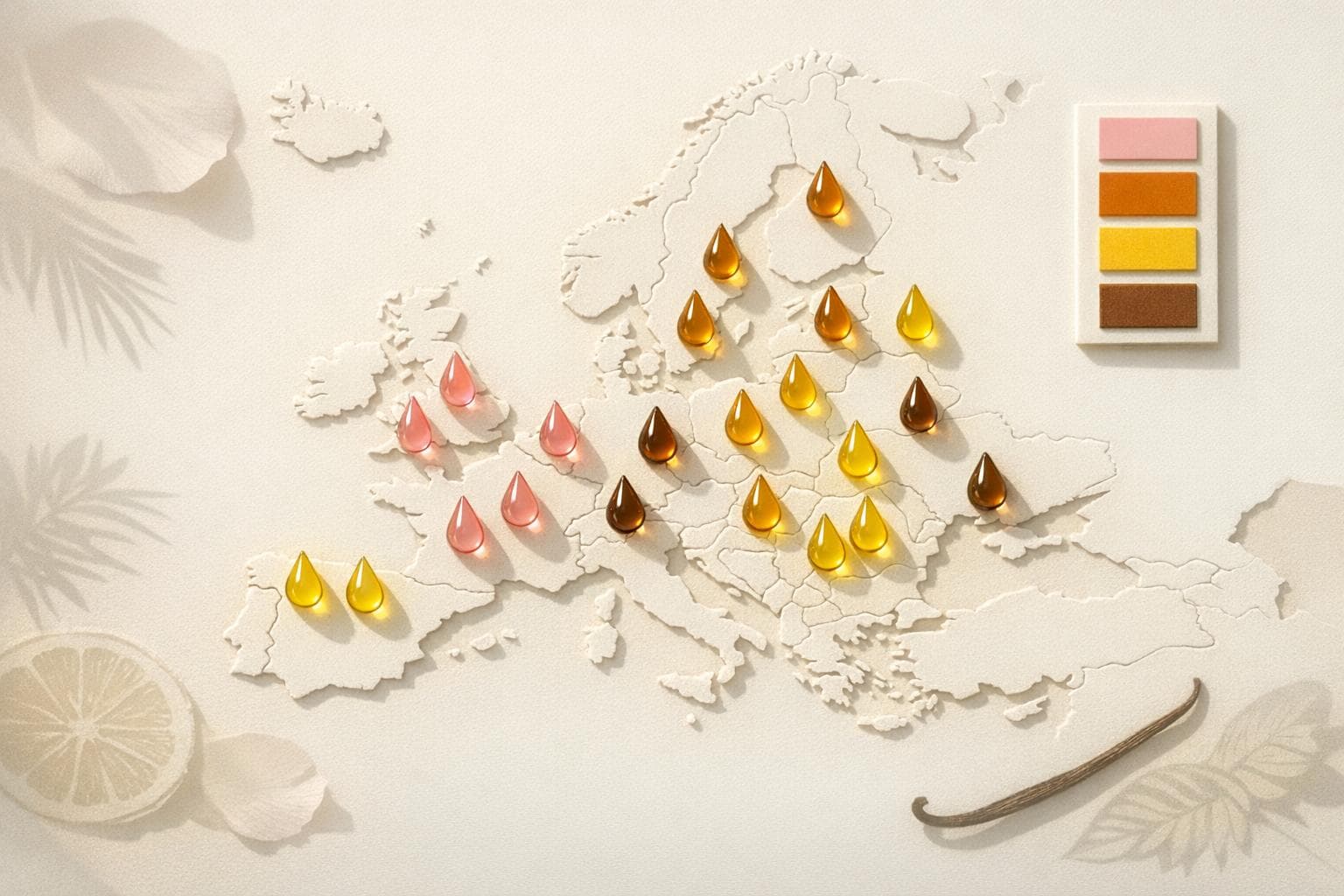
Európa 2026-os illatpreferenciái megmutatják, miként tükrözik az illatok a helyi tájakat, történelmet és hagyományokat. Franciaország grasse-i jázminjától Észtország fenyőkátrányáig minden ország jellegzetes illatjegyei mélyen kötődnek környezetéhez és örökségéhez. Főbb megállapítások:
- Virágos jegyek: Franciaország élen jár a levendula, rózsa és nőszirom terén, míg Olaszország a nerolit és a jázmint részesíti előnyben. Németország búzavirága és nefelejcse történelmi kötődéseket idéz.
- Fás jegyek: A szantálfa és a cédrusfa uralkodik, Görögország pedig őshonos fenyőket és ciprusokat is beemel. A vetiver egyre népszerűbb a sportos illatokban.
- Orientális jegyek: Franciaország a pézsmás kompozíciókat öleli magához; Olaszország a sáfrányt citrusokkal egyensúlyozza; Spanyolország a sáfrányt és az ámbrát emeli ki, mór hatásokat tükrözve.
- Citrusos jegyek: A yuzu és a bergamott újradefiniálják a citrusprofilokat, miközben az olasz és spanyol piacok a mediterrán melegséget mutatják be.
- Gourmand jegyek: A vanília, a pisztácia és a laktónos akkordok modern változatai kifinomultságot kölcsönöznek az ehető ihletésű illatoknak.
A 2026-ra 16,79 milliárd euróra értékelt európai illatpiac olyan fejlődő trendeket mutat, mint a nyáron viselt intenzívebb illatok, a gendersemleges kompozíciók és az érzelmi jóllétet támogató neuroparfüméria. Akár a fás kifinomultságot, a virágos eleganciát vagy a gourmand kényelmet kedveli, Európa illatvilága minden személyiség számára kínál valamit.
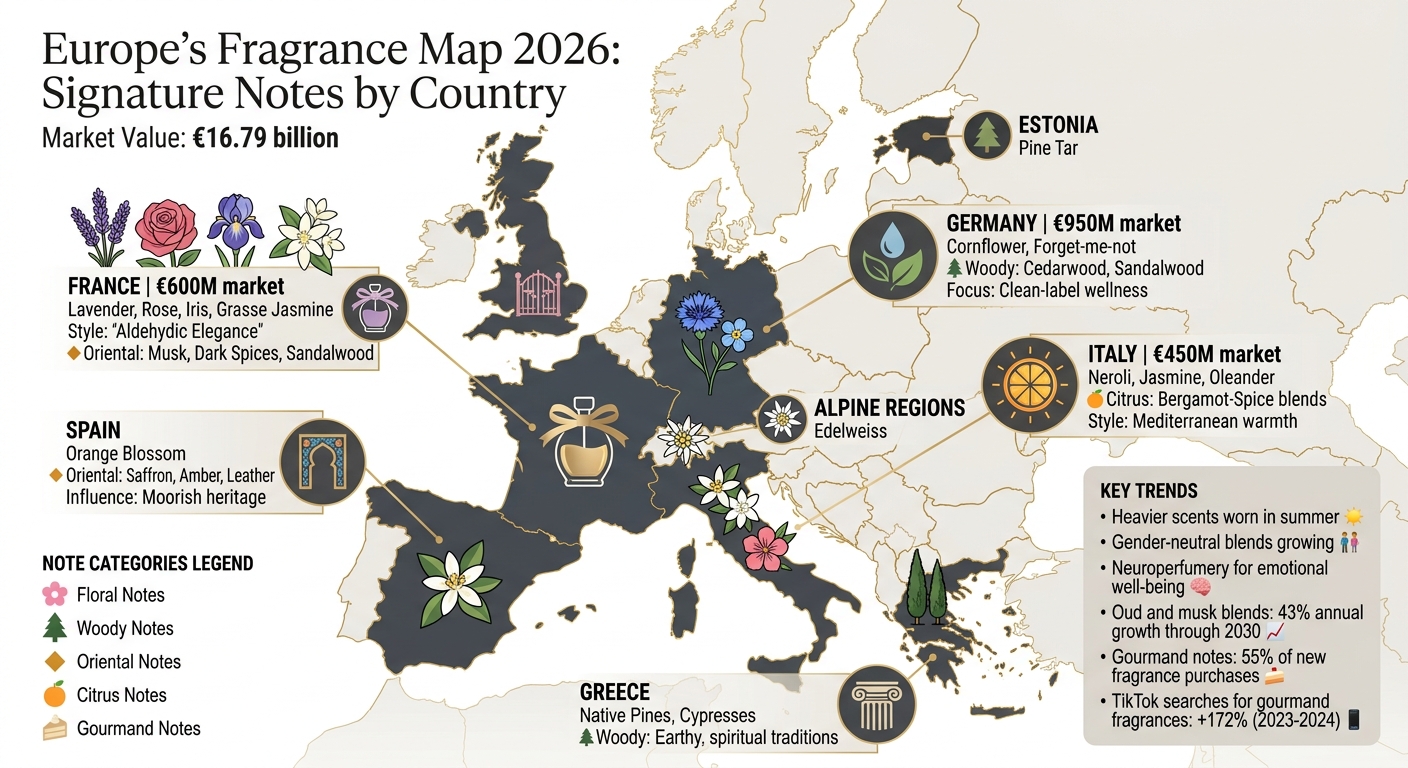
Európai illatpreferenciák országonként: legfőbb jegyek és kulturális hatások 2026
Hogyan olvassunk egy illatjegylapot (kezdők útmutatója a parfümök megértéséhez)
1. Virágos jegyek
A virágos jegyek lenyűgöző történetet mesélnek el Európa-szerte, nem csupán az ízlést, hanem a mély kulturális gyökereket is tükrözve. Franciaországban, ahol az illatpiac értéke 600 millió euró, a provence-i levendula, a rózsa és a nőszirom uralkodik. Ezek az illatok a hagyomány mélységeit hordozzák, olyan örökséget szimbolizálva, amelyet évszázadokon át gondosan őriztek. A 950 millió eurós illatiparral rendelkező Németország a búzavirág (Kornblume) és a nefelejcs (Vergissmeinnicht) felé hajlik. E választások a 19. századi porosz nacionalizmushoz kötődnek, amikor a búzavirág kékje a katonai egyenruhákat idézte. Itt a virágos jegyek többet jelentenek egyszerű illatoknál – a folklórral és az identitással átszőtt nemzeti szimbólumok.
Olaszország 450 millió eurós piaca mediterrán környezetéből merít ihletet. A neroli, a jázmin és a leander bőséggel élnek ezen a tájon, a fehér jázmin pedig különleges helyet foglal el a hagyományos olasz esküvőkön. Spanyolországban a narancsvirág egyértelmű kedvenc, az andalúz örökséget és Sevilla ikonikus narancsfáit idézve. Franciaország eközben továbbra is őrzi hírnevét a grasse-i jázmin révén, amely az „aldehides elegancia” egyik sarokköve, és ma is meghatározza a klasszikus kompozíciókat.
Az évszakok változása is meghatározó szerepet játszik a virágos preferenciák alakításában. Nyáron a „napfényes virágok”, mint a tiaré virág, a Monoï és az ilang-ilang kerülnek reflektorfénybe, felidézve a napsütötte bőr meleg, érzéki érzetét. Ahogy Yasmin Sewell, a Vyrao alapítója fogalmaz:
"A legjobb nyári érzés az, amikor az ember az óceánban van, napcsókolta és érzéki. Az olyan virágok, mint a jázmin és a vanília, sokkal tartósabbak, és azt az érzést keltik, mintha egy nyári tengerparti vakáción lenne."
Tavasszal és nyáron az olyan régiókban, mint az Egyesült Királyság és Franciaország, újra fellendülnek az „igazi” virágos jegyek, mint a rózsa és az ibolya, amelyek a nosztalgia érzetére hatnak.
A piaci trendeken túl a kulturális hagyományok erősen befolyásolják e virágos választásokat. Franciaországban az első illat 12 éves korban való megkapása beavatási rítus, amely a parfümöt a személyes identitás kulcsfontosságú részévé emeli. Németország clean-label wellnessre irányuló fókusza szemben áll az Egyesült Királyság „angol kert” ihletésű púderes virágosaival és személyre szabott illataival. E preferenciák gyakran történelmi és mitológiai gyökerekig vezethetők vissza. A rózsa például Aphrodité szent virága, a liliom pedig Hérához kapcsolódik, így az ősi tisztelet a mai ízlésben is tovább él.
Az alpesi régiók saját, különleges karaktert adnak hozzá az havasi gyopár révén, amely a bátorság és az odaadás szimbóluma. A nagy magasságban történő gyűjtés veszélyével való kapcsolata romantikus és kalandos vonzerőt kölcsönöz neki. A földrajz, a történelem és a hagyomány e finom szövedéke formálja minden európai nemzet egyedi illatprofilját.
2. Fás jegyek
Míg a virágos jegyek Európa romantikus örökségét idézik, a fás illatok földközeli, időtálló vonzerőt hoznak, amely a modern kifinomultság egyik meghatározó eleme. 2026-ban a fás jegyek adják az európai illattrendek alapját, melegséget, szerkezetet és örök eleganciát kínálva. Ahogy Frank Voelkl, a DSM — Firmenich vezető parfümőre megfogalmazza:
"Az embereket azért vonzzák a fás illatok, mert természetesnek, elegánsnak és maradandónak érződnek, szemben a trendvezérelt megoldásokkal. Nyugalmat, magabiztosságot és önbizalmat sugallnak."
A preferenciákat formáló kiemelkedő fás jegyek közé tartozik a szantálfa (sima, bőrszerű), a cédrusfa (friss, strukturált), a vetiver (földes, füstös), a pacsuli (mély, gazdag) és az oud (meleg, gyantás). A szantálfa továbbra is Európa-szerte az egyik legkedveltebb összetevő, míg a cédrusfa Franciaországban örvend különös népszerűségnek, gyakran a „frissen mosott ruha” illatprofilok részeként. A vetiver eközben egyre nagyobb teret nyer a „sportos” és „aktív” életstílushoz kapcsolódó illatokban, tükrözve a 2026-os szélesebb trendeket.
Az éghajlat jelentős szerepet játszik e preferenciák alakításában. Németországban a hidegebb telek fokozzák a cédrusfa és a szantálfa iránti keresletet, különösen az év utolsó negyedévében. Ezzel szemben az olyan mediterrán országok, mint Olaszország és Görögország, őshonos növényzetükből – például ciprusokból, fenyőkből és örökzöld tölgyekből – merítenek ihletet, helyi kötődést teremtve a fás illatokhoz. Görögországban ez a kapcsolat még mélyebb: a földes, fás illatok spirituális hagyományokhoz és a nemzeti identitáshoz is kapcsolódnak, amit a hegyvidéki táj és az olajfaligetek is formálnak.
Az európai fogyasztókat egyre inkább vonzzák a virágos-fás hibridek, amelyek kifinomult alternatívát kínálnak az Egyesült Államokban kedvelt citrusos-gourmand kombinációkkal szemben. Az oud- és pézsmaakordok például várhatóan évi 43%-os növekedést mutatnak 2030-ig, amit a gendersemleges illatok egyre növekvő népszerűsége hajt. Előre tekintve az „earthy naturalism” fogalma egyre nagyobb lendületet kap. A márkák már kísérleteznek gombaakkordokkal, gyökér- és talajjegyekkel, valamint wellnessközpontú fákkal, mint a hinoki és a cédrus az „Unwind” kollekciókban. Emellett a „boreális” illatok – fagyott nyírfanedvvel és fenyőkátránnyal – is megjelennek, hogy Észak — Európa tájait idézzék.
A regionális árnyalatok tovább gazdagítják a fás illatok világát. Az indiai szantálfát krémes gazdagságáért becsülik, míg az ausztrál szantálfa szárazabb, élesebb karaktert kínál. A haiti vetiver tiszta, zöld karakteréről ismert, szemben a jávai vetiver füstösebb összetettségével. Hasonlóképp az atlaszcédrus aromás frissességet nyújt, míg a virginiai cédrus a „ceruzahegyezék” vagy a „szivardoboz” nosztalgikus képzeteit idézi. E változatok Európa precizitás iránti elkötelezettségét és szaglásbeli identitásának hitelességét hangsúlyozzák.
3. Orientális jegyek
Az orientális jegyek 2026-ban markáns benyomást keltenek Európa illatvilágában, melegséget és érzékiséget hozva magukkal. Ez az illatcsalád olyan összetevőkre épül, mint az ámbra, a benzoé, a kardamom, a sáfrány, a vanília és a tonkabab, amelyek mind hozzájárulnak gazdag és hívogató karakteréhez. Ami az orientális illatokat igazán izgalmassá teszi, az az, hogy minden európai ország saját kulturális nézőpontján keresztül értelmezi őket.
Franciaország merész és összetett orientális alkotásaival tűnik ki. Franciaországban a parfüm éppolyan fontos kulturális szimbólum, mint a híres gasztronómia. A francia ízlés a pézsmás kompozíciók, a sötét fűszerek és a szantálfa felé hajlik, tükrözve az ország mély kapcsolatát legendás divatörökségével. Ezeket az illatokat gyakran az „aldehides elegancia” megtestesítőiként írják le, ami kifinomult és csiszolt természetüket ragadja meg. Miközben Franciaország megőrzi a merészség hagyományát, Olaszország könnyedebb, citrusokkal átszőtt megközelítést alkalmaz.
Olaszország az orientális fűszerek melegségét a mediterrán citrusok pezsdítő erejével ötvözi. A történelmi keleti kereskedelmi útvonalakból merítve az olasz parfümőrök gyakran keverik a sáfrányt bergamottal, hogy a frissesség és a mélység tökéletes egyensúlyát hozzák létre. A máshol látott nehezebb orientális stílusokkal ellentétben az olasz illatok a fűszereket inkább finom hangsúlyként, semmint uralkodó elemként használják. Ez Olaszország azon képességét tükrözi, hogy gazdag hagyományait a mediterrán életérzés vibráló esszenciájával egyesíti.
Spanyolország ismét egy sajátos nézőpontot kínál az orientális illatok terén. Spanyolország alkotásait mélyen meghatározza mór öröksége, amelyben a sáfrány, az ámbra és a bőr kulcsszerepet kap. Különösen a sáfrány kölcsönöz fényűző, fémes élű karaktert, amely mind a spanyol, mind a niche parfümériában egyre inkább védjeggyé válik. 2027 felé tekintve növekvő érdeklődés mutatkozik a rituális ihletésű illatok iránt, amelyek olyan jegyeket vonultatnak fel, mint a kopál, a kakaó és a szent boróka füstje. Ezek a kompozíciók a modern parfümériát kívánják összekötni az ősi szertartásos hagyományokkal.
| Ország | Előnyben részesített orientális jegyek | Kulturális mozgatórugó |
|---|---|---|
| Franciaország | Pézsma, sötét fűszerek, szantálfa | Divatörökség és „aldehides elegancia” |
| Olaszország | Sáfrány, bergamott-fűszer keverékek | Mediterrán vibrálás és keleti kereskedelmi útvonalak |
| Spanyolország | Sáfrány, ámbra, bőr | Mór örökség és kapcsolat az ősi rituálékkal |
Your Personal Fragrance Expert Awaits
Take our quick scent quiz to discover authentic designer and niche fragrances matched to your taste — explore them as 2–8ml decants and samples, so you can try each one before committing to a full bottle.
Find Your Scent4. Citrusos jegyek
A citrusos jegyek merész új szerepet kapnak az európai illatokban, túllépve hagyományos, gyorsan elillanó fejillat-funkciójukon. 2026-ban ez az átalakulás – az úgynevezett „elektromos citrus” – ásványos mélységet hoz, lehetővé téve, hogy a citrusok ne csupán bevezessék, hanem valóban meghatározzák egy illat identitását.
E változás egyik kiemelkedő szereplője a yuzu, az a japán citrus, amely újraformálja az elvárásokat. Tom Pendrey, az AURA Candle Bar társalapítója így emeli ki különleges vonzerejét:
"A yuzu az a citrusos jegy, amely következetesen meglepi azokat a vendégeket, akik azt hiszik, hogy már ismerik a citrusokat. Fényessége mellett szinte ásványos minősége is van."
A yuzu csípős frissessége és szinte építészeti karaktere főszerepet biztosít számára a modern illatkompozíciókban. Kiválóan párosítható élénk növényi jegyekkel, például gyömbérrel, így vibráló, energizáló illatokat teremt a mindennapokra. A yuzu e kreatív alkalmazása más megközelítéseket is inspirált, például a „szoláris maximalizmust”, amely újragondolja a narancsjegyeket túláradóan gazdag, buja formában.
A „szoláris maximalizmus” különösen jól megfigyelhető az olyan illatokban, mint Issey Miyake Lumiere D’Issey parfümje. A 2026 elején megjelent kompozíció lédús mandarinokat egyesít ragyogó narancsvirággal, megragadva egy „örömtelien ragyogó” nyár esszenciáját. Az olasz luxusmárkák is magukévá teszik ezt a trendet. Az Acqua di Parma Colonia Il Profumo Millesimato (250 €) és a Tom Ford Taormina Orange EDP (220 €) kiemelik a zöldellő, gyümölcsvezérelt profilok vonzerejét.
Az olyan mediterrán piacokon, mint Olaszország és Spanyolország, a citrusos jegyek szorosan összefonódnak a régió melegségével, tükrözve gazdag örökségét. A bergamott és a mandarin uralják ezt a „mediterrán sikk” esztétikát. Eközben az olyan klasszikus francia illatok, mint a Dior Eau Sauvage (92 € / 100 ml), megőrzik időtlen aldehides eleganciájukat. Az olasz parfümőrök szintén újítanak, a citrusokat hídként használva a frissesség és a mélység között. A Maison Francis Kurkdjian Aqua Universalis például szicíliai citromot ötvöz váratlan fűszeres árnyalatokkal, 175 €-s áron 70 ml-es kiszerelésben.
E fejlődő citrusprofilok nemcsak energiát és ragyogást visznek a nappali illatokba, hanem utat nyitnak az évszakos kompozíciók friss és váratlan felfedezéséhez is.
5. Gourmand jegyek
A gourmand jegyek újraformálják Európa illatvilágát, messze túlmutatva a korábbi évtizedek cukros egyszerűségén. 2026-ban ezek a jegyek arról szólnak, hogyan lehet az ehető ihletésű komfortot egy csipetnyi kifinomultsággal ötvözni. Gondoljon füstös vaníliára, krémes pisztáciára vagy könnyed, légies laktónos akkordokra a túlzottan édes, édességszerű illatok helyett.
A vanília továbbra is meghatározó szereplő, ám modern értelmezései korántsem egyszerűek. A füstös és fűszeres variációk mélységet és titokzatosságot visznek ebbe a klasszikus jegybe, tükrözve a „sós-gourmand” iránti növekvő érdeklődést. Ezek az illatok váratlan ehető elemeket – például fehér szarvasgombát, pirított szezámot és vajas croissant-t – vonnak be, sós csavart adva a hagyományosan édes kategóriának. A gourmand jegyeknek az illatukon túl pszichológiai vonzerejük is van: a fogyasztás megnyugtató hatását utánozva dopamint szabadítanak fel és csökkentik a kortizolszintet – valódi „szaglásbeli komfortétel” élményt teremtve.
A pisztácia és a laktónos akkordok szintén a gourmand világának feltörekvő csillagai. A krémes, enyhén sós karakterű pisztácia visszafogott eleganciája miatt vált kedvenccé. Ezzel egy időben a laktónos jegyek – mint a zabtej és a habos cukormáz – puha, légies minőséget adnak, amely egyszerre megnyugtató és kifinomult.
Az olyan népszerű gourmand illatok, mint a That Girl | Viral Vanilla és a Strawberry Sensation, körülbelül 52 €-ba kerülnek, míg a trendi body mist-ek ára 25 és 37 € között mozog.
A regionális preferenciák rámutatnak a gourmand irányzat sokszínűségére. Olaszországban a vérnarancsos és bergamottos gourmand illatok tükrözik az ország citrusok és tengerparti hatások iránti szeretetét. Spanyolország eközben a „Saffron Gold” profilok felé hajlik, a sáfrányt keserűnaranccsal ötvözve a luxus érintéséért. Nyugat — Európában a gourmand illatok uralják a piacot. Már 2018-ban is az Egyesült Királyság illatpiacának 74%-át, Franciaországban pedig 68%-át tették ki. 2026-ra a gourmand jegyek várhatóan az új illatvásárlások 55%-át hajtják majd. Még a TikTok is zsong: a „gourmand fragrances” kifejezésre végzett keresések 172%-kal ugrottak meg 2023 és 2024 között.
Az illatok évszakokhoz kötött határai szintén elhalványulnak. Christophe Laudamiel, az Osmo munkatársa megfigyeli:
"A parfümrajongók nyáron is nehéz illatokat viselnek, télen pedig friss illatokat."
Ez a változás azt jelenti, hogy a gazdag, meleg jegyek, mint a vanília és az ámbra, már nem csupán a hidegebb hónapok sajátjai, miközben a trópusi illatok, például a kókusz és a mangó, jóval túlmutatnak a nyáron. A gourmand világ fejlődése újraírja a szabályokat, és egész éven át végtelen lehetőséget kínál az illatok szerelmeseinek.
Összegzés
2026-ra Európa illatvilága kultúráinak és történelmének vibráló tükörképévé válik. Franciaország továbbra is a parfümörökségében gyökerező pézsmás és fűszeres illatokat öleli magához, míg Olaszország a pezsdítő citrusokat mediterrán melegséggel egyesíti. Az Egyesült Királyság hű marad „angol kert” ihletésű virágos hagyományaihoz, míg az olyan országok, mint Németország és Románia, a szantálfához és cédrushoz hasonló fás jegyek felé fordulnak.
A 2026-ra előrejelzések szerint 16,79 milliárd eurót elérő európai parfümpiac jelentős átalakulásokon megy keresztül. Az évszakos illatpreferenciák változnak: a nehezebb illatok megjelennek nyáron, míg a könnyedebb, frissebb opciók télen nyernek népszerűséget. A neuroparfüméria térnyerése szintén átalakítja az iparágat, olyan illatokat kínálva, amelyeket a fókusz erősítésére vagy a jobb alvás támogatására terveztek. Ahogy Judith Gross, az IFF kommunikációs és márkaépítési alelnöke ékesszólóan fogalmaz:
"Az öröm már nem felszínes dolog; pszichológiai szükségletté vált... olyan illatokkal, amelyeket meghatározott érzelmi vagy kognitív előnyök mentén terveznek."
E változások növelik az olyan illatok iránti keresletet, amelyek egyszerre szolgálják az érzéki élvezetet és az érzelmi jóllétet. A „csendes illat” irányzata – finom, bőrhöz simuló kompozíciókkal, pézsmákkal, lágy fákkal és krémes laktónos jegyekkel – a visszafogott elegancia iránti vágyat hangsúlyozza a merész, figyelemfelkeltő illatokkal szemben. Hasonlóképpen a szolifragranciák és a bőrápolási előnyökkel bíró hibrid parfümök növekvő népszerűsége is azt a vágyat tükrözi, hogy a fogyasztók átgondolt, személyre szabott élményekhez jussanak, összhangban a korábban tárgyalt regionális illatpreferenciákkal.
A Scento arra invitálja Önt, hogy fedezze fel ezeket a fejlődő trendeket a több mint 1 000 dizájner illatot felvonultató, gondosan válogatott kollekciójával, amely 2 ml-es, 5 ml-es és 8 ml-es kiszerelésekben érhető el. Legyen szó a francia kifinomultság vonzerejéről vagy a mediterrán könnyedség frissességéről, a Scento személyre szabott ajánlásokat és opcionális havi előfizetést kínál, már parfümönként mindössze 12,90 €-tól, így könnyedén rátalálhat az ízléséhez leginkább illő illatokra.
Európa illattérképe megmutatja, mennyire mélyen kapcsolódik az illat az identitáshoz, az emlékezethez és a helyhez. E trendek feltárásával Ön is felfedezheti, mely kulturális narratíva rezonál leginkább a saját történetével.
GYIK
Hogyan határozza meg a Scento az egyes országok legfontosabb illatjegyeit?
A Scento az egyes országok illatpreferenciáit kulturális hatások, éghajlati tényezők és történelmi illattrendek összetett vizsgálatával tárja fel. A több mint 350 illatjegyet tartalmazó adatbázis segítségével a Scento elemzi a különböző illatcsaládok, egyes jegyek és fogyasztói trendek népszerűségét. Ez a megközelítés biztosítja, hogy a kiválasztott jegyek összhangban legyenek az adott régió egyedi identitásával – például az élénk citrusok a melegebb éghajlatokhoz vagy a mély fás tónusok a hűvösebb területekhez – tökéletesen illeszkedve a helyi ízléshez és a mindennapi életstílushoz.
Mi a különbség a fás, orientális, citrusos, virágos és gourmand jegyek között?
A fás jegyek melegséget és mélységet hordoznak, gyakran olyan aromákkal, mint a szantálfa, a cédrusfa és az oud. Földes, stabilitást sugárzó karakterük van. Az orientális jegyek ezzel szemben gazdagok és bőségesek, a fűszerek, a vanília és az ámbra keverékével érzéki és fényűző hatást keltenek. A citrusos jegyek frissítő, csípős ragyogást adnak, a citromhoz és bergamotthoz hasonló elemekkel ropogós, élénk karaktert teremtve. A virágos jegyek a rózsa és a jázmin eleganciájára épülnek, friss és gyakran romantikus érintést kínálva. Végül a gourmand jegyek a desszertek világát idézik, a vanília, karamell és csokoládé árnyalataival édes és megnyugtató aromákat alkotva. E kategóriák együtt határozott és emlékezetes illatprofilokat formálnak.
Hogyan válasszak illatot az európai éghajlathoz és évszakhoz?
Illatválasztáskor érdemes figyelembe venni, hogy az időjárás és az éghajlat miként befolyásolhatja annak teljesítményét. A melegebb hónapokban a könnyed, friss és citrusalapú jegyek ragyognak igazán, ropogós és élénkítő érzetet nyújtva. Ezzel szemben a hidegebb évszakok tökéletesek a fás, fűszeres vagy gourmand illatokhoz, amelyek melegséget és mélységet adnak. A hőség felerősítheti az illatot, hangsúlyosabbá téve azt, míg a hűvösebb hőmérséklet lágyíthat rajta. Ha az illatát az évszakhoz igazítja, nemcsak annak vonzerejét emeli ki, hanem azt is biztosítja, hogy harmonikusan illeszkedjen az Önt körülvevő atmoszférához.