Az olasz parfümipar 2026-ban az évszázados kézműves hagyományokat ötvözi a modern fogyasztói trendekkel, és eléri a 2,15 milliárd eurós piaci értéket. A főbb kiemelések:
- A luxusszegmens növekedése: értéke 2024-ben 1 028,1 millió euró volt, és várhatóan 2030-ra 1 457,0 millió euróra nő 6%-os CAGR mellett.
- Művészi parfüméria: 450 millió eurót képvisel, és a vállalkozások 53%-a árbevétel-növekedést prognosztizál 2026-ra.
- Demográfia: a Z generáció és a millenniálok (19–35 évesek) mozgatják a keresletet, különösen a niche és uniszex illatok iránt.
- E-kereskedelem: a független márkák értékesítésének több mint 30%-a online platformokról származik.
- Export: a termelés 41%-át exportálják, elsősorban Európa, az Egyesült Államok, Kína és az Öböl-térség piacaira.
Olaszország kézműves megközelítése, a természetes esszenciákra való támaszkodása és a kis szériás gyártásra helyezett hangsúlya biztosítja folyamatos befolyását a globális luxus- és niche illatpiacokon.
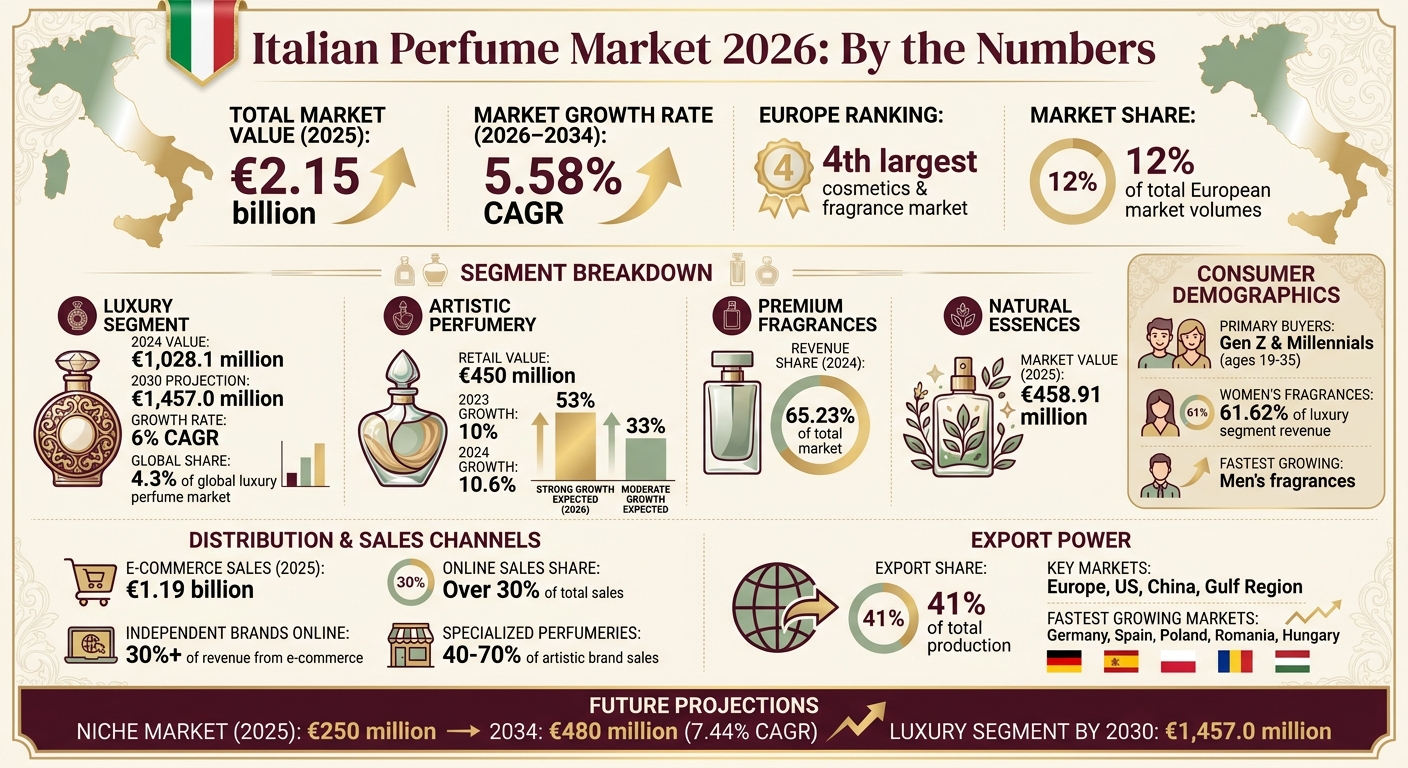
Olasz parfümpiaci statisztikák 2026: fő számok és növekedési trendek
Az olasz parfüméria öröksége
Az olasz illatkészítés történelmi fejlődése
Az olasz parfüméria gazdag múltra tekint vissza, gyökerei egészen 1221-ig, az Officina Profumo — Farmaceutica di Santa Maria Novella megalapításáig nyúlnak vissza. Ez az ikonikus intézmény nemcsak úttörő szerepet játszott az illatkészítési technikák fejlesztésében, hanem a reneszánsz idején az innováció egyik fáklyavivőjévé is vált. Figyelemre méltó módon ma is működik, megőrizve azokat a módszereket, amelyek több mint nyolc évszázada formálják ezt a mesterséget. A reneszánsz idején Olaszország az illatinnováció központjává emelkedett, ahol a parfümkészítők a "négy testnedv elmélete" alapján alkottak illatokat, és olyan regionális kincseket használtak, mint a kalábriai bergamott és a toszkán nőszirom.
E hagyaték hívta életre azt, amit gyakran "il senso del bello"-ként emlegetnek – a szépség olasz érzékét, amely áthatja a mindennapi életet. Ahogyan Sebastián Alvarez Murena, az Eau d’Italie társalapítója ékesszólóan megfogalmazza:
"Az "il senso del bello", a szépség érzéke, valami olyasmi, ami a mindennapi életet irányítja Olaszországban, és ugyanolyan valódi súlya és értéke van, mint mondjuk az erkölcsi vagy gazdasági tényezőknek."
Ez a kulturális elkötelezettség a szépség és a kézműves kiválóság iránt megszilárdította Olaszország helyét Franciaország mellett mint a luxusparfüméria globális vezetője. 2024-re az előrejelzések szerint Olaszország a globális parfümpiaci árbevétel 3,9%-át adja majd.
Ez a maradandó örökség táplálja az olasz kézműves illatszektor erejét, amely 2023-ban lenyűgöző 10%-os, 2024-ben pedig 10,6%-os növekedést ért el. A közgazdászok ezt gyakran az anticiklikus ellenálló képesség példájaként emelik ki. A globális divatkonszernek terjeszkedése ellenére számos kis- és középvállalkozás méretű olasz márka megőrizte kézműves gyökereit, biztosítva, hogy gazdag történelmük továbbra is alakítsa identitásukat és termelésüket.
Kézműves gyártási módszerek
Az olasz parfüméria ma is szorosan kötődik történelmi gyökereihez, a modern házak pedig minden alkotásukban tiszteletben tartják a hagyományos technikákat. Az olasz parfümkészítés egyik ismertetőjegye a kis szériás gyártás, ahol a minőség és a részletgazdagság megelőzi a puszta mennyiséget. A kézműves parfümkészítők gyakran akár 200 természetes összetevőt is használnak, gondosan egymásra rétegezve őket, hogy összetett illatkompozíciókat hozzanak létre, messze túlszárnyalva a tömegpiaci illatok egyszerűségét.
Az időtálló kivonási módszerek állnak e folyamat középpontjában. Az olyan technikák, mint a gőzdesztilláció a gyógynövényekhez és virágokhoz, a hideg sajtolás a citrusolajokhoz, valamint az oldószeres extrakció a finom növényi alapanyagokhoz, biztosítják az összetevők épségét és tisztaságát. A különösen hőérzékeny aromák esetében egyes házak ma is az enfleurage-ra támaszkodnak, erre az ősi módszerre, amely megragadja a szirmok "lelkét". A keverést követően a parfümöket érlelik és precízen szűrik, hogy megőrizzék tisztaságukat és mélységüket.
Még a csomagolás is ezt a kézműves ethoszt tükrözi. Egyes olasz márkák kézzel festett üvegeket alkalmaznak, vagy márványt és nemes fákat használnak a kupakokhoz. Nicola Pozzani, a The Merchant of Venice kreatív igazgatója kiemeli ezt az egyedi megközelítést:
"Az olasz parfüméria olyan művészet, amelyet a táj, a történelem és a divat formál. Olyan ikonikus alapanyagok határozzák meg, mint a citrusok királya, a bergamott... és mások, például az írisz."
Olaszország természetes esszenciák iránti előnyben részesítése 2025-ben is meghatározó marad illatpiacán, bemutatva az ország páratlan szakértelmét a növényi alapanyagok terén. A történelmi technikák és a megingathatatlan kézműves elkötelezettség ötvözésével Olaszország megszilárdította helyét a luxusillatok világának élvonalában.
A PARFÜM KÖLTÉSZETE: betekintés egy kézműves parfümériába Firenzében, Olaszországban
Piacméret és növekedési trendek
Olaszország parfümipara, amely mélyen gyökerezik gazdag örökségében, a hagyomány és a modern növekedés vibráló elegyét éli, így Európa egyik kulcsszereplőjévé válik.
Piaci érték és éves növekedés
2025-ben az olasz parfümpiac lenyűgöző 2,15 milliárd eurót ért el, ezzel Európa negyedik legnagyobb kozmetikai és illatpiacává vált, a teljes piaci volumen 12%-os részesedésével. 2026 és 2034 között a piac várhatóan 5,58%-os CAGR mellett növekszik.
A 2024-ben 1 028,1 millió euróra értékelt luxusszegmens előrejelzés szerint 6%-os CAGR mellett bővül, és 2030-ra eléri az 1 457,0 millió eurót. Különösen a kézműves parfüméria virágzik továbbra is, tartós kétszámjegyű növekedéssel, ami ellenálló képességét még gazdasági bizonytalanság idején is bizonyítja. Marco Ricchetti közgazdász így magyarázza ezt a trendet:
"A szépség és a személyes megkülönböztetés iránti vágy biztos menedéket jelent a gazdasági bizonytalanság időszakaiban."
Előre tekintve az iparági hangulat továbbra is pozitív. 2026-ra a művészi parfüméria szereplőinek 53%-a "erős növekedést" vár, míg további 33% "mérsékelt növekedést" jósol. Németország és Spanyolország mellett Olaszország Európa egyik leggyorsabban növekvő piacává válik a művészi parfüméria terén.
A piac bontása terméktípus és ár szerint
A prémium illatok uralják az olasz piacot, és 2024-ben a teljes piaci árbevétel 65,23%-át termelték. Ezen belül a művészi parfüméria szegmense hozzávetőlegesen 450 millió euró kiskereskedelmi értéket képvisel, amit a különleges és személyre szabott illatok iránti fogyasztói igény hajt.
A női illatok vezetik a luxusszegmenst, 2024-ben 61,62%-os árbevételi részesedéssel. Ugyanakkor a férfi illatok gyorsan lendületet nyernek mint a leggyorsabban növekvő kategória. A 2025-ben 458,91 millió euróra értékelt természetes esszenciák továbbra is rendkívül keresettek. Az Eau de Parfum a legkedveltebb termékformátum, 2025-ben a legnagyobb piaci részesedéssel rendelkezik, és 2034-ig további növekedés várható. Eközben a tömegpiaci kategória, amelynek értéke 2025-ben 1,19 milliárd euró, továbbra is létfontosságú szerepet játszik az összképben.
Belföldi fogyasztás vs. exportértékesítés
Olaszország parfümpiaca belföldön és nemzetközi szinten egyaránt erőt mutat. Az export a teljes termelés mintegy 41%-át teszi ki, ami jól mutatja az olasz kézműves tudás és luxusmárkák globális vonzerejét. Például 2017-ben a kozmetikai export elérte az 5,036 milliárd eurót, a teljes helyi termelés 12,32 milliárd eurójából.
Hazai szinten a belföldi piac továbbra is erős, a személyes használatra szánt fogyasztás értéke 2025-ben 1,22 milliárd euró. A specializált parfümériák uralják a helyi értékesítést, és számos művészi márka esetében az eladások 40%–70%-át adják. Az online értékesítés szintén dinamikusan növekszik, 2025-ben eléri az 1,19 milliárd eurót, és az illateladások több mint 30%-át teszi ki. A digitális csatornák felé történő elmozdulás, különösen a fiatalabb fogyasztók körében, képes lehet átalakítani a piacot. Marco Ricchetti közgazdász megjegyzi:
"Ezek az érzékelések olyan jövőbeni fejlődési potenciált jeleznek, amely teljesen újradefiniálhatja a piac egyensúlyát, és a digitális bennszülött generáció számára megfelelő értékesítési formák felé mozdíthatja el azt."
A piacot nagyrészt a kis- és középvállalkozások (KKV-k) hajtják, és Olaszország vezeti Európát a szépség- és illatiparban működő KKV-k számát tekintve. Ez a KKV-k által vezérelt struktúra, az online platformok gyors növekedésével párosulva, az olasz parfümszektort további globális befolyásra pozicionálja.
A vezető olasz parfümházak 2026-ban
Olaszország parfümvilága 2026-ban az örökség és az innováció vibráló egyvelegét mutatja. A kézműves mesterségben gyökerező alapokra és a modern piaci dinamika erejére építve ez egy olyan tér, ahol a nagy múltú házak és a feltörekvő márkák egymás mellett léteznek és virágoznak. Ez az összhang biztosítja, hogy Olaszország továbbra is a globális illatipar egyik vezetője maradjon, és minden kifinomult ízlés számára kínáljon valamit.
Acqua di Parma: időtlen elegancia
Az Acqua di Parma továbbra is meghatározó név az olasz parfümériában, ikonikus citrusos és levendulás kompozícióival a kifinomultság megtestesítője. Az LVMH Moët Hennessy Louis Vuitton SE támogatásával a márka azon fogyasztók 33,6%-át szólítja meg, akik olyan illatokat keresnek, amelyek kiemelkednek a tömegpiaci kínálatból. A bergamotthoz és levendulához hasonló jegyeket felvonultató, felemelő kompozícióiról ismert Acqua di Parma a klasszikus olasz luxust testesíti meg. Míg időtlen vonzerejével uralja a prémium piacot, az olyan márkák, mint a Xerjoff, azoknak szólnak, akik valami merészebben avantgárdot keresnek.
Xerjoff: a niche illatok művészete

A Xerjoff egyedülálló teret vívott ki magának a niche parfümök piacán, a hagyományos kézművességet merész kreativitással ötvözve. Ez a szektor, amelynek értéke 2025-ben 0,25 milliárd USD volt, az előrejelzések szerint 2034-re csaknem megduplázódik, 0,48 milliárd USD-ra nőve. A Xerjoff ritka összetevőkre és egyedi alkotásokra helyezett fókusza a gyűjtőket és rajongókat egyaránt megszólítja, összhangban a niche piac lenyűgöző, 2026 és 2034 közötti 7,44%-os éves növekedési ütemével. Figyelemre méltó, hogy a férfi illatok az olasz luxus- és niche szegmens egyik kulcsfontosságú növekedési területeként jelennek meg. A Xerjoff sikere nemcsak a márka innovatív szellemiségét emeli ki, hanem Olaszország azon képességét is, hogy vezető szerepet töltsön be a versengő globális niche piacon.
A kézműves márkák felemelkedése
A már befutott óriásokon túl a kézműves parfümmárkák új hulláma formálja át az olasz illatszínteret. Ezek a kisebb házak a kis szériás gyártásra és a közvetlen fogyasztói stratégiákra összpontosítanak, és egyre növekvő közönség figyelmét ragadják meg. A hozzávetőlegesen 450 millió euró kiskereskedelmi értékű művészi parfüméria piaca a fogyasztók egyéniség és szépség iránti mély vágyából táplálkozik, ahogyan azt Marco Ricchetti közgazdász is magyarázza:
"A szépség és a személyes megkülönböztetés iránti vágy biztos menedéket jelent a gazdasági bizonytalanság időszakaiban."
A kézműves márkák online platformokat és exkluzív értékesítési tereket használnak elérésük bővítésére, miközben megőrzik kézzel készített identitásukat. Az olyan események, mint a firenzei Pitti Fragranze kiállítás, kulcsfontosságú lehetőséget kínálnak e alkotók számára, hogy nemzetközi forgalmazókkal kapcsolódjanak össze és bemutassák egyedi megközelítéseiket. Mivel az üzemeltetők 53%-a jelentős árbevétel-növekedést vár 2026-ra, ezek a márkák bizonyítják, hogy a művészet és az innováció a kereskedelmi sikerrel is harmonikusan együtt létezhet.
Your Personal Fragrance Expert Awaits
Take our quick scent quiz to discover authentic designer and niche fragrances matched to your taste — explore them as 2–8ml decants and samples, so you can try each one before committing to a full bottle.
Find Your ScentFogyasztói magatartás és preferenciák
Olaszország gazdag illatörökségét és bővülő piacát egyre inkább a változó fogyasztói preferenciák formálják. 2026-ra az olasz parfümvásárlók várhatóan a szaglási identitást és az összetevők átláthatóságát helyezik előtérbe a márkapresztízzsel szemben. Ez elmozdulást jelez azon illatok felé, amelyek személyes történeteket tükröznek, nem pusztán egy luxuscímkét mutatnak fel.
A citrusos és virágos illatok továbbra is dominálnak, de a trendek egyre sokszínűbbé válnak. A Z generáció az uniszex niche illatok felé hajlik, gyakran olyan markáns jegyekkel, mint a sáfrány és az oud, az önkifejezés eszközeként. Eközben a modern férfiak a sokoldalú keverékeket részesítik előnyben, például a fás-aromás és a citrusos-fűszeres profilokat. Az egészségtudatos fogyasztók számára a levendulát, jázmint és bergamottot tartalmazó funkcionális illatok vonzóak stresszoldó és hangulatjavító tulajdonságaik miatt. Különösen figyelemre méltó, hogy a fogyasztók mintegy 33,6%-a aktívan keres egyedi és exkluzív illatkombinációkat, ami táplálja az érdeklődést a gourmand-fás hibridek és a személyre szabott rétegezési technikák iránt.
A fenntarthatóság egy másik kulcstényező, amely befolyásolja a vásárlási döntéseket, jóllehet a piac továbbra is megosztott. A természetes formulák 15%–25%-os árprémiumot képviselnek a szintetikus alternatívákhoz képest. Míg a hagyományos keverékek 2025-ben még mindig a piac 43,88%-át birtokolták, a természetes és organikus illatok 2031-ig évi 9,56%-os ütemben növekednek. Ez a trend összhangban áll a prémium szegmenssel, amely 2025-ben a teljes olasz parfümpiaci árbevétel 65,23%-át adta. Ahogy a fogyasztók egyre inkább a jobb minőségű összetevőkkel társítják a magasabb árakat, a prémiumizáció trendje tovább erősödik.
A digitális platformok meghatározó szerepet játszanak a fogyasztói viselkedés alakításában, különösen a Z generáció és a millenniálok körében, akik a művészi parfüméria szektor legaktívabb vásárlói. A független márkák mintegy egyharmada ma már értékesítésének több mint 30%-át saját e-kereskedelmi platformjain keresztül generálja. Marco Ricchetti közgazdász kiemeli ezt az elmozdulást:
"Ezek az érzékelések olyan jövőbeni fejlődési potenciált jeleznek, amely teljesen újradefiniálhatja a piac egyensúlyát, és a digitális bennszülött generáció számára megfelelő értékesítési formák felé mozdíthatja el azt."
Bár a 35–50 éves korosztály továbbra is alapvető demográfiai csoport marad, a növekedést a fiatalabb generációk hajtják. Még a 18 év alatti szegmens is egyre hangsúlyosabbá válik, az exhibitorok 44%-a ezt a demográfiai csoportot feltörekvő piacnak tekinti. Ez a generációs elmozdulás, a közvetlen fogyasztói stratégiákkal párosulva, lehetővé teszi a kézműves márkák számára, hogy megőrizzék egyedi identitásukat, miközben globális közönséget érnek el. Az ilyen alkalmazkodóképesség különösen fontos, mivel az iparági válaszadók 53%-a erőteljes növekedést vár a művészi szegmensben 2026-ra.
Ezek a változó fogyasztói preferenciák nemcsak Olaszország kézműves kiválóság iránti elkötelezettségét emelik ki, hanem erősítik pozícióját a globális piacokon is, megnyitva az utat a további exportnövekedés előtt.
Olaszország parfümexportjának ereje
Fő exportcélországok
Az olasz illatházak markáns pozíciót alakítottak ki a globális piacokon. Európán belül Németország és Spanyolország várhatóan a művészi parfümök leggyorsabban növekvő célpiacai lesznek 2026-ra. Európán kívül az olasz márkák olyan kulcspiacokra összpontosítanak, mint Kína, az Egyesült Államok és az Öböl-térség. Ezzel párhuzamosan olyan feltörekvő piacok felé is nyitnak, mint Lengyelország, Románia és Magyarország.
Ez a széles földrajzi jelenlét védőpajzsot nyújt a gazdasági ingadozásokkal szemben, lehetővé téve az olasz parfümmárkák számára, hogy különböző régiókban is fenntartsák stabilitásukat és növekedésüket. A sokszínű piacok kihasználásával Olaszország nemcsak globális befolyását erősíti az illatiparban, hanem e szektor gazdasági jelentőségét is tovább hangsúlyozza.
Az illatexport gazdasági hatása
Olaszország illatipara létfontosságú szerepet játszik a nemzetgazdaság erősítésében, nagyrészt erős exporthálózatainak köszönhetően. Csak a luxusparfüm-szegmens árbevétele 2024-ben elérte az 1 028,1 millió eurót, ami a globális luxusparfüm-piac 4,3%-át jelentette. Az olasz parfümpiac összértéke 2025-ben 2,15 milliárd euró volt.
Különösen a művészi illatszegmens mutatott lenyűgöző, exportvezérelt növekedést. Az árbevétel 2023-ban 10%-kal, 2024-ben pedig 10,6%-kal nőtt, hangsúlyozva az olasz kézműves tudás iránti globális keresletet. A 2026-ra vonatkozó előrejelzések szerint az illatmárkák 53%-a erős növekedést vár, további 33% pedig mérsékelt bővülést prognosztizál. Emellett a szegmens mintegy 9%-os stabil adózás előtti nyereségességet élvez, ami lehetővé teszi a folyamatos beruházást a kézműves technikákba és a nemzetközi piacfejlesztésbe.
Kitekintés 2030-ra: jövőbeli trendek és lehetőségek
Olaszország gazdag öröksége továbbra is harmonikusan olvad össze a változó fogyasztói preferenciákkal és a digitális fejlődéssel, megalapozva egy ígéretes évtizedet. Az erős exportképességek és az átalakuló piaci igények nyomán az olasz parfümipar 2030-ra dinamikus növekedés és átalakulás előtt áll.
Piaci növekedési előrejelzések
Az olasz parfümpiac 2030-ig folyamatos bővülés pályáján halad. A luxusparfüm-szegmens várhatóan 2030-ra eléri az 1 457,0 millió eurót, 2025-től induló 6%-os CAGR mellett. Eközben a niche parfümök piaca 2025-ös 250 millió euróról 2034-re 480 millió euróra nőhet, ami figyelemre méltó, 7,44%-os CAGR-t tükröz.
A férfi luxusillatok előrejelzések szerint 2030-ig a felsőkategóriás szegmens leggyorsabban növekvő kategóriájává válnak. A niche piacon a roll-on és a szilárd parfümök mutathatják a legmagasabb növekedési ütemet 2026 és 2034 között. Ez a fellendülés rámutat a prémium férfi illatok és a kényelmes, hordozható formátumok iránti növekvő keresletre, amelyek alakítják a piac fejlődését.
A művészi parfüméria szintén erős bástya marad, az iparági szakértők 53%-a számít jelentős növekedésre ebben a szegmensben 2026-ra. Marco Ricchetti közgazdász hangsúlyozza:
"A szépség és a személyes megkülönböztetés iránti vágy biztos menedéket jelent a gazdasági bizonytalanság időszakaiban".
A parfümgyártásban várható változások
A gyártási trendek erősen a természetes esszenciák felé mozdulnak, amelyek 2025-től már most is uralják az olasz piacot. A szilárd és olajalapú parfümök, amelyeket különösen a TSA-barát jellegük és természetes vonzerejük miatt értékelnek, várhatóan tovább erősödnek. Ezek a formátumok összhangban állnak a tiszta, kézműves formulák iránti növekvő preferenciával, így népszerű választássá válnak a nemzetközi utazók és a környezettudatos fogyasztók körében. Ezek a termelési módszerekben bekövetkező változások új kapukat nyitnak a márkák előtt a feltörekvő niche területek felfedezésére és a változó igények kiszolgálására.
Növekedési területek az új márkák számára
A feltörekvő parfümházak számára több lehetőség is kiemelkedik. A 19–35 éves korosztály, amelyet a művészi parfüméria legdinamikusabb demográfiai csoportjaként azonosítanak, mélyen befolyásolt a digitális platformok és a közösségi média által. Ennek a közönségnek az eléréséhez a márkáknak elsőbbséget kell adniuk a saját e-kereskedelmi platformoknak és a közvetlen fogyasztói stratégiáknak.
A férfi luxusillatok egy másik ígéretes irányt jelentenek, mivel ez a kategória gyorsabban növekszik, mint a teljes piac. Emellett a roll-on és a szilárd parfümformátumok vonzó belépési pontot kínálnak az új márkák számára, tekintettel a niche piacon várható erős teljesítményükre. Ezek a területek termékeny talajt kínálnak az innovációnak és a piacra lépésnek.
Összegzés
Olaszország 2026-os parfümpiaca tökéletes egyensúlyt mutat a hagyományos kézművesség és a változó fogyasztói preferenciák között. A művészi parfüméria szektora önmagában várhatóan eléri a 450 millió eurót, 2024-ben pedig figyelemre méltó, 10,6%-os növekedést mutatott. Különösen figyelemre méltó, hogy a márkák 53%-a erős növekedésre számít, miközben egyikük sem lát visszaesést előre – ez a szektor dinamizmusának és ellenálló képességének bizonyítéka. Ezt a növekedést egy sokszínű ökoszisztéma támasztja alá, amelybe kis- és középvállalkozások, bejáratott luxusmárkák és stratégiai befektetési lehetőségek egyaránt tartoznak, miközben a hagyományos gyártási technikák iránti elkötelezettség megmarad, és a digitális fejlődés is teret nyer.
Az átfogó piaci adatok az iparág robusztusságát hangsúlyozzák, a fiatalabb generációk – a Z generáció és a millenniálok – pedig minden kategóriában élen járnak a vásárlási szokások átalakításában. Hatásuk jól látható a digitális platformok térnyerésében, amelyek mára kulcsszerepet töltenek be a parfümszektorban. Az e-kereskedelem a független márkák árbevételének több mint 30%-át adja, miközben a specializált parfümériák sok kézműves márka esetében továbbra is az eladások 40% és 70% közötti részét biztosítják. A közvetlen fogyasztói megközelítés lehetővé tette az olasz parfümkészítők számára, hogy globális elérésüket bővítsék anélkül, hogy feladnák bensőséges, személyes karakterüket.
Ez az alkalmazkodóképesség a gazdasági ingadozások idején is stabilitást biztosított. A prémium és niche szegmensek erősek maradtak, és csak a niche piac esetében is 7,44%-os összetett éves növekedési ráta (CAGR) várható 2026 és 2034 között.
Az olasz parfüméria tartós sikere abban rejlik, hogy örökségét és a modernitást zökkenőmentesen képes egyesíteni. Az évszázados technikák integrálásával olyan kortárs formátumokkal, mint a roll-on és a szilárd parfümök, az online értékesítés felkarolásával a butikkereskedők támogatása mellett, valamint a digitálisan felkészült fogyasztók megszólításával anélkül, hogy szem elől tévesztené a hagyományos luxusértékeket, Olaszország illatházai olyan modellt építettek fel, amely tiszteletben tartja gazdag történelmüket, miközben utat nyit a jövőbeni növekedés előtt.
GYIK
Mitől különleges az olasz kézműves parfüm?
Az olasz kézműves parfümök mélyen gyökerező örökségükkel, gondos mesterségbeli tudásukkal és olyan kivételes helyi összetevőkre való támaszkodásukkal tűnnek ki, mint a mediterrán fűszernövények és az élénk citrusok. Minden illat Olaszország tájainak és hagyományainak gazdag szövetét tükrözi, egyedi történeteket szőve és erőteljes helyérzetet idézve. A tömegpiaci alternatívákkal ellentétben ezek a parfümök az időtálló technikákra és a legmagasabb minőségű alapanyagokra építenek, kivívva a gyűjtők és az illatrajongók csodálatát egyaránt.
Miért vásárol a Z generáció és a millenniálok egyre több niche illatot?
A Z generáció és a millenniálok azért vonzódnak a niche illatokhoz, mert ezek az egyéniség érzetét, az önkifejezés lehetőségét és mélyebb érzelmi rezonanciát kínálnak. Ezek a kézműves illatok személyesebbnek és hitelesebbnek hatnak a tömegpiaci alternatíváknál. Emellett a fiatalabb vásárlók nagy jelentőséget tulajdonítanak olyan tényezőknek, mint a fenntarthatóság, a kreativitás és a lehetőség arra, hogy karakteres benyomást keltsenek, ami ösztönözte a niche parfümök iránti növekvő keresletet, és az illatipar egyre meghatározóbb erejévé tette őket.
Mely exportpiacok a legfontosabbak az olasz parfümök számára?
Olaszország parfümipara legerősebb exportpiacait az Egyesült Államokban és Németországban találta meg. 2034-re az előrejelzések szerint az Egyesült Államok válik a globális vezetővé ebben a szektorban, míg Németország Európán belül foglalja majd el az első helyet. Ezek a trendek az olasz illatok időtálló nemzetközi vonzerejét tükrözik.