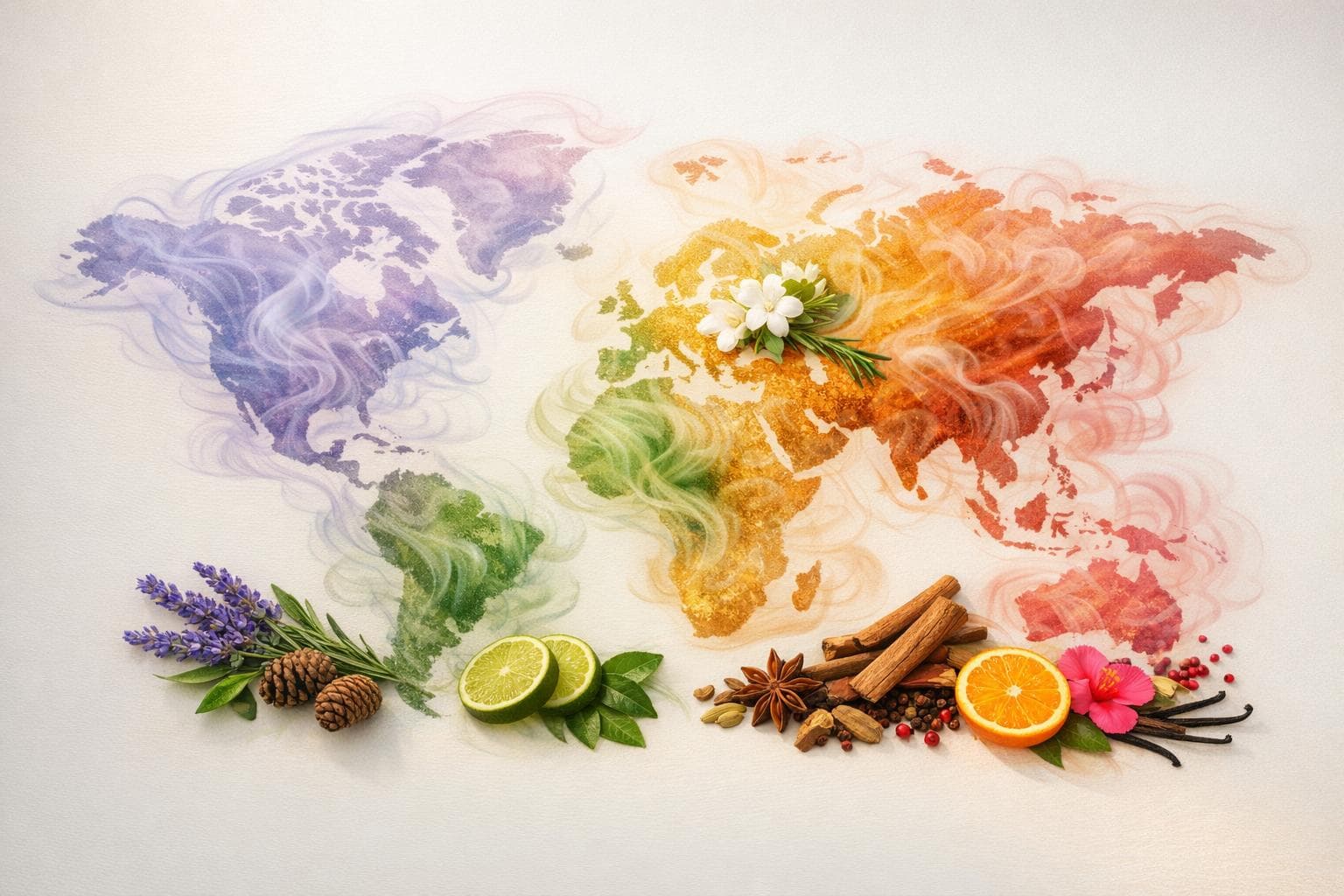
Az illatokat a földrajz, az éghajlat és a hagyományok formálják. A világ különböző régiói sajátos illatpreferenciákkal rendelkeznek, amelyeket a helyi alapanyagok és kulturális szokások alakítanak:
- Nyugat-Európa: A citrusos, virágos és fougère illatokról ismert, amelyekben a bergamott, a levendula és a neroli kap főszerepet. Ezek az illatok az eleganciát és a frissességet harmonikusan egyesítik.
- Közel-Kelet: Karakteres és hosszan tartó illatok, amelyek kulcsösszetevői az oud, az ámbra és a sáfrány. Több illat rétegezése bevett szokás.
- Kelet-Ázsia: Finom, könnyed, fás-citrusos jegyek, mint a yuzu és a hinoki, amelyek a személyes tér és a nyugalom fontosságát hangsúlyozzák.
- Dél-Ázsia: Meleg és fűszeres illatok szantálfával, jázminttal és kardamommal, gyakran spirituális hagyományok ihletésével.
- Latin-Amerika: A gyümölcsös-virágos és gourmand illatok dominálnak, ahol a trópusi gyümölcsök és a vanília intenzív, tartós kompozíciókat alkotnak.
- Afrika: Földes, gyantás és balzsamos jegyek, mint a mirha és a kék varádics, a régió gazdag mélységét tükrözik.
Az éghajlat és az életmód az illatok teljesítményére is hatással van. A forró klímák a tartósság érdekében az erőteljes alapjegyeknek kedveznek, míg a hűvösebb régiók inkább a könnyedebb illatok felé hajlanak. Az illatokat közvetlenül a bőrön tesztelve derül ki igazán, miként lépnek kölcsönhatásba a testkémiáddal és a környezeteddel.
Azok számára, akik most fedezik fel az illatok világát, a kisebb dekantok (2 ml–8 ml) praktikus megoldást kínálnak új kompozíciók kipróbálására anélkül, hogy teljes kiszerelés mellett kellene elköteleződni. Ez a megközelítés lehetővé teszi, hogy stílusodhoz, éghajlatodhoz és mindennapi rutinodhoz igazított, sokoldalú illatgardróbot építs.
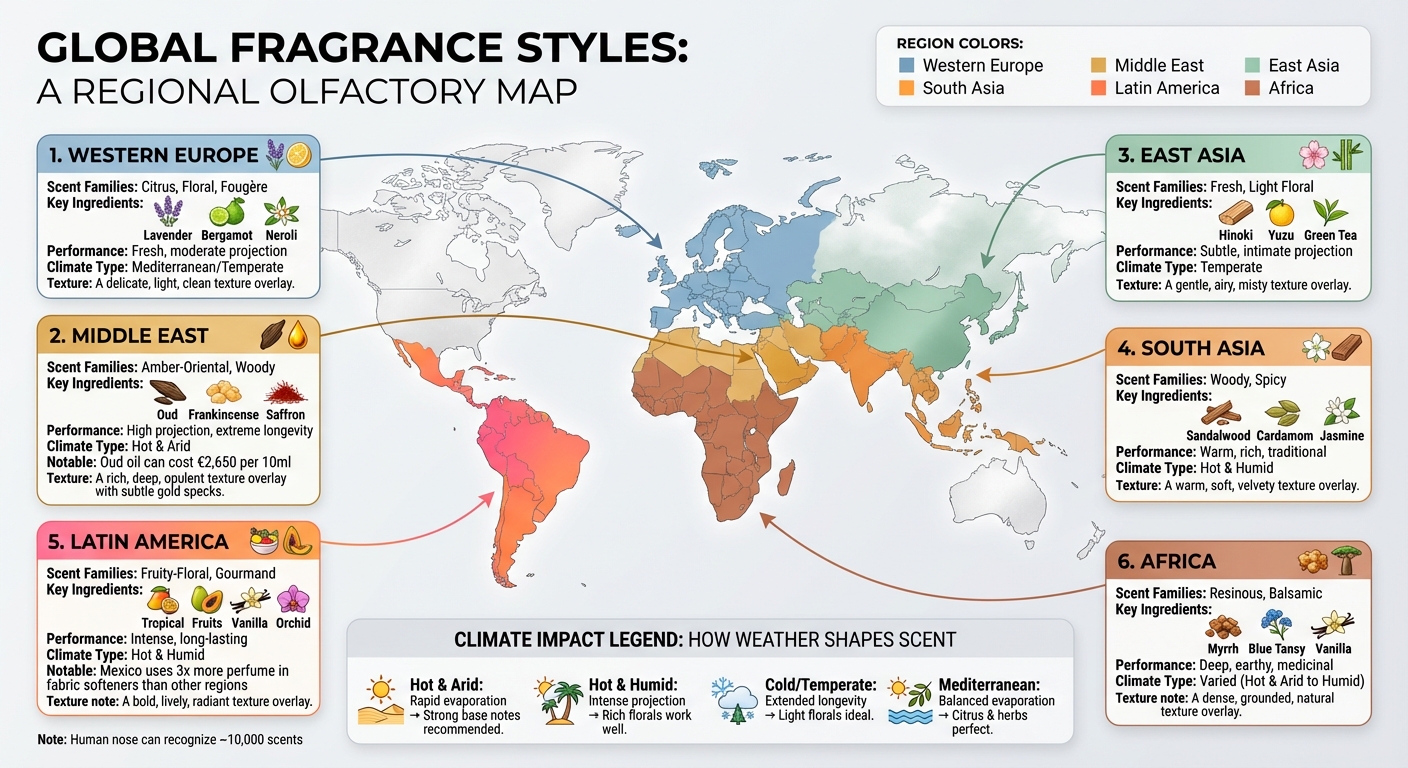
Regionális globális illatstílusok: illatprofilok és alkalmazkodás az éghajlathoz
A globális illatstílusok áttekintése
A világ illatait a helyi alapanyagok, az éghajlat és a generációkon át öröklődő hagyományok összhangja formálja. Nyugat-Európában az illatok gyakran citrusos jegyeket emelnek ki, mint a bergamott, a levendula és a neroli – olyan összetevőket, amelyek az ókori görög gyakorlatokban gyökereznek, majd a legendás francia parfümőrök tökéletesítették őket. A Perzsa-öböl térsége ezzel szemben az oud, a tömjén és a sáfrány merész, összetett elegyeiről ismert, olyan illatokról, amelyek a mélységet és a kiemelkedő tartósságot hangsúlyozzák.
Kelet-Ázsiában a megközelítés jóval visszafogottabb. Japán és Kína a finom, légies illatokat részesíti előnyben, fás-citrusos jegyekkel, mint a hinoki és a yuzu, amelyek a személyes tér tiszteletére és a nyugalom megteremtésére születtek. Dél-Ázsia a meleg és fűszeres kompozíciók felé fordul, krémes szantálfával, jázminttal és kardamommal, gyakran a régió spirituális öröksége által inspirálva. Latin-Amerikában eközben az intenzitás áll a középpontban. A gyümölcsös-virágos és gourmand illatok uralkodnak, erőteljes, hosszan tartó kompozíciókat nyújtva. Mexikóban például az öblítőkben használt parfüm mennyisége háromszor magasabb, mint más régiókban. Végül Afrika illatait gyantás és balzsamos jegyek jellemzik, gyakran földes karakterrel és gazdag mélységgel.
Kulcsrégiók és illatjellemzők
Az alábbi táblázat kiemeli azokat az illatprofilokat és tulajdonságokat, amelyek az egyes régiókat meghatározzák:
| Régió | Jellemző illatcsaládok | Kulcsösszetevők | Teljesítményjellemzők |
|---|---|---|---|
| Nyugat-Európa | Citrusos, virágos, fougère | Levendula, bergamott, neroli | Friss, mérsékelt vetítés |
| Közel-Kelet | Ámbrás-orientális, fás | Oud, tömjén, sáfrány | Erőteljes vetítés, rendkívüli tartósság |
| Kelet-Ázsia | Friss, könnyed virágos | Hinoki, yuzu, zöld tea | Finom, bensőséges vetítés |
| Dél-Ázsia | Fás, fűszeres | Szantálfa, kardamom, jázmin | Meleg, gazdag, hagyományos |
| Latin-Amerika | Gyümölcsös-virágos, gourmand | Trópusi gyümölcsök, vanília, orchidea | Intenzív, hosszan tartó |
| Afrika | Gyantás, balzsamos | Mirha, kék varádics, vanília | Mély, földes, gyógyhatású jellegű |
Ezek az illatpreferenciák túlmutatnak az esztétikán – a helyi környezethez és életmódhoz való praktikus alkalmazkodást is jelentik. Mexikó magaslatai és alacsony páratartalma például erősebb illatkoncentrációkat igényel ahhoz, hogy az illat megfelelően érzékelhető maradjon. Ezzel szemben a kelet-ázsiai fogyasztók gyakran tolakodónak érzik az erőteljes illatokat, ezért inkább a könnyed, vízszerű frissességet választják. E regionális különbségek megértése segíthet abban, hogy környezetedhez és egyéni stílusodhoz illő, sokoldalú illatgardróbot építs.
Regionális illatstílusok ellenőrzőlistája
Nyugat-Európa
A francia parfüméria az elegancia szinonimája, gyakran virágos, pézsmás és fás elemeket ötvöz kifinomult kompozíciókban. Franciaországban a parfüm különleges helyet foglal el, még a fontos életeseményeket is jelzi – például amikor egy 12 éves lány kiválasztja első illatát, ami nagy becsben tartott hagyomány.
Az olasz és dél-európai illatok a Mediterráneum könnyed báját idézik, friss citrusos, nerolis és akvatikus jegyekkel, amelyek napfényes tengerpartokat elevenítenek meg. A narancsvirág és a fűszerek is gyakran megjelennek ezekben az illatokban, történelmi kereskedelmi útvonalak és az általuk elősegített kulturális találkozások ihletésére. Eközben Észak-Európa egyre inkább a minimalista megközelítés felé fordul, tiszta, modern illatokat bemutatva szokatlan párosításokkal, amelyek átlépik a megszokott kereteket.
Az európai parfümök kipróbálásakor vidd fel őket pulzuspontokra, ahol a bőr melege kiemeli az illatot. Kerüld a csuklók összedörzsölését, mert ez megzavarhatja a fejillatot. Felvitel után hagyd az illatot körülbelül 10–15 másodpercig megpihenni, majd adj neki akár nyolc órát is a teljes kibontakozásra, mielőtt a vásárlás mellett döntenél. Kelet felé haladva a közel-keleti illatok merész intenzitása látványos kontrasztot kínál.
Közel-Kelet és az Öböl térsége
A közel-keleti illatokat intenzitásuk, illatuk hatósugara és tartósságuk teszi különlegessé. Gyakran olyan összetevőket tartalmaznak, mint az oud (agarfa), a damaszkuszi rózsa, az ámbra, a pézsma, a szantálfa, a sáfrány, a tömjén, valamint az olyan fűszerek, mint a kardamom és a szegfűszeg. A kiváló minőségű oudolaj ára akár a 2 650 €-t is elérheti mindössze 10 ml (0.34 fl oz) esetén, ami ritkaságát és keresettségét tükrözi. A régió illatpiaca továbbra is virágzik, kétszámjegyű növekedéssel.
"Az illatod az egyéniséged megkülönböztető eleme."
– Rawya Catto, a CPL Aromas Közel-Kelet vezérigazgatója
Az illatok rétegezése az Öböl-menti kultúrában igazi művészet. Egy hagyományos, 7 lépéses rituáléba beletartoznak az illatos tusfürdők, testolaj, a ruhákhoz használt bakhoor, hajpermet és több réteg parfüm. Míg Nyugaton inkább egyetlen jellegzetes illat dominál, az Öböl térségének rajongói gyakran három-négy illatot kombinálnak, sőt vannak, akik akár 15 különböző illatot is rétegeznek.
A regionális preferenciák is eltérnek: az Öböl-országok a karakteres, fás és ámbrás illatokat kedvelik, míg a Levante (Libanon, Jordánia, Szíria) inkább a természet ihlette jegyek felé hajlik, mint a narancsvirág, a jázmin és a levendula, tartós alapjegyekkel megtámasztva. A nyugati luxusmárkák is felfigyeltek erre, és exkluzív megjelenéseket alkotnak a közel-keleti ízlésre szabva. A Louis Vuitton például 2022 júliusában mutatta be a Fleur du Désert illatot, amely jázmint, narancsvirágot és damaszkuszi rózsát ötvöz. Ezek a gazdag, erőteljes kompozíciók éles ellentétben állnak Kelet-Ázsia finom, szemlélődő illataival.
Kelet-Ázsia és Japán
Kelet-Ázsiában az illat a finomságról és a diszkrécióról szól. Japánban az illatok szorosan kapcsolódnak a zen gyakorlatokhoz, a nyugalomra, az összpontosításra és az egyszerűségre helyezve a hangsúlyt. A hangsúly nem az erőteljes kisugárzáson van, hanem azon, hogy az illat közel maradjon a bőrhöz, finom virágos és gyümölcsös jegyekkel.
A kulcsösszetevők közé tartozik a cseresznyevirág, a lótusz, a zöld tea, a yuzu, a shiso, a gyömbér, a szantálfa és a hinoki. A hagyományos füstölőfák, mint a kyara, tovább tükrözik a kultúra visszafogott elegancia iránti vonzalmát.
Néhány modern illat ezekből a hagyományokból merít ihletet. Az Aesop Hwyl Eau de Parfum illata, amely Barnabé Fillion parfümőrrel együttműködésben született, a "századok óta érintetlen japán erdő zöldellését és csendjét" ragadja meg ciprussal, tömjénnel és vetiverrel. Hasonlóképpen a Rōzu Eau de Parfum a shiso és a petitgrain segítségével friss, zöld nyitányt alkot, amely Japán kifinomult esztétikáját tükrözi. Ezek a finom alkotások gyönyörűen szemléltetik, miként formálják a visszafogottság és a harmónia kulturális értékei a régió illatkészítésének művészetét.
Az éghajlat és az életmód hatása az illatválasztásra
Az, ahogyan egy illat teljesít, mélyen függ az éghajlattól. A meleg például felgyorsítja a párolgást, ezért a parfümök gyorsabban elhalványulnak. A hűvösebb klímák ezzel szemben lassítják a párolgást, így az illatok sokkal tovább megmaradnak. A páratartalom is szerepet játszik, mivel megváltoztathatja a parfüm kémiai összetételét, és ezzel finoman módosíthatja az illat karakterét az eredeti elképzeléshez képest.
Ezek a környezeti tényezők gyakran alakítják a regionális preferenciákat és az illatkompozíciókat. Forró, száraz területeken különösen népszerűek az erőteljes alapjegyeket hordozó illatok, mint az oud, az ámbra és a pézsma. Eközben a hűvösebb régiók, például Észak-Európa inkább a könnyedebb, visszafogottabb illatokat részesítik előnyben, például mentás vagy bergamottos jegyekkel.
Az életmód és a kulturális normák szintén befolyásolják az illatválasztást. Kínában például a munkahelyi etikett gyakran a finom, alig érzékelhető illatokat részesíti előnyben, amelyek nem hatolnak be mások személyes terébe. Azokon a helyeken pedig, ahol az öltözködési szabályok korlátozzák az önkifejezést, az illat a személyiség megmutatásának egyik legfontosabb eszközévé válik.
Ahhoz, hogy a legtöbbet hozd ki illatodból, érdemes a felvitelt a napi rutinodhoz igazítani. A friss citrusos vagy zöld jegyek remekül működnek szabadtéri tevékenységekhez, míg a meleg fűszerek, például az ámbra vagy a vanília, tökéletesek esti viseletre. Professzionális környezetben a természet ihlette, visszafogott illatok biztos választást jelentenek. Ha forró éghajlaton élsz, a parfüm enyhén illatosított hidratálóval vagy pézsmaolajjal történő rétegezése segíthet rögzíteni az illatot és meghosszabbítani a tartósságát.
Íme egy gyors áttekintés arról, hogyan hat az éghajlat az illatok teljesítményére és stílusára:
| Éghajlattípus | Hatás az illatra | Ajánlott regionális stílus | Kulcsjegyek |
|---|---|---|---|
| Forró és száraz | Gyors párolgás; erőteljes vetítés | Közel-keleti / Öböl-menti | Oud, ámbra, pézsma, fűszerek |
| Forró és párás | Módosult egyensúly; intenzív vetítés | Latin-amerikai / dél-ázsiai | Trópusi gyümölcsök, tubarózsa, gazdag virágok |
| Hideg / mérsékelt | Hosszabb tartósság; finom vetítés | Észak-európai / kelet-ázsiai | Menta, szantálfa, tea, könnyed virágok |
| Mediterrán | Kiegyensúlyozott párolgás | Dél-európai | Citrusok, neroli, bergamott, fűszernövények |
E finomságok megértése lehetővé teszi, hogy nagyobb tudatossággal közelíts az illatválasztáshoz és a felvitelhez, így biztosítva, hogy az illatod tökéletes összhangban legyen környezeteddel és életstílusoddal.
sbb-itb-fb213bc
Saját, személyes globális illattérképed megalkotása
Egy személyes illattérkép megalkotása arról szól, hogy környezetedet, életstílusodat és preferenciáidat egy olyan illatutazássá formáld, amely valóban rád szabott. Kezdd azzal, hogy az általad kedvelt intenzitást olyan régiókhoz társítod, amelyek ezekről az illatprofilokról ismertek. Ilyenek lehetnek például a Közel-Kelet merész jegyei, mint az oud és az ámbra, Kelet-Ázsia finom érintései, mint a szantálfa és a cseresznyevirág, vagy Észak-Európa könnyed, frissítő illatai, mint a menta és az uborka – mindegyik sajátos regionális karaktert hordoz.
A helyi éghajlat óriási szerepet játszik abban, hogyan teljesít egy illat. A forró és párás területek gyakran kiemelik a friss citrusos vagy trópusi gyümölcsös jegyek vonzerejét, míg a mediterrán környezet gyönyörűen harmonizál a nerolival és a növényi ihletésű illatokkal. Mivel az emberi orr körülbelül 10 000 különböző illat felismerésére képes, elengedhetetlen, hogy az illatokat közvetlenül a bőrödön teszteld. Az olyan tényezők, mint a testkémia, a hőmérséklet vagy akár az étrend is befolyásolhatják, hogyan bontakozik ki egy illat. Hagyd a kompozíciót legalább nyolc órán át fejlődni, hogy megtapasztald teljes evolúcióját – és állj ellen a késztetésnek, hogy összedörzsöld a csuklóidat, mert ez megzavarhatja a finom fejillatokat.
Az első lépésekhez próbáld ki a Scento tesztereit. Egy gyors, 10–15 másodperces várakozás után, amíg az alkohol elillan, valós képet kapsz a fejillatokról. Amint leszűkítetted a kedvenceidet, térj át a 2 ml-es mintákra, hogy néhány napon át alaposabban tesztelhesd őket. Ez a méret ideális annak felmérésére, hogyan működik együtt az illat a bőröddel, és mennyire tartós. Amikor készen állsz, fektess be 8 ml-es porlasztókba – elég kompaktak az utazáshoz, ugyanakkor elég tartalmasak ahhoz, hogy élvezhesd kiválasztott illataidat, legyen szó egy ropogós citrusos kompozícióról nappali megbeszélésekre vagy egy gazdag oudról esti alkalmakra.
A még személyesebb élményért kísérletezz az illatok rétegezésével. Kezdd egy alapréteggel, például pézsmaolajjal vagy enyhén illatosított balzsammal, mielőtt felvinnéd az Eau de Parfumöt. Ez a technika, amely gyakran megjelenik a közel-keleti hagyományokban, több illat kombinálását jelenti – olykor akár 3-tól 15-ig terjedő számban. Hogy ne terheld túl az érzékeidet, egyszerre legfeljebb két illattal kísérletezz. Építs sokoldalú kollekciót, amely tükrözi életstílusodat: egy friss, természet ihlette választást munkára, egy élénk trópusi illatot hétvégékre, és egy kifinomult virágos kompozíciót különleges eseményekre.
Összegzés
A regionális illatstílusok megismerése magasabb szintre emelheti azt, ahogyan személyiségedhez és mindennapi életedhez illő illatokat választasz. A közel-keleti parfümök például az oud és az ámbra merész használatáról ismertek, amelyeket úgy alkottak meg, hogy maradandó benyomást keltsenek és a kulturális gazdagságot tükrözzék. Ezzel szemben a japán illatok inkább olyan finom jegyek felé hajlanak, mint a cseresznyevirág és a szantálfa, visszafogottabb, minimalista bájt kínálva. Ahogy Rawya Catto, a CPL Aromas Middle East vezérigazgatója találóan fogalmaz: "Az illatod az egyéniséged megkülönböztető eleme".
Az éghajlat szintén kulcsszerepet játszik abban, hogyan teljesítenek az illatok. A mediterrán ihletésű illatok, ragyogó citrusos és nerolis jegyeikkel, meleg időben bontakoznak ki a legszebben, míg a trópusi klíma felerősítheti a fűszeres gourmand jegyek gazdagságát. Ha ezeket a regionális stílusokat a saját bőrödön próbálod ki – figyelembe véve a testkémiádat, a helyi éghajlatot és napi szokásaidat –, egy jól átgondolt illatgardróbot állíthatsz össze, túllépve azon az elképzelésen, hogy csupán egyetlen jellegzetes illathoz ragaszkodj.
A parfüméria sokszínű világának felfedezésére az egyik legjobb mód a dekantok és discovery setek kipróbálása. Egy 2 ml-es minta körülbelül öt használatra elegendő, míg egy 8 ml-es dekant már elég ahhoz, hogy egy illat teljes összetettségét megtapasztald. Ez a módszer lehetővé teszi az illatok tesztelését pénzügyi kockázat nélkül – különösen akkor, amikor a teljes üvegek, mint például az Amouage Lilac Love 270 euróért vagy az Opus IX 305 euróért, komoly befektetést jelenthetnek.
GYIK
Hogyan befolyásolja az időjárás és az éghajlat, mennyi ideig tart egy illat?
Az, ahogyan egy illat viselkedik a bőrödön, jelentősen változhat a körülötted lévő hőmérséklettől és páratartalomtól függően. Melegebb, párás éghajlaton az illatmolekulák gyorsabban párolognak, ami csökkentheti, mennyi ideig marad érzékelhető az illat. Ezzel szemben hűvösebb, szárazabb körülmények között a párolgás lelassul, így az illat hosszabb ideig megmarad. Ugyanakkor a magas páratartalom miatt bizonyos finom jegyek, például a pézsma, a megszokottnál gyorsabban halványulhatnak el.
A legjobb eredmény érdekében vidd fel az illatot jól hidratált bőrre, és koncentrálj a pulzuspontokra. Ezek a területek természetes meleget sugároznak, így segítenek abban, hogy az illat jobban kibontakozzon és tovább tartson, bármilyen is legyen az időjárás.
Melyek a közel-keleti illatok jellegzetes összetevői?
A közel-keleti illatokat mély, fényűző kompozícióikért ünneplik, amelyek középpontjában gyakran az oud (agarfa), az ámbra és a pézsma áll. Ezeket az alapvető elemeket gyönyörűen ellensúlyozzák az olyan virágos jegyek, mint a damaszkuszi rózsa és a jázmin, valamint a szantálfa és a tömjén földes gazdagsága.
Összetettségüket tovább gazdagítják az olyan fűszerek, mint a fahéj és a szegfűszeg, amelyek melegséget visznek a kompozícióba, míg a mirha és az édes gyanták fokozzák jellegzetes vonzerejüket. Az eredmény egy érzéki utazás, amely egyszerre sugároz eleganciát és mélységet.
Milyen előnyei vannak a kisebb illatdekantok kipróbálásának új illatok felfedezésekor?
A kisebb dekantok felfedezése intelligens módja annak, hogy elmerülj az illatok világában anélkül, hogy egy teljes üveg mellett kellene elköteleződnöd. Lehetőséget adnak arra, hogy időn át viseld az illatot, így könnyebben eldöntheted, valóban illik-e a stílusodhoz, és harmonizál-e a bőrkémiáddal.
A dekantok a pénztárcádhoz is kíméletesebbek, hiszen megóvnak attól, hogy több száz eurót költs egy teljes kiszerelésre, amely végül a polcon porosodna. Ráadásul rendkívül praktikusak – ideálisak utazáshoz vagy egy sokszínű illatkollekció összeállításához. A dekantok rugalmasságot, kényelmet és a szabad kísérletezés lehetőségét kínálják.

