A karbonsemleges parfümök célja, hogy minden szakaszban csökkentsék környezeti hatásukat – az összetevők beszerzésétől egészen a csomagolásig. Íme, hogyan érik ezt el a márkák:
- Összetevők beszerzése: Újrahasznosított szén-dioxid-kibocsátásból (pl. acélművekből) előállított etanol használata a mezőgazdasági eredetű etanol helyett. A regeneratív gazdálkodási gyakorlatok helyreállítják a talaj egészségét és védik a biológiai sokféleséget.
- Gyártás: Az olyan fejlett technikák, mint a szuperkritikus CO₂-extrakció és a precíziós fermentáció csökkentik a hulladékot, a vízfelhasználást és a földigényt, miközben megőrzik az illat minőségét.
- Csomagolás: Az utántölthető rendszerek, a fogyasztás utáni újrahasznosított anyagok és a könnyebb kialakítás csökkentik a hulladékot és a szállításból eredő kibocsátásokat.
- Hitelesítés: Az olyan tanúsítványok, mint a COSMOS, az Ecocert, valamint az életciklus-értékelések biztosítják a karbonsemlegességi állítások átláthatóságát és számonkérhetőségét.
Az olyan luxusillatok, mint a Gucci "Where My Heart Beats" (€330 / 100 ml), e módszerek kifinomult példái: a környezettudatos gyakorlatokat magas minőségű illatkompozíciókkal ötvözik. Keresse az utántölthető megoldásokat és a tanúsítványokat, hogy olyan márkákat támogasson, amelyek valóban a fenntarthatóságot helyezik előtérbe.
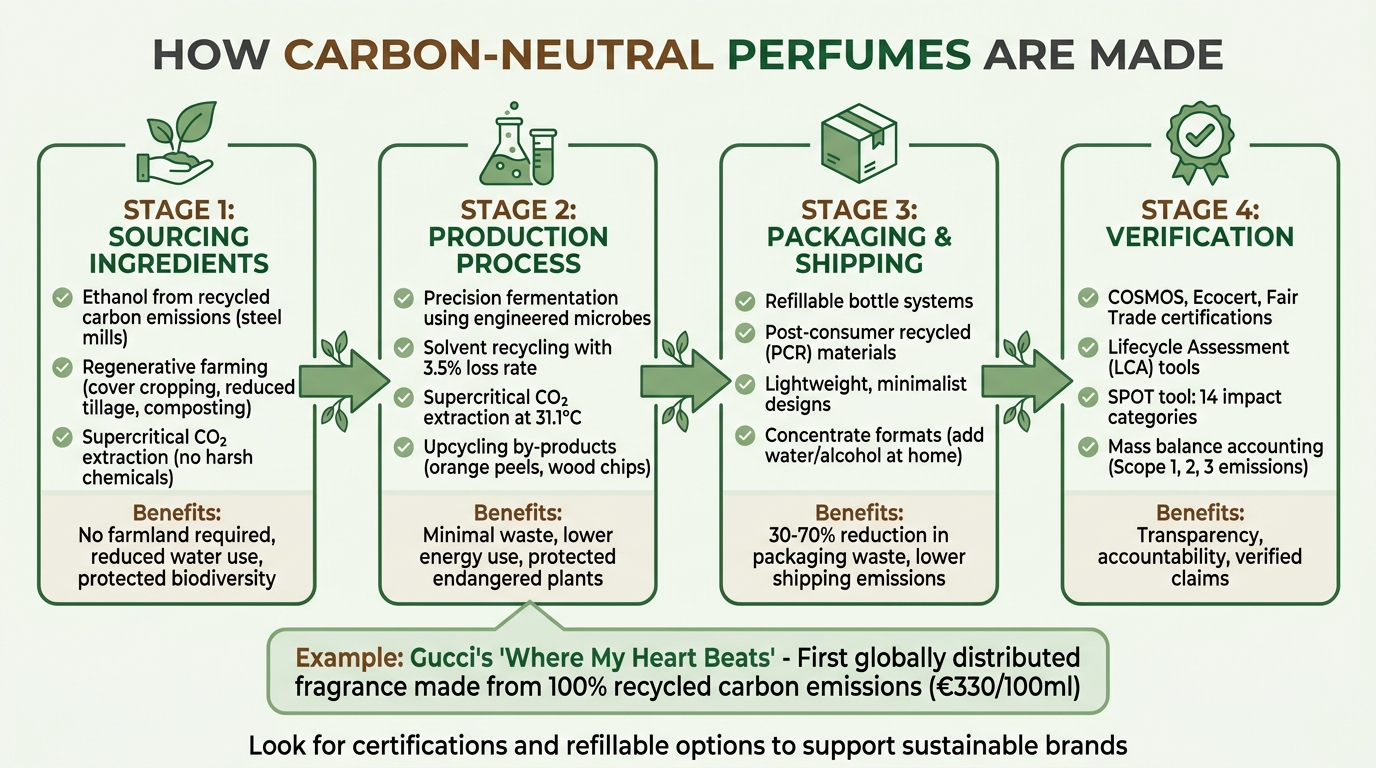
Hogyan készülnek a karbonsemleges parfümök: 4 szakaszból álló gyártási folyamat
Fenntartható és karbonsemleges szépségápolás
Fenntartható összetevők beszerzése
A karbonsemleges parfümök megalkotása a felelősségteljes alapanyag-beszerzéssel kezdődik. A hagyományos parfümkészítés gyakran mezőgazdasági eredetű etanolra támaszkodik, amelyet jellemzően cukornádból vagy cukorrépából állítanak elő. Az innovatív alternatívák azonban új irányt szabnak ennek a modellnek: az ipari folyamatokból származó szén-dioxid-kibocsátást fogják fel, majd azt a parfümök kulcsfontosságú összetevőivé alakítják. Íme, hogyan formálják át ezek a fejlesztések mind az alkoholos hordozókat, mind a növényi kivonatokat.
Etanol újrahasznosított szénből
Az etanol hordozóként működik a parfümökben, segítve az illatanyagok egyenletes eloszlását a bőrön. Míg a hagyományos etanolgyártás mezőgazdaságra épül, egyes gyártók ma már úgy állítanak elő etanolt, hogy acélművekhez hasonló ipari forrásokból származó szén-dioxid-kibocsátást kötnek meg. Ezeket a kibocsátásokat természetes fermentációs folyamatok révén nagy tisztaságú alkohollá alakítják.
Ennek a technológiának figyelemre méltó példája a szépségipari óriás Coty és a szén-újrahasznosítással foglalkozó LanzaTech együttműködése, amely 2021 márciusában indult. 2022 januárjára a Coty megkezdte a befogott kibocsátásokból származó etanol használatát, majd 2023 áprilisában a Gucci bemutatta a "Where My Heart Beats" illatot a The Alchemist’s Garden kollekció részeként. Ez a parfüm lett az első világszerte forgalmazott illat, amely teljes egészében újrahasznosított szén-dioxid-kibocsátásból készült. A projektet Dr. Shimei Fan, a Coty tudományos és fenntarthatósági igazgatója felügyelte, biztosítva, hogy az újrahasznosított etanol megfeleljen a fine fragrance kategóriában elvárt szigorú minőségi előírásoknak. A Quantis által készített életciklus-elemzés megerősítette, hogy ez a módszer a hagyományos etanolgyártáshoz képest jelentősen csökkenti a vízfelhasználást és a mezőgazdasági területigényt.
"Elemzésünk azt mutatja, hogy az új alkohol rendkívül alacsony szennyezőanyagtartalommal rendelkezik – megfelel, sőt túl is teljesíti a parfümériában alkalmazott szigorú előírásainkat, és összhangban áll a piacon elérhető más kiváló minőségű alkoholokkal." – Dr. Shimei Fan, tudományos és fenntarthatósági igazgató, Coty
Az előnyök tagadhatatlanok: nincs szükség termőföldre, csökken a vízfogyasztás, és enyhül a biológiai sokféleségre nehezedő nyomás. A Gucci "Where My Heart Beats" illata €330 / 100 ml áron érhető el, összhangban a kollekció luxuspozicionálásával. Ez az újrahasznosított etanol terén megvalósuló innováció meghatározó lépést jelent a fenntartható parfümgyártás felé.
Regeneratív mezőgazdasági gyakorlatok
A növényi alapanyagok esetében a karbonsemleges parfümök olyan regeneratív gazdálkodási gyakorlatokra támaszkodnak, amelyek a talaj helyreállítását helyezik előtérbe. Az olyan technikák, mint a takarónövények alkalmazása, a csökkentett talajművelés és a komposztálás nemcsak javítják a talaj egészségét, hanem közvetlenül a földben kötnek meg szenet. Ezenfelül az olyan módszerek, mint a társításos termesztés és a vetésforgó, segítenek megőrizni a talaj biodiverzitását, csökkenteni a növényvédő szerek használatát, valamint javítani az illatalapanyagok minőségét.
A hagyományos mezőgazdaságtól eltérően a regeneratív gazdálkodás célja, hogy az ökoszisztémák egészségesebbek legyenek a művelés után, mint előtte voltak. Ez a megközelítés az olyan növények, mint a cukornád vagy cukorrépa termelékenységét is növeli, csökkentve annak szükségességét, hogy a mezőgazdaság szénben gazdag élőhelyekre, például erdőkre terjeszkedjen. A hozamok javításával egyensúlyt teremt az ökológiai megőrzés és a mezőgazdasági igények között.
Levegőalapú extrakció természetes esszenciákhoz
Az extrakciós folyamat ugyanilyen meghatározó a fenntartható parfümök létrehozásában. A hagyományos módszerek gyakran kémiai oldószerekre, például hexánra épülnek, amelyek maradványokat hagyhatnak hátra és jelentős energiát igényelnek. Ezzel szemben a szuperkritikus CO₂-extrakció egyre nagyobb teret nyer a karbonsemleges gyártásban. Ez a technika nyomás alá helyezett CO₂-t használ arra, hogy hő vagy agresszív vegyszerek nélkül, kíméletesen vonja ki az illóolajokat.
Ez a módszer nemcsak megőrzi a finom aromás vegyületek integritását, hanem kiküszöböli az oldószerhulladékot is. A visszamaradó növényi anyagokat komposztálják vagy más módon kezelik, hogy tovább csökkentsék a karbonlábnyomot. Az eredmény egy tisztább, kifinomultabb esszencia, amely megőrzi a természetes összetevők minőségét, miközben minimálisra csökkenti a környezeti terhelést. Ezek a letisztult kivonatok ezután olyan gyártási folyamatokba kerülnek, amelyek a fenntarthatóságot végig középpontban tartják.
Fejlesztések a gyártási folyamatban
A fenntartható alapanyagok beszerzését követően a következő lépés ezen anyagok hatékony átalakítása kész parfümökké. A modern gyártási módszerek célja a hulladék csökkentése, az energiafelhasználás mérséklése, valamint a zöld kémia elveinek integrálása a termelés minden szakaszába.
Zöld kémia és energiahatékonyság
A zöld kémia a hulladékot az úgynevezett E-faktor segítségével értékeli, amely a hulladék és a késztermék arányát méri. Az extrakciós technikák fejlődésének köszönhetően ma már nagyobb hozam érhető el minimális hulladék mellett. Például az oldószeralapú extrakciós módszerek jelentősen fejlődtek, és az oldószervisszanyerés révén a veszteségi arány mindössze 3,5% – ami jelentős csökkenést jelent a vegyi hulladék mennyiségében.
A biotechnológia is forradalmasítja az illatanyagok előállítását. A módosított mikrobákat alkalmazó precíziós fermentáció olyan aromás vegyületeket képes előállítani, mint a patchoulol és a rózsaoxid, jóval kisebb föld- és vízigénnyel, mint a hagyományos mezőgazdaság. Ez a megközelítés hozzájárul az olyan veszélyeztetett növények védelméhez, mint a szantálfa és az agarfa (oud), ezáltal csökkentve a biodiverzitásra nehezedő terhelést.
Az upcycling gyakorlata egy másik áttörést jelent. Az olyan melléktermékeket, mint a gyümölcslégyártásból származó narancshéj vagy a papírgyártás során keletkező faforgács (pl. nyers szulfát-terpentin), ma már újrahasznosítják, és illatanyagok alapanyagává alakítják. Az olyan eszközök, mint a MANE GREEN MOTION™ rendszere lehetővé teszik a gyártók számára, hogy folyamataikat a zöld kémia 12 alapelve mentén értékeljék, biztosítva a biztonságot és a környezetbarát működést egyaránt. Ezek az előrelépések a CO₂-alapú innovációk új lehetőségeit is megnyitják a gyártásban.
Szuperkritikus CO₂-extrakciós technológia
A szuperkritikus CO₂-extrakció a modern illatgyártás egyik kiemelkedő technikája. Körülbelül 31,1°C-on működik, és oldószerként nyomás alá helyezett, újrahasznosítható CO₂-t használ. Ez az eljárás nemcsak az energiafogyasztást csökkenti, hanem megőrzi azokat a finom aromás vegyületeket is, amelyek elengedhetetlenek a kiváló minőségű illatokhoz.
A természetes és szintetikus összetevők egyensúlya
A fejlettebb gyártási módszerek segítenek biztosítani, hogy a fenntartható beszerzésre irányuló törekvések a végtermékben is érvényesüljenek. Az energiahatékony folyamatok és a gondosan finomhangolt formulák lehetővé teszik az egyensúlyt a fenntarthatóság és az illat összetettsége között.
A karbonsemleges parfümök egyre inkább előnyben részesítik a szuperkritikus CO₂-extrakcióval nyert természetes izolátumokat a hexánból származó szintetikus alternatívákkal szemben. Ez az elmozdulás csökkenti a kőolajalapú vegyszerektől való függőséget anélkül, hogy az illat minősége csorbát szenvedne. Ahol lehetséges, a biotechnológiai úton előállított molekulák és illóolajok váltják fel a hagyományos szintetikumokat, mérsékelve az összesített karbonlábnyomot. A fermentációval nyert összetevők és a természetesen kivont komponensek ötvözésével a parfümőrök kifinomult, sokrétű illatokat alkothatnak, amelyek egyszerre felelnek meg a fenntarthatósági céloknak és a fogyasztók hitelesség iránti igényének.
Személyes illatszakértője már várja
Töltse ki rövid illatkvízünket, és fedezzen fel hiteles designer és niche parfümöket, amelyek az ízléséhez illenek – próbálja ki őket 2–8ml-es dekantokban és mintákban, hogy mindegyiket kipróbálhassa, mielőtt teljes flakon mellett dönt.
Találja meg illatátKörnyezetbarát csomagolás és hulladékcsökkentés
A gyártási folyamatok fejlesztése után a karbonsemlegesség fenntartásának következő lépése a felelősségteljes csomagolás. Még a leggondosabban, fenntartható módon készített parfüm is elveszítheti környezeti előnyeit, ha pazarló csomagolással párosul. Az átgondolt csomagolás és a hatékony hulladékgazdálkodás kulcsszerepet játszik egy termék teljes környezeti lábnyomának csökkentésében.
Újrahasznosítható és minimalista csomagolás
Az üveg továbbra is a prémium illatok alapanyaga, amelyet eleganciája és újrahasznosíthatósága miatt nagyra értékelnek. Az iparág azonban fejlődik: az utazó kiszerelések és másodlagos csomagolások esetében olyan anyagokat is beemel, mint a PCR (fogyasztás utáni újrahasznosított) műanyag és a komposztálható megoldások. Számos nagy múltú márka már bevezette az utántöltő rendszereket, bizonyítva, hogy a környezeti felelősség tökéletesen összeegyeztethető a luxusmárkázással.
Az utántölthető üvegrendszerek és a koncentrált formátumok valódi áttörést jelentenek. Nemcsak a hulladék mennyiségét csökkentik, hanem a szállításból eredő kibocsátásokat is, miközben idővel erősebb kapcsolatot alakítanak ki a vásárlókkal. A moduláris csomagolási kialakítás lehetővé teszi a kiváló minőségű elemek újrafelhasználását anélkül, hogy a luxusélmény sérülne. Például egy 5 ml-es utántölthető porlasztó hozzávetőleg 77 fújást biztosít, így intelligensebb és tudatosabb alternatívát kínál több utazó méretű üveg megvásárlásával szemben.
"A minimalista, jól megtervezett, újrahasználatra ösztönző rendszerek csökkentik az életciklus során jelentkező terheléseket, és a valódi fenntarthatósági gondolkodás gyakorlati ismérvei." — Amara Lane, vezető szerkesztő és beauty sustainability strategist, Glamours.life
A biológiailag lebomló megoldások szintén egyre nagyobb teret nyernek. A magpapír címkék például a terjedelmes díszcsomagolás helyét veszik át, kifinomult és környezetbarát gesztust kínálva. A csomagoláson elhelyezett QR-kódok átláthatóságot biztosítanak, betekintést nyújtva a fogyasztóknak az alapanyag-beszerzésbe és az összetevőkbe. Fenntartható gyártással párosítva az ilyen csomagolás teszi teljessé egy karbonsemleges termék életciklusát.
Karbonsemleges szállítási gyakorlatok
A csomagolás kialakítása közvetlenül befolyásolja a szállításból eredő kibocsátásokat. A könnyű, letisztult dizájnok – újrahasznosítható üveggel, komposztálható dobozokkal és biológiailag lebomló festékekkel – segítenek mérsékelni a küldemények fizikai és karbonlábnyomát. A koncentrátumformátumok még tovább mennek: lehetővé teszik, hogy a vásárlók otthon adjanak hozzá vizet vagy alkoholt, ami jelentősen csökkenti az egységenkénti szállítási tömeget és kibocsátást.
Az utántölthető rendszerek a szállítás gyakoriságát is csökkentik, mivel a vásárlók teljesen új üvegek helyett kompakt utántöltő patronokat rendelnek. Ez a megközelítés nemcsak a környezeti terhelést mérsékli, hanem erősíti a vásárlói hűséget is. Sikere ugyanakkor a fogyasztók részvételén és a hatékony utántöltési logisztikán múlik. A moduláris csomagolási rendszerek bevezetésével a márkák lezárhatják az anyagkörforgásokat, és tartós kapcsolatot építhetnek ki ügyfeleikkel.
Ezek az intézkedések a csomagolás és szállítás terén megágyaznak a karbonsemlegesség még megalapozottabb hitelesítési folyamatai számára.
A karbonsemlegesség igazolása
Ahhoz, hogy a márkák valóban összhangban legyenek a környezettudatos elvekkel, karbonsemlegességi állításaikat átlátható és függetlenül hitelesített adatokkal kell alátámasztaniuk. Ez biztosítja a hitelességet az alapanyag-beszerzéstől a csomagolásig.
Tömegmérleg-elszámolás és tanúsítványok
Az alapos megközelítés a kibocsátások minden szintjének nyomon követését jelenti: közvetlen kibocsátások (1. hatókör / Scope 1), közvetett kibocsátások (2. hatókör / Scope 2) és a teljes ellátási lánc (3. hatókör / Scope 3). Ez a folyamat a nyersanyagok beszerzésétől a termék életciklusának végéig terjed.
Az olyan szervezetek tanúsítványai, mint a COSMOS, az Ecocert és a Fair Trade, kiegészítve az ISO-kompatibilis életciklus-értékelésekkel, komoly hitelt adnak ezeknek az állításoknak. A független tanúsítások és nyomonkövethetőségi rendszerek tovább erősítik az összetevők eredetének és környezeti hatásainak igazolását.
Például 2023 júliusában a L’Oréal a MANE vállalattal együttműködve 27 illatösszetevőt elemzett a Sustainable Product Optimisation Tool (SPOT) segítségével. Ez az eszköz 14 hatáskategória mentén értékeli a termékeket, például az éghajlatváltozás, a vízfogyasztás és a földhasználat szempontjából. Figyelemre méltó, hogy a Climate Change és a Land Use kategóriák a SPOT keretrendszerében egyenként körülbelül 25,5%-kal járulnak hozzá a teljes környezeti hatáspontszámhoz. Ez az együttműködés rámutat arra, miként értékelhetik a márkák a fenntarthatóságot úgy, hogy közben védik a saját fejlesztésű illatformulákat.
Ez a precíz elszámolás képezi a részletes életciklus-hatásvizsgálatok alapját.
Életciklus-hatásmérés és átláthatóság
A tömegmérleg-adatokból kiindulva az életciklus-értékelések átfogó képet nyújtanak egy illat környezeti lábnyomáról. Mivel a legtöbb parfüm több mint 100 összetevőt tartalmaz, az átfogó adatgyűjtés a gyártási titkot képező formulák miatt különösen összetett feladat. Ennek kezelésére a vállalatok fejlett eszközökre támaszkodnak. A Life Cycle Assessment (LCA) mélyreható környezeti betekintést ad, míg az egyszerűsített rendszerek, mint a GREEN MOTION™ (a MANE fejlesztése) és a SPOT (a L’Oréal fejlesztése), lehetővé teszik az összetevők szintjén történő értékelést a zöld kémia alapelvei mentén.
"A természetes összetevők fenntarthatóságának értékelése, javítása és biztosítása abszolút szükségszerűség a természetes illatok jövője szempontjából." — IFF — LMR / Quantis Study
Erős a fogyasztói érdeklődés az átláthatóság iránt. A kutatások szerint a személyes ápolási termékeket használók 64%-a fontolóra venné a márkaváltást, ha a természetes összetevőket nem tüntetnék fel egyértelműen. Ezen igény kielégítésére a vezető márkák részletes fenntarthatósági jelentéseket tesznek közzé, amelyek olyan mutatókat ismertetnek, mint a CO₂e (szén-dioxid-egyenérték), a vízfelhasználás és a hulladékképződés. Emellett mérhető célokat is vállalnak – például a fogyasztás utáni újrahasznosított üveg arányának növelését a csomagolásban –, és rendszeresen beszámolnak előrehaladásukról. Ez a nyitottság nemcsak abban segíti a fogyasztókat, hogy megalapozott döntéseket hozzanak, hanem azt is biztosítja, hogy a márkák elszámoltathatók maradjanak környezeti ígéreteikkel kapcsolatban.
Összegzés
A karbonsemleges parfümök átformálják az illatipart azzal, hogy a környezettudatos gyakorlatokat minden szakaszba beépítik – az alapanyag-beszerzésbe, a gyártásba és a csomagolásba egyaránt. A fenntartható gazdálkodási módszerektől az innovatív extrakciós technikákig ezek az erőfeszítések a környezeti terhelés csökkentését célozzák anélkül, hogy kompromisszumot kötnének az illat minőségében. Azok a márkák, amelyek megújuló energiát alkalmaznak, újrahasználható csomagolást vezetnek be, és független tanúsítványokat szereznek, új mércét állítanak fel a felelősségvállalás terén a luxuspiacon.
Fogyasztóként az Ön választásai meghatározó szerepet játszanak ebben az átalakulásban. Keresse az olyan tanúsítványokat, mint a COSMOS, az Ecocert vagy a Fair Trade, amelyek igazolják, hogy egy márka fenntarthatósági állításait független fél ellenőrizte. Kerülje azokat a vállalatokat, amelyek homályos ígéreteket tesznek, például "teljesen természetes", anélkül hogy konkrét adatokat közölnének a CO₂-kibocsátásról, a vízfogyasztásról vagy a hulladékgazdálkodásról.
Az utántölthető parfümrendszerek újabb lépést jelentenek a fenntarthatóság felé. Idővel ezek a formátumok a csomagolással kapcsolatos hulladékot és kibocsátásokat 30%–70%-kal csökkenthetik az egyszer használatos üvegekhez képest. Bár a kezdeti költség magasabb lehet, a hosszú távú megtakarítások bölcs befektetéssé teszik őket.
Ha bizonytalan abban, hogy elköteleződjön-e egy teljes üveg mellett, próbálja ki a dekantokat. Ezek a kisebb mennyiségek lehetővé teszik, hogy tesztelje, miként lép kölcsönhatásba egy illat a bőrével, csökkentve a fel nem használt termékekből eredő pazarlás kockázatát. Keressen olyan márkákat, amelyek könnyen használható utántöltő állomásokat vagy postai visszaküldési programokat kínálnak, hogy a környezetbarát választás valóban egyszerű legyen.
Ma az igazi luxust az illatok világában a transzparencia, a nyomonkövethetőség és az elszámoltathatóság határozza meg. Azoknak a márkáknak a támogatásával, amelyek részletes hatásjelentéseket tesznek közzé és körforgásos megoldásokat alkalmaznak, Ön is hozzájárul egy olyan iparághoz, ahol a kifinomult élvezet és a fenntarthatóság kéz a kézben jár.
GYIK
Ugyanazt jelenti a „karbonsemleges”, mint a „zéró kibocsátás”?
Nem, a karbonsemleges azt jelenti, hogy a nettó szén-dioxid-kibocsátást nullára egyensúlyozzák ki, jellemzően kompenzációval vagy fenntartható gyakorlatok alkalmazásával. Ezzel szemben a zéró kibocsátás azt jelenti, hogy egyáltalán nem keletkezik szén-dioxid-kibocsátás – ez lényegesen szigorúbb cél, amelyet ritkán érnek el teljes mértékben.
Hogyan ellenőrizhetem, hogy egy parfüm valóban karbonsemleges-e?
Annak megállapításához, hogy egy parfüm valóban karbonsemleges-e, vizsgálja meg a márka átláthatóságát az alapanyag-beszerzés, a gyártás és a csomagolás terén. Kulcsfontosságú jelzések lehetnek az újrahasznosított szén-dioxid-kibocsátás használata, a szénmegkötési technológiák alkalmazása, valamint a gyártó által biztosított hivatalos tanúsítványok vagy nyilatkozatok. Ezek a részletek segíthetnek megerősíteni a karbonsemlegességi állítások hitelességét.
Az utántölthető parfümök a gyakorlatban valóban csökkentik a CO₂e-kibocsátást?
Az utántölthető parfümök fontos szerepet játszanak a CO₂e-kibocsátás csökkentésében, mivel mérséklik az új üvegek és csomagolások gyártásának szükségességét. Az anyagok élettartamának meghosszabbításával segítenek minimalizálni a hulladékot, és csökkentik a gyártáshoz és szállításhoz kapcsolódó karbonlábnyomot. Bár a pontos környezeti előnyök a használati szokásoktól és az adott utántöltő rendszertől függően változnak, ezek a parfümök kézzelfogható lépést jelentenek a körforgásos szemlélet felé az illatiparban, ösztönözve a környezettudatosabb gyártási módszereket és a bolygóra gyakorolt kisebb terhelést.