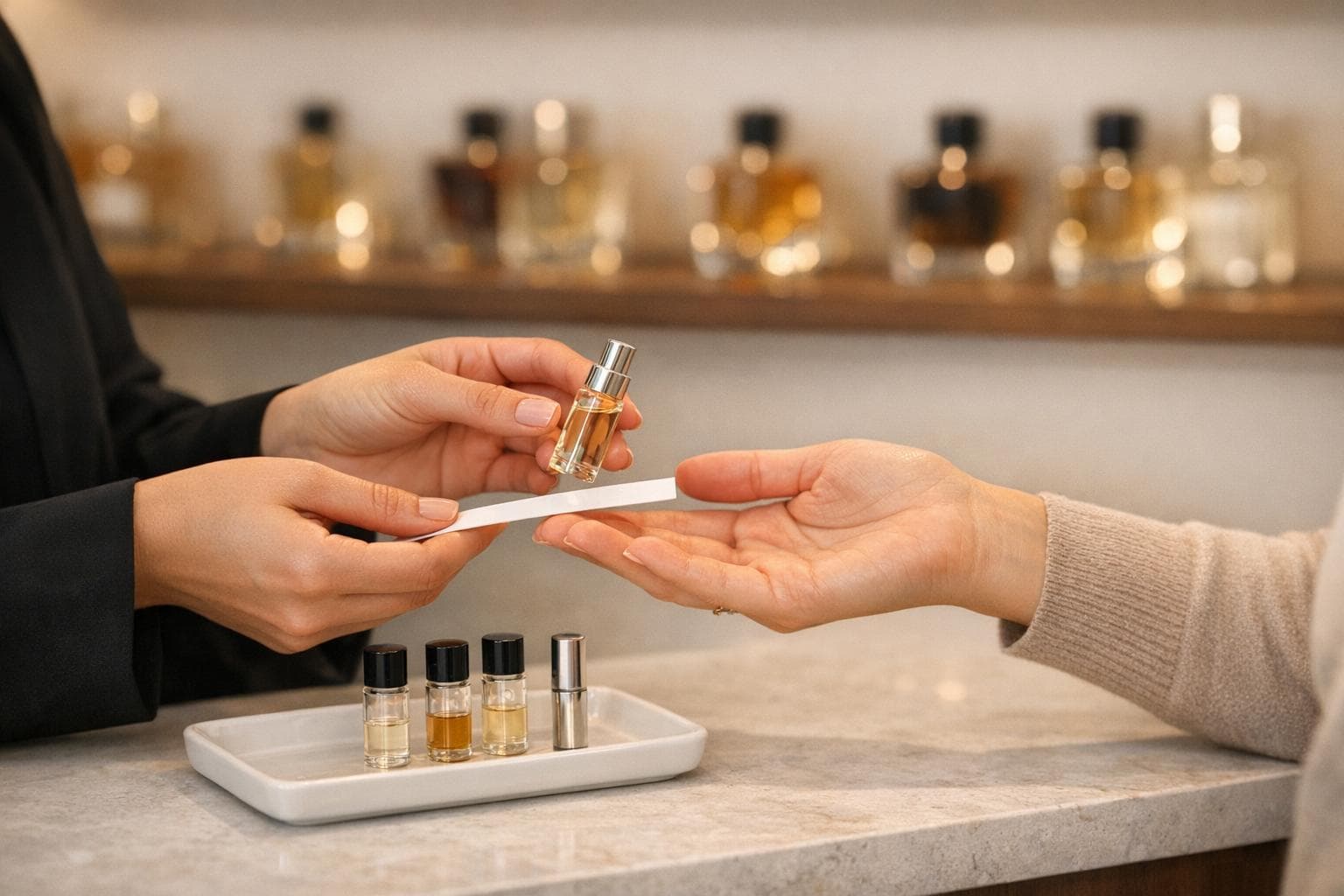
A niche parfümériák alapjaiban írják át a parfümvásárlás élményét. A fősodorbeli márkákkal ellentétben az exkluzív illatokra, a személyre szabott vásárlói élményre és a kis szériás kézműves alkotásokra helyezik a hangsúlyt. Ezek az üzletek olyan egyedi kompozíciókat kínálnak, amelyekben merész jegyek – például füst vagy gyanta – kapnak helyet, megszólítva mindazokat, akik az önkifejezés művészi formájaként tekintenek az illatokra. Ezt az átalakulást több meghatározó trend is hajtja:
- Illatgardrób kialakítása: A vásárlók ma már különféle hangulatokhoz, évszakokhoz és alkalmakhoz válogatnak illatkollekciókat, elszakadva az egyetlen, állandó védjegyként használt parfümtől.
- Felfedező méretek: A kisebb méretű dekantok (2 ml-től 8 ml-ig) lehetővé teszik, hogy a vásárlók több illatot is kipróbáljanak anélkül, hogy rögtön egy egész üvegre elköteleznék magukat.
- Tiszta összetevők: Számos niche márka az átláthatóságra és a mesteri kidolgozottságra összpontosít, harmonizálva a kortárs értékekkel.
A mainstream parfümforgalmazók ezzel szemben a könnyű elérhetőséget és az azonnali felismerhetőséget részesítik előnyben, ám gyakran hiányzik belőlük az a mélység és egyediség, amit a niche üzletek képviselnek. Bár a fősodorbeli opciók kényelmesek és megfizethetőek, a niche butikok jóval személyre szabottabb, exkluzívabb élményt nyújtanak az illatok szerelmeseinek.
1. Niche parfümériák
Exkluzivitás és kézműves mestermunka
A niche parfümházak olyan illatok megalkotására törekednek, amelyek felülemelkednek a tiszavirág-életű divathullámokon. A fősodorbeli márkákkal szemben, amelyek jelentősen támaszkodnak a fogyasztói tesztekre, a niche parfümőrök bátran kísérleteznek rendhagyó, merész jegyekkel, mint a füst, a széna vagy a gyanta. Ez a szemlélet a művészi kifejezést a tömeges tetszés elé helyezi.
A mestermunka iránti elhivatottság nemcsak magukban az illatokban, hanem megjelenésükben is megmutatkozik. Számos niche márka természetes abszolútumokat és egyedi kivonási eljárásokat alkalmaz, hogy olyan illatokat hozzon létre, amelyek a fejjegyektől az alapjegyekig varázslatosan bontakoznak ki a bőrön. A csomagolás gyakran híven tükrözi ezt az aprólékos figyelmet: a letisztult formatervezés, a prémium minőségű anyagok és a nehezebb üvegek mind a kifinomult luxus érzetét keltik. Mivel terjesztésüket a kiválasztott butikokra és exkluzív csatornákra korlátozzák, ezek a márkák a ritkaság és az autentikus önkifejezés auráját sugározzák. A minőség melletti kompromisszummentes elkötelezettség a vásárlási élményben is tetten érhető, bensőséges és személyre szabott utazást kínálva.
Személyre szabott vásárlási élmények
Christopher Yu, a United Perfumes ügyvezető igazgatója és az Ostens társalapítója tökéletesen rávilágít a niche parfümházak kivételes szerepére:
Történelmileg, és ma még inkább, alternatív hangot képviselnek a fősodorbeli illatokkal szemben.
A niche butikok azáltal emelik magasabb szintre a vásárlás élményét, hogy magával ragadó történeteket szőnek kreációik köré. Ezek a narratívák gyakran bepillantást engednek az inspirációkba, a ritka alapanyagokba és az egyes alkotások mögött rejlő kreatív folyamatokba, így minden egyes vásárlás valóban jelentőségteljessé válik.
Ami igazán megkülönbözteti ezeket az üzleteket, az a munkatársak szakértelme. A kiválóan képzett tanácsadók értőn kalauzolják el a vásárlókat az illatok összetett világában – bemutatva az illatjegyek felépítését, a koncentrációkat, valamint azt, hogy az egyes aromák miként alakulnak át az idő múlásával. Ez a fajta személyre szabott odafigyelés felbecsülhetetlen értékű a hatalmas, mintegy 52 milliárd eurós parfümpiactér útvesztőiben. Sokak számára a parfümök személyes, tapintható és érzéki tesztelése pótolhatatlan élmény marad, ami megerősíti a fizikai üzletek alapvető fontosságát a niche kiskereskedelemben.
Elérhetőség és felfedezési lehetőségek
Bár a niche parfümöket hagyományosan az exkluzivitással társítják, a butikok kreatív felfedezési lehetőségekkel gondolták újra az elérhetőséget. Hogy elkerüljék a teljes méretű üvegek megvásárlásából adódó felesleget, sok helyen kisebb dekantokat kínálnak, amelyek révén a vásárlók sokféle illatot fedezhetnek fel anélkül, hogy jelentős anyagi elköteleződést vállalnának. Egy 8 ml-es fiola például körülbelül 120 fújásra elegendő – ez bőségesen elegendő ahhoz, hogy a parfümöt különböző alkalmakkor és évszakokban is ki lehessen próbálni.
Ez a megközelítés tökéletesen rezonál a modern vásárlók megváltozott igényeivel. Az „illatgardrób” kialakításának tendenciája, ahol a parfümrajongók különféle hangulatokhoz és eseményekhez gyűjtenek illatokat, még inkább felerősítette a keresletet az ilyen megoldások iránt. Az előfizetéses szolgáltatások és a felfedező készletek, amelyek például gyantás ámbrás vagy friss citrusos kategóriák szerint válogatják össze a kreációkat, hibátlanul szolgálják ki ezt az új irányt.
Különcök, egyediek és drágák – miért hódítanak a niche parfümök Montréalban?
2. Fősodorbeli parfümforgalmazók
Szemben a niche butikokkal, amelyek az exkluzivitásra és a gazdag történetmesélésre építenek, a mainstream parfümériák a kiegyensúlyozott minőséget, a könnyű elérhetőséget és az azonnali felismerhetőséget helyezik a középpontba.
Exkluzivitás és kézműves mestermunka
A fősodorbeli parfümériák – amelyek áruházakban, drogériákban és bevásárlóközpontokban találhatók – más szemlélettel közelítenek az illatokhoz. Kínálatuk javarészt olyan nagy divatházak és kozmetikai márkák termékeiből áll, mint a Chanel, a Dior és a Versace. E márkák számára a parfüm gyakran a márkaidentitás kiterjesztése, nem pedig az elsődleges fókuszpont. Magukat az illatokat széles közönség igényeihez igazítják, ismerős akkordokat alkalmazva, mint a tiszta pézsmák, a könnyed virágos és a friss fás jegyek. Az alapos fogyasztói tesztek garantálják, hogy a kompozíciók könnyen megszerethetők és harmonikusak legyenek, megcélozva a „szerelem első szippantásra” élményét.
Vegyünk például egy 100 ml-es Chanel üveget: a mintegy 150 eurós árcédula nem pusztán magát az illatot tükrözi, hanem a csomagolást, a kereskedelmi árrést és a jelentős marketingköltségvetést is. Ezeket a parfümöket úgy alkotják meg, hogy könnyen felismerhetők, kiválóan ajándékozhatók és a mindennapi viseletre tökéletesen alkalmasak legyenek, a megbízhatóság és biztonság érzését nyújtva.
Bár magukat az illatokat gondosan a széles rétegek tetszéséhez finomítják, ezen üzletek népszerűségében maga a vásárlási élmény is kulcsszerepet játszik.
Személyre szabott vásárlási élmények
A mainstream kereskedők a globális márkaimázsra és a széles körű ismertségre támaszkodnak az eladások növelése érdekében. A marketingkampányok, a hírességek ajánlásai és a kidolgozott reklámok biztosítják, hogy az illatok kiemelkedjenek a polcokról. A vásárlási élményből azonban gyakran hiányzik az a személyes érintés, ami a niche butikok sajátja. Az áruházak pultjai alapszintű segítséget nyújtanak a termékekhez, ám ritkán merülnek el az illatok mögött rejlő mélyebb történetekben vagy inspirációkban.
Elérhetőség és felfedezési lehetőségek
A mainstream kiskereskedők legnagyobb vonzereje az elérhetőség és a kényelem. Parfümjeik mindenütt megtalálhatók – drogériákban, bevásárlóközpontokban és a repülőtéri vámmentes üzletekben is. Ez a széles körű jelenlét rendkívül egyszerűvé teszi az illatok kipróbálását és a kedvencek újravásárlását.
Az elérhetőség további javítása érdekében sok divatház ma már utazó méreteket is forgalmaz, megkönnyítve az illatok tesztelését és hordozhatóságát. Egy 30 ml-es üveg például mintegy 300–450 fújásra elegendő, míg egy kompakt 10 ml-es kiszerelés nagyjából 100 fújást biztosít. Ez a megoldás csökkenti az első vásárlás anyagi kockázatát, és ösztönzi az újbóli választást.
Összességében a fősodorbeli parfümeladók ereje abban rejlik, hogy képesek ötvözni a jól ismert márkaneveket a könnyen hozzáférhető termékekkel, így stabil választást jelentenek a mindennapi illatszükségletek kielégítésére.
Személyes illatszakértője már várja
Töltse ki rövid illatkvízünket, és fedezzen fel hiteles designer és niche parfümöket, amelyek az ízléséhez illenek – próbálja ki őket 2–8ml-es dekantokban és mintákban, hogy mindegyiket kipróbálhassa, mielőtt teljes flakon mellett dönt.
Találja meg illatátÉrvek és ellenérvek
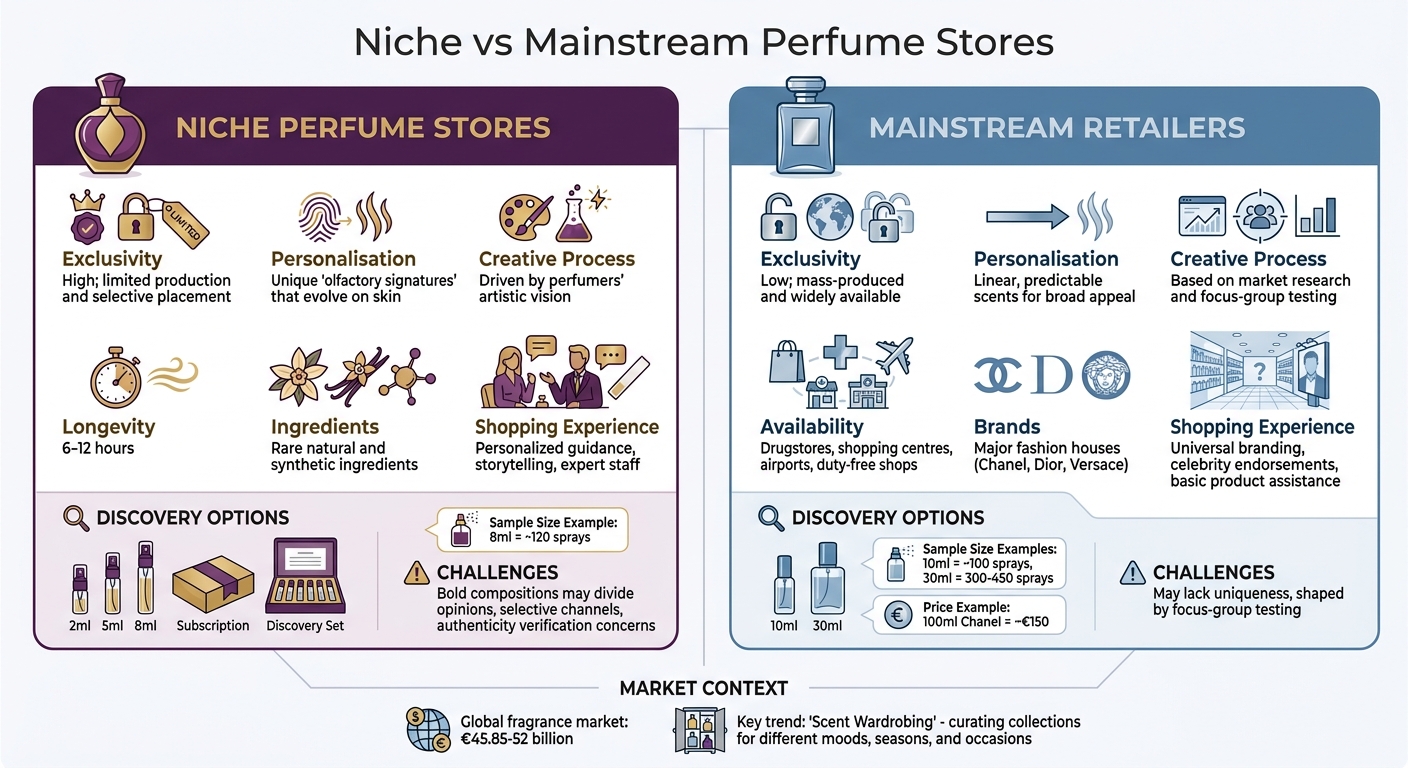
Niche vs Mainstream Perfume Stores: Key Differences Comparison
A niche és a mainstream megközelítés összehasonlítása után vizsgáljuk meg mindkét irány legfőbb előnyeit és kihívásait.
A niche butikok és a mainstream parfümériák eltérő prioritásoknak felelnek meg, és más-más előnyöket kínálnak attól függően, hogy mi a legfontosabb szempont a vásárlás során. A niche szalonok az exkluzivitás és a személyre szabottság terén jeleskednek. Kis tételben, művészi gondossággal megalkotott kompozíciókat kínálnak, amelyek a viselőjük személyiségének természetes folytatásaként hatnak. Ahogyan Ian Darcy az Alexandria UK részéről fogalmaz:
Ha olyan niche illatot viselsz, amely igazán rezonál a személyiségeddel, az az egyediség láthatatlan auráját teremti meg körülötted, és még azelőtt magabiztosságot sugároz, hogy megszólalnál.
Ezek az illatok gyakran ritka összetevőket használnak – természeteseket és szintetikusakat egyaránt –, és tartósságukat jellemzően hat és tizenkét óra közé tervezik. Fókuszukban a történetmesélés és az individualizmus áll, így tökéletes választást jelentenek azok számára, akik személyes és kifejező illatra vágynak.
Másrészről a niche parfümöknek is megvannak a maguk kihívásai. Merész megfogalmazásaik olykor megosztják a véleményeket: ami az egyik ember számára a tökéletes összhang, az másnak talán túl intenzív vagy hétköznapi viseletre alkalmatlan. Ezenkívül, mivel a niche parfümöket szigorúan válogatott csatornákon értékesítik, az eredetiség ellenőrzése olykor körültekintést igényelhet. Bár ez az exkluzivitás fokozza a vonzerejüket, a mindennapi praktikum szempontjából némi korlátot jelenthet.
A fősodorbeli forgalmazók ezzel szemben orvosolják a niche kínálat ezen hiányosságait. Páratlan kényelmet biztosítanak, hiszen az illatok elérhetők drogériákban, plázákban és a repülőtereken is. Ez hihetetlenül egyszerűvé teszi a mintázást és az utánpótlást. Az utazó méretű flakonok (30 ml, mintegy 300–450 fújással) az első vásárlók számára az anyagi elkötelezettséget is mérséklik. Ez a hozzáférhetőség azonban gyakran az egyediség rovására megy: a fókuszcsoportos kutatások alapján formált tömegpiaci parfümökből sokszor hiányzik az az egyéniség, amely különösen a fiatalabb generációk, köztük a Z generáció számára oly vonzó.
| Szempont | Niche parfümériák | Mainstream kiskereskedők |
|---|---|---|
| Exkluzivitás | Magas; korlátozott darabszám és szelektív értékesítés | Alacsony; tömeggyártott és széles körben elérhető |
| Személyre szabottság | Egyedi, bőrön átalakuló „illatjegyek és szignatúrák” | Lineáris, kiszámítható illatok a széles körű tetszésért |
| Kreatív folyamat | A parfümőr művészi látásmódja vezérli | Piackutatásra és fókuszcsoportos tesztekre épül |
Azok számára, akik egyedi és személyes illatélményt keresnek, a niche parfümök jelentik a tökéletes utat. Ha a kényelem és a gyors elérhetőség a fő szempont, a fősodorbeli opciók jobb választásnak bizonyulhatnak. Ha pedig vonzzák a niche kreációk, de még nem kötelezné el magát egy teljes üveg mellett, a felfedező szettek (jellemzően 2 ml és 10 ml közötti minták) költséghatékony lehetőséget nyújtanak a komplex illatok felfedezésére anélkül, hogy nagyobb összeget kellene befektetnie. Mindkét megközelítésnek megvan a maga helye és szerepe a folyamatosan fejlődő parfümpiactéren.
Összegzés
A mainstream márkák kétségkívül kényelmet és alacsonyabb árakat kínálnak, ám a niche butikok szilárd pozíciót vívtak ki maguknak az egyediség, a művészi kidolgozottság és a személyes kapcsolat révén. Ez az egyre erősödő trend egyértelműen mutatja, hogy alapjaiban változik meg a vásárlók hozzáállása a parfümökhöz.
Ahogyan fentebb láthattuk, a niche üzletek jóval személyre szabottabb környezetet nyújtanak, amely harmonizál a kézműves alkotások és az autentikus önkifejezés iránti igénnyel. Ezek a műhelyek a tömeges tetszés helyett az alkotói integritást tartják szem előtt: ritka alapanyagokat használnak, és hírességek bevonása helyett lebilincselő történeteket mesélnek el. Ez a szemlélet különösen azokhoz szól, akik a parfümben az önkifejezés mélyen intim formáját látják, nem pedig csupán egy kellemes illatot.
A globális parfümpiactér – amelynek értéke hozzávetőlegesen 45,85 milliárd euró – hűen tükrözi ezt a kettősséget, bőséges teret hagyva mind a fősodorbeli, mind a niche szereplőknek. Hasonló ez a független zenék világához: a kisebb, innovatív hangok formálják a szélesebb iparágat, és olyan trendeket indítanak el, amelyeket még a legnagyobb márkák sem hagyhatnak figyelmen kívül.
Mindazoknak, akik valami igazán személyesre vágynak, a niche parfümériák páratlan lehetőséget tartogatnak. A felfedező méretű dekantok segítségével kötelezettségek nélkül próbálhatók ki az illatok, megfigyelve, hogyan bontakoznak ki a bőrön a nap folyamán. Az olyan platformok, mint a Scento, mindezt még könnyebbé teszik: dizájner és niche parfümökből összeállított kínálatukkal segítenek felfedezni az új kedvenceket, és csökkentik a kihasználatlanul maradó üvegek jelentette pazarlást.
Gyakran Ismételt Kérdések
Honnan tudhatom, hogy egy niche parfüm illik-e hozzám?
Annak megállapításához, hogy egy niche parfüm megfelelő-e az Ön számára, érdemes figyelembe venni az alábbi szempontokat:
- Illatpreferenciák: A niche kompozíciók mesteri megalkotottságukról ismertek; gyakran tartalmaznak ritka összetevőket és olyan egyedi illatprofilokat, amelyek határozottan elkülönülnek a megszokott fősodortól.
- Tesztelési lehetőségek: Válasszon kisebb dekantokat, például 8 ml-es mintákat, hogy több illatot is próbára tehessen, mielőtt egy teljes méretű üvegre beruházna. Ez a módszer segít megtalálni azt, ami igazán összhangban van Önnel.
- Filozófia és értékek: Sok niche márka nagy hangsúlyt fektet a környezettudatos megoldásokra és az individualizmusra, így ideálisak mindazok számára, akiknek fontos a fenntarthatóság és az egyedi önkifejezés.
Milyen mintamérettel érdemes kezdenem: 2 ml vagy 8 ml?
Egy 8 ml-es minta tökéletes választás, ha szeretne több időt szánni egy illat mélyebb megismerésére, és több alkalom során felfedezni annak különféle rétegeit. Ezzel szemben egy 2 ml-es minta kiváló a gyors benyomásszerzéshez és a rövid próbához. A döntés attól függ, mennyi időt és figyelmet kíván szentelni a kompozíció megismerésére.
Hogyan kerülhetem el a hamisított niche parfümök megvásárlását?
A hamisítványok elkerülése érdekében mindig megbízható forrásból vásároljon. Válasszon szakosodott butikokat vagy olyan hiteles platformokat, mint a Scento, amely eredeti dizájner és niche illatok forgalmazására specializálódott. Az ellenőrzött forgalmazók választása nemcsak kizárja a hamis termékek kockázatát, hanem garantálja az elvárt kiváló minőséget is.

