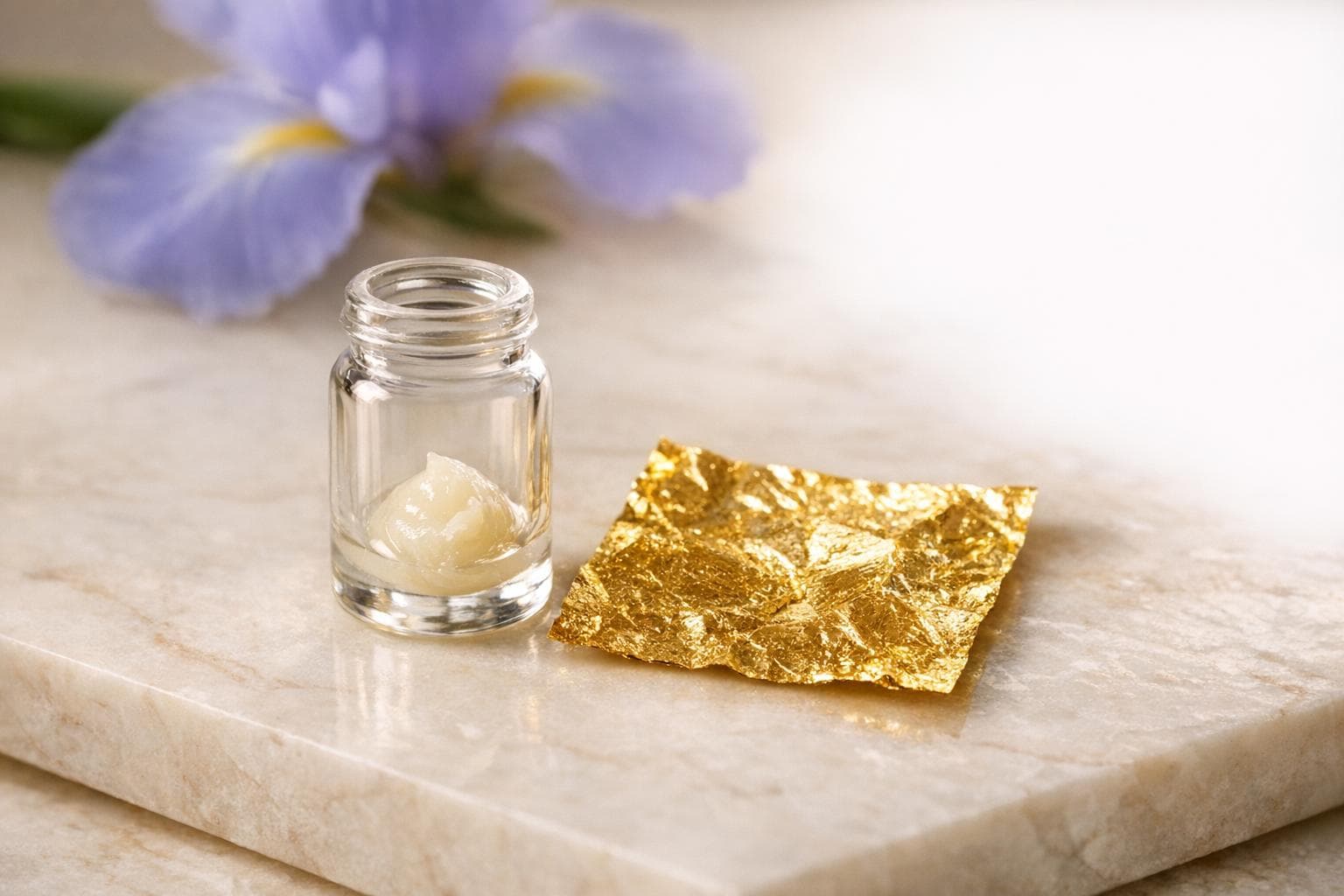
Irisul, sau mai exact rizomii sai, a devenit unul dintre cele mai scumpe ingrediente din parfumerie. In 2026, absolutul de orris - extractul obtinut din radacinile de iris - costa peste 100.000 € pe kilogram, depasind aurul, care se tranzactioneaza la aproximativ 85.000 € pe kilogram. Acest pret uluitor provine dintr-un proces extrem de laborios, care dureaza aproape un deceniu si necesita 500.000 de flori pentru a produce doar 1 kg de absolut de orris.
Motivele principale pentru acest cost ridicat:
- Ciclu lent de productie: Rizomii de iris au nevoie de 3–4 ani pentru a ajunge la maturitate si necesita inca cativa ani de maturare.
- Munca manuala: Recoltarea, curatarea de coaja si procesarea sunt realizate in intregime manual.
- Randament scazut: 1.000 kg de rizomi proaspeti produc doar 2 kg de unt de orris.
- Riscuri de mediu: Daunatorii, ciupercile si conditiile climatice pun in pericol culturile in timpul procesului de maturare.
In ciuda alternativelor sintetice, orrisul natural ramane apreciat pentru aroma sa complexa - pudrata, lemnoasa si cremoasa - si pentru capacitatea sa de a prelungi longevitatea parfumului. Brandurile de lux continua sa foloseasca irisul pentru a exprima exclusivitatea, dar cu un pret pe masura: parfumurile de inalta clasa pe baza de iris se vand adesea cu peste 300 €.
Doriti sa experimentati irisul fara sa cheltuiti o avere? Platformele de mostre precum Scento ofera decanturi incepand de la 12,90 €, permitandu-va sa explorati parfumuri premium precum Prada Infusion d’Iris (147 €) sau Loewe Iris Root (395 €) fara a fi nevoie sa achizitionati o sticla intreaga.
CELE MAI SCUMPE INGREDIENTE DIN PARFUMERIE
Ce este irisul si de ce conteaza atat de mult in parfumerie?
Irisul este una dintre cele mai usor de recunoscut flori din lume, insa in parfumerie adevarata sa valoare se ascunde sub pamant - in rizomii sai.
Floarea de iris vs. radacina de orris: Ce folosesc parfumierii in realitate
Desi floarea de iris in sine este spectaculoasa, ea nu produce niciun ulei aromat. In schimb, parfumierii apeleaza la rizomii plantei - tulpinile groase subterane ale unor specii precum Iris pallida, Iris germanica si Iris florentina. Acesti rizomi proaspeti nu au miros, insa dupa ani intregi de maturare atenta, dezvolta parfumul inconfundabil pe care il asociem cu irisul.
„Irisul este planta... insa mirosul pe care il asociem cu «irisul» in parfumerie nu provine din floare. Acea inflorescenta remarcabila nu produce ulei parfumat. Adevarata magie se naste sub pamant.” - Gustavo Romero, Fragrance Consultant
Aceasta transformare necesita timp. Pe parcursul a trei sau mai multi ani, compusii numiti iridali se oxideaza in irone, substantele responsabile pentru aroma cremoasa si pudrata pentru care irisul este atat de apreciat. Rizomii maturati sunt apoi macinati pana devin o pulbere fina si distilati cu abur pentru a produce untul de orris, o rasina ceroasa cu un continut de aproximativ 15% irone. Pentru o forma si mai concentrata se creeaza absolutul de orris, care contine pana la 80% irone.
Acest proces laborios este cel care confera irisului locul sau distinct si plin de lux in universul parfumeriei.
Cum miroase irisul si de ce il folosesc parfumierii
Parfumul irisului este o compozitie complexa: pudrat, lemnos, onctuos si pamantiu, cu nuante subtile de violeta, piele intoarsa si chiar un accent mineral. In comparatie cu violeta, este mai putin dulce si mai bine ancorat, oferind un caracter sofisticat si matur.
„Orrisul este discret, dar de neuitat. Este fin si textural, pudrat fara a fi superficial... Nu doar parfumeaza o compozitie; ii defineste intreaga atmosfera.” - Gustavo Romero, Fragrance Consultant
Irisul nu este pretuit doar pentru aroma sa inedita. El actioneaza si ca un fixator natural, ajutand la ancorarea notelor de varf si de mijloc, astfel incat parfumul sa persiste mai mult timp pe piele. In plus, joaca rolul de armonizator, estompand asprimile dintr-o compozitie pentru a crea un amestec echilibrat si cizelat. Bella Varghese, Fragrance Development Manager la dsm-firmenich, explica: „Doar o urma din el lasa o impresie uimitor de intensa.”
Aceasta armonie intre parfum, textura si rolul sau de fixator face irisul incredibil de versatil. Straluceste in creatii feminine precum Floral Street Iris Goddess si in compozitii masculine precum Tom Ford Fucking Fabulous. Asa cum subliniaza Connection Parfumerie, irisul este „puloverul de casmir al notelor din parfumerie: discret, rafinat si inconfundabil de luxos.”
De ce costa irisul mai mult decat aurul in 2026
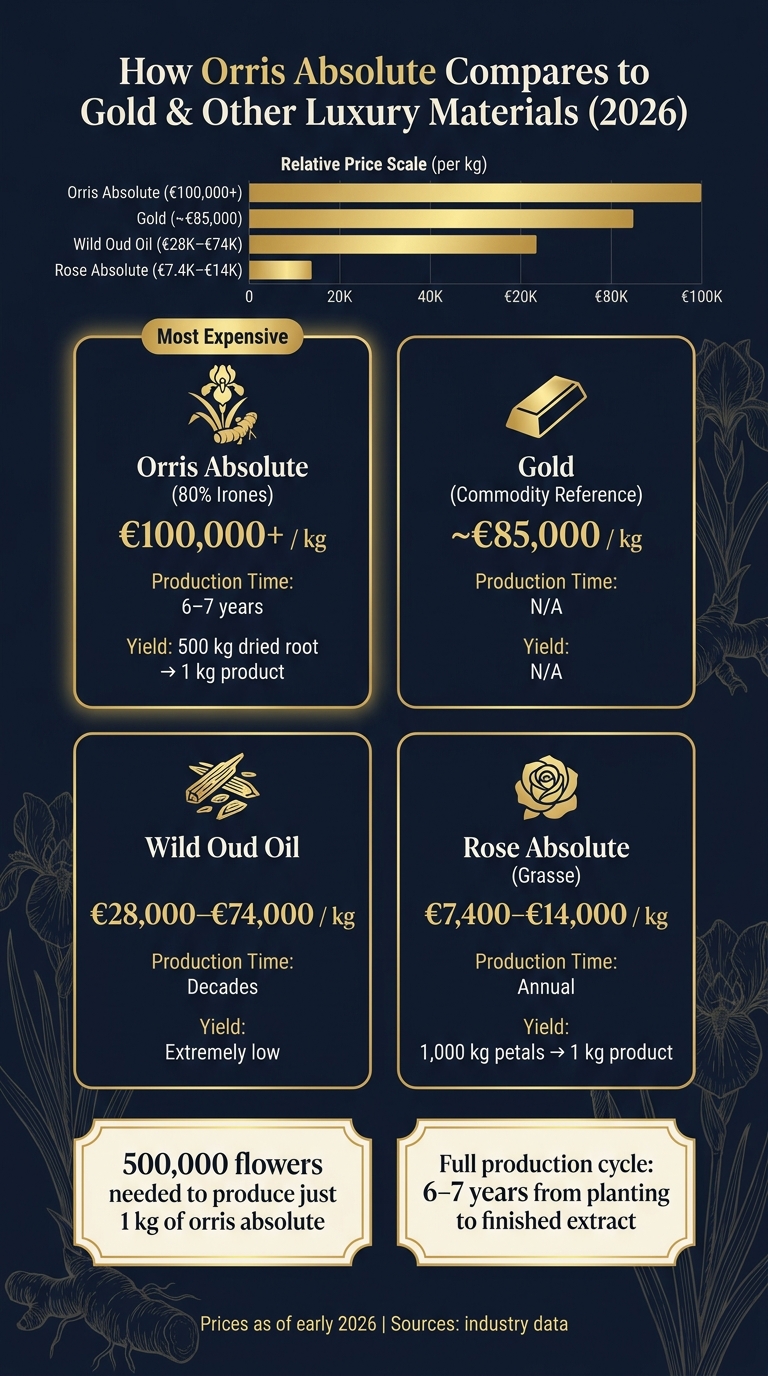
Orris Absolute vs. Gold & Other Luxury Materials: 2026 Price Comparison
La inceputul anului 2026, aurul este evaluat la aproximativ 85.000 € pe kilogram, in timp ce absolutul de orris - forma extrem de concentrata de iris pretioasa in parfumeria de lux - atinge preturi de peste 100.000 € pe kilogram. Aceasta diferenta frapanta rezulta dintr-un proces de productie anevoios, de lunga durata si imposibil de adaptat la scara industriala.
Un proces de productie care dureaza ani intregi
Calatoria de la campul de iris pana la absolutul de orris este oricum, dar nu rapida. Cultivarea irisului implica un proces manual regizat cu grija. Butasii sunt plantati manual la mijlocul lunii septembrie, iar rizomii raman in pamant intre trei si patru ani. Cand sunt gata, sunt recoltati cu unelte traditionale, apoi curatati si decojiti manual cu o atentie meticuloasa - o etapa care nu poate fi mecanizata.
La aceasta complexitate se adauga procesul de maturare. Dupa recoltare, rizomii trebuie lasati la maturat timp de cativa ani, ceea ce inseamna ca intregul ciclu - de la plantare pana la produsul finit - dureaza intre sase si sapte ani. Aceasta durata extinsa afecteaza semnificativ atat volumul de productie, cat si costul final.
Provocari si riscuri in agricultura
Dificultatile productiei de iris merg dincolo de factorul timp. Randamentele reduse si riscurile de mediu adauga noi obstacole. De exemplu, 1.000 de kilograme de rizomi proaspeti produc doar 2 kilograme de unt de orris, in timp ce obtinerea unui singur kilogram de absolut de orris poate necesita pana la 500 de kilograme de rizomi uscati.
In timpul etapei de uscare, rizomii depozitati sunt deosebit de vulnerabili la daunatori si ciuperci, care pot distruge munca de ani de zile. In plus, impactul schimbarilor climatice si presiunea asupra terenurilor agricole i-au determinat pe cultivatori, precum Cooperativa Toscana Giaggiolo din Toscana, sa adopte practici agricole ecologice si regenerative. Unii au investit chiar in propriile instalatii de procesare pentru a pastra o valoare mai mare in cadrul lantului de aprovizionare.
Orrisul natural vs. alternativele sintetice
Pretul ridicat al irisului natural contrasteaza puternic cu cel al inlocuitorilor sintetici. Iononele de sinteza, spre exemplu, reproduc latura pudrata de violeta a irisului la o fractiune din pret si sunt utilizate frecvent in parfumurile mass-market. Cu toate acestea, orrisul natural ofera un profil incomparabil mai nuantat, cu tonuri minerale si onctuoase si o compozitie complexa de peste 400 de compusi. Aceasta profunzime si bogatie senzoriala nu pot fi replicate sintetic.
„Utilizarea acestui ingredient face diferenta intre parfumeria artistica si parfumeria industriala.” - Gianluca Foà, Chief Commercial Officer la Farmaceutica di Santa Maria Novella
Cum se compara orrisul cu alte materiale pretioase
Pentru a privi costul absolutului de orris in perspectiva, iata o comparatie cu alte materii prime de mare valoare in 2026:
| Material | Pret 2026 (€/kg) | Timp de productie | Randament |
|---|---|---|---|
| Orris Absolute (80% irone) | 100.000 €+ | 6–7 ani | 500 kg radacina uscata : 1 kg |
| Aur (referinta de piata) | ~85.000 € | N/A | N/A |
| Ulei de oud salbatic | 28.000 €–74.000 € | Decenii | Extrem de scazut |
| Absolut de trandafir (Grasse) | 7.400 €–14.000 € | Anual | 1.000 kg petale : 1 kg |
Pentru casele de parfumuri de lux, includerea orrisului natural nu inseamna doar crearea unei arome deosebite. Este o alegere constienta ce subliniaza maiestria artizanala si calitatea, al carui cost ridicat este integrat in produsul final cu mult inainte ca parfumul sa ajunga pe rafturi.
Expertul tău personal în parfumuri te așteaptă
Completează testul nostru rapid de parfumuri și descoperă parfumuri designer și de nișă autentice, alese pe gustul tău – explorează-le ca decanturi și mostre de 2–8ml, ca să le poți încerca pe fiecare înainte de a alege un flacon întreg.
Descoperă-ți parfumulCum influenteaza costul irisului pretul parfumurilor de lux
Ce efect are irisul asupra costului de productie al unui parfum
Procesul complex si indelungat de extractie a untului de orris, prezentat anterior, joaca un rol determinant in cresterea pretului parfumurilor de lux. Untul de orris, extras din radacinile de iris, este una dintre cele mai scumpe materii prime din parfumerie. Pentru a va face o idee despre valoarea sa, chiar si o cantitate infima poate costa un parfumier impresionanta suma de 50.000 €.
„O cantitate minuscula de unt de orris ii poate costa pe parfumieri aproximativ 50.000 $.”
Acest pret astronomic transforma irisul intr-un factor dominant in cheltuielile de productie ale parfumurilor centrate pe aceasta nota. Pentru a tine costurile sub control, multe marci folosesc o combinatie de ionone sintetice si o cantitate discreta de orris natural. Acest melanj le permite sa pastreze textura inconfundabila si proprietatile fixative ale irisului fara a depinde exclusiv de ingredientul natural atat de costisitor.
De ce folosesc brandurile irisul ca simbol al luxului
Orrisul are o asociere indelungata cu exclusivitatea si sofisticarea. In secolul al XVIII-lea, era un element nelipsit la curtile regale europene, fiind folosit pentru a parfuma perucile si manusile nobilimii. Aceasta mostenire a rafinamentului dainuie si astazi, irisul fiind considerat o emblema a parfumeriei artistice, de elita. Expertul in parfumuri Daniel Figuero surprinde perfect aceasta idee:
„Irisul este practic puloverul de casmir al lumii parfumurilor: clasic, scump si elegant.”
Pe langa valoarea sa simbolica, orrisul indeplineste si un rol practic, imbunatatind persistenta parfumului. Aceasta dubla functie - desavarsind atat experienta olfactiva, cat si performanta creatiei - ii consolideaza reputatia de ingredient esential in compozitiile de lux. Cu toate acestea, desi adauga un prestigiu incontestabil, irisul contribuie direct si la preturile ridicate care pot face aceste parfumuri mai greu accesibile publicului larg.
Dificultatea achizitionarii unui parfum de iris in 2026
Parfumurile bogate in iris vin insotite de o provocare aparte: complexitatea lor se dezvaluie treptat, facand dificila aprecierea intregului profil olfactiv dintr-o simpla testare rapida. Acest lucru este deosebit de riscant avand in vedere preturile ridicate ale acestor creatii. Pe piata germana din 2026, pretul parfumurilor cu iris variaza semnificativ in functie de concentratia de orris natural utilizata:
| Parfum | Pret de retail (€) | Segment de piata |
|---|---|---|
| Loewe „Iris Root” | 395 € | Luxury Designer |
| Byredo „Eyes Closed” | 165 € | Niche Premium |
| Prada „Infusion d’Iris” | 147 € | Premium Designer |
| Heeley „Iris de Nuit” | 145 € | Niche Premium |
Ceea ce face ca parfumurile pe baza de iris sa fie atat de captivante, dar si pretentioase, este modul lor de evolutie. Spre deosebire de aromele mai simple care isi arata adevarata fata aproape instantaneu, compozitiile cu iris se transforma pe parcursul mai multor ore. Spre exemplu, o deschidere rece si pudrata se poate transforma in acorduri calde, minerale - sau invers. Aceasta evolutie inseamna ca achizitionarea unei sticle intregi bazata doar pe un test pe un strip de hartie poate duce la dezamagiri, transformand ceea ce ar trebui sa fie o placere luxoasa intr-o greseala costisitoare.
Cum sa incercati parfumuri cu iris fara sa cheltuiti prea mult, folosind Scento
Explorati creatiile pe baza de iris cu decanturile Scento
Parfumurile cu iris sunt renumite pentru profunzimea lor, transformandu-se din note clare si pudrate in tonuri calde, minerale de-a lungul orelor. Aceasta evolutie este o parte din ceea ce le face atat de fascinante - si atat de scumpe. Dar inainte de a investi intr-o sticla intreaga, puteti experimenta aceasta calatorie la un cost accesibil, prin intermediul decanturilor de 2 ml, 5 ml si 8 ml de la Scento. De exemplu, un decant de 5 ml ofera suficiente pulverizari pentru a aprecia pe deplin fiecare strat al parfumului, fiind o modalitate practica de a testa fara a face o cheltuiala mare.
Abonamentul lunar de 8 ml de la Scento: Accesibil si flexibil
Pentru cei care iubesc sa descopere constant noi creatii pe baza de iris, abonamentul lunar de 8 ml de la Scento este solutia ideala. Incepand de la doar 12,90 € per parfum, acest format ofera peste 120 de pulverizari - suficient pentru a va bucura din plin de o aroma, economisind considerabil fata de pretul unei sticle complete. In plus, nu este necesar un angajament pe termen lung, fiind varianta perfecta pentru experimentare.
Parfumuri cu iris pe care le puteti incerca pe Scento
Scento ofera o selectie atent curatoriat de parfumuri cu iris, fiecare evidentiind o fateta diferita a acestei note versatile. Iata cateva optiuni exceptionale:
| Parfum | Profilul irisului | Pret sticla completa |
|---|---|---|
| Prada Infusion d’Iris | Curat, aerisit si de o eleganta atemporala | 147 € |
| Dior Homme | Pudrat, rafinat, cu o nota masculina | - |
| Xerjoff Irisss | Opulent, iris „Blue Gold” de o calitate de nisa | - |
| Loewe Iris Root | Pamantiu, bine ancorat si bogat texturat | 395 € |
Testarea acestora sub forma de decanturi va permite sa descoperiti ce tip de iris rezoneaza cu stilul dumneavoastra personal, evitand in acelasi timp riscul unei achizitii costisitoare si nepotrivite.
Concluzie: Irisul este scump, dar nu trebuie sa platiti pretul intreg
Obtinerea extractului de iris este un proces minutios, de sase ani, care genereaza un randament foarte redus. Aceasta raritate il face unul dintre cele mai scumpe ingrediente de parfumerie, cu preturi ce depasesc 100.000 € pe kilogram. Pentru a pune acest lucru in perspectiva, aurul se tranzactioneaza la aproximativ 85.000 € pe kilogram. Aceasta exclusivitate se reflecta direct in pretul parfumurilor cu iris, care in Germania depasesc frecvent 300 €. Dupa cum a descris atat de inspirat Lena Raab de la Glamour Germany, „Irisul este, ca sa spunem asa, puloverul de casmir al lumii parfumurilor: clasic, scump si elegant.” Casele de parfumuri folosesc irisul pentru a-si pozitiona creatiile ca fiind artizanale si luxoase, la mare distanta de oferta mass-market.
Totusi, pretul piperat al parfumurilor cu iris nu inseamna doar exclusivitate - ci aduce si o provocare. Chimia proprie a pielii influenteaza considerabil modul in care se dezvolta notele de iris, facand riscanta decizia de a cumpara o sticla intreaga fara o testare prealabila. Nuantele minerale, pudrate si pamantii ale radacinii naturale de orris pot varia spectaculos de la o persoana la alta, iar intelegerea modului in care aroma evolueaza pe piele cere timp.
Pentru a gestiona costurile si imprevizibilitatea, testarea este esentiala. Scento ofera o solutie practica prin decanturile de 2 ml, 5 ml si 8 ml, precum si printr-un abonament lunar de 8 ml incepand de la 12,90 €. Aceasta abordare va permite sa explorati creatii precum Loewe Iris Root (sticla intreaga: 395 €) sau Prada Infusion d’Iris (sticla intreaga: 147 €) fara un angajament financiar initial major. Testarea formatelor mici va ofera sansa de a experimenta intreaga transformare a parfumului in timp, asigurandu-va ca este alegerea perfecta inainte de a investi intr-o sticla intreaga.
Intrebari frecvente
Un pret mai mare inseamna ca parfumul contine orris natural?
Nu, un pret mai ridicat nu garanteaza intotdeauna prezenta orrisului natural in parfum. Adevaratul orris provine din rizomi de iris maturati timp de 3 pana la 5 ani, devenind incredibil de costisitor din cauza randamentului redus. Chiar si multe parfumuri high-end se bazeaza pe alternative sintetice de tip „iris” sau „acord de iris” pentru a recrea nota, deoarece costul orrisului natural poate fi prohibitiv - chiar si pentru marile case de lux.
Cum pot sti daca un parfum cu iris se va potrivi cu pielea mea?
Pentru a vedea daca un parfum cu iris reactioneaza armonios cu pielea dumneavoastra, urmariti modul in care evolueaza pe parcursul intregii zile. Irisul incetineste procesul de evaporare, ceea ce inseamna ca aroma ar trebui sa ramana delicata si sofisticata, fara note stridente. Semnatura sa caracteristica - pudrata, pamantie si onctuoasa - se datoreaza radacinilor de iris meticulos maturate. Pe piele, se simte adesea discret si distins, cu o eleganta rafinata care evita dulceata excesiva.
Care este diferenta dintre untul de orris si absolutul de orris?
Untul de orris este un material semisolid, ceros, obtinut prin distilarea cu abur a rizomilor maturati de iris. Datorita continutului sau de acizi grasi, acesta ramane mai putin procesat. Pe de alta parte, absolutul de orris se obtine prin spalarea untului cu alcool, rezultand un extract mult mai concentrat, cu un continut de pana la 80% irone. Acest procedeu ii confera absolutului de orris o textura mai fina si il face mai usor de integrat in compozitii. Cu toate acestea, un asemenea rafinament are un pret pe masura, depasind adesea 92.000,00 € pe kilogram.

