Producția de parfumuri fără apă remodelează industria parfumurilor prin reducerea consumului de apă, a deșeurilor și a consumului de energie. Metodele tradiționale se bazează în mare măsură pe apă și pe solvenți pe bază de alcool, contribuind la epuizarea resurselor și la preocupările de mediu. Noile abordări, precum extracția pe bază de aer și metodele cu CO2 supercritic, păstrează calitatea parfumului, reducând în același timp utilizarea apei și a substanțelor chimice.
Aspecte esențiale:
- De ce este important: Fabricarea parfumurilor consumă cantități semnificative de apă, doar ambalarea utilizând anual până la 800 de miliarde de metri cubi.
- Schimbarea: Tehnici precum nebulizarea cu aer rece și extracția cu CO2 elimină apa și căldura, reducând deșeurile și menținând aromele naturale.
- Cererea consumatorilor: 65% dintre cumpărători preferă produse eco-conștiente. Metodele fără apă reduc, de asemenea, conservanții, îmbunătățesc formulele și permit ambalaje fără plastic.
- Creștere: Se estimează că piața va ajunge la 22,75 miliarde € până în 2034, impulsionată de reglementări mai stricte și de cererea pentru produse sustenabile.
Această transformare oferă parfumuri de calitate superioară, răspunzând totodată provocărilor globale legate de resurse și deschizând calea către un viitor mai curat și mai responsabil în parfumerie.
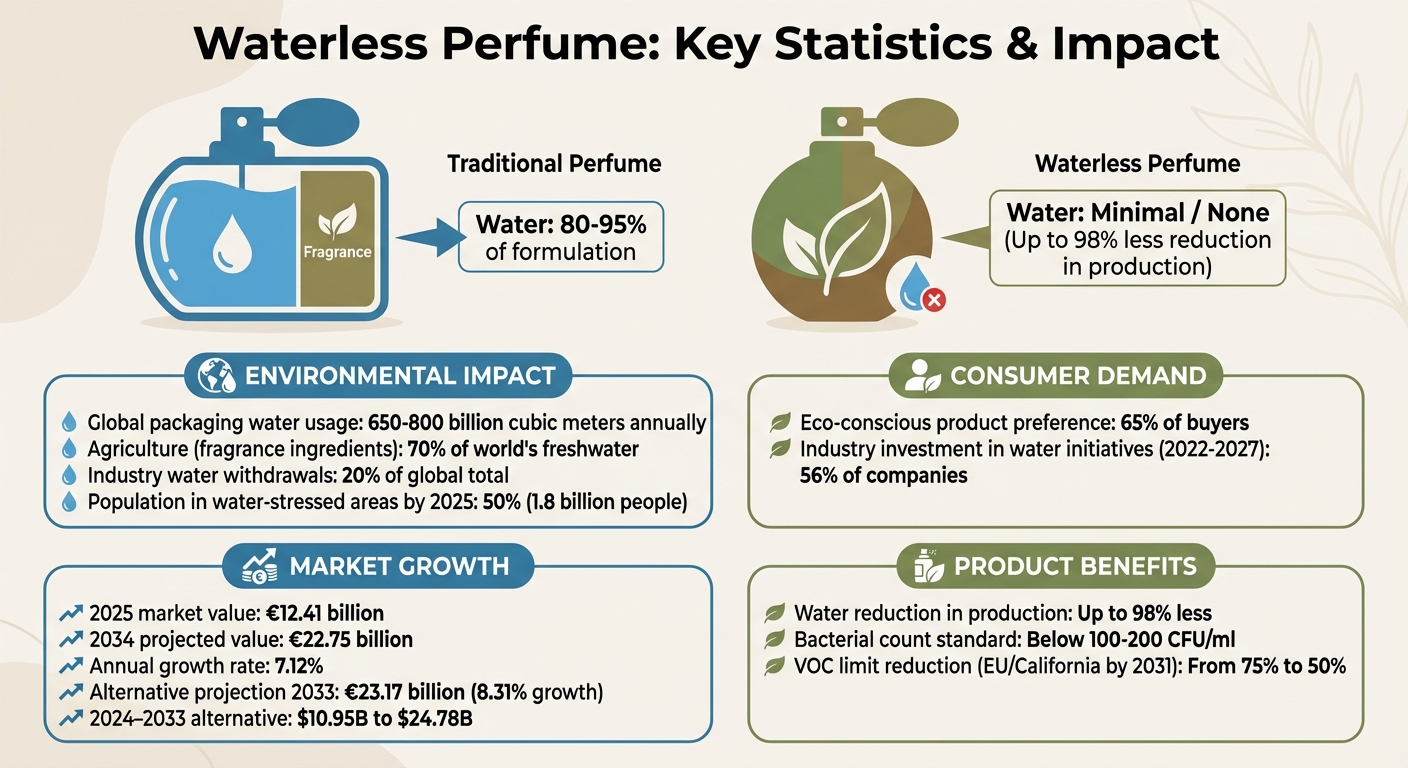
Statistici despre industria parfumurilor fără apă și impactul asupra mediului
Problema: consumul de apă în fabricarea parfumurilor
Utilizarea apei în toate etapele producției
Fabricarea parfumurilor se bazează puternic pe apă în întregul său proces, iar distilarea cu abur se remarcă drept una dintre cele mai intensive etape din punctul de vedere al consumului de apă. Această metodă de extracție utilizată pe scară largă se bazează pe un flux constant de abur pentru a extrage compușii aromatici din materii prime precum florile, ierburile și rășinile. Generarea acestui abur necesită o cantitate considerabilă de energie termică, iar procesele ulterioare de răcire nu fac decât să crească cererea de apă.
Apa nu este esențială doar pentru extracție - ea este indispensabilă și pentru crearea formulărilor de parfum și pentru susținerea altor activități de producție. Unitățile de producție depind de apă purificată, care trebuie să respecte standarde stricte, menținând de regulă numărul de bacterii sub 100–200 UFC/ml. Obținerea acestui nivel de puritate implică sisteme de purificare intensive din punct de vedere energetic. Dincolo de formulare, apa este folosită la curățarea echipamentelor și în operațiunile de ambalare, sporind și mai mult consumul. La nivel global, numai producția de ambalaje utilizează anual între 650 și 800 de miliarde de metri cubi de apă. Această dependență de apă în multiple etape evidențiază provocările ecologice și sociale mai ample asociate producției de parfumuri.
Consecințe asupra mediului
Această utilizare extinsă a apei nu doar epuizează resursele - ci alimentează și o gamă largă de probleme de mediu. Agricultura, care furnizează ingredientele botanice pentru parfumuri, consumă aproximativ 70% din apa dulce a lumii. Culturile cultivate special pentru parfumuri intră adesea în competiție cu comunitățile locale pentru aceste resurse, o provocare care devine deosebit de acută în regiunile predispuse la secetă.
"Industria reprezintă aproximativ 20% din totalul captărilor de apă, iar companiile și consumatorii sunt din ce în ce mai preocupați de impactul asupra mediului al bunurilor pe care le produc și le consumă." – ScienceDirect
Se estimează că situația se va agrava, iar previziunile sugerează că până în 2025, jumătate din populația globală va trăi în zone afectate de stres hidric. Metodele tradiționale de extracție generează ape uzate care necesită tratamente atente, în timp ce energia necesară pentru încălzire, răcire și purificare adaugă un plus la amprenta de carbon a industriei. Pentru a complica și mai mult situația, materiile prime precum florile folosite în distilarea cu abur sunt adesea aruncate după utilizare, ceea ce duce la deșeuri suplimentare. Acești factori subliniază nevoia urgentă de practici mai sustenabile în fabricarea parfumurilor.
Soluția: metode de extracție fără apă
Tehnici de producție fără apă
Industria parfumurilor se orientează către metode de extracție care nu se bazează pe apă, deschizând calea către practici mai sustenabile. O astfel de inovație este extracția pe bază de aer, care captează moleculele parfumate volatile folosind un flux constant de aer la temperaturi ambientale. Acest proces evită complet căldura și petrochimicalele. În decembrie 2023, L’Oréal, în colaborare cu Cosmo International Fragrances, a introdus această tehnologie după cinci ani de dezvoltare. Ea funcționează direct în câmp, păstrând intacte flori precum tuberoza pentru utilizări secundare.
"Această tehnică lentă presupune captarea moleculelor parfumate volatile cu ajutorul fluxului de aer... Florile rămân intacte pe tot parcursul procesului, pot avea o a doua viață și pot fi prelucrate diferit... În acest fel, nu se generează deșeuri." – Alexandrine Demachy, Managing Director France, Cosmo International Fragrances
O altă abordare, extracția cu CO2 supercritic, utilizează dioxid de carbon sub presiune ridicată la temperaturi de până la numai 86°F (30°C). Acționând ca solvent, CO2 se evaporă complet atunci când presiunea este redusă, fără a lăsa reziduuri chimice. „E — Pure Jungle Essences” de la Mane combină această metodă cu enfleurage-ul tradițional pentru a crea extracții fără solvenți.
Tehnologia vibrațiilor electromagnetice, comercializată sub numele Firgood de către dsm-firmenich, utilizează unde electromagnetice pentru a extrage parfumul direct din apa conținută în biomasa vegetală. Astfel, este eliminată nevoia oricărei surse externe de apă. Mélanie Verhille, Sustainable Perfumery Marketing & Communication Director la dsm-firmenich, îi subliniază potențialul: "Firgood deschide noi teritorii olfactive pentru parfumieri, cu fațete diferite și profiluri premium... [aceasta] păstrează integritatea moleculelor olfactive sensibile la căldură".
În cele din urmă, upcycling-ul la rece transformă reziduurile aromatice din industria alimentară în noi ingrediente pentru parfumuri. Tehnologia SymTrap extrage note fructate naturale din sucurile rămase în timpul procesării fructelor. Această metodă la rece, fără solvenți, nu doar creează noi arome, ci contribuie și la reducerea deșeurilor agricole.
Aceste tehnici evită căldura și reziduurile chimice, păstrând adevărata esență a ingredientelor.
Menținerea calității parfumului
Metodele fără apă nu doar conservă resursele, ci excelează și în păstrarea aromelor naturale ale ingredientelor. Spre deosebire de distilarea cu abur, care poate degrada aromele delicate din cauza căldurii, tehnici precum extracția cu aer, CO2 supercritic și vibrațiile electromagnetice operează la sau aproape de temperatura camerei. Acest lucru asigură păstrarea moleculelor volatile exact așa cum se regăsesc în planta vie.
Beneficiile producției de parfumuri fără apă
Reducerea consumului de resurse și a deșeurilor
Prin eliminarea apei ca agent de umplere - de regulă 80% până la 95% din formulele convenționale de parfum - producția fără apă atenuează semnificativ preocupările globale legate de consumul de apă.
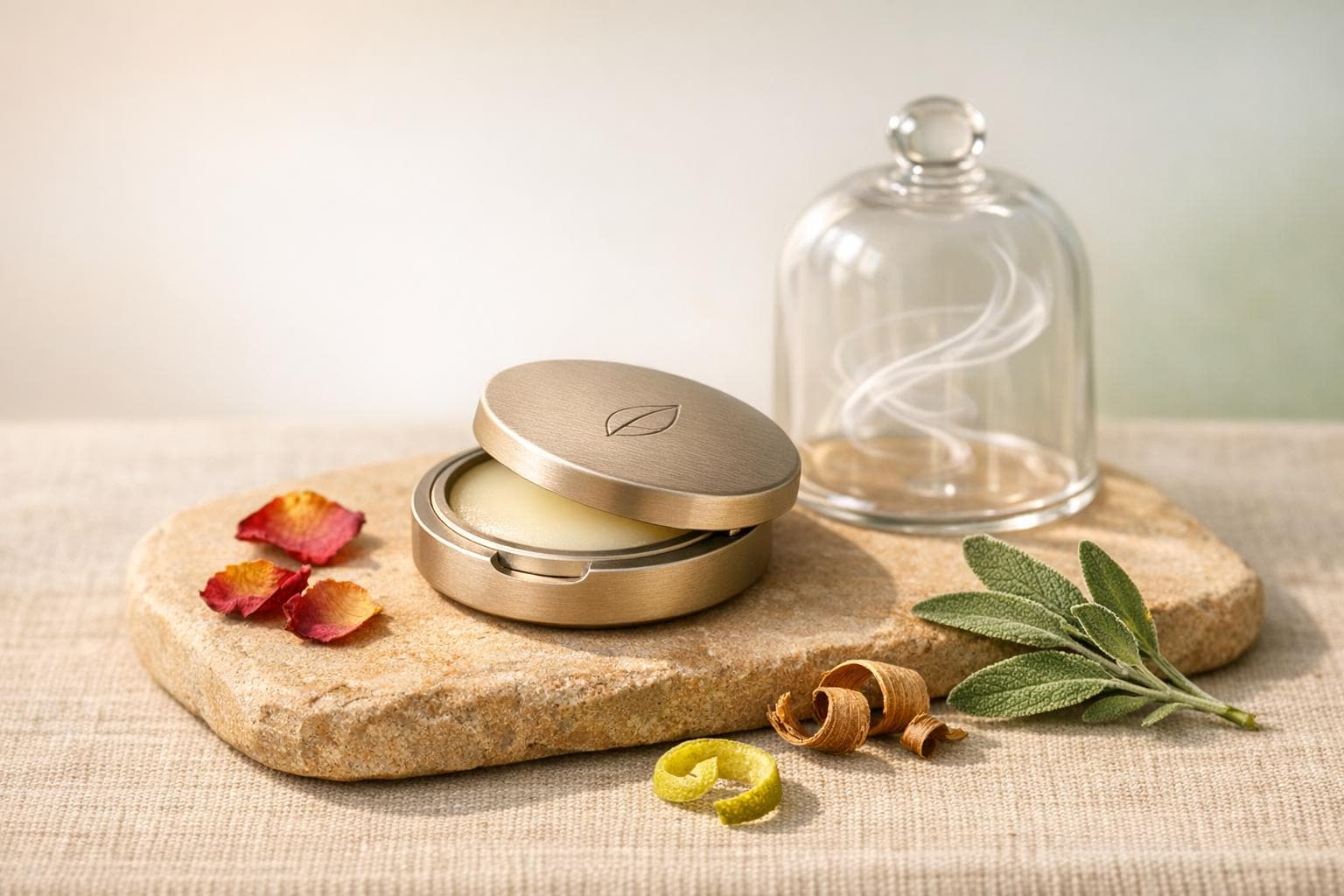
Produse precum parfumurile solide și uleiurile uscate nu doar folosesc mai puțină apă, ci reduc și greutatea și volumul. Acest lucru conduce la costuri mai mici de transport, la scăderea emisiilor de carbon și la reducerea consumului de energie în timpul producției. În plus, în absența apei, riscul de proliferare bacteriană este minimizat. Astfel, brandurile pot reduce utilizarea conservanților sintetici, obținând formule mai curate și mai puține deșeuri. Formatele solide încurajează, de asemenea, utilizarea ambalajelor fără plastic, precum cutii reciclabile sau recipiente biodegradabile, reducând și mai mult deșeurile care ajung la groapa de gunoi.
"Produsele fără apă sunt mai ușoare și mai compacte, reducând emisiile generate de transport și deșeurile de ambalaje. În plus, natura lor concentrată înseamnă că sunt necesari mai puțini conservanți, rezultând formule mai curate, mai puternice și cu o durată de viață extinsă." – DKSH Discover
Aceste eficiențe nu doar simplifică producția, ci se aliniază și cu valorile consumatorilor preocupați de sustenabilitate.
Atractivitate pentru cumpărătorii eco-conștienți
Natura economă în resurse și eficientă din punct de vedere al costurilor a parfumurilor fără apă atrage puternic cumpărătorii eco-conștienți. Acești consumatori apreciază sustenabilitatea și sunt atrași de produse cu formule prietenoase cu pielea, fără conservanți. Multe opțiuni fără apă folosesc uleiuri și ceruri botanice în loc de alcool, ceea ce le face mai blânde cu pielea sensibilă și atrăgătoare pentru cei care caută parfumuri orientate spre wellness.
Parfumurile solide răspund, de asemenea, stilurilor de viață moderne, mereu în mișcare. Natura lor neinflamabilă elimină restricțiile de transport și riscurile de incendiu, iar dimensiunea compactă asigură conformitatea cu cerințele de securitate aeroportuară. Sistemele de ambalare reîncărcabile permit clienților să își completeze aromele preferate fără a cumpăra un recipient nou, promovând o economie circulară și economisind bani. Așa cum explică Nelly Di Mercurio de la CPL Aromas: "Consumatorii de astăzi nu cumpără doar un parfum - cumpără valori. Transparența, sustenabilitatea și grija pentru piele nu mai sunt avantaje suplimentare; ele sunt așteptări".
Expertul tău personal în parfumuri te așteaptă
Completează testul nostru rapid de parfumuri și descoperă parfumuri designer și de nișă autentice, alese pe gustul tău – explorează-le ca decanturi și mostre de 2–8ml, ca să le poți încerca pe fiecare înainte de a alege un flacon întreg.
Descoperă-ți parfumulAdoptarea în industrie și exemple
Branduri care folosesc producția fără apă
Unele dintre cele mai mari nume din industria parfumurilor și a frumuseții adoptă metode de producție fără apă pentru a reduce atât consumul de apă, cât și consumul de energie.
În decembrie 2023, L’Oréal a colaborat cu Cosmo International Fragrances pentru a introduce o tehnologie de extracție „doar cu aer”. Acest proces în curs de brevetare captează moleculele parfumate fără a se baza pe apă, menținând în același timp calitatea originală a parfumului.
Procter & Gamble a intrat pe piața fără apă în 2020 cu brandul său „Waterless”, care include produse precum misturi parfumate, balsamuri uscate și batoane de șampon. Aceste articole folosesc cu până la 98% mai puțină apă în timpul producției și au prețuri cuprinse între 7,99 $ și 9,99 $.
Între timp, Pinch of Colour a mers și mai departe, eliminând complet apa din procesul său de producție. În locul solvenților pe bază de apă, își curăță echipamentele de producție folosind uleiuri precum uleiul mineral sau uleiul de măceșe. Această tendință reflectă o schimbare mai amplă a pieței, care este de așteptat să crească de la 10,95 miliarde $ în 2024 la 24,78 miliarde $ până în 2033.
Aceste progrese sunt completate de inovații în ambalare, care consolidează și mai mult eforturile de sustenabilitate.
Scento: parfumuri de designer în formate eco-friendly
Scento este un exemplu remarcabil al modului în care ambalajul poate contribui la o industrie a parfumurilor mai sustenabilă. Platforma oferă parfumuri de designer și de nișă în decanturi compacte, ideale pentru călătorii, de 0,75 ml, 2 ml și 8 ml, cu o opțiune de abonament pentru formatul de 8 ml.
Această abordare răspunde unei probleme-cheie din lumea parfumurilor: risipa generată de sticlele supradimensionate, care adesea rămân nefolosite. Oferind dimensiuni mai mici și mai practice, Scento contribuie la reducerea risipei de produs, susținând totodată obiectivele producției fără apă. Flacoanele lor de 8 ml, care oferă aproximativ 120 de pulverizări fiecare, nu sunt doar ușoare și compacte, ci necesită și semnificativ mai puțin material de ambalare comparativ cu sticlele tradiționale de 50 ml sau 100 ml. Acest lucru se aliniază cu orientarea industriei către principiile economiei circulare, unde reducerea deșeurilor și optimizarea resurselor sunt obiective centrale.
Viitorul producției de parfumuri fără apă
Creșterea pieței și interesul consumatorilor
În 2025, piața cosmeticelor fără apă era evaluată la 12,41 miliarde €, iar proiecțiile sugerează că ar putea urca la 22,75 miliarde € până în 2034, cu o rată anuală de creștere de 7,12%. Unele estimări prevăd chiar că piața ar putea ajunge la 23,17 miliarde € până în 2033, cu o rată de creștere puțin mai mare, de 8,31%.
Această creștere este alimentată de cererea tot mai mare a consumatorilor pentru produse mai sustenabile. În 2021, peste jumătate (56%) dintre profesioniștii din industrie au indicat că firmele lor intenționau să investească în inițiative legate de apă între 2022 și 2027. În același timp, urgența unor astfel de eforturi devine evidentă dacă luăm în considerare faptul că aproximativ 1,8 miliarde de oameni sunt așteptați să trăiască în zone afectate de lipsă severă de apă până în 2025.
Eliminarea apei din produse - care reprezintă adesea până la 80% din formulele tradiționale - oferă avantaje practice și de mediu. Reduce greutatea transporturilor, scade emisiile generate de transport și minimizează necesarul de ambalaje, ceea ce nu doar simplifică logistica, ci susține și practicile eco-friendly. Acest avânt a inspirat chiar și brandurile de lux mai mici să exploreze inovațiile fără apă.
Aplicații în producția de lux în loturi mici
Profitând de valul acestor schimbări de piață, creatorii de parfumuri boutique se îndreaptă către metode de producție fără apă pentru a crea arome sustenabile, de înaltă clasă. Aceste tehnici sunt deosebit de potrivite pentru producția de lux în loturi mici, unde bazele anhidre - precum uleiurile, cerurile și unturile - permit o flexibilitate și o precizie mai mare în formulare.
Parfumurile solide, balsamurile și stick-urile parfumate devin opțiuni de referință în segmentul de lux. Aceste formate oferă o experiență olfactivă mai intimă, adesea aproape de piele, ceea ce atrage persoanele care preferă parfumuri discrete, neutre din punct de vedere al genului. Ele se leagă și de tendința în creștere de „skinification”, în care parfumurile îndeplinesc un dublu rol prin integrarea unor ingrediente botanice hrănitoare, precum uleiurile și unturile.
Brandurile de lux se orientează tot mai mult și către sisteme reîncărcabile. Companiile high-end lansează compacte și stick-uri de parfum solid reîncărcabile, aliniindu-se cu principiile economiei circulare și reducând deșeurile. Dincolo de sustenabilitate, această abordare stimulează loialitatea pe termen lung a clienților prin combinarea calității premium cu un design responsabil față de mediu.
Concluzie
Producția fără apă transformă modul în care industria parfumurilor abordează provocările de mediu. Prin eliminarea apei ca agent de umplere și reducerea procesului intensiv energetic de producere a alcoolului, aceste metode răspund unor probleme presante precum conservarea resurselor și diminuarea emisiilor de COV. Rezultatul? Parfumuri care nu sunt doar mai concentrate, ci și mai persistente.
Schimbarea este deja în curs. Branduri de referință precum Dior și Guerlain au lansat versiuni fără alcool ale parfumurilor lor iconice. Între timp, tehnici avansate precum extracția cu CO₂ supercritic păstrează adevărata esență a ingredientelor botanice, fără dezavantajele căldurii sau ale solvenților chimici. Această mișcare subliniază accentul tot mai puternic pe care industria îl pune pe inovația eco-conștientă. După cum explică Barbara Lavernos, Deputy CEO of Research, Innovation, and Technology la L’Oréal:
"Prin acest proces de extracție Green Sciences, putem experimenta puterea olfactivă a florilor într-un mod autentic, ca și cum ne-am plimba printr-o grădină, un câmp sau o pădure".
Pentru consumatori, aceste parfumuri fără apă oferă mai mult decât o opțiune mai verde. Multe dintre aceste formule includ și ingrediente care hrănesc pielea și sunt adesea mai blânde pentru persoanele cu piele sensibilă.
Și cadrul de reglementare susține această evoluție. Având în vedere că limitele pentru COV sunt prognozate să scadă de la 75% la 50% până în 2031 în regiuni precum UE și California, brandurile care investesc în tehnologii fără apă și fără alcool se poziționează pentru a răspunde cerințelor viitoare.
Parfumurile fără apă sunt mai mult decât o tendință trecătoare - ele reprezintă un răspuns practic și vizionar la provocările de mediu și la schimbarea priorităților consumatorilor. Prin adoptarea acestor metode, industria parfumurilor este pregătită să deschidă drumul către un viitor mai curat și mai sustenabil.
Întrebări frecvente
Sunt parfumurile fără apă lipsite de alcool?
Parfumurile fără apă nu înseamnă întotdeauna că sunt fără alcool. Deși anumite opțiuni fără apă se bazează pe purtători alternativi în locul alcoolului, altele îl pot include în continuare. Termenul „fără apă” indică în mod specific absența apei din formulă, nu excluderea alcoolului sau a altor componente.
Persistă mai mult pe piele parfumurile fără apă?
Parfumurile fără apă tind să persiste mai mult pe piele deoarece nu conțin apă, care se evaporă rapid și poate diminua intensitatea parfumului. În schimb, uleiurile lor concentrate aderă mai eficient la piele, ajutând aroma să rămână perceptibilă pentru o perioadă mai îndelungată.
Cum îmi pot da seama dacă un parfum este cu adevărat fără apă?
Pentru a identifica un parfum cu adevărat fără apă, acordați atenție formulelor care omit adaosul de apă sau alcool. Acestea sunt adesea marcate ca fără alcool, evidențiază utilizarea ingredientelor naturale sau încorporează tehnologie cu microcapsule. O privire rapidă asupra listei de ingrediente vă poate ajuta să verificați absența apei sau a alcoolului, ambele fiind componente standard în parfumurile tradiționale.