

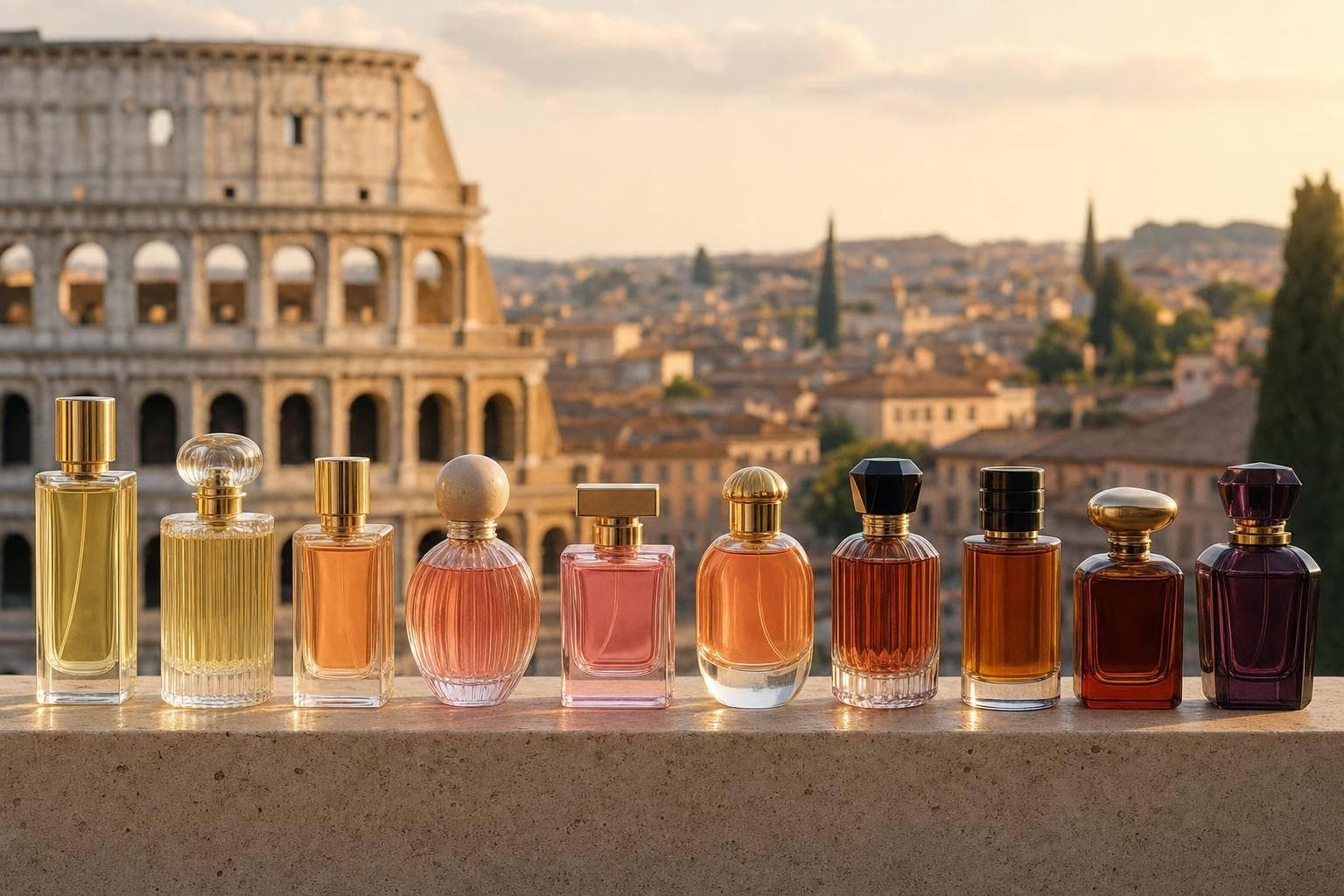
Si je devais acheter du parfum à Rome en 2026, je commencerais par explorer les maisons romaines, avant d’affiner ma sélection selon la saison, le budget et la tenue. Cette liste met en lumière 10 fragrances qui prennent tout leur sens dans la cité : Profumum Roma Victrix, Pantheon Roma MMXXII, Laura Biagiotti Aqve Romane Divinum Ficus, Laura Biagiotti ROMA, Eau d’Italie Baume du Doge, Aedes de Venustas Signature, Nishane Hacivat, Acqua di Parma Colonia Il Profumo, Parco 1923, et Santa Maria Novella Angeli di Firenze.
Pour aller à l’essentiel :
- Meilleur achat parmi les maisons romaines : Profumum Roma Victrix
- Idéal pour les soirées fraîches : Pantheon Roma MMXXII
- Meilleures options abordables : Laura Biagiotti ROMA et Divinum Ficus, autour de €46,94–€55,86
- Idéal sous la chaleur estivale : Hacivat, Divinum Ficus et Colonia Il Profumo
- Idéal pour l’automne/hiver : Baume du Doge et MMXXII
- Meilleurs quartiers pour le shopping : Prati, Pantheon, Tridente et Campo Marzio
- La meilleure raison d’acheter à Rome : l’accès direct aux maisons locales, la facilité de découverte et des boutiques aux sélections soignées
Environ 40% de cette sélection provient de signatures italiennes intimement liées à Rome, avec des prix oscillant entre €46,94 et €340,00. Ce guide est pensé comme un véritable parcours olfactif au cœur de la ville, bien au-delà d’un simple classement.
Voyage à Rome : À la découverte de la Ville éternelle avec PANTHEON ROMA — Maison italienne de haute parfumerie
Aperçu comparatif
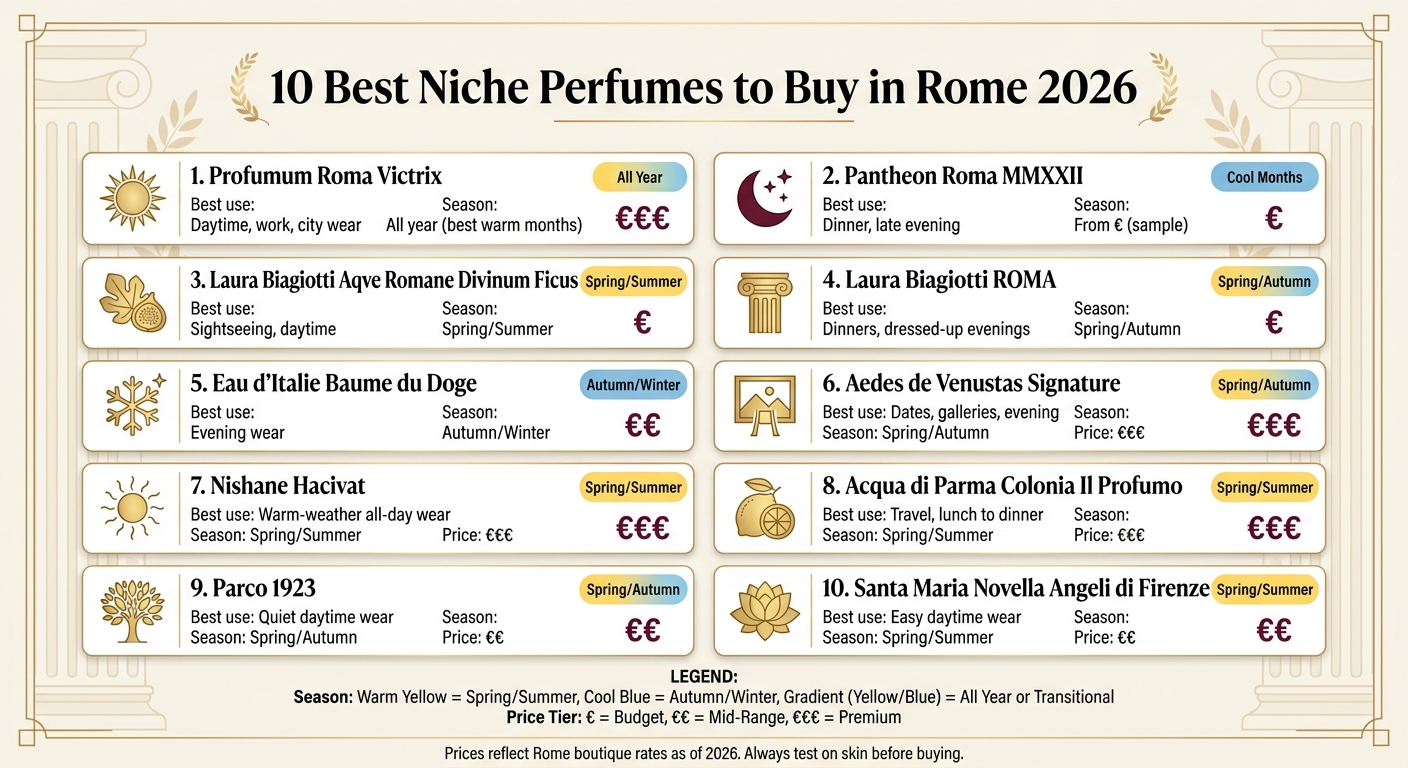
10 Best Niche Perfumes to Buy in Rome 2026: Quick Comparison Guide
| Parfum | Usage idéal | Saison | Prix à Rome |
|---|---|---|---|
| Profumum Roma Victrix | En journée, travail, tenue de ville | Toute l’année, idéal aux beaux jours | €250,00 |
| Pantheon Roma MMXXII | Dîner, fin de soirée | Mois frais | Échantillon à partir de €8,90 |
| Laura Biagiotti Aqve Romane Divinum Ficus | Visites, journée | Printemps/été | €54,80–€55,86 |
| Laura Biagiotti ROMA | Dîners, soirées habillées | Printemps/automne | €46,94–€54,06 |
| Eau d’Italie Baume du Doge | En soirée | Automne/hiver | €120,00 |
| Aedes de Venustas Signature | Rendez-vous, galeries, soirée | Printemps/automne | €225,00 |
| Nishane Hacivat | Journée par temps chaud | Printemps/été | Non mentionné dans l’article |
| Acqua di Parma Colonia Il Profumo | Voyage, du déjeuner au dîner | Printemps/été | €146,00–€220,00 |
| Parco 1923 | Tenue de jour discrète | Printemps/automne | €120,00–€145,00 |
| Santa Maria Novella Angeli di Firenze | Facile à porter en journée | Printemps/été | €135,00 |
En résumé : privilégiez les créations romaines à Rome, portez des sillages légers sous la chaleur et réservez les flacons plus liquoreux ou résineux aux soirées et aux saisons fraîches.
Pourquoi Rome est une destination idéale pour le parfum de niche
L’univers olfactif romain se concentre dans quelques quartiers très agréables à parcourir à pied, en particulier le quartier de Prati et les ruelles entourant le Pantheon. Dans ces enclaves, d’anciennes parfumeries familiales côtoient les boutiques d’enseignes romaines emblématiques comme Profumum Roma et Pantheon Roma. Ce contraste fait tout le charme des lieux : on passe de comptoirs historiques à des maisons contemporaines sans avoir à traverser toute la ville.
On y trouve également Bertozzini sur la Via Cola di Rienzo, ouvert depuis 1913, ainsi qu’Essenzialmente Laura sur la Via Santa Maria Maggiore, où Laura Bosetti Tonatto compose des créations sur mesure pour des têtes couronnées. Grâce à cette proximité, il devient bien plus simple de s’imprégner de l’identité d’une maison avant de faire l’acquisition d’un flacon.
Les boutiques de niche romaines se distinguent aussi par des sélections particulièrement affinées. Les conseillers savent ainsi vous guider rapidement vers les sillages qui vous correspondent, sans que vous ayez à vous perdre devant d’interminables rayonnages.
Profumum Roma possède plusieurs adresses à travers la ville, et ses formats de voyage débutent aux alentours de €10,66, une excellente formule pour comparer et apprivoiser une création sur peau avant de s’engager pleinement.
Les saisons jouent également un rôle clé. Sous la chaleur romaine, les hespéridés et la menthe révèlent toute leur fraîcheur. Les bois s’épanouissent pleinement au printemps et à l’automne, tandis que les notes gourmandes et opulentes prennent tout leur sens lorsque les températures baissent. C’est avec cette sensibilité que la sélection ci-dessous a été élaborée.
1. Profumum Roma Victrix
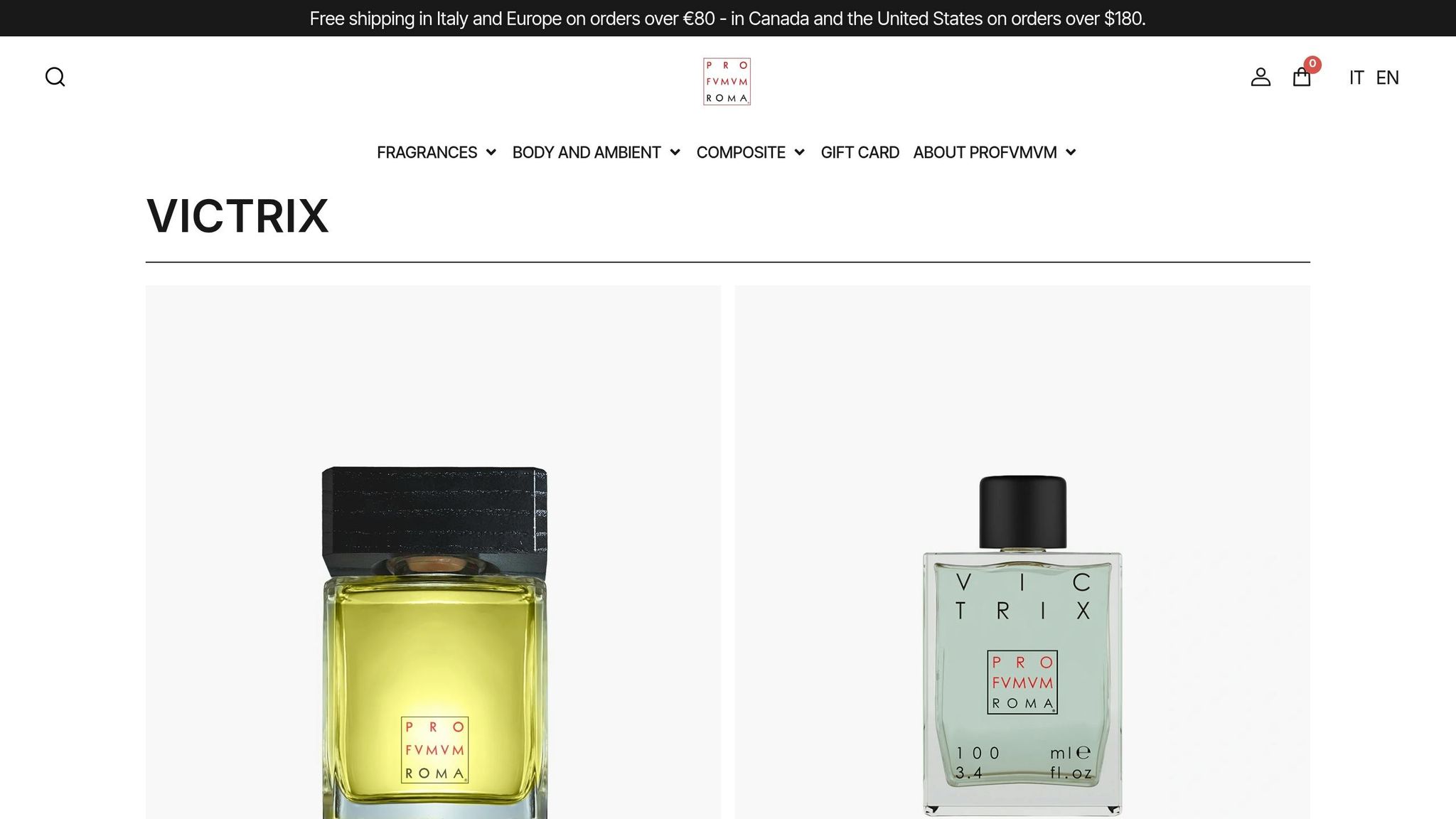
En tête de sélection s’impose la maison romaine qui capture le mieux l’atmosphère végétale et solaire de la ville. Profumum Roma fait référence dans la parfumerie de niche de la capitale, et Victrix en constitue l’une des plus belles signatures. Lancé en 2002, il s’inspire directement d’une promenade le long de la Via Appia Antica.
Victrix est une partition boisée-aromatique, verte et sèche, construite autour du laurier, des baies roses, de la coriandre, du genièvre et de la mousse de chêne. Le laurier lui insuffle une touche romaine inimitable. Parallèlement, sa structure demeure vive et sans rondeur sucrée. Cela en fait un choix remarquable pour la journée comme pour le bureau. Sublime durant la belle saison, il s’apprécie en réalité tout au long de l’année. Pour beaucoup, cet équilibre en fait l’un des sillages de niche romains les plus sûrs à adopter.
Sa concentration en extrait de 43 % lui confère une tenue impressionnante de 8 à 10 heures. Ayez la main légère sur le vaporisateur : un excès d’aspersion peut rendre la coriandre et le laurier un peu trop incisifs.
L’Extrait de Parfum en 100 ml est proposé autour de €250,00, tandis que les formats nomades s’échelonnent de €70,00 à €98,00. L’acquérir sur place prend tout son sens : découvrir Victrix dans sa ville natale permet de prendre le temps d’apprécier son évolution sur peau avant de choisir son format. C’est une première étape incontournable de tout voyage olfactif à Rome.
2. Pantheon Roma MMXXII
Si Victrix incarne Rome dans sa clarté diurne et verdoyante, MMXXII s’invite dans la douceur d’une soirée romaine gourmande et enveloppante. Pantheon Roma est une maison familiale née au cœur de la capitale, fondée par Paolo Fadelli et aujourd’hui dirigée par son fils Leone. Depuis 2013, la marque transfigure l’histoire romaine en créations olfactives. MMXXII rend hommage au Trastevere du XVIe siècle, autrefois surnommé le « four de Rome » en raison de ses nombreuses boulangeries.
La fragrance dévoile une facette gourmande, mariant crème de marron, vanille, caramel et davana. L’ensemble évoque une chaleur pâtissière raffinée, sans jamais basculer dans l’excès de sucre. Grâce à sa haute concentration, le parfum offre une excellente tenue sur peau et déploie un sillage affirmé.
Cette texture riche le destine naturellement aux journées fraîches plutôt qu’aux fortes chaleurs estivales. Il accompagne à merveille les dîners intimes, les fins d’aperitivo et la douceur nocturne des ruelles du Trastevere.
À Rome, MMXXII prend toute sa dimension dans le quartier même qui a guidé sa création : le Trastevere. Ses flacons façonnés selon les traditions de Murano apportent une authentique dimension artisanale. Si vous souhaitez l’essayer au préalable, le format découverte de 2 ml débute à environ €8,90, idéal avant d’opter pour un grand format.
3. Laura Biagiotti Aqve Romane Divinum Ficus
Pour un choix de jour empreint de fraîcheur, Divinum Ficus emprunte une voie plus végétale et botanique. Il évoque les cours ombragées de Rome, loin des figues confites qui peuvent sembler étouffantes en plein soleil.
Lancée en 2024 au sein de la collection Aqve Romane, cette création signée Laura Biagiotti entretient un lien intime avec la Ville éternelle. Le maître parfumeur Suzy Le Helley l’a articulée autour d’une envolée de bergamote d’Italie, poivre vert, menthe et basilic ; d’un cœur mariant figue, artichaut romain, laurier et baies de câprier ; sur un lit de santal, cèdre et musc. Le résultat est aromatique, subtilement savoureux, sublimé par un profil de figue sèche plutôt que sirupeuse.
Il accompagne ainsi idéalement le printemps et l’été romains, qu’il s’agisse de flâneries architecturales ou d’une journée de détente. Sa tenue s’étend généralement de 6 à 10 heures avec un sillage modéré : présent sans jamais saturer l’atmosphère par temps chaud. Par forte chaleur, appliquez-le de préférence sur la nuque et les poignets.
Le flacon rend lui aussi hommage à l’héritage de Rome. Ses lignes circulaires rappellent les temples antiques, tels que le temple de Vesta ou celui de Diane à la Villa Borghese, tandis que le bouchon en verre s’inspire des chapiteaux doriques. Un achat très séduisant sur place : son tarif local tourne autour de €54,80–€55,86 pour 100 ml, bien en deçà du prix public conseillé de €81,00.
4. Laura Biagiotti ROMA
Tandis que Divinum Ficus capture l’éclat du jour romain, ROMA s’accorde avec les soirées élégantes de la capitale.
Créé en 1988 en hommage à la ville, Laura Biagiotti ROMA est un floral-oriental illuminé par une envolée hespéridée, qui évolue vers un fond baumé et chaleureux.
L’ouverture mêle menthe, bergamote, agrumes et cassis, avant de s’ouvrir sur un cœur d’œillet, jasmin, rose et camomille romaine. Cette dernière enracine profondément le parfum dans son terroir d’inspiration, tandis que le sillage de myrrhe, ambre, vanille, civette et castoréum apporte une sensualité enveloppante, subtilement animale.
Cette sophistication destine ROMA aux moments habillés plutôt qu’aux tenues décontractées du quotidien.
Il déploie son plein potentiel au printemps et à l’automne, ou lors de soirées estivales plus fraîches. C’est le choix rêvé pour un dîner raffiné, une soirée à l’opéra ou toute occasion où l’on recherche une présence soignée. Deux à quatre vaporisations sur les points de pulsation suffisent. La tenue est estimée entre 6 et 10 heures, avec une projection modérée.
Son flacon dépoli rappelle les cannelures des colonnes doriques romaines. Ce lien architectural et ces tarifs locaux en font un souvenir de prédilection à rapporter de Rome. L’EDT de 100 ml se trouve généralement entre €46,94 et €54,06.
5. Eau d’Italie Baume du Doge
Parmi les créations d’un grand raffinement pour le soir que l’on croise dans les parfumeries de niche romaines, Baume du Doge retient immédiatement l’attention. Cet oriental épicé, chaud et résineux, s’accorde parfaitement avec les saisons fraîches et les ambiances feutrées. La douceur apportée par la myrrhe y demeure aérienne sans jamais s’alourdir, ce qui fait tout son prestige.
La fragrance s’ouvre sur des tonalités éclatantes et épicées, avant de dévoiler l’encens, la myrrhe et le safran. Elle s’établit ensuite sur un accord de benjoin, vanille et vétiver.
Elle révèle toute sa splendeur en automne et en hiver, particulièrement lors d’un dîner élégant ou d’une promenade nocturne dans Rome. L’harmonie entre le piquant des épices et la douceur des résines compose une aura luxueuse tout en restant d’une grande aisance.
Très apprécié des connaisseurs, le flacon de 100 ml est proposé autour de €120,00. Sa distribution étant parfois confidentielle, il mérite d’être acquis dès que vous le croisez dans les vitrines de la ville.
Votre expert parfum personnel vous attend
Faites notre quiz olfactif express pour découvrir des parfums de créateurs et de niche authentiques, choisis selon vos goûts – explorez-les en décants et échantillons de 2–8ml, pour essayer chaque fragrance avant de vous engager sur un flacon entier.
Trouvez votre parfum6. Aedes de Venustas Signature
Pour un choix plus végétal et architectural, Aedes de Venustas Signature trace sa propre voie. Cette composition incisive vert-encens associe la rhubarbe, la feuille de tomate, le vétiver et la noisette. Dévoilée en 2012 puis rééditée en 2021 dans un flacon cannelé aux nuances bleu paon, elle s’affranchit des schémas pyramidaux classiques.
L’attaque est vive et fusante, dominée d’emblée par la rhubarbe et la feuille de tomate. Elle glisse ensuite vers l’encens, le vétiver et la noisette. Si les premiers instants peuvent paraître légèrement médicinaux, cette aspérité s’estompe rapidement pour laisser place à un sillage mixte, moderne, net et admirablement structuré. La tenue varie de 6 à 10 heures, avec un sillage mesuré qui habille la peau avec élégance.
Le dialogue entre notes vertes et encens résonne merveilleusement avec Rome : il évoque simultanément les jardins secrets, la pierre séculaire et la fraîcheur des nefs d’églises. Il excelle au printemps comme en automne, tout en conservant une tenue parfaite lors des douces soirées romaines.
Vous pourrez le découvrir chez Bertozzini dal 1913, l’une des plus prestigieuses adresses historiques de la capitale. L’Eau de Parfum de 100 ml se situe autour de €225,00. Pour qui recherche une empreinte singulière et facile à porter aux beaux jours, c’est une option remarquable.
7. Nishane Hacivat
En dehors des maisons romaines, Hacivat s’impose comme l’option internationale incontournable par temps chaud. Fondée à Istanbul en 2012, Nishane est réputée pour ses extraits hautement concentrés et son esthétique contemporaine nourrie de traditions. Hacivat incarne sa création fraîche et boisée la plus éclatante pour arpenter Rome. Son nom s’inspire d’Hacivat, personnage du théâtre d’ombres turc incarnant l’élégance et l’art de vivre.
Il s’agit d’un chypré boisé débutant sur des notes d’ananas, pamplemousse et bergamote, relayées par un cœur de cèdre, patchouli et jasmin, reposant sur un fond de mousse de chêne et bois secs. Grâce à sa concentration en extrait de 30 %, il assure plus de 12 heures de présence. Deux à quatre pulvérisations suffisent amplement, la projection étant particulièrement généreuse.
À Rome, Hacivat se prête idéalement au printemps et à l’été. L’envolée hespéridée et fruitée reste d’une vivacité exemplaire sous le soleil, tandis que la structure boisée apporte la tenue nécessaire pour passer de la journée à un dîner élégant.
Si vous faites vos emplettes du côté du Tridente ou du Campo Marzio, veillez à le tester sur peau : éclatant et cristallin sur touche, c’est sur l’épiderme que toute sa puissance se révèle.
8. Acqua di Parma Colonia Il Profumo
Pour les amateurs d’agrumes italiens dans leur expression la plus pure et intemporelle, Colonia Il Profumo s’impose naturellement. Acqua di Parma y revisite son accord hespéridé emblématique en lui conférant davantage de relief et de persistance.
Le départ est un accord solaire mêlant bergamote, pamplemousse, orange sanguine et petit-grain. Il évolue vers un cœur aromatique de romarin, absolu de feuilles d’oranger et ylang-ylang, pour enfin s’ancrer dans un fond de vétiver et de patchouli.
Sa tenue s’étend de 6 à 10 heures, ce qui en fait une fragrance fraîche capable de faire la transition du matin au soir sans faillir. Elle s’adresse à celles et ceux qui affectionnent les sillages mixtes, épurés et raffinés, exempts de toute lourdeur sucrée.
C’est précisément ce qui fait sa force lors d’un séjour romain : un flacon lumineux qui traverse avec aisance déjeuners en terrasse, visites culturelles et verres en fin de soirée. Les boutiques de Rome proposent parfois la gravure sur flacon ainsi que des séances de découverte sur mesure. Vous pourriez également y apercevoir l’édition Millesimato 2026.
Le tarif standard oscille entre €146,00 et €220,00, tandis que l’édition Millesimato 2026 est proposée autour de €340,00.
9. Parco 1923
Si vous recherchez un univers plus sylvestre que les hespéridés évoqués plus haut, Parco 1923 transporte la fraîcheur des forêts des Abruzzes jusqu’au cœur de Rome. Fondée en 2016, la maison collabore avec les botanistes du parc national afin de valoriser les essences endémiques de la région.
L’EDT s’ouvre sur des baies de genièvre et de l’angélique sauvage, avant de se déposer sur un lit de bois de hêtre et de mousse. Le sillage est d’une fraîcheur authentiquement boisée, restituant fidèlement l’ambiance d’un sous-bois de montagne plutôt qu’un simple accord vert générique. Cet esprit sauvage des Abruzzes contraste singulièrement avec la verdure urbaine de Victrix ou la précision géométrique d’Aedes de Venustas Signature.
Particulièrement équilibré au printemps et à l’automne, il constitue une création de jour très raffinée lors des saisons tempérées. Son élégance est discrète et authentique, répondant aux attentes des amateurs de fragrances ancrées dans les paysages italiens, loin des partitions vanillées plus répandues.
L’objet lui-même séduit par ses détails : son bouchon en bois de hêtre et son anneau en Pietra Gentile lui confèrent une allure d’atelier d’art.
À Rome, Bertozzini dal 1913 le propose selon les tarifs suivants :
- EDT 100 ml : €120,00
- Éditions EDP Riserva Regia et Scarpetta di Venere : €145,00 chacune
10. Santa Maria Novella Angeli di Firenze
Pour clore ce parcours avec une création lumineuse issue d’une institution historique, Angeli di Firenze apporte une touche de grâce idéale en journée. Santa Maria Novella est l’une des plus anciennes maisons de parfumerie d’Italie, et Angeli di Firenze a été composé en 2006 en hommage aux bénévoles qui ont œuvré lors des inondations de Florence en 1966.
Ce jus déploie une partition fraîche, fruitée et aquatique. La pêche et l’orange ouvrent la marche avec vivacité. Les embruns marins, le jasmin et le cassis s’installent ensuite en cœur, avant que le santal, la vanille et le musc ne viennent enrober le tout en fond. Le voile sur peau reste doux et aérien, ce qui le rend très agréable lors des journées ensoleillées de printemps ou d’été, pour flâner sur les places ombragées ou savourer un aperitivo.
Son souffle est plus vaporeux que celui des créations romaines plus denses mentionnées plus haut, offrant une alternative pleine de légèreté et de sérénité.
À Rome, l’Eau de Cologne de 100 ml est affichée à €135,00, les boutiques présentant généralement l’ensemble de la collection. Essayez-la impérativement sur peau : les facettes marines et fruitées de cassis évoluent grandement selon chaque épiderme. Une dernière étape idéale avant d’aborder notre guide d’achat rapide.
Guide d’achat rapide
Ce récapitulatif synthétise nos 10 sélections selon l’occasion, la saison et le budget.
| Parfum | Usage idéal à Rome |
|---|---|
| Profumum Roma Victrix | Journée et cadre professionnel |
| Pantheon Roma MMXXII | Transition de la fin de journée à la soirée |
| Laura Biagiotti Aqve Romane Divinum Ficus | Promenades et visites diurnes |
| Laura Biagiotti ROMA | Soirées de mi-saison et dîners habillés |
| Eau d’Italie Baume du Doge | Dîner et promenades nocturnes |
| Aedes de Venustas Signature | Rendez-vous et sorties culturelles |
| Nishane Hacivat | Journées chaudes et estivales |
| Acqua di Parma Colonia Il Profumo | Matinées de visite et voyage |
| Parco 1923 | Journées douces de printemps et d’automne |
| Santa Maria Novella Angeli di Firenze | Balades urbaines en journée |
La palette tarifaire offre également une grande liberté : Laura Biagiotti permet des acquisitions très accessibles, tandis qu’Acqua di Parma et Santa Maria Novella s’établissent dans une tranche intermédiaire. Au sommet, Profumum Roma et Aedes de Venustas incarnent un positionnement plus exclusif.
Pour arpenter Rome, le principe demeure simple : privilégiez la vivacité des sillages frais sous le soleil d’été, et laissez la richesse des notes gourmandes vous envelopper dès que l’air fraîchit.
En conclusion
Ces dix créations s’articulent autour de trois univers distincts : les signatures romaines, les classiques italiens et les découvertes confidentielles.
Fiez-vous à votre style. Si vous souhaitez rapporter l’essence même du lieu, tournez-vous vers une maison romaine comme Profumum Roma ou Pantheon Roma. Leurs sillages portent en eux l’âme de la cité avec une intensité inimitable.
Pour un choix plus intemporel, optez pour un classique transalpin. Roma de Laura Biagiotti demeure une valeur sûre pour qui recherche un flacon polyvalent, réconfortant et intimiste au quotidien.
Enfin, prenez toujours le temps de tester sur vous. Les boutiques de Rome s’y prêtent merveilleusement bien, vous invitant à apprécier l’évolution des notes sur votre peau, notamment au sein de l’adresse Profumum Roma sur la Via di Ripetta. C’est la meilleure façon d’accorder une création à votre sensibilité, à la météo et aux souvenirs que vous souhaitez créer.
Questions fréquentes
Quel parfum choisir pour un premier achat à Rome ?
Notte Romana de Tiziana Terenzi constitue une formidable initiation à la haute parfumerie lors d’un séjour à Rome. Présenté en 2026, il a été spécialement pensé pour traduire l’atmosphère de la ville.
Ses notes révèlent immédiatement son caractère : rhum cubain, cognac arménien, café torréfié italien, pin maritime romain et cyprès du Janicule. Cette alliance capture avec force les paysages, l’histoire millénaire et l’effervescence nocturne romaine.
Comment choisir son parfum selon la saison à Rome ?
Choisissez votre fragrance en tenant compte des températures et de l’ambiance de la ville selon le moment de l’année.
Pendant les mois les plus frais, les notes chaudes et profondes trouvent toute leur ampleur : encens, ambre, patchouli, café ou accords épicés. Elles s’accordent naturellement avec l’air vif de la ville et ses rues aux lumières plus cinématographiques.
Quand les températures grimpent, les compositions légères s’imposent. Les envolées hespéridées et les muscs cristallins offrent une sensation vivifiante et harmonieuse. Rien ne vous empêche d’adapter aussi votre parfum aux quartiers traversés : les nuances gourmandes de marron ou de vanille résonnent magnifiquement avec les ruelles pavées et les effluves de boulangeries, en particulier du côté du Trastevere.
Vaut-il mieux commencer par des formats voyage ou des échantillons ?
Tout à fait. Les formats voyage et les doses d’essai constituent une excellente démarche avant d’acquérir un parfum de niche à Rome.
Ces créations révèlent souvent une grande complexité par rapport aux parfums traditionnels et réagissent sensiblement à la chimie de votre peau, à la température ambiante ainsi qu’à votre environnement. Les formats réduits, de 3 ml ou 18 ml, permettent d’observer le départ, l’épanouissement du cœur et la tenue du fond tout au long de la journée avant de choisir un flacon de 100 ml.