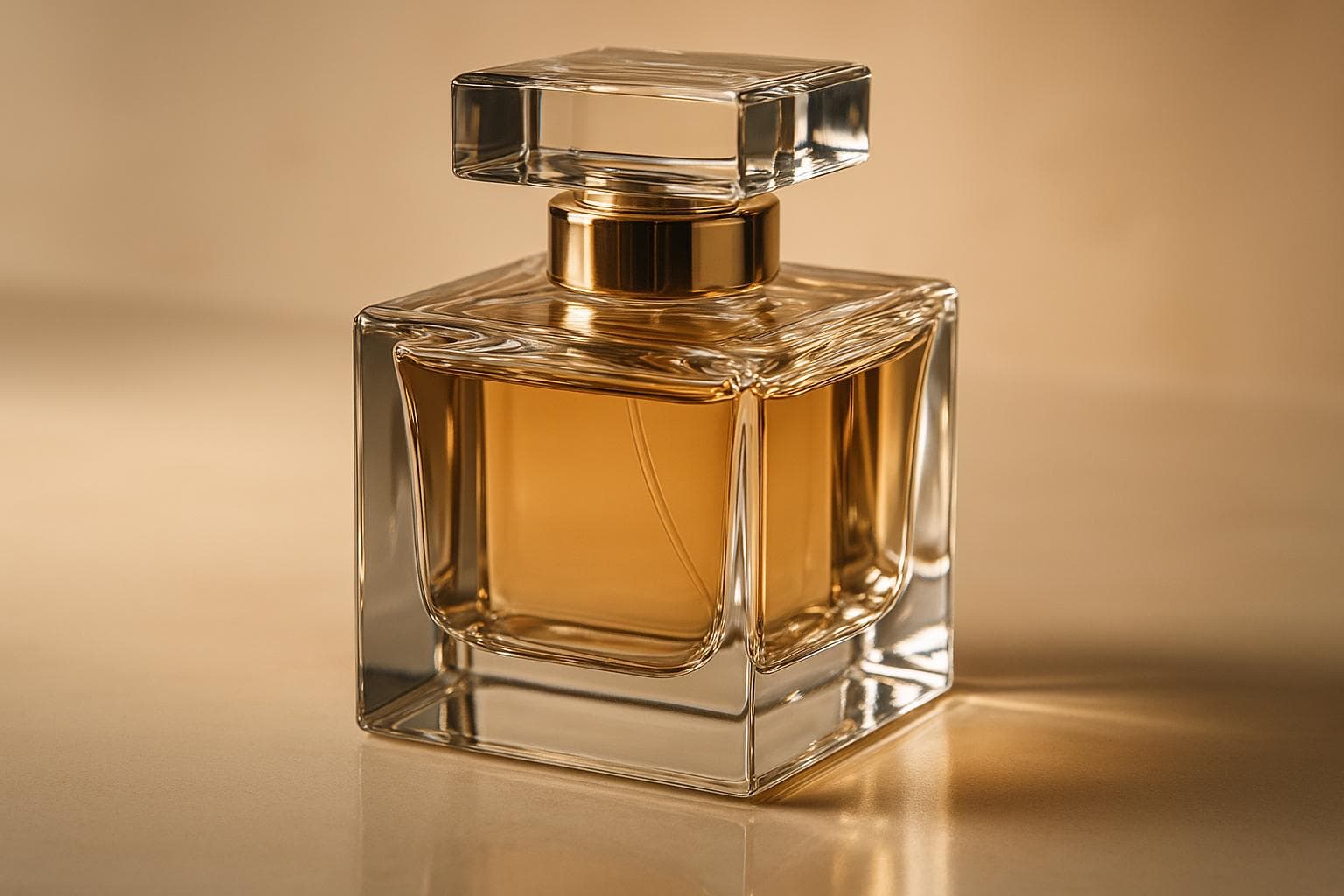
Lorsqu’il s’agit de flacons de parfum de luxe, l’épaisseur du verre ne relève pas seulement de l’esthétique - elle constitue un facteur clé de durabilité, de présentation et de qualité. Voici pourquoi elle compte :
- Protection : Un verre épais protège les fragrances de la chaleur, de la lumière et des chutes accidentelles, afin qu’elles restent intactes et durables.
- Sensation de luxe : Un flacon lourd et solide évoque une qualité premium. La manière dont la lumière se réfracte à travers un verre épais ajoute de la profondeur et de l’éclat, renforçant son attrait visuel.
- Contrôle qualité : Un verre régulièrement épais et limpide témoigne d’un savoir-faire supérieur, tandis qu’un verre irrégulier ou fin peut indiquer un produit de moindre qualité ou contrefait.
Pour repérer les contrefaçons, vérifiez le poids, l’uniformité de l’épaisseur du verre et sa clarté. Pour les collectionneurs, conservez les flacons à la verticale dans des endroits frais et secs, et manipulez-les avec précaution pour éviter tout dommage. Si vous voyagez souvent, envisagez de transvaser votre parfum dans de plus petits atomiseurs en verre ou d’utiliser des fioles de voyage préremplies provenant de services de confiance.
L’épaisseur du verre n’est pas seulement un choix de design - c’est un marqueur de durabilité, d’élégance et de savoir-faire.
How Glass Thickness Affects Durability
L’épaisseur du verre d’un flacon de parfum joue un rôle crucial dans sa durabilité, en lui permettant de résister à un usage quotidien et à quelques incidents occasionnels. Cela protège non seulement la fragrance à l’intérieur, mais renforce aussi la sensation de luxe.
Un verre plus épais réduit le risque de casse
Un verre plus épais forme une barrière robuste, absorbant les chocs et minimisant le risque de casse en cas de chute accidentelle ou de manipulation brusque. Par exemple, un flacon de parfum de 3,4 fl oz (100 ml) doté d’une base épaisse a moins de chances de basculer sur un comptoir de salle de bain qu’une alternative plus légère aux parois fines. Le poids supplémentaire abaisse le centre de gravité du flacon, le rendant plus stable et moins susceptible de se briser s’il est heurté ou tombé sur une surface dure. Les designs à base lourde ou à double paroi renforcent encore la résistance aux impacts, les rendant plus adaptés à un usage quotidien comme aux exigences du transport international.
Une épaisseur uniforme évite les points de faiblesse
Une épaisseur de verre homogène est essentielle pour éviter les zones fragiles, en particulier autour de points critiques comme le col ou les angles, qui sont sujets aux fissures sous l’effet de la pression ou des variations de température. Une épaisseur irrégulière crée des points de tension qui compromettent l’intégrité structurelle du flacon. Les fabricants de flacons de luxe utilisent des techniques avancées de moulage et de refroidissement pour garantir cette uniformité, éliminant ainsi ces vulnérabilités. Un col bien conçu améliore également la durabilité en assurant la stabilité des composants tels que les filetages ou les pompes à clipser, tout en réduisant le risque de microfissures susceptibles de compromettre l’étanchéité.
Cette précision garantit non seulement la solidité du flacon, mais contribue également à préserver la qualité de la fragrance qu’il renferme.
Préserver l’intégrité de la fragrance
Un verre épais et teinté agit comme une barrière thermique, modérant les variations de température et protégeant les molécules olfactives délicates de la chaleur et de la lumière. Par exemple, lors d’étés étouffants dans des États comme l’Arizona ou le Texas, un flacon lourd et teinté résiste bien mieux à un réchauffement rapide qu’un verre fin et transparent. Cette protection est essentielle pour préserver la composition de la fragrance lors des fluctuations de température. De plus, lorsqu’il est associé à des revêtements protecteurs contre les UV, le verre épais aide à bloquer la lumière susceptible d’altérer la qualité du parfum.
Le verre de qualité cosmétique, chimiquement inerte et non poreux, offre une solide défense contre les facteurs extérieurs. Des parois plus épaisses amplifient cette protection, garantissant l’intégrité du flacon et de son contenu. Pour l’expédition, ces conceptions robustes sont mieux armées pour supporter les secousses et les chocs du transport, protégeant à la fois le contenant et la fragrance qu’il abrite.
L’attrait visuel des flacons en verre épais
Le verre épais fait bien plus qu’offrir de la durabilité - il sublime l’esthétique d’un flacon de parfum et amplifie sa sensation d’authenticité. Cette épaisseur supplémentaire magnifie l’apparence générale du flacon, projetant une impression de luxe perceptible avant même que la fragrance elle-même ne soit découverte.
Voyons comment des éléments tels que la réfraction de la lumière, le poids et les détails de design contribuent au charme haut de gamme des flacons en verre épais.
Réfraction de la lumière et profondeur visuelle
Le verre épais interagit avec la lumière d’une manière que le verre plus fin ne peut tout simplement pas égaler. Lorsque la lumière traverse des parois et des bases denses, elle se réfracte, se réfléchit et se disperse, créant des effets éblouissants. Ces interactions produisent un éclat prismatique et une lueur radieuse qui donnent vie au liquide à l’intérieur, le rendant plus riche et plus vibrant. Une base épaisse ou une construction à double paroi ajoute une impression supplémentaire de profondeur, donnant le sentiment que la fragrance est suspendue dans des couches de verre plutôt que simplement contenue. Même de petits choix de design, comme des parois légèrement incurvées, peuvent créer de subtiles distorsions qui accentuent l’attrait artistique du flacon.
Le verre flint de haute qualité, prisé par les marques de parfums de luxe, porte ces effets à un niveau supérieur grâce à sa clarté et à sa brillance exceptionnelles. Sous un éclairage de boutique intense, les bases épaisses et les arêtes nettement dessinées créent des halos lumineux et des reflets scintillants, aidant le flacon à se distinguer même sur les étagères les plus chargées.
Pour enrichir encore l’expérience visuelle, de nombreuses maisons de luxe associent un verre épais et transparent à de subtils dégradés teintés ou à une douce coloration. Par exemple, une base claire et épaisse combinée à une partie supérieure teintée crée naturellement un puits de lumière, tandis que des finitions givrées ou satinées diffusent la lumière, ajoutant une douce lueur qui souligne les contours et le volume du flacon.
Le poids est synonyme de qualité
Le poids d’un flacon de parfum joue un rôle étonnamment important dans la manière dont il est perçu. Aux États-Unis, les consommateurs associent souvent le poids à la qualité et au luxe, reliant un flacon substantiel à la durabilité et à un savoir-faire premium. Un design plus lourd semble non seulement plus stable et raffiné, mais justifie également des prix compris entre 100 € et 300 €. Cette expérience tactile - tenir un flacon au poids perceptible - renforce sa valeur et procure une sensation de satisfaction.
Cela dit, les fabricants réservent souvent les designs les plus lourds aux flacons grand format (généralement 75 à 100 ml ou 2,5 à 3,4 fl oz) destinés à être exposés. Les versions format voyage, en revanche, privilégient la portabilité avec des constructions plus légères qui conservent malgré tout une esthétique raffinée.
Caractéristiques de design courantes des flacons de luxe
Les flacons de parfum de luxe intègrent souvent des éléments de design spécifiques qui maximisent l’impact du verre épais. Une base épaisse, par exemple, apporte une stabilité visuelle et crée un effet de piédestal, conférant au flacon une qualité sculpturale, presque architecturale. Cette base permet également à la lumière de s’y accumuler et de s’y réfracter, ajoutant profondeur et dimension. Des épaules renforcées et des cols épais encadrent le vaporisateur et le bouchon, donnant à la partie supérieure une allure statuaire et harmonieuse. Les designs à double paroi ou en verre multicouche vont encore plus loin, créant l’illusion d’un liquide flottant dans une coque transparente, pour un fascinant effet tridimensionnel.
D’autres détails, comme les arêtes biseautées, les faces facettées et les angles sculptés, renforcent l’apparence précieuse du flacon. Ces caractéristiques reposent sur la précision et la clarté qu’offre le verre épais, garantissant une finition polie et haut de gamme. La moindre imperfection, comme des bulles ou une épaisseur irrégulière, nuirait à cet aspect raffiné.
| Élément de design | Rôle visuel | Pourquoi le verre épais est essentiel |
|---|---|---|
| Bases épaisses | Crée un effet de piédestal et un ancrage visuel | Renforce la réfraction de la lumière, ajoutant de la profondeur |
| Épaules renforcées | Encadre le vaporisateur avec une présence affirmée | Ajoute de la solidité et un équilibre visuel |
| Construction à double paroi | Crée un effet de liquide en suspension | Nécessite un verre solide pour l’intégrité structurelle |
| Arêtes biseautées et facettes | Ajoute de l’éclat et des lignes nettes, épurées | Permet un polissage précis et une grande clarté |
Si les flacons grand format tirent pleinement parti du verre épais pour un impact maximal, les modèles format voyage recherchent un équilibre entre portabilité et durabilité. Par exemple, des services comme Scento proposent des fioles de 8 ml dans des constructions en verre plus fines, légères mais suffisamment robustes pour un usage quotidien. Ces petits flacons conservent une sensation de luxe grâce à des designs épurés, des vaporisateurs raffinés et des étuis de protection extérieurs, ce qui les rend idéaux pour les amateurs de fragrances en déplacement.
Les marques plus petites ou de niche peuvent elles aussi obtenir une sensation premium sans moules complexes. Un flacon standard avec une base extra-épaisse et des parois droites et transparentes, par exemple, transmet instantanément qualité et poids. À l’inverse, l’utilisation d’un verre flint à haute clarté associé à une épaule renforcée et à un bouchon de grande qualité peut créer un saisissant effet de « couronne », attirant l’attention vers le sommet du flacon.
Ces choix de design réfléchis n’enrichissent pas seulement la beauté du flacon - ils servent aussi d’indicateurs subtils d’authenticité et de savoir-faire.
sbb-itb-fb213bc
Utiliser l’épaisseur du verre pour identifier les faux parfums
L’un des moyens les plus simples de repérer des parfums contrefaits consiste à examiner l’épaisseur du verre du flacon. Si les contrefacteurs peuvent imiter les étiquettes et les emballages avec une précision surprenante, ils échouent souvent à reproduire le verre épais et de haute qualité utilisé dans les authentiques flacons de luxe. La fabrication de verre de précision est coûteuse, et c’est là que de nombreuses contrefaçons se trahissent. Savoir quoi observer peut vous éviter de gaspiller votre argent pour une fragrance contrefaite.
Signes d’alerte des flacons contrefaits
Le premier signal d’alarme est un poids anormalement léger. Les véritables flacons de parfum de créateur sont fabriqués avec un verre à parois épaisses et des bases lourdes, conférant même aux plus petits formats une sensation dense et substantielle. Si le flacon semble creux ou fragile dans votre main, c’est un indicateur fort de contrefaçon. Les flacons authentiques, généralement vendus entre 100 € et 300 €, sont conçus pour sembler solides et pesants.
Un autre signe révélateur est une épaisseur de paroi irrégulière. Faites pivoter le flacon sous une source lumineuse - les flacons authentiques présentent une épaisseur homogène sur toute leur surface. Les flacons contrefaits, en revanche, affichent souvent des irrégularités telles que des « vagues », des renflements ou des zones plus fines. Vous pouvez remarquer qu’un côté du flacon est plus épais que l’autre, ou que les épaules semblent inégales. Ces défauts révèlent l’artisanat inférieur des contrefaçons.
La base du flacon est une autre zone à inspecter. Les flacons de luxe authentiques possèdent des bases épaisses et pleines qui assurent la stabilité et contribuent au poids global. Lorsque vous tapotez légèrement la base, elle doit sembler dense et reposer fermement sur une surface plane, sans vaciller. Les flacons contrefaits ont souvent des bases fines ou creuses qui peuvent légèrement fléchir sous la pression, ou vous pourriez remarquer un dôme intérieur excentré (l’indentation située en dessous). Certaines contrefaçons présentent même des bases complètement plates sur des modèles qui devraient avoir des fonds épais et lourds - un indice évident.
La qualité de surface et la clarté sont aussi des indicateurs essentiels. Les flacons de luxe sont fabriqués à partir d’un verre très limpide avec un minimum d’imperfections. Vous devriez voir très peu de bulles, et le verre doit paraître cristallin. Le verre contrefait semble souvent trouble, présente une teinte verdâtre ou contient de multiples bulles visibles. En outre, les arêtes et les joints des flacons authentiques sont lisses et bien finis, alors que les faux ont tendance à montrer des lignes de moulage rugueuses, des bords tranchants ou des marques de meulage à la base.
Portez une attention particulière aux angles et aux arêtes. Les maisons haut de gamme investissent massivement dans la conception des moules pour garantir des angles nets, symétriques et des arêtes polies qui captent magnifiquement la lumière. Les flacons contrefaits peuvent avoir des angles arrondis là où ils devraient être nets, un biseautage irrégulier ou des arêtes mal finies. Le col et l’ouverture doivent également être parfaitement centrés et droits - tout défaut d’alignement ou toute inclinaison est le signe d’une production de faible qualité.
Comment inspecter un flacon de parfum
Une fois les éventuels signaux d’alerte identifiés, suivez ces étapes pour inspecter minutieusement le flacon et confirmer son authenticité. Une inspection détaillée ne prend que quelques minutes et peut vous éviter d’acheter une contrefaçon.
Commencez par tenir le flacon hors de son emballage. Les flacons authentiques paraissent plus lourds que prévu, avec des parois en verre uniformément épaisses et une base pleine. Comparez cela à ce que vous attendez d’un produit premium - si le flacon semble trop léger ou peu substantiel, restez prudent. Placez-le devant une source lumineuse et observez la façon dont le verre réfracte la lumière. Un véritable verre épais crée profondeur et clarté, tandis qu’un verre fin semble plat et terne.
Effectuez un contrôle d’uniformité en faisant tourner le flacon sous une lampe. L’épaisseur du verre doit rester constante tout autour, avec des transitions lisses et symétriques de la base vers les côtés et les épaules. Toute ondulation visible, asymétrie ou variation soudaine d’épaisseur suggère une fabrication de mauvaise qualité.
Pour une inspection de la qualité de surface, examinez attentivement le verre à la recherche d’imperfections. Passez votre doigt le long des joints - ils doivent être à peine perceptibles sur un flacon authentique, et non saillants ou rugueux. Vérifiez la présence de bulles d’air en tenant le flacon face à la lumière ; le verre de luxe contient rarement des bulles visibles. Regardez les arêtes là où la base rejoint les côtés - elles doivent sembler lisses et arrondies, non tranchantes ou ébréchées. Les textures rugueuses, les petits creux ou les joints épais sont des signes évidents de contrefaçon.
Enfin, réalisez un test de stabilité en plaçant le flacon sur une surface plane et en tapotant légèrement à proximité. Un véritable flacon à fond lourd restera bien en place et semblera difficile à renverser. Les flacons fins et bon marché peuvent vaciller ou sembler instables. Appuyez légèrement sur la base - un verre authentique et épais ne se déformera pas, mais la base d’un faux flacon pourrait le faire.
| Étape d’inspection | Ce qu’il faut rechercher | Signaux d’alerte |
|---|---|---|
| Vérification du poids | Sensation dense et substantielle ; étonnamment lourd pour sa taille | Semble léger ou creux |
| Épaisseur visuelle | Parois épaisses ; base pleine et lourde | Arêtes fines ; base peu profonde ou plate |
| Contrôle d’uniformité | Épaisseur constante tout autour | Ondulations, renflements ou asymétrie |
| Qualité de surface | Verre cristallin ; peu de bulles ; joints lisses | Verre trouble ; nombreuses bulles ; joints rugueux |
| Test de stabilité | Repose fermement ; ne vacille pas ; base solide | Vacille ; la base fléchit sous la pression |
Si possible, comparez le flacon suspect à un exemplaire authentique vérifié, provenant par exemple d’un grand magasin ou d’une source fiable. Tenez les deux flacons en main et comparez leur poids, l’épaisseur du verre et la façon dont la lumière les traverse. Les différences entre un flacon authentique et une contrefaçon deviennent frappantes lors d’une comparaison côte à côte.
Pour les consommateurs américains souhaitant éviter totalement les contrefaçons, acheter auprès de revendeurs agréés reste l’option la plus sûre. Une autre alternative consiste à recourir à des services d’abonnement qui garantissent des fragrances de créateur authentiques dans des formats plus petits. Par exemple, Scento propose des fioles de 8 ml remplies de parfums de créateurs vérifiés, vous permettant de découvrir le parfum authentique et sa qualité sans le risque d’acheter un flacon grand format contrefait. Cette approche vous aide également à vous familiariser avec la sensation des flacons authentiques, ce qui facilitera l’identification des faux à l’avenir.
Conseils pour les collectionneurs et les utilisateurs de parfum
Si vous êtes passionné par les fragrances, prendre soin de votre collection est tout aussi important que choisir le parfum parfait. Manipuler correctement des flacons en verre lourd permet de protéger à la fois vos parfums et votre investissement. Ces conseils pratiques vous aideront à stocker, manipuler et transporter vos fragrances avec le plus grand soin.
Stocker et manipuler des flacons lourds
Avec les flacons lourds, la stabilité est primordiale. Placez-les toujours sur des surfaces planes et robustes pour éviter les accidents. Les étagères hautes de salle de bain ou les placards suspendus sont des emplacements risqués - un seul faux mouvement, et même le verre le plus épais peut se briser. Pour plus de sécurité, utilisez des tapis antidérapants ou des plateaux de présentation afin d’empêcher les flacons de glisser en cas de choc.
Gardez vos parfums à l’abri de la lumière directe du soleil, des sources de chaleur ou des zones humides comme les rebords de fenêtre, les radiateurs ou les salles de bain. Le verre épais peut offrir une certaine isolation, mais il ne protégera pas totalement votre fragrance contre les variations de température. L’idéal est de conserver vos flacons dans des endroits frais et secs à température ambiante (environ 68–72°F). Pour les collections importantes, des armoires fermées avec des sachets de gel de silice constituent une excellente solution pour contrôler l’humidité.
Rangez toujours les flacons à la verticale avec les bouchons bien serrés. Cela protège le mécanisme de pulvérisation et maintient une fermeture hermétique. Lors de la manipulation de flacons plus lourds, soutenez la base avec toute votre main - ne vous fiez pas au bouchon ou au col, plus fragiles et plus susceptibles d’être endommagés.
Si vous devez déplacer des flacons dans votre intérieur, dégagez le passage au préalable et utilisez vos deux mains, surtout pour les grands flacons au poids irrégulièrement réparti. Pour les fragrances vintage ou particulièrement précieuses, prenez des précautions supplémentaires : enveloppez-les dans un tissu doux ou du papier bulle et placez-les dans une petite boîte rigide. Les verres anciens peuvent développer avec le temps de microfissures, les rendant plus vulnérables à la casse.
Pour transporter des flacons sur de plus longues distances, emballez chacun d’eux à la verticale dans une boîte rigide rembourrée. Enveloppez-les individuellement dans du papier bulle ou un tissu épais, puis comblez les espaces vides dans la boîte avec du papier froissé ou de la mousse pour éviter tout déplacement. Étiquetez clairement la boîte avec « Fragile – Verre » et ajoutez une flèche indiquant le sens vertical afin d’assurer une manipulation attentive.
Quand le verre épais est le plus important
Comprendre dans quelles situations le verre épais est le plus avantageux peut vous aider à prendre des décisions éclairées concernant le stockage et la protection de vos fragrances.
Le verre épais est particulièrement utile pour les parfums qui reposent fortement sur des huiles essentielles naturelles, des notes d’agrumes ou des matières botaniques. Ces compositions sont plus sensibles à la lumière et à la température, et un verre épais, teinté ou givré peut ralentir leur dégradation en réduisant l’exposition aux UV.
Les parfums de luxe, en particulier ceux dont le prix se situe entre 100 € et 300 €, sont souvent présentés dans des flacons en verre plus épais pour une meilleure durabilité. Cette épaisseur supplémentaire est particulièrement précieuse pour les grands formats (100 ml et plus), car elle offre une meilleure stabilité et réduit le risque de basculement. En revanche, pour des fragrances plus simples et synthétiques ou des parfums que vous prévoyez d’utiliser dans les quelques mois, des flacons en verre plus fin peuvent suffire - à condition qu’ils soient correctement conservés.
Options format voyage pour plus de praticité
Si les flacons en verre épais sont magnifiques sur votre coiffeuse, ils sont loin d’être pratiques en voyage. Les flacons lourds alourdissent inutilement vos bagages et risquent davantage de se briser s’ils tombent ou sont secoués. Envisagez plutôt de transvaser votre fragrance dans de petits atomiseurs en verre (5 à 10 ml) plus adaptés au transport.
Les atomiseurs en verre sont préférables au plastique car ils sont chimiquement inertes et non poreux, préservant ainsi l’intégrité de votre parfum. Ces petites fioles se glissent facilement dans des pochettes de liquides, acceptées en bagage cabine selon la règle européenne des 100 ml pour les liquides, les formats de 8 ml restant bien en dessous de la limite de 3,4 fl oz pour les bagages cabine. Leur poids plus léger réduit également le risque de casse en cas d’impact.
En avion, rangez les fioles de voyage dans des pochettes rembourrées ou des étuis rigides à l’intérieur de votre bagage cabine pour une protection accrue.
Scento est un détaillant de décants et d’échantillons de parfum, et chaque produit peut être acheté à l’unité, sans aucun abonnement. Scento+ est l’adhésion optionnelle de Scento : la cotisation mensuelle vous revient intégralement sous forme de crédit en magasin, à dépenser sur n’importe quel parfum ; les membres bénéficient de 10 % de réduction, d’un échantillon offert avec chaque commande, d’un parfum offert tous les six mois et d’un cadeau d’anniversaire, et vous pouvez mettre en pause ou résilier à tout moment. Scento propose également des fioles adaptées au voyage comprenant plus de 1 000 parfums authentiques de maisons telles que Dior, Tom Ford et Louis Vuitton. Chaque fiole contient environ 120 pulvérisations - de quoi couvrir près de deux mois d’utilisation quotidienne. Cette approche vous permet de profiter d’une variété de fragrances premium sans les contraintes de transport ni le risque lié aux flacons grand format. De plus, elle réduit les risques de perte ou de vol en voyage tout en gardant vos senteurs favorites à portée de main.
Conclusion
L’épaisseur du verre joue un rôle essentiel tant dans la préservation des fragrances que dans l’expression du luxe.
Tout d’abord, elle agit comme un bouclier protecteur pour la fragrance elle-même. Un verre plus épais aide à protéger contre les variations de température et les UV, garantissant que le sillage demeure intact au fil du temps.
Ensuite, le design des flacons en verre épais enrichit l’expérience sensorielle du luxe. Un flacon plus lourd paraît plus substantiel et plus sûr en main, tandis que ses parois épaisses réfractent magnifiquement la lumière, ajoutant de la profondeur au liquide qu’il contient. Les maisons de luxe s’appuient souvent sur ce poids et cette uniformité pour transmettre une impression de qualité supérieure.
Enfin, l’épaisseur du verre peut servir d’indicateur pratique d’authenticité. Les flacons authentiques sont conçus avec des parois uniformément épaisses, des bases pleines et des arêtes lisses - des détails qui font souvent défaut aux produits contrefaits.
En résumé, si un flacon paraît solide et que le verre semble homogène et raffiné, il remplit probablement parfaitement son rôle : protéger votre fragrance tout en dégageant une élégance certaine. Ces attributs montrent pourquoi l’épaisseur du verre est bien plus qu’un simple choix de design - c’est un véritable signe distinctif de qualité.
Pour celles et ceux qui recherchent la praticité sans compromettre l’authenticité, les formats voyage peuvent compléter les flacons grand format destinés à être exposés. Des alternatives légères, comme les fioles de 8 ml de Scento de fragrances de créateurs authentiques, offrent une solution pratique tout en conservant le même niveau d’excellence.
FAQ
Pourquoi l’épaisseur du verre est-elle importante dans les flacons de parfum ?
L’épaisseur du verre dans les flacons de parfum n’est pas qu’une question d’apparence - c’est un choix pratique qui remplit plusieurs fonctions. Un verre plus épais améliore la durabilité, rendant le flacon moins susceptible de se briser et préservant votre fragrance sur le long terme. Il apporte aussi une touche d’élégance, offrant au flacon une sensation de poids et de prestige qui sublime sa présentation globale.
Mais cela ne s’arrête pas à la durabilité et à l’esthétique. L’épaisseur du verre agit comme une barrière protectrice contre les éléments extérieurs tels que la lumière et la chaleur, qui peuvent altérer et affaiblir la fragrance avec le temps. Cette conception réfléchie permet au parfum de rester fidèle à son caractère d’origine, afin que vous puissiez en profiter plus longtemps dans toute sa splendeur.
Comment stocker et manipuler en toute sécurité des flacons de parfum lourds en verre épais ?
Pour assurer le stockage et la manipulation en toute sécurité de flacons de parfum lourds fabriqués en verre épais, suivez ces conseils pratiques :
- Choisissez des surfaces stables : Placez toujours vos flacons sur des surfaces planes et robustes, en les éloignant des bords afin de réduire le risque de chute.
- Tenez-les éloignés du soleil et de la chaleur : Conservez vos parfums dans un endroit frais et sec afin de préserver la qualité de la fragrance et d’éviter que le verre ne s’affaiblisse avec le temps.
- Manipulez-les avec douceur : Lors de l’utilisation, tenez fermement le flacon avec les deux mains, surtout s’il présente une forme inhabituelle ou un poids concentré en haut.
Le verre épais apporte non seulement de la durabilité, mais confère aussi une touche d’élégance aux flacons de parfum. En les manipulant avec soin, vous préserverez leur beauté et leur fonctionnalité pendant de longues années.
Comment l’épaisseur du verre des flacons de parfum aide-t-elle à identifier des fragrances authentiques ?
L’épaisseur du verre des flacons de parfum constitue souvent un indice révélateur d’authenticité. Les véritables parfums de luxe présentent fréquemment des flacons réalisés en verre épais et de haute qualité. Cela garantit non seulement une meilleure durabilité, mais ajoute aussi une élégance certaine tout en protégeant la fragrance à l’intérieur. À l’inverse, les flacons contrefaits utilisent généralement un verre plus fin et de moindre qualité, ce qui leur confère une sensation plus légère et moins raffinée.
Lorsque vous examinez un flacon de parfum, prêtez attention à la régularité de l’épaisseur du verre, à la finesse de la finition et au poids général. Ces éléments sont les marques d’un savoir-faire méticuleux et des standards de qualité qui définissent les véritables fragrances de créateur.

