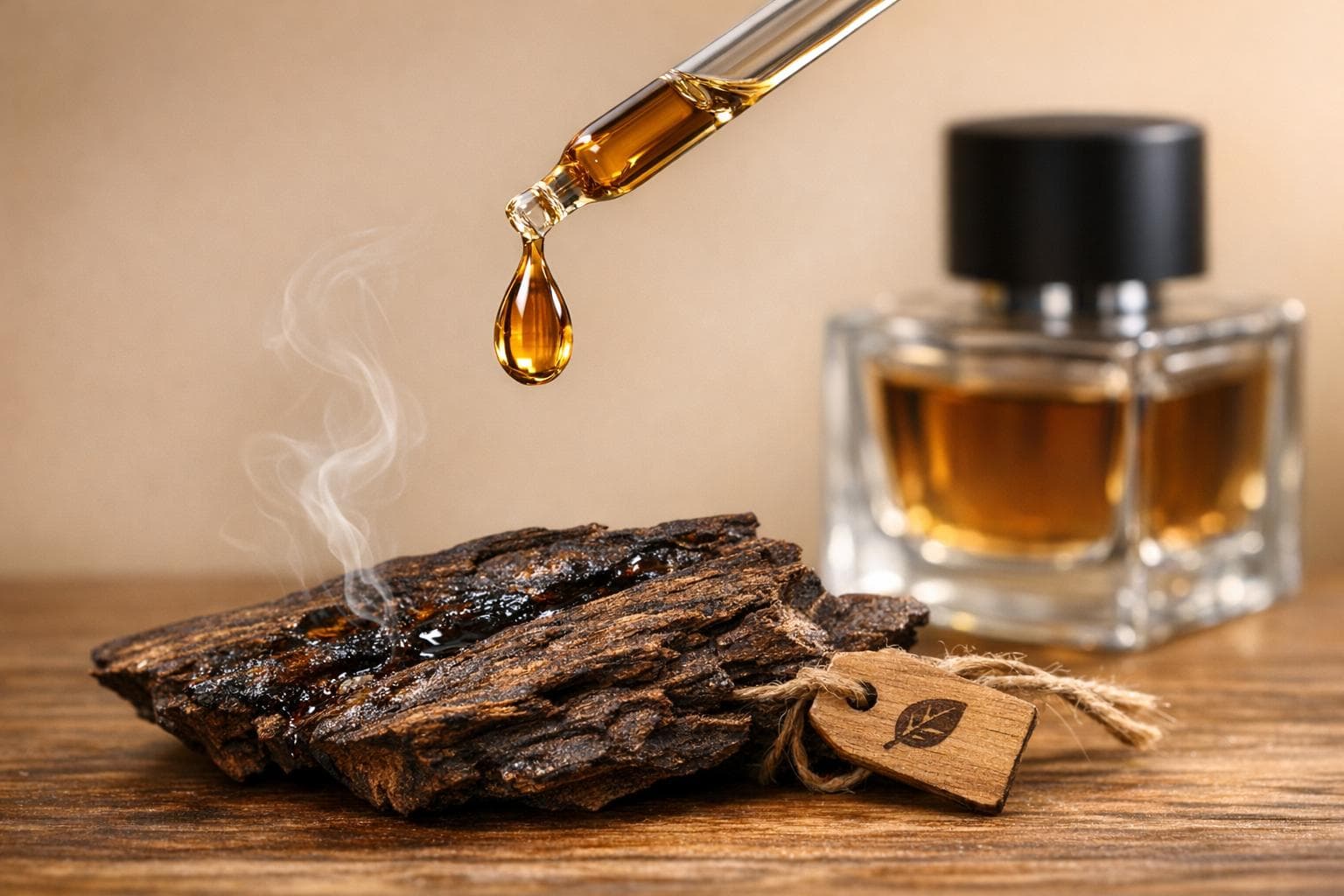
L’oud, souvent surnommé "l’or liquide", est l’un des ingrédients les plus coûteux et les plus convoités de la parfumerie moderne. Issu du bois de cœur résineux des arbres Aquilaria infectés par un champignon spécifique, l’oud doit sa rareté et son profil olfactif complexe à son statut de pierre angulaire des fragrances de luxe. Voici l’essentiel à savoir :
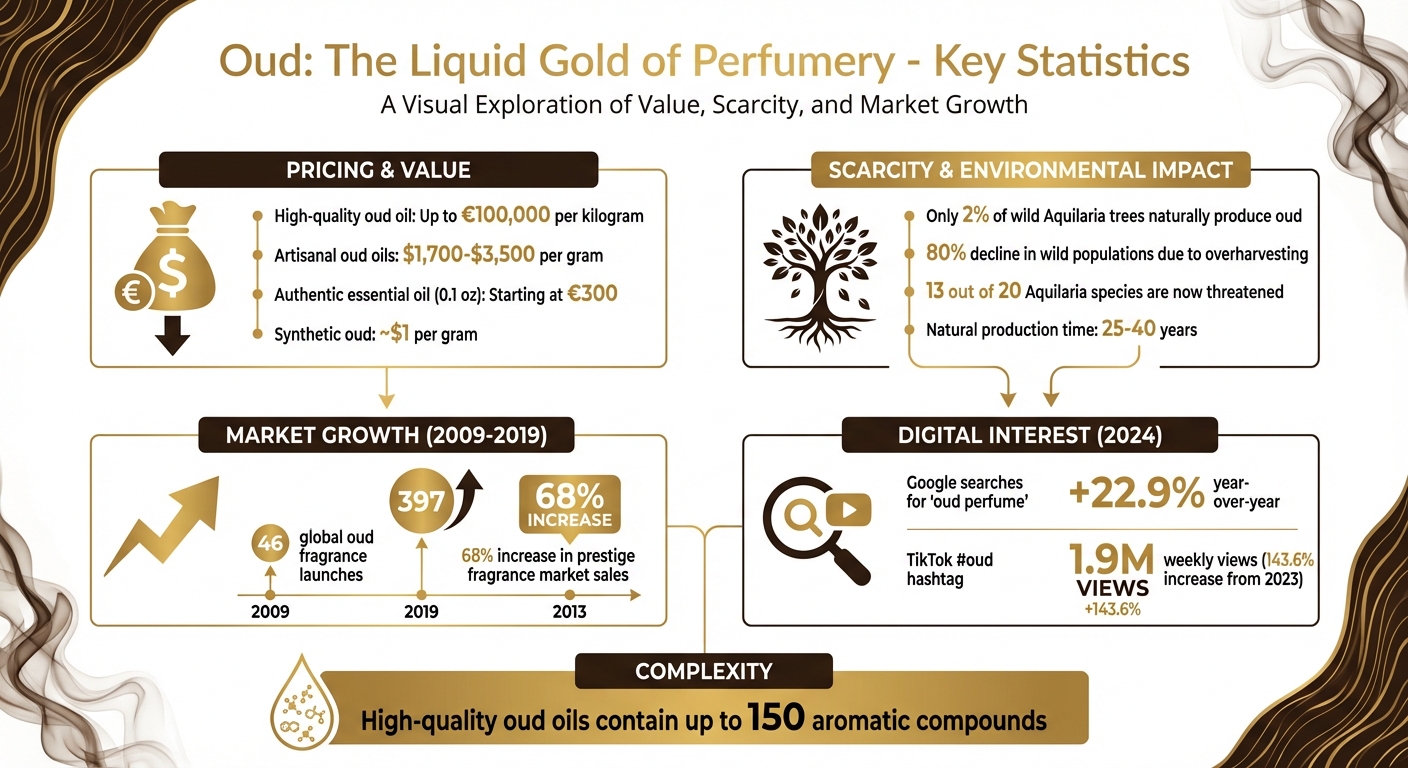
- Prix : Une huile d’oud de haute qualité peut coûter jusqu’à 100 000 € le kilogramme, dépassant l’or en valeur.
- Rareté : Seuls 2 % des arbres Aquilaria sauvages produisent naturellement de l’oud, et la surexploitation a entraîné un déclin de 80 % des populations sauvages.
- Importance culturelle : L’oud est utilisé depuis plus de 3 000 ans dans les rituels, la médecine et la parfumerie, de l’Inde ancienne à l’Égypte en passant par le Moyen-Orient.
- Parfumerie moderne : Popularisé en Occident par Tom Ford avec Oud Wood en 2007, l’oud est désormais un ingrédient clé dans des centaines de parfums de créateurs.
- Naturel vs synthétique : L’oud naturel offre une profondeur inégalée, mais soulève des préoccupations environnementales et éthiques. L’oud synthétique constitue une alternative plus accessible et durable.
Que vous préfériez l’opulence affirmée de l’oud naturel ou les accords plus légers et plus accessibles des créations modernes, le charme de l’oud réside dans sa capacité à transformer un parfum en une signature intemporelle et luxueuse.
Statistiques sur les parfums à l’oud : croissance du marché, prix et données sur la rareté
L’histoire de l’oud
Les premiers usages en Asie et au Moyen-Orient
Les origines de l’oud remontent à environ 2000 av. J.-C. dans l’Inde ancienne, où il est mentionné pour la première fois dans des textes sanskrits sous les noms de gahuru ou agaharu, que l’on peut traduire par "esprit de vie". Cette appellation souligne sa profonde portée spirituelle. Dans plusieurs civilisations anciennes, le bois d’agar résineux était vénéré pour ses vertus spirituelles et médicinales.
En Inde, le savant ayurvédique Sushruta recommandait l’oud pour traiter les inflammations dans son traité médical, Suśrutasamhitā. Dans l’Égypte ancienne, il était associé à l’encens dans les rituels d’embaumement. Au IIIe siècle apr. J.-C., des textes chinois le désignaient comme le "Bois des Dieux", soulignant son rôle dans les rites funéraires. À la même époque, le médecin grec Pedanius Dioscorides consignait ses usages médicinaux dans son ouvrage Materia Medica (40–90 apr. J.-C.). Ces premières applications mettent en lumière l’importance de l’oud à travers les civilisations et annoncent déjà son ascension en tant que symbole de luxe.
À mesure que l’oud se diffusait géographiquement, sa portée culturelle évoluait. Bien qu’il soit aujourd’hui fortement associé aux traditions arabes, ce n’est qu’au VIIe siècle apr. J.-C. qu’il commença à arriver en quantités significatives au Moyen-Orient, grâce aux marchands arabes commerçant le long de la Route de la soie. Au IXe siècle, des textes arabes détaillaient des recettes de parfums à base d’oud, et celui-ci s’intégra profondément à la culture islamique. L’oud est mentionné dans les hadiths et fréquemment utilisé sous forme de bakhoor pour parfumer les maisons et les mosquées.
L’oud comme symbole de statut
Avec le temps, l’oud est passé d’un matériau cérémoniel et médicinal à un marqueur de richesse et de pouvoir. Sa rareté en faisait un bien précieux, symbole de prestige. Dans le Golfe arabe, offrir de l’oud à ses invités est devenu un geste hautement significatif, réservé aux grandes occasions comme les mariages et les célébrations religieuses.
Cette association au luxe s’est étendue bien au-delà du Moyen-Orient. En 1975, la maison de parfum Krigler a créé "Oud for Highness 75" exclusivement pour le roi Hussein de Jordanie. Des décennies plus tard, en avril 2011, le prince William aurait reçu un parfum sur mesure à base d’oud en cadeau de mariage, renforçant encore sa réputation auprès des familles royales du monde entier.
Christina Christie, parfumeuse senior chez Givaudan, en saisit parfaitement l’essence :
L’odeur est à l’origine associée à l’énergie, à la religion, à la proximité avec Dieu et à la proximité avec la nature. Elle est très cérémonielle. C’est un bois spirituel qui élève le parfum vers quelque chose d’unique — on emmène presque le parfum dans une autre dimension.
Comment l’oud est produit
La formation naturelle de l’oud
L’oud ne provient pas directement de l’arbre Aquilaria — il est le résultat d’une réponse au stress tout à fait singulière. Lorsque l’arbre est blessé par des facteurs extérieurs comme les intempéries, les animaux ou les insectes, puis infecté par un champignon spécifique, il réagit en produisant une résine sombre et aromatique pour se défendre.
Geza Schoen, fondateur et parfumeur chez Escentric Molecules, décrit ce processus fascinant :
Le bois d’agar est la réponse immunitaire de l’arbre à l’infection, un peu comme notre peau forme une croûte lorsque nous nous coupons. La différence ici, c’est qu’il s’agit d’une lutte à mort entre l’arbre et l’infection, qui peut durer des années, voire des décennies.
Au fil du temps, cette résine imprègne le bois de cœur de l’arbre, mettant entre 25 et 40 ans à développer un profil aromatique riche. Une fois la résine arrivée à maturité, l’arbre est récolté, puis le bois imprégné de résine est taillé et distillé à la vapeur afin d’en extraire l’huile d’oud.
Fait remarquable, seuls environ 2 à 10 % des arbres Aquilaria sauvages produisent naturellement de l’oud. Cette rareté, combinée aux récoltes illégales, a entraîné un déclin marqué de ces arbres. Sur les 20 espèces connues d’Aquilaria, 13 sont aujourd’hui considérées comme menacées et protégées par la réglementation CITES. Cette rareté a valu à l’oud naturel le surnom d’"or liquide", l’huile d’oud de tout premier rang atteignant des prix allant jusqu’à 100 000 $ le kilogramme. Ce processus de formation complexe souligne son exclusivité et sa valeur dans l’univers de la parfumerie.
Oud naturel vs oud synthétique
La rareté et les défis environnementaux liés à la production d’oud naturel ont favorisé l’émergence d’alternatives synthétiques. Si ces versions créées en laboratoire ne peuvent reproduire pleinement la complexité de l’oud naturel, elles offrent une solution concrète. L’oud naturel est célébré pour ses centaines de composés aromatiques entrelacés, qui créent une senteur dynamique et évolutive. Christina Christie, parfumeuse senior chez Givaudan, souligne l’unicité de l’oud naturel :
N’oublions pas que le bois [des arbres aquilaria] est en décomposition, et l’on ne peut pas vraiment imiter la décomposition ni cette véritable dimension terrestre avec une molécule synthétique.
L’oud naturel possède un caractère intensément animal et terrien qui évolue magnifiquement sur la peau. L’oud synthétique, quant à lui, est plus abordable, plus constant et plus durable, présentant souvent un profil olfactif plus doux et plus sucré. En revanche, il ne possède pas la profondeur évolutive de la résine naturelle.
| Caractéristique | Oud naturel | Oud synthétique |
|---|---|---|
| Profil olfactif | Complexe, animal, terrien, évolue sur la peau | Plus doux, plus sucré, constant |
| Prix | Jusqu’à 100 000 € le kilogramme | Plus abordable |
| Impact environnemental | Élevé – implique la récolte d’espèces menacées | Faible – créé en laboratoire, durable |
| Temps de production | 25 à 40 ans (infection fongique naturelle) | Synthèse chimique rapide |
| Tenue | Exceptionnelle (8 à 14 heures ou plus) | Bonne, mais sans profondeur évolutive |
Choisir entre oud naturel et synthétique revient souvent à arbitrer entre authenticité et profondeur, d’une part, et coût et considérations environnementales, d’autre part. Les deux options ont leur place dans la parfumerie moderne, répondant à des besoins et des préférences distincts.
Votre expert parfum personnel vous attend
Faites notre quiz olfactif express pour découvrir des parfums de créateurs et de niche authentiques, choisis selon vos goûts – explorez-les en décants et échantillons de 2, 5, 8 et 30 ml, pour essayer chaque fragrance avant de vous engager sur un flacon entier.
Trouvez votre parfumL’oud dans la parfumerie moderne
L’oud, riche de son histoire, s’est forgé une nouvelle identité dans l’univers de la parfumerie contemporaine.
Tom Ford, Oud Wood et son influence
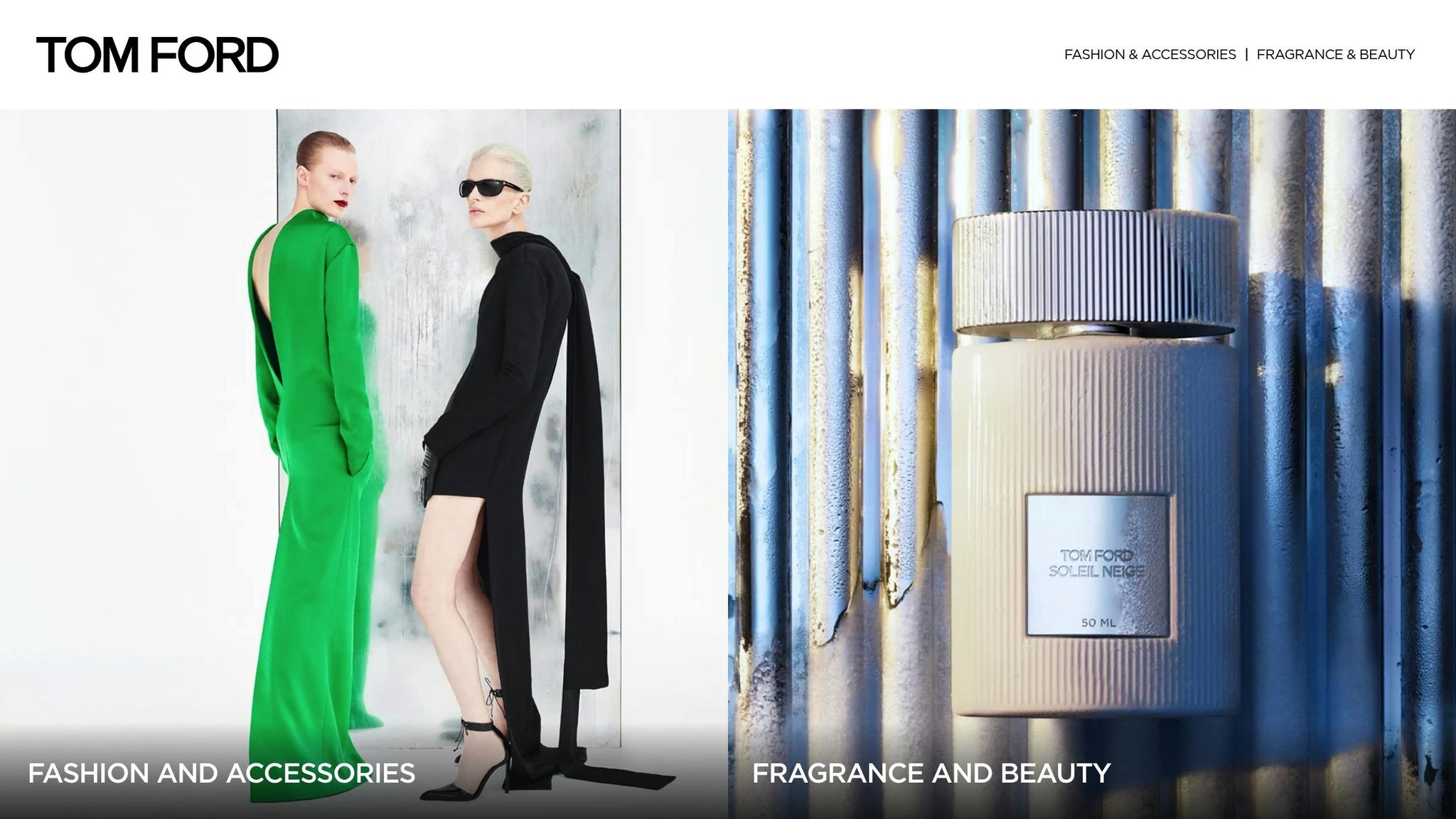
Pendant des siècles, l’oud a été célébré en Orient, mais son caractère puissant et intense l’a empêché de conquérir largement l’Occident. Tout a changé en 2007 avec le lancement de Oud Wood de Tom Ford. Cette fragrance a marqué un tournant décisif, faisant passer l’oud d’un trésor régional à un symbole mondial du luxe.
Ce qui distinguait Oud Wood, c’était son audace : le nom de l’ingrédient figurait en évidence dans l’intitulé du produit. Cette initiative a fait découvrir l’oud à des consommateurs qui ne l’avaient peut-être jamais rencontré auparavant. En réinterprétant l’oud comme une note "fumée, épurée et unisexe", la fragrance a rendu cet ingrédient plus accessible à un public international.
La réaction a été spectaculaire. Entre 2009 et 2019, le nombre de lancements mondiaux de parfums à l’oud a grimpé de 46 à 397. Rien qu’en 2013, les ventes d’oud sur le marché de la parfumerie de prestige ont progressé de 68 %. De grandes maisons occidentales comme Dior, Versace, Gucci et Jo Malone ont rapidement suivi, déclenchant ce que les experts qualifient de "fascination mondiale" pour cette note.
Le monde numérique a lui aussi reflété cet essor. En 2024, les recherches Google pour "oud perfume" ont augmenté de 22,9 % par rapport à l’année précédente. Sur TikTok, le hashtag #oud a atteint une moyenne de 1,9 million de vues hebdomadaires, soit une hausse spectaculaire de 143,6 % depuis 2023.
Moderniser l’oud grâce à des accords singuliers
Les parfumeurs contemporains ont redéfini l’oud en adoucissant son intensité brute et traditionnelle. L’oud naturel présente souvent des facettes "animales" exigeantes, mais les techniques modernes cherchent à préserver sa chaleur et sa profondeur tout en atténuant ses aspects les plus envahissants.
Au lieu de laisser l’oud dominer, les créateurs d’aujourd’hui l’utilisent comme une base structurelle. Julien Sprecher, fondateur de Parfums de Marly, explique :
L’oud peut agir comme la colonne vertébrale d’un parfum... mais dans un oud moderne, il ne doit pas devenir trop dominant au point d’éclipser les autres ingrédients.
Cette approche équilibrée a donné naissance à des associations inédites, mariant l’oud à des ingrédients autrefois jugés incompatibles. Ainsi, Oud Minérale de Tom Ford associe l’oud au sel marin et à des notes aquatiques, créant ce que le blogueur Thomas Dunckley décrit comme "une composition ingénieuse qui relie deux styles contrastés". De même, Colonia Intensa Oud d’Acqua Di Parma marie l’oud à un citron éclatant, tandis que Oud & Bergamot de Jo Malone utilise les agrumes pour créer un profil plus léger et plus lumineux.
Une tendance croissante en parfumerie consiste à associer l’oud à des facettes gourmandes. Kayali avec Oudgasm Café Oud mêle l’oud au cappuccino pour une sensation riche et enveloppante, tandis que Byredo avec Rouge Chaotique y ajoute prune et praliné pour une touche douce mais raffinée. Fragrance Du Bois avec Oud Jaune Intense va même jusqu’à incorporer de l’ananas tropical et de l’ylang-ylang, illustrant toute la polyvalence de l’oud dans la création olfactive moderne.
Ces accords innovants ont transformé l’image de l’oud, le faisant découvrir à une nouvelle génération de passionnés et assurant sa place dans l’univers de la parfumerie de luxe.
Comment reconnaître des parfums à l’oud de qualité
Alors que l’oud continue de gagner en popularité dans la parfumerie moderne, savoir identifier la qualité devient essentiel. Sur un marché qui propose aussi bien des huiles artisanales que des imitations synthétiques, comprendre ce qui distingue un véritable oud peut vous éviter de dépenser une fortune pour un produit médiocre.
Oud pur vs versions diluées
Le signe distinctif d’un oud pur réside dans sa complexité et son évolution. Les huiles d’oud de haute qualité peuvent contenir jusqu’à 150 composés aromatiques dans une seule huile, créant un parfum qui change et se déploie au contact de la peau. Cette nature dynamique est un indice majeur d’authenticité — si une fragrance sent la même chose du premier spray jusqu’au fond sec, elle repose probablement sur des molécules synthétiques comme Black Agar Givco ou Oud Synthetic 10760 E.
Un autre élément à considérer est l’équilibre des notes. Bien que l’oud naturel présente effectivement des nuances terreuses et légèrement animales, une odeur excessivement rude ou désagréable peut révéler de mauvaises méthodes de distillation. Par exemple, un trempage inapproprié du bois avant distillation peut provoquer une décomposition qui compromet la qualité de l’huile. Un oud bien élaboré doit sentir la richesse, la terre et la nuance — jamais être agressivement rebutant.
Le prix est également un indicateur fort de qualité. Les huiles d’oud artisanales authentiques peuvent coûter entre 1 700 et 3 500 $ le gramme, tandis que les alternatives synthétiques sont proposées autour de 1 $ le gramme. Un flacon de 0,1 once d’huile essentielle authentique débute généralement à 300 € ; méfiez-vous donc des prix anormalement bas, souvent synonymes de produits dilués ou synthétiques.
Approvisionnement et considérations éthiques
La qualité de l’oud ne tient pas uniquement à son arôme — elle dépend aussi de la manière dont il est sourcé. Alors que les populations sauvages d’arbres Aquilaria diminuent en raison de la surexploitation, l’approvisionnement éthique devient une priorité croissante. De nombreuses espèces sont désormais classées parmi les espèces menacées, rendant les pratiques durables indispensables.
Lorsque vous achetez de l’oud, recherchez des marques qui mettent en avant la certification CITES (Convention sur le commerce international des espèces de faune et de flore sauvages menacées d’extinction). Cette certification garantit que le bois a été récolté légalement et durablement. Ian Thompson, expert du commerce du bois d’agar, souligne :
Il est tout à fait clair que ce n’est pas durable. Tant qu’ils ne disposeront pas de bonnes données sur l’application des règles et sur les populations, les arbres continueront de décliner.
La région d’origine de l’oud joue également un rôle dans son profil olfactif. Par exemple, l’oud d’Assam en Inde est connu pour sa richesse terreuse, l’oud cambodgien présente des nuances fruitées, et l’oud thaïlandais est souvent plus doux. Les marques qui précisent l’espèce (par exemple, Aquilaria malaccensis) ainsi que la région de récolte font preuve de transparence, ce qui constitue un excellent signe de qualité.
Pour un usage quotidien, envisagez des fragrances élaborées avec de l’oud synthétique. Bien qu’elles n’aient pas la profondeur de l’oud naturel, elles représentent une option plus respectueuse de l’environnement, sans contribuer à l’épuisement des arbres menacés.
Pour aller plus loin dans la garantie d’un approvisionnement éthique, renseignez-vous sur les marques qui s’appuient sur des plantations durables en Thaïlande, au Vietnam ou en Australie. Dans ces plantations, les arbres sont inoculés manuellement avec des champignons pour produire de la résine, préservant ainsi les forêts sauvages tout en offrant un caractère d’oud authentique.
Conclusion
L’oud occupe une place prestigieuse dans la parfumerie moderne, célébré non seulement pour sa rareté, mais aussi pour la richesse et l’empreinte durable qu’il confère à toute fragrance. Fort d’une histoire remontant à plusieurs millénaires, l’oud incarne un mariage d’histoire et de sophistication qui symbolise aujourd’hui le luxe contemporain. Comme l’exprime avec éloquence Rodrigo Flores-Roux, parfumeur senior chez Givaudan :
Au-delà d’être une matière première noble, l’oud est un état d’esprit.
Aujourd’hui, cet ingrédient ancestral inspire des choix d’achat plus réfléchis. Que vous soyez attiré par l’intensité franche et authentique de l’oud pur ou que vous préfériez des compositions plus accessibles adoucies par des notes d’agrumes ou florales, il existe une fragrance à l’oud pour presque chaque sensibilité. L’essentiel est de savoir dans quoi vous investissez : privilégiez les maisons transparentes sur leur approvisionnement, attachées à une récolte éthique certifiée CITES, et qui identifient clairement l’espèce ainsi que l’origine de leur oud. Un oud de haute qualité se transforme sur la peau, passant souvent de tonalités fumées et médicinales à des nuances crémeuses et balsamiques.
Pour celles et ceux qui découvrent l’oud, commencer modestement est une approche judicieuse. Les formats découverte permettent d’explorer sans s’engager sur un flacon entier — d’autant qu’à peine 0,1 once d’oud authentique peut atteindre des prix supérieurs à 300 €. Des plateformes comme Scento simplifient cette démarche en proposant des décants soigneusement sélectionnés, du 2 ml jusqu’au décant en flacon de 30 ml, vous permettant de découvrir des parfums de créateurs à l’oud avant de décider lesquels méritent une place dans votre collection.
À mesure que l’industrie du parfum adopte des pratiques plus durables, l’attrait de l’oud demeure plus fort que jamais. Cette évolution raconte une histoire plus vaste, où la tradition se mêle avec naturel au luxe moderne. Les chiffres parlent d’eux-mêmes : les lancements mondiaux de parfums à l’oud sont passés de 46 en 2009 à 397 en 2019, démontrant sa capacité à captiver aussi bien les connaisseurs aguerris qu’une nouvelle vague d’amateurs de parfum.
Prenez le temps d’explorer l’oud. Ses facettes complexes et son caractère évolutif peuvent vous guider vers ce qui résonne le plus intimement avec votre style personnel.
FAQ
Pourquoi l’oud est-il souvent considéré comme plus précieux que l’or ?
L’oud est souvent considéré comme plus précieux que l’or en raison de son extrême rareté, de la manière complexe dont il se forme et de son importance profondément ancrée dans certaines traditions. Cette substance rare provient du bois de cœur résineux des arbres Aquilaria, qui ne produisent de l’oud que lorsqu’ils sont infectés par un type spécifique de moisissure. Sa rareté est saisissante — moins de 2 % de ces arbres développent naturellement cette résine. En conséquence, une huile d’oud de haute qualité peut atteindre des prix de plusieurs milliers de dollars par livre.
Au-delà de sa rareté, l’oud porte un immense héritage culturel et historique, en particulier dans les traditions du Moyen-Orient et d’Asie. Depuis des siècles, il est chéri pour son arôme riche et multidimensionnel ainsi que pour ses liens avec le luxe, la spiritualité et l’art de l’hospitalité. Cette alliance rare entre disponibilité limitée, complexité olfactive et prestige culturel a consacré l’oud comme un véritable emblème de l’extravagance.
Quelle est la différence entre l’oud naturel et l’oud synthétique en termes de senteur et de durabilité ?
L’oud naturel et l’oud synthétique diffèrent considérablement tant par leur profil olfactif que par leur impact environnemental. L’oud naturel provient du bois de cœur résineux des arbres Aquilaria, qui ne produisent cette résine rare qu’après avoir été infectés par une moisissure spécifique. Son arôme est remarquablement stratifié, mêlant des facettes fumées, boisées et parfois animales, qui varient selon des facteurs tels que l’âge de l’arbre, sa région d’origine et le procédé d’extraction. Toutefois, l’oud naturel n’est pas seulement onéreux : il suscite également des préoccupations liées à la déforestation et à la surexploitation, faisant de sa production un sujet sensible sur le plan environnemental.
L’oud synthétique, en revanche, est élaboré en laboratoire pour reproduire l’essence de l’oud naturel. S’il ne parvient pas toujours à capturer toute la complexité et les subtiles variations de son équivalent naturel, il offre une option fiable et éthique. Il contribue à préserver les populations d’arbres menacées et présente un impact environnemental bien moindre. C’est pourquoi il gagne du terrain dans la parfumerie contemporaine, même si de nombreux puristes continuent de tenir l’oud naturel en très haute estime pour son authenticité et son profond ancrage culturel.
Que faut-il rechercher lors de l’achat d’un véritable parfum à l’oud ?
Lorsque vous achetez un véritable parfum à l’oud, quelques éléments clés méritent toute votre attention afin de vous assurer de son authenticité. Commencez par le profil olfactif — un oud authentique possède un arôme profond et naturel qui se déploie magnifiquement avec le temps. Il doit se fondre harmonieusement sur la peau, sans notes trop vives ni artificiellement synthétiques. Un autre indice réside dans l’apparence et la texture de l’huile. Une véritable huile d’oud tend à être épaisse et sombre, signe de sa pureté et de sa forte concentration en composés aromatiques.
La source et l’origine de l’oud jouent également un rôle majeur. L’oud provenant de régions comme l’Inde, le Cambodge ou le Laos présente des profils olfactifs distincts, chacun doté de son propre charme. Soyez attentif à la méthode d’extraction ainsi qu’à la réputation du vendeur, car les techniques artisanales traditionnelles donnent souvent naissance à des fragrances plus riches et plus nuancées que les options synthétiques. Enfin, surveillez le prix. Le véritable oud est rare et coûteux en raison du processus intensif en main-d’œuvre nécessaire à sa production. Des tarifs suspectement bas peuvent révéler un produit loin d’être authentique. En tenant compte de ces détails, vous pourrez choisir avec assurance un parfum à l’oud de haute qualité.

