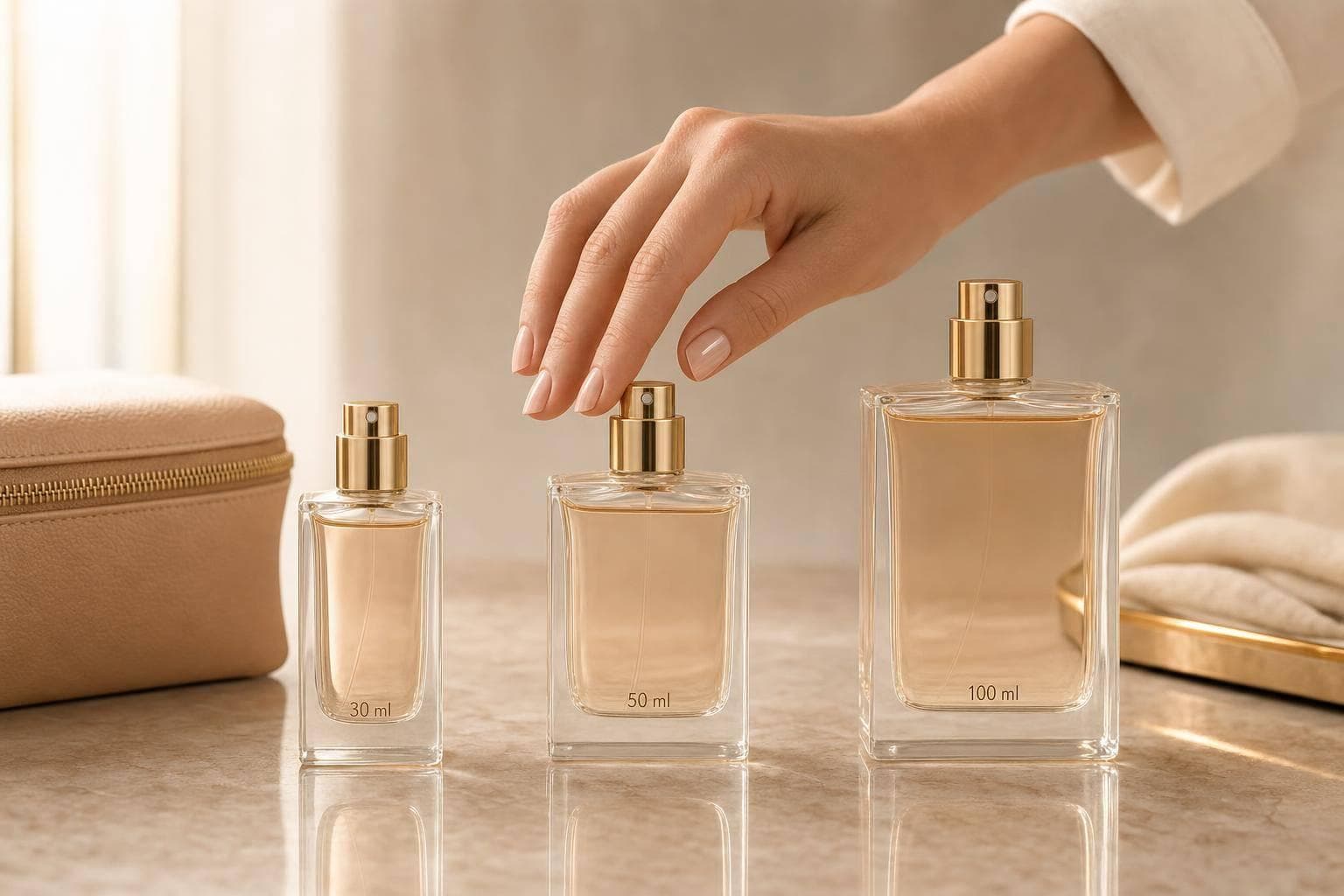
Si je porte souvent le même parfum, je choisis 100 ml pour son prix au millilitre plus avantageux. Si je veux limiter les risques, je prends 50 ml. Si je souhaite tester, alterner ou voyager léger, j’opte pour 30 ml.
En résumé :
- 30 ml = dépense initiale réduite, facile à emporter, idéal pour tester
- 50 ml = le parfait compromis pour une utilisation régulière
- 100 ml = le coût au millilitre le plus bas, mais un investissement initial plus important
- La durée d’utilisation varie d’environ 2 à 12 mois, selon le nombre de vaporisations quotidiennes
- La réglementation aérienne européenne autorise jusqu’à 100 ml en cabine, mais les flacons plus compacts restent plus simples à emporter
Aperçu des prix moyens en 2026 :
- 30 ml : environ 45 € à 100 €+
- 50 ml : généralement situé entre le petit et le grand format
- 100 ml : environ 120 € à 300 €+
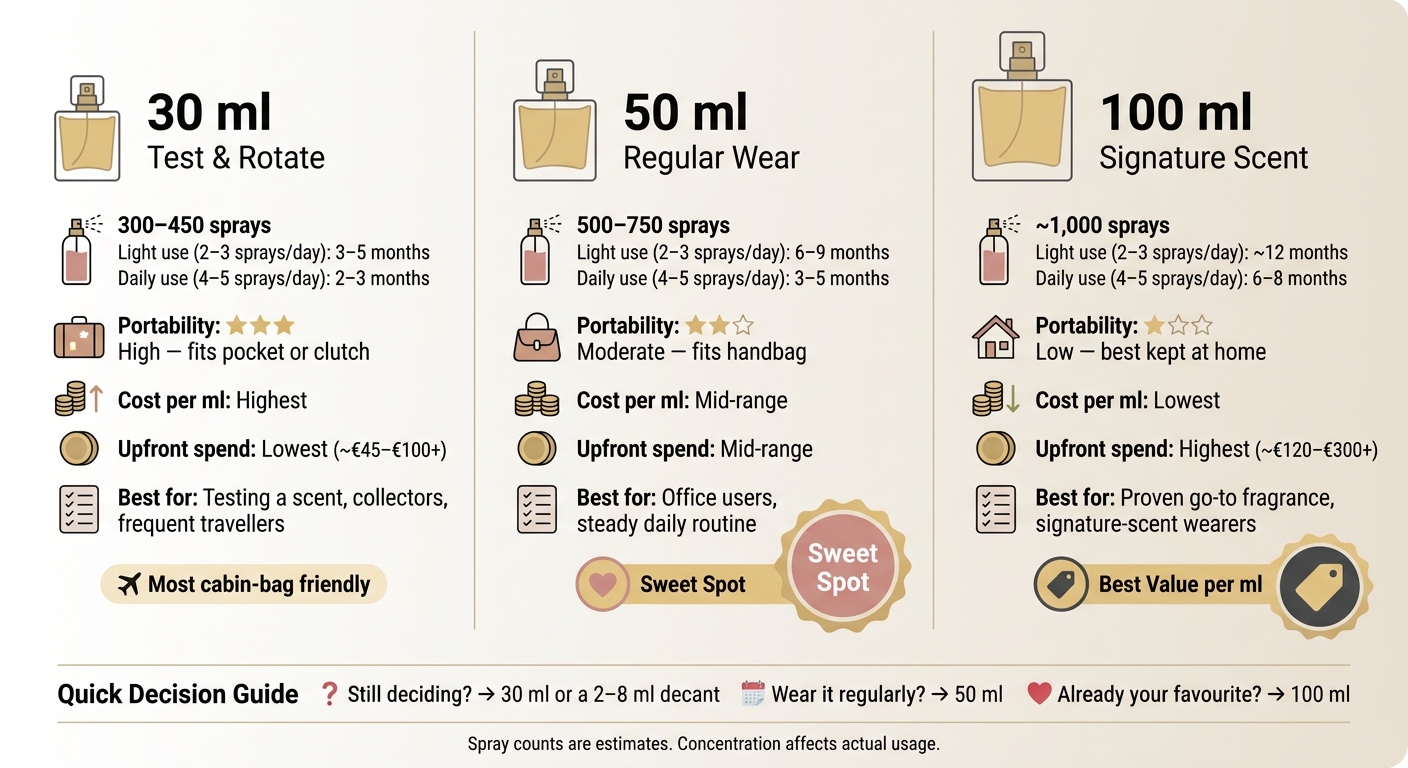
Tailles de flacons de parfum comparées : 30 ml, 50 ml et 100 ml (2026)
Comparatif des tailles de flacons : 50 ml vs 100 ml (et 10 ml, 15 ml, 30 ml, 60 ml, 125 ml !)
Comparatif rapide
| Contenance | Idéal pour | Investissement de départ | €/ml | Praticité de transport | Durée d’utilisation approximative |
|---|---|---|---|---|---|
| 30 ml | Découverte, voyages, rotation | Le plus bas | Le plus élevé | Le plus facile | 2 à 5 mois |
| 50 ml | Usage régulier | Intermédiaire | Intermédiaire | Assez facile | 3 à 9 mois |
| 100 ml | Parfum signature au quotidien | Le plus élevé | Le plus bas | Le moins pratique | 6 à 12 mois |
Notre avis : le choix du flacon ne se résume pas à son prix. Tout dépend de la fréquence à laquelle vous le portez, du nombre de parfums que vous possédez déjà et de votre certitude de le terminer. Ce guide passe en revue ces critères en toute simplicité.
30 ml vs 50 ml vs 100 ml : analyse comparative
Un flacon de 30 ml offre environ 300 à 450 vaporisations, un flacon de 50 ml environ 500 à 750 vaporisations, et un flacon de 100 ml environ 1.000 vaporisations. Voici ce que cela donne concrètement, côte à côte.
| 30 ml | 50 ml | 100 ml | |
|---|---|---|---|
| Nombre de vaporisations (est.) | 300–450 | 500–750 | ~1.000 |
| Usage modéré (2–3 sprays/jour) | 3 à 5 mois | 6 à 9 mois | Environ un an |
| Usage quotidien (4–5 sprays/jour) | 2 à 3 mois | 3 à 5 mois | 6 à 8 mois |
| Portabilité | Excellente – poche ou minaudière | Bonne – sac à main | Moins pratique à transporter au quotidien |
| Encombrement | Minime | Modéré | Visible |
| €/ml moyen | Le plus élevé | Moyen | Le plus bas |
À noter : la concentration change tout. Si vous portez une formule plus concentrée, moins de vaporisations suffiront, ce qui permettra à votre flacon de durer bien plus longtemps que ces estimations.
Prix au millilitre, coût initial et rentabilité
Il est utile d’évaluer la taille d’un flacon selon deux angles : le montant dépensé aujourd’hui et la valeur obtenue dans la durée.
Le flacon de 30 ml exige l’investissement initial le plus faible. C’est un choix judicieux si vous êtes encore en phase de découverte ou si vous alternez régulièrement entre plusieurs créations. Le flacon de 100 ml affiche généralement le prix au millilitre le plus avantageux, ce qui en fait l’option la plus rentable. Pour une fragrance que vous portez sans cesse, le grand format est souvent le plus pertinent.
Le format 50 ml représente le juste milieu. Il n’impose pas le même engagement qu’un 100 ml, tout en offrant un tarif au millilitre plus intéressant que le 30 ml. Pour beaucoup, c’est l’équilibre parfait.
Nombre de vaporisations et longévité selon la taille du flacon
La durée de vie d’un flacon dépend moins de son étiquette que de vos habitudes quotidiennes.
Pour un usage léger à raison de 2 à 3 vaporisations en semaine uniquement, comptez environ 3 à 5 mois pour un flacon de 30 ml et 6 à 9 mois pour un 50 ml. Pour un usage quotidien à raison de 4 à 5 vaporisations chaque matin, un flacon de 30 ml se terminera généralement en 2 à 3 mois et un 50 ml en 3 à 5 mois.
Le flacon de 100 ml est évidemment celui qui dure le plus longtemps. Il constitue le meilleur investissement pour une fragrance portée presque quotidiennement. Pour résumer : lorsqu’un parfum s’installe durablement dans votre routine, opter pour un grand flacon permet de réelles économies à long terme.
Maniabilité, sac à main et restrictions de voyage en avion
C’est ici que les considérations pratiques prennent le pas sur les chiffres.
Un flacon de 30 ml se glisse sans effort dans une poche, une pochette ou un petit sac à main. C’est la taille idéale pour l’emporter partout avec vous. Le 50 ml reste parfaitement adapté à un sac à main classique, bien qu’il soit légèrement plus encombrant. Quant au 100 ml, il est le moins adapté aux déplacements quotidiens et trouve naturellement sa place sur votre coiffeuse ou soigneusement emballé dans une valise.
Ces trois formats sont conformes aux restrictions concernant les liquides en cabine, mais le flacon de 30 ml laisse bien plus de place pour vos autres essentiels de toilette. Pour les voyageurs fréquents, cette différence est précieuse lors des contrôles de sécurité.
Votre expert parfum personnel vous attend
Faites notre quiz olfactif express pour découvrir des parfums de créateurs et de niche authentiques, choisis selon vos goûts – explorez-les en décants et échantillons de 2–8ml, pour essayer chaque fragrance avant de vous engager sur un flacon entier.
Trouvez votre parfumQuelle contenance correspond à vos besoins ?
Les chiffres sont de précieux repères, mais vos habitudes de parfumage restent déterminantes. La bonne contenance dépend de votre fréquence d’utilisation, du nombre de créations que vous aimez alterner et de votre attachement à la fragrance : simple coup de cœur potentiel ou véritable certitude ?
| Profil | Format idéal | Pourquoi |
|---|---|---|
| Usage occasionnel | 30 ml | Parfait pour apprivoiser une fragrance sans grand investissement |
| Au quotidien au bureau | 50 ml | Un équilibre idéal pour une routine régulière |
| Voyageur fréquent | 30 ml | Compact et simple à glisser dans un bagage |
| Collectionneur | 30 ml | Idéal pour alterner facilement plusieurs créations |
| Adepte d’un parfum signature | 100 ml | Le choix évident pour une fragrance portée au quotidien |
30 ml : l’idéal pour explorer une note et varier les plaisirs
Si vous hésitez encore sur l’intensité de votre coup de cœur, ce format est le point de départ idéal. Un flacon de 30 ml vous laisse amplement le temps d’expérimenter la fragrance dans différents contextes sans vous engager.
C’est également un choix parfait pour les amateurs de variété. Lorsque vous alternez régulièrement entre plusieurs créations, les petits formats sont plus faciles à terminer et évitent de laisser des flacons à moitié pleins sur vos étagères.
50 ml : l’équilibre parfait pour un usage régulier
Pour beaucoup, le format 50 ml est le compromis idéal. Il convient parfaitement à un usage régulier, surtout lorsque vous appréciez déjà le parfum sans pour autant vouloir investir d’emblée dans le format le plus généreux.
C’est le choix de la modération : plus généreux qu’un petit flacon, mais toujours mesuré. Si vous vous parfumez la plupart des jours pour aller travailler ou si vous aimez la constance, cette taille vous conviendra parfaitement.
100 ml : le choix incontournable pour votre signature olfactive
Misez sur le 100 ml lorsque le parfum s’est déjà imposé comme un favori absolu. Ce format s’adresse à la fragrance qui fait partie intégrante de votre identité — celle que vous vaporisez instinctivement chaque matin.
Si vous avez le moindre doute sur votre fidélité à ce sillage, le 50 ml reste plus sage. Mais lorsque vous avez trouvé votre signature, le 100 ml s’impose comme une évidence.
Scénarios d’achat : quelle contenance choisir selon vos habitudes ?
Le tableau fournit un aperçu rapide. Ces situations concrètes vous aident à visualiser le format le plus adapté à votre quotidien.
Usage occasionnel, environnement professionnel et voyages fréquents
Si vous ne vous parfumez que le week-end ou lors d’occasions particulières, choisissez le 30 ml. Cela réduit la dépense initiale et reste cohérent si vous n’utilisez pas votre flacon tous les jours.
Si le parfum ponctue vos journées de travail, le 50 ml représente généralement la contenance idéale. Il accompagne une utilisation quotidienne sans vous enfermer dans un flacon trop imposant.
Si vous voyagez régulièrement, le 30 ml est le choix le plus pratique. Il se glisse sans encombre dans une trousse de toilette et préserve votre quota de liquides. À l’inverse, le 100 ml est le moins adapté aux déplacements puisqu’il atteint à lui seul la limite autorisée en cabine.
Collectionneurs et fidèles à un parfum signature
Si vous aimez alterner entre plusieurs sillages, le 30 ml offre une souplesse incomparable. Il permet de découvrir davantage de compositions sans s’encombrer d’un grand flacon. Le 50 ml s’avère également très adapté si vous naviguez régulièrement entre quelques créations favorites.
Si vous avez déjà trouvé votre parfum signature et le portez quotidiennement, le 100 ml s’impose naturellement : il vous garantit le coût au millilitre le plus avantageux.
Comment les décants Scento vous guident avant l’achat d’un flacon complet
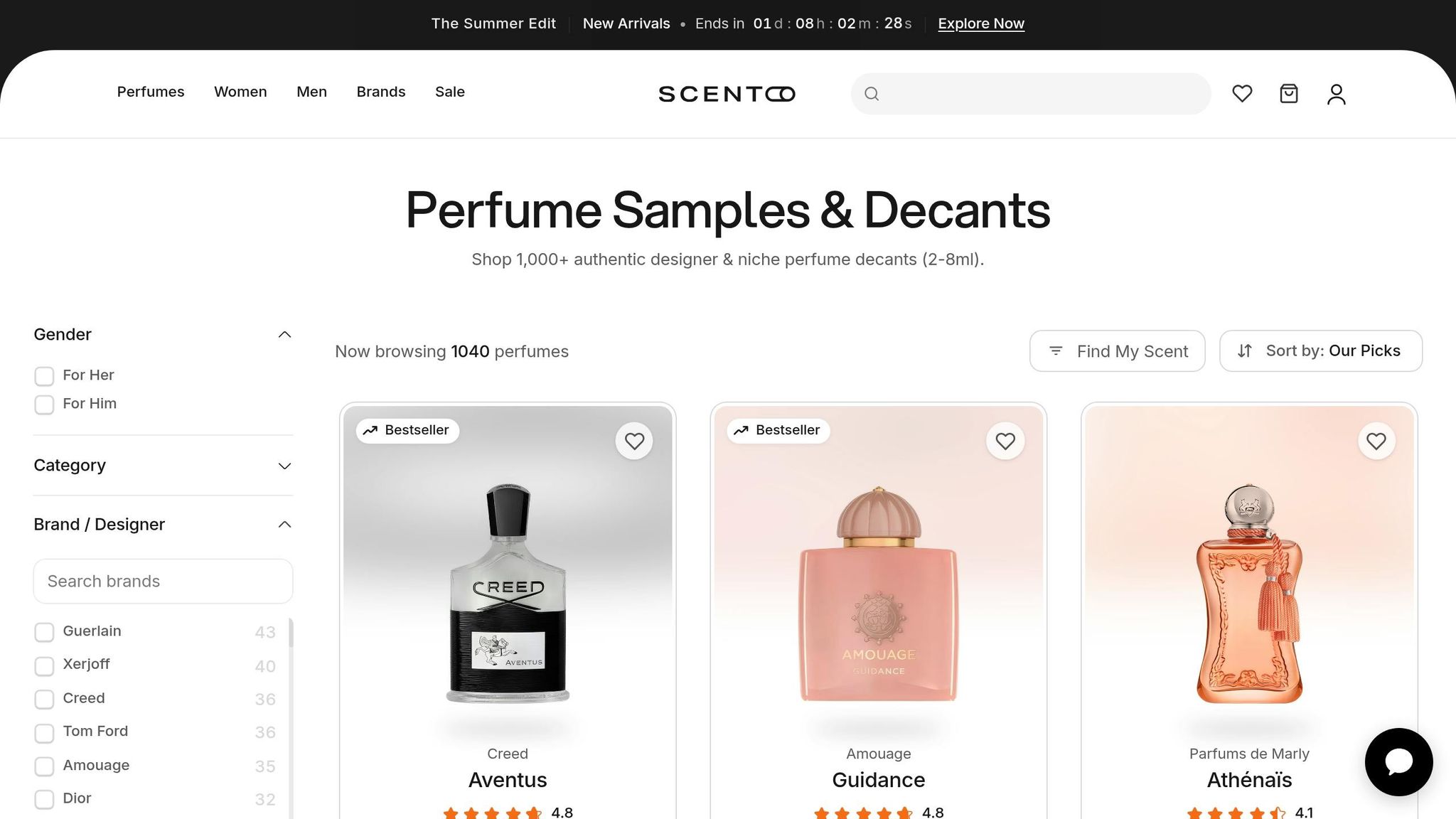
Si vous hésitez encore, commencez par un décant avant d’investir dans un flacon. Les décants Scento en formats 2 ml, 5 ml et 8 ml vous permettent d’essayer une création en toute sérénité avant d’opter pour un 30 ml, 50 ml ou 100 ml.
Voyez-les comme un essai sur mesure :
- 2 ml pour une première impression
- 5 ml pour porter le parfum sur plusieurs jours
- 8 ml pour prendre le temps d’une vraie décision avant le flacon complet
C’est la manière la plus sûre de savoir si une fragrance s’intègre harmonieusement à votre collection ou mérite un flacon entier.
Conclusion : une règle simple pour choisir la contenance idéale
En mettant en balance rentabilité, durée de vie et mobilité, la décision devient limpide. Le 30 ml est idéal pour découvrir une fragrance et faire varier sa collection. Le 50 ml répond parfaitement aux exigences d’un port quotidien. Le 100 ml reste le choix d’élection pour une création dont vous ne pouvez plus vous passer.
Pour ne pas vous tromper, commencez petit. En cas d’hésitation, débutez par un 30 ml ou par un décant de 2 ml, 5 ml ou 8 ml — le prélude idéal avant tout flacon complet.
En 2026, privilégiez ce que vous êtes certain de savourer jusqu’à la dernière goutte.
Questions fréquentes
Combien de vaporisations contient chaque taille de flacon ?
Cela dépend de la concentration du parfum et de votre vaporisateur, mais voici quelques repères fiables :
- 30 ml : environ 300 à 450 vaporisations
- 50 ml : environ 500 vaporisations
- 100 ml : environ 1.000 vaporisations
Votre consommation réelle peut varier. Un Extrait ne nécessite souvent que 1 à 2 vaporisations, tandis qu’une Eau de Toilette peut demander 5 à 6 vaporisations ou plus, notamment pour une retouche au cours de la journée.
La concentration d’un parfum influe-t-elle sur sa longévité ?
Oui. Les concentrations les plus intenses comme le Parfum et l’Extrait, dosés à 20–40 % de concentré odorant, tiennent généralement plus longtemps sur la peau, souvent entre 10 et 14 heures. Vous aurez donc besoin de moins de vaporisations à chaque application.
Les formules plus légères comme l’Eau de Toilette (dosée à 5–15 %) durent généralement de 4 à 6 heures et demandent parfois une retouche en cours de journée.
Ainsi, à contenance égale, une fragrance plus concentrée dure souvent bien plus longtemps au quotidien.
Vaut-il mieux acheter un décant avant un flacon entier ?
Absolument. Un décant de 2 ml, 5 ml ou 8 ml offre une période d’essai idéale d’environ 60 jours, vous permettant d’observer le comportement du parfum sur votre peau, au fil des heures et selon les saisons.
C’est aussi le meilleur moyen d’éviter un achat coûteux à l’aveugle. Un décant reste infiniment plus abordable qu’un flacon entier, vous évitant de laisser sommeiller une pièce précieuse sur une étagère.

