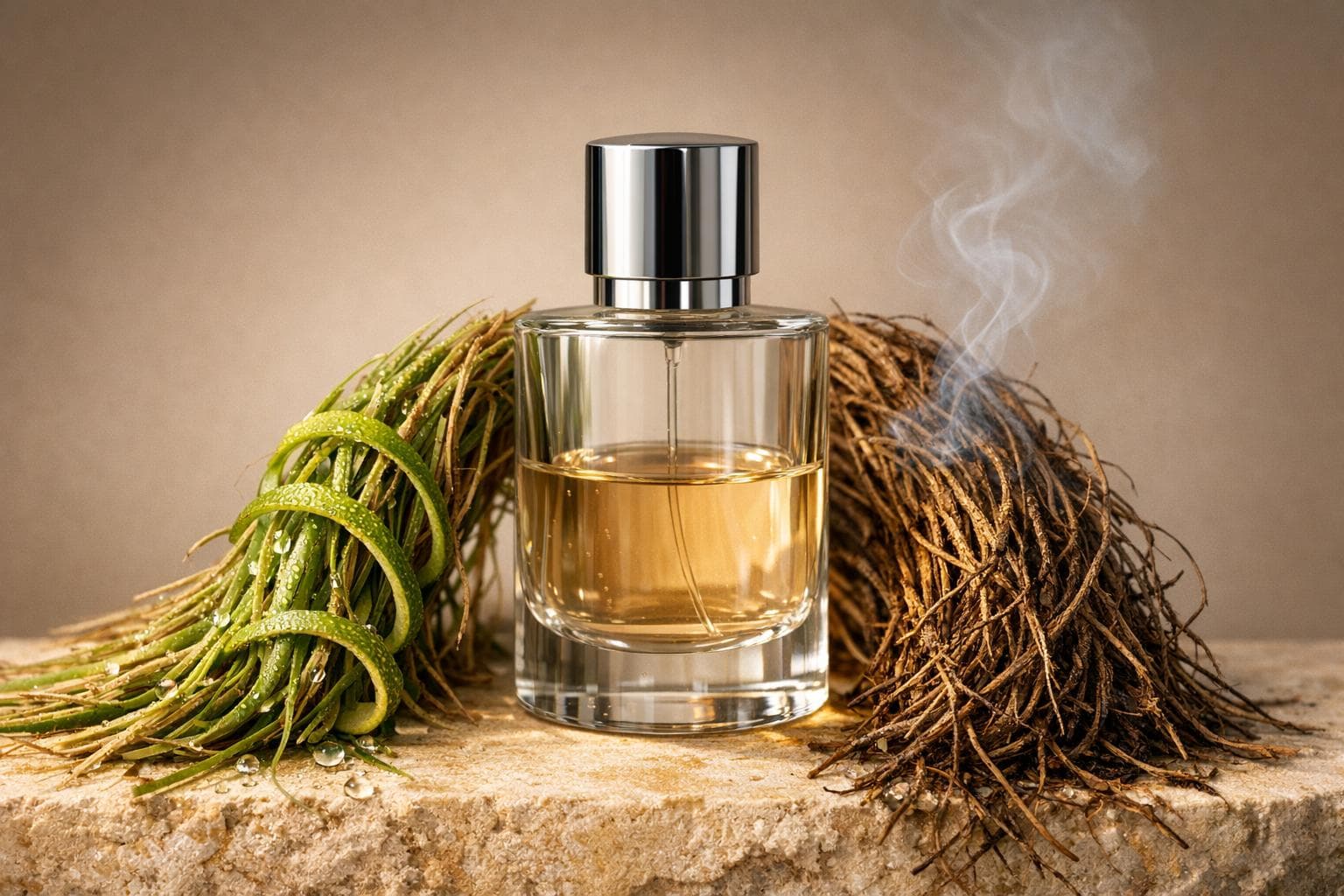
Vetiver has been a cornerstone of perfumery for decades, offering a unique balance of smoky, green, earthy, and clean notes. Its versatility has made it a popular choice for both classic and modern fragrances. In 2026, vetiver continues to shine, evolving with trends towards personal and understated scents. Here’s a quick overview:
- What is Vetiver? A tropical grass prized for its roots, vetiver oil is extracted through steam distillation. Regions like Haiti and Indonesia produce distinct scent profiles.
- How it smells: Vetiver combines earthy, woody, smoky, and herbal tones, with Haitian vetiver being clean and citrusy, and Indonesian vetiver darker and smokier.
- Why it matters: It’s a crucial base note in perfumery, offering depth, longevity, and complexity that synthetic substitutes can’t fully replicate.
- Current trends: Modern vetiver fragrances lean towards lighter, drier, and more transparent profiles, with brands exploring fresh citrus blends and darker, gourmand combinations.
Whether you’re new to vetiver or a seasoned fan, understanding its origins and scent profiles can help you choose the perfect fragrance for any occasion.
What Is Vetiver? All About Vetiver Fragrances W/Bruno Fazzolari 🌿🌿🌿
What Is Vetiver? Origins and Role in Perfumery
Vetiver (Chrysopogon zizanioides) is a tropical perennial grass known not for its leaves but for its extraordinary roots. These roots, which can grow up to 3–5 metres in just the first year, are the source of one of perfumery’s most prized raw materials. The essential oil extracted from vetiver roots has become a cornerstone of fragrance creation.
Where Vetiver Comes From
Vetiver flourishes in tropical regions across Asia, the Caribbean, and the Indian Ocean. Its scent profile is deeply influenced by the local terroir - a combination of soil, altitude, and climate. Haiti, in particular, stands out as a leading producer, with its vetiver oil often seen as the industry standard.
| Region | Scent Profile | Key Characteristics |
|---|---|---|
| Haiti (Les Cayes) | Clean, green, slightly floral | Industry benchmark with a citrusy brightness; refined and transparent |
| Indonesia (Java/Sumatra) | Smoky, leathery, resinous, dark | Heavier and earthier; ideal for bold, niche fragrances with a darker edge |
| India (Tamil Nadu/Kerala) | Earthy, bitter, medicinal | Known as "khus"; traditional copper-still distillation adds a distinct character |
| Réunion (Bourbon) | Rosy, nutty, balsamic, silky | Rare today; offers a rounded profile with caramel and licorice undertones |
The process of harvesting vetiver is meticulous. Roots are collected after 18–24 months, then washed, dried in the sun, and steam-distilled for up to 24 hours. This labor-intensive process yields only 0.5–1% essential oil by weight, meaning 100–200 kg of dried roots are needed to produce just 1 kg of oil. Each region’s unique characteristics contribute to vetiver’s versatility and importance in perfumery.
How Vetiver Functions in Perfumery
Vetiver’s intricate aroma is enhanced by careful cultivation and distillation, making it a critical component in modern fragrance design. It is almost always used as a base note, serving two essential purposes: providing its signature earthy and mineral scent while acting as a fixative. This fixative quality stabilizes lighter, more volatile notes like citrus and florals, extending the fragrance’s wear time.
"Vetiver is the perfumer’s structural base note. It fixes volatile materials, extends longevity, and provides an earthy-woody foundation that anchors compositions across every major fragrance family." - Premiere Peau
What makes vetiver irreplaceable is its complexity. The oil contains over 100 identified compounds (some sources suggest more than 300), making it nearly impossible to replicate fully with synthetics. While synthetic options like vetiveryl acetate can mimic certain aspects, such as a cleaner, grapefruit-like freshness, they lack the depth and richness of natural vetiver. This is why natural vetiver oil, particularly from Haiti, remains a staple in luxury and niche perfumery. Its rarity and quality are reflected in its price, with Haitian vetiver oil costing €350–600 per kilogram wholesale.
How Vetiver Smells: Smoky, Green, and Complex
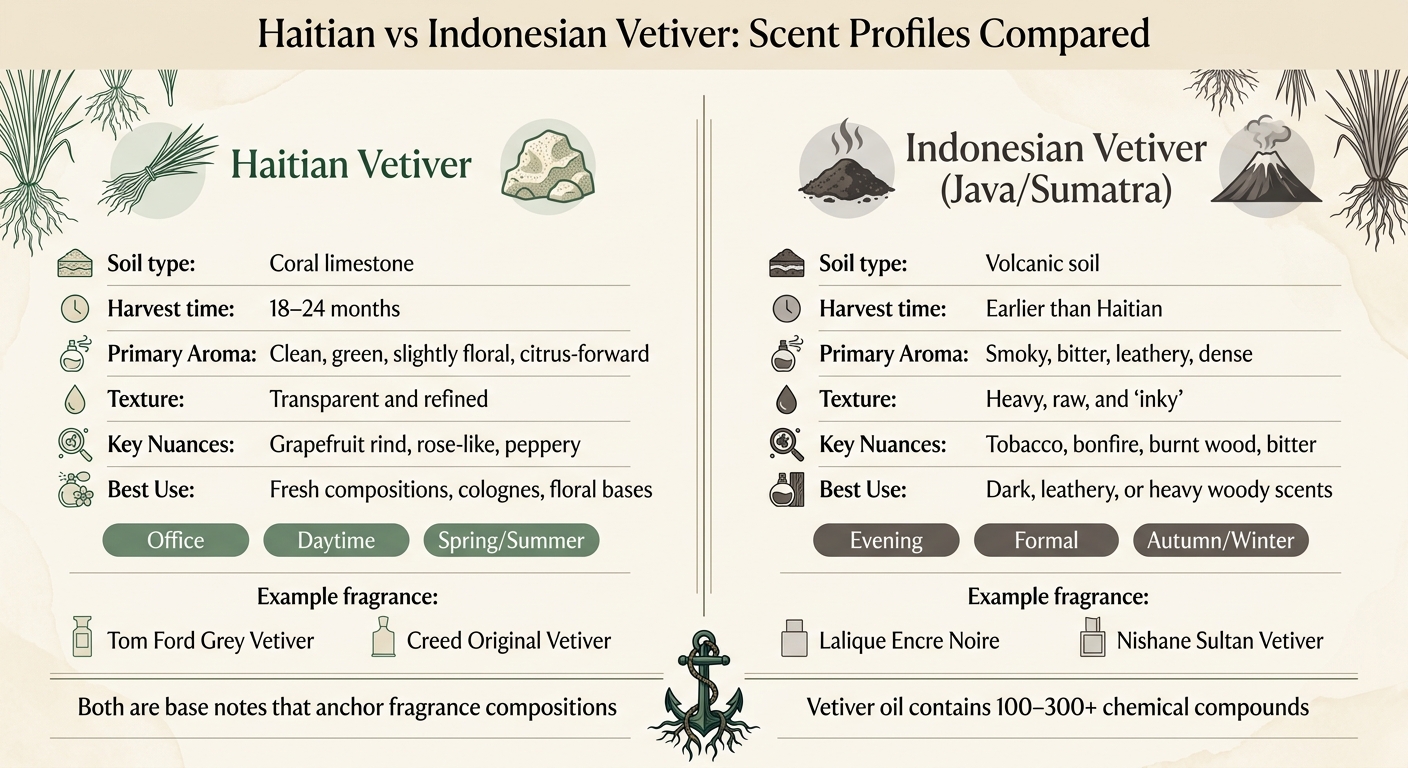
Haitian vs Indonesian Vetiver: Scent Profiles Compared
Vetiver’s scent is anything but straightforward. It evolves over time, starting with a sharp, green-earthy burst, transitioning into a rich, root-like smokiness, and finishing with a warm, woody residue. This dynamic nature is why perfumers treasure it so much.
Its essence is a blend of four key elements: the earthy smell of damp soil after rain, a dry and woody touch like aged grass, a smoky warmth reminiscent of burnt hazelnut or tobacco, and a fresh, herbal edge.
"The smokiness in vetiver tends to be similar to the smell of a slightly burnt hazelnut, and it can bring an element of warmth and depth to fragrances." - Snif
Haitian vs Indonesian Vetiver: Key Differences
Where vetiver is grown plays a huge role in shaping its aroma. Haitian vetiver, cultivated in coral limestone soil and harvested after 18–24 months, has a clean and airy quality, with subtle citrus and floral hints. On the other hand, Indonesian vetiver, grown in volcanic soil and harvested earlier, delivers a denser, smokier, and more leathery profile.
| Feature | Haitian Vetiver | Indonesian (Java/Sumatra) Vetiver |
|---|---|---|
| Primary Aroma | Clean, green, slightly floral, citrus-forward | Smoky, bitter, leathery, dense |
| Texture | Transparent and refined | Heavy, raw, and "inky" |
| Key Nuances | Grapefruit rind, rose-like, peppery | Tobacco, bonfire, burnt wood, bitter |
| Best Use | Fresh compositions, colognes, floral bases | Dark, leathery, or heavy woody scents |
These differences highlight vetiver’s versatility, offering endless possibilities for blending in fragrance creation.
How Vetiver Works with Other Notes
Vetiver’s magic lies in how it interacts with other ingredients. Its nootkatone content - a molecule also found in grapefruit - makes it a natural companion for citrus notes like bergamot or grapefruit rind. Together, they create a vibrant contrast: bright and lively on the surface, grounded and earthy underneath.
When paired with woods like sandalwood or cedarwood, vetiver adds a refreshing depth, balancing the dryness of these notes. Combined with spices like black pepper or cardamom, it enhances its smoky and green qualities. And when blended with florals such as rose or jasmine, it provides a smoky counterpoint, softening the ruggedness of the root while adding richness to the floral bouquet.
"Think of it as the bass line in your favourite song – the note that grounds everything else and gives the whole composition its soul." - Shay & Blue
How Vetiver Is Used in 2026 Perfumery
Vetiver, with its rich history and layered character, has taken on a new role in the evolving world of perfumery. Its modern use reflects a shift toward subtlety and sophistication, perfectly aligning with the quieter, more personal fragrance trends of 2026.
In today’s landscape, perfumers are leaning toward intimate compositions that prioritize elegance over boldness. Vetiver’s ability to stay close to the skin, transform over time, and exude a calm, understated charm makes it an ideal choice for this approach.
"These aren’t the loud, declarative bases of the past, but quieter, more intimate structures; scents that remain subtle and personal." - Gustavo Romero, Founder, Fragrance Alliance Network
Current Trends in Vetiver — Based Fragrances
One of the most noticeable trends in vetiver’s use today is the preference for lighter, drier, and more transparent profiles. Luxury brands are steering away from the heavier, moss-laden interpretations of the past and embracing vetiver’s potential for refined, minimalist compositions. This shift positions vetiver as a symbol of "quiet luxury", reflecting restraint and sophistication rather than ostentation.
A prime example of this trend is House of Creed‘s Wild Vetiver. Priced at approximately €370, this fragrance opens with bright bergamot and timur berry before transitioning into a dry vetiver base. It embodies a universal appeal, highlighting vetiver’s dual nature while lasting about five hours on the skin. Its clean, intimate dry-down perfectly mirrors the current demand for subtle sophistication.
Beyond the traditional citrus pairings, perfumers are venturing into more unexpected territory. Savory gourmand blends are gaining traction, with vetiver being combined with roasted nuts, dark chocolate, or oud to create depth without relying on sweetness. For instance, Chris Collins’ Lust Oud Delice, priced at approximately €210, blends vetiver with dark chocolate, hazelnut, and oud, showcasing this emerging trend.
These innovations have broadened the scope of vetiver-based scents, allowing for a wide range of interpretations.
Popular Vetiver Fragrance Styles
Vetiver’s adaptability makes it the backbone of several distinctive fragrance styles, each suited to different preferences and occasions.
Citrus — Vetiver Blends: These fragrances balance bright, zesty top notes like bergamot, timur berry, and grapefruit with vetiver’s earthy depth. The result is a fresh, grounded scent that’s ideal for daytime wear and warm climates.
Unisex and Fresh — Woody Compositions: Vetiver’s unique duality lends itself to gender-neutral fragrances that feel both natural and polished. As Julia Buonanno — Godec, Senior Marketing Manager at DSM — Firmenich, explains: "People are drawn to woody scents because they feel natural, confident, and composed... they give off that quiet luxury energy".
Smoky, Dark Profiles: Featuring Indonesian vetiver paired with notes like cedarwood, patchouli, or leather, these richer, more intense compositions are perfect for evening wear and cooler weather.
| Style | Key Notes | Best For |
|---|---|---|
| Citrus — Vetiver | Bergamot, timur berry, grapefruit | Daytime, warm weather |
| Unisex / Fresh — Woody | Haitian vetiver, sandalwood, dry musk | Daily wear |
| Smoky / Dark | Indonesian vetiver, cedar, patchouli, leather | Evenings, cooler months |
From airy daytime blends to bold evening scents, vetiver continues to prove its versatility in perfumery, offering something for every taste and moment.
Votre expert parfum personnel vous attend
Faites notre quiz olfactif express pour découvrir des parfums de créateurs et de niche authentiques, choisis selon vos goûts – explorez-les en décants et échantillons de 2–8ml, pour essayer chaque fragrance avant de vous engager sur un flacon entier.
Trouvez votre parfumHow to Recognise Vetiver in a Perfume
Vetiver is a fascinating note, but identifying it can be a challenge due to its evolving nature - it doesn’t remain static as a fragrance develops.
Reading Vetiver on a Note Pyramid
Vetiver typically resides in the base notes of a perfume, contributing to its longevity on the skin. Remarkably, vetiver oil can linger for up to 400 hours on a scent blotter. Its full character only truly emerges as the fragrance unfolds over time.
High-quality vetiver, especially Haitian vetiver, often starts with a sharp, green-earthy burst that carries a hint of bitterness and a subtle grapefruit-like quality. This distinct opening is due to nootkatone, a molecule also found in grapefruit peel. So, if you notice grapefruit listed alongside vetiver in a fragrance pyramid, that initial citrusy note might actually stem from the vetiver itself.
"Citrus provides an initial burst, while vetiver sustains the fragrance with a grounded, enduring base." - St Johns Bay Rum
As the fragrance settles over the first couple of hours, the citrus tones fade, giving way to a smokier, rootier essence. By the dry-down, vetiver reveals its true self: a dry, warm, woody-earthy scent with a faint nuttiness. If a perfume features Indonesian or Javanese vetiver, expect the dry-down to lean darker, with a leathery undertone.
Next, let’s explore how vetiver stands apart from other similar notes.
Comparing Vetiver to Similar Notes
Vetiver is often mistaken for other earthy or woody notes, but it has a distinct trait: verticality. Unlike patchouli, which feels dense and heavy, vetiver is drier, more transparent, and even mineral-like. As Premiere Peau describes it:
"Compared to patchouli’s sweet, opaque weight, vetiver is drier, more vertical, more mineral. Compared to cedarwood’s papery crispness, vetiver is wetter and more alive." - Premiere Peau
Here’s a table to highlight how vetiver compares with similar notes:
| Note | Scent Profile | Key Difference from Vetiver |
|---|---|---|
| Vetiver | Rooty, smoky, mineral, grapefruit-like | The "vertical", wet-earth benchmark |
| Cedarwood | Dry, woody, pencil-shavings | More "papery"; lacks vetiver’s damp, rooty depth |
| Patchouli | Sweet, dark, heavy, balsamic | Much sweeter and more opaque |
| Oakmoss | Inky, bitter, forest-floor | More "marine" and bitter; vetiver often replaces it in modern blends |
| Green Grass | Fresh, leafy, mown-lawn | A volatile top note; vetiver, as a dried root, is far woodier and smokier |
When testing vetiver, always apply it to your skin rather than a blotter. With over 300 chemical components, its complexity can’t be fully appreciated on paper. Allow at least two hours for the fragrance to develop - only then will its smoky, nutty essence fully emerge.
How to Pick the Right Vetiver Fragrance
Vetiver Fragrances by Preference and Occasion
Vetiver’s unique smoky and green character makes it incredibly versatile, but choosing the right one depends on the occasion and your personal style. The source of the vetiver - Haitian or Javanese - significantly influences the fragrance’s profile and its suitability for various settings.
For office settings, opt for clean and dry vetiver scents that lean on Haitian vetiver. This variety is known for its subtle brightness, reminiscent of grapefruit. Tom Ford Grey Vetiver emphasizes fresh, spicy, and nutty tones with minimal smokiness. Another excellent choice is Guerlain Vetiver Parfum, which has been praised by 136 users for its polished yet understated elegance, making it perfect for professional environments.
For evenings or formal occasions, darker and smokier vetiver fragrances work best. These typically feature Javanese vetiver combined with notes like leather, tobacco, or incense. Lalique Encre Noire is a standout example, celebrated for its intense, minimalist smokiness.
If you’re after something lighter for daytime or warmer weather, consider vetiver fragrances with fresh, green, or citrus-forward profiles. Guerlain Aqua Allegoria Forte Nerolia Vetiver blends neroli with vetiver and fig leaf for a bright, refreshing scent, earning an impressive 4.4/5 rating.
| Occasion | Vetiver Style | Example Fragrance |
|---|---|---|
| Office / Work | Clean, dry, low smoke | Tom Ford Grey Vetiver, Guerlain Vetiver Parfum |
| Evening / Formal | Smoky, dark, rich | Lalique Encre Noire, Nishane Sultan Vetiver |
| Casual / Daytime | Fresh, green, bright | Creed Original Vetiver, Dior Eau Sauvage |
| Spring / Summer | Citrus-forward, light | Guerlain Aqua Allegoria Forte Nerolia Vetiver |
After narrowing down your choice, always test the fragrance on your skin. Vetiver develops differently on each person, evolving through nutty, bitter, and smoky phases over time.
Trying Vetiver Fragrances Through Scento

Trying vetiver fragrances in smaller sizes is a smart way to find your perfect match. Vetiver interacts uniquely with skin, and its character can shift significantly throughout the day.
Scento offers curated decants in 2 ml, 5 ml, and 8 ml sizes, allowing you to experience the full evolution of a fragrance before committing. For example, Guerlain Vetiver Parfum decants start at €7,90, while Guerlain Vétiver Fauve begins at €13,90. If you want to explore multiple options, Scento’s monthly subscription is a great choice. For €21,51 per fragrance, you can access over 1.000 designer scents in 8 ml vials. Each vial provides about 120 sprays - enough for daily use over a month and to see how the scent performs in different settings.
When and How to Wear Vetiver
Seasonal Considerations for Vetiver
Vetiver offers a versatile scent profile that transitions beautifully across seasons. During spring and summer, its crisp, green, and citrus-like notes stand out. Fragrances featuring Haitian vetiver, known for its radiant and sunny character, are particularly well-suited for the warmer months.
In contrast, as autumn and winter arrive, vetiver reveals its smoky, leathery, and balsamic undertones, creating a warmer and more comforting aura. Indonesian vetiver, often showcased in fragrances like Lalique Encre Noire, thrives in cooler weather. On rainy or overcast days, vetiver’s earthy, root-like quality pairs harmoniously with the damp, natural scent of wet soil, making it a perfect companion for grey autumn afternoons.
Testing and Wearing Vetiver Properly
Vetiver unfolds over time, transitioning from a bright, green opening - sometimes with a hint of soapiness - to a deeper, smoky dry-down that becomes prominent after 30–60 minutes. To fully appreciate its complexity, test vetiver on your skin for at least four hours.
Skin type plays a role in how vetiver performs. Oily skin tends to hold onto the fragrance longer (8–12 hours), while dry skin may cause the fresher top notes to fade more quickly, bringing the earthy base notes to the forefront. Applying an unscented moisturiser beforehand can help prolong the scent’s vibrant, green phase.
For application, consider the effect of body temperature. Spraying on cooler areas like the forearms enhances vetiver’s green, grassy facets, while applying to warmer pulse points such as the throat or chest intensifies its smoky depth. The concentration of the fragrance also matters: an Eau de Toilette emphasises vetiver’s citrus and grassy characteristics, making it a great choice for daytime or office settings in warmer weather. On the other hand, an Eau de Parfum or Extrait focuses on its smoky, resinous richness, making it ideal for evenings or cooler months. Keep in mind that a 100 ml Eau de Parfum typically costs 20–35% more than its Eau de Toilette counterpart.
Conclusion: Getting Started with Vetiver
Vetiver stands as one of perfumery’s most grounding and versatile ingredients, a true cornerstone in fragrance crafting. Harvested after 18–24 months, this botanical marvel offers an earthy, smoky aroma with a depth that not only enhances fragrance longevity but also anchors creations across all major fragrance families. As discussed in this guide, vetiver journeys from a fresh, green opening to a rich, smoky dry-down, solidifying its place in the world of modern, refined luxury scents.
The origin of vetiver plays a key role in shaping its character. Haitian vetiver is known for its clean, polished aroma, making it a perfect introduction for those new to this note. On the other hand, Indonesian vetiver delivers a darker, smokier profile, ideal for those who already enjoy bold and intense fragrances. If you’re just starting, opt for citrus-forward blends where vetiver’s earthiness gradually reveals itself.
"Vetiver is not a rush of adrenaline; it is the calm, long-lasting assurance of a deeply rooted tree." - Kate Shulga, Author at Near Store
To truly understand vetiver’s complexity, give it time - at least 30 to 60 minutes - to fully develop and reveal its layered character.
For those curious about vetiver, Scento offers a convenient way to explore without committing to a full bottle. Their decants, available in 2 ml, 5 ml, and 8 ml sizes, allow you to compare Haitian and Indonesian vetiver profiles side by side. An 8 ml monthly subscription starts at €12,90 per fragrance and opens the door to over 1,000 designer scents. This approach lets you navigate the world of vetiver at your own pace, helping you find the perfect match for your personal style and occasions. Start your vetiver journey today by sampling decants to discover the essence that resonates with you.
FAQs
Is vetiver a “safe blind buy” note?
Vetiver carries an earthy, smoky, and green character that exudes sophistication. Its layered complexity makes it a favorite among fragrance enthusiasts seeking something grounded and refined. However, its bold and distinctive nature might not resonate with everyone. Whether vetiver is a "safe blind buy" largely depends on how comfortable you are with its unique profile and how much you enjoy fragrances that stand out.
What makes vetiver smell citrusy in some perfumes?
Vetiver takes on a citrusy character when blended with lively top notes such as orange or grapefruit. These bright notes mellow out vetiver’s smoky undertones, creating a lighter, fresher feel that settles gracefully on the skin. The result is a balanced, airy fragrance that feels both vibrant and smooth.
How can I tell if vetiver is natural or mostly synthetic?
Natural vetiver is extracted through steam distillation of its roots, resulting in a scent that’s deeply earthy, smoky, and grassy. The character of vetiver can vary based on its origin: Haitian vetiver offers a softer, more refined profile, Javanese vetiver leans towards a smokier aroma, while Indian vetiver has a sweeter, more grass-forward quality. In contemporary perfumery, natural ingredients like vetiver are often used sparingly, typically as accents, with most fragrances being composed of 80–95% synthetic elements to achieve consistency and versatility.

