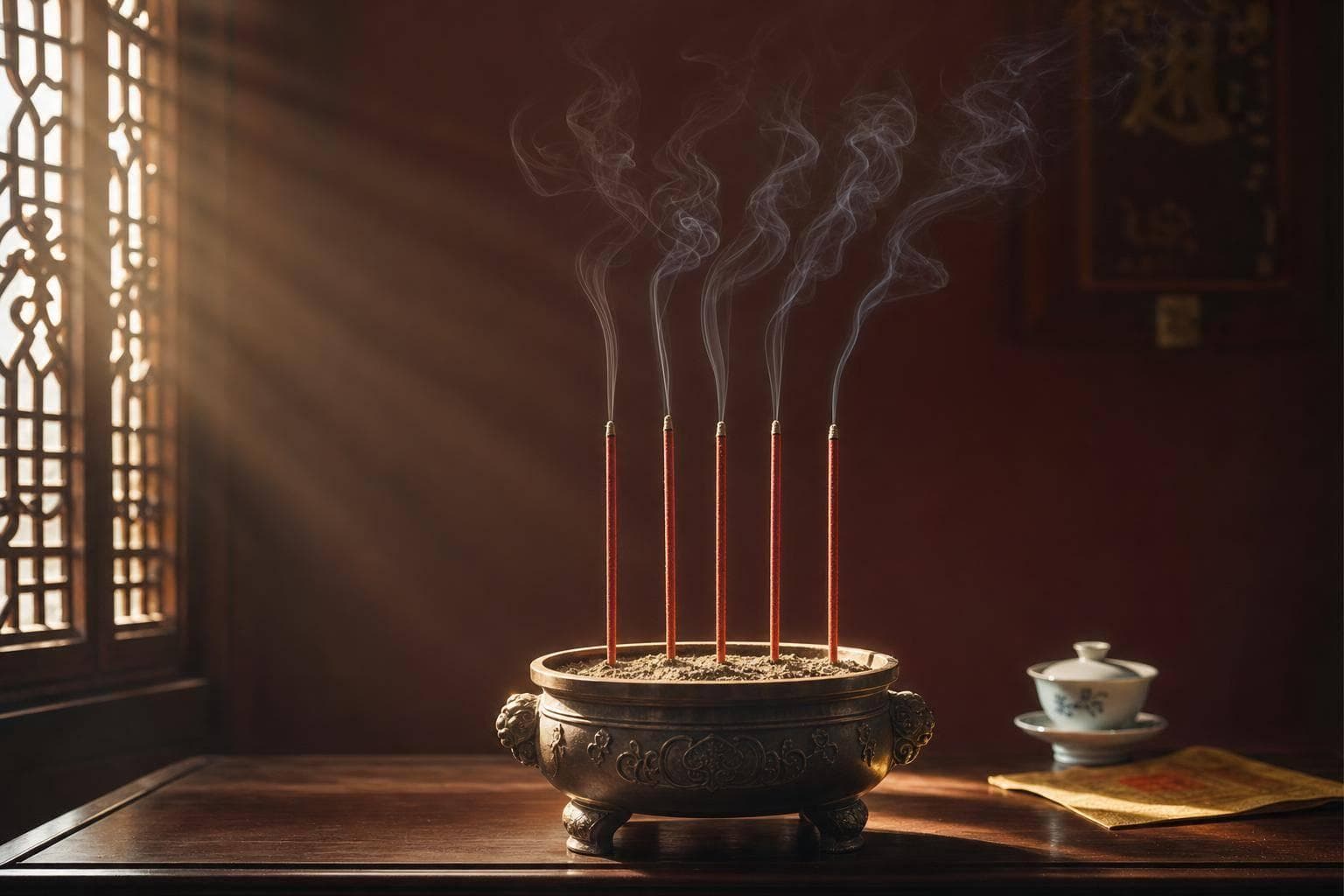
Το θυμίαμα στην κινεζική ζωή δεν είναι μια μεμονωμένη πράξη. Θα το συνόψιζα ως εξής: χρησιμοποιείται με 5 κύριους τρόπους - στον οικογενειακό βωμό, στους ναούς, κατά το Σεληνιακό Νέο Έτος, στους τάφους κατά το Qingming, καθώς και στη βουδιστική, ταοϊστική πρακτική και το xiangdao.
Αν αναζητάτε τη σύντομη απάντηση, είναι η εξής:
- Στο σπίτι, το θυμίαμα διατηρεί ζωντανή την οικογενειακή μνήμη.
- Στους ναούς, συνοδεύει την προσευχή και τον σεβασμό.
- Στο Σεληνιακό Νέο Έτος, σηματοδοτεί την αρχή της χρονιάς και την ελπίδα για καλή τύχη.
- Στο Qingming, τιμά τους νεκρούς στους τάφους.
- Στο βουδιστικό και ταοϊστικό πλαίσιο, υποστηρίζει τη λατρεία.
- Στο xiangdao, αφορά λιγότερο την προσευχή και περισσότερο τη γαλήνη και το άρωμα.
Ένα απλό γεγονός ξεχωρίζει: το ίδιο στικ θυμιάματος μπορεί να επιτελέσει πολύ διαφορετικούς ρόλους ανάλογα με τον τόπο και τον σκοπό. Σε ένα πλαίσιο, εκφράζει το οικογενειακό καθήκον. Σε ένα άλλο, τη λατρεία. Σε ένα τρίτο, αποτελεί μια ήρεμη ενατένιση του ίδιου του αρώματος.
Γρήγορη σύγκριση
| Τελετουργία | Κύριος σκοπός | Σύνηθης χώρος | Κυρίαρχη διάθεση |
|---|---|---|---|
| Οικιακή προγονική προσφορά | Μνήμη των εκλιπόντων μελών της οικογένειας | Οικιακός βωμός | Προσωπική και ήρεμη |
| Προσφορά σε θεότητες στον ναό | Προσευχή και σεβασμός | Ναός | Συλλογική και ευλαβική |
| Θυμίαμα Σεληνιακού Νέου Έτους | Σηματοδότηση μιας νέας αρχής | Σπίτι ή ναός | Ελπιδοφόρα |
| Θυμίαμα Qingming | Απόδοση τιμής στους προγόνους στους τάφους | Χώρος ταφής | Σεβάσμια και επίσημη |
| Βουδιστικό και ταοϊστικό θυμίαμα | Υποστήριξη λατρείας και ιεροτελεστιών | Ιερό ή βωμός ναού | Αφοσιωμένη ή τυπική |
| Xiangdao | Εστίαση στο άρωμα και την ηρεμία | Ήσυχο δωμάτιο, γραφείο ή χώρος τσαγιού | Στοχαστική |
Εν συντομία, αντιλαμβάνομαι αυτές τις τελετουργίες ως ένα υλικό με πολλαπλά νοήματα - και αυτό είναι που καθιστά το θυμίαμα ένα τόσο σταθερό στοιχείο της κινεζικής ζωής.
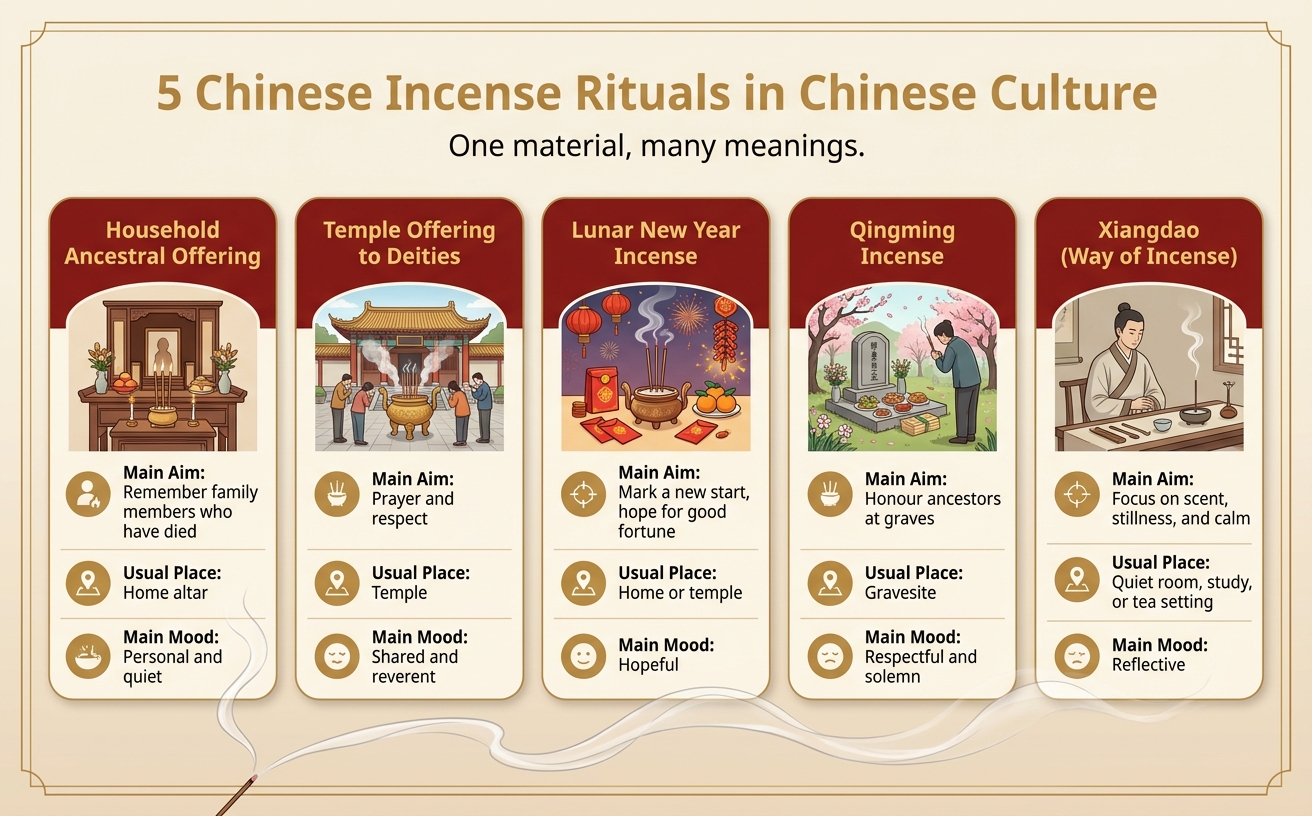
5 Chinese Incense Rituals: Purpose, Place & Mood
1. Household ancestral incense offering
Στον οικογενειακό βωμό, το θυμίαμα αποτελεί μέρος της καθημερινής ενθύμησης. Διατηρεί τον δεσμό με τις προηγούμενες γενιές παρόντα στην καθημερινή ζωή.
Σκοπός και συμβολισμός
Το άναμμα του θυμιάματος δείχνει σεβασμό και μια αίσθηση συνέχειας με όσους προηγήθηκαν.
Πώς εκτελείται η τελετουργία
Στους εσωτερικούς βωμούς, πολλές οικογένειες επιλέγουν θυμίαμα χαμηλής παραγωγής καπνού, όπως στικς από sandalwood ή agarwood.
Πότε και πού λαμβάνει χώρα
Ορισμένα νοικοκυριά ανάβουν θυμίαμα καθημερινά. Άλλα το πράττουν σε ημερομηνίες μνήμης και κατά τη διάρκεια του Qingming.
Από τον οικιακό βωμό, η ίδια χειρονομία μεταφέρεται στη λατρεία εντός των ναών.
2. Προσφορά θυμιάματος σε θεότητες στον ναό
Από τον οικογενειακό βωμό, το θυμίαμα περνά στη συλλογική λατρεία του ναού. Στους κινεζικούς ναούς που συνδέονται με τη λαϊκή θρησκεία ή την ταοϊστική πρακτική, το θυμίαμα βρίσκεται στην καρδιά της προσφοράς. Το περιβάλλον αλλάζει τα πάντα. Στο σπίτι, η πράξη είναι ιδιωτική και συνυφασμένη με την καθημερινότητα. Σε έναν ναό, πραγματοποιείται σε έναν ιερό χώρο που μοιράζονται πολλοί άνθρωποι ταυτόχρονα.
Οι πιστοί συνήθως προσφέρουν θυμίαμα πριν από μια προσευχή ή δέηση. Ο καπνός που αναδύεται από το θυμιατήρι θεωρείται συχνά ότι μεταφέρει αυτές τις προσευχές προς τα πάνω. Αυτό προσδίδει στην πράξη δύο όψεις ταυτόχρονα: είναι προσωπική, αλλά γίνεται επίσης μέρος της ζωής του ναού και του συγκεντρωμένου πλήθους.
Σκοπός και πρωτόκολλο του ναού
Οι περισσότεροι πιστοί ανάβουν θυμίαμα λίγο μετά την άφιξή τους, πριν προσευχηθούν. Το κυριότερο σημείο είναι η ειλικρίνεια. Κινηθείτε με προσοχή, ακολουθήστε την τάξη που ισχύει στον συγκεκριμένο ναό και τοποθετήστε το θυμίαμα στο θυμιατήρι που προορίζεται για τις προσφορές, αντί να επιλέξετε μόνοι σας ένα σημείο.
Τα έθιμα των ναών μπορεί να διαφέρουν από τόπο σε τόπο. Για τον λόγο αυτό, η ασφαλέστερη προσέγγιση είναι απλή:
- Παρατηρήστε πώς το κάνουν οι άλλοι
- Ακολουθήστε τις σημάνσεις ή τις οδηγίες του προσωπικού
- Διατηρήστε τις κινήσεις σας ήρεμες και γεμάτες σεβασμό
Αυτή η μικρή παύση για παρατήρηση μπορεί να σας απαλλάξει από πολλή αμηχανία. Κάθε ναός έχει τον δικό του ρυθμό.
Η πρακτική στον ναό βήμα προς βήμα
Η συνήθης ακολουθία είναι απλή. Ο πιστός ανάβει το θυμίαμα, κρατά τα στικ όρθια στο ύψος του στήθους ή του μετώπου, υποκλίνεται και στη συνέχεια τοποθετεί τα στικ σε όρθια θέση μέσα στο θυμιατήρι.
Δεν είναι μια δραματική πράξη. Στις περισσότερες περιπτώσεις, το νόημα πηγάζει από τον ήρεμο, σταθερό τρόπο με τον οποίο εκτελείται.
Περιφερειακές παραλλαγές και σύγκριση
Η πρακτική στους ναούς δεν είναι παντού η ίδια. Ο αριθμός των στικ, το βάθος της υπόκλισης και η σειρά της λατρείας μπορούν να διαφέρουν από τον ένα ναό στον άλλο. Σε ορισμένα μέρη, ένα στικ είναι αρκετό. Σε άλλα, προσφέρονται πολλά στικ μαζί.
Εάν επισκέπτεστε έναν ναό για πρώτη φορά, δεν χρειάζεται να υπεραναλύετε τα πράγματα. Σταθείτε για μια στιγμή πίσω, παρατηρήστε το τοπικό μοτίβο και ακολουθήστε το. Οι εορταστικές ιεροτελεστίες πηγάζουν από αυτήν ακριβώς την προσφορά, αν και ο χρόνος και ο χώρος προσδίδουν στην πράξη μια διαφορετική αίσθηση.
3. Εορταστικές τελετουργίες θυμιάματος κατά το Σεληνιακό Νέο Έτος και το Qingming
Στους ναούς και στα σπίτια, οι εορταστικές ιεροτελεστίες χαρίζουν στο θυμίαμα έναν ξεκάθαρο εποχιακό ρόλο. Το Σεληνιακό Νέο Έτος και το Qingming το αποδεικνύουν με τον πιο σαφή τρόπο: το ένα προσβλέπει στο έτος που ξεκινά, το άλλο στρέφεται προς τη μνήμη και τον σεβασμό.
Το πρώτο θυμίαμα του Σεληνιακού Νέου Έτους
Το πρώτο θυμίαμα του Σεληνιακού Νέου Έτους ανάβει στην αρχή της νέας χρονιάς. Σηματοδοτεί ένα νέο ξεκίνημα και μεταφέρει μια ευχή για καλή τύχη.
Η τελετουργία θυμιάματος κατά τον καθαρισμό των τάφων στο Qingming
Κατά τη διάρκεια του Qingming, το θυμίαμα αποτελεί μέρος του καθαρισμού των τάφων και της ανάμνησης των προγόνων. Οι άνθρωποι τοποθετούν στικς θυμιάματος στους τάφους για να επιδείξουν σεβασμό και υική ευσέβεια.
Σεληνιακό Νέο Έτος εναντίον Qingming
| Πτυχή | Θυμίαμα Σεληνιακού Νέου Έτους | Θυμίαμα Qingming |
|---|---|---|
| Χώρος | Ναοί και σπίτια στην αρχή του έτους | Χώροι ταφής κατά τον καθαρισμό των τάφων |
| Κύριο νόημα | Ανανέωση και καλή τύχη | Ενθύμηση και υική ευσέβεια |
Πέρα από αυτές τις εορταστικές στιγμές, το θυμίαμα διαδραματίζει επίσης ρόλο στη βουδιστική και ταοϊστική λατρεία.
Ο προσωπικός σας ειδικός αρωμάτων σας περιμένει
Κάντε το σύντομο κουίζ αρώματος και ανακαλύψτε αυθεντικά αρώματα designer και niche, επιλεγμένα στα μέτρα σας – εξερευνήστε τα σε decant και δείγματα των 2, 5, 8 και 30 ml, ώστε να δοκιμάσετε το καθένα πριν επιλέξετε ολόκληρο μπουκάλι.
Βρείτε το άρωμά σας4. Το θυμίαμα στην κινεζική βουδιστική και ταοϊστική λατρεία
Μετά τις οικιακές προσφορές και εκείνες στους ναούς, το θυμίαμα βρίσκεται επίσης στην καρδιά της βουδιστικής και ταοϊστικής τελετουργικής ζωής.
Βουδιστική προσφορά θυμιάματος
Στη βουδιστική λατρεία, το θυμίαμα σηματοδοτεί την αφοσίωση. Συνοδεύει την προσευχή, τις ψαλμωδίες και τις προσφορές, συμβάλλοντας στη διαμόρφωση μιας ήρεμης, συγκεντρωμένης διάθεσης γύρω από τον βωμό. Η πράξη είναι απλή, αλλά έχει ιδιαίτερο βάρος: το άναμμα του θυμιάματος γίνεται μια σιωπηλή ένδειξη σεβασμού και πρόθεσης.
Ταοϊστική προσφορά θυμιάματος
Στην ταοϊστική λατρεία, το θυμίαμα υποστηρίζει τις τελετουργικές δεήσεις και τις ιεροπραξίες του βωμού. Εδώ, δίνεται συχνά μεγαλύτερη προσοχή στο τελετουργικό και την ακολουθία, με κάθε βήμα να συνδέεται με την τάξη της ιεροτελεστίας. Η ατμόσφαιρα είναι πιο επίσημη και το θυμίαμα λειτουργεί ως μέρος αυτής της τελετουργικής ροής.
Με απλά λόγια, το βουδιστικό θυμίαμα επικεντρώνεται στην αφοσίωση, ενώ το ταοϊστικό θυμίαμα εστιάζει στην τελετουργική ακολουθία. Στη συνέχεια, το θυμίαμα μετουσιώνεται σε μια εκλεπτυσμένη πρακτική στο xiangdao.
5. Xiangdao: το θυμίαμα ως εκλεπτυσμένη μορφή τέχνης
Μετά τις επίσημες ιεροτελεστίες λατρείας, το xiangdao παρουσιάζει το θυμίαμα υπό ένα διαφορετικό πρίσμα. Εδώ, το θυμίαμα αφορά λιγότερο την παράκληση για κάτι και περισσότερο τη γαλήνη, την προσοχή και την ήρεμη απόλαυση.
Δεν συνδέεται όλο το θυμίαμα στην κινεζική κουλτούρα με προσευχές ή δεήσεις. Το Xiangdao - ο «Δρόμος του Θυμιάματος» - διαφοροποιείται από αυτές τις τελετουργικές χρήσεις. Πρόκειται για μια στοχαστική, αισθητική πρακτική που δομείται γύρω από τη βαθιά, υπομονετική εστίαση στο άρωμα.
Τι περιλαμβάνει το xiangdao
Σε αντίθεση με το θυμίαμα των δεήσεων, το xiangdao είναι συνήθως μια ιδιωτική και στοχαστική διαδικασία. Το επίκεντρο είναι το ίδιο το άρωμα και η εσωτερική κατάσταση του ατόμου που το βιώνει. Ιστορικά, οι λόγιοι εκτιμούσαν ιδιαίτερα το sandalwood και το agarwood στους χώρους μελέτης και τσαγιού. Σήμερα, οι άνθρωποι στρέφονται στο xiangdao για ηρεμία, συγκέντρωση και περισυλλογή.
Πώς λειτουργεί μια βασική συνεδρία xiangdao
Μια συνεδρία ξεκινά συνήθως σε έναν ήσυχο, ειδικά διαμορφωμένο χώρο, που ενίοτε συνδυάζεται με τσάι ή άλλη γαλήνια δραστηριότητα. Το υλικό του θυμιάματος - συχνά μια ρητίνη ή ένα μικρό κομμάτι ξύλου - τοποθετείται σε ένα πυρίμαχο θυμιατήρι γεμάτο στάχτη ή άμμο, ώστε η θερμότητα να διαχέεται ομοιόμορφα. Πολλοί ασκούμενοι χρησιμοποιούν πλέον ηλεκτρικούς καυστήρες, καθώς επιτρέπουν καλύτερο έλεγχο της θερμοκρασίας και συμβάλλουν στην προστασία των ντελικάτων νοτών.
Μόλις το άρωμα αρχίσει να αναδύεται, ο χώρος βυθίζεται στη σιωπή. Στόχος είναι να «ακούσετε» το άρωμα. Με άλλα λόγια, του αφιερώνετε την πλήρη προσοχή σας αντί να το αφήνετε να περνά στο παρασκήνιο. Παρατηρείτε πώς εξελίσσεται το άρωμα με την πάροδο του χρόνου, αργά και χωρίς περισπασμούς.
Αυτή η αντίθεση γίνεται σαφής όταν τοποθετεί κανείς το τελετουργικό θυμίαμα δίπλα στο xiangdao:
| Πτυχή | Τελετουργικό θυμίαμα | Xiangdao |
|---|---|---|
| Σκοπός | Δεήσεις - ευλογίες, καθοδήγηση, προγονολατρεία | Στοχαστικός - περισυλλογή και συναισθηματική ισορροπία |
| Χώρος | Ναός, οικιακός βωμός, χώρος ταφής | Χώρος λογίων ή τελετής τσαγιού |
| Υλικά | Τυπικά στικς ή σπείρες θυμιάματος | Sandalwood, agarwood, ακατέργαστες ρητίνες |
Συμπέρασμα: Τι αποκαλύπτουν αυτές οι πέντε τελετουργίες θυμιάματος
Αυτές οι πέντε τελετουργίες καταδεικνύουν πώς το θυμίαμα αποκτά διαφορετικούς ρόλους ανάλογα με το περιβάλλον. Σε έναν οικιακό βωμό, επισφραγίζει την ενθύμηση. Στη λατρεία του ναού, εκφράζει την ευλάβεια. Κατά το Σεληνιακό Νέο Έτος και το Qingming, ακολουθεί τον ρυθμό των εποχών. Στη βουδιστική και ταοϊστική πρακτική, λειτουργεί ως γέφυρα προς το ιερό. Και στο xiangdao, μεταμορφώνεται σε μια ήσυχη, εσωτερική πράξη προσοχής.
Κάθε μία υφίσταται αυτόνομα, διαμορφωμένη από τον σκοπό, τον τόπο και το νόημά της. Οι προγονικές προσφορές κρατούν ζωντανό έναν δεσμό. Το θυμίαμα στον ναό μεταφέρει ικεσίες. Οι εορταστικές ιεροπραξίες τιμούν τους νεκρούς. Η θρησκευτική λατρεία δίνει μορφή στην αφοσίωση. Το xiangdao μετατρέπει το ίδιο υλικό σε μια στοχαστική τέχνη.
Η διάκριση αυτών των διαφορετικών πλαισίων βοηθά να κατανοήσουμε τι ακριβώς συμβαίνει σε κάθε περίπτωση. Μια προσφορά στον τάφο κατά το Qingming και μια συνεδρία xiangdao μπορεί να χρησιμοποιούν το ίδιο θυμίαμα, επιτελούν όμως έναν εντελώς διαφορετικό σκοπό.
Συχνές ερωτήσεις
Πώς επιλέγω το κατάλληλο θυμίαμα για κάθε τελετουργία;
Επιλέξτε το θυμίαμα με βάση τον σκοπό της τελετουργίας σας, την ώρα της ημέρας και την εποχή. Στην κινεζική παράδοση, το sandalwood και το agarwood χρησιμοποιούνται συχνά για διαλογισμό, προγονολατρεία και μελέτη, καθώς βοηθούν στη διαμόρφωση μιας ήρεμης, γαλήνιας ατμόσφαιρας.
Βοηθά επίσης να ταιριάξετε το άρωμα με τη διάθεση που επιθυμείτε να δημιουργήσετε στον χώρο. Οι ζεστές νότες προσφέρουν μια αίσθηση γείωσης. Το Frankincense μπορεί να λειτουργήσει εξαιρετικά το πρωί, όταν αναζητάτε πνευματική διαύγεια. Το Myrrh ταιριάζει συχνά σε έναν αργό, ήρεμο βραδινό στοχασμό.
Εάν δεν είστε βέβαιοι από πού να ξεκινήσετε, δοκιμάστε μερικές συνθέσεις και παρατηρήστε την αίσθηση που αφήνει η καθεμία. Με τον καιρό, θα αποκτήσετε μια διαισθητική αντίληψη για το τι ταιριάζει καλύτερα στη δική σας πρόθεση.
Μπορούν μη θρησκευόμενα άτομα να εξασκηθούν στο xiangdao;
Ναι. Παρόλο που το xiangdao έχει τις ρίζες του στη λατρεία των ναών και την απόδοση τιμών στους προγόνους, απέκτησε επίσης πρακτικές, κοσμικές χρήσεις.
Στα εργαστήρια των λογίων, το θυμίαμα συχνά μετρούσε τον χρόνο και βοηθούσε στη συγκέντρωση κατά τη διάρκεια της μελέτης. Σήμερα, μπορεί επίσης να λειτουργήσει ως ένα προσωπικό τελετουργικό για εστίαση, εκλεπτυσμένη ατμόσφαιρα και ήσυχη περισυλλογή, ανεξάρτητα από το αν έχετε πνευματικές πεποιθήσεις ή όχι.
Ποια λάθη πρέπει να αποφεύγουν οι επισκέπτες στους κινεζικούς ναούς;
Οι κινεζικοί ναοί είναι ιεροί χώροι, επομένως είναι σημαντικό να κινείστε με σεβασμό και προσοχή. Η καύση θυμιάματος είναι μια επίσημη πράξη που συνδέεται με την απόδοση τιμής στους προγόνους, τον εξαγνισμό των χώρων και τη μεταφορά προσευχών στους ουρανούς. Για τον λόγο αυτό, η ευπρεπής συμπεριφορά έχει ιδιαίτερη σημασία.
Διατηρήστε χαμηλό τόνο φωνής και ήρεμη συμπεριφορά. Παρατηρείτε τις τυχόν τελετουργικές δραστηριότητες που λαμβάνουν χώρα γύρω σας και παραχωρήστε στους πιστούς τον χώρο που χρειάζονται.

