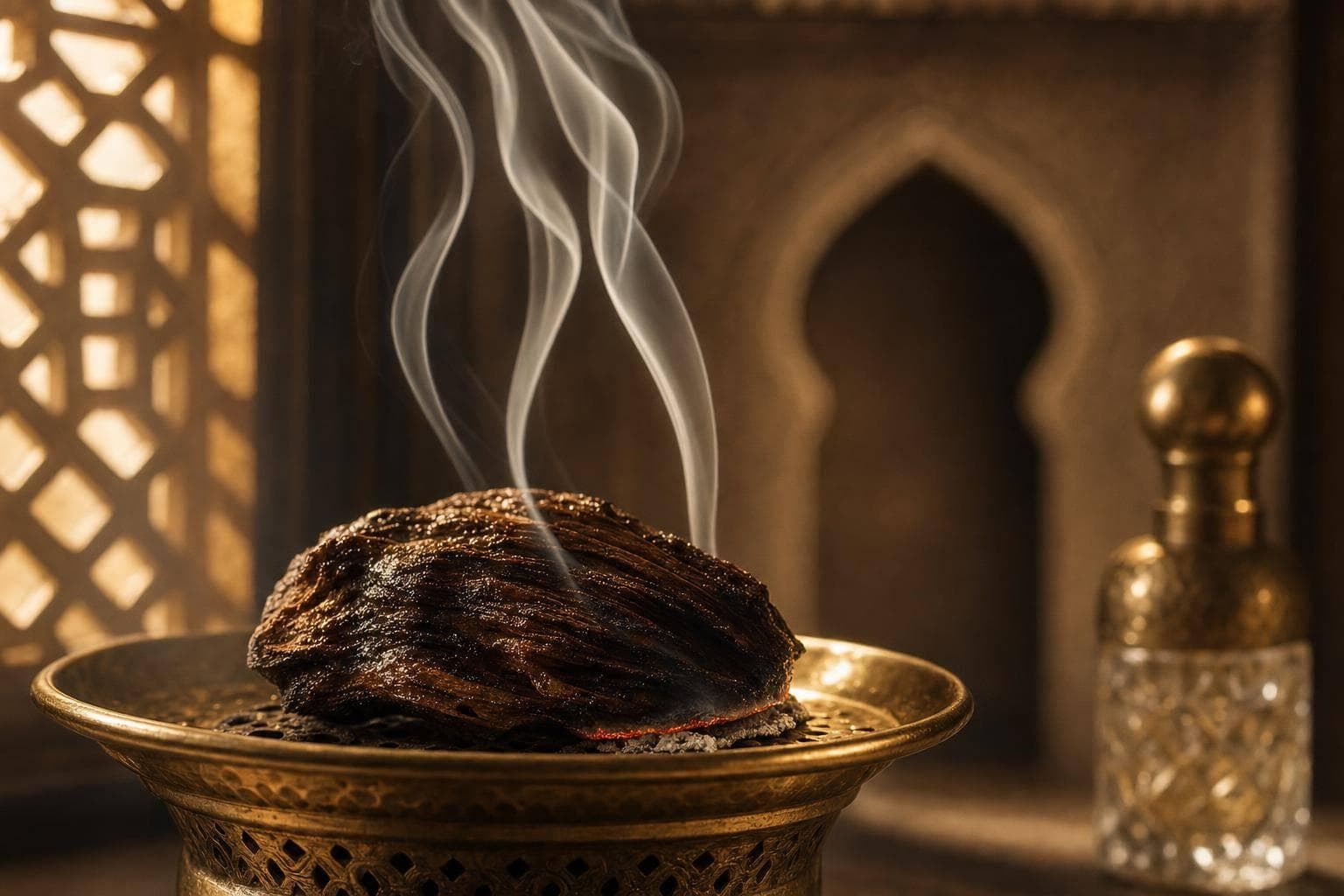
Το oud διαμόρφωσε τη ζωή στη Μέση Ανατολή για περισσότερα από 3.000 χρόνια προτού εξελιχθεί σε μια σύγχρονη αρωματική νότα. Θα το συνόψιζα ως εξής: το oud ξεκίνησε ως ένα πλούσιο σε ρητίνη ξύλο αγαροξύλου από τα δάση της Ασίας, έφτασε στην Αραβία μέσω θαλάσσιων και χερσαίων εμπορικών οδών και στη συνέχεια ενσωματώθηκε στην προσευχή, τη φιλοξενία, την προσωπική περιποίηση και την αυλική ζωή.
Ακολουθεί η σύντομη εκδοχή που ίσως αναζητάτε αρχικά:
- Τι είναι το oud: σκουρόχρωμο, εμποτισμένο με ρητίνη εγκάρδιο ξύλο από δέντρα των γενών Aquilaria και Gyrinops
- Από πού προέρχεται: από τη Νότια και Νοτιοανατολική Ασία, όχι από τη Μέση Ανατολή
- Πώς ταξίδεψε: μέσω καραβανιών και ναυτιλιακών διαδρομών του Ινδικού Ωκεανού, περνώντας από λιμάνια όπως το Άντεν, το Μουσκάτ, η Βασόρα και η Τζέντα
- Γιατί ήταν σημαντικό: χρησιμοποιούνταν σε τζαμιά, οικίες, συναθροίσεις και για προσωπικό αρωματισμό
- Γιατί ήταν περιζήτητο: ήταν σπάνιο, εξαιρετικά ακριβό και κατά καιρούς αποτιμώταν ισάξια με το βάρος του σε χρυσό
- Γιατί εξακολουθεί να έχει σημασία σήμερα: τα σύγχρονα αρώματα oud εξακολουθούν να αντλούν το κύρος τους από αυτή τη μακραίωνη ιστορία
Ορισμένα δεδομένα ξεχωρίζουν. Το άρθρο ανατρέχει στη χρήση του oud σε βάθος άνω των 3.000 ετών, συνδέει τις εισαγωγές στην Εγγύς Ανατολή περίπου με τον 10ο αιώνα π.Χ. και καταδεικνύει πώς η χρήση του εξαπλώθηκε από τον 7ο αιώνα μ.Χ. σε θρησκευτικά και κοινωνικά πλαίσια. Επισημαίνει επίσης ότι όλα τα γνωστά είδη Aquilaria και Gyrinops περιλαμβάνονται πλέον στο Παράρτημα II της CITES, γεγονός που εξηγεί γιατί το oud παραμένει τόσο ακριβό και άρρηκτα συνδεδεμένο με την πολυτέλεια.
Αυτό που με συναρπάζει εδώ είναι η ξεκάθαρη διαδρομή: πρώτη ύλη του δάσους → εμπορικό αγαθό → θυμίαμα και έλαιο → άρωμα κύρους. Αυτή η αλληλουχία καθιστά την ιστορία του εύληπτη χωρίς να χάνεται η ουσία.
Oudimentary Origins: Μια εις βάθος ματιά στον κόσμο του Oud
Τι είναι το Oud και από πού προέρχεται το Agarwood
Για να κατανοήσει κανείς τη θέση του oud στην ιστορία της Μέσης Ανατολής, είναι χρήσιμο να ξεκινήσει από την ίδια την πρώτη ύλη. Οι όροι oud, oudh, agarwood και aloeswood αναφέρονται στο ίδιο ακριβώς πράγμα: το πλούσιο σε ρητίνη εγκάρδιο ξύλο που σχηματίζεται στο εσωτερικό ορισμένων δέντρων Aquilaria και Gyrinops έπειτα από τραυματισμό ή μόλυνση. Το υγιές ξύλο είναι ανοιχτόχρωμο και σχεδόν άοσμο. Μόλις αναπτυχθεί η ρητίνη, το ξύλο γίνεται σκούρο, πυκνό και εξαιρετικά αρωματικό.
Agarwood, έλαιο Oud και η σημασία της λέξης Oud
Η αραβική λέξη ʿūd (عود) σημαίνει κυριολεκτικά ξύλο, αλλά στην οσφρητική κουλτούρα αναφέρεται συγκεκριμένα στο αρωματικό αγαρόξυλο. Στην καθημερινή αρωματοποιία, ο όρος μπορεί να δηλώνει δύο συναφή προϊόντα.
Το Agarwood είναι το ακατέργαστο ρητινώδες ξύλο, συνήθως κομμένο σε ροκανίδια ή μικρά κομμάτια, το οποίο χρησιμοποιείται ως έχει. Το Dehn al — Oud (دهن العود) είναι το συμπυκνωμένο έλαιο που αποστάζεται από αυτά τα ίδια ροκανίδια μέσω απόσταξης με ατμό ή νερό. Το έλαιο είναι παχύρρευστο και βαθιά αρωματικό. Στην αρωματοποιία της Μέσης Ανατολής, εφαρμόζεται απευθείας στο δέρμα, αναμιγνύεται σε attars και χρησιμοποιείται στα μαλλιά και στα ρούχα.
Πού ευδοκιμεί το Agarwood και γιατί είναι τόσο σπάνιο
Τα δέντρα Aquilaria και Gyrinops αναπτύσσονται σε ολόκληρη τη Νότια και Νοτιοανατολική Ασία, με βασικές πηγές την Ινδία, το Μπαγκλαντές, το Βιετνάμ, την Καμπότζη, το Λάος, τη Μαλαισία, την Ινδονησία και περιοχές της νότιας Κίνας. Η γεωγραφική προέλευση παίζει καθοριστικό ρόλο εδώ. Το αγαρόξυλο της Καμπότζης τείνει συχνά να είναι πιο γλυκό και βαλσαμικό, ενώ το ινδικό ξύλο από το Assam περιγράφεται συνήθως ως πιο ξηρό και ζωώδες.
Η σπανιότητά του οφείλεται στη βιολογία του και στις επιθετικές μεθόδους συγκομιδής. Μόνο ένα μικρό ποσοστό δέντρων σχηματίζει ρητίνη με φυσικό τρόπο, και η ύπαρξή της συνήθως δεν μπορεί να επιβεβαιωθεί πριν κοπεί το δέντρο. Αυτό είχε ως αποτέλεσμα τη σοβαρή υποβάθμιση των άγριων πληθυσμών. Σήμερα, όλα τα γνωστά είδη Aquilaria και Gyrinops περιλαμβάνονται στο Παράρτημα II της CITES, ενώ αρκετά κύρια είδη αξιολογούνται ως Κρισίμως Κινδυνεύοντα. Αυτή ακριβώς η σπανιότητα συνέβαλε στο να αναχθεί το oud σε υλικό απαράμιλλου κύρους στη ζωή της Μέσης Ανατολής.
Μορφές του Agarwood και ο τρόπος χρήσης τους
Στην πράξη, το αγαρόξυλο απαντάται σε μερικές βασικές μορφές, καθεμία από τις οποίες εξυπηρετεί έναν ξεχωριστό ρόλο.
| Μορφή | Βοτανική Πηγή | Μορφή Προϊόντος | Κύρια Χρήση |
|---|---|---|---|
| Ροκανίδια ξύλου | Εγκάρδιο ξύλο Aquilaria / Gyrinops | Ακατέργαστα ρητινώδη κομμάτια, κατηγοριοποιημένα βάσει περιεκτικότητας σε ρητίνη | Καίγονται σε καρβουνάκια ή ηλεκτρικούς καυστήρες για τον αρωματισμό σπιτιών, ενδυμάτων και τζαμιών |
| Dehn al — Oud (έλαιο oud) | Υψηλής ποιότητας ροκανίδια agarwood | Παχύρρευστο αιθέριο έλαιο μέσω απόσταξης με ατμό ή νερό | Εφαρμόζεται αυτούσιο στο δέρμα, χρησιμοποιείται σε attars και αξιοποιείται σε τελετουργικούς αρωματισμούς |
| Bakhoor και μείγματα θυμιάματος | Σκόνη και ροκανίδια agarwood αναμεμειγμένα με ρητίνες και μπαχαρικά | Συμπιεσμένοι κύβοι, κόκκοι ή χύμα μείγματα | Καθημερινός αρωματισμός σπιτιού, τελετουργίες φιλοξενίας, αρωματισμός τζαμιών και majlis |
Από αυτά τα μακρινά δάση, το oud ταξίδεψε δυτικά μέσω αρχαίων εμπορικών οδών προς την Αραβία και ακόμα παραπέρα.
Πώς έφτασε το Oud στη Μέση Ανατολή
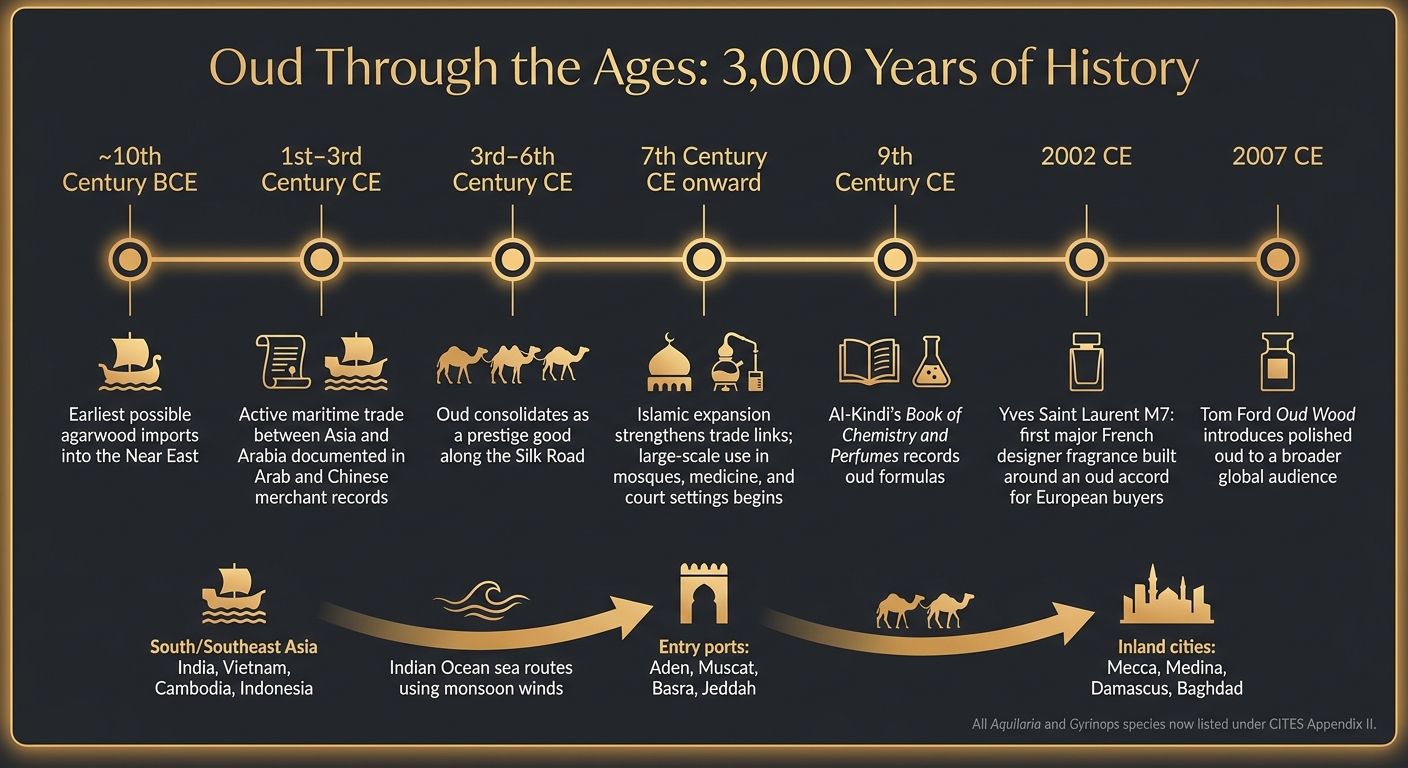
Oud Through the Ages: 3,000 Years of History
Η Μέση Ανατολή βασιζόταν στο εισαγόμενο αγαρόξυλο από τη Νότια και Νοτιοανατολική Ασία.
Αρχαίοι εμπορικοί δρόμοι που ένωναν την Ασία με την Αραβία
Το αγαρόξυλο έφτανε στη Μέση Ανατολή μέσω δύο βασικών εμπορικών δικτύων: των χερσαίων διαδρομών με καραβάνια και των θαλάσσιων οδών του Ινδικού Ωκεανού. Από τη στεριά, ταξίδευε από το Assam, τη Βεγγάλη και τη Βορειοανατολική Ινδία μέσω της Περσίας προς την Αραβία, ως μέρος του εμπορίου του Δρόμου του Μεταξιού. Στη θάλασσα, οι έμποροι έπλεαν από την ακτή Malabar και τα λιμάνια της Νοτιοανατολικής Ασίας προς την Αραβική Χερσόνησο, εκμεταλλευόμενοι τους εποχικούς μουσώνες για να διασχίσουν τον Ινδικό Ωκεανό.
Αυτά τα ταξίδια απαιτούσαν χρόνο. Εξαρτώνταν από τον κύκλο των μουσώνων, με αποτέλεσμα το εμπόριο να κινείται σε εποχικά κύματα και όχι με σταθερή ροή καθ’ όλη τη διάρκεια του έτους.
Τα κύρια λιμάνια εισόδου περιελάμβαναν το Άντεν, το Μουσκάτ, τη Βασόρα και την Τζέντα. Από εκεί, το αγαρόξυλο μεταφερόταν στην ενδοχώρα με καραβάνια προς πόλεις όπως η Μέκκα, η Μεδίνα, η Δαμασκός και η Βαγδάτη. Στην πράξη, ο Κόλπος και η Ερυθρά Θάλασσα αποτελούσαν τις κύριες πύλες εισόδου του oud στην περιοχή.
Η Μέση Ανατολή δεν παρήγαγε αγαρόξυλο σε μεγάλη κλίμακα, αλλά βρισκόταν στο δυτικό άκρο ενός αχανούς εμπορικού δικτύου αρωματικών υλών. Οι ίδιοι δρόμοι μετέφεραν επίσης λιβάνι, σμύρνα, μόσχο, μπαχαρικά και μετάξι.
Το Oud κατά την πρώιμη ισλαμική περίοδο
Γραπτές πηγές υποδεικνύουν ότι τα αρωματικά ξύλα, όπως το αγαρόξυλο, ήταν γνωστά στην Εγγύς Ανατολή πριν από το Ισλάμ, με πιθανές εισαγωγές που χρονολογούνται από τον 10ο αιώνα π.Χ. Μέχρι τον 1ο αιώνα μ.Χ., αρχεία Αράβων και Κινέζων εμπόρων μαρτυρούν ενεργό εμπόριο αρωματικών ξύλων μεταξύ της Αραβικής Χερσονήσου και των ασιατικών αγορών.
Από τον 7ο αιώνα μ.Χ., η ισλαμική εξάπλωση ενίσχυσε τους εμπορικούς δεσμούς με την Ινδία και τη Νοτιοανατολική Ασία. Πρώιμα ισλαμικά κείμενα περιγράφουν το αγαρόξυλο, γνωστό ως oud al — Hindi, τόσο ως θεραπευτική όσο και ως αρωματική ύλη. Αναφέρουν επίσης ότι οι κυβερνήτες της Μεδίνας κάλυπταν τα έξοδα για θυμίαμα στο τέμενος του Προφήτη τις Παρασκευές και κατά τη διάρκεια του Ραμαζανιού.
Σε αυτό το στάδιο, το oud δεν αποτελούσε πλέον απλώς ένα εμπορεύσιμο αγαθό. Είχε γίνει αναπόσπαστο μέρος της λατρείας, της ζωής της αυλής και του καθημερινού αρωματισμού. Εκεί ακριβώς αρχίζει να αποκρυσταλλώνεται η τελετουργική, κοινωνική και οικιακή του θέση στην περιοχή.
Βασικές ημερομηνίες, περιοχές και χρήσεις
Η εξάπλωση του αγαρόξυλου προς τη δύση συντελέστηκε σε βάθος πολλών αιώνων, όχι εν μια νυκτί. Ένα συνοπτικό χρονολόγιο αποσαφηνίζει αυτή την πορεία:
- Περίπου τον 10ο αιώνα π.Χ.: πιθανές εισαγωγές στην Εγγύς Ανατολή.
- 1ος–3ος αιώνας μ.Χ.: ενίσχυση του θαλάσσιου εμπορίου μεταξύ Ασίας και Αραβίας.
- 3ος–6ος αιώνας μ.Χ.: εδραίωση ως αγαθό κύρους κατά μήκος του Δρόμου του Μεταξιού.
- Από τον 7ο αιώνα μ.Χ. και έπειτα: εκτεταμένη χρήση σε τζαμιά, στην ιατρική και σε αυλικά περιβάλλοντα.
Ο προσωπικός σας ειδικός αρωμάτων σας περιμένει
Κάντε το σύντομο κουίζ αρώματος και ανακαλύψτε αυθεντικά αρώματα designer και niche, επιλεγμένα στα μέτρα σας – εξερευνήστε τα σε decant και δείγματα των 2, 5, 8 και 30 ml, ώστε να δοκιμάσετε το καθένα πριν επιλέξετε ολόκληρο μπουκάλι.
Βρείτε το άρωμά σαςΠώς χρησιμοποιούνταν το Oud στην τελετουργική, κοινωνική και καθημερινή ζωή της Μέσης Ανατολής
Μόλις το αγαρόξυλο έφτασε στη Μέση Ανατολή, το oud έγινε αναπόσπαστο μέρος της λατρείας, της φιλοξενίας και της καθημερινής περιποίησης.
Θυμίαμα, εξαγνισμός και πνευματική σημασία
Η κύρια τελετουργική του χρήση ήταν ως θυμίαμα. Στα τζαμιά έκαιγαν ροκανίδια oud για να εξαγνίσουν την ατμόσφαιρα και να ορίσουν τον ιερό χώρο. Ιστορικές πηγές αναφέρουν ότι αυτό έγινε κοινή πρακτική στα τζαμιά ήδη από την εποχή του δεύτερου χαλίφη, ʿUmar.
Αρκετές συλλογές χαντίθ αναφέρουν το oud al — Hindi τόσο ως άρωμα όσο και ως ίαμα. Ο Nafiʿ ανέφερε ότι ο Ibn ʿUmar αρωματιζόταν με αγαρόξυλο ή καμφορά αναμεμειγμένη με αγαρόξυλο, ακολουθώντας το παράδειγμα του Προφήτη. Αυτή η σύνδεση συνέβαλε στο να καθιερωθεί το oud ως ένα άρωμα συνδεδεμένο με την πρακτική της Sunnah και την πνευματική φροντίδα.
Φιλοξενία, κύρος και αρωματισμός του σώματος και του σπιτιού
Πέρα από τη λατρεία, το oud αναδείχθηκε επίσης σε σύμβολο καλωσορίσματος και κοινωνικής επιφάνειας στο σπίτι. Το ίδιο άρωμα που χρησιμοποιούνταν σε ιερούς χώρους καθόριζε και τον τρόπο υποδοχής των επισκεπτών. Στα αραβικά έθιμα, το κάψιμο ροκανιδιών oud ή bakhoor - ενός μείγματος από oud, αρωματικά έλαια και ρητίνες - πριν από την άφιξη των καλεσμένων αποτελούσε καθιερωμένη χειρονομία φιλοξενίας.
Το θυμιατό, γνωστό ως mabkhara, περνούσε από χέρι σε χέρι στη συγκέντρωση. Οι καλεσμένοι το κρατούσαν κάτω από τα ρούχα τους ώστε ο καπνός να εμποτίσει το ύφασμα. Ήταν ένα λιτό τελετουργικό, αλλά γεμάτο συμβολισμούς: σεβασμός, γενναιοδωρία και φροντίδα. Και επειδή τα ακατέργαστα ροκανίδια oud ήταν εξαιρετικά δαπανηρά, η χειρονομία αυτή απέπνεε αναμφισβήτητο κύρος.
Τα ακατέργαστα ροκανίδια oud φυλάσσονταν συχνά για επίτιμους καλεσμένους ή επίσημες περιστάσεις. Τα μείγματα bakhoor ήταν πιο συνηθισμένα για τον καθημερινό αρωματισμό της οικίας. Το έλαιο oud, ή dahn al-oud, εφαρμοζόταν απευθείας στο δέρμα, στα μαλλιά και στη γενειάδα ως μέρος της προσωπικής περιποίησης. Με άλλα λόγια, το oud δεν προοριζόταν μόνο για σπάνιες περιστάσεις. Ήταν παρόν στον καθημερινό ρυθμό της προετοιμασίας, της υποδοχής των ανθρώπων και του αρωματισμού του χώρου.
Το Oud ανά περίσταση: Μορφές και σημασίες
Η χρήση του προσαρμοζόταν ανάλογα με την περίσταση:
- Στα τζαμιά έκαιγαν ροκανίδια oud
- Στα σπίτια χρησιμοποιούσαν συχνά bakhoor
- Στους καλεσμένους προσφερόταν ο αρωματικός καπνός μέσω του mabkhara
- Για την προσωπική περιποίηση χρησιμοποιούνταν το dahn al-oud
Αυτό το κοινωνικό και θρησκευτικό βάρος βοήθησε το oud να μεταβεί από τελετουργικό υλικό σε μια αρωματική νότα διαχρονικού γοήτρου.
Από το ιστορικό Oud στη σύγχρονη αρωματοποιία και την ευρωπαϊκή ανακάλυψη
Πώς το Oud έγινε βασική νότα στη σύγχρονη αρωματοποιία
Το oud δεν ξεκίνησε από τα ράφια των καταστημάτων αρωματοποιίας. Έφτασε εκεί σταδιακά, βήμα προς βήμα.
Πολύ πριν από τις σύγχρονες αρωματικές κυκλοφορίες, το oud είχε ήδη εδραιώσει τη θέση του στην καταγεγραμμένη τέχνη της αρωματοποιίας. Το Βιβλίο της Χημείας των Αρωμάτων και των Αποστάξεων του Al — Kindi από τον 9ο αιώνα περιείχε συνταγές με oud, ενώ μεταγενέστεροι δημιουργοί το συνδύασαν με τριαντάφυλλο, κεχριμπάρι, μόσχο και σαφράν στα πρώτα attars - συμπυκνωμένα αρωματικά έλαια που ενέταξαν το oud στον προσωπικό αρωματισμό.
Η δυτική αρωματοποιία ανακάλυψε το oud πολύ αργότερα. Το Yves Saint Laurent M7 (2002) αναφέρεται συχνά ως το πρώτο μεγάλο άρωμα Γάλλου σχεδιαστή που δομήθηκε γύρω από μια συμφωνία oud για το ευρωπαϊκό κοινό. Λίγα χρόνια αργότερα, το Tom Ford Oud Wood (2007) συνέβαλε στην εξοικείωση ενός ευρύτερου παγκόσμιου κοινού με μια πιο απαλή, εκλεπτυσμένη εκδοχή του oud.
Αυτή η μεταστροφή είναι σημαντική. Το ακατέργαστο έλαιο oud μπορεί να είναι εξαιρετικά πυκνό, καπνιστό και ζωώδες. Πολλοί σύγχρονοι αρωματοποιοί χρησιμοποιούν πλέον εξευγενισμένες συμφωνίες oud ή συνθετικά μόρια oud. Το αποτέλεσμα διατηρεί σε μεγάλο βαθμό τον ξυλώδη και δερμάτινο χαρακτήρα του, αλλά αμβλύνει τις πιο έντονες πτυχές που θα μπορούσαν να φανούν απαιτητικές σε μια σύγχρονη αρωματική σύνθεση.
Γιατί το Oud γοητεύει τους λάτρεις των αρωμάτων στη Γερμανία και την Ευρώπη
Στην Ευρώπη, το oud άλλαξε ρόλο με την πάροδο του χρόνου. Αυτό που ξεκίνησε αλλού ως ιερό υλικό μετατράπηκε, στη σύγχρονη αρωματοποιία, σε μια niche νότα βάσης με ακαταμάχητη έλξη.
Για τους λάτρεις των αρωμάτων στη Γερμανία και σε ολόκληρη την Ευρώπη, η γοητεία του είναι απολύτως κατανοητή. Το oud προσφέρει βάθος, εξαιρετική διάρκεια και μια αίσθηση αφηγηματικής ιστορίας. Δεν μοιάζει με εφήμερη τάση, αλλά με ένα υλικό με ουσιαστικό υπόβαθρο. Αυτή η έλξη πηγάζει πάντα από τα ίδια χαρακτηριστικά που σμίλεψαν την ιστορία του στη Μέση Ανατολή: σπανιότητα, πολυπλοκότητα και τελετουργικό βάρος.
Συμπέρασμα: Οι ιστορικές ρίζες του Oud
Το απαράμιλλο κύρος του εξακολουθεί να απορρέει από την ιστορία που το κατέστησε εξαρχής τόσο περιζήτητο - γεννημένο στα δάση της Νοτιοανατολικής Ασίας, ταξιδεμένο δυτικά κατά μήκος των αρχαίων εμπορικών δρόμων και υφασμένο στα τελετουργικά, τη φιλοξενία και την καθημερινή ζωή της Μέσης Ανατολής, πολύ πριν βρει τη θέση του στο σύγχρονο μπουκάλι ενός αρώματος.
Συχνές Ερωτήσεις
Γιατί το oud είναι τόσο στενά συνδεδεμένο με τη Μέση Ανατολή αν προέρχεται από την Ασία;
Παρόλο που το oud προέρχεται από δέντρα ενδημικά της Νότιας και Νοτιοανατολικής Ασίας, συνδέθηκε άρρηκτα με τη Μέση Ανατολή μέσω του εμπορίου, του πολιτισμού και της ιστορίας. Οι Άραβες έμποροι το μετέφεραν μέσω του Δρόμου του Μεταξιού και, μέχρι τον ένατο αιώνα, είχε ήδη καταστεί θεμέλιος λίθος της αραβικής αρωματοποιίας.
Με την πάροδο του χρόνου, το oud κατέληξε να συμβολίζει τη φιλοξενία, τη θρησκευτική ευλάβεια, την πολυτέλεια και το κύρος. Χρησιμοποιούνταν σε θυμιάματα, γάμους και προσευχές, αποκτώντας ξεχωριστή θέση όχι μόνο στον κόσμο των αρωμάτων, αλλά και στην καθημερινή ζωή και τις ιερές τελετουργίες.
Τι έκανε το oud πιο πολύτιμο από άλλα αρωματικά υλικά;
Το oud ήταν πολυτιμότερο για έναν απλό λόγο: ήταν εξαιρετικά δυσεύρετο. Στη φύση, μόνο περίπου το 2% έως 10% των δέντρων Aquilaria σχηματίζει φυσικά το πλούσιο σε ρητίνη εγκάρδιο ξύλο που χρησιμοποιείται για την παραγωγή του.
Η υψηλή τιμή και το κύρος του πηγάζουν επίσης από τον αργό ρυθμό με τον οποίο σχηματίζεται, την πολυπλοκότητα της διαδικασίας και τον απαράμιλλο πλούτο του αρώματός του μόλις αναπτυχθεί. Το oud φημίζεται για το πολυεπίπεδο άρωμά του, το οποίο μπορεί να εναλλάσσεται από ξυλώδες και καπνιστό σε γλυκό, ρητινώδες και σκοτεινό. Αν προσθέσει κανείς τη μακραίωνη ιστορία του και τον ρόλο του ως συμβόλου πολυτέλειας και αποκλειστικότητας, γίνεται εύκολα κατανοητό γιατί το oud απέκτησε τόσο μυθική αξία.
Πώς πέρασε το oud από το θυμίαμα και την τελετουργική χρήση στη σύγχρονη αρωματοποιία;
Το oud μεταπήδησε από την τελετουργική χρήση στη σύγχρονη αρωματοποιία καθώς ταξίδεψε σε διεθνείς αγορές και υιοθέτησε νέες μορφές, ιδιαίτερα μέσω συνθετικών συμφωνιών. Στη Μέση Ανατολή, εκτιμώταν ανέκαθεν ως bakhoor και ως καθαρό έλαιο. Ωστόσο, ο πυκνός, καπνιστός του χαρακτήρας σήμαινε ότι παρέμενε ένα άρωμα για μυημένους έξω από αυτόν τον χώρο.
Αυτό άλλαξε στις αρχές της δεκαετίας του 2000. Οι οίκοι αρωμάτων άρχισαν να παρουσιάζουν το oud ως μια εκλεπτυσμένη, unisex νότα πολυτελείας και όχι ως κάτι αποκλειστικά τελετουργικό ή niche. Ταυτόχρονα, οι συνθετικές συμφωνίες oud άνοιξαν τον δρόμο για ένα ευρύτερο κοινό, απηχώντας τη ζεστασιά και το βάθος του oud, μειώνοντας παράλληλα τόσο το κόστος όσο και την έντασή του.

