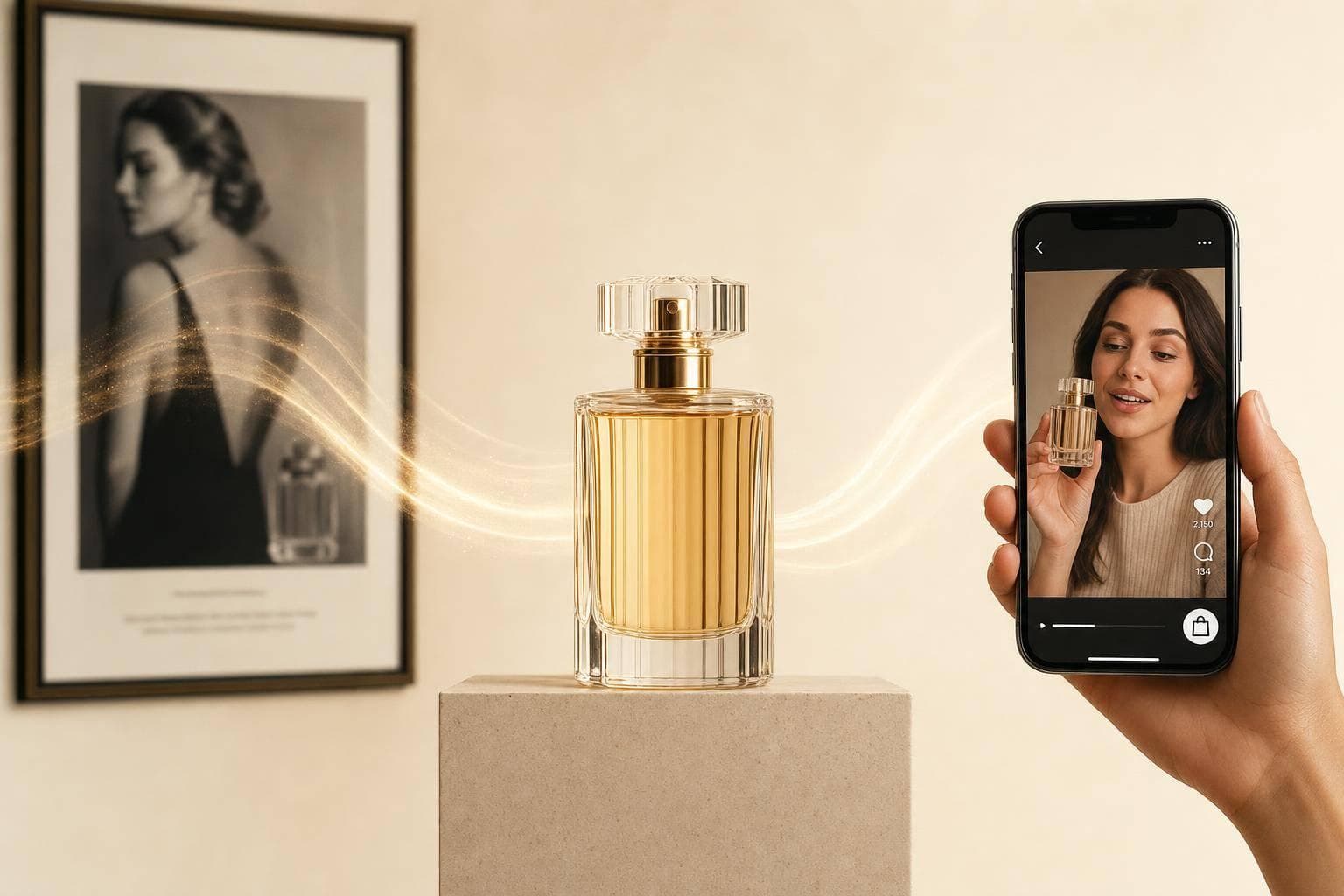
Perfume ads changed with media, but the job stayed the same: make you feel the scent before you smell it. From print pages to TV films to TikTok-style clips, the biggest shift was not the bottle. It was who shapes the story.
Here’s the short version:
- Print sold perfume through image, status, and fantasy
- TV turned fragrance ads into glossy mini-films with stars
- Digital moved power toward creators, reviews, and public feedback
- Shopping habits changed too: many buyers now test first, then buy
- 61% of Gen Z trust user-made content more than brand messaging
If I had to sum it up in one line, it would be this: perfume ads used to tell you what a scent meant; now people online help decide that in public.
| Era | Main format | What brands sold | Who had most control |
|---|---|---|---|
| Posters, magazine ads | Status, taste, fantasy | Brands and publishers | |
| TV | Cinematic commercials | Glamour, story, star appeal | Brands, directors, celebrities |
| Digital | Social video, reviews, UGC | Mood, fit, self-expression | Brands, creators, customers |
That shift matters because fragrance buying is now more trial-led, more personal, and less tied to one polished brand message.
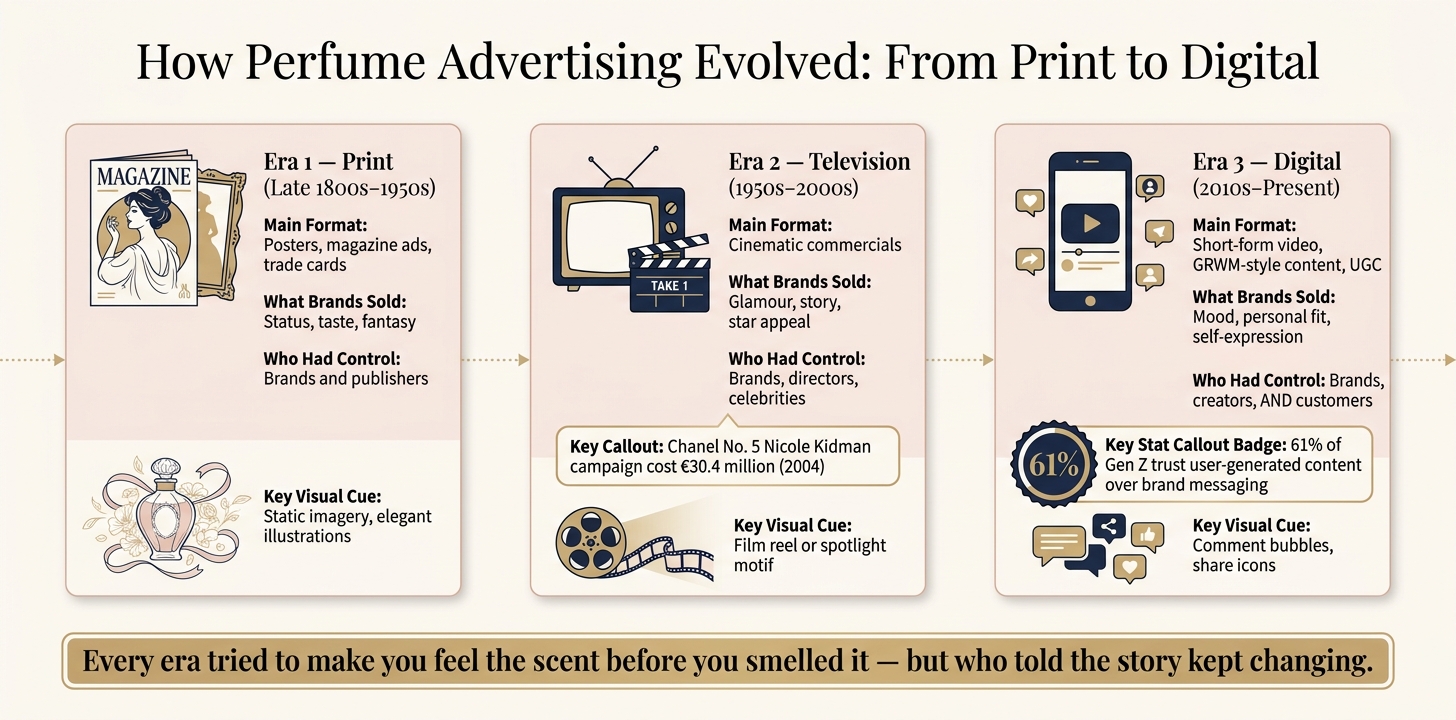
How Perfume Advertising Evolved: From Print to Digital
The Best Retro Women’s Fragrance Commercials Compilation | 70s, 80s, and 90s Perfume Ads
Early perfume ads: posters, trade cards, and magazine pages
Print gave fragrance brands a way to build desire with images and copy alone. Posters pushed that same idea into public spaces, making perfume a visible marker of taste.
From product notices to aspirational imagery
Early perfume promotions were plain and direct: a name, a seller, and where to find it. As printing got better, brands started adding elegant illustrations and fashionable scenes. The shift was subtle but important. Ads no longer just said a perfume existed. They suggested a certain life around it.
That change moved the message from simple availability to aspiration, and status became part of the sell.
How magazines made fragrance look luxurious
Full-page magazine ads took that idea much further. Once colour printing became more reliable and photography improved, brands had a format that could look genuinely beautiful. For perfume, that mattered a lot. A magazine page couldn’t deliver the scent, so the image had to do the heavy lifting.
The copy changed too. Instead of focusing on ingredients or formulas, brands leaned into mood, fantasy, and exclusivity. They wanted readers to feel the promise of the perfume before they ever smelled it.
That emotion-led style became one of the defining traits of fragrance advertising. Later, the same mood-first approach shaped television-era perfume ads as well.
The television era: cinematic ads, celebrities, and mass appeal
Television kept print’s mood-led promise, but gave it motion. Suddenly, perfume brands had tools print never had: movement, sound, and a few seconds of screen time to pull people into a feeling. A TV ad could do more than suggest a mood. It could stage one.
How television changed the format
From the 1950s onward, fragrance brands treated the commercial break like a short film. Instead of one still image, viewers saw scenes unfold: a woman moving through Paris at dusk, two people meeting by chance, or a lone figure stepping into a grand setting. Music, lighting, and editing carried much of the emotion.
Because TV still couldn’t deliver scent, brands had to sell the atmosphere around it. That’s where celebrity casting came in. A familiar face brought status, reach, and instant recognition. If audiences admired the star, part of that feeling could rub off on the fragrance too.
Chanel No. 5: a case study in long-term reinvention
Few campaigns show this shift more clearly than Chanel No. 5. In 1952, Marilyn Monroe’s remark became part of the scent’s mythology and helped fix its desirability in the public mind. By 2004, Chanel had moved to a fully scripted, director-led campaign starring Nicole Kidman, with a reported cost of €30,4 million.
That contrast says a lot. Television turned perfume ads into glossy, high-budget image campaigns, where every frame could be shaped and polished. Later, once fragrance promotion moved online, that level of control became much harder to hold onto.
Ο προσωπικός σας ειδικός αρωμάτων σας περιμένει
Κάντε το σύντομο κουίζ αρώματος και ανακαλύψτε αυθεντικά αρώματα designer και niche, επιλεγμένα στα μέτρα σας – εξερευνήστε τα σε decant και δείγματα των 2–8ml, ώστε να δοκιμάσετε το καθένα πριν επιλέξετε ολόκληρο μπουκάλι.
Βρείτε το άρωμά σαςDigital campaigns changed who creates perfume influence
Social media changed fragrance advertising from a one-way broadcast into a public conversation. Brands no longer control the whole story. Now creators interpret a scent in their own voice, and sometimes even flip its meaning on its head.
From brand websites to social-first perfume storytelling
Unlike TV, digital channels let people react on the spot and shape the story in public. You can see the shift most clearly in format, reach, storytelling, and interaction.
| Feature | Print Ads | TV Commercials | Digital/Social Campaigns |
|---|---|---|---|
| Format | Static imagery, scent strips | Cinematic, high-budget films | Short-form video, GRWM-style, UGC |
| Audience Reach | Magazine subscribers | Mass market (broadcast) | Targeted by niche interests and behaviour patterns |
| Storytelling Style | Aspirational, luxury-focused | Fantasy, celebrity-led, emotional | Personal, mood-led |
| Consumer Interaction | Passive | Passive | High: comments, shares, live shopping |
That shift did more than change the channel. It changed the message too.
How gender, identity, and self-expression reshaped the message
Modern campaigns put the wearer’s experience at the centre, not someone else’s approval. That change leans toward subtle, skin-close scents that stay understated instead of loud and theatrical.
Self-expression isn’t a side theme here. It’s the reason fragrance ads now sell mood, intimacy, and personal fit, rather than status alone.
What modern fragrance discovery looks like for today’s shopper
This new media world also changed how people shop for fragrance. That’s why creator reviews and samples carry so much weight today: 61% of Gen Z consumers trust user-generated content more than official brand communications.
For that reason, sampling has become part of the buying journey. Scento offers designer and niche fragrances in 2 ml, 5 ml, and 8 ml decants, plus an optional 8 ml monthly subscription, so shoppers can test scents before buying a full bottle.
Conclusion: what stayed the same and what changed most
Perfume advertising moved from bold magazine pages to cinematic TV campaigns and then to short social video. The format changed. The goal did not. Every era tried to make you feel something before you ever smelled the scent.
The bigger shift wasn’t the medium itself. It was who controlled the message. Print ads came from luxury houses and high-fashion photographers. Television added film directors, star power, and bigger storylines. Digital pulled creators and customers into the mix, and polished studio campaigns started to lose ground to personal, mood-led content.
That change shaped more than discovery. It also changed how people build a fragrance collection. Instead of one signature scent for every moment, many people now prefer a small scent wardrobe for different moods and occasions. Advertising played a big part in that shift because it now sells discovery and variety, not one perfect bottle for life.
That also helps explain why low-risk discovery matters so much today. A full bottle can feel like a big spend when you’re still unsure. Scento offers designer fragrances in 2 ml, 5 ml, and 8 ml decants, plus an optional monthly subscription for people who want to test before buying.
That’s the balance modern fragrance ads are still trying to hit. Perfume ads still sell aspiration, but now they also need to feel personal and believable.
FAQs
Why can’t brands fully control perfume ads anymore?
Brands don’t fully control perfume ads anymore. Digital platforms have pushed a lot of that influence toward creators and user-generated content.
That shift makes sense. When people shop for fragrance, they often trust honest reviews, personal impressions, and social proof more than a polished brand campaign.
Perfume is a tricky product to sell online because scent is subjective. You can’t smell a fragrance through a screen, so a genuine recommendation often feels more believable than a glossy ad.
Deinfluencing adds another layer. It gives audiences a way to push back fast when a product feels overpriced or simply underwhelming.
How did social media change how people discover fragrances?
Social media changed fragrance discovery. It moved the conversation away from polished ad campaigns and into the hands of people sharing what they wear, test, and love.
TikTok often drives that first moment of interest through creator videos, layering tutorials, and trends like #PerfumeTok. Instagram brings the mood and image-led side of scent, while YouTube gives people more room to dig in and do deeper research.
Taken together, these platforms made user reviews far more influential. They also nudged shoppers toward low-commitment sampling before buying a full bottle, which fits how many people want to discover fragrance now: with curiosity, not pressure.
Why do modern perfume ads focus more on mood than status?
Modern perfume ads lean more on mood because fragrance is deeply personal. And that’s tough to show on a screen. A scent can’t be seen or heard, so brands have to sell the feeling around it instead.
Rather than pushing status, many brands now go for relatability and emotional pull. The idea is simple: help people picture the fragrance in their own day-to-day life.
By tying scents to moments, lifestyles, or feelings, brands make the experience easier to imagine. Maybe it’s a slow Sunday morning, a night out, or that polished, put-together mood before a meeting. That kind of message tends to land better than old-school luxury advertising, because it feels closer to how people actually choose a fragrance.