Ο τρόπος με τον οποίο οι άνθρωποι αγοράζουν αρώματα έχει μετατοπιστεί δραματικά προς τις mobile πλατφόρμες. Μέχρι τα τέλη του 2024, τα smartphones παρήγαγαν το 80% της παγκόσμιας επισκεψιμότητας σε retail sites και αντιστοιχούσαν σε τα δύο τρίτα των online παραγγελιών. Οι mobile εφαρμογές ξεπέρασαν τα mobile websites τόσο σε αλληλεπίδραση χρηστών όσο και σε πωλήσεις, με τους χρήστες εφαρμογών να δαπανούν 10–50% περισσότερα ανά παραγγελία και να μετατρέπονται σε πελάτες με ποσοστά έως και 7 φορές υψηλότερα από τους επισκέπτες του mobile web. Η Gen Z και οι Millennials οδηγούν αυτή τη μετατόπιση, με το 48% της Gen Z να ξεκινά το shopping journey της μέσα από εφαρμογές.
Βασικά σημεία:
- Τα εργαλεία AI και sampling μειώνουν το ρίσκο της "τυφλής αγοράς" αρωμάτων online.
- Τα social media διαδραματίζουν καθοριστικό ρόλο στην ανακάλυψη αρωμάτων, με την κοινότητα FragranceTok του TikTok να ξεπερνά τις 278 εκατομμύρια δημοσιεύσεις μέχρι τα τέλη του 2024.
- Οι mobile εφαρμογές κυριαρχούν στο fragrance e-commerce, δημιουργώντας 3,5–7 φορές περισσότερα έσοδα ανά χρήστη σε σύγκριση με τα mobile websites.
- Η παγκόσμια αγορά niche luxury αρωμάτων προβλέπεται να αναπτυχθεί από 2,4 δισ. € το 2024 σε 8,12 δισ. € έως το 2033, με ισχυρό μοχλό τις mobile-first μάρκες.
Retailers όπως το Scento πρωτοπορούν, προσφέροντας εξατομικευμένες προτάσεις, AI-driven αντιστοίχιση αρωμάτων και sampling προγράμματα που διευκολύνουν τους χρήστες να ανακαλύψουν και να δοκιμάσουν αρώματα. Η mobile τεχνολογία αναδιαμορφώνει τη βιομηχανία αρωμάτων, μετατρέποντας την αγοραστική εμπειρία σε κάτι πιο εξατομικευμένο, διαδραστικό και προσανατολισμένο στην ανακάλυψη.
Ανάπτυξη του Mobile Commerce στο Λιανεμπόριο Αρωμάτων
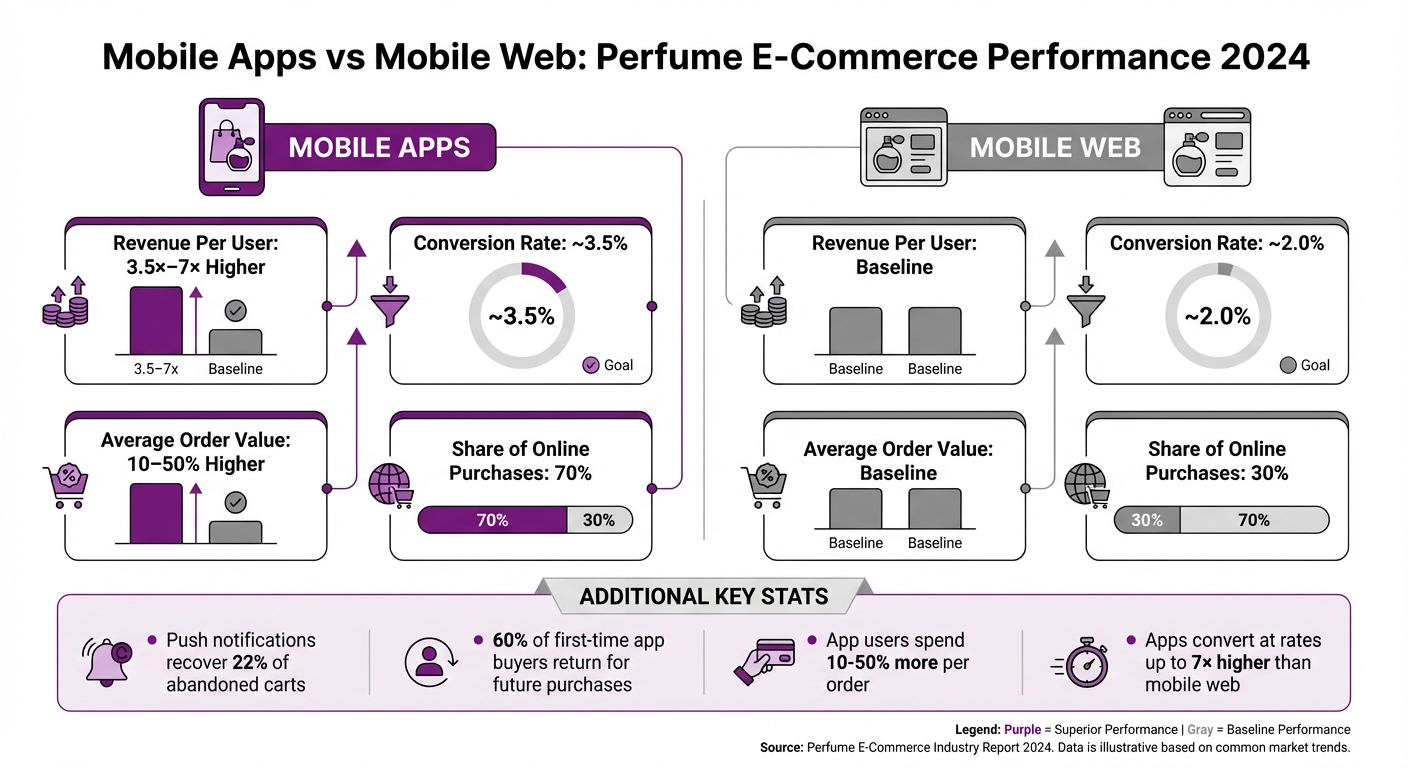
Απόδοση Mobile Apps έναντι Mobile Web στο Ηλεκτρονικό Εμπόριο Αρωμάτων 2024
Ανάπτυξη της Αγοράς Ηλεκτρονικού Εμπορίου Αρωμάτων
Το 2024, το παγκόσμιο mobile commerce έφτασε το εντυπωσιακό ποσό των 2,07 τρισ. €, με τα αρώματα να αντιπροσωπεύουν το 70% των αγορών μέσω mobile εφαρμογών. Οι mobile εφαρμογές ξεπέρασαν σημαντικά τα mobile websites, παρουσιάζοντας ποσοστά μετατροπής περίπου 3,5% έναντι 2% για τα mobile websites. Επίσης, οδήγησαν σε μέσες αξίες παραγγελίας που ήταν κατά 10–50% υψηλότερες.
| Δείκτης | Mobile Εφαρμογές | Mobile Web |
|---|---|---|
| Έσοδα Ανά Χρήστη | 3,5×–7× Υψηλότερα | Βάση αναφοράς |
| Ποσοστό Μετατροπής | ~3,5% | ~2,0% |
| Μέση Αξία Παραγγελίας | 10–50% Υψηλότερη | Βάση αναφοράς |
| Μερίδιο Online Αγορών | 70% (2024) | 30% |
Αυτά τα στοιχεία αναδεικνύουν την αυξανόμενη κυριαρχία των mobile εφαρμογών στη διαμόρφωση του μέλλοντος του retail αρωμάτων.
Η Στροφή των Καταναλωτών προς το Mobile Shopping
Όπως υποδεικνύουν αυτοί οι αριθμοί, οι retailers εστιάζουν ολοένα και περισσότερο σε mobile καινοτομίες για να απλοποιήσουν την αγοραστική εμπειρία. Λειτουργίες όπως πληρωμές με ένα κλικ, προαποθηκευμένες μέθοδοι πληρωμής και mobile wallets καθιστούν τη διαδικασία checkout ταχύτερη και ευκολότερη. Οι push notifications παίζουν επίσης καθοριστικό ρόλο, ανακτώντας το 22% των εγκαταλελειμμένων καλαθιών μέσω επαναδραστηριοποίησης των χρηστών.
Οι mobile εφαρμογές έχουν επίσης φέρει επανάσταση στον τρόπο με τον οποίο οι καταναλωτές ανακαλύπτουν αρώματα. Τα εξατομικευμένα feeds επιτρέπουν πλέον στους χρήστες να εξερευνούν νέα αρώματα αβίαστα, δημιουργώντας μια πιο συναρπαστική εμπειρία αγορών. Η αγορά niche luxury αρωμάτων, ειδικότερα, οδεύει προς ταχεία επέκταση, με πρόβλεψη ανάπτυξης από 2,4 δισ. € το 2024 σε 8,12 δισ. € έως το 2033 - με μεγάλο μέρος αυτής της ανάπτυξης να προέρχεται από mobile-first ανεξάρτητες μάρκες.
Βασικές Καταναλωτικές Συμπεριφορές στις Mobile Πλατφόρμες
Τάσεις Sampling και Discovery
Οι mobile πλατφόρμες έχουν μεταμορφώσει τον τρόπο με τον οποίο οι καταναλωτές ανακαλύπτουν αρώματα, με τα social media feeds και τις live shopping εμπειρίες να διαδραματίζουν κεντρικό ρόλο. Αντί να αναζητούν ενεργά, οι χρήστες πλέον συναντούν νέα αρώματα οργανικά. Για παράδειγμα, η κοινότητα FragranceTok του TikTok έχει εκτοξευθεί, με πάνω από 278 εκατομμύρια δημοσιεύσεις έως τον Οκτώβριο του 2024, καθιστώντας την ένα ισχυρό εργαλείο ανακάλυψης για το νεότερο κοινό.
Η Gen Z και οι Millennials πρωταγωνιστούν σε αυτό που αποκαλείται "προσιτό prestige". Στις ΗΠΑ, όσοι είναι 25–34 ετών συχνά προτιμούν να δοκιμάζουν αρώματα online πριν δεσμευτούν σε ένα μπουκάλι πλήρους μεγέθους. Πρόκειται για μια πρακτική στρατηγική - γιατί να δαπανήσει κανείς 300 δολάρια ή περισσότερα για ένα πλήρες μπουκάλι, όταν μπορεί να πειραματιστεί με travel-sized decants ή δείγματα;
Η αυξανόμενη γοητεία των λειτουργικών αρωμάτων προσθέτει μία ακόμη διάσταση σε αυτή την τάση. Οι νεότεροι καταναλωτές χρησιμοποιούν ολοένα και περισσότερο mobile εργαλεία για να βρουν αρώματα που ευθυγραμμίζονται με στόχους ευεξίας, όπως η μείωση του στρες, η βελτίωση της ποιότητας του ύπνου ή ακόμη και η αίσθηση δροσιάς στο δέρμα. Ένα χαρακτηριστικό παράδειγμα είναι το λανσάρισμα της Charlotte Tilbury στις αρχές του 2025 με τη σειρά "Collection of Emotions", μια συλλογή έξι neuro-fragrances σχεδιασμένων να επηρεάζουν τη διάθεση. Το brand αξιοποίησε AI-driven mobile quizzes για να αντιστοιχίσει στους χρήστες αρώματα βάσει της συναισθηματικής κατάστασης που επιθυμούν.
Εξατομίκευση στο Mobile Shopping
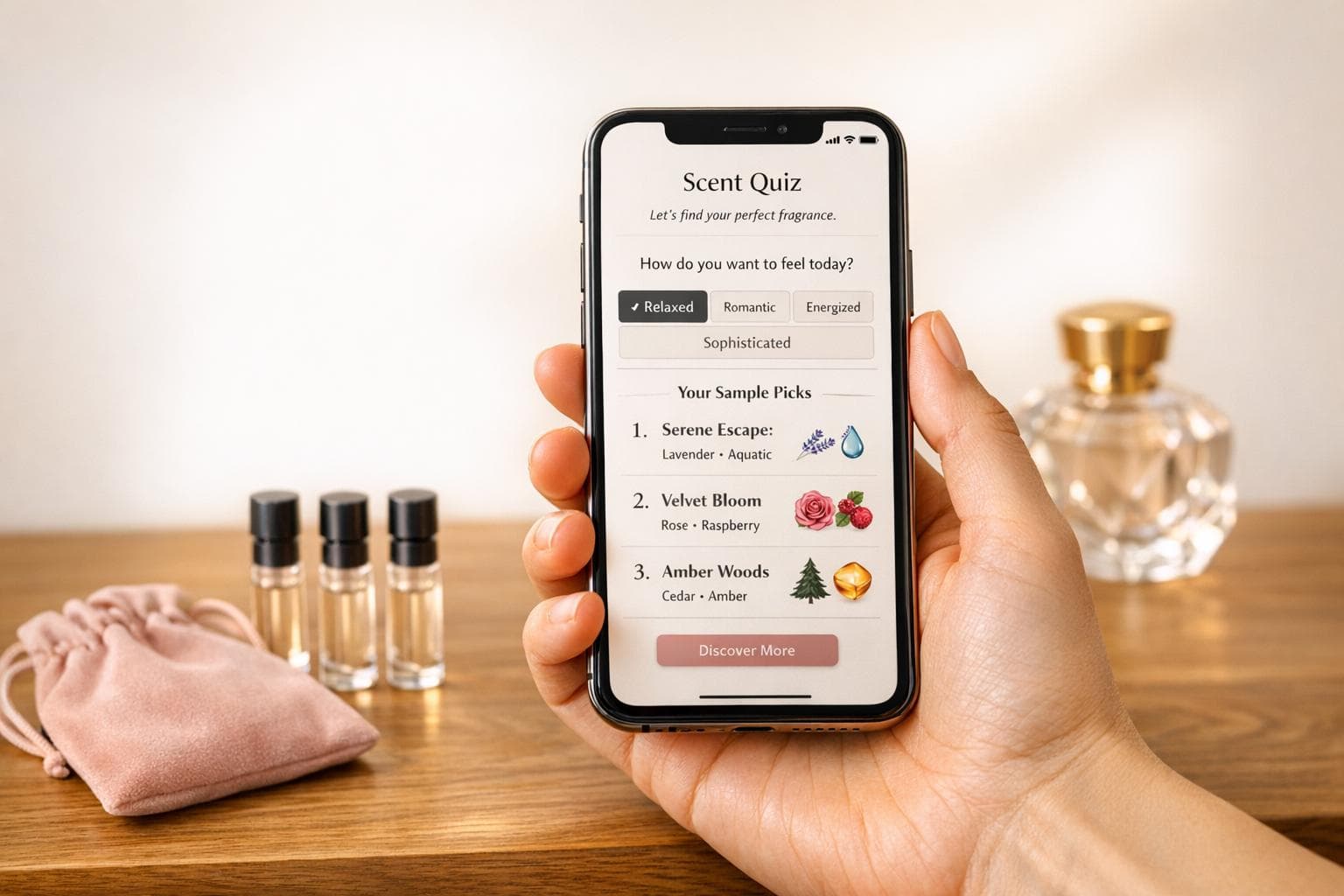
Η εξατομίκευση απογειώνει το mobile shopping, χτίζοντας πάνω στις τάσεις ανακάλυψης. Τα AI-powered scent quizzes αποτελούν ένα ξεχωριστό χαρακτηριστικό, συνδέοντας τον αισθητηριακό κόσμο του αρώματος με ψηφιακά εργαλεία μέσω ανάλυσης παραγόντων όπως η διάθεση, η προσωπικότητα και ο τρόπος ζωής. Αυτά τα εργαλεία έχουν απήχηση στους νεότερους αγοραστές: το 32% της Gen Z και το 30% των Millennials δηλώνουν ότι βρίσκουν χρήσιμα αυτά τα AI-driven εργαλεία για την ανακάλυψη νέων αρωμάτων.
Όμως η εξατομίκευση δεν σταματά στις προτάσεις προϊόντων. Οι ανταμοιβές loyalty αποτελούν βασικό στοιχείο, με το 35% των καταναλωτών να δηλώνει ότι αυτές οι λειτουργίες κάνουν το online shopping να φαίνεται πιο προσαρμοσμένο στις ανάγκες τους. Οι mobile εφαρμογές διακρίνονται σε αυτόν τον τομέα, προσφέροντας δυνατότητες όπως παρακολούθηση προτιμήσεων μεταξύ συνεδριών, αποστολή push notifications για αγαπημένα προϊόντα που είναι ξανά διαθέσιμα, ακόμη και εξατομικευμένη τιμολόγηση μέσω subscription μοντέλων. Αυτό το επίπεδο προσαρμογής πιθανότατα εξηγεί γιατί το 60% των first-time αγοραστών σε mobile εφαρμογές επιστρέφει για μελλοντικές αγορές, ξεπερνώντας κατά πολύ τα ποσοστά διατήρησης που παρατηρούνται στα mobile websites.
Τεχνολογικές Καινοτομίες στο Mobile Ηλεκτρονικό Εμπόριο Αρωμάτων
AI — Driven Αντιστοίχιση Αρωμάτων
Η τεχνητή νοημοσύνη αναδιαμορφώνει τον τρόπο με τον οποίο αγοράζουμε αρώματα, καθιστώντας εφικτό να βρούμε αρώματα που ταιριάζουν στις προτιμήσεις μας χωρίς να χρειάζεται να επισκεφθούμε φυσικό κατάστημα. Αναλύοντας παράγοντες όπως η διάθεση, ο τρόπος ζωής και οι προηγούμενες αγορές, οι αλγόριθμοι AI μπορούν να προτείνουν αρώματα προσαρμοσμένα στο ατομικό γούστο. Αυτή η προσέγγιση κερδίζει έδαφος, με το 17% των αγοραστών να αναφέρει ότι έχει αγοράσει προϊόντα βάσει προτάσεων από AI assistants ή chatbots.
Ένα εξαιρετικό παράδειγμα είναι η τεχνολογία "AI.LICE" της Puig, που παρουσιάστηκε μέσω του εργαλείου "Magic Monocle" της Penhaligon’s. Με τη σάρωση ενός QR code, οι χρήστες μπορούν άμεσα να δουν βασικά συστατικά και νότες αρώματος, παρακάμπτοντας την ανάγκη για φυσικά δείγματα. Το εργαλείο προτείνει ακόμη και παρόμοια αρώματα βάσει του σαρωμένου scent profile. Σε ένα άλλο μέτωπο, η τεχνολογία MoodScentz της Givaudan χρησιμοποιεί συναισθηματικά δεδομένα για να δημιουργεί αρώματα που προκαλούν συγκεκριμένα συναισθήματα. Αυτή η εξέλιξη από τη βασική αντιστοίχιση προτιμήσεων σε συστάσεις που βασίζονται στο συναίσθημα αναδεικνύει τη δυναμική του AI να δημιουργεί βαθύτερους, πιο προσωπικούς δεσμούς μεταξύ καταναλωτών και αρωμάτων. Αυτές οι εξελίξεις προμηνύουν ένα μέλλον όπου τα AI-powered εργαλεία θα μπορούν να προσομοιώνουν την πλήρη αισθητηριακή εμπειρία του shopping αρωμάτων.
Virtual Try — On και Immersive Χαρακτηριστικά
Ένα από τα μεγαλύτερα εμπόδια στο online shopping αρωμάτων είναι η αδυναμία να μυρίσει κανείς πριν αγοράσει. Τα virtual try-on εργαλεία και οι immersive τεχνολογίες έρχονται να γεφυρώσουν αυτό το κενό. Η Επαυξημένη Πραγματικότητα (AR) επιτρέπει στους χρήστες να βλέπουν πώς δείχνουν τα σχέδια των μπουκαλιών και πώς ταιριάζουν στους χώρους τους, ενώ τα showrooms Εικονικής Πραγματικότητας (VR) μεταφέρουν τους αγοραστές σε καθηλωτικά ταξίδια σε μέρη όπως χωράφια λεβάντας ή πολύβουες αγορές μπαχαρικών, δημιουργώντας ισχυρότερο συναισθηματικό δεσμό με το άρωμα.
Brands όπως το Jo Malone London αντιμετωπίζουν αυτή την πρόκληση με εργαλεία όπως το διαδραστικό τους "Scent Finder". Αυτή η mobile λειτουργία καθοδηγεί τους χρήστες μέσα από μια σειρά ερωτήσεων σχετικά με τον τρόπο ζωής και τις προτιμήσεις τους, βοηθώντας τους να ανακαλύψουν αρώματα που ταιριάζουν στην προσωπικότητά τους. Τέτοια εργαλεία μειώνουν την αβεβαιότητα της "τυφλής αγοράς" προσφέροντας εξατομικευμένη καθοδήγηση αντίστοιχη με μια εμπειρία μέσα σε κατάστημα. Το αυξανόμενο ενδιαφέρον για το digital shopping αρωμάτων αντικατοπτρίζεται στις προβλέψεις ότι η αγορά θα φτάσει τα 500 εκατ. € έως το 2025, με ετήσιο ρυθμό ανάπτυξης 15% έως το 2033.
Κοιτάζοντας μπροστά, πειραματικές τεχνολογίες όπως οι "εκτυπωτές αρωμάτων" της Olfactory Ink θα μπορούσαν να επιτρέψουν στους χρήστες να δημιουργούν δείγματα αρωμάτων στο σπίτι. Ακόμη πιο φουτουριστικοί είναι οι ψηφιακοί συνθετητές αρώματος και οι E — Noses, που θα μπορούσαν κάποια μέρα να επιτρέπουν στους χρήστες να βιώνουν αρώματα απευθείας μέσω των smartphones τους. Αυτές οι εξελίξεις μεταμορφώνουν το mobile shopping αρωμάτων από μια οπτική εμπειρία σε μια πολυαισθητηριακή, κάνοντάς το πιο συναρπαστικό και διαδραστικό από ποτέ.
Mobile Στρατηγικές για το Retail Αρωμάτων: Περιφερειακές Εικόνες
Τάσεις Mobile Shopping σε Βασικές Αγορές
Οι συνήθειες mobile shopping για αρώματα διαφέρουν σημαντικά ανά περιοχή, αντικατοπτρίζοντας τις τοπικές προτιμήσεις και προτεραιότητες. Στις Ηνωμένες Πολιτείες, παρατηρείται αυξανόμενο ενδιαφέρον για αρώματα εμπνευσμένα από την ευεξία και gender-neutral αρώματα. Social platforms όπως το TikTok (ιδιαίτερα κάτω από hashtags όπως #PerfumeTok) τροφοδοτούν τόσο την ανακάλυψη όσο και τις αγορές. Καθώς η Βόρεια Αμερική κατέχει το 35% του παγκόσμιου μεριδίου της digital αγοράς αρωμάτων, η περιοχή διαδραματίζει καθοριστικό ρόλο στη διαμόρφωση των online fragrance τάσεων.
Στην Ευρώπη, οι αγοραστές στρέφονται προς niche, artisanal και heritage brands. Τα AI-powered sampling εργαλεία έχουν αποκτήσει δυναμική εδώ, ενισχύοντας τις εξατομικευμένες εμπειρίες και βοηθώντας την Ευρώπη να αντιπροσωπεύει το 28% της παγκόσμιας digital αγοράς αρωμάτων. Εν τω μεταξύ, στη Λατινική Αμερική - ιδιαίτερα στη Βραζιλία και το Μεξικό - τα φρέσκα, λουλουδάτα και celebrity-branded αρώματα έχουν ιδιαίτερα υψηλή ζήτηση. Αυτή η τάση τροφοδοτείται από την αστικοποίηση και την προτίμηση της νεότερης γενιάς για mobile shopping.
Η Μέση Ανατολή παρουσιάζει ισχυρή ζήτηση για luxury και παραδοσιακά αραβικά αρώματα, όπως εκείνα με oud, amber και musk. Η βελτιωμένη ψηφιακή υποδομή στην περιοχή καθιστά τις premium επιλογές πιο προσβάσιμες. Στην Αφρική, η άνοδος των εισοδημάτων και η μεγαλύτερη χρήση smartphones ενισχύουν το ενδιαφέρον για luxury και εξατομικευμένα ανδρικά αρώματα, αναδεικνύοντάς την σε μια αναδυόμενη αγορά που αξίζει προσοχής.
Αυτές οι ποικίλες περιφερειακές προτιμήσεις υπογραμμίζουν την ανάγκη για εξατομικευμένες mobile στρατηγικές στο παγκόσμιο retail αρωμάτων.
Social Commerce και Subscription Μοντέλα
Το social commerce επαναπροσδιορίζει τον τρόπο με τον οποίο οι καταναλωτές ανακαλύπτουν και αγοράζουν αρώματα μέσω mobile συσκευών. Περίπου το 65% των mobile αγοραστών έχει πραγματοποιήσει αγορές βάσει προτάσεων από influencers, γεγονός που υπογραμμίζει τη δύναμη πλατφορμών όπως το Instagram, το TikTok και το YouTube. Οι retailers πειραματίζονται επίσης με social hubs - τόσο online όσο και σε φυσικούς χώρους - για να συνδεθούν με νεότερα κοινά, συμπεριλαμβανομένων εφήβων και pre-teens.
Τα subscription μοντέλα είναι ένας ακόμη τομέας όπου οι mobile εφαρμογές αποδεικνύονται ανεκτίμητες. Οι χρήστες εφαρμογών δημιουργούν 3,5 έως 7 φορές περισσότερα έσοδα ανά χρήστη σε σύγκριση με τους επισκέπτες του mobile web, και το 60% των first-time αγοραστών σε εφαρμογές συνεχίζει με επαναλαμβανόμενες αγορές. Στην Ιαπωνία, οι subscription υπηρεσίες για clean, alcohol-free και functional αρώματα κερδίζουν δημοτικότητα, αντικατοπτρίζοντας την έμφαση της χώρας σε καινοτόμα και health-conscious προϊόντα.
Ο προσωπικός σας ειδικός αρωμάτων σας περιμένει
Κάντε το σύντομο κουίζ αρώματος και ανακαλύψτε αυθεντικά αρώματα designer και niche, επιλεγμένα στα μέτρα σας – εξερευνήστε τα σε decant και δείγματα των 2–8ml, ώστε να δοκιμάσετε το καθένα πριν επιλέξετε ολόκληρο μπουκάλι.
Βρείτε το άρωμά σαςΠώς το Scento Ηγείται στην Mobile Ανακάλυψη Αρωμάτων
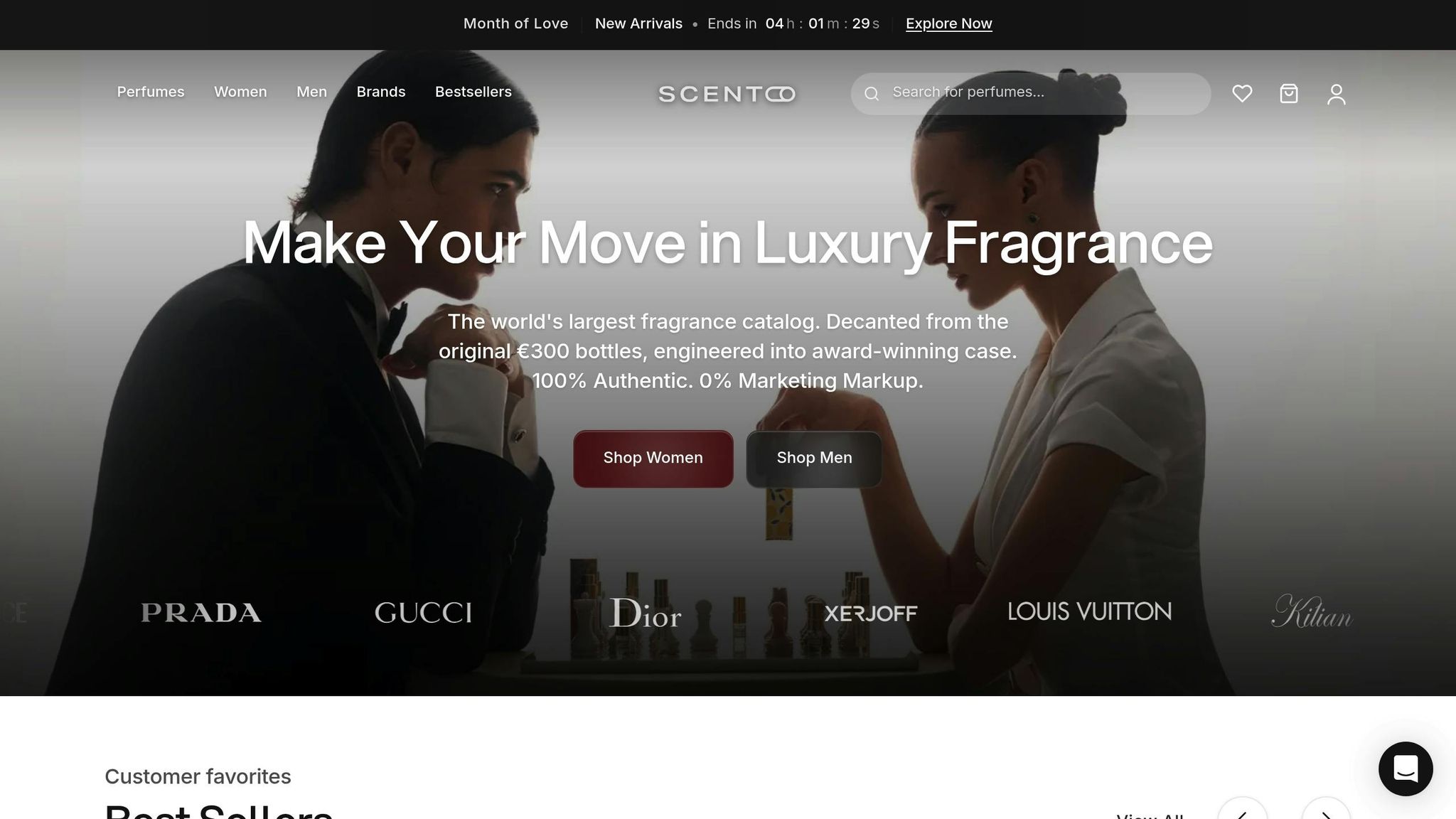
Η Mobile — Friendly Εμπειρία Αγορών του Scento
Το Scento προσφέρει μια έξυπνη λύση στις προκλήσεις της online "τυφλής αγοράς" αρωμάτων, διαθέτοντας decants σε μεγέθη όπως 0,75 ml, 2 ml και 8 ml. Αυτά τα μικρότερα δείγματα επιτρέπουν στους mobile αγοραστές να εξερευνούν premium αρώματα χωρίς να δεσμεύονται σε ένα μπουκάλι πλήρους μεγέθους. Αυτή η sampling-first προσέγγιση ευθυγραμμίζεται ιδανικά με την προτίμηση της Gen Z για discovery sets και miniatures, καθιστώντας την εμπειρία τόσο προσιτή όσο και χαμηλού ρίσκου.
Ο mobile σχεδιασμός της πλατφόρμας δίνει έμφαση στην ευελιξία, ενθαρρύνοντας τους χρήστες να δημιουργήσουν μια ποικιλόμορφη fragrance wardrobe αντί να παραμένουν πιστοί σε ένα μόνο signature scent. Αυτή η ευέλικτη προσέγγιση αντικατοπτρίζει τις συνήθειες των mobile χρηστών, οι οποίοι προτιμούν ολοένα και περισσότερο discovery feeds αντί για τα παραδοσιακά εργαλεία αναζήτησης. Ο κατάλογος του Scento περιλαμβάνει πάνω από 2.000 επαληθευμένα brands, από εμβληματικούς παριζιάνικους οίκους έως niche artisanal δημιουργούς. Όλα αυτά παρουσιάζονται μέσα από ένα κομψό και φιλικό προς τον χρήστη interface, εξασφαλίζοντας μια απρόσκοπτη εμπειρία αγορών. Αυτά τα χαρακτηριστικά ανταποκρίνονται στα εξελισσόμενα γούστα των σύγχρονων καταναλωτών, προσφέροντας τόσο ταχύτητα όσο και εξατομίκευση.
Τον Νοέμβριο του 2025, το Scento ανακοίνωσε μια στρατηγική επένδυση 27 εκατ. δολαρίων με στόχο την κλιμάκωση αυτού που αποκαλεί "Υποδομή Ηλεκτρονικού Εμπορίου Αρωμάτων Επόμενης Γενιάς". Υπό την ηγεσία του συνιδρυτή και CEO Sebastian Dobrincu, αυτή η πρωτοβουλία εστιάζει στην επέκταση των AI-driven εργαλείων εξατομίκευσης και στη βελτίωση των logistics για τη διανομή δειγμάτων σε 19 ευρωπαϊκές αγορές. Ο απώτερος στόχος; Η ενίσχυση των μετατροπών από δείγματα σε φιάλες πλήρους μεγέθους.
Εξατομικευμένες Προτάσεις και Ταχεία Παράδοση
Το Scento πηγαίνει το μοντέλο sampling ένα βήμα παραπέρα με εξαιρετικά εξατομικευμένες προτάσεις. Χρησιμοποιώντας προηγμένο AI profiling, η πλατφόρμα αναλύει παράγοντες όπως η χημεία του δέρματος, ο τρόπος ζωής και οι εποχικές τάσεις, ώστε να προτείνει αρώματα προσαρμοσμένα σε κάθε χρήστη. Αυτό το σύστημα χαρτογραφεί οικογένειες αρωμάτων και προτιμήσεις σε νότες, βελτιώνοντας συνεχώς τις προτάσεις του ώστε να ευθυγραμμίζονται με τα ατομικά γούστα.
Ο Sebastian Dobrincu περιγράφει αυτή την προσέγγιση ως τη δημιουργία ενός "έμπιστου ψηφιακού μονοπατιού" που απλοποιεί τη συχνά απαιτητική διαδικασία αγοράς αρωμάτων online:
"Η ανακάλυψη μοιάζει προσωπική, ευφυής και αβίαστη – οι πελάτες επιστρέφουν επειδή η πλατφόρμα μας προσαρμόζεται στο εξελισσόμενο γούστο τους, όχι επειδή τους έχουμε εγκλωβίσει σε άκαμπτα subscription μοντέλα."
- Sebastian Dobrincu, Συνιδρυτής και CEO του Scento
Η mobile-first υποδομή του Scento υποστηρίζει επίσης cross-border αγορές σε 19 έως 27 ευρωπαϊκές αγορές, προσφέροντας υποστήριξη πολλών γλωσσών σε 12 γλώσσες. Μέσω άμεσης συνεργασίας με περισσότερα από 2.000 brands, η πλατφόρμα εγγυάται 100% αυθεντικότητα, αντιμετωπίζοντας τις ανησυχίες για απομιμήσεις που συχνά συνδέονται με το διασυνοριακό e-commerce. Με ταχεία αποστολή εντός ΕΕ και φορητά φιαλίδια 8 ml (που προσφέρουν περίπου 120 ψεκασμούς), το Scento καλύπτει τις ανάγκες των αγοραστών εν κινήσει. Αυτή η δέσμευση στην άνεση αναδείχθηκε κατά τη διάρκεια της launch εκδήλωσής τους που έσπασε ρεκόρ, η οποία πραγματοποιήθηκε στα 41.000 πόδια μέσα σε ιδιωτικό jet.
Μελλοντικές Τάσεις στο Mobile Ηλεκτρονικό Εμπόριο Αρωμάτων
Το μέλλον του mobile shopping αρωμάτων διαμορφώνεται ως πιο εξατομικευμένο και immersive, συνδυάζοντας προηγμένο AI με cutting-edge εργαλεία για τη δημιουργία απρόσκοπτων εμπειριών που γεφυρώνουν τον ψηφιακό και τον φυσικό κόσμο.
Mobile — First Εξατομίκευση
Το mobile shopping αρωμάτων ξεπερνά πλέον τις βασικές προτάσεις και υιοθετεί τη βιο-ενσωματωμένη εξατομίκευση. Αυτή η τεχνολογία χρησιμοποιεί δεδομένα βιοαισθητήρων σε πραγματικό χρόνο για να προσαρμόζει τις προτάσεις αρωμάτων με βάση την υγεία και τη διάθεσή σας. Φανταστείτε το τηλέφωνό σας να προτείνει ένα καταπραϋντικό άρωμα λεβάντας σε μια αγχωτική ημέρα ή ένα ζωηρό citrus fragrance για να ενισχύσει τα επίπεδα ενέργειάς σας όταν νιώθετε υποτονικά.
Αυτή η τάση ευθυγραμμίζεται με τις αυξανόμενες προτιμήσεις των καταναλωτών - το 60% των αγοραστών σε ορισμένες αγορές δίνει πλέον προτεραιότητα σε αρώματα που προσφέρουν συναισθηματικά οφέλη, πέρα από το να είναι απλώς ευχάριστα. Για να υποστηριχθεί αυτή η μετατόπιση, οι ψηφιακοί συνθετητές αρωμάτων μικροποιούνται ώστε να ενσωματωθούν σε smartphones και wearables. Οι mobile εφαρμογές βρίσκονται στο επίκεντρο αυτής της εξέλιξης, ξεπερνώντας τα mobile websites με ποσοστά μετατροπής έως και επτά φορές καλύτερα και αυξάνοντας τις μέσες αξίες παραγγελίας κατά 10–50%.
Η αγορά luxury αρωμάτων ευημερεί επίσης, επεκτεινόμενη με σύνθετο ετήσιο ρυθμό ανάπτυξης (CAGR) 14,52%. Αναδυόμενες τεχνολογίες όπως τα haptic scent systems, που συνδυάζουν παροχή αρώματος με απτική ανάδραση, αναμένεται να αναβαθμίσουν τις mobile και VR πλατφόρμες σε πλήρως immersive αισθητηριακές εμπειρίες. Με αυτές τις εξελίξεις, η digital αγορά αρωμάτων αναμένεται να φτάσει περίπου τα 575 εκατ. δολάρια έως το 2025.
Αυτή η εξέλιξη στην εξατομίκευση σηματοδοτεί μια ευρύτερη τάση: την ενσωμάτωση της ψηφιακής καινοτομίας με τις φυσικές εμπειρίες retail.
Omnichannel Ενοποίηση και Social Sampling
Το μέλλον του mobile retail αρωμάτων δεν αφορά μόνο την online ευκολία - αφορά τη σύνδεση της ψηφιακής ανακάλυψης με εμπειρίες στον πραγματικό κόσμο. Για παράδειγμα, το 2025, ο βρετανικός retailer Boots λάνσαρε μια boutique αφιερωμένη αποκλειστικά στα αρώματα στο Λονδίνο, συνδυάζοντας digital insights με εξερεύνηση αρωμάτων εντός καταστήματος. Αυτή η προσέγγιση βρίσκει απήχηση στους νεότερους αγοραστές, οι οποίοι συχνά ανακαλύπτουν αρώματα μέσω social media αλλά εξακολουθούν να εκτιμούν την απτική εμπειρία της δοκιμής αρωμάτων από κοντά.
Τα travel-sized και mini αρώματα έχουν γνωρίσει αλματώδη άνοδο σε δημοτικότητα, με τις πωλήσεις να αυξάνονται πάνω από 45% το Q1 του 2025. Αυτές οι μικρότερες μορφές προσφέρουν έναν χαμηλού ρίσκου τρόπο στους καταναλωτές να εξερευνούν νέα αρώματα καθώς κινούνται μεταξύ online και in-store εμπειριών. Οι mobile εφαρμογές παίζουν κομβικό ρόλο σε αυτή την omnichannel στρατηγική, προσφέροντας λειτουργίες όπως αυτοματοποιημένες ειδοποιήσεις για επαναδραστηριοποίηση χρηστών και ενίσχυση πωλήσεων. Η αποτελεσματικότητά τους στην αύξηση των εσόδων υπογραμμίζει τη σημασία τους στο εξελισσόμενο τοπίο του retail.
Τα social media θα παραμείνουν ένα ισχυρό εργαλείο ανακάλυψης, ειδικά για τη Gen Z, με το 64% αυτής της ομάδας να ξεκινά το shopping journey της απευθείας μέσα από mobile εφαρμογές. Η πρόκληση για τα brands θα είναι να εξασφαλίσουν ομαλές μεταβάσεις από τις social πλατφόρμες σε mobile εμπειρίες έτοιμες για αγορά, συλλαμβάνοντας πωλήσεις που διαφορετικά θα χάνονταν στη διαδικασία. Δημιουργώντας frictionless διαδρομές από την ανακάλυψη έως το checkout, τα brands μπορούν να παραμείνουν μπροστά σε αυτό το ανταγωνιστικό πεδίο.
Συμπέρασμα
Η mobile τεχνολογία έχει μεταμορφώσει πλήρως το shopping αρωμάτων, μετατοπίζοντάς το από μια εμπειρία φυσικού retail σε ένα digital-first ταξίδι. Σήμερα, οι mobile εφαρμογές ηγούνται της ανάπτυξης, ξεπερνώντας το mobile web σε τομείς όπως η αλληλεπίδραση χρηστών και τα έσοδα. Για παράδειγμα, το Q1 του 2025, ένα wellness brand ανέφερε ότι μόλις το 5% των χρηστών του - εκείνοι που χρησιμοποιούσαν τη mobile εφαρμογή του - δημιούργησαν ένα εντυπωσιακό 64% των συνολικών mobile εσόδων του. Αυτή η μετατόπιση αναδεικνύει το πώς η τεχνολογία αναδιαμορφώνει τον τρόπο με τον οποίο οι άνθρωποι ανακαλύπτουν και αγοράζουν αρώματα.
Οι εξελίξεις στη mobile καινοτομία έχουν επίσης αντιμετωπίσει τις προκλήσεις της online αγοράς αρωμάτων. Τα AI-powered εργαλεία προσφέρουν πλέον εξατομικευμένες προτάσεις, βοηθώντας τους χρήστες να ξεπεράσουν τους αισθητηριακούς περιορισμούς της "τυφλής αγοράς". Επιπλέον, τα sampling-first μοντέλα αντιμετωπίζουν τη διστακτικότητα απέναντι στη δέσμευση σε φιάλες πλήρους μεγέθους, προσφέροντας έναν χωρίς ρίσκο τρόπο εξερεύνησης νέων αρωμάτων.
Στην αιχμή αυτής της εξέλιξης βρίσκεται το Scento, μια πλατφόρμα χτισμένη γύρω από μια mobile-first προσέγγιση. Προσφέροντας αυθεντικοποιημένα φιαλίδια 8ml και επιλογές μεγέθους discovery από περισσότερα από 2.000 brands, το Scento δίνει τη δυνατότητα στους χρήστες να δημιουργούν εξατομικευμένες scent wardrobes. Αυτή η ευελιξία επιτρέπει στα άτομα να προσαρμόζουν τα αρώματά τους στη διάθεσή τους, στην εποχή ή στον τρόπο ζωής τους, αντί να περιορίζονται σε ένα μόνο signature scent.
Καθώς η εξατομίκευση μέσω AI και οι απρόσκοπτες omnichannel εμπειρίες καθιερώνονται ως ο κανόνας, το μέλλον της βιομηχανίας αρωμάτων θα ανήκει στις πλατφόρμες που δίνουν προτεραιότητα στην ανακάλυψη. Η mobile τεχνολογία δεν άλλαξε απλώς το πού αγοράζουν οι άνθρωποι άρωμα - επαναστατικοποίησε το πώς το βιώνουν. Το Scento αποτελεί χαρακτηριστικό παράδειγμα αυτής της μετατόπισης, μετατρέποντας το shopping αρωμάτων σε ένα ελκυστικό και εξατομικευμένο ταξίδι.
Συχνές Ερωτήσεις
Πώς οι εφαρμογές αρωμάτων μειώνουν την τυφλή αγορά;
Οι εφαρμογές αρωμάτων αλλάζουν τον τρόπο με τον οποίο οι άνθρωποι αγοράζουν αρώματα, μειώνοντας την τυφλή αγορά. Χρησιμοποιούν εργαλεία όπως αναγνώριση νοτών και εξατομικευμένα scent profiles για να βοηθήσουν τους χρήστες να κατανοήσουν ένα άρωμα πριν δεσμευτούν σε αυτό. Με αλγορίθμους προτάσεων, αυτές οι εφαρμογές προτείνουν αρώματα που ευθυγραμμίζονται με τις ατομικές προτιμήσεις.
Επιπρόσθετα χαρακτηριστικά όπως το virtual sampling, οι κριτικές χρηστών και το feedback της κοινότητας προσφέρουν επιπλέον επίπεδα πληροφόρησης, εξασφαλίζοντας πιο σίγουρες αγορές. Χάρη στις εξελίξεις στην AI και τη μηχανική μάθηση, αυτές οι εφαρμογές προσφέρουν πλέον ακόμη πιο εξατομικευμένες προτάσεις, βοηθώντας τους αγοραστές να ανακαλύπτουν αρώματα που πραγματικά θα απολαύσουν, ενώ παράλληλα μειώνουν τη σπατάλη.
Γιατί οι αγοραστές μέσω εφαρμογών ξοδεύουν περισσότερο και μετατρέπονται ευκολότερα από τους αγοραστές μέσω mobile web;
Οι εφαρμογές ξεπερνούν σημαντικά το mobile web όσον αφορά την αγοραστική απόδοση, δημιουργώντας 3,5 έως 7 φορές περισσότερα έσοδα ανά χρήστη. Διακρίνονται επίσης στην επαναδραστηριοποίηση πελατών, ανακτώντας έως και 22% των εγκαταλελειμμένων καλαθιών μέσω push notifications. Τα ποσοστά μετατροπής στις εφαρμογές μπορούν να είναι έως και 7 φορές υψηλότερα, ενώ οι αγοραστές τείνουν να ξοδεύουν περισσότερο, με μέσες αξίες παραγγελίας 10–50% υψηλότερες. Αυτοί οι παράγοντες αναδεικνύουν γιατί οι εφαρμογές αποτελούν πραγματικό game-changer για τη βελτίωση των αποτελεσμάτων στο e-commerce.
Πώς μπορώ να μετατρέψω τις ανακαλύψεις αρωμάτων από τα social media σε καλύτερες επιλογές πριν από την αγορά;
Για να πάρετε πιο έξυπνες αποφάσεις για αρώματα που επηρεάζονται από τα social media, εξετάστε τη χρήση AI-powered εργαλείων που ευθυγραμμίζουν τις νότες αρώματος με τις προσωπικές σας προτιμήσεις, μειώνοντας τις εικασίες. Μια ακόμη εξαιρετική προσέγγιση είναι να εξερευνήσετε επιμελημένες επιλογές sampling, όπως discovery sets ή decants, που σας επιτρέπουν να δοκιμάσετε αρκετά αρώματα με χαμηλότερο κόστος πριν επενδύσετε σε ένα μπουκάλι πλήρους μεγέθους. Αυτές οι μέθοδοι βοηθούν ώστε τα αρώματα που ανακαλύπτετε online να σας εκφράζουν πραγματικά - χωρίς να επιβαρύνετε τον προϋπολογισμό σας.