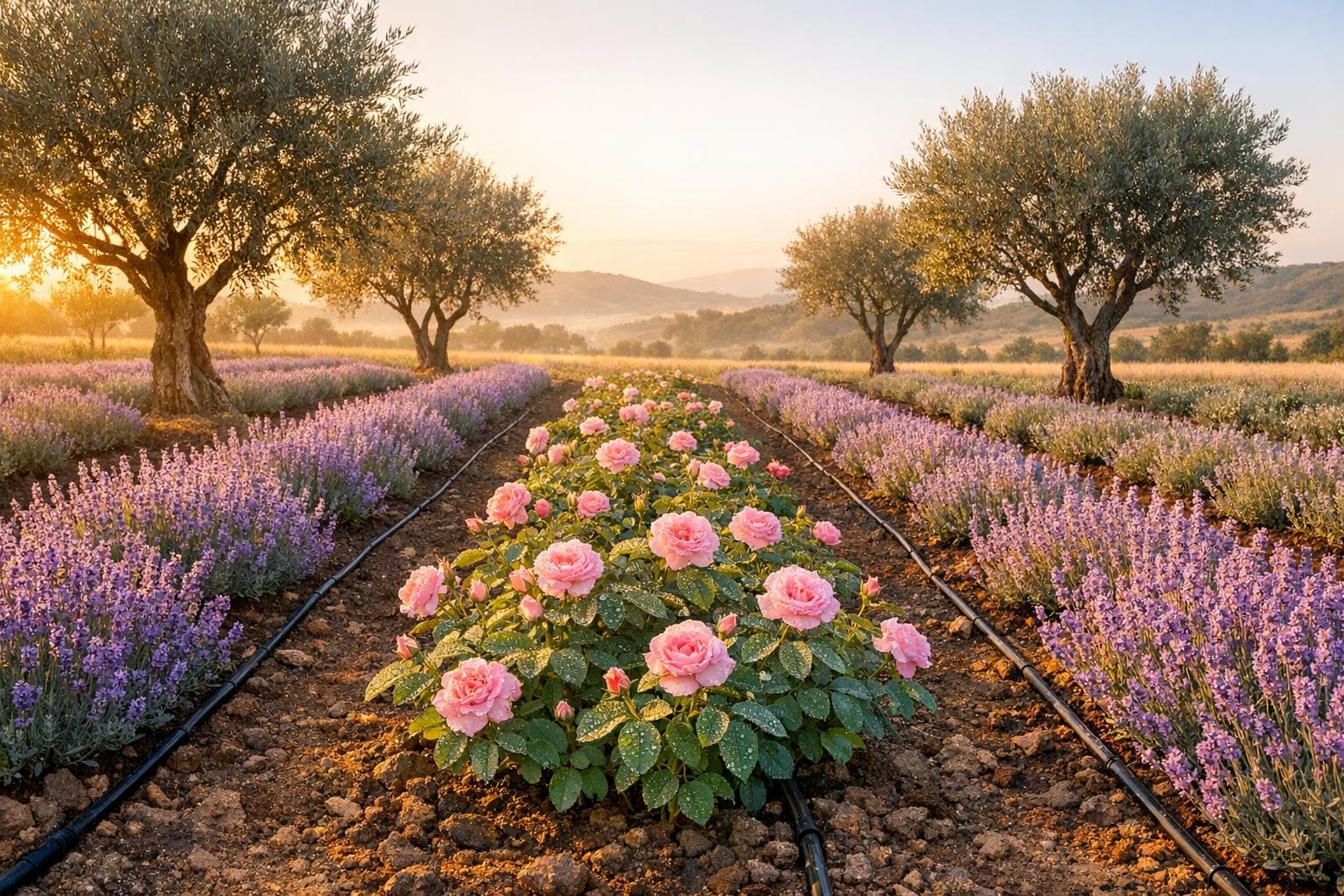
Η βιομηχανία της αρωματοποιίας εξαρτάται από συγκεκριμένα φυτά, όπως τα τριαντάφυλλα, το γιασεμί και το βετιβέρ, όμως η καλλιέργειά τους συχνά επιβαρύνει τα οικοσυστήματα. Τα ζητήματα περιλαμβάνουν την αποψίλωση των δασών, την υποβάθμιση του εδάφους και την υπερβολική κατανάλωση νερού. Οι παραδοσιακές μέθοδοι βασίζονται επίσης σε συνθετικά χημικά, τα οποία ρυπαίνουν και υποβαθμίζουν την υγεία του εδάφους. Η εκχύλιση των φυσικών αρωματικών ενώσεων απαιτεί έντονη χρήση πόρων και προσφέρει χαμηλές αποδόσεις (π.χ. 0,01% για το απόσταγμα άνθους πορτοκαλιάς), οδηγώντας σε σημαντική παραγωγή αποβλήτων.
Για την αντιμετώπιση αυτών των προβλημάτων, οι καλλιεργητές υιοθετούν αναγεννητικές μεθόδους που εστιάζουν στη βελτίωση του εδάφους, την εξοικονόμηση νερού και τη μείωση της χρήσης χημικών. Η ζήτηση των καταναλωτών για ηθικά, οικολογικά ευαισθητοποιημένα προϊόντα, σε συνδυασμό με αυστηρότερους κανονισμούς, ωθεί τους οίκους να αγκαλιάσουν αυτές τις πρακτικές. Εργαλεία όπως το Field Cultivation Index (FCI) συμβάλλουν στην αξιολόγηση των γεωργικών συστημάτων με στόχο καλύτερα αποτελέσματα.
Οι βασικές λύσεις περιλαμβάνουν:
- Βιολογική καλλιέργεια για την αντικατάσταση των συνθετικών χημικών.
- Αγροδασοπονία για την ενίσχυση της βιοποικιλότητας και της ποιότητας του εδάφους.
- Αποδοτική χρήση του νερού μέσω άρδευσης ακριβείας και υδροπονίας.
Αυτές οι μέθοδοι όχι μόνο προστατεύουν τους φυσικούς πόρους, αλλά προσφέρουν επίσης κοινωνικά οφέλη, όπως δίκαιες αμοιβές και κοινοτική ανάπτυξη. Πρωτοβουλίες στη Βουλγαρία, την Αϊτή και την Ινδία αποδεικνύουν πώς οι βιώσιμες προσεγγίσεις μπορούν να εξισορροπήσουν την παραγωγή με την περιβαλλοντική φροντίδα και τη στήριξη των τοπικών κοινοτήτων.
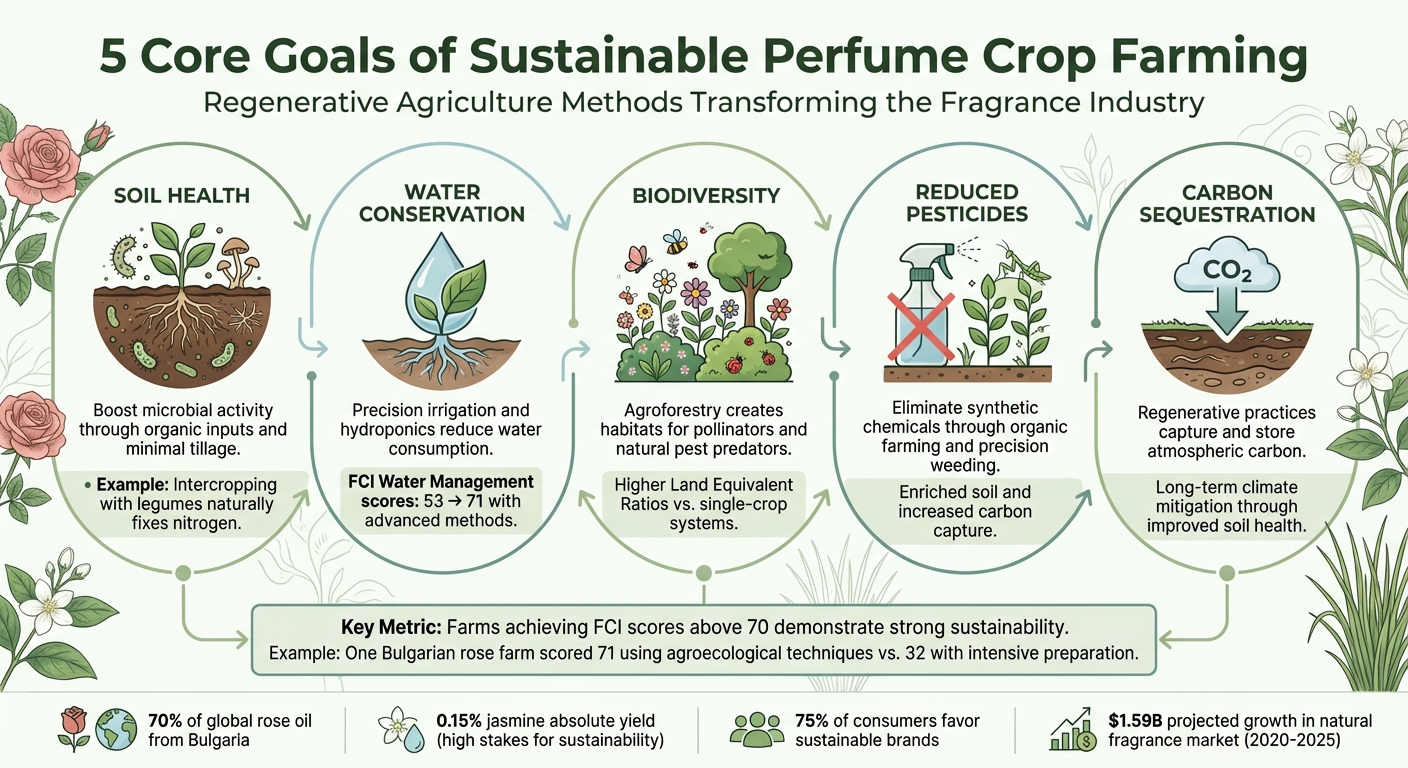
5 Βασικοί Στόχοι της Βιώσιμης Καλλιέργειας Αρωματικών Φυτών
Βιώσιμες Μέθοδοι Καλλιέργειας για Αρωματικά Φυτά
Οι σύγχρονες βιώσιμες αγροτικές πρακτικές ενισχύονται για να αντιμετωπίσουν τις περιβαλλοντικές προκλήσεις, διασφαλίζοντας παράλληλα τα πολύτιμα συστατικά της αρωματοποιίας. Αυτές οι μέθοδοι επικεντρώνονται σε πέντε βασικούς στόχους: βελτίωση της υγείας του εδάφους, εξοικονόμηση νερού, ενίσχυση της βιοποικιλότητας, δραστική μείωση της χρήσης φυτοφαρμάκων και περιορισμό των εκπομπών άνθρακα. Ακολουθεί μια πιο αναλυτική ματιά στο πώς αυτές οι πρακτικές κάνουν τη διαφορά.
«Η αναγεννητική γεωργία αναδεικνύεται ως μια καινοτόμος προσέγγιση για την αποκατάσταση των αγροοικοσυστημάτων... καθοδηγούμενη από παράγοντες της βιομηχανίας που τη θεωρούν μια πολλά υποσχόμενη και πραγματιστική προσέγγιση.» — Delphine Bouvier et al., L’Oréal Research and Innovation
Βιολογική Καλλιέργεια και Μέθοδοι Χωρίς Φυτοφάρμακα
Η στροφή προς τις μεθόδους βιολογικής καλλιέργειας εξαλείφει την εξάρτηση από συνθετικά χημικά, αναμορφώνοντας ουσιαστικά την υγεία του εδάφους. Χρησιμοποιώντας οργανικά λιπάσματα και βοτάνισμα ακριβείας, οι καλλιεργητές ενισχύουν τη μικροβιακή δραστηριότητα, η οποία εμπλουτίζει το έδαφος και συμβάλλει στη μεγαλύτερη δέσμευση άνθρακα. Για παράδειγμα, η συγκαλλιέργεια με ψυχανθή —όπως ο άνηθος και η σόγια— δεσμεύει φυσικά το άζωτο στο έδαφος, μειώνοντας την ανάγκη για συνθετικά λιπάσματα. Αυτή η προσέγγιση όχι μόνο τρέφει τη γη, αλλά υποστηρίζει και τη μακροπρόθεσμη βιωσιμότητα.
Η Αγροδασοπονία στην Καλλιέργεια Αρωματικών Φυτών
Η αγροδασοπονία πηγαίνει ένα βήμα παραπέρα από τη βιολογική καλλιέργεια, συνδυάζοντας διαφορετικά είδη φυτών στον ίδιο χώρο, δημιουργώντας έτσι ένα πιο ανθεκτικό οικοσύστημα. Αυτή η προσέγγιση συχνά προβάλλεται ως κορυφαία πρακτική στην αναγεννητική γεωργία, καθώς προάγει τη βιοποικιλότητα, βελτιώνει τη διατήρηση του εδάφους και των υδάτων και υποστηρίζει τη δέσμευση του άνθρακα.
«Η συγκαλλιέργεια φαρμακευτικών και αρωματικών φυτών με άλλες καλλιέργειες έχει αποδείξει σημαντικές δυνατότητες για τη βελτίωση των βιώσιμων αγροτικών συστημάτων.» — MDPI Agronomy
Τα αγροδασικά συστήματα επιτυγχάνουν επίσης υψηλότερο Land Equivalent Ratios (Συντελεστή Ισοδύναμης Έκτασης Γης), πράγμα που σημαίνει ότι αξιοποιούν καλύτερα τη διαθέσιμη γη σε σύγκριση με τα παραδοσιακά συστήματα μονοκαλλιέργειας. Για παράδειγμα, η ενσωμάτωση αρωματικών φυτών σε οπωρώνες ή αμπελώνες όχι μόνο ενισχύει την παραγωγικότητα, αλλά δημιουργεί επίσης ιδανικούς βιοτόπους για επικονιαστές και φυσικούς θηρευτές επιβλαβών οργανισμών, καθιστώντας το τοπίο πιο οικολογικά ισορροπημένο.
Εξοικονόμηση Νερού στην Αγροτική Παραγωγή Αρωματοποιίας
Το νερό αποτελεί ζωτικό πόρο για την καλλιέργεια αρωματικών φυτών όπως τα τριαντάφυλλα και το γιασεμί, τα οποία συχνά έχουν υψηλές απαιτήσεις σε άρδευση. Η αναγεννητική γεωργία θέτει την αποδοτική χρήση του νερού ως βασικό πυλώνα, αξιοποιώντας εργαλεία όπως το Field Cultivation Index για την αξιολόγηση και τη βελτίωση των πρακτικών διαχείρισης των υδάτων.
Η υδροπονία προσφέρει μια εξαιρετική λύση μειώνοντας δραστικά την κατανάλωση νερού διατηρώντας ταυτόχρονα τις αποδόσεις των καλλιεργειών, γεγονός που την καθιστά ιδιαίτερα αποτελεσματική για φυτά με υψηλές υδατικές ανάγκες. Μια Αξιολόγηση Κύκλου Ζωής (Life Cycle Assessment) του 2019 για την παραγωγή ροδέλαιου ανέδειξε τη χρήση νερού ως έναν από τους πιο κρίσιμους περιβαλλοντικούς παράγοντες στη βιομηχανία αρωμάτων.
Για την παραδοσιακή καλλιέργεια στο έδαφος, η βελτίωση της υγείας του χώματος ενισχύει την ικανότητα της γης να συγκρατεί την υγρασία. Τεχνικές όπως η άρδευση ακριβείας και η συγκαλλιέργεια με φυτά συμβατών υδατικών αναγκών βελτιστοποιούν περαιτέρω τη χρήση του νερού. Σε μια μελέτη του 2025 για τα λευκά τριαντάφυλλα, ένας χώρος καλλιέργειας πέτυχε δείκτη «Διαχείρισης Νερού» 53, ενώ ένας άλλος —χρησιμοποιώντας προηγμένες αναγεννητικές μεθόδους και αγροοικολογικές υποδομές— έφτασε σε βαθμολογία Field Cultivation Index 71. Αυτές οι εξελίξεις υπογραμμίζουν τη δυνατότητα εξισορρόπησης της παραγωγικότητας με την περιβαλλοντική υπευθυνότητα.
Κοινωνικά Οφέλη της Βιώσιμης Καλλιέργειας Αρωματικών Φυτών
Η βιώσιμη γεωργία δεν αφορά μόνο πιο πράσινα λιβάδια και καθαρότερο αέρα — προσφέρει επίσης ουσιαστικά κοινωνικά πλεονεκτήματα. Διασφαλίζοντας σταθερό εισόδημα και ενδυναμώνοντας τις κοινότητες, αποτελεί τη ραχοκοκαλιά της ηθικής προμήθειας αρωματικών πρώτων υλών. Καθώς οι καλλιεργητικές πρακτικές μετατοπίζονται προς ένα πιο βιώσιμο μοντέλο, οι θετικές τους επιδράσεις στην κοινωνία αναδεικνύουν περαιτέρω τη σημασία αυτής της αλλαγής.
Δίκαιο Εμπόριο και Ηθική Προμήθεια
Η πιστοποίηση δίκαιου εμπορίου (fair trade) διαδραματίζει ζωτικό ρόλο στην προστασία των μέσων διαβίωσης των καλλιεργητών. Εξασφαλίζει δίκαιες αμοιβές και ασφαλείς συνθήκες εργασίας, προστατεύοντας το ένα δισεκατομμύριο εργαζομένους στον αγροτικό τομέα παγκοσμίως, συμπεριλαμβανομένου του 75% που εξαρτάται αποκλειστικά από τη γεωργία για να επιβιώσει.
«Είναι ευθύνη μας να προμηθευόμαστε προσεκτικά συστατικά από παραγωγούς που διασφαλίζουν τη βιωσιμότητα, όχι μόνο όσον αφορά τα περιβαλλοντικά ζητήματα, αλλά και τις κοινωνικές πτυχές της κοινότητας.» — Erwin Creed, Αρωματοποιός, House of Creed
Η ηθική προμήθεια εισάγει διαφάνεια στις εφοδιαστικές αλυσίδες, προσφέροντας στους μικροκαλλιεργητές μια δίκαιη ευκαιρία σε μια παγκόσμια αγορά που συχνά στρεβλώνεται από διεθνείς επιδοτήσεις. Μέσω των πλαισίων δίκαιου εμπορίου, οι παραγωγοί απολαμβάνουν εγγυημένες κατώτατες τιμές και προστασία, θωρακίζοντάς τους απέναντι στις ευμετάβλητες συνθήκες της αγοράς. Για καλλιέργειες όπως το γιασεμί, το τριαντάφυλλο και το σανδαλόξυλο —όπου η συγκομιδή απαιτεί σχολαστική, χειρωνακτική εργασία— αυτές οι προστασίες είναι απαραίτητες για τη διασφάλιση της ευημερίας της κοινότητας και τη διατήρηση της καλλιεργήσιμης γης για τις επόμενες γενιές.
Στήριξη των Τοπικών Κοινοτήτων
Πέρα από το δίκαιο εμπόριο, ευρύτερες πρωτοβουλίες με επίκεντρο την κοινότητα μεταμορφώνουν τις αγροτικές περιοχές. Προγράμματα όπως τα Integrated Supply Chain Projects (PIFs) επισημοποιούν τις σχέσεις μεταξύ παραγωγών και αγοραστών, μειώνοντας το κόστος και ελαχιστοποιώντας τις πρακτικές εκμετάλλευσης.
Χαρακτηριστικό παράδειγμα αποτελεί το έργο «Flora Aromatica Santa Luce» στην Τοσκάνη. Χρηματοδοτούμενο εν μέρει από την Περιφερειακή Διοίκηση της Τοσκάνης, το έργο επένδυσε 1,2 εκατομμύρια δολάρια (συμπεριλαμβανομένων 752.000 δολαρίων σε δημόσια χρηματοδότηση) για τη μετατροπή μικρών εκμεταλλεύσεων από συμβατικές καλλιέργειες δημητριακών σε βιολογική λεβάντα. Η Flora, η εταιρεία μεταποίησης, συνεργάστηκε με 11 παραγωγούς και δεσμεύτηκε να αγοράζει όλες τις ταξιανθίες λεβάντας για παραγωγή αιθέριου ελαίου για περίοδο οκτώ ετών σε τιμές αγοράς. Αυτή η συμφωνία προσέφερε οικονομική σταθερότητα στις συμμετέχουσες οικογένειες, δημιουργώντας παράλληλα την «Κοιλάδα των Αρωμάτων», έναν προορισμό που συνδυάζει τη γεωργία με τον τουρισμό. Το έργο δεν ωφέλησε μόνο τους καλλιεργητές — τόνωσε την τοπική οικονομία συνδέοντας 253 επιχειρήσεις, ενώσεις και δημόσιους φορείς.
Άλλες πρωτοβουλίες εστιάζουν στην ενδυνάμωση περιθωριοποιημένων ομάδων. Στην Γκάνα και την Μπουρκίνα Φάσο, ένα πρόγραμμα βιώσιμου βουτύρου καριτέ στηρίζει 20.000 γυναίκες σε 180 συνεταιρισμούς, ενώ στο Μαρόκο, ένα έργο για το έλαιο αργκάν δίνει τη δυνατότητα σε 600 γυναίκες να αξιοποιούν πόρους του δίκαιου εμπορίου για έργα ανάπτυξης καθοδηγούμενα από την κοινότητα. Αυτά τα προγράμματα συχνά υπερβαίνουν την εποχιακή καλλιέργεια, ενθαρρύνοντας τη διαφοροποίηση του εισοδήματος καθ’ όλη τη διάρκεια του έτους. Για παράδειγμα, οι καλλιεργητές στην Ινδία παροτρύνονται να καλλιεργούν ποικιλία φυτών παράλληλα με τα αρωματικά είδη, μειώνοντας την εξάρτησή τους από μία μόνο συγκομιδή.
«Τα Ολοκληρωμένα Έργα Εφοδιαστικής Αλυσίδας (PIFs) μπορούν όχι μόνο να τονώσουν την καινοτομία στην εφοδιαστική αλυσίδα, αλλά ταυτόχρονα να ενεργοποιήσουν μια διαδικασία πολυλειτουργικής ανάπτυξης μιας περιθωριοποιημένης αγροτικής περιοχής προς μια νέα ταυτότητα.» — Springer Nature Link
Αυτές οι πρωτοβουλίες, οι οποίες συνδυάζουν την οικονομική ενδυνάμωση με την περιβαλλοντική διαχείριση, υπογραμμίζουν την ευρύτερη αξία της βιώσιμης γεωργίας για τα αρωματικά φυτά. Ανταποκρινόμενες τόσο στις κοινωνικές όσο και στις περιβαλλοντικές ανάγκες, δημιουργούν ένα πιο ισορροπημένο και ανθεκτικό μέλλον για τις αγροτικές κοινότητες.
Ο προσωπικός σας ειδικός αρωμάτων σας περιμένει
Κάντε το σύντομο κουίζ αρώματος και ανακαλύψτε αυθεντικά αρώματα designer και niche, επιλεγμένα στα μέτρα σας – εξερευνήστε τα σε decant και δείγματα των 2, 5, 8 και 30 ml, ώστε να δοκιμάσετε το καθένα πριν επιλέξετε ολόκληρο μπουκάλι.
Βρείτε το άρωμά σαςΜελέτες Περίπτωσης: Προγράμματα Βιώσιμης Καλλιέργειας
Αυτές οι μελέτες περίπτωσης αναδεικνύουν πώς οι βιώσιμες αγροτικές πρακτικές μεταμορφώνουν την καλλιέργεια αρωματικών φυτών, αποδεικνύοντας ότι η περιβαλλοντική μέριμνα και η οικονομική επιτυχία μπορούν να συνυπάρξουν αρμονικά. Βασίζονται στις προαναφερθείσες αναγεννητικές μεθόδους, προσφέροντας πρακτικά παραδείγματα βιωσιμότητας στην πράξη.
Βιώσιμη Καλλιέργεια Τριαντάφυλλου στη Βουλγαρία
Η Βουλγαρία παράγει περίπου το 70% της παγκόσμιας προσφοράς ροδέλαιου. Τον Φεβρουάριο του 2025, η BG Oils, μια εταιρεία που διαχειρίζεται 95 στρέμματα με ροδώνες κοντά στο Central Balkan National Park, έλαβε πιστοποίηση UEBT μετά την υιοθέτηση μιας σειράς πρωτοβουλιών εστιασμένων στη βιωσιμότητα. Υπό την ηγεσία της Plamena Georgieva, η εταιρεία εισήγαγε συστήματα άρδευσης με ηλιακή ενέργεια, εφάρμοσε Σχέδιο Δράσης για τη Βιοποικιλότητα και μετέτρεψε τα υπολείμματα ροδοπέταλων σε κομπόστ πλούσιο σε θρεπτικά συστατικά. Αυτές οι προσπάθειες, επαληθευμένες από το Preferred by Nature, εξασφάλισαν επίσης δίκαιες αμοιβές για τους εποχικούς εργαζομένους και προώθησαν τη μακροπρόθεσμη υγεία του εδάφους.
«Ο Κώδικας Δεοντολογίας της UEBT ευθυγραμμίζεται πλήρως με τον δικό μας τρόπο επιχειρηματικής δράσης. Πιστεύουμε ότι η βιομηχανία ροδέλαιου στρέφεται όλο και περισσότερο προς βιώσιμες πρακτικές, ιχνηλασιμότητα και υπεύθυνη προμήθεια.» — Plamena Georgieva, Εκπρόσωπος, BG Oils
Μια μελέτη που δημοσιεύτηκε στο περιοδικό Sustainability τον Σεπτέμβριο του 2025 αξιολόγησε τέσσερις τοποθεσίες βιολογικής παραγωγής τριαντάφυλλου χρησιμοποιώντας το Field Cultivation Index (FCI). Ένας αγρός που εφάρμοσε αγροοικολογικές τεχνικές και ελάχιστη κατεργασία του εδάφους πέτυχε βαθμολογία 71 στα 100, ενώ ένας άλλος που βασίστηκε σε εντατική προετοιμασία του εδάφους σημείωσε μόλις 32. Επιπλέον, οι Βούλγαροι παραγωγοί ροδέλαιου συνεργάζονται με βιολογικούς μελισσοκόμους για την τοποθέτηση κυψελών στους ροδώνες, ενισχύοντας την επικονίαση και τις αποδόσεις, υποστηρίζοντας παράλληλα τα τοπικά οικοσυστήματα. Αυτή η προσέγγιση αποτελεί πρότυπο για βιώσιμες αγροτικές πρακτικές και σε άλλες περιοχές.
Καλλιέργεια Βετιβέρ στην Αϊτή
Το βετιβέρ, ένα πολυετές αγρωστώδες φυτό που εκτιμάται ιδιαίτερα για το αιθέριο έλαιό του, ευδοκιμεί στο τραχύ ανάγλυφο της Αϊτής χάρη στο βαθύ ριζικό του σύστημα, το οποίο συμβάλλει στην πρόληψη της διάβρωσης του εδάφους και προάγει τη διατήρησή του. Η καλλιέργειά του βασίζεται στη χειρωνακτική εργασία και στις ελάχιστες χημικές εισροές, δημιουργώντας σταθερή απασχόληση στην ύπαιθρο και προστατεύοντας περιοχές επιρρεπείς σε διάβρωση. Το Field Cultivation Index χρησιμοποιείται για να διακρίνει τις εκμεταλλεύσεις που αγκαλιάζουν ουσιαστικά τις αναγεννητικές πρακτικές από εκείνες που πληρούν μόνο τα βασικά πρότυπα βιολογικής καλλιέργειας. Αυτό διασφαλίζει ότι η προμήθεια βετιβέρ συμβάλλει τόσο στην περιβαλλοντική αποκατάσταση όσο και στην οικονομική ανάπτυξη της Αϊτής.
Καλλιέργεια Γιασεμιού στην Ινδία
Η Ινδία, μαζί με την Αίγυπτο, είναι ένας από τους κορυφαίους παραγωγούς γιασεμιού στον κόσμο, προσφέροντας ένα άνθος απαραίτητο σε αναρίθμητες αρωματικές δημιουργίες. Η διαδικασία συγκομιδής του γιασεμιού, η οποία διαρκεί επτά μήνες, παρέχει σταθερό εισόδημα σε χιλιάδες εργαζομένους.
Η βιώσιμη καλλιέργεια γιασεμιού στην Ινδία συμμορφώνεται με τους επικαιροποιημένους κανονισμούς βιοποικιλότητας και τη Χάρτα Βιωσιμότητας IFRA-IOFI. Το Field Cultivation Index εισάγεται σταδιακά για την αξιολόγηση των καλλιεργειών γιασεμιού, βοηθώντας τους αγοραστές να εντοπίζουν προμηθευτές που επιτυγχάνουν αναγεννητικά αποτελέσματα, όπως υγιέστερα εδάφη και πλουσιότερη βιοποικιλότητα.
Δεδομένου ότι οι αποδόσεις του jasmine absolute φτάνουν μόλις το 0,15%, το διακύβευμα —τόσο οικονομικό όσο και περιβαλλοντικό— είναι εξαιρετικά υψηλό. Συνδυάζοντας ρυθμιστικές κατευθυντήριες γραμμές με εθελοντικά πρότυπα του κλάδου, ο τομέας γιασεμιού της Ινδίας θέτει ένα λαμπρό παράδειγμα ηθικής προμήθειας που εξισορροπεί την προστασία των οικοσυστημάτων με τη στήριξη του βιοπορισμού των κατοίκων.
Συμπέρασμα: Το Μέλλον της Βιώσιμης Καλλιέργειας Αρωματικών Φυτών
Κύρια Οφέλη των Βιώσιμων Πρακτικών
Οι βιώσιμες τεχνικές καλλιέργειας προσφέρουν πλήθος περιβαλλοντικών και οικονομικών πλεονεκτημάτων στην παραγωγή αρωματικών φυτών. Στην καρδιά αυτών των οφελών βρίσκονται πέντε βασικά περιβαλλοντικά αποτελέσματα: καλύτερη υγεία του εδάφους, εξοικονόμηση νερού, αυξημένη βιοποικιλότητα, μειωμένη εξάρτηση από φυτοφάρμακα και δέσμευση άνθρακα. Αυτές οι αρχές της αναγεννητικής γεωργίας όχι μόνο προστατεύουν το περιβάλλον, αλλά ενισχύουν και την παραγωγικότητα. Για παράδειγμα, η συγκαλλιέργεια αρωματικών φυτών με ψυχανθή ή δημητριακά μεγιστοποιεί τη χρήση της γης, ενισχύοντας ταυτόχρονα τη μικροβιακή δραστηριότητα του εδάφους, γεγονός που με τη σειρά του αυξάνει τις αποδόσεις σε αιθέρια έλαια. Οι εκμεταλλεύσεις που επιτυγχάνουν βαθμολογίες FCI άνω του 70 επιδεικνύουν ισχυρή βιωσιμότητα.
Δείκτες όπως ο συντελεστής E-factor, ένα μέτρο πράσινης χημείας, συμβάλλουν στην παρακολούθηση και την προώθηση της συνεχούς βελτίωσης αυτών των πρακτικών. Οικονομικά, τα πλεονεκτήματα είναι προφανή: οι εκμεταλλεύσεις που υιοθετούν προηγμένες αναγεννητικές μεθόδους υπερτερούν σταθερά εκείνων που βασίζονται σε βασικές βιολογικές τεχνικές, ακόμη και όταν και οι δύο πληρούν τα κριτήρια πιστοποίησης βιολογικής καλλιέργειας. Μαζί, αυτά τα περιβαλλοντικά και οικονομικά οφέλη θωρακίζουν την εφοδιαστική αλυσίδα της αρωματοποιίας από τα θεμέλιά της.
Πώς οι Επιλογές των Καταναλωτών Στηρίζουν τη Βιωσιμότητα
Οι καταναλωτές διαδραματίζουν καθοριστικό ρόλο στην προώθηση των βιώσιμων πρακτικών. Με το 75% των αγοραστών να προτιμά οίκους που δεσμεύονται για τη βιωσιμότητα, οι προτιμήσεις τους αναδιαμορφώνουν τη βιομηχανία των αρωμάτων. Μεταξύ 2020 και 2025, η αγορά φυσικών αρωμάτων προβλέπεται να αναπτυχθεί κατά 1,59 δισεκατομμύρια δολάρια, με ετήσιο ρυθμό ανάπτυξης 8,59%. Επιλέγοντας αρώματα με διαφανή προέλευση πρώτων υλών και ηθικές συνεργασίες, οι καταναλωτές ενθαρρύνουν τους οίκους να συνεργάζονται με μικρής κλίμακας, βιώσιμους καλλιεργητές.
«Καθώς οι προτιμήσεις των καταναλωτών συνεχίζουν να μετατοπίζονται προς προϊόντα με περιβαλλοντική συνείδηση, τα βιώσιμα αρώματα θα διαμορφώσουν το μέλλον του κλάδου.» — Bellff
Απλές κινήσεις μπορούν να έχουν σημαντικό αντίκτυπο: αναζητήστε οίκους που αποκαλύπτουν την προέλευση των βοτανικών συστατικών τους και προσφέρουν επαναγεμιζόμενες (refillable) επιλογές με ανακυκλώσιμη συσκευασία. Έως τον Απρίλιο του 2022, τα αρώματα που περιείχαν βιώσιμα συστατικά σημείωσαν ποσοστό εξάντλησης αποθεμάτων (sold-out) 12%, αποδεικνύοντας πώς οι συνειδητές αγορές μπορούν να ασκήσουν ουσιαστική πίεση στην αγορά. Οι Ευρωπαίοι καταναλωτές, ιδιαίτερα στη Γαλλία, τη Γερμανία και το Ηνωμένο Βασίλειο, αναμένεται να οδηγήσουν το 32% της ανάπτυξης στην αγορά φυσικών αρωμάτων. Μέσα από ενημερωμένες επιλογές, οι λάτρεις του αρώματος συμβάλλουν στη διαμόρφωση ενός πιο βιώσιμου μέλλοντος για την υψηλή αρωματοποιία.
Συχνές Ερωτήσεις
Ποια είναι τα οφέλη από τη χρήση της αγροδασοπονίας για την καλλιέργεια αρωματικών φυτών;
Η αγροδασοπονία προσφέρει μια ευφυή προσέγγιση στην καλλιέργεια αρωματικών φυτών, προάγοντας παράλληλα έναν πιο υγιή πλανήτη. Ενσωματώνοντας δέντρα και καλλιέργειες στο ίδιο αγροτικό σύστημα, συμβάλλει στην προστασία της βιοποικιλότητας, στον εμπλουτισμό της ποιότητας του εδάφους και στη μείωση της χρήσης χημικών, όπως τα φυτοφάρμακα και τα λιπάσματα. Αυτή η μέθοδος ενισχύει επίσης την εξοικονόμηση νερού και δεσμεύει τον άνθρακα, καθιστώντας την μια πιο οικολογική επιλογή για την παραγωγή αρωματικών συστατικών.
Πέρα από αυτά τα οφέλη, η αγροδασοπονία μπορεί να δώσει νέα πνοή σε υποβαθμισμένες εκτάσεις, να οικοδομήσει ισχυρότερα οικοσυστήματα και να συνεχίσει να προσφέρει εξαιρετικές αποδόσεις συγκομιδής. Αυτές οι μέθοδοι ευθυγραμμίζονται απόλυτα με τους στόχους της βιώσιμης γεωργίας, επιτυγχάνοντας ισορροπία ανάμεσα στη φροντίδα του περιβάλλοντος και τις οικονομικές ανάγκες της βιομηχανίας αρωμάτων.
Τι είναι το Field Cultivation Index και πώς υποστηρίζει τη βιώσιμη καλλιέργεια αρωματικών φυτών;
Το Field Cultivation Index (FCI) είναι ένα πρακτικό εργαλείο σχεδιασμένο για την αξιολόγηση και την προώθηση βιώσιμων αγροτικών πρακτικών. Εστιάζει σε κρίσιμους παράγοντες όπως η υγεία του εδάφους, η εξοικονόμηση νερού, η βιοποικιλότητα, η μειωμένη χρήση φυτοφαρμάκων και ο περιορισμός των εκπομπών άνθρακα. Αναδεικνύοντας τόσο τα δυνατά σημεία όσο και τους τομείς που χρήζουν βελτίωσης, το FCI βοηθά τους παραγωγούς και τους επαγγελματίες του κλάδου να στραφούν προς πιο βιώσιμες προσεγγίσεις.
Όσον αφορά τις αρωματικές καλλιέργειες, το FCI έχει ιδιαίτερη απήχηση στην υποστήριξη της αναγεννητικής γεωργίας. Ενθαρρύνει μεθόδους που προστατεύουν τους φυσικούς πόρους, ελαχιστοποιώντας παράλληλα τη χρήση χημικών ουσιών. Αυτό όχι μόνο ωφελεί το περιβάλλον, αλλά ενισχύει και τις εφοδιαστικές αλυσίδες για κλάδους όπως η αρωματοποιία, οι οποίοι βασίζονται σε κορυφαίας ποιότητας βοτανικά συστατικά. Η ευελιξία του το καθιστά πολύτιμο εφόδιο για τη βιώσιμη γεωργία σε διάφορες περιοχές και είδη καλλιεργειών.
Πώς ωφελούν οι βιώσιμες αγροτικές πρακτικές τις τοπικές κοινότητες;
Οι βιώσιμες γεωργικές πρακτικές διαδραματίζουν καθοριστικό ρόλο στην ενίσχυση των τοπικών κοινοτήτων προστατεύοντας το περιβάλλον και υποστηρίζοντας τη βιοποικιλότητα. Χρησιμοποιώντας οικολογικά υπεύθυνες μεθόδους καλλιέργειας και παραδοσιακές τεχνικές συγκομιδής, αυτές οι πρακτικές συμβάλλουν στη διαφύλαξη των φυσικών οικοσυστημάτων, διατηρώντας παράλληλα την ισορροπία μεταξύ των τοπικών πληθυσμών φυτών και ζώων. Αυτή η προσεγμένη προσέγγιση διασφαλίζει ότι οι ζωτικοί πόροι διατηρούνται για την ευημερία των μελλοντικών γενεών.
Επιπλέον, η βιώσιμη γεωργία ελαχιστοποιεί την εξάρτηση από επιβλαβή χημικά, γεγονός που οδηγεί σε πιο υγιές περιβάλλον και βελτιωμένη ανθρώπινη υγεία. Ενισχύει επίσης τις τοπικές οικονομίες δημιουργώντας θέσεις εργασίας, ενθαρρύνοντας την ανταλλαγή γνώσεων και καλλιεργώντας αγροτικές πρωτοβουλίες καθοδηγούμενες από την ίδια την κοινότητα. Αυτές οι προσπάθειες όχι μόνο προάγουν την οικονομική ανάπτυξη, αλλά τη συνδέουν στενά με την περιβαλλοντική επιστασία και τη διατήρηση των πολιτιστικών παραδόσεων.

