Η αγορά αρωμάτων του Ηνωμένου Βασιλείου εξελίσσεται δυναμικά και προβλέπεται να ξεπεράσει τα €4.18 δισεκατομμύρια έως το 2026. Στις βασικές τάσεις περιλαμβάνονται η άνοδος των προσιτών "dupes" και η αυξανόμενη προτίμηση σε niche, artisanal αρώματα. Η Gen Z οδηγεί την αλλαγή, δίνοντας προτεραιότητα στο ίδιο το άρωμα αντί για το brand, στις gender-neutral επιλογές και στη βιωσιμότητα. Πλατφόρμες όπως το TikTok και το e-commerce κυριαρχούν στην ανακάλυψη, ενώ οι "wardrobes" αρωμάτων - ο συνδυασμός οικονομικών και premium επιλογών - αναδιαμορφώνουν τις αγοραστικές συνήθειες. Η niche αρωματοποιία γνωρίζει άνθηση, προσφέροντας ατομικότητα και αρώματα με επίκεντρο την ευεξία. Το μέλλον του αρώματος συνδυάζει ηθικές πρακτικές, μικρότερα formats και ψηφιακά εργαλεία εξατομίκευσης.
Κύρια Σημεία:
- Ανάπτυξη αγοράς: €4.18 δισεκατομμύρια το 2026, ετήσια αύξηση 5.64%.
- Τομέας niche αρωμάτων: Αναμένεται να σχεδόν διπλασιαστεί έως το 2034 (€0.96 δισεκατομμύρια).
- Προτιμήσεις Gen Z: Το 88% αποτιμά περισσότερο το άρωμα από το brand· το 40% προτιμά unisex αρώματα.
- Dupes: Προσιτές εναλλακτικές κάτω από €70 κερδίζουν έδαφος.
- E-commerce: Πάνω από το 39% των πωλήσεων αρωμάτων πραγματοποιείται πλέον online.
- Αναδυόμενες τάσεις: Το άρωμα ως αυτοέκφραση, ανακάλυψη μέσω δειγμάτων και εξατομίκευση με τη βοήθεια AI.
Το τοπίο των αρωμάτων μεταβάλλεται, συνδυάζοντας προσιτή πολυτέλεια, ατομικότητα και εμπειρίες με digital-first χαρακτήρα.
Στατιστικά Αγοράς Αρωμάτων στο Ηνωμένο Βασίλειο 2026: Ανάπτυξη, Τάσεις & Προτιμήσεις Καταναλωτών
Μέγεθος και Ανάπτυξη της Αγοράς Αρωμάτων στο Ηνωμένο Βασίλειο
Επισκόπηση Αγοράς και Βασικά Μεγέθη
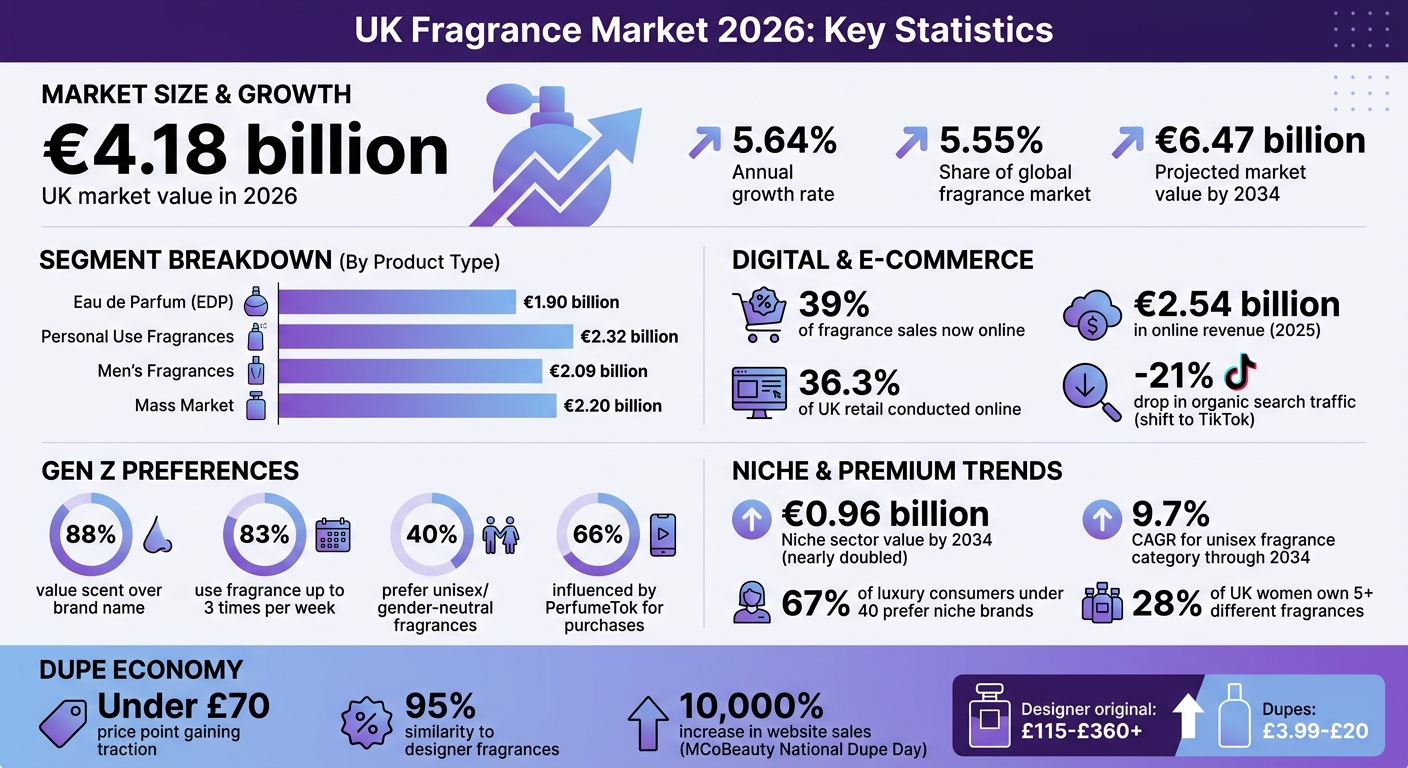
Η αγορά αρωμάτων του Ηνωμένου Βασιλείου ακολουθεί σταθερή αναπτυξιακή πορεία, με πρόβλεψη να φτάσει περίπου τα €4.18 δισεκατομμύρια το 2026, από €3.96 δισεκατομμύρια το 2025. Με ετήσιο ρυθμό ανάπτυξης 5.64%, το Ηνωμένο Βασίλειο κατέχει μερίδιο 5.55% της παγκόσμιας αγοράς αρωμάτων, εδραιώνοντας τη θέση του ως βασικού παίκτη.
Σημαντικός μοχλός αυτής της ανάπτυξης είναι η άνοδος του online shopping, που αναδιαμορφώνει τον τρόπο με τον οποίο οι Βρετανοί καταναλωτές αγοράζουν αρώματα. Έως το 2025, οι online πωλήσεις αναμένεται να αποφέρουν έσοδα €2.54 δισεκατομμυρίων. Η τάση αυτή επηρεάζεται ιδιαίτερα από νεότερους αγοραστές, οι οποίοι συχνά ανακαλύπτουν αρώματα μέσω των social media. Παρά τις οικονομικές προκλήσεις, οι καταναλωτές προσαρμόζουν τις συνήθειές τους αντί να περιορίζουν πλήρως τις αγορές αρωμάτων.
Η ανάπτυξη ενισχύεται περαιτέρω από συγκεκριμένες τάσεις προϊόντων και προτιμήσεις καταναλωτών, όπως φαίνεται και στην τμηματοποίηση της αγοράς.
Ανάλυση Κατηγοριών
Η αγορά αρωμάτων του Ηνωμένου Βασιλείου διαχωρίζεται ξεκάθαρα ανά τύπο προϊόντος και τιμολόγηση. Το Eau de Parfum (EDP) προηγείται, συνεισφέροντας €1.90 δισεκατομμύρια σε έσοδα για το 2025, ενώ η κατηγορία mass market φτάνει τα €2.20 δισεκατομμύρια. Τα ανδρικά αρώματα διαδραματίζουν επίσης καίριο ρόλο, αντιπροσωπεύοντας €2.09 δισεκατομμύρια σε έσοδα, στοιχείο που αναδεικνύει τη διαχρονική τους απήχηση σε διαφορετικά δημογραφικά κοινά.
Ενδιαφέρον παρουσιάζει το γεγονός ότι η αγορά βιώνει μια διαίρεση. Από τη μία πλευρά, οι προσιτές εναλλακτικές κερδίζουν έδαφος, ενώ από την άλλη, τα premium niche αρώματα γνωρίζουν άνθηση. Αυτή η "πόλωση" αντανακλά τις οικονομικές συνθήκες, καθώς οι καταναλωτές συνδυάζουν budget-friendly επιλογές με πολυτελείς αγορές για να δημιουργήσουν αυτό που οι αναλυτές αποκαλούν "fragrance wardrobes". Πράγματι, το 28% των γυναικών στο Ηνωμένο Βασίλειο που χρησιμοποιούν αρώματα διαθέτει πέντε ή περισσότερα διαφορετικά αρώματα. Τα αρώματα προσωπικής χρήσης, ή fine fragrances, αποτελούν άλλη μία ισχυρή κατηγορία, δημιουργώντας €2.32 δισεκατομμύρια το 2025, αποδεικνύοντας ότι τα ποιοτικά αρώματα παραμένουν προτεραιότητα ακόμη και καθώς οι καταναλωτές γίνονται πιο ευαίσθητοι ως προς την τιμή.
Διεθνείς Συγκρίσεις
Σε σύγκριση με άλλες ευρωπαϊκές αγορές, το Ηνωμένο Βασίλειο παραμένει κορυφαίος διεκδικητής, μαζί με τη Γαλλία, αν και η Γερμανία αναμένεται να ηγηθεί της περιοχής έως το 2034. Μέχρι εκείνο το έτος, η αγορά του Ηνωμένου Βασιλείου προβλέπεται να αυξηθεί στα €6.47 δισεκατομμύρια, συνεχίζοντας την ανοδική της τροχιά. Ωστόσο, μια πτώση -2.61% στις εισαγωγές αρωμάτων μεταξύ 2023 και 2024 υποδηλώνει πιθανή στροφή προς εγχώρια brands ή μεταβαλλόμενες εμπορικές συνθήκες στο μετα — Brexit τοπίο.
Ενώ η Ρωσία είναι η ταχύτερα αναπτυσσόμενη αγορά αρωμάτων στην Ευρώπη, η ανάπτυξη του Ηνωμένου Βασιλείου τροφοδοτείται από premiumisation και καινοτομία στα κανάλια πωλήσεων, παρά από τον καθαρό όγκο. Η ώριμη φύση της αγοράς του, σε συνδυασμό με ετήσιο ρυθμό ανάπτυξης 5.64%, υπογραμμίζει την εστίαση στην καταναλωτική εκλέπτυνση περισσότερο παρά στην απλή επέκταση.
Η Οικονομία των Dupes: Προσιτή Πολυτέλεια
Μερίδιο Αγοράς και Ζήτηση Καταναλωτών
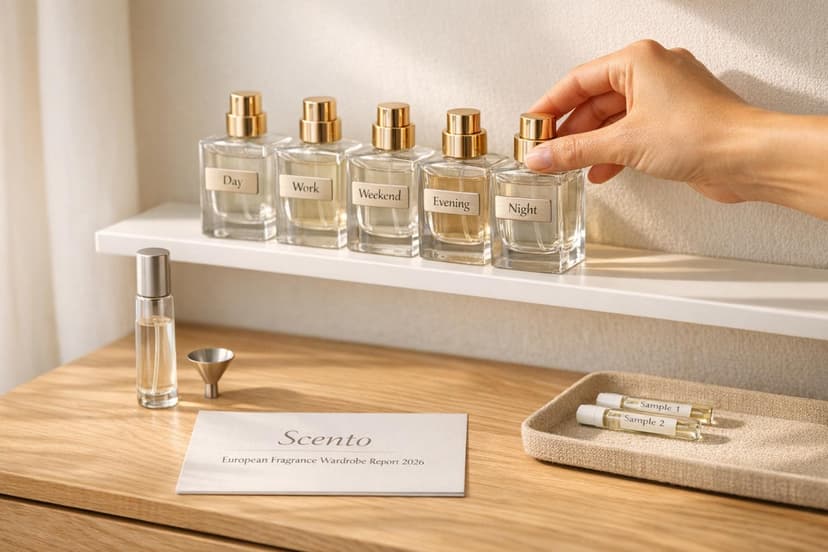
Η αγορά των dupes αναδιαμορφώνει τον τρόπο με τον οποίο οι Βρετανοί καταναλωτές προσεγγίζουν τις αγορές αρωμάτων. Αντί να ξοδεύουν μεγάλα ποσά για ένα μόνο designer άρωμα, πολλοί επιμελούνται πλέον μια "fragrance wardrobe" - μια συλλογή προσιτών αρωμάτων προσαρμοσμένων σε διαφορετικές περιστάσεις. Αυτή η μετατόπιση αντανακλά ευρύτερες αλλαγές στις καταναλωτικές συνήθειες, ιδίως καθώς οι οικονομικές πιέσεις οδηγούν τους καταναλωτές στην αναζήτηση πιο συμφερουσών επιλογών.
Η κατηγορία τιμής κάτω των £70 έχει εξελιχθεί σε σημείο αναφοράς της προσιτής πολυτέλειας, με πολλούς αγοραστές να στρέφονται σε body sprays και fragrance dupes αντί για ακριβά Eau de Parfums. Τα social media, και ειδικά το TikTok, έχουν διαδραματίσει καθοριστικό ρόλο σε αυτή την τάση. Οι καταναλωτές της Gen Z, ιδιαίτερα, βασίζονται στους creators για recommendations dupes αντί στις παραδοσιακές διαφημίσεις, καθιστώντας αυτές τις πλατφόρμες κρίσιμες για την ανακάλυψη.
"Η κρίση κόστους ζωής ενίσχυσε την απήχηση των body sprays, καθώς οι καταναλωτές στρέφονται σε χαμηλότερες κατηγορίες από EDTs και EDPs. Τα dupes στερούνται αξιοπιστίας και η εκπαίδευση γύρω από τις νότες αρωμάτων είναι καθοριστική."
– Dionne Officer, Research Analyst – BPC Innovation, Mintel
Αυτό το μεταβαλλόμενο τοπίο έχει ωθήσει τους κατασκευαστές να τελειοποιήσουν τα προϊόντα τους, μειώνοντας το χάσμα ποιότητας ανάμεσα στα dupes και τα designer αρώματα υψηλής κατηγορίας.
Τάσεις Παραγωγής και Συστατικών
Η διαφορά ανάμεσα στα dupes και τα designer αρώματα συρρικνώνεται. Πολλά dupe brands συνεργάζονται με μεγάλους οίκους αρωμάτων όπως οι Givaudan, IFF, Dsm — Firmenich και Symrise. Αυτές οι συνεργασίες τους επιτρέπουν να κάνουν reverse-engineering σε πολυτελή αρώματα, επιτυγχάνοντας έως και 95% ομοιότητα στα scent profiles. Χάρη στην απουσία προστασίας πνευματικών δικαιωμάτων στις φόρμουλες αρωμάτων, τα brands μπορούν νόμιμα να αναπαράγουν τη μοριακή δομή αρωμάτων υψηλής κατηγορίας.
Οι σύγχρονες τεχνικές παραγωγής έχουν βελτιστοποιήσει τη διαδικασία, με ορισμένα dupes να περνούν από το concept στο ράφι μέσα σε μόλις έξι μήνες. Αυτή η αποδοτικότητα, σε συνδυασμό με τα υψηλά similarity scores, έχει ενισχύσει την εμπιστοσύνη των καταναλωτών στα dupes ως αξιόπιστες εναλλακτικές. Για παράδειγμα, η Dossier - ένα από τα ηγετικά ονόματα στην αγορά των dupes - ανακοίνωσε ετήσιες πωλήσεις περίπου $60 εκατομμυρίων το 2025, με εντυπωσιακή ετήσια ανάπτυξη 120% έως τον Φεβρουάριο του 2026.
Η βιοτεχνολογία διαδραματίζει επίσης ρόλο στην αντιμετώπιση ζητημάτων εφοδιαστικής αλυσίδας, διασφαλίζοντας σταθερότητα στα συστατικά και ανταποκρινόμενη στη ζήτηση για μη τοξικές και alcohol-free συνθέσεις. Η ώθηση προς τα "clean-label" προϊόντα έχει επηρεάσει περαιτέρω τον κλάδο, προσελκύοντας καταναλωτές που αναζητούν πιο ασφαλείς και βιώσιμες επιλογές.
| Τύπος Προϊόντος | Παράδειγμα Brand | Τυπική Τιμή |
|---|---|---|
| Πολυτελές Πρωτότυπο | Chanel Coco Mademoiselle | £115 |
| Dupe Σούπερ Μάρκετ | Lidl Suddenly Madame Glamour | £3.99 |
| Πολυτελές Πρωτότυπο | Tom Ford Lost Cherry | £360+ |
| Premium Dupe | The Essence Vault | ~£20 |
Αυτές οι εξελίξεις στη σύνθεση και οι ταχείς κύκλοι παραγωγής επέτρεψαν στα brands να ανταποκριθούν γρήγορα στη ζήτηση των καταναλωτών, διατηρώντας παράλληλα διαφάνεια σχετικά με τα προϊόντα τους.
Το E-commerce ως Μοχλός Ανάπτυξης
Η άνοδος του e-commerce έχει φέρει επανάσταση στην πρόσβαση σε προσιτές επιλογές αρωμάτων. Στις αρχές του 2021, το 36.3% του λιανεμπορίου στο Ηνωμένο Βασίλειο πραγματοποιούνταν online, καθιστώντας τις ψηφιακές πλατφόρμες απαραίτητο κανάλι για τα dupe brands. Ιστότοποι όπως το Amazon έχουν εξελιχθεί σε βασικούς παίκτες, εστιάζοντας σε σαφή επικοινωνία της αξίας και σε οπτικά ελκυστική παρουσίαση προϊόντων.
Τα digital-first brands έχουν κεφαλαιοποιήσει την τάση της διαφανούς τιμολόγησης, τονίζοντας συχνά τη μεγάλη διαφορά ανάμεσα στα dupes (συνήθως £30–£50) και στα designer originals (συχνά £200 ή περισσότερο). Αυτή η στρατηγική έχει οικοδομήσει εμπιστοσύνη στους καταναλωτές, ενώ καθιστά τις luxury-like εμπειρίες πιο προσιτές. Για παράδειγμα, η MCoBeauty κατέγραψε εντυπωσιακή αύξηση 10,000% στις πωλήσεις του website της κατά το λανσάρισμα του National Dupe Day στις 4 Απριλίου 2025. Entry-level formats, όπως mists, rollers και μικρά μπουκάλια 8–10 ml, έχουν μειώσει ακόμη περισσότερο τα εμπόδια για νεότερους αγοραστές που εξερευνούν αρώματα online.
Παρά αυτές τις επιτυχίες, η αξιοπιστία παραμένει εμπόδιο για ορισμένα online-first dupe brands. Παρότι το e-commerce έχει κάνει τα dupes πιο εύκολα προσβάσιμα, τα heritage brands εξακολουθούν να υπερέχουν σε επίπεδο εμπιστοσύνης και φήμης. Επιπλέον, αν και τα dupes επιτυγχάνουν συχνά υψηλά similarity scores, οι αξιολογήσεις χρηστών επισημαίνουν συχνά διαφορές στη διάρκεια και την προβολή σε σύγκριση με τα designer αντίστοιχά τους.
ΤΑ ΚΑΛΥΤΕΡΑ PERFUME DUPES ΤΗΣ HIGH STREET ΑΓΟΡΑΣ; Primark Vs Jo Malone Superdrug Vs Chanel Lidl Vs Chloe, Zara κ.ά.
Η Επιστροφή του Niche: Η Αναγέννηση της Prestige Αρωματοποιίας
Σε μια αγορά όπου τα προσιτά dupes γνωρίζουν άνθηση, η niche αρωματοποιία ανατρέπει τις προσδοκίες. Ενώ τα dupes εξυπηρετούν την καθημερινή πρακτικότητα, αυξάνεται η ζήτηση για artisanal, bespoke αρώματα που αντανακλούν την ατομικότητα. Οι Βρετανοί καταναλωτές, ειδικά, ξεπερνούν πλέον τα mass-market αρώματα, αναζητώντας ποιότητα και μοναδικότητα αντί για τη λάμψη των μεγάλων ονομάτων prestige. Αυτή η μεταστροφή δημιούργησε χώρο για μικρότερα, δημιουργικά brands που δίνουν προτεραιότητα στην καλλιτεχνία και στα σπάνια συστατικά αντί για τη μαζική παραγωγή.
Ενδιαφέρον είναι ότι αυτή η τάση δεν αφορά μόνο την αποκλειστικότητα - αφορά την εξατομίκευση. Η Olivia Ford, Performance Lead στη Foundation Agency, εξηγεί:
Το 2026, η εξατομίκευση δεν είναι απλώς μια τάση· γίνεται προσδοκία. Τα brands που βοηθούν τους καταναλωτές να δημιουργήσουν ένα signature scent, αντί απλώς να επιλέξουν ένα, θα είναι εκείνα που θα χτίσουν βαθύτερη αφοσίωση.
Η έννοια του ενός και μοναδικού "signature scent" εξασθενεί. Αντί γι’ αυτό, οι καταναλωτές υιοθετούν το fragrance wardrobing - επιμελούνται διαφορετικά αρώματα για διαφορετικές διαθέσεις, περιστάσεις ή εποχές. Στους νεότερους αγοραστές, αυτή η συμπεριφορά είναι ιδιαίτερα έντονη. Έρευνες δείχνουν ότι το 67% των luxury καταναλωτών κάτω των 40 προτιμά πλέον niche ή artisanal brands από τις παραδοσιακές designer επιλογές. Αυτό το αυξανόμενο ενδιαφέρον για niche αρώματα επαναπροσδιορίζει τον τρόπο με τον οποίο οι άνθρωποι εκφράζουν την ταυτότητά τους μέσω του αρώματος.
Εξατομίκευση και Τάσεις που Καθοδηγούνται από AI
Η τεχνολογία διαδραματίζει καθοριστικό ρόλο στον τρόπο με τον οποίο οι άνθρωποι ανακαλύπτουν niche αρώματα. Τα εργαλεία με υποστήριξη AI γεφυρώνουν το χάσμα ανάμεσα στην online περιήγηση και τη sensorial εμπειρία της όσφρησης. Αυτά τα εργαλεία χρησιμοποιούν δεδομένα νευροσήμανσης για να προτείνουν αρώματα προσαρμοσμένα σε συναισθηματικές ανάγκες. Για παράδειγμα, η DSM — Firmenich παρουσίασε το "EmotiOn Social Connection" στις αρχές του 2026, ένα σύστημα που βοηθά τα brands να δημιουργούν αρώματα σχεδιασμένα επιστημονικά ώστε να ενισχύουν την ανθρώπινη σύνδεση και την ευεξία. Τέτοιες εξελίξεις βοηθούν τα niche brands να τοποθετούν τα προϊόντα τους όχι απλώς ως πολυτελή αγαθά, αλλά ως εργαλεία βελτίωσης διάθεσης και νοοτροπίας.
Οι retailers επίσης εξελίσσονται. Το 2026, τα Boots παρουσίασαν στο Ηνωμένο Βασίλειο ένα concept "fragrance-only boutique", με επιμελημένο storytelling και intimate workshops για την αναβάθμιση της αγοραστικής εμπειρίας. Πλατφόρμες όπως η Scento ανταποκρίνονται σε αυτή τη ζήτηση προσφέροντας εξατομικευμένες προτάσεις αρωμάτων και formats δειγμάτων, διευκολύνοντας τους αγοραστές να εξερευνήσουν niche αρώματα χωρίς να δεσμευτούν σε φιάλες πλήρους μεγέθους. Αυτός ο συνδυασμός εξατομίκευσης και τεχνολογίας ανασχηματίζει το τοπίο των luxury αρωμάτων.
Wellness και Functional Αρώματα
Η ευεξία έχει αναδειχθεί σε βασικό παράγοντα ανάπτυξης των niche αρωμάτων. Η έννοια της "Neuroperfumery" - αρώματα σχεδιασμένα να επιτυγχάνουν συγκεκριμένα συναισθηματικά αποτελέσματα όπως χαλάρωση, συγκέντρωση ή γείωση - κερδίζει ολοένα μεγαλύτερη προσοχή. Η Judith Gross, VP of Communication and Branding στην IFF, εξηγεί:
Η χαρά δεν είναι πλέον επιφανειακή· είναι μια ψυχολογική ανάγκη, στην οποία η πλατφόρμα IFF Science of Wellness μπορεί να ανταποκριθεί με αρώματα σχεδιασμένα για συγκεκριμένα συναισθηματικά ή γνωστικά οφέλη.
Αυτή η μετατόπιση επηρεάζει τις τάσεις στα αρώματα. Τα savoury gourmands με καθησυχαστικά συστατικά όπως ρύζι, φιστίκι και γαλακτώδεις accord αντικαθιστούν τα υπερβολικά γλυκά προφίλ. Αντίστοιχα, οι γαλακτώδεις και lactonic νότες, όπως συνδυασμοί λεβάντας με γάλα ή ρύζι, δημιουργούν "skin-like" αρώματα που αποπνέουν συναισθηματική θαλπωρή. Τα μινιμαλιστικά single-note fragrances (ή "soli-fragrances") επανέρχονται επίσης, προσελκύοντας όσους εκτιμούν τη σαφήνεια και τη διαφάνεια στις αρωματικές επιλογές τους.
Οι νέοι κανονισμοί της ΕΕ για τα αλλεργιογόνα στα αρώματα, που έφτασαν σε βασικά ορόσημα τον Ιούλιο του 2026, ωθούν τα niche brands προς συνθέσεις "sensitive by design". Πολλά χρησιμοποιούν αυτή την ευκαιρία για να αναδείξουν ingredients φιλικά προς το δέρμα και φυτικής προέλευσης, μετατρέποντας τη συμμόρφωση σε πλεονέκτημα πώλησης.
Προτιμήσεις Καταναλωτών: Unisex και Μοναδικότητα
Η κατηγορία των unisex αρωμάτων γνωρίζει ισχυρή άνθηση, με προβλεπόμενο CAGR 9.7% έως το 2034. Αυτή η ανάπτυξη αντικατοπτρίζει μια ευρύτερη στροφή προς τη gender-fluid αυτοέκφραση, ιδιαίτερα ανάμεσα στους Millennials και τη Gen Z. Τα niche brands ανταποκρίνονται με αρώματα που εστιάζουν στην ατομικότητα αντί για τα παραδοσιακά στερεότυπα φύλου.
Η καινοτομία αποτελεί έναν ακόμη τρόπο με τον οποίο τα niche brands ξεχωρίζουν. Τον Μάιο του 2025, η Bella Hadid λάνσαρε τη fragrance line της, Orebella, αποκλειστικά στα Selfridges στο Λονδίνο. Η συλλογή περιλαμβάνει alcohol-free, bi-phase φόρμουλες που συνδυάζουν αιθέρια έλαια με skincare οφέλη. Τέσσερα ξεχωριστά αρώματα — Window2Soul, Salted Muse, Blooming Fire και Nightcap - αποτυπώνουν αυτό το πάντρεμα ευεξίας και αρώματος. Τέτοια πολυλειτουργικά προϊόντα αγγίζουν καταναλωτές που δίνουν αξία στην πρόθεση και τη χρηστικότητα των αγορών τους.
Η τάση προς τα διακριτικά, skin-close αρώματα διαμορφώνει επίσης την niche αγορά. Αυτά τα αρώματα δίνουν προτεραιότητα στην οικειότητα και τη φινέτσα, εναρμονιζόμενα με μια πιο ήσυχη αισθητική πολυτέλειας. Επιπλέον, η χρήση captive molecules - αποκλειστικών συστατικών που αναπτύσσονται από fragrance houses - επιτρέπει στα niche brands να προσφέρουν αρώματα με μοναδικά, μη επαναλήψιμα προφίλ. Εστιάζοντας στη δεξιοτεχνία και την πρωτοτυπία, η niche αρωματοποιία δημιουργεί τον δικό της ξεχωριστό χώρο σε μια αγορά που διαφορετικά κυριαρχείται από mass-market και dupe επιλογές. Αυτή η εξέλιξη προμηνύει συναρπαστικές αλλαγές για την καινοτομία στα αρώματα.
Your Personal Fragrance Expert Awaits
Take our quick scent quiz to discover authentic designer and niche fragrances matched to your taste — explore them as 2–8ml decants and samples, so you can try each one before committing to a full bottle.
Find Your ScentGen Z: Η Κινητήρια Δύναμη Πίσω από την Καινοτομία στα Αρώματα
Η Gen Z αναδιαμορφώνει τη βιομηχανία αρωμάτων, χτίζοντας πάνω σε τάσεις όπως η άνοδος των dupes και η αυξανόμενη δημοτικότητα των niche brands. Στο Ηνωμένο Βασίλειο, αυτή η γενιά έχει εξελιχθεί σε κυρίαρχη δύναμη στην αγορά αρωμάτων. Φορά αρώματα συχνά - το 83% χρησιμοποιεί άρωμα έως και τρεις φορές την εβδομάδα - και εστιάζει στο ίδιο το άρωμα αντί στο prestige του brand, με το 88% να δηλώνει ότι το άρωμα έχει μεγαλύτερη σημασία από την ετικέτα. Για τη Gen Z, το άρωμα είναι βαθιά προσωπικό, λειτουργώντας ως τρόπος έκφρασης της ταυτότητάς τους. Αντί να μένουν σε ένα signature scent, δημιουργούν μια συλλογή που ταιριάζει σε διαφορετικές διαθέσεις και περιστάσεις.
Βιωσιμότητα και Ηθική Κατανάλωση
Για τη Gen Z, οι ηθικές και βιώσιμες πρακτικές είναι αδιαπραγμάτευτες. Περιμένουν από τα brands να προσφέρουν vegan, cruelty-free και περιβαλλοντικά συνειδητά προϊόντα - και δεν διστάζουν να ερευνήσουν αν οι εταιρείες ανταποκρίνονται πραγματικά σε αυτούς τους ισχυρισμούς.
Ας πάρουμε για παράδειγμα την Eden Perfumes. Αυτή η οικογενειακή επιχείρηση με έδρα το Brighton έχει χτίσει τη φήμη της προσφέροντας vegan, cruelty-free εναλλακτικές σε δημοφιλή designer αρώματα. Η προσέγγισή της απευθύνεται άμεσα στους νεότερους καταναλωτές που εκτιμούν τη συνύπαρξη προσιτής τιμής και ηθικής ακεραιότητας. Αντίστοιχα, τα niche fragrance brands έχουν μετατοπίσει την εστίασή τους από το aspirational marketing σε διαφανή προέλευση συστατικών και αυθεντικό storytelling, στοιχεία που βρίσκουν ιδιαίτερη ανταπόκριση σε αυτό το κοινό.
Η καινοτομία στη συσκευασία είναι ένα ακόμη πεδίο όπου οι απαιτήσεις βιωσιμότητας της Gen Z οδηγούν την αλλαγή. Τα brands προσφέρουν όλο και περισσότερο επαναγεμιζόμενες φιάλες, ανακυκλωμένα υλικά και μικρότερα formats για να μειώσουν τα απόβλητα. Αυτό δεν αφορά μόνο την ηθική - η Gen Z αναζητά ενεργά brands που ευθυγραμμίζονται με τις αξίες της και είναι διατεθειμένη ακόμη και να πληρώσει λίγο περισσότερο για προϊόντα που περιορίζουν το περιβαλλοντικό αποτύπωμα. Οι eco-friendly πρακτικές έχουν περάσει από nice-to-have σε βασική προϋπόθεση συμμετοχής στην αγορά.
Αυτές οι ηθικές προτεραιότητες επηρεάζουν επίσης την προτίμησή τους για gender-neutral και πειραματικά αρώματα.
Gender — Neutral και Πειραματικά Αρώματα
Ο παραδοσιακός διαχωρισμός ανάμεσα σε αρώματα "for him" και "for her" φαίνεται ξεπερασμένος για τη Gen Z. Το 40% αυτού του δημογραφικού προτιμά unisex ή gender-neutral αρώματα, οδηγώντας τους retailers να επανεξετάσουν τον τρόπο κατηγοριοποίησης των αρωμάτων. Αντί να τα διαχωρίζουν βάσει φύλου, πολλοί τα ομαδοποιούν πλέον με βάση τα scent profiles - όπως woody, floral ή fresh. Ο Paul Firmin, Co-founder της Earl of East, αποτυπώνει άριστα αυτή τη μετατόπιση:
Η άρση ξεπερασμένων ορίων – όπως η ιδέα ότι το άρωμα πρέπει να συνδέεται με το φύλο – άνοιξε επίσης τον χώρο. Αυτή η διάκριση ήταν εξαρχής μια παράλογη ιδέα.
Αυτή η ανοιχτότητα έχει ενθαρρύνει τα brands να εξερευνήσουν πιο πειραματικά scent profiles. Η Gen Z στρέφεται προς αρώματα που αντανακλούν το προσωπικό της ύφος ή το τρέχον vibe της. Για παράδειγμα, η αισθητική "Clean Girl" κλίνει προς διακριτικά skin musks, ενώ το "Dark Academia" μπορεί να εμπνέει επιλογές με νότες smoky leather και espresso. Άλλοι προτιμούν αισθησιακά blends με κρεμώδη βανίλια ή woody amber. Αυτές οι προτιμήσεις αναδεικνύουν πώς το άρωμα έχει γίνει εργαλείο αυτοέκφρασης, υφασμένο μέσα στη συνολική τους ταυτότητα.
Μια τάση του TikTok με την ονομασία Smellmaxxing αναδεικνύει αυτήν την πειραματική προσέγγιση. Δημοφιλής μεταξύ εφήβων αγοριών, περιλαμβάνει layering πολλαπλών αρωμάτων και προσεκτική επιλογή luxury aftershaves για την ενίσχυση του φυσικού αρώματος κάποιου. Η τάση αυτή αποκαλύπτει πώς η Gen Z βλέπει το άρωμα ως τέχνη, συνδυάζοντας προϊόντα για να δημιουργήσει ένα signature scent απολύτως δικό της.
Formats Ανακάλυψης: Δείγματα και Συνδρομές
Όταν πρόκειται για την ανακάλυψη νέων αρωμάτων, η Gen Z ακολουθεί διαφορετική προσέγγιση από τις παλαιότερες γενιές. Αντί να αγοράζει ένα μπουκάλι πλήρους μεγέθους μετά από μια γρήγορη δοκιμή σε πολυκατάστημα, προτιμά να δοκιμάζει αρώματα για ημέρες ή ακόμη και εβδομάδες. Αυτό έχει οδηγήσει σε έκρηξη δημοτικότητας για discovery sets, mini bottles και subscription services.
Η επιρροή του PerfumeTok είναι αδιαμφισβήτητη, επηρεάζοντας το 66% των αγορών αρωμάτων της Gen Z. Ωστόσο, καθώς το άρωμα δεν μπορεί να βιωθεί μέσα από μια οθόνη, τα δείγματα αποτελούν την απαραίτητη γέφυρα ανάμεσα στο online hype και τις πραγματικές αγορές. Πολλοί νέοι καταναλωτές, ιδιαίτερα όσοι είναι 25-34 ετών, προτιμούν να αγοράζουν online δείγματα αρωμάτων πριν δεσμευτούν σε ένα full-size μπουκάλι. Αυτή η μέθοδος τους επιτρέπει να πειραματιστούν με niche αρώματα που διαφορετικά μπορεί να φαίνονταν οικονομικά ριψοκίνδυνα.
Brands όπως η Scento έχουν αξιοποιήσει αυτή την τάση προσφέροντας formats ανακάλυψης σε μεγέθη 2ml, 5ml και 8ml. Ένα vial 8ml, για παράδειγμα, προσφέρει περίπου 120 ψεκασμούς - αρκετούς για να δοκιμάσει κανείς ένα άρωμα σε διαφορετικά περιβάλλοντα και εποχές. Αυτά τα μικρότερα μεγέθη είναι επίσης ιδανικά για τον on-the-go τρόπο ζωής της Gen Z και την προτίμησή της σε compact τσάντες.
Οι μηνιαίες συνδρομητικές υπηρεσίες έχουν επίσης αποκτήσει δυναμική σε αυτό το κοινό. Σε αντίθεση με τα flat-rate boxes, η συνδρομή της Scento δίνει στους πελάτες την ελευθερία να επιλέγουν συγκεκριμένα αρώματα κάθε μήνα, με τιμή εκκίνησης τα €12.90 ανά άρωμα. Αυτό το μοντέλο συνδυάζει ποικιλία με εξατομίκευση, επιτρέποντας στους χρήστες να ανακαλύπτουν νέα αρώματα διατηρώντας τον έλεγχο. Επιπλέον, η δυνατότητα ακύρωσης ανά πάσα στιγμή εξαλείφει τον φόβο της μακροχρόνιας δέσμευσης, καθιστώντας τα premium αρώματα πιο προσιτά στους νεότερους αγοραστές.
Μετατόπιση Καναλιών: Από το Retail στο Digital
Η αγορά αρωμάτων στο Ηνωμένο Βασίλειο έχει κάνει σαφή στροφή προς το digital. Ενώ τα φυσικά καταστήματα παραμένουν μέρος του τοπίου, το 39% των χρηστών αρωμάτων στο Ηνωμένο Βασίλειο ψωνίζει πλέον online μέσω πλατφορμών όπως Amazon ή Boots, και το 15% των Βρετανίδων προτιμά να αγοράζει απευθείας από το website ενός brand. Δεν πρόκειται απλώς για ευκολία πρόσβασης - αυτή η μετατόπιση ανασχηματίζει τον τρόπο με τον οποίο τα brands συνδέονται με τους καταναλωτές, τον τρόπο που ο κόσμος εξερευνά αρώματα και το ποια αρώματα αποκτούν δυναμική.
Επέκταση E-commerce και Direct-to — Consumer
Η μετάβαση στο online shopping απορρέει από πρακτικές συνήθειες. Για παράδειγμα, οι μισοί χρήστες αρωμάτων στο Ηνωμένο Βασίλειο μένουν σε ένα ή δύο μόνο αγαπημένα που επαναγοράζουν τακτικά. Επιπλέον, το 58% ξόδεψε κάτω από £50 στην πιο πρόσφατη αγορά αρώματος, ένα εύρος τιμής στο οποίο οι online retailers υπερέχουν, προσφέροντας εύκολη σύγκριση τιμών και προσιτές επιλογές.
Υπάρχει όμως και μια αρνητική πλευρά: η οργανική επισκεψιμότητα μέσω αναζήτησης για τα fragrance brands έχει μειωθεί κατά 21%, καθώς η AI παρέχει πλέον άμεσες απαντήσεις απευθείας στις σελίδες αναζήτησης. Η ανακάλυψη μεταφέρεται σε πλατφόρμες όπως το TikTok, όπου η Gen Z βασίζεται σε recommendations creators αντί στις παραδοσιακές αναζητήσεις. Η Olivia Ford, Performance Lead στη Foundation Agency, εξηγεί:
Το άρωμα εξακολουθεί να πουλά όνειρα. Ο στόχος μας είναι να κάνουμε αυτά τα όνειρα να σταματούν το σκρολάρισμα.
Για να προσαρμοστούν, οι εταιρείες επενδύουν στην ψηφιακή καινοτομία. Τον Νοέμβριο του 2024, η Unilever ανακοίνωσε μια digital-first μονάδα αρωμάτων στο Ηνωμένο Βασίλειο. Αυτή η πρωτοποριακή εγκατάσταση ενσωματώνει AI και neuroscience για να ανταποκρίνεται καλύτερα στις συναισθηματικές τάσεις και να βελτιστοποιεί την ανάπτυξη αρωμάτων. Αυτές οι εξελίξεις αναδεικνύουν πώς τα digital εργαλεία αναδιαμορφώνουν τόσο την παραγωγή όσο και την αλληλεπίδραση με τον καταναλωτή.
Αντιμετωπίζοντας την Πρόκληση της Ανακάλυψης
Ένα από τα μεγαλύτερα εμπόδια στην online πώληση αρωμάτων είναι η αδυναμία όσφρησης μέσα από μια οθόνη. Για να το αντιμετωπίσουν, τα brands έχουν καταστήσει τα εργαλεία ανακάλυψης κεντρικό στοιχείο της στρατηγικής τους. Για παράδειγμα, οι περιγραφές τύπου "olfactory pyramid" καθοδηγούν πλέον τους online αγοραστές. Αυτές οι σύντομες εξηγήσεις βοηθούν στην αντιστοίχιση με τις προτιμήσεις των καταναλωτών που έχουν συνείδηση κόστους και επαναπαραγγέλλουν συχνά τα αγαπημένα τους.
Τα φυσικά δείγματα διαδραματίζουν επίσης καίριο ρόλο. Τα QR codes πάνω στα δείγματα οδηγούν πλέον σε σύντομες ψηφιακές έρευνες που καταγράφουν τις προτιμήσεις των καταναλωτών μέσα σε μόλις 10–15 δευτερόλεπτα, αυξάνοντας τα conversion rates κατά 3.7 φορές σε σύγκριση με τις τυπικές προσφορές. Ο Marco Rivera, Senior Editor και Content Strategist, υπογραμμίζει τη σημασία αυτής της προσέγγισης:
Το sampling που δεν τροφοδοτεί δεδομένα μετατροπής είναι marketing theatre - εντυπωσιακό στην παρακολούθηση, αλλά αδύναμο στην κλίμακα.
Ορισμένα brands προχωρούν ακόμη περισσότερο, συνεργαζόμενα με τοπικούς couriers για να προσφέρουν αυθημερόν παράδοση δειγμάτων ή πλήρων φιαλών. Αυτό αξιοποιεί την άμεση πρόθεση αγοράς, υποστηριζόμενη από micro-fulfilment logistics. Πλατφόρμες όπως η Scento προσφέρουν ευέλικτες συνδρομές από €12.90 τον μήνα, επιτρέποντας στους πελάτες να δοκιμάζουν διαφορετικά αρώματα χωρίς να δεσμεύονται σε full bottles. Αυτό το μοντέλο αντιμετωπίζει τόσο την πρόκληση της ανακάλυψης όσο και την αυξανόμενη ζήτηση για ποικιλία.
Κανονιστικές και Αγοραστικές Μεταβολές
Οι κανονισμοί διαμορφώνουν επίσης την ψηφιακή αγορά αρωμάτων. Οι απαιτήσεις UK REACH και CLP για την επισήμανση έχουν αυξήσει τα λειτουργικά κόστη συμμόρφωσης ασφάλειας, προσφέροντας σαφές πλεονέκτημα στις μεγαλύτερες εταιρείες με εδραιωμένες υποδομές. Παράλληλα, τα πρότυπα Unique Formula Identifier (UFI) έχουν δημιουργήσει σημαντικές προκλήσεις για τους μικρότερους Βρετανούς κατασκευαστές, οδηγώντας σε περαιτέρω συγκέντρωση της αγοράς.
Η επικείμενη επέκταση της επισήμανσης αλλεργιογόνων αρωμάτων στην ΕΕ τον Ιούλιο του 2026 αποτελεί άλλο ένα εμπόδιο. Τα brands θα χρειαστεί να αναδιατυπώσουν προϊόντα ώστε να ανταποκρίνονται στα standards διανομής. Επιπλέον, τόσο τα digital όσο και τα φυσικά σημεία δειγματισμού πρέπει πλέον να συμμορφώνονται με κανονισμούς ασφαλείας ζωντανών εκδηλώσεων και ροής κοινού, αυξάνοντας περαιτέρω το κόστος συμμόρφωσης. Αυτές οι αλλαγές δημιουργούν εμπόδια για τους ανεξάρτητους αρωματοποιούς, ενώ ευνοούν τους εδραιωμένους παίκτες με τους πόρους να διαχειριστούν αυτή την πολυπλοκότητα.
Όπως το θέτει η Shiyan Zering, Senior Beauty and Personal Care Analyst στη Mintel:
Το online κανάλι αλλάζει τον τρόπο με τον οποίο οι καταναλωτές αλληλεπιδρούν με τα αρώματα, πράγμα που σημαίνει ότι η πολυτέλεια πρέπει να... απο-ρισκοποιηθεί.
Σε αυτή την εξελισσόμενη αγορά, μόνο τα brands που θα κατακτήσουν τα digital discovery tools και θα διαχειριστούν επιτυχώς το σύνθετο ρυθμιστικό πλαίσιο θα ευδοκιμήσουν.
Προοπτικές για το 2030: Το Μέλλον της Αγοράς Αρωμάτων στο Ηνωμένο Βασίλειο
Η αγορά αρωμάτων του Ηνωμένου Βασιλείου οδεύει προς αξιοσημείωτη ανάπτυξη έως το 2030, με κινητήριες δυνάμεις τις μεταβαλλόμενες προτιμήσεις των καταναλωτών και τις εξελίξεις στην ψηφιακή αλληλεπίδραση.
Προβλέψεις Ανάπτυξης της Αγοράς
Η αγορά προβλέπεται να αναπτυχθεί σταθερά, φτάνοντας τα €3.35 δισεκατομμύρια έως το 2030, από €2.32 δισεκατομμύρια το 2024, με σύνθετο ετήσιο ρυθμό ανάπτυξης (CAGR) 6.33%. Ορισμένες προβλέψεις υποδηλώνουν ότι μόνο το τμήμα των perfumes θα μπορούσε να αγγίξει αξία €4.1 δισεκατομμυρίων έως το 2030. Βασικοί παράγοντες όπως η βιωσιμότητα, η ψηφιακή καινοτομία και οι εξατομικευμένες εμπειρίες διαμορφώνουν αυτή την εξέλιξη. Οι καταναλωτές είναι ολοένα πιο πρόθυμοι να πληρώσουν 9.7% περισσότερο για eco-friendly προϊόντα, ενώ τα online κανάλια αντιπροσωπεύουν πλέον πάνω από το 40% των πωλήσεων αρωμάτων. Το premium segment, το οποίο αντιπροσώπευε το 66.99% των εσόδων το 2024, αναμένεται να παραμείνει κυρίαρχο καθώς οι αγοραστές στρέφονται σε συστατικά υψηλότερης ποιότητας και σε πιο ιδιαίτερα αρώματα.
Ο τομέας των niche αρωμάτων, ειδικότερα, υπεραποδίδει σε σχέση με την ευρύτερη αγορά. Αυτό αντανακλά μια αυξανόμενη αντίληψη του αρώματος ως κάτι περισσότερο από μια τελική πινελιά - μετατρέπεται σε μορφή αυτοέκφρασης. Η Vanita Sabnani Dalamal, VP Strategy στην Puig και Chairman της TFF UK, υπογραμμίζει αυτή τη μετατόπιση:
Το άρωμα έχει μετακινηθεί από το να είναι μια τελική πινελιά στο να αποτελεί πλέον μια γλώσσα ταυτότητας και αυτοέκφρασης για όλες τις γενιές, ειδικά για τις νεότερες.
Αναδυόμενες Τάσεις και Καταναλωτική Συμπεριφορά
Οι εξελισσόμενες καταναλωτικές συνήθειες και τα καινοτόμα formats προϊόντων αναδιαμορφώνουν τον τρόπο με τον οποίο οι άνθρωποι αγοράζουν και βιώνουν τα αρώματα.
Η παραδοσιακή ιδέα του "signature scent" δίνει τη θέση της στην έννοια των scent wardrobes. Μέχρι το 2030, περισσότεροι καταναλωτές θα αγκαλιάσουν μικρότερα, ευέλικτα formats, απομακρυνόμενοι από τη στατική λογική του να μένει κανείς σε ένα μόνο άρωμα για χρόνια. Η Lisa Payne, Head of Beauty στη Stylus, σημειώνει:
Η έννοια του signature scent – το να αγοράζεις και να μένεις σε μία μυρωδιά για χρόνια – είναι ομοίως ξεπερασμένη και οι fragrance libraries γίνονται πλέον de rigueur.
Compact formats όπως φιάλες 30ml και 10ml κερδίζουν δημοτικότητα, ενθαρρύνοντας τον πειραματισμό και επιτρέποντας στους καταναλωτές να επιμελούνται τις δικές τους συλλογές αρωμάτων. Παράλληλα, τα functional fragrances κάνουν αίσθηση. Για παράδειγμα, η "Collection of Emotions" της Charlotte Tilbury, που λανσαρίστηκε τον Μάιο του 2024, περιλαμβάνει έξι neuro-fragrances σχεδιασμένα να προκαλούν συγκεκριμένα συναισθήματα όπως ενδυνάμωση ή ευτυχία μέσω scent technology. Τα upcycled συστατικά έρχονται επίσης στο προσκήνιο, όπως φαίνεται στο άρωμα "Dear Sky" της Ellis Brooklyn, το οποίο ενσωματώνει επτά upcycled components για μια πιο βιώσιμη εμπειρία πολυτέλειας.
Άλλες τάσεις περιλαμβάνουν την άνοδο των long-wear fragrances, με claims παρατεταμένης διάρκειας να αυξάνονται από 11% των παγκόσμιων launches το 2019 σε 35% το 2023. Επιπλέον, τα gender-neutral αρώματα ανασχηματίζουν τις σειρές προϊόντων, απομακρυνόμενα από τις παραδοσιακές ετικέτες "for him" και "for her". Αυτά τα unisex profiles, συχνά δομημένα γύρω από νότες ξύλου, μπαχαρικών και musk, βρίσκουν ισχυρή απήχηση στις νεότερες γενιές. Πλατφόρμες όπως το TikTok και το Instagram παίζουν σημαντικό ρόλο στην ανακάλυψη, με το 50% των καταναλωτών Gen Z και Alpha να ανακαλύπτουν νέα αρώματα μέσω social media.
Ευκαιρίες για Καινοτομία
Οι ψηφιακές εξελίξεις δεν επαναπροσδιορίζουν μόνο τα κανάλια πωλήσεων, αλλά προωθούν επίσης την καινοτομία προϊόντων και την εξατομίκευση.
Τα brands που συνδυάζουν επιτυχώς artisanal craftsmanship με τεχνολογία AI είναι πιθανό να ευημερήσουν. Η Vanita Sabnani Dalamal εξηγεί:
Τα brands που θα κερδίσουν θα είναι εκείνα που μπορούν να διαχειριστούν αυτή την ένταση... ανάμεσα στην τέχνη, που αφορά τη διαίσθηση και το συναίσθημα, και στον κόσμο της τεχνητής νοημοσύνης.
Εργαλεία με υποστήριξη AI, augmented reality sampling και digital scent profiling επιτρέπουν σε πλατφόρμες όπως η Scento να προσφέρουν εξατομικευμένες προτάσεις χωρίς να απαιτείται δοκιμή σε κατάστημα. Αυτές οι καινοτομίες ευθυγραμμίζονται με την προτίμηση της Gen Z για αυθεντικότητα και άμεση αλληλεπίδραση, συνδυάζοντας την παραδοσιακή καλλιτεχνία με τη σύγχρονη τεχνολογία.
Η βιωσιμότητα έχει μετατραπεί σε βασική προσδοκία. Για παράδειγμα, η Molton Brown παρουσίασε επαναγεμιζόμενες φιάλες αρωμάτων και concentrates στα τέλη του 2023 για να ανταποκριθεί στις απαιτήσεις των eco-conscious καταναλωτών. Αντίστοιχα, η Dyson εισήλθε στην αγορά αρωμάτων το 2025 με έναν smart diffuser που επιτρέπει στους χρήστες να προσαρμόζουν τα scent profiles μέσω εφαρμογής. Τα συνδρομητικά μοντέλα επίσης εξελίσσονται. Το 2024, η LookFantastic λάνσαρε μια υπηρεσία που χρησιμοποιεί AI για να παραδίδει tailored αρώματα στους συνδρομητές. Παράλληλα, το συνδρομητικό μοντέλο της Scento, με τιμή €12.90 τον μήνα, προσφέρει vials 8ml (περίπου 120 ψεκασμούς), διευκολύνοντας τους καταναλωτές να εξερευνούν νέα αρώματα χωρίς να δεσμεύονται σε φιάλες πλήρους μεγέθους.
Η επόμενη μεγάλη ευκαιρία βρίσκεται στα μικρότερα formats και στα discovery sets. Καθώς το 70% της ανακάλυψης αρωμάτων μεταξύ νεότερων καταναλωτών πραγματοποιείται online, τα brands πρέπει να μειώσουν τα εμπόδια στη δοκιμή. Ο συνδυασμός recommendations που καθοδηγούνται από AI με sample-first μοντέλα προσφέρει μια ξεκάθαρη διαδρομή για την προσέλκυση της προσοχής των κοινού Gen Z και Alpha, που βασίζονται ολοένα περισσότερο σε creator-led discovery αντί στις παραδοσιακές retail εμπειρίες.
Συμπέρασμα
Η αγορά αρωμάτων του Ηνωμένου Βασιλείου το 2026 βρίσκεται σε φάση μεγάλης μεταμόρφωσης, με κινητήριο δύναμη τις αλλαγές στις προτεραιότητες των καταναλωτών και στις στρατηγικές λιανικής. Οι αγοραστές ξεπερνούν το prestige του brand, εστιάζοντας πλέον στο ίδιο το άρωμα. Αυτό έχει οδηγήσει στην άνοδο των fragrance wardrobes που συνδυάζουν οικονομικές επιλογές με προσεκτικά επιλεγμένες niche προτάσεις.
Η λεγόμενη "dupe economy" έχει ωριμάσει. Οι καταναλωτές προτιμούν πλέον προσιτά αρώματα κάτω των £70 που ξεχωρίζουν για την πρωτοτυπία και την ποιότητά τους. Όπως σημειώνει η fragrance expert Alice du Parcq:
Δεν υπάρχει πλέον χώρος για πρόχειρα dupes και κλοπή δημιουργικής ιδιοκτησίας... τα high street ή low-cost brands πρέπει να προσπαθήσουν περισσότερο.
Την ίδια στιγμή, η niche αρωματοποιία έχει περάσει στο mainstream, καθώς οι άνθρωποι εκτιμούν όλο και περισσότερο την ατομικότητα και τις artisanal ιστορίες πίσω από τα αρώματά τους περισσότερο από τη μαζική απήχηση.
Η Gen Z βρίσκεται στον πυρήνα αυτών των αλλαγών. Οι συνήθειες ανακάλυψής της έχουν μεταφερθεί σε πλατφόρμες όπως το TikTok, με την οργανική επισκεψιμότητα αναζήτησης να έχει μειωθεί κατά 21%. Η digital-first προσέγγιση αυτής της γενιάς ευθυγραμμίζεται με την αυξανόμενη ζήτηση για εξατομικευμένα και niche αρώματα. Η Olivia Ford, Performance Lead στη Foundation Agency, τονίζει αυτή την εξέλιξη:
Το 2026, τα brands που θα κερδίσουν θα είναι εκείνα που θα κινηθούν εντελώς πέρα από το φύλο και θα εστιάσουν στην ταυτότητα, τη διάθεση και την αυτοέκφραση.
Αυτές οι αλλαγές ωθούν τα brands να επανεξετάσουν τις στρατηγικές τους. Πλατφόρμες όπως η Scento κάνουν την εξερεύνηση αρωμάτων ευκολότερη με συνδρομητικά μοντέλα και tailored recommendations, εξυπηρετώντας καταναλωτές που πλέον προτιμούν να ανακαλύπτουν αρώματα online.
Τα brands που θα ευδοκιμήσουν θα συνδυάζουν artisanal ποιότητα με digital innovation, θα αγκαλιάζουν μικρότερα και πιο πειραματικά formats και θα δίνουν προτεραιότητα στη βιωσιμότητα. Το άρωμα δεν είναι πλέον απλώς ένα προϊόν - είναι μορφή αυτοέκφρασης. Το μέλλον ανήκει στα brands που κατανοούν και προσαρμόζονται σε αυτή τη μετατόπιση.
Συχνές Ερωτήσεις
Πώς μπορώ να δημιουργήσω μια fragrance wardrobe με περιορισμένο budget;
Για να δημιουργήσετε μια fragrance wardrobe χωρίς να ξεφύγετε οικονομικά, ξεκινήστε με μια μικρή αλλά ευέλικτη επιλογή προσαρμοσμένη σε διαφορετικές περιστάσεις, εποχές και διαθέσεις. Εξετάστε το ενδεχόμενο να ανακαλύψετε perfume dupes - προσιτές εναλλακτικές που αποτυπώνουν την ουσία των designer αρωμάτων σε πολύ χαμηλότερη τιμή. Εμπλουτίστε τη συλλογή σας με προσοχή, εστιάζοντας σε βασικές scent categories και πειραματιζόμενοι με τεχνικές layering. Με αυτόν τον τρόπο, η wardrobe σας θα παραμείνει ποικιλόμορφη και πρακτική, διατηρώντας παράλληλα το κόστος υπό έλεγχο.
Πώς επιλέγω ένα niche άρωμα online χωρίς να το έχω μυρίσει πρώτα;
Για να βρείτε το ιδανικό niche άρωμα online, ξεκινήστε διαβάζοντας προσεκτικά λεπτομερείς περιγραφές αρωμάτων και λίστες συστατικών. Αναζητήστε νότες και συνθέσεις που ευθυγραμμίζονται με όσα απολαμβάνετε - είτε πρόκειται για δροσερά εσπεριδοειδή, ζεστά ξύλα ή φίνα λουλουδάτα στοιχεία. Οι αξιολογήσεις πελατών μπορούν επίσης να προσφέρουν πολύτιμες πληροφορίες για το πώς αποδίδει και εξελίσσεται το άρωμα με την πάροδο του χρόνου.
Αν διστάζετε να δεσμευτείτε σε ένα μπουκάλι πλήρους μεγέθους, σκεφτείτε να παραγγείλετε πρώτα sample sizes ή μικρότερες εκδοχές. Έτσι, μπορείτε να δοκιμάσετε πώς αλληλεπιδρά το άρωμα με το δέρμα σας και αν ταιριάζει στο προσωπικό σας ύφος. Πολλοί άνθρωποι εστιάζουν περισσότερο στο ίδιο το άρωμα παρά στο όνομα του brand, επομένως αυτά τα βήματα μπορούν να σας βοηθήσουν να επιλέξετε με αυτοπεποίθηση ένα άρωμα χωρίς να το έχετε μυρίσει από κοντά.
Τι σημαίνουν για το άρωμά μου οι κανόνες για τα αλλεργιογόνα του Ιουλίου 2026;
Οι κανόνες για τα αλλεργιογόνα που τίθενται σε ισχύ τον Ιούλιο του 2026 θα εισαγάγουν αυστηρότερες απαιτήσεις για τη γνωστοποίηση αλλεργιογόνων στα perfumes. Αυτές οι αλλαγές είναι πιθανό να επηρεάσουν αρκετές πτυχές της δραστηριότητάς σας στα αρώματα, συμπεριλαμβανομένων της σύνθεσης, της επισήμανσης προϊόντων και των στρατηγικών marketing, με στόχο τη συμμόρφωση με τα επικαιροποιημένα πρότυπα ασφάλειας για την αγορά αρωμάτων του Ηνωμένου Βασιλείου.