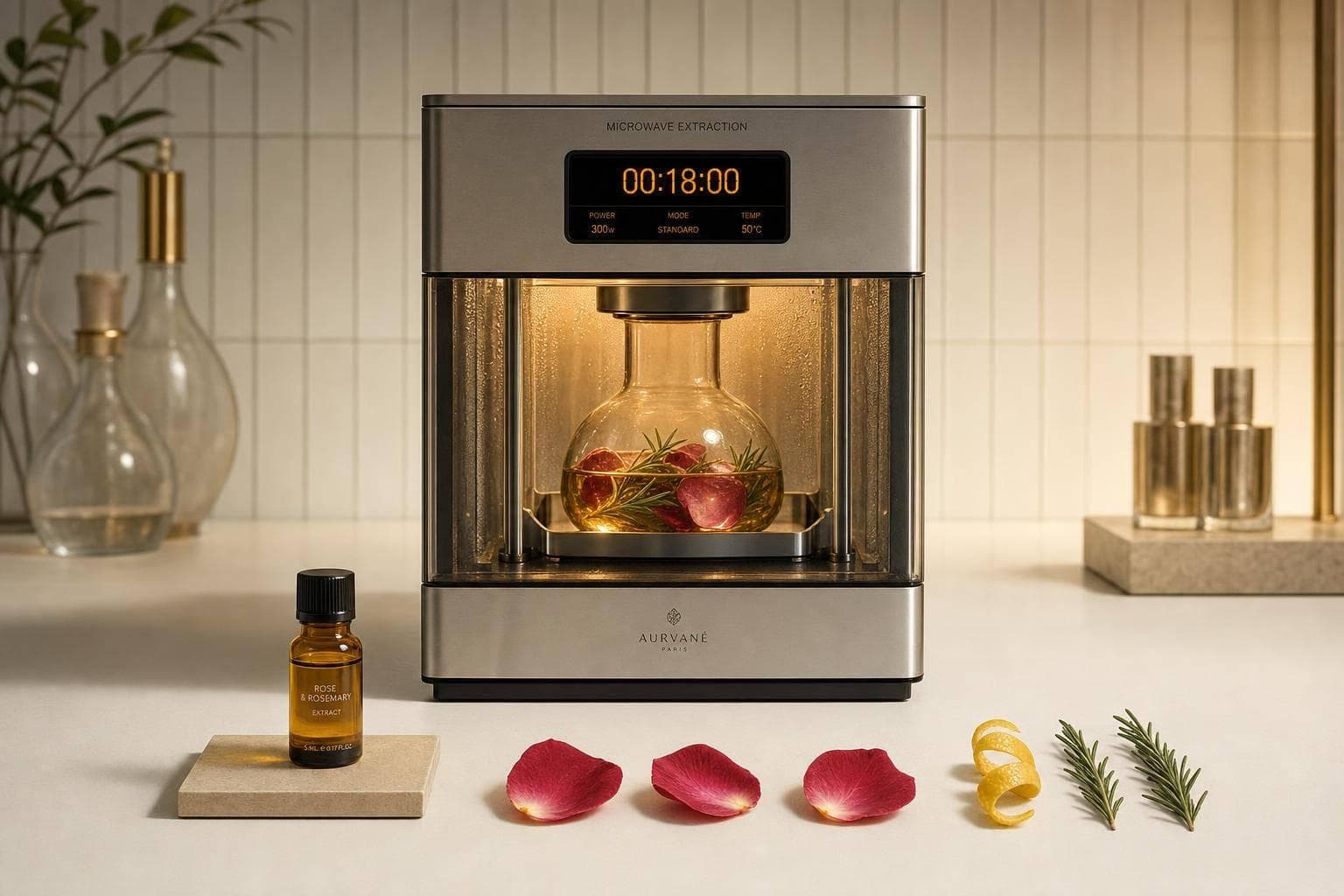
Röviden összefoglalva: a mikrohullámú extrakció 4–8 óra helyett mindössze 10–30 perc alatt nyeri ki az illatanyagokat a növényekből, miközben a hozam gyakran változatlan marad, az energia- és oldószer-felhasználás pedig jelentősen csökken.
Számomra ez a kutatás leglényegesebb tanulsága. Az eljárás a növény saját belső nedvességtartalmát melegíti fel, így az aromavegyületek hamarabb felszabadulnak, és kevesebb ideig vannak kitéve hőhatásnak. Ez segít megőrizni az érzékeny illatmolekulák eredeti jellegét a forrásalapanyaghoz legközelebbi formában.
A legfontosabb tudnivalók röviden:
- Jelentős időmegtakarítás: órák helyett percek alatt
- A hozam gyakran változatlan: a paraméterek finomhangolásával olykor valamivel magasabb is
- Alacsonyabb energiafogyasztás: a rövidebb ciklusok kevesebb energiát igényelnek
- Az oldószer-felhasználás akár nullára csökkenthető: az oldószermentes eljárásokban
- Az illatprofil szinte teljesen megegyezik: a GC — MS elemzések általában szinte tökéletes egyezést mutatnak a hagyományos lepárlással
- Garantált tisztaság: a kevesebb oldószer csökkenti a maradványok kockázatát, a hexáncélok pedig 10 ppm alatt maradnak
Gyors összehasonlítás
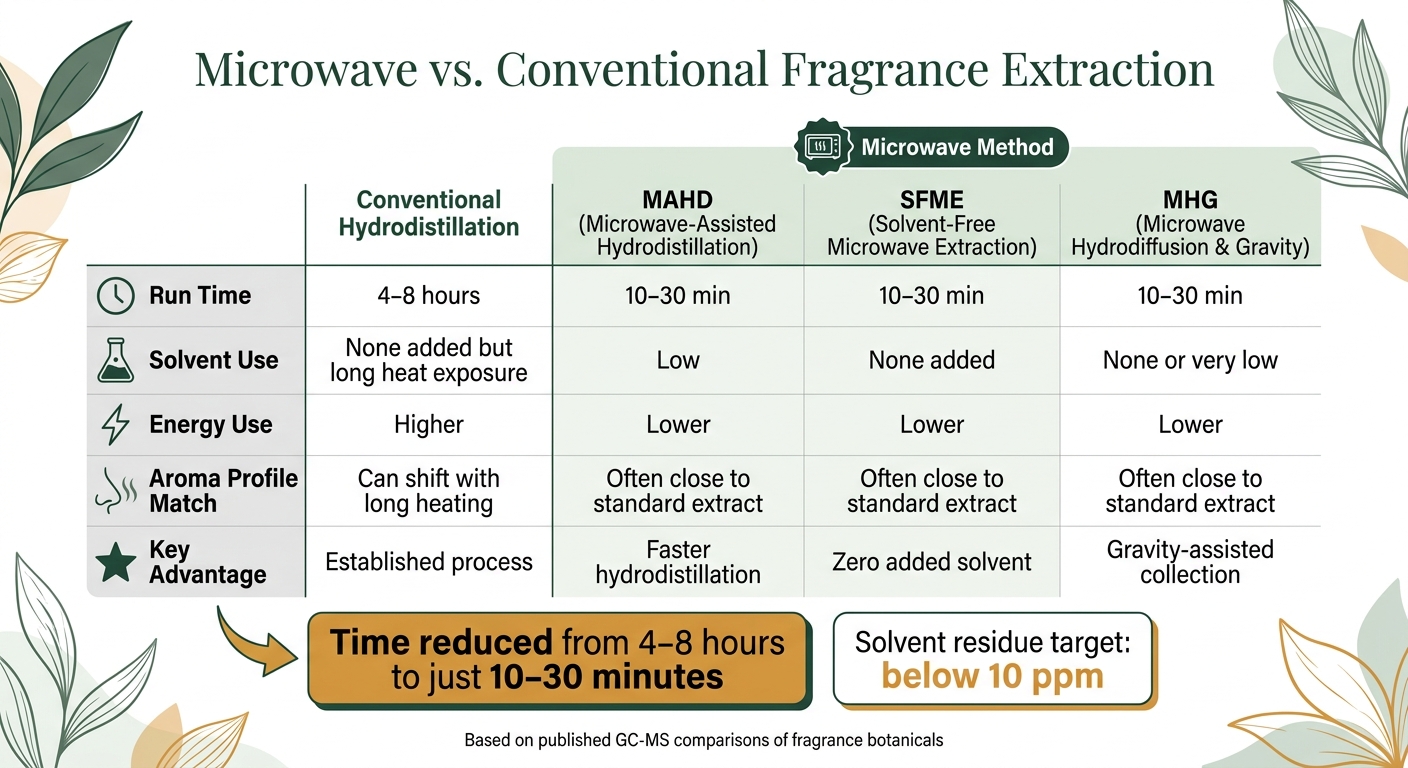
Microwave vs. Conventional Fragrance Extraction: Speed, Yield & Purity Compared
| Módszer | Futási idő | Oldószer-használat | Energiafelhasználás | Illatprofil | Fő jellemző |
|---|---|---|---|---|---|
| Hagyományos hidrodesztilláció | 4–8 óra | A lepárlás során gyakran nincs, de hosszú a hőhatás | Magasabb | A tartós hő hatására módosulhat | Lassú, nagy hőigényű eljárás |
| MAHD | 10–30 perc | Alacsony | Alacsonyabb | Gyakran közel áll a standard kivonathoz | Gyorsabb hidrodesztilláció |
| SFME | 10–30 perc | Hozzáadott oldószer nélkül | Alacsonyabb | Gyakran közel áll a standard kivonathoz | Nincs hozzáadott oldószer |
| MHG | 10–30 perc | Nincs, vagy minimális, az elrendezéstől függően | Alacsonyabb | Gyakran közel áll a standard kivonathoz | A hő felszabadítja a vegyületeket, a gravitáció összegyűjti őket |
Az illatanyag-előállítás szempontjából tehát a lényeg így foglalható össze: a mikrohullámú eljárások lerövidítik a feldolgozási időt, csökkentik az erőforrás-felhasználást, miközben az illatprofilt gyakran az eredeti növényéhez hűen őrzik meg.
Hogyan működik a mikrohullámmal segített extrakció?
A gyorsaság titka abban rejlik, hogy a mikrohullámok belülről kifelé melegítik fel a növény saját nedvességtartalmát. A mikrohullámmal segített extrakció során az energia közvetlenül a biomasszába jut. A növényben lévő víz gyorsan felmelegszik, ami elősegíti az aromavegyületek korábbi felszabadulását. Ahelyett, hogy a növényt kívülről melegítenék fel, az energia közvetlenül a szövetekben abszorbeálódik.
Három elterjedt eljárás épül erre az elvre, minimális technikai eltérésekkel.
A MAHD, az SFME és az MHG bemutatása
- MAHD (microwave-assisted hydrodistillation): a mikrohullámok a növény belső nedvességét melegítik, felgyorsítva a hagyományos hidrodesztillációt.
- SFME (solvent-free microwave extraction): kizárólag a növény saját víztartalmát használja, hozzáadott oldószerek nélkül.
- MHG (microwave hydrodiffusion and gravity): a hő hatására az aromavegyületek távoznak a növényi anyagból, a gyűjtést pedig a gravitáció segíti.
Miért gyorsítja fel a kivonást a mikrohullám?
Ez a belülről kiinduló melegítés a legfőbb oka annak, hogy a tanulmányok lényegesen rövidebb extrakciós időkről számolnak be a végtermék minőségének romlása nélkül. Egyszerűen fogalmazva: a közvetlen belső melegítés lerövidíti a folyamatot, miközben a hozam változatlan szinten marad.
Személyes illatszakértője már várja
Töltse ki rövid illatkvízünket, és fedezzen fel hiteles designer és niche parfümöket, amelyek az ízléséhez illenek – próbálja ki őket 2, 5, 8 és 30 ml-es dekantokban és mintákban, hogy mindegyiket kipróbálhassa, mielőtt teljes flakon mellett dönt.
Találja meg illatátAmit a tanulmányok mutatnak: gyorsabb ciklusok, hasonló hozamok, kevesebb energia
A mikrohullámok belülről melegítik fel a növény nedvességét. Ez az egyetlen változtatás az egész folyamat dinamikáját átalakítja. A publikált összehasonlítások alapján a mikrohullámmal segített módszerek jóval hamarabb befejeződnek, mint a standard lepárlás.
Drasztikusan csökkenő extrakciós idők
Az illatipari vizsgálatokban a mikrohullámmal segített eljárás kevesebb időt vesz igénybe, mivel a hő a növényi anyag belsejében keletkezik ahelyett, hogy kívülről hatolna befelé. Ez az időmegtakarítás növényenként eltérő, és az elrendezés is befolyásolja. A tendencia azonban egyértelmű: a kivonás lényegesen gyorsabb. A következő kérdés természetesen az, hogy ez a sebesség hatással van-e a végeredményre.
A hozam gyakran hasonló vagy kissé magasabb
Itt válnak igazán érdekessé a dolgok. Az itt összefoglalt tanulmányok szerint a mikrohullámú eljárások a hagyományos lepárláshoz mérhető hozamot biztosítanak. Megfelelően optimalizált beállítások mellett olykor még csekély mértékű növekedés is megfigyelhető. A hozam továbbra is a növénytől és a paraméterektől függ, így nincs általános érvényű számadat, a fő megállapítás azonban áll: a kitermelés általában azonos szinten marad.
Csökken az energia- és oldószer-felhasználás
További előny, hogy a rövidebb extrakciós idő révén az energiafogyasztás is mérséklődik, különösen a hosszadalmas hagyományos lepárlási ciklusokkal összevetve.
Összességében a kutatások egy olyan eljárást mutatnak be, amely gyorsabb, megbízható hozamot garantál és kevesebb energiát igényel.
Tisztaság és illatminőség: megőrzi-e a mikrohullámú eljárás az eredeti illatot?
A gyorsaságon és a hozamon túl a legfontosabb szempont maga az illat. Egy gyors eljárás mit sem ér, ha az aroma tompává, torzzá vagy kiegyensúlyozatlanná válik. Az illatkészítésben a tisztaság éppoly lényeges, mint a kitermelés mennyisége. A döntő kérdés egyszerű: hű marad-e az illatprofil a forrásalapanyaghoz?
A kémiai profilok közel állnak a hagyományos kivonatokhoz
A GC — MS vizsgálatok gyakran igazolják, hogy a mikrohullámú kivonatok rendkívül közel maradnak a hagyományos lepárlással kapott profilokhoz. Ez kulcsfontosságú az illatfejlesztés és az alapanyag-kiválasztás során, hiszen nem csupán az anyag kinyerése a cél. A feladat egy olyan kivonat megalkotása, amely pontosan visszaadja a parfümőrök által vizsgálni kívánt illatképet.
Ez a szoros kémiai egyezés a legfőbb oka annak, hogy a mikrohullámú eljárások miért bírnak kiemelt jelentőséggel a parfümkészítésben. Nem pusztán laboratóriumi időt takarítanak meg, hanem olyan kivonatokat hoznak létre, amelyek maradéktalanul alkalmasak a szaglószervi bírálatra.
A rövidebb hőhatás mérsékelheti a degradációt
A rövidebb hevítési idő csökkentheti a termikus degradáció veszélyét, ami az egyik legnyilvánvalóbb előny.
A hagyományos vízgőz-desztilláció általában 100 °C-on vagy magasabb hőmérsékleten zajlik több órán keresztül. Ez a hosszan tartó hőhatás kedvezőtlenül módosíthatja az aromát, és nemkívánatos változásokat idézhet elő. Egyes jegyek elhalványulnak, mások tompává vagy „főtt” jellegűvé válhatnak.
Az oldószermentes eljárások jellegükből adódóan kiküszöbölik az oldószermaradványok jelenlétét, ami elengedhetetlen, ha a kompromisszummentes tisztaság a cél.
Ahol a bizonyítékok meggyőzőek, és ahol még vegyesek
A MAHD, az SFME és az MHG esetében a legmeggyőzőbb eredményeket a jól ismert növényekkel végzett, ismételt összehasonlító kísérletek nyújtják. Ezekben az esetekben a mikrohullámú eljárások megbízhatóan őrzik meg az illatminőséget a feldolgozási idő drasztikus csökkentése mellett.
Ugyanakkor a kevésbé feltárt illatösszetevők esetében az eredmények még nem ennyire kiforrottak. A jelenlegi adatok ígéretes jövőt vetítenek előre a parfümiparban, de további komponensek vizsgálata szükséges a teljes képhez.
Mit jelent mindez a parfümkészítés és az illatfelfedezés szempontjából?
Miért fontos ez a parfümőröknek és a gyártóknak?
Ezek a laboratóriumi eredmények azért bírnak nagy jelentőséggel, mert megváltoztatják, milyen tempóban tesztelhetik és finomíthatják a parfümőrök a természetes alapanyagokat. A mikrohullámú módszerek órákról percekre rövidítik az extrakció idejét, így egyetlen munkanap alatt jóval több növényi kísérlet végezhető el.
Ez a változás közvetlenül érezteti hatását az alkotóműhelyekben is. A gyorsabb alapanyag-feldolgozás révén a parfümőrök hamarabb kapnak visszajelzést. Megszagolhatják, módosíthatják és újra tesztelhetik a kompozíciót anélkül, hogy fél napot kellene várniuk az eredményre.
Az oldószermentes mikrohullámú eljárások ráadásul feleslegessé teszik a hozzáadott oldószereket, ami minimálisra csökkenti az oldószermaradványokat a kész kivonatban. Ez azért lényeges, mert a parfümabszolútumokra vonatkozó iparági szabványok előírják, hogy az oldószermaradványok szintje 10 ppm (parts per million) alatt maradjon.
Miért fontos ez az európai illatkedvelők számára?
Ugyanez a gyorsaság és tisztább feldolgozás határozza meg, hogyan találkoznak az illatrajongók a természetes alapanyagokkal a vásárlás előtt. A gyorsabb feldolgozás segíthet megóvni az érzékeny aromavegyületeket, amelyek a hosszabb extrakció során elhalványulhatnának vagy átalakulhatnának.
A vásárlók számára ez olyan természetes esszenciákat jelent, amelyek illata hűebben tükrözi az eredeti forrást, különösen a kisebb felfedező kiszerelésekben. Gondoljunk a Scento 2 ml-es, 5 ml-es és 8 ml-es dekantjaira. Egy ilyen formátumban azt várjuk el egy illattól, hogy tiszta és határozott első benyomást keltsen, ne pedig tompát vagy elmosódottat.
Összegzés: A jelenlegi kutatások legfőbb tanulsága
Összességében a mikrohullámmal segített extrakció gyorsabb, erőforrás-takarékosabb utat kínál a növénytől a kivonatig, miközben az ismételt vizsgálatok szerint is kifogástalanul hű marad az alapanyagok eredeti karakteréhez.
Gyakori kérdések
Hogyan működik a mikrohullámú extrakció?
A mikrohullámmal segített extrakció mikrohullámú energiát alkalmaz a növényi alapanyagban természetesen jelen lévő nedvesség felmelegítésére. Ez a belülről felépülő hő feltárja a növényi sejteket, és figyelemreméltó hatékonysággal szabadítja fel az illóolajokat és az aromás vegyületeket.
Mivel a módszer magában a növényben található vízzel dolgozik, nincs szükség hozzáadott vízre vagy kémiai oldószerekre. Emellett gyors, kevesebb energiát használ fel, és a kivonás alatti hőkárosodás minimalizálásával segít megőrizni az összetevő makulátlan tisztaságát.
Megváltoztatja-e a mikrohullámú extrakció az illatot?
Igen, képes pozitívan formálni a végső illatprofilt.
Ez az eljárás gyorsabban és kevesebb veszteséggel vonja ki az aromás vegyületeket, miközben tisztább alapanyagot eredményez. És mivel kontrollált mikrohullámú energiát alkalmaz, a kényes komponenseket jobban védi, mint a magas hőmérsékletű eljárások, például a gőzlepárlás.
Ennek nagyobb a jelentősége, mint elsőre tűnhet. A parfümkészítésben a kivonás során bekövetkező apró eltérés is megváltoztathatja, hogyan viselkedik egy illatjegy a bőrön. A hőkárosodás kockázatának mérséklésével ez a módszer segít közelebb tartani az esszenciát a növény természetes, friss illatához.
Mely növényekhez a legalkalmasabb a mikrohullámú extrakció?
A mikrohullámmal segített extrakció számos növényi alapanyaggal kiválóan működik, különösen virágok, fűszerek és más aromás növények esetében.
Gyorsan felmelegíti a növény belső nedvességét, ami óvja a kényes illatprofilokat, miközben lerövidíti a gyártási időt. Ezzel párhuzamosan kiemelkedő tisztaság és egyenletes minőség mellett nyeri ki az aromás vegyületeket.

