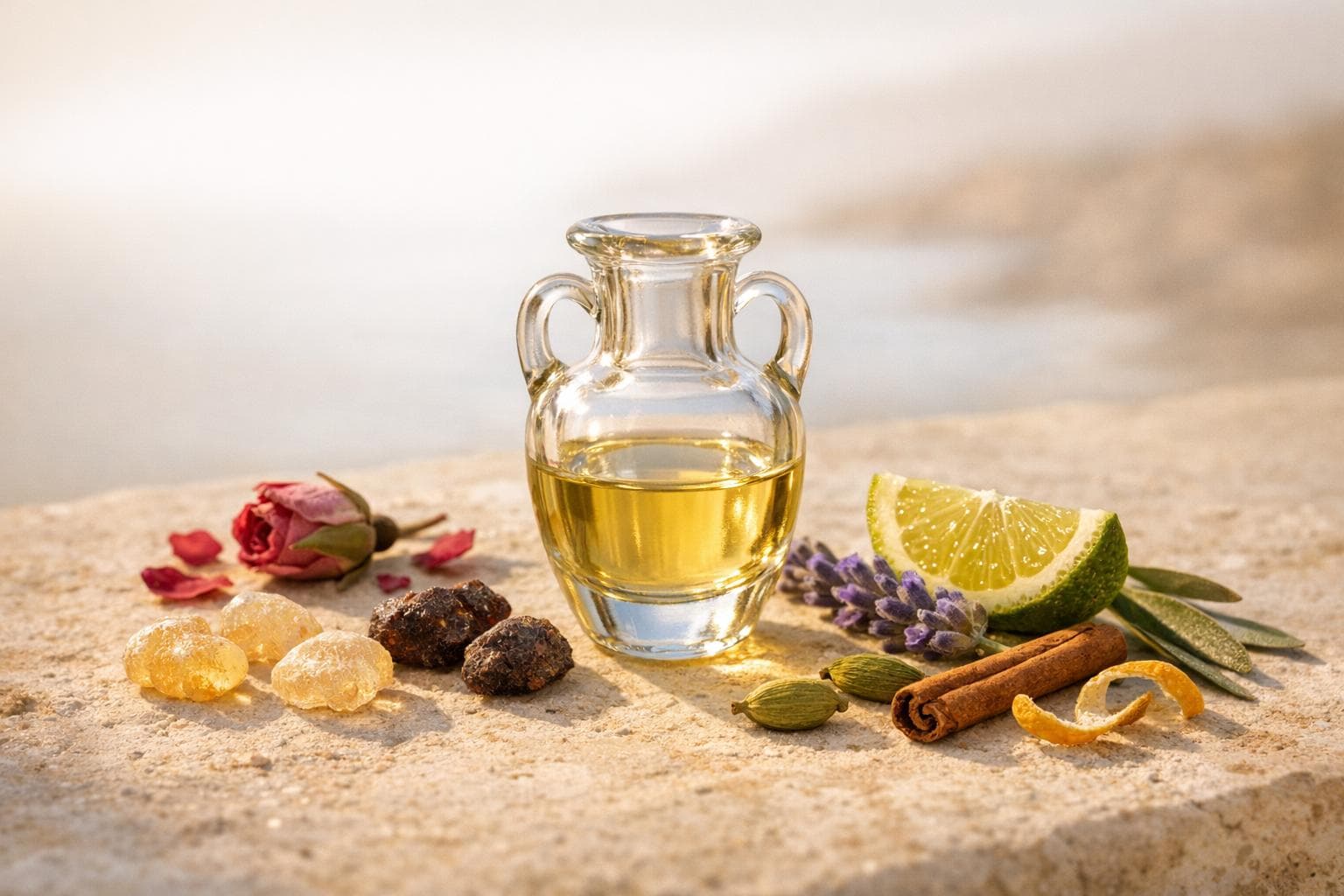
Le fragranze mediterranee devono le loro origini alle antiche rotte commerciali che collegavano Arabia, Africa, India ed Europa. Queste vie trasportavano resine come l’olibano e la mirra, spezie come lo zafferano e la cannella, e botaniche locali come la rosa e il pino. Già nel 2000 a.C., i mercanti spostavano questi materiali preziosi attraverso vasti deserti e mari, creando una fiorente rete commerciale che influenzò rituali, economie e tradizioni profumiere.
Punti salienti:
- Olibano & Mirra: Provenienti dall’Arabia, apprezzati per rituali e medicina.
- Zafferano & Nardo: Lussi dall’India e dall’Oriente, utilizzati in profumi e cerimonie.
- Botaniche locali: Piante mediterranee come lavanda, rosmarino e mastice aggiungevano un carattere regionale.
- Grandi centri: Città come Alessandria, Petra e Tiro fungevano da centri di lavorazione e commercio.
Metodi antichi, come la miscela di importazioni esotiche con ingredienti locali, posero le basi della profumeria moderna. Questi aromi non definivano soltanto il lusso, ma riflettevano anche lo scambio di idee e tecniche tra civiltà. Ancora oggi, ingredienti e pratiche di quell’epoca continuano a ispirare la creazione olfattiva contemporanea.
Ancient Trade Networks and Aromatic Materials
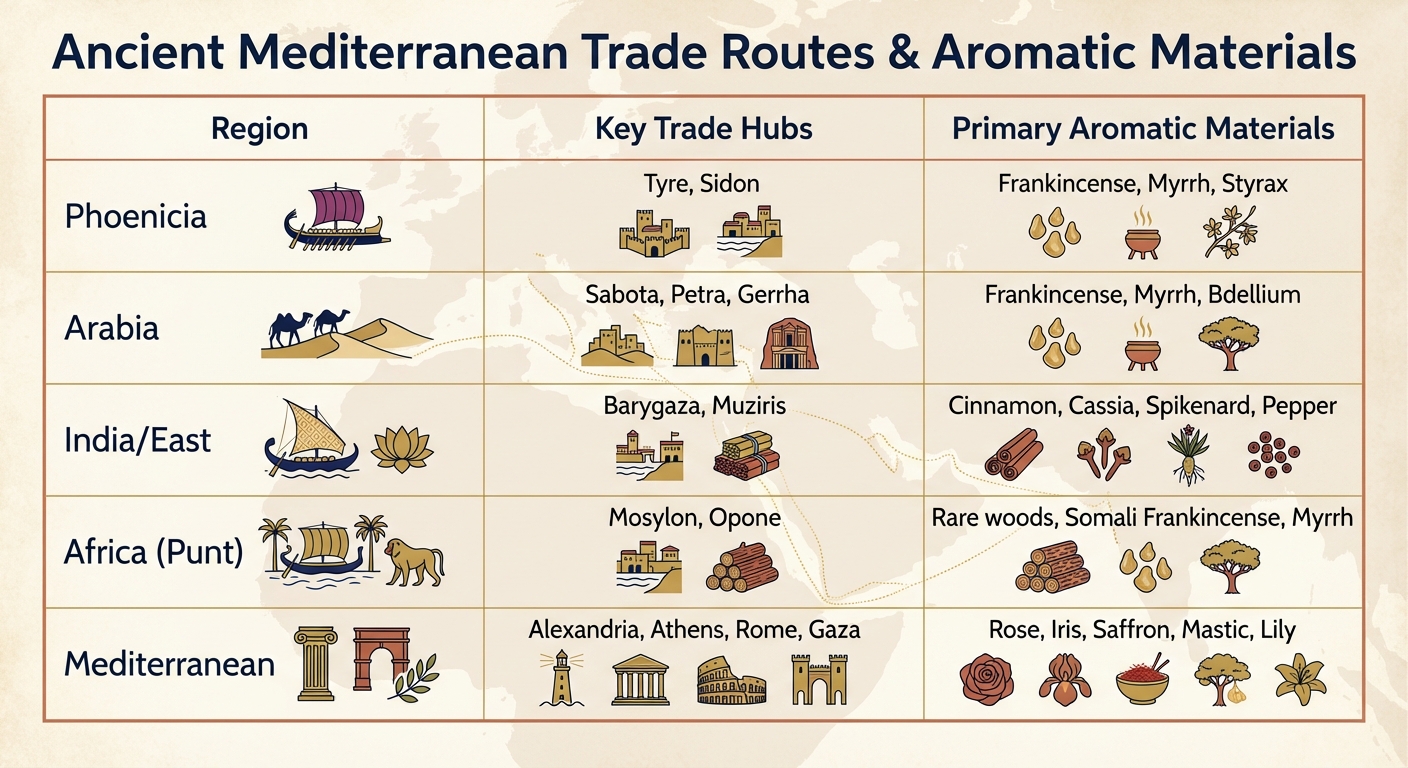
Antiche rotte commerciali mediterranee e materiali aromatici per regione
L’industria delle fragranze mediterranee prosperò su una trama di rotte commerciali che trasportavano materiali aromatici attraverso i continenti. Queste reti riunivano ingredienti diversi, plasmando gli aromi delle antiche civiltà.
Rotte marittime fenicie
I Fenici, attivi da porti come Tiro e Sidone, erano maestri del commercio marittimo mediterraneo. Le loro navi trasportavano aromi preziosi come olibano, mirra e storace, collegando i fornitori arabi ai mercati greci e romani. L’efficienza delle loro rotte marittime permetteva di evitare pericolosi percorsi via terra, garantendo consegne più rapide e affidabili. Curiosamente, la diversità linguistica del termine per l’olibano riflette la loro influenza diffusa. Le loro vie commerciali divennero l’ossatura di scambi aromatici più ampi in tutta la regione.
Rotte delle spezie dall’India e dall’Africa
La Rotta dell’Incenso era una vasta rete che collegava i porti mediterranei all’India, all’Arabia meridionale e al Corno d’Africa attraverso una combinazione di percorsi terrestri e marittimi. I mercanti nabatei svolsero un ruolo decisivo, controllando segmenti strategici dalla loro capitale, Petra, che fungeva da snodo cruciale tra Arabia e Damasco, con connessioni verso Gaza. Testimonianze storiche, come la spedizione della regina Hatshepsut nella Terra di Punt intorno al 1500 a.C., evidenziano l’importanza di questi collegamenti. In epoca romana, le rotte marittime avevano assunto la precedenza, con fino a 120 navi all’anno in partenza da Myos Hormos verso l’India per procurare beni di lusso. I mercanti romani aggiravano gli intermediari navigando direttamente attraverso il Mar Rosso, aumentando in modo significativo l’afflusso di articoli preziosi nei mercati mediterranei. Al culmine del commercio, l’olibano era così ambito che il suo valore superava quello dell’oro, con diritti esclusivi di raccolta a Saba detenuti da sole 300 famiglie, celebri come "i santi". Queste rotte non facilitarono soltanto il commercio, ma posero anche le basi per centri di lavorazione specializzati nei territori greci e romani.
Centri commerciali greci e romani
Con il fiorire di queste reti commerciali, città come Alessandria e Puteoli divennero centri di lavorazione essenziali. Materie prime come cassia, cannella e nardo venivano trasformate in fragranze raffinate destinate all’esportazione. In città greche come Atene, la profumeria si evolse da uso rituale a scienza strutturata. Teofrasto, nella sua opera Sugli odori, documentò metodi di estrazione e conservazione. I Romani ampliarono queste tecniche, istituendo quartieri dedicati alla produzione di profumi a Trastevere e lungo la Via Sacra a Roma. Gli scavi di Pompei hanno riportato alla luce vasi marchiati (unguentaria), a testimonianza di sistemi commerciali avanzati. Alessandria si distinse come centro d’innovazione, fondendo le tradizioni egizie dell’incenso con le pratiche cosmetiche greche per produrre articoli ampiamente distribuiti in tutto il Mediterraneo.
| Regione | Principali centri commerciali | Materiali aromatici primari |
|---|---|---|
| Fenicia | Tiro, Sidone | Olibano, Mirra, Storace |
| Arabia | Sabota, Petra, Gerrha | Olibano, Mirra, Bdellio |
| India/Oriente | Barygaza, Muziris | Cannella, Cassia, Nardo, Pepe |
| Africa (Punt) | Mosylon, Opone | Legni rari, Olibano somalo, Mirra |
| Mediterraneo | Alessandria, Atene, Roma, Gaza | Rosa, Iris, Zafferano, Mastice, Giglio |
Ingredienti commerciati nelle fragranze mediterranee
Il ricco arazzo della profumeria mediterranea deve molto ai diversi materiali che viaggiavano lungo le antiche rotte commerciali. Dalle resine esotiche alle botaniche autoctone, questi ingredienti non solo plasmarono le tradizioni olfattive della regione, ma rifletterono anche gli scambi commerciali e culturali del tempo. Ogni materiale portava con sé la storia della propria origine, influenzando sia il commercio sia l’evoluzione dell’arte profumiera.
Olibano e Mirra dall’Arabia
L’Arabia meridionale, in particolare aree come Saba e Hadhramaut (gli odierni Yemen e Oman), era la fonte di resine pregiate come l’olibano e la mirra. Questi materiali erano molto più di semplici ingredienti per profumi: svolgevano ruoli essenziali nei rituali religiosi, nei processi di mummificazione e persino nella medicina. Gli antichi guaritori li utilizzavano per trattare disturbi come bronchite, tosse e problemi dentali. Miscelando queste resine con oli come quello d’oliva o di mandorla, i profumieri ne estraevano l’essenza aromatica per creare lussuosi oli per unzione e fragranze esclusive destinate all’élite. Queste resine non arricchirono soltanto i rituali antichi, ma gettarono anche le fondamenta di tradizioni olfattive durature.
Zafferano e Nardo dall’Oriente
Lo zafferano, simbolo di immensa ricchezza, era uno degli ingredienti più laboriosi del mondo antico. Per raccoglierne appena un’oncia erano necessari circa 4.000 stigmi del fiore di Crocus sativus, con ogni corolla capace di produrre solo tre fili rossi. Questa rarità rese l’olio di zafferano un’aggiunta ambita nei profumi d’alta gamma. Allo stesso modo, il nardo, importato dall’India, era riservato a usi di alto prestigio, come cerimonie religiose e oli per unzione. Cannella e cassia, provenienti da regioni come Sri Lanka, Cina e Indonesia, aggiungevano una dimensione calda e speziata alle composizioni profumate. Gli antichi profumieri arrivavano persino a macerare foglie di cannella per creare prodotti aromatici che profumavano gli abiti e rinfrescavano l’alito. Questi ingredienti lontani completavano le materie locali, elevando la profumeria mediterranea a nuove vette.
Aromatiche mediterranee locali: Pino, Mastice e Rosa
La regione mediterranea offriva a sua volta una ricchezza di botaniche aromatiche. Erbe come lavanda, rosmarino e timo erano apprezzate per le loro proprietà medicinali, mentre fiori come rosa, iris, maggiorana e giglio divennero elementi fondamentali nei balsami floreali greci. Queste basi locali venivano spesso impreziosite con tesori importati come cannella e mirra, segnali di agiatezza e raffinatezza. Le terme romane, celebri per i loro ambienti profumati, prediligevano gli aromi freschi e rinvigorenti di pino, rosmarino e menta. Un altro elemento distintivo era il mastice, resina dell’albero del lentisco, che aggiungeva una nota resinosa inconfondibile alle fragranze mediterranee. L’unione di botaniche locali e rare importazioni consentiva ai profumieri di creare aromi complessi e stratificati. Questa fusione dinamica ha definito per secoli la cultura olfattiva del Mediterraneo, combinando accessibilità e lusso in un modo che continua a ispirare.
Il tuo esperto di profumi personale ti aspetta
Fai il nostro veloce quiz olfattivo per scoprire autentici profumi di design e di nicchia scelti in base ai tuoi gusti: esplorali in decant e campioni da 2, 5, 8 e 30 ml, così puoi provarne ognuno prima di scegliere il flacone intero.
Trova il tuo profumoInfluenza interculturale sui metodi profumieri
Il Mediterraneo non fu soltanto una via commerciale per gli ingredienti: fu un crocevia di idee e tecniche che plasmò l’arte della profumeria. Mercanti fenici, filosofi greci e industriali romani portarono i propri metodi, fondendoli e adattandoli in pratiche che influenzarono la creazione di fragranze in tutto il mondo antico. Queste innovazioni condivise posero le basi per l’evoluzione sia dell’artigianato sia della sua presentazione.
Oli profumati fenici: più che merci di scambio
Tra l’8° e il 6° secolo a.C., i Fenici agirono da intermediari culturali, diffondendo le tradizioni aromatiche del Vicino Oriente in tutto il Mediterraneo. I loro oli profumati non erano semplici beni di scambio: avevano un valore simbolico. Il Dott. Adriano Orsingher, ricercatore onorario presso l’Università di Tubinga, ne sottolinea l’importanza:
"Questi oli erano più che semplici merci. Funzionavano come connettori culturali, come espressioni di identità che accompagnavano i migranti fenici attraverso il Mediterraneo."
Gli archeologi hanno rinvenuto circa 90 bottiglie d’olio fenicie a Mozia, in Sicilia: la più grande collezione mai trovata in un unico luogo. Dei 51 contenitori analizzati, otto contenevano tracce di pino e resina di mastice, confermando il loro uso nel trasporto di oli fragranti lungo rotte commerciali consolidate. Questi oli svolgevano anche ruoli nei rituali religiosi e nella diplomazia, spesso raffigurati nell’arte antica come incenso che si innalzava davanti a figure divine.
Contributi greci alla profumeria
I Greci portarono la profumeria a un livello superiore, trasformandola da mestiere a disciplina sistematica. Adattarono le tecniche egizie alle piante mediterranee come origano, violetta e maggiorana. Gli artigiani greci innovarono anche nel packaging, creando eleganti recipienti come aryballoi e lekythoi, che univano funzionalità e bellezza artistica. Questi design si distinguevano nettamente dalle bottiglie fenicie, più semplici e utilitarie.
Centri romani ed egizi di produzione dei profumi
Mentre i Greci raffinavano l’arte della profumeria, Romani ed Egizi si concentrarono sull’ampliamento della produzione e della distribuzione. I Romani industrializzarono la creazione di fragranze, istituendo distretti specializzati chiamati unguentaria e trasformando i profumi in lussi accessibili. Importanti centri di produzione sorsero in luoghi come Capua, Ercolano e Pompei in Italia, oltre a Delo in Grecia e nella Fenicia meridionale, tra Beirut e la regione del Carmelo. Al culmine dell’Impero romano, la domanda di fragranze era straordinaria: i Romani importavano circa 2.800 tonnellate di olibano e 550 tonnellate di mirra ogni anno. Iniziative come il progetto Seplasia hanno persino ricostruito antichi profumi romani, mostrando le loro tecniche di miscela avanzate.
In Egitto, Mendes divenne un rinomato centro di produzione profumiera. Le sue miscele, realizzate con olio di balanos, erano così apprezzate che altre città del Mediterraneo cercarono di replicarle. Tuttavia, i profumi mendesiani conservarono il loro status d’élite.
Queste innovazioni antiche continuano a influenzare la profumeria moderna, in cui l’incontro tra tecniche raffinate e scambio culturale definisce ancora l’arte della creazione olfattiva.
Aromi mediterranei antichi nella profumeria moderna
Ingredienti antichi nei profumi contemporanei
I materiali aromatici che un tempo viaggiavano lungo le rotte commerciali mediterranee continuano a svolgere un ruolo essenziale nella profumeria moderna. Ingredienti come olibano e mirra, apprezzati per la loro profondità calda e terrosa, restano componenti chiave nelle fragranze orientali e unisex. Allo stesso modo, la rosa continua a fungere da elemento di equilibrio in molte composizioni, ammorbidendo e completando note più intense.
Prendiamo lo zafferano, per esempio. Questa spezia, inizialmente proveniente da Creta e utilizzata da Ippocrate a scopi medicinali, si è trasformata in una nota lussuosa nei profumi niche e designer di oggi. Il suo impiego storico ne sottolinea il fascino senza tempo. I profumieri moderni apprezzano lo zafferano per la sua complessità, la sua persistenza e il suo carattere distintivo.
Combinando questi ingredienti consacrati dal tempo con tecniche avanzate, la profumeria contemporanea costruisce sulle ricche tradizioni del passato.
Influenza mediterranea sul design olfattivo contemporaneo
La profumeria moderna ha accolto anche tecniche antiche, perfezionandole con la tecnologia odierna. Metodi come la distillazione a vapore, portata a perfezione per la prima volta da Ibn Sina, e la macerazione restano essenziali per l’estrazione degli oli. Persino l’antica pratica greca di applicare il profumo sui punti di pulsazione, dove il calore corporeo amplifica la fragranza, continua a essere una raccomandazione standard.
"Gli antichi profumieri comprendevano principi che restano attuali oggi: la complessità dei materiali crea risonanza emotiva; il profumo àncora memoria e identità." - NYC.PH
Nella profumeria di nicchia, si osserva un rinnovato interesse per ciò che le culture antiche chiamavano "fragranza atmosferica". Questo approccio privilegia la complessità dei materiali e la profumazione dell’ambiente rispetto alla semplice proiezione personale. Riflette il modo in cui le culture mediterranee usavano il profumo per segnare i grandi passaggi della vita, dalla nascita al matrimonio fino ai riti funebri.
Scoprire fragranze d’ispirazione mediterranea con Scento

Oggi gli amanti delle fragranze possono esplorare questi aromi senza tempo in chiave moderna. Piattaforme come Scento offrono accesso a profumi d’ispirazione mediterranea senza l’impegno di un flacone full-size. Con oltre 1.000 opzioni designer e niche, Scento propone decant da 2 ml, 5 ml e 8 ml, e un decant in flacone da 30 ml per la maggior parte dei profumi.
Che siate attratti da miscele resinose di olibano e mirra o da aromi freschi ed erbacei con lavanda e rosmarino, radicati nelle tradizioni greche, Scento vi permette di esplorare senza lo spreco di flaconi inutilizzati. Ogni vial da 8 ml offre circa 120 spruzzi, dandovi ampia occasione di sperimentare come gli antichi ingredienti mediterranei vengano reinterpretati nella profumeria moderna.
Conclusione
L’eredità olfattiva del Mediterraneo riflette secoli di commercio e scambio culturale. Le antiche rotte commerciali non si limitarono a muovere merci: trasportarono storie, tradizioni e un lascito sensoriale che ancora oggi ci influenza. Dalle navi fenicie cariche di olibano agli unguentaria romani colmi di oli preziosi, questi scambi posero le fondamenta di un’arte che attraversa i millenni.
"Gli antichi profumieri comprendevano principi che restano attuali oggi: la complessità dei materiali crea risonanza emotiva; il profumo àncora memoria e identità." - nyc.ph
Questa eredità duratura unisce arte e scienza della profumeria. Le materie prime apprezzate nell’antichità continuano a ispirare le fragranze moderne, mentre il sapere tecnico sviluppato attraverso quei primi scambi informa ancora l’arte della creazione profumiera artigianale. Persino i progressi romani nella distribuzione del commercio globale trovano eco nell’industria internazionale del profumo di oggi.
La profumeria moderna, in molti modi, è una rinascita di questi principi consacrati dal tempo. Tracciando il modo in cui il commercio mediterraneo ha plasmato l’evoluzione degli aromi, scopriamo un legame più profondo con la fragranza come qualcosa di più di un semplice prodotto: diventa un linguaggio di atmosfera e memoria, che ci unisce a secoli di storia condivisa.
FAQ
Perché le resine d’incenso valevano più dell’oro?
Le resine d’incenso un tempo avevano un valore superiore all’oro, grazie alla loro rarità e alla profonda importanza che rivestivano nei rituali spirituali, nelle pratiche medicinali e negli usi aromatici. La produzione di queste resine richiedeva complessi processi di coltivazione e dipendeva da estese reti commerciali, fattori che ne accrescevano il fascino e l’elevata domanda.
Come estraevano gli aromi gli antichi profumieri senza distillazione?
Gli antichi profumieri si affidavano alla spremitura come metodo per estrarre oli dalle piante. Comprimendo fisicamente le piante, potevano liberarne le essenze naturali senza bisogno di calore. Questo approccio preservava la fragranza nella sua forma più pura, evitando il processo di distillazione dipendente dal calore usato per gli oli essenziali.
Quali note dei profumi moderni provengono da queste rotte commerciali?
L’influenza delle antiche rotte commerciali sulle note della profumeria moderna è inconfondibile. Ingredienti come cannella, mirra e olibano - spezie e resine classiche - portano con sé l’essenza di questi scambi storici. Allo stesso modo, note floreali come ninfee e rosa, venerate per secoli, devono la loro prominenza anche a questi legami. Questi materiali, provenienti da regioni connesse alle antiche reti commerciali, continuano a plasmare il mondo della profumeria contemporanea, fondendo storia e arte moderna.

