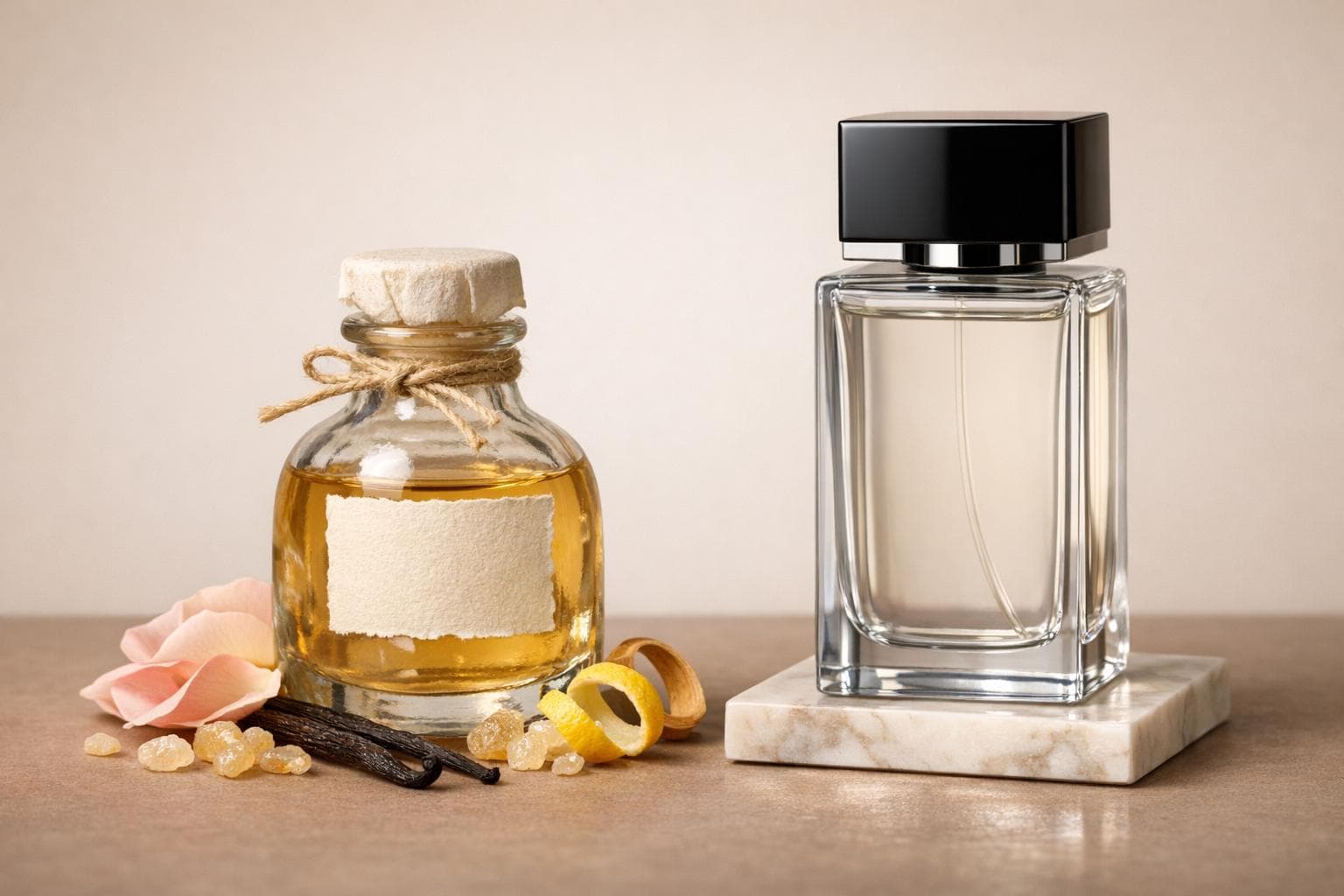
I profumi artigianali e quelli designer rispondono a preferenze e stili di vita differenti. I profumi artigianali sono realizzati a mano in piccoli lotti, con particolare attenzione a ingredienti rari e naturali e all’estro personale del profumiere. Spesso costano €200–€300+ a flacone, offrendo fragranze complesse e in continua evoluzione che persistono per 8–12 ore. Al contrario, i profumi designer sono prodotti su larga scala da maison di lusso come Dior o Gucci, privilegiando un’ampia attrattiva e una maggiore accessibilità. In genere utilizzano ingredienti sintetici e costano meno, con formulazioni più leggere che possono richiedere applicazioni più frequenti.
Differenze principali:
- Produzione: le fragranze artigianali sono realizzate in piccoli lotti ed esclusive; quelle designer sono prodotte in massa per garantire uniformità.
- Ingredienti: i profumi artigianali impiegano materie prime naturali di pregio; i profumi designer si affidano a sintetici più convenienti.
- Costo: le fragranze artigianali sono più costose ma anche più concentrate; le opzioni designer sono più accessibili.
- Disponibilità: i profumi designer sono facilmente reperibili, mentre le fragranze artigianali sono spesso esclusive di boutique selezionate.
Entrambi rispondono a esigenze diverse: i profumi designer sono ideali per l’uso quotidiano, mentre le fragranze artigianali offrono un’esperienza più personale e distintiva.
Confronto rapido
| Caratteristica | Profumi Artigianali | Profumi Designer |
|---|---|---|
| Fascia di prezzo | €200–€300+ a flacone | Più accessibili |
| Produzione | Piccoli lotti | Produzione di massa |
| Ingredienti | Materie prime naturali rare | Alternative sintetiche |
| Concentrazione | 20–40% di oli profumati | 10–15% di oli profumati |
| Disponibilità | Limitata e selettiva | Ampiamente disponibili |
La scelta tra i due dipende dalle vostre priorità: arte ed esclusività oppure praticità e convenienza.
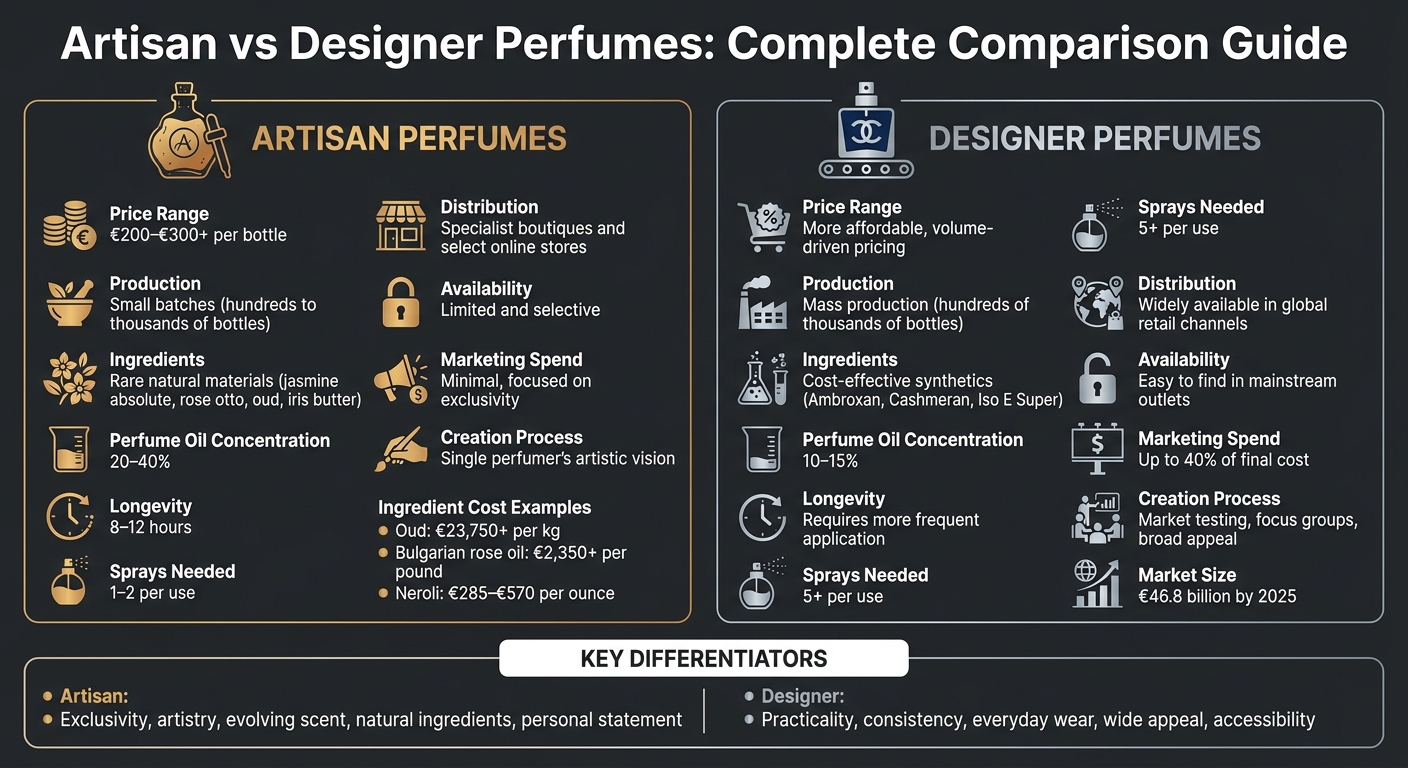
Profumi Artigianali vs Profumi Designer: Guida Completa al Confronto
DIFFERENZA TRA FRAGRANZE DESIGNER, CELEBRITY, NICCHIA, ARTIGIANALI, NATURALI | Tommelise
Metodi di Produzione: Piccoli Lotti vs Produzione di Massa
Il modo in cui una fragranza viene prodotta ha un impatto significativo sul suo profumo e sulla sua disponibilità. I profumi artigianali vengono creati in piccoli lotti, accuratamente controllati, spesso limitati a poche centinaia di flaconi e realizzati a mano. Al contrario, le fragranze designer sono prodotte in massa su linee automatizzate, con decine di migliaia di flaconi pronti a soddisfare la domanda globale.
Questa differenza di scala influisce anche sul processo creativo. Le fragranze artigianali rappresentano in genere la visione di un singolo profumiere e si basano su formule esclusive sviluppate internamente. Le fragranze designer, invece, sono spesso plasmate da strategie di marketing, ricerche sui consumatori e focus group, con l’obiettivo di conquistare il pubblico più ampio possibile. Come afferma Ggema:
Le fragranze designer sono... progettate per piacere a un pubblico ampio. Sono i “profumi sicuri” - belli, piacevoli e volutamente semplici.
La scelta degli ingredienti evidenzia ulteriormente questa divisione. I profumieri artigianali utilizzano spesso materiali rari ed esotici come assoluta di gelsomino autentica, patchouli invecchiato o oud di provenienza etica, che può costare oltre €23.750 al chilogrammo. Questi ingredienti d’alta gamma sono poco pratici per la produzione su larga scala a causa dei vincoli di approvvigionamento, perciò i marchi designer ricorrono ad alternative sintetiche più convenienti per garantire uniformità e disponibilità in tutto il mondo.
Questo compromesso si riflette anche nel prodotto finale. Le fragranze designer sono realizzate con estrema precisione per assicurare uniformità, facendo sì che ogni flacone abbia esattamente lo stesso profumo. Al contrario, i profumi artigianali possono presentare leggere variazioni da un lotto all’altro a causa delle naturali oscillazioni delle materie prime. Inoltre, i profumi in piccoli lotti vengono spesso prodotti più vicino alla data di vendita per preservarne la freschezza, il che può talvolta comportare ritardi nel riassortimento.
Ingredienti e Profili Olfattivi
Gli ingredienti di un profumo non determinano soltanto il suo sentore iniziale, ma influenzano anche il modo in cui evolve nel tempo. I profumi artigianali presentano spesso materiali naturali rari come assoluta di gelsomino, rosa otto, sandalo e oud. Questi estratti botanici contengono centinaia di molecole che interagiscono tra loro per creare una fragranza complessa e mutevole sulla pelle, con una durata che può variare da 8 a 12 ore.
Le fragranze designer, invece, tendono a fare affidamento su molecole sintetiche come Ambroxan, Cashmeran e Iso E Super. Questi ingredienti sono più efficienti in termini di costo, garantiscono un aroma costante e prolungano la durata di conservazione.
Il prezzo delle materie prime mette in luce la netta differenza tra questi due approcci. Ad esempio, l’olio essenziale di neroli può costare tra €285 e €570 per oncia, mentre il sandalo varia da €190 a €380 per oncia. L’oud di provenienza etica può superare €23.750 al chilogrammo, e il burro di iris - uno degli ingredienti più pregiati in assoluto - richiede sei anni di maturazione prima di essere pronto all’uso.
I profumi artigianali e di nicchia presentano spesso concentrazioni Extrait de Parfum, con il 20–40% di oli profumati puri, offrendo fragranze più persistenti e sfaccettate rispetto alle Eau de Toilette designer, che contengono in genere solo il 5–15% di oli profumati. L’industria della profumeria utilizza oltre 3.500 sostanze chimiche, molte delle quali sintetiche o derivate dal petrolio, spesso celate sotto il termine generico "fragrance" o "parfum".
Alcuni marchi artigianali si spingono oltre, incorporando oli essenziali con benefici aggiuntivi, come la citronella per le sue proprietà antifungine o la salvia sclarea per il suo effetto calmante. Le fragranze designer, al contrario, si concentrano esclusivamente sulla creazione di aromi seducenti. Questa differenza evidenzia il compromesso fondamentale: i profumi artigianali offrono profondità e un’esperienza olfattiva in evoluzione, mentre le fragranze designer propongono un aroma più lineare e di ampia attrattiva. Queste scelte in termini di ingredienti e profili olfattivi preparano il terreno per un’analisi più approfondita di prezzi e accessibilità.
Prezzi e Accessibilità
I profumi artigianali si collocano nel segmento del lusso, con prezzi che spesso vanno da €200 a oltre €300 per flacone. Questo valore premium riflette l’impiego di ingredienti rari e di alta qualità, nonché una produzione su piccola scala. Ad esempio, l’olio di rosa bulgara può costare oltre €2.350 per libbra, mentre l’oud di provenienza etica può raggiungere l’incredibile cifra di €23.750 al chilogrammo. Il costo di queste materie prime spiega in larga misura i prezzi elevati delle fragranze artigianali.
Le fragranze designer, invece, sono pensate per attrarre il mercato di massa, con una forte enfasi sul marketing e su una distribuzione capillare. I marchi designer dominano i grandi magazzini, i retailer aeroportuali e le piattaforme online, e il mercato globale di queste fragranze dovrebbe raggiungere circa €46,8 miliardi entro il 2025. A differenza dei marchi artigianali, che spesso si affidano al passaparola e alla presenza in boutique di nicchia, le maison designer investono notevolmente in campagne globali per mantenere alta la propria visibilità.
"Una fragranza designer destina fino al 40% del suo costo finale al marketing. Sponsorizzazioni di celebrità. Campagne globali. Il profumo in sé è spesso un elemento secondario. La profumeria di nicchia ribalta questo modello. Il budget premia la formula." - Ggema
È interessante notare che, nel tempo, i profumi artigianali possono offrire un miglior rapporto qualità-prezzo grazie alla loro più alta concentrazione di oli profumati - in genere 20–40%, rispetto al 10–15% delle fragranze designer. Questo significa che bastano 1–2 vaporizzazioni per utilizzo, rispetto alle 5 o più spesso necessarie con le formulazioni designer più leggere. Tuttavia, il costo iniziale può comunque rappresentare un ostacolo per molti. Per rispondere a questa esigenza, numerosi marchi artigianali propongono oggi discovery set con prezzi compresi tra €28 e €56, permettendo ai clienti di provare diverse fragranze prima di investire in un flacone intero.
Per chi desidera esplorare le fragranze designer senza impegnarsi nell’acquisto di un flacone completo, Scento propone decant selezionati in formati da 2 ml, 5 ml e 8 ml a partire da €12,90 al mese. Questo servizio offre accesso a oltre 1.000 fragranze autentiche, rappresentando un modo più accessibile per vivere l’esperienza di profumi di alta gamma senza affrontare il prezzo di €300+ di un flacone intero.
Tabella Comparativa: Profumi Artigianali vs Profumi Designer
| Caratteristica | Profumi Artigianali | Profumi Designer |
|---|---|---|
| Fascia di prezzo | €200–€300+ a flacone | Più accessibili, con prezzi guidati dai volumi |
| Produzione | Piccoli lotti (da centinaia a migliaia) | Produzione di massa (centinaia di migliaia) |
| Focus sugli ingredienti | Ingredienti naturali rari; 20–40% di olio profumato | Sintetici convenienti; 10–15% di olio profumato |
| Spesa di marketing | Minima, focalizzata sull’esclusività | Fino al 40% del costo finale destinato al marketing |
| Distribuzione | Boutique specializzate e selezionati negozi online | Ampiamente disponibili nei canali retail globali |
| Disponibilità | Limitata e selettiva | Facili da trovare nei punti vendita mainstream |
Questa chiara distinzione in termini di prezzo e accessibilità mette in luce le filosofie contrastanti dei marchi di profumi artigianali e designer, preparando il terreno per un’analisi più approfondita dei loro approcci unici all’esclusività e alla maestria artigianale.
Il tuo esperto di profumi personale ti aspetta
Fai il nostro veloce quiz olfattivo per scoprire autentici profumi di design e di nicchia scelti in base ai tuoi gusti: esplorali in decant e campioni da 2–8ml, così puoi provarne ognuno prima di scegliere il flacone intero.
Trova il tuo profumoFocus del Brand ed Esclusività
La profumeria artigianale si distingue per mettere in risalto la visione unica dei suoi creatori, dove ogni fragranza riflette l’arte personale del profumiere. Queste essenze traggono spesso ispirazione da storie intime, ricordi preziosi o esplorazioni artistiche, libere dai vincoli imposti dal marketing. Al contrario, le fragranze designer sono create pensando al grande pubblico. Il loro sviluppo prevede ampi test di mercato, con profumieri che spesso lavorano dietro le quinte come "ghostwriter". Le formule finali vengono perfezionate attraverso focus group per garantire una risonanza con un pubblico vasto.
Quando si parla di esclusività, i due mondi seguono percorsi differenti. I marchi artigianali la ottengono attraverso una scarsità intenzionale, proponendo fragranze in edizione limitata spesso distribuite in modo selettivo. Questi profumi sono pensati per interagire in modo unico con la pelle di chi li indossa, creando un’esperienza personale. I marchi designer, invece, fanno leva sul prestigio consolidato della loro firma, amplificato da campagne di marketing su larga scala e sponsorizzazioni di celebrità, rendendo i loro prodotti ampiamente accessibili ma al tempo stesso aspirazionali.
È interessante osservare come le grandi maison di moda abbiano iniziato a sfumare questi confini. Collezioni esclusive come Private Blend di Tom Ford e Les Exclusifs di Chanel adottano un approccio più raffinato, combinando ingredienti pregiati e distribuzione limitata con il prestigio dei loro iconici nomi designer.
Per chi desidera esplorare questi universi esclusivi, Scento offre un modo pratico per vivere il meglio di entrambi. Con decant selezionati di autentiche fragranze designer disponibili nei formati da 0,75 ml, 2 ml e 8 ml, potrete assaporare la sofisticazione delle creazioni designer e decidere se la loro ampia attrattiva o l’arte intima della profumeria di nicchia si accordi meglio con le vostre preferenze.
Come Scegliere tra Profumi Artigianali e Designer
Nel decidere tra fragranze artigianali e designer, considerate quanto ciascuna si armonizzi con il vostro stile di vita e le vostre preferenze.
I profumi designer sono perfetti se cercate una fragranza versatile e affidabile. Sono creati per adattarsi a una varietà di contesti - professionali, casual o sociali - rendendoli ideali per l’uso quotidiano o come doni raffinati. Il loro fascino universale garantisce che rappresentino una scelta sicura per la maggior parte delle occasioni.
I profumi artigianali, invece, si rivolgono a chi attribuisce valore all’individualità e alla narrazione attraverso il profumo. Queste fragranze riflettono spesso la visione artistica del loro creatore, offrendo composizioni uniche che potrebbero non incontrare il gusto di tutti, ma che possono risultare profondamente personali. Come afferma Rodrigo Ortiz di Viti Vinci:
Se desiderate un’unica fragranza “tuttofare” per l’uso quotidiano, i designer possono essere una scelta più intelligente. Se invece desiderate una collezione, alternare i profumi, lasciare il segno o investire in qualcosa di significativo, la nicchia potrebbe offrire più valore.
Quando esplorate le opzioni artigianali, è essenziale provarle sulla pelle. Queste fragranze evolvono in modo significativo nell’arco di 8–12 ore, rivelando sfumature che potreste non percepire subito. Brand come Scento offrono decant nei formati da 2 ml, 5 ml e 8 ml, permettendovi di testarle senza impegnarvi con il considerevole prezzo di €300+ per un flacone intero.
Infine, riflettete sul vostro ambiente e sul modo in cui indossate i profumi. I profumi artigianali danno il meglio di sé quando amate alternare le fragranze o abbinarle al vostro stato d’animo, grazie alla loro complessità e natura evolutiva. Le fragranze designer, invece, offrono una scelta costante e affidabile per l’uso quotidiano. Entrambe hanno il loro posto in un guardaroba olfattivo ben equilibrato, rispondendo a esigenze e preferenze diverse.
Conclusione
I profumi artigianali e quelli designer rappresentano due universi distinti nella creazione di fragranze. Le maison artigianali si concentrano su produzioni in piccoli lotti, utilizzando spesso botaniche rare e metodi tradizionali per dare vita a essenze che privilegiano creatività e individualità rispetto all’attrattiva del mercato di massa. I marchi designer, al contrario, si affidano a processi industriali e ingredienti sintetici per produrre fragranze uniformi e di ampia attrattiva. Queste differenze si riflettono anche nelle rispettive strategie di prezzo.
I profumi designer, realizzati su scala più ampia, sono generalmente più accessibili e pensati per l’uso quotidiano. Le fragranze artigianali, invece, presentano spesso prezzi più elevati a causa della produzione limitata e del costo degli ingredienti premium. Inoltre, la loro maggiore concentrazione di oli profumati assicura una persistenza superiore, spesso sulla pelle per 8–12 ore o più. Queste differenze spiegano perché ciascuna categoria si adatti a preferenze e stili di vita differenti.
Quando si sceglie tra le due, tutto si riduce spesso a una questione di arte contro praticità. I profumi designer sono versatili e perfettamente adatti a contesti professionali o casual, mentre le fragranze artigianali offrono un’esperienza olfattiva più personale e unica. La chiave è trovare un profumo che non solo risuoni con la vostra personalità, ma che evolva magnificamente sulla vostra pelle. Tuttavia, impegnarsi con un flacone intero - soprattutto quando supera i €300 - può sembrare un investimento rischioso se non si è certi di come si comporterà nel tempo.
È qui che Scento colma il divario. Offrendo decant selezionati nei formati da 0,75 ml, 2 ml e 8 ml, Scento vi consente di esplorare oltre 1.000 fragranze designer e di nicchia senza impegno né sprechi. Attraverso acquisti singoli o un’eventuale sottoscrizione mensile, potrete scoprire come un profumo si sviluppa sulla vostra pelle, trasformando la scelta della fragranza in un viaggio raffinato e piacevole verso la scoperta del vostro signature scent perfetto.
Domande frequenti
Come posso capire se un profumo è davvero artigianale?
Per riconoscere un autentico profumo artigianale, prestate attenzione al suo processo di creazione e alla sua disponibilità. Questi profumi sono solitamente realizzati in quantità limitate da profumieri indipendenti o piccoli atelier che privilegiano creatività e qualità rispetto a un’ampia attrattiva commerciale. Spesso si affidano a ingredienti pregiati e a tecniche tramandate nel tempo, puntando su individualità e carattere. A differenza delle fragranze designer di massa, i profumi artigianali sono apprezzati per la loro meticolosa maestria e rarità, non per un branding appariscente o per prezzi elevati.
I profumi artigianali durano sempre più a lungo di quelli designer?
La persistenza di un profumo non dipende esclusivamente dal fatto che sia artigianale o designer. Tutto ruota attorno alla formulazione e agli ingredienti. I profumi artigianali possono orientarsi verso molecole di alta qualità e più corpose, che possono contribuire a una maggiore durata, ma non è sempre così. Alcune fragranze designer sono studiate appositamente per durare più a lungo, mentre certi profumi artigianali si concentrano maggiormente sulla complessità o sull’unicità piuttosto che sulla persistenza. In definitiva, è la formula a determinare quanto a lungo una fragranza permane, non l’etichetta.
Qual è il modo più economico per provare prima fragranze artigianali e designer?
Il modo più conveniente per avvicinarsi ai profumi artigianali e designer è utilizzare campioni o decant. Queste quantità ridotte permettono di vivere l’esperienza di una fragranza senza impegnarsi nell’acquisto di un flacone intero, che spesso può essere costoso. Il sampling è particolarmente utile per i profumi artigianali, che sono generalmente realizzati a mano e prodotti in quantità limitate. I decant di fragranze designer, come i formati accuratamente selezionati di Scento (0,75 ml, 2 ml, 8 ml), rappresentano un modo economico per esplorare e trovare i vostri preferiti, riducendo al minimo gli acquisti superflui.