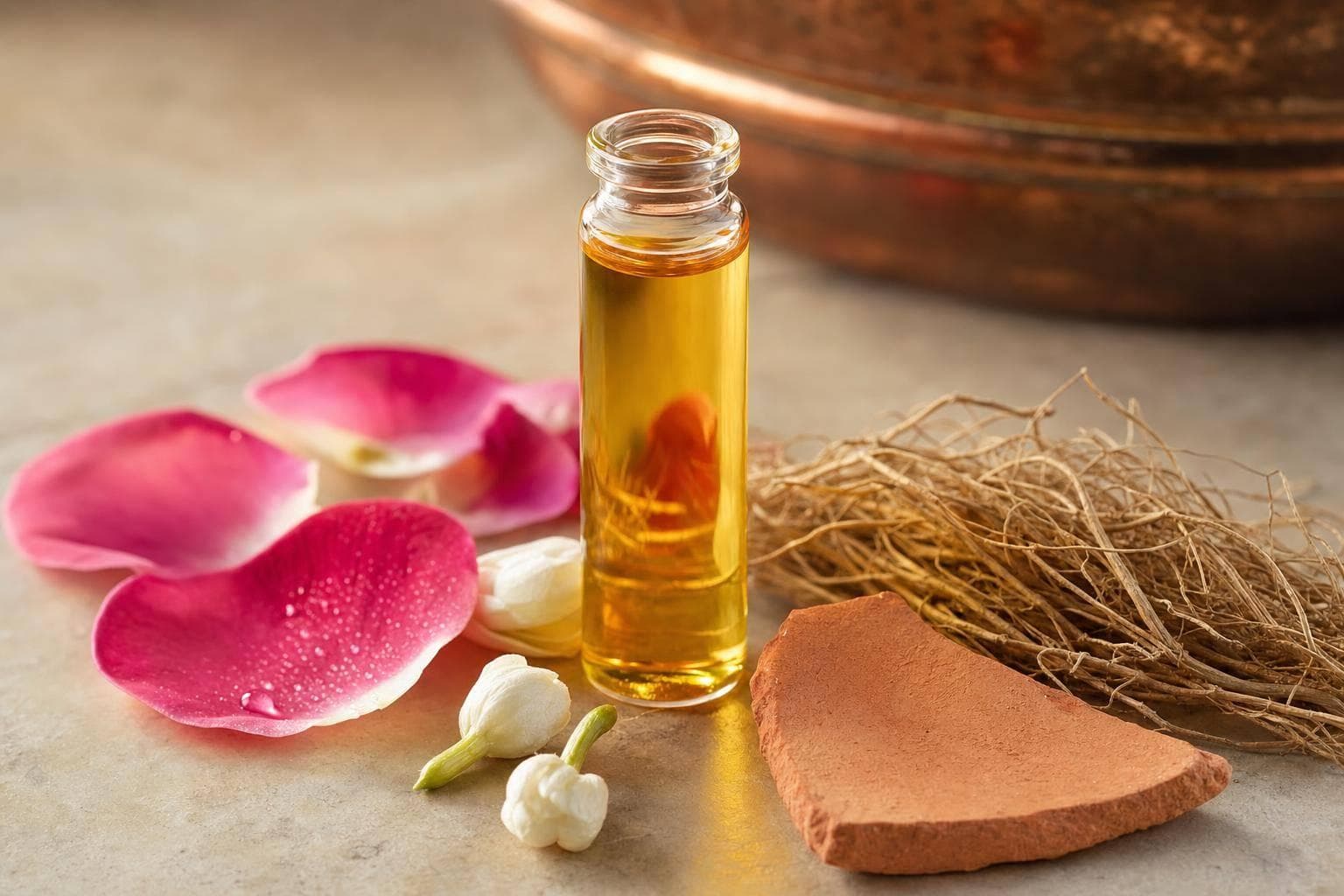
L’attar, nella sua essenza, è semplice: un olio di base, materiale vegetale e una lenta distillazione. Nell’Asia meridionale, questo significa di solito fiori, radici, spezie o persino argilla cotta distillati in olio di sandalo o in un sostituto più accessibile.
Se desideri la risposta breve, eccola:
- Il sandalo è la base che dona corpo, morbidezza e lunga persistenza
- Rosa e gelsomino definiscono i principali stili floreali
- Vetiver, kewda, mitti, zafferano, muschio e ambra conducono la fragranza verso direzioni legnose, verdi, terrose o calde
- Kannauj è il centro di produzione più rinomato, con una storia di oltre 400 anni
- Un lotto di rosa può richiedere 12-15 ore di distillazione
- La scelta della base modifica molto la durata, da bassa a oltre 72 ore
Ciò che trovo più utile è questo: l’attar non riguarda solo il fiore. Il profumo finale dipende da l’olio di base, la materia prima e la regione in cui viene prodotto.
| Elemento | Funzione |
|---|---|
| Olio di base | Aggiunge profondità, morbidezza e durata sulla pelle |
| Materiale botanico | Dona il carattere olfattivo principale |
| Metodo di distillazione | Trasferisce lentamente l’aroma nell’olio |
| Regione | Influenza l’approvvigionamento delle materie prime e lo stile finale |
Dunque, se vuoi comprendere rapidamente l’attar dell’Asia meridionale, parti da questi quattro elementi. Ti offrono il quadro completo in poche righe.
How Attar Is Made: The Deg-Bhapka Process
Il processo deg-bhapka è il classico sistema di distillazione utilizzato per creare l’attar. Si fonda su un calore basso e costante e su un apparato ermetico, capace di estrarre il profumo da fiori, radici, cortecce e spezie. È per questo che la scelta della materia prima è così determinante: quando il metodo è lento e preciso, ogni ingrediente lascia la propria impronta.
Dal raccolto fresco all’olio distillato
Fiori e acqua vengono posti all’interno del deg in rame. Quando la miscela si scalda, il vapore passa attraverso il tubo fino al bhapka, dove si raffredda e si deposita nell’olio di base. Nella tradizione, una sigillatura in argilla mantiene l’apparato ermetico. I lotti di rosa possono richiedere 12-15 ore.
Quella lentezza compie gran parte del lavoro. Aiuta i fiori più delicati a conservare la propria forma olfattiva, mentre il sandalo dona profondità e persistenza alla miscela. Poiché l’olio di base assorbe il profumo poco alla volta, il legame tra sandalo e materiale floreale finisce per plasmare il carattere finale dell’attar.
Attrezzature tradizionali e adattamenti moderni
Il rame resta la scelta classica per il deg, anche se alcuni produttori oggi utilizzano l’acciaio inossidabile. Tuttavia, la sigillatura in argilla e il calore delicato restano al cuore del processo.
Una volta compreso il metodo, il passo successivo riguarda gli ingredienti che conferiscono agli attar dell’Asia meridionale la loro identità.
Sandalo: la base classica degli attar dell’Asia meridionale
Curioso? Prova Acqua di Parma Sandalo in decant, da €10.90Provalo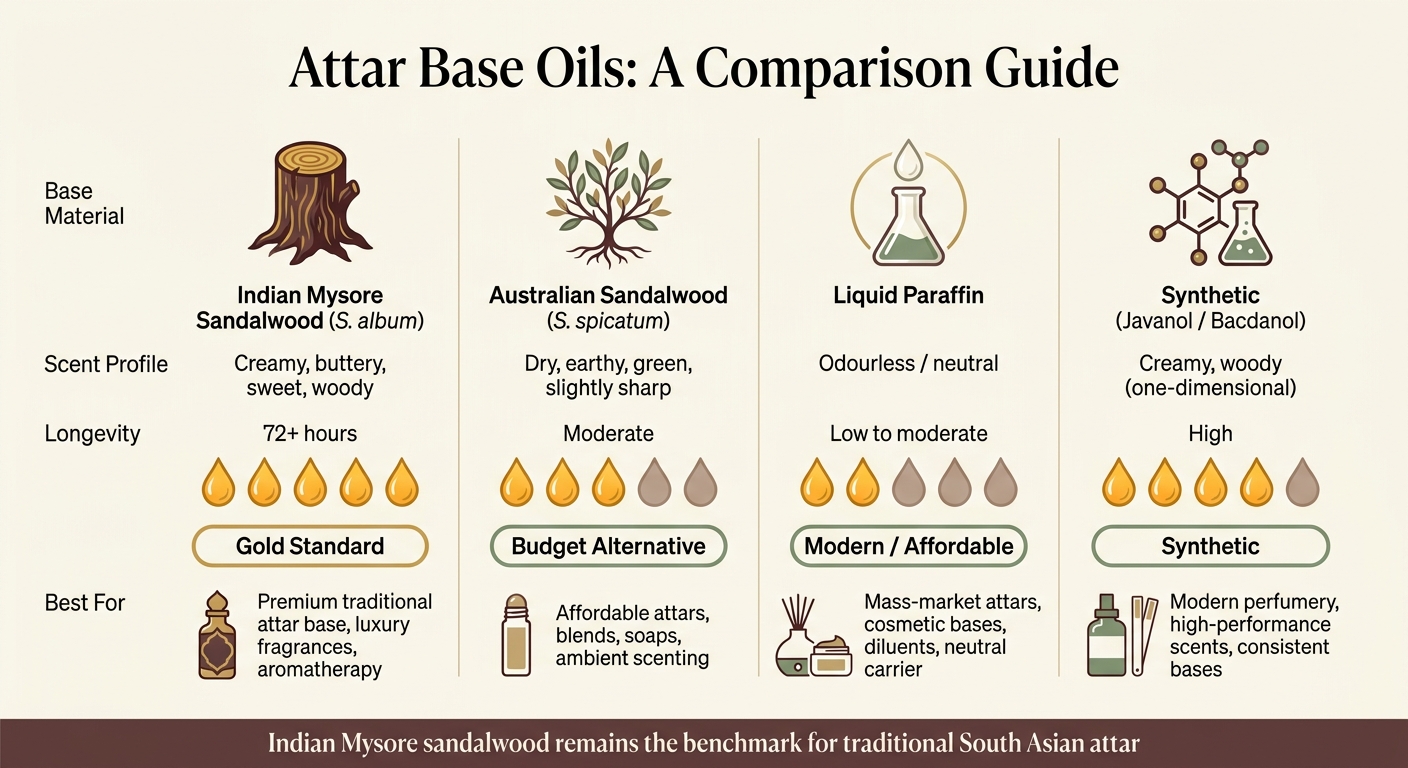
Confronto tra oli di base per attar: sandalo vs. sostituti
Nell’attar, la base non è mai un semplice veicolo. Modifica il profumo, la sensazione e la tenuta dell’intera fragranza sulla pelle. Per gli attar dell’Asia meridionale, l’olio di sandalo è da tempo il punto di riferimento. Il sandalo di Mysore indiano (Santalum album) è particolarmente apprezzato per il suo carattere cremoso e legnoso e per l’elevato contenuto di santalolo, che aiuta la fragranza a restare sulla pelle per ore. La sua base oleosa risulta inoltre meno secca sulla pelle.
Come il sandalo influenza profumo, texture e longevità
Il sandalo dona all’attar più corpo e una sensazione più vellutata. Arrotonda le note più taglienti, aggiunge una morbida cremosità legnosa e aiuta il profumo a persistere molto più a lungo rispetto alle basi più leggere.
Rarità del sandalo e basi sostitutive
Poiché il sandalo è diventato più difficile da reperire, molti produttori sono passati a basi sintetiche o a base di paraffina. Questo cambiamento spesso comporta minore profondità e un potenziale di maturazione inferiore. Le alternative più comuni sono:
| Materiale di base | Profilo olfattivo | Longevità |
|---|---|---|
| Mysore indiano (S. album) | Cremoso, burroso, dolce, legnoso | Oltre 72 ore |
| Australiano (S. spicatum) | Secco, terroso, verde, leggermente pungente | Moderata |
| Paraffina liquida | Inodore / neutra | Da bassa a moderata |
| Sintetico (Javanol/Bacdanol) | Cremoso, legnoso (monodimensionale) | Alta |
Il sandalo di Mysore indiano continua a definire lo standard di qualità. Il S. spicatum australiano tende a essere più secco e terroso, solitamente a un prezzo molto più basso. La paraffina liquida e le basi sintetiche, al contrario, compaiono più spesso nelle miscele moderne più accessibili.
Una volta stabilita la base, i materiali successivi costruiscono il carattere floreale e speziato di ogni attar.
Il tuo esperto di profumi personale ti aspetta
Fai il nostro veloce quiz olfattivo per scoprire autentici profumi di design e di nicchia scelti in base ai tuoi gusti: esplorali in decant e campioni da 2, 5, 8 e 30 ml, così puoi provarne ognuno prima di scegliere il flacone intero.
Trova il tuo profumoIngredienti chiave negli attar dell’Asia meridionale
Il sandalo stabilisce la base, ma il carattere di un attar nasce dai materiali stratificati al suo interno. È lì che il profumo inizia a trasformarsi: verso il floreale, il terroso, il verde o il caldo.
Una volta fissata la base, la differenza successiva deriva dai botanici stessi.
Rosa e gelsomino: i classici ingredienti floreali
La rosa (Gulab) è uno dei materiali classici nella produzione dell’attar. Il suo profumo è dolce, rinfrescante e intensamente floreale. Quando viene miscelata con il sandalo, la rosa risulta più morbida sulla pelle e tende a durare più a lungo.
Il gelsomino compare in due forme principali negli attar dell’Asia meridionale: Motia (Jasminum sambac) e Chameli (Jasminum grandiflorum). Entrambi apportano una nota floreale ricca e calda, pur avendo ciascuno una propria personalità nella miscela.
Vetiver, kewda, spezie e altri materiali notevoli
Khus (vetiver, Chrysopogon zizanioides) dona all’attar un carattere legnoso, fresco, quasi ristoratore.
Kewda (screwpine, Pandanus odorifer) introduce una nota floreale verde e dolce, distinta da rosa e gelsomino.
L’attar Mitti viene creato distillando argilla cotta in olio di sandalo invecchiato, dando vita a quel profumo di pioggia sulla terra.
Zafferano, muschio e note ambrate definiscono attar caldi, speziati e resinosi, con una profondità ricca e avvolgente.
Nel loro insieme, questi materiali formano le principali famiglie di attar dell’Asia meridionale, dai floreali delicati alle miscele più profonde per la stagione fredda.
Panoramica degli ingredienti per profilo olfattivo e uso
| Ingrediente | Nome botanico / materiale | Profumo e stile |
|---|---|---|
| Rosa | Rosa damascena | Floreale dolce - attar Gulab |
| Gelsomino (Motia) | Jasminum sambac | Floreale caldo - attar Motia |
| Gelsomino (Chameli) | Jasminum grandiflorum | Floreale caldo - attar Chameli |
| Vetiver (Khus) | Chrysopogon zizanioides | Legnoso fresco - attar Khus |
| Kewda | Pandanus odorifer | Floreale verde - attar Kewda |
| Mitti | Argilla cotta / olio di sandalo invecchiato | Pioggia sulla terra - attar Mitti |
| Zafferano / miscele speziate-resinose | Crocus sativus + muschio + ambra | Caldo speziato - attar caldi speziati-resinosi |
Stili regionali, rilevanza contemporanea e conclusione
Variazione regionale: da Kannauj alle tradizioni floreali costiere
Questi ingredienti non esistono mai isolati. Il clima locale e la disponibilità dei raccolti plasmano il modo in cui prende forma ogni stile di attar.
Lo si vede chiaramente a Kannauj, nell’Uttar Pradesh, e nell’Odisha costiera, soprattutto a Ganjam, dove il kewda cresce in condizioni umide. Anche quando i produttori lavorano con le stesse materie prime, il profumo finale può cambiare da una regione all’altra. Perché? Perché coltivatori e distillatori utilizzano ciò che la loro terra offre.
Il luogo conta in modo molto diretto. Clima, suolo, umidità e disponibilità vegetale modellano gli stili regionali tanto quanto la pratica locale.
Perché gli attar sono ancora importanti oggi per scoprire le fragranze
L’attar resta importante nella scoperta olfattiva perché rende più riconoscibili gli elementi fondamentali di una fragranza. Si può percepire come un olio di base interagisce con un singolo botanico e come quell’abbinamento modifica il risultato finale.
È parte del suo fascino. Negli attar, la base e i botanici spesso rimangono visibili nel profumo finito. Il formato è concentrato e privo di alcol, quindi tende a restare vicino alla pelle e a dispiegarsi lentamente nel tempo. Questo movimento più lento offre un modo diverso di vivere il profumo.
Non sorprende, quindi, che gli attar stiano suscitando un rinnovato interesse.
Conclusione: gli ingredienti che definiscono l’attar dell’Asia meridionale
L’attar dell’Asia meridionale è plasmato da tre elementi essenziali: l’olio di base, il materiale botanico e la regione che sta dietro a entrambi.
Il sandalo rimane la base classica, anche se oggi i sostituti sono più comuni. E nell’attar dell’Asia meridionale, la scelta degli ingredienti non è mai separata dal luogo.
Domande frequenti
Perché il sandalo viene usato come base nell’attar?
Nella creazione dell’attar, l’olio di sandalo svolge due funzioni insieme: forma la base e agisce da fissativo. Durante la distillazione, assorbe e trattiene le molecole aromatiche più volatili rilasciate da botanici come rosa e gelsomino.
Questo conta anche per la durata. L’olio di sandalo rallenta l’evaporazione, così il profumo resta più a lungo sulla pelle. Altrettanto importante, la sua profondità cremosa e legnosa ammorbidisce i floreali più leggeri e dona all’attar quel carattere ricco e persistente per cui è conosciuto.
In che modo la regione cambia il profumo di un attar?
La regione d’origine svolge un ruolo importante nel profumo di un attar. Perché? Perché il luogo da cui provengono le materie prime ne modella il profilo aromatico.
Prendiamo l’oud. Può avere un profumo molto diverso a seconda della provenienza. L’oud indiano dell’Assam tende a essere più secco e medicinale. L’oud cambogiano spesso vira verso una dolcezza maggiore, con un tono mielato. L’oud vietnamita è solitamente più morbido.
Anche il sandalo cambia. In un attar può apportare un calore cremoso e lattiginoso. In un altro può risultare più secco, più verde o persino più orientato agli agrumi.
Che cosa fa sì che l’attar mitti profumi di pioggia sulla terra?
L’attar mitti ricrea l’odore nostalgico della pioggia che cade sulla terra asciutta attraverso un processo di distillazione secolare. A Kannauj, in India, gli artigiani distillano argilla cotta in olio di sandalo invecchiato, che agisce da fissativo e aiuta a preservare quella nota terrosa.
Il risultato è il celebre aroma dell’attar mitti, spesso paragonato alla prima pioggia monsonica che incontra il suolo arido.

