
Un profumo dimostra una semplice verità: la pubblicità può contribuire a mantenere i prezzi elevati per decenni. Dalla citazione spontanea di Marilyn Monroe a una campagna in stile cinematografico da €30,4 million, Chanel No. 5 mostra come gli investimenti di un brand possano plasmare ciò che gli acquirenti considerano un prezzo di lusso accettabile.
Volendo riassumere l’articolo, i punti chiave sono questi:
- La pubblicità ha aiutato Chanel a mantenere No. 5 su una fascia di prezzo premium persino in un mercato attento ai costi come la Germania.
- Un’unica fragranza iconica ha ricevuto anni di attenzione esclusiva, anziché rincorrere continui nuovi lanci.
- Immagini essenziali e campagne narrative hanno fatto percepire il profumo come qualcosa di molto più prezioso di un semplice flacone di essenza.
- I grandi budget pubblicitari hanno agito come un asset del brand a lungo termine, non come una mera spesa commerciale.
- Per gli acquirenti, una pubblicità d’impatto può spingere al blind buy, una scelta rischiosa quando una boccetta costa circa €173,00.
Ecco la conclusione più evidente: Chanel ha fatto leva sull’immagine, sulla ripetizione e sul fascino delle star per far percepire No. 5 come un profumo all’altezza del suo prezzo. Tuttavia, per i consumatori, questo stesso meccanismo può tradursi in errori costosi. Ecco perché provare una fragranza in un formato ridotto è spesso molto più saggio che acquistare la boccetta intera fidandosi solo della prima impressione.
Quick Comparison
| Caso | Costo per Chanel | Controllo | Effetto principale |
|---|---|---|---|
| Citazione di Marilyn Monroe | €0,00 di spesa diretta | Basso | Fama e desiderabilità durature nel tempo |
| Campagna con Nicole Kidman | ~€30,4 million | Alto | Prestigio globale e controllo assoluto dell’immagine |
La lezione, dunque, è semplice: la narrazione può sostenere il prezzo, ma è l’esperienza sulla pelle a decidere l’acquisto.
Come la pubblicità di Chanel No. 5 ha creato un marchio di profumeria di altissimo valore
Chanel ha costruito No. 5 attraverso decenni di pubblicità costante, trasformando la fragranza in un autentico simbolo e non in un semplice prodotto. Questa visione è rimasta immutata su ogni mezzo, dalle pagine delle riviste alle grandi produzioni cinematografiche.
Dalle campagne su carta stampata alla pubblicità cinematografica
Le prime pubblicità a mezzo stampa di Chanel erano minimaliste e audaci: il flacone, il nome e quasi nient’altro. Il messaggio arrivava dritto senza bisogno di spiegazioni: il lusso non necessita di giustificarsi. Con il passare del tempo, la maison ha continuato ad associare No. 5 all’universo dell’alta moda piuttosto che alla routine quotidiana. Campagne con protagoniste come Catherine Deneuve e Carole Bouquet, immortalate da maestri come Richard Avedon e Helmut Newton, hanno plasmato questa estetica.
Poi, Chanel ha puntato ancora più in alto.
La pubblicità in stile cinematografico ha ridefinito la scala e la portata degli investimenti. Lo spot La Piscine di Ridley Scott del 1979 ricordava più il cinema d’autore che un comune spot televisivo. Nel 2004, Chanel ha portato questo concetto all’estremo con No. 5 The Film, un cortometraggio di tre minuti diretto da Baz Luhrmann e interpretato da Nicole Kidman. Il Guinness World Records lo ha certificato come lo spot televisivo più costoso mai realizzato, con costi di produzione stimati tra i 33 e i 35 milioni di dollari, pari a circa 27 €–29 million. A quei livelli, Chanel non stava semplicemente acquistando spazi pubblicitari: stava finanziando un’opera d’arte cinematografica.
Il mezzo è cambiato, ma il messaggio è rimasto identico: No. 5 è sinonimo indiscusso di glamour, grandiosità e prestigio.
Perché investire con costanza nel brand sostiene prezzi elevati
Dietro a tutto questo si cela una precisa logica di business. Quando il pubblico vede la stessa fragranza posizionata ai vertici della moda e della cultura delle celebrità per decenni — sulle riviste patinate, sui grandi schermi, accanto a icone mondiali — smette di valutarne il prezzo come farebbe per un bene ordinario. Un flacone di Chanel No. 5 Eau de Parfum nei formati standard viene venduto a circa 100 €+ in Germania, un prezzo perfettamente coerente con l’immagine coltivata negli anni. La pubblicità ha fatto sì che questa cifra fosse percepita come del tutto naturale.
È proprio questo che garantisce un investimento di lungo periodo nel brand: una minore resistenza ai prezzi elevati. Stime risalenti al 2011 indicavano che Chanel investiva tra i 20 e i 25 milioni di dollari all’anno per promuovere il solo No. 5. Ripartita su una stima di 10 milioni di flaconi venduti ogni anno e ricavi annuali calcolati tra i 2 e i 3 miliardi di dollari, questa spesa non appare come un costo a breve termine, bensì come un vero asset del brand che protegge i margini nel tempo.
In sintesi, i clienti non pagano principalmente le materie prime o la produzione del flacone: pagano il significato racchiuso in quel nome. La comunicazione di Chanel No. 5 ha costruito quel valore simbolico con una tale maestria da far apparire del tutto legittimo un prezzo d’élite.
Questa stessa logica spiega anche perché la maison sia sempre stata pronta a investire cifre straordinarie in singole campagne capaci di catalizzare un’attenzione planetaria.
La logica economica dietro le campagne più celebri di Chanel No. 5
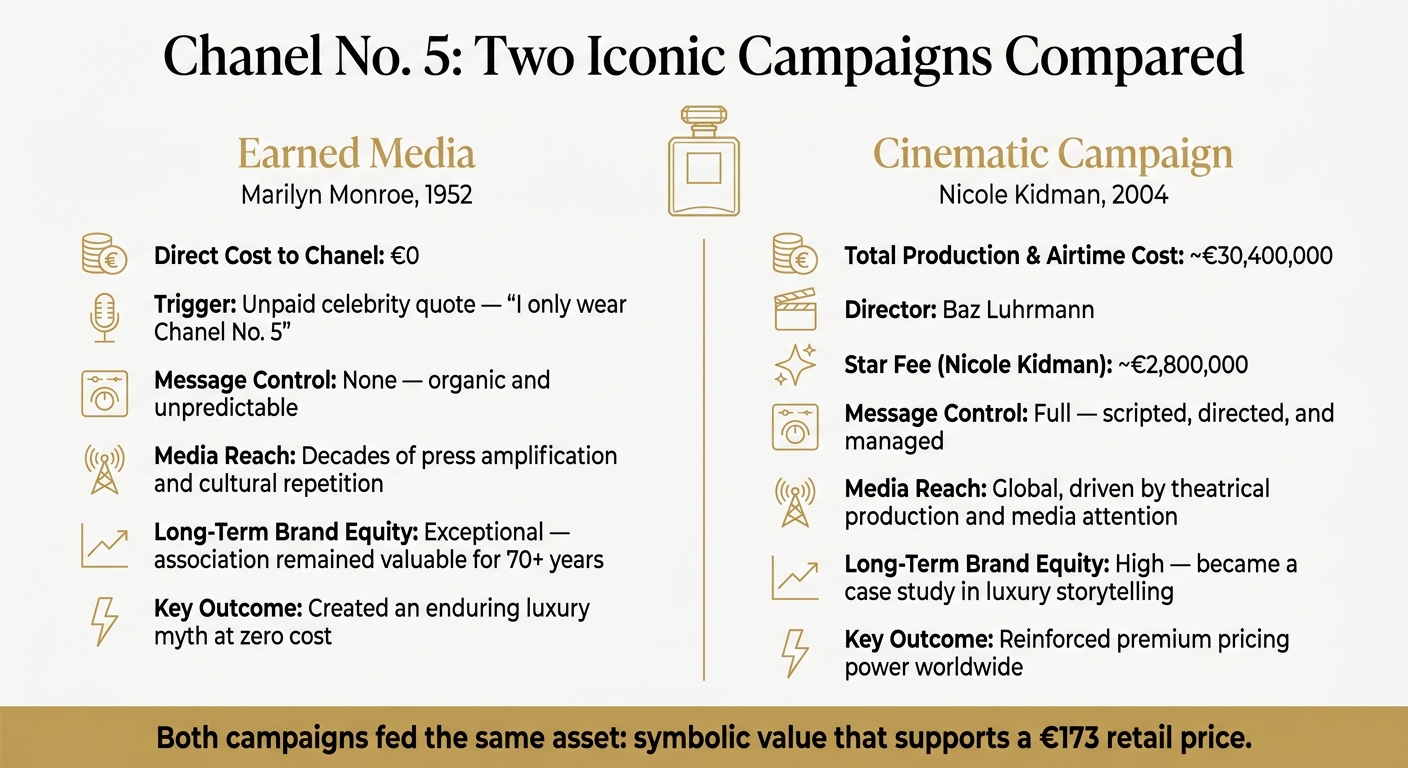
Pubblicità Chanel No. 5: Earned Media a confronto con la campagna cinematografica
Un caso è nato per puro caso ed è costato a Chanel assolutamente nulla; l’altro è stato pianificato in ogni singolo fotogramma e ha comportato un investimento monumentale.
Marilyn Monroe e il valore dell’earned media
Nel 1952, Marilyn Monroe pronunciò la celebre frase: «Indosso solo due gocce di Chanel No. 5». Chanel non pagò per quella dichiarazione. Non c’era alcun contratto, nessun compenso e nessun piano media prestabilito. Ciononostante, è diventata una delle associazioni di marca più leggendarie nella storia dei consumi.
Perché ebbe un impatto così straordinario? La tempistica fu perfetta, così come il magnetismo della diva. Ma l’elemento decisivo fu la perfetta affinità. Marilyn era una delle donne più famose al mondo e quella citazione rese Chanel No. 5 molto più di un profumo: divenne la personificazione stessa del fascino, della seduzione e dell’intimità. Questo legame si è impresso nella memoria collettiva per generazioni, continuando a generare vendite anno dopo anno.
Quell’episodio offrì a Chanel una lezione preziosa: quando la persona giusta esprime il concetto ideale, attorno al brand fiorisce un mito ineguagliabile. In seguito, la maison ha cercato di ricreare quella stessa alchimia in modo calcolato.
Nicole Kidman e la scelta dell’advertising ad alto budget
Successivamente, Chanel ha trasformato quell’aura legata alle star in una straordinaria campagna a pagamento.
No. 5 The Film, diretto da Baz Luhrmann con Nicole Kidman, aveva una durata di tre minuti ed è costato circa €30,4 million tra produzione e passaggi televisivi. All’epoca fu definito all’unanimità lo spot commerciale più costoso della storia. Il solo compenso della Kidman fu stimato intorno a €2,8 million. Non si trattava di una semplice reclame con un rapido primo piano del prodotto e un payoff: era un vero cortometraggio di lusso.
La campagna riuniva l’eredità di Coco Chanel, la visione di Karl Lagerfeld, Kidman e Luhrmann in un concentrato di prestigio assoluto. L’obiettivo di quel budget non era ottenere conversioni immediate o una risposta a breve termine: serviva a rendere Chanel No. 5 ancora più grandioso, esclusivo e memorabile.
Earned media e campagne cinematografiche: costi e impatto a confronto
La tabella seguente mette a confronto costi, controllo, visibilità ed effetti sul posizionamento del brand.
| Earned Media (Monroe, 1952) | Campagna cinematografica (Kidman, 2004) | |
|---|---|---|
| Entità dei costi | Nessun costo diretto per Chanel | Costi di produzione stimati in ~€30,4 million |
| Controllo del messaggio | Nullo: spontaneo e imprevedibile | Totale: sceneggiato, diretto e supervisionato |
| Copertura mediatica | Amplificata dalla stampa e dalla cultura popolare per decenni | Globale, sostenuta da una produzione kolossal e dalla risonanza mediatica |
| Brand equity a lungo termine | Straordinaria: l’associazione è rimasta preziosa per generazioni | Elevatissima: la campagna è diventata un caso di studio nello storytelling del lusso |
Chanel ha tratto immensi vantaggi da entrambi i modelli, un traguardo tutt’altro che scontato. La maggior parte dei brand fatica a trasformare un passaparola spontaneo oppure una campagna d’immagine onerosa in un valore tangibile e duraturo. Chanel No. 5 è riuscito in entrambe le imprese perché offre qualcosa che va oltre l’accordo olfattivo: trasmette un valore simbolico, e sia l’aneddoto di Marilyn sia il film con Nicole Kidman hanno nutrito questo stesso patrimonio immateriale.
Questi due esempi offrono quattro importanti insegnamenti sulle dinamiche economiche dell’alta profumeria.
Il tuo esperto di profumi personale ti aspetta
Fai il nostro veloce quiz olfattivo per scoprire autentici profumi di design e di nicchia scelti in base ai tuoi gusti: esplorali in decant e campioni da 2, 5, 8 e 30 ml, così puoi provarne ognuno prima di scegliere il flacone intero.
Trova il tuo profumo4 lezioni di economia dal caso Chanel No. 5
Queste campagne evidenziano una realtà lineare ma potentissima: Chanel ha saputo convertire la pubblicità in potere di determinazione del prezzo, efficienza operativa e valore del marchio capace di consolidarsi nel tempo.
Perché concentrarsi su 1 prodotto di punta dà i suoi frutti
Chanel ha concentrato risorse e creatività su un’unica creazione leggendaria invece di disperdersi in un susseguirsi infinito di uscite. Questa strategia ha consentito di consacrare un profumo che ancora oggi vende circa 10 million bottles per year.
Questa coerenza porta con sé importanti vantaggi gestionali. Mantenendo un prodotto cardine al centro della strategia, la gestione della produzione e della catena di fornitura risulta estremamente lineare. Una formula e un design stabili riducono le complessità nel packaging, nella logistica e nello stoccaggio, proteggendo la marginalità di ogni singolo pezzo. Inoltre, massimizza la memorabilità del brand: quando un consumatore pensa a un profumo classico ed esclusivo, No. 5 è la prima fragranza a venire in mente.
Come la narrazione e il minimalismo sostengono prezzi elevati
Chanel No. 5 comunica uno status prima ancora delle sue note olfattive. Il flacone, l’atmosfera e i volti delle campagne svolgono la maggior parte del lavoro evocativo.
Non si tratta di una scelta puramente estetica, ma di una precisa strategia di prezzo. Un design essenziale eleva No. 5 a vero oggetto del desiderio, lontano dall’ordinario. Quando una creazione viene percepita come un’icona culturale anziché come un semplice bene di consumo, cessa il confronto con i profumi commerciali e inizia quello con i beni di lusso. In questa cornice, un prezzo al dettaglio di €150,00–€250,00 non appare come una spesa impulsiva, ma come un’affermazione consapevole del proprio stile. L’eleganza sobria del design lascia inoltre spazio all’acquirente di attribuirvi significati intimi, rafforzando il legame affettivo e rendendo secondario il fattore prezzo.
Considerare la pubblicità un investimento a lungo termine, non un costo immediato
Secondo le stime, Chanel stanzia circa USD 20–25 million annually solo per la promozione di No. 5. Una cifra comprensibile solo se rapportata al suo reale valore: elementi identificativi indelebili come la silhouette del flacone, la palette cromatica e i volti simbolo del profumo, che rendono la fragranza immediatamente riconoscibile al momento dell’acquisto, anno dopo anno.
Una presenza pubblicitaria costante tutela sia il valore percepito sia il posizionamento. La politica degli sconti, al contrario, erode entrambi. Quando gli acquirenti si abituano a vedere un profumo da €200,00 ribassato a €129,00, il prezzo pieno comincia a sembrare ingiustificato. Chanel ha sempre evitato questo errore, considerando gli investimenti promozionali come un arricchimento duraturo della propria brand equity e non come una voce di costo trimestrale da sacrificare.
Bilanciare il desiderio evocato con la prova reale del prodotto
L’aspirazione alimenta il desiderio, ma è l’esperienza d’uso a decretare se l’acquisto sia davvero azzeccato. Una campagna straordinaria può suscitare interesse per un profumo, ma non potrà mai anticipare l’effetto che avrà sull’epidermide. Il profumo è un’esperienza profondamente intima: la medesima composizione muta a seconda della chimica della pelle, del clima e delle occasioni. Uno spot da sogno può accendere la curiosità verso Chanel No. 5, ma non risolverà mai il dubbio fondamentale: «Donerà davvero alla mia persona?»
Per i consumatori in Germania che valutano flaconi con prezzi di €150,00–€300,00, i formati da 2 ml, 5 ml e 8 ml proposti da Scento, uniti a decant da 30 ml disponibili per la maggior parte dei profumi, azzerano il rischio di un acquisto sbagliato. Provate prima l’essenza, per poi scegliere serenamente se meriti un posto d’onore nella vostra collezione.
Cosa significa questo oggi per gli acquirenti di profumi in Germania
Per gli appassionati in Germania, la forza commerciale di Chanel può trasformarsi in un rischio d’acquisto. Nel mercato tedesco, le decisioni relative alla bellezza di alta gamma vengono ponderate con grande attenzione. Ciononostante, quasi tre consumatori su dieci acquistano prodotti premium o di lusso, e la profumeria rappresenta proprio uno dei settori in cui vi è una maggiore propensione alla spesa, a patto che il valore sia ineccepibile.
Come una pubblicità d’impatto può favorire blind buy costosi
Una campagna magistrale fa molto più che informare: costruisce un’emozione intorno a una fragranza ancor prima che sia stata vaporizzata per la prima volta. Chanel perfeziona quest’arte da generazioni e i social media ne hanno amplificato la risonanza a dismisura.
In Germania, il 29% delle persone ha acquistato un prodotto affidandosi al consiglio di un influencer, con una spesa media pari a €101,00. Una cifra sufficiente per tentare un blind buy. La criticità è evidente: la pubblicità può raccontare un’atmosfera, ma non può svelare come il profumo si sposerà con la vostra pelle, nel clima tedesco o nei momenti della vostra giornata. Dopo qualche scelta azzardata, il rischio è quello di ritrovarsi con una collezione di flaconi quasi intonsi e svariate centinaia di euro immobilizzate.
È proprio qui che la prova con formati ridotti dimostra tutta la sua intelligenza.
Come Scento rende la scoperta dei profumi più conveniente
Scento risponde a questa esigenza proponendo decant originali di profumi di nicchia e di design in formati da 2 ml, 5 ml e 8 ml, oltre a decant in flaconi da 30 ml per gran parte del catalogo. Questa selezione offre la quantità ideale per indossare e vivere una creazione nella quotidianità, senza dover investire subito nel formato classico.
Un vantaggio fondamentale quando si parla di nomi come Chanel. Il prestigio che sostiene margini elevati per la maison è lo stesso che rende un acquisto sgradito una spesa difficile da ignorare. Chi desidera scoprire tre fragranze celebri può provarle tutte attraverso 8 ml decants con una spesa complessiva di appena €40,00 to €60,00. Solo in seguito converrà investire nella boccetta intera del profumo che ha davvero conquistato il cuore.
Scento è una boutique specializzata in sample e decant di profumeria artistica e di lusso; ogni acquisto è singolo e privo di abbonamenti obbligatori. Scento+ è l’esclusivo programma facoltativo: la quota mensile viene restituita interamente sotto forma di credito da spendere su qualsiasi creazione; i membri beneficiano del 10% di sconto, un campioncino in omaggio a ogni ordine, un profumo in regalo ogni sei mesi e una sorpresa per il compleanno, con la totale libertà di mettere in pausa o cancellare l’iscrizione in qualsiasi momento. Un modo limpido e sereno per pianificare il proprio viaggio olfattivo mese dopo mese.
Per gli amanti delle fragranze in Germania, il percorso ideale è chiaro: lasciatevi ispirare dalla suggestione delle immagini, ma provate sempre l’essenza prima di sceglierla per sempre.
Conclusioni: la vera lezione economica degli spot di Chanel No. 5
Chanel No. 5 agisce come un formidabile punto di riferimento per i prezzi di mercato. Rappresenta una delle conferme più limpide di come la pubblicità d’autore possa operare come una risorsa economica a lungo termine, a difesa del prestigio del marchio e della sua assoluta rilevanza attraverso le epoche.
Questo posizionamento non ha giovato unicamente a Chanel: ha tracciato la strada per l’intero comparto. Un prodotto manifesto, un’identità senza tempo e un’arte del racconto ad alto tasso aspirazionale sono i pilastri che definiscono ancora oggi la comunicazione della profumeria d’eccellenza.
Tuttavia, la stessa cura che tutela la marginalità della maison può tradursi in una delusione per chi acquista d’impulso. In Germania, un flacone da 100 ml di Chanel N°5 Eau de Parfum ha un prezzo di listino di circa €173,00: sbagliare un acquisto al buio non è un dettaglio trascurabile.
Per ogni appassionato, il consiglio migliore resta uno solo:
- Iniziate con formati ridotti prima di procedere all’acquisto definitivo.
- I decant abbattono il rischio di un errore costoso.
- Indossare un profumo per qualche giorno nella vita vera svela molto più di una vaporizzazione distratta in profumeria.
La narrazione accende il desiderio dell’accordo; la prova sulla pelle ne suggella la scelta.
Domande frequenti
Perché Chanel si è concentrata così tanto su un unico profumo?
Chanel ha puntato sull’eredità storica e sull’identità inconfondibile della sua creazione più iconica per ribadire la propria autorevolezza nel mondo del lusso. Coniugando il marchio a un universo visivo nitido e a una narrazione suggestiva, la maison ha consacrato No. 5 a firma olfattiva senza tempo.
Questa visione lungimirante ha alimentato una profonda fedeltà e una notorietà su scala globale, preservando No. 5 come fulcro del catalogo della maison, con circa 10 milioni di flaconi acquistati ogni anno.
In che modo la pubblicità riesce a far percepire un profumo come degno di un prezzo di €173,00?
La pubblicità fa percepire un profumo come pienamente all’altezza di un prezzo di €173,00 riducendo il timore della spesa e infondendo totale sicurezza nella scelta.
Ci riesce attraverso pochi elementi mirati: veste il jus di una storia in perfetta armonia con chi lo indossa e con l’immaginario visivo, aggiunge dettagli credibili ed esclusivi e offre al cliente un motivo tangibile per desiderare di provarlo.
La profumeria online affronta un limite evidente: non è possibile percepire una fragranza attraverso uno schermo.
Per questo le migliori campagne sono quelle che invitano a un’esperienza olfattiva autentica, non a un atto di fede a scatola chiusa. Formati prova più intimi, discovery set e vaporizzatori da viaggio permettono di valutare personalmente l’accordo, scongiurando qualsiasi delusione prima di acquistare il flacone classico.
Perché è così importante provare un profumo prima di acquistarlo?
Testare un profumo prima di scegliere il formato intero azzera i rischi economici ed evita incertezze sensoriali. Le creazioni di nicchia più raffinate si attestano spesso tra i €150,00 to €400,00, rendendo un acquisto al buio particolarmente oneroso.
Permette inoltre di ammirare la naturale evoluzione delle note sulla pelle nell’arco di diverse ore e in circostanze differenti. Un passaggio imprescindibile: le note di testa possono catturare all’istante, per poi schiudersi in un’armonia di fondo del tutto inaspettata. Con una prova preliminare, si coglie la vera anima della composizione, la sua persistenza e la sua resa reale prima di procedere all’acquisto.

