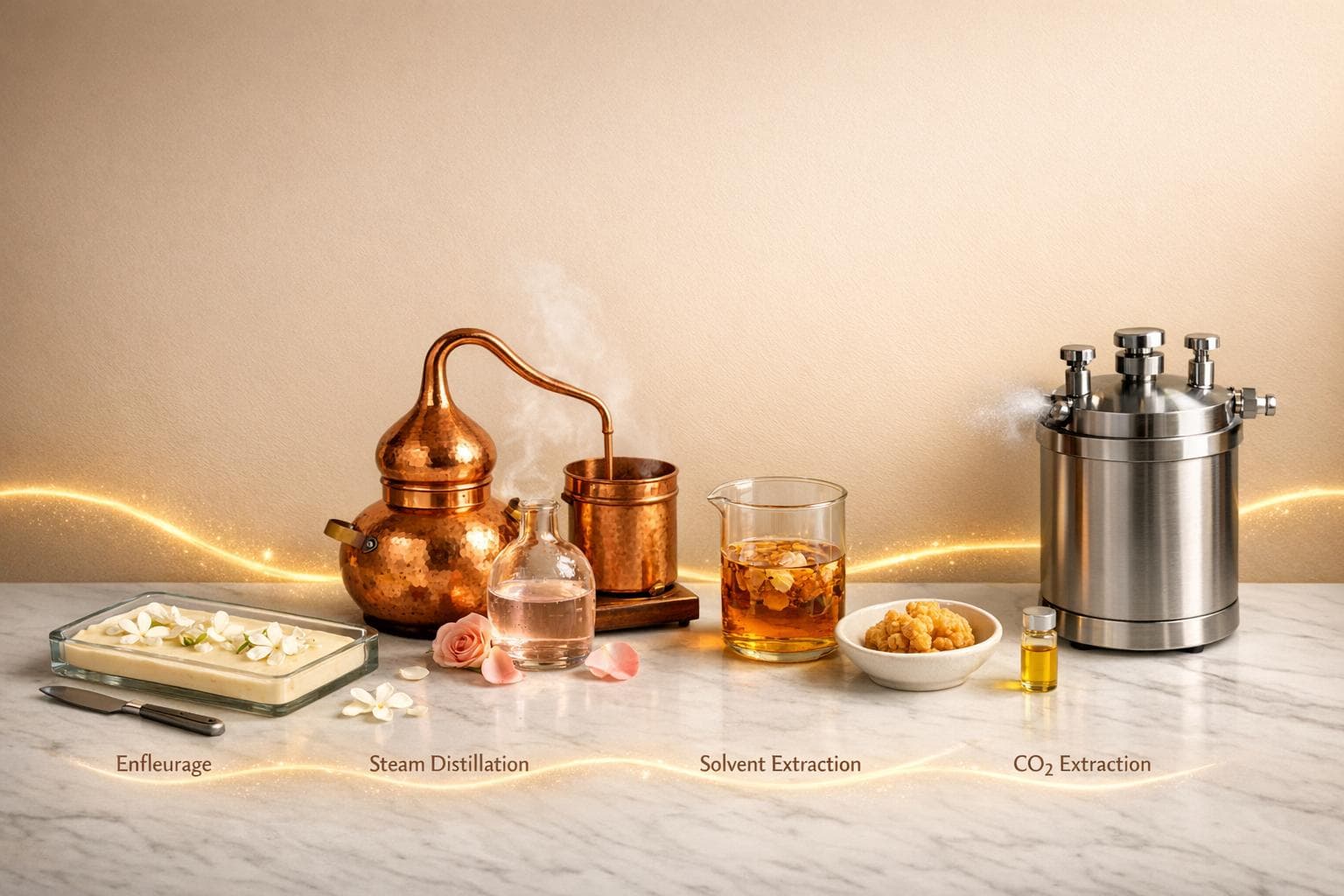
L’estrazione del profumo si è trasformata nel corso dei millenni, fondendo metodi antichi e scienza moderna. Dai grassi dell’Antico Egitto all’estrazione con CO₂ di oggi, ogni tecnica incide sulla qualità olfattiva, sull’efficienza e sull’uso delle risorse. Ecco una breve panoramica:
- Enfleurage (2000 a.C.): i grassi animali assorbivano le fragranze floreali, ma il processo era laborioso e lento.
- Distillazione in corrente di vapore (Medioevo): metodo più rapido, basato sul calore, ideale per piante robuste, ma con il rischio di danneggiare i fiori più delicati.
- Spremitura (XIX secolo): pressatura meccanica per gli oli agrumati, preservandone l’aroma naturale senza calore.
- Estrazione con solvente (anni ’30): impiego di solventi organici per fiori delicati, con rese elevate ma possibili residui.
- Estrazione con CO₂ supercritica (moderna): processo preciso, privo di residui e a basse temperature, perfetto per botaniche fragili.
Ogni metodo presenta punti di forza e limiti, mentre le tecniche più recenti, come l’estrazione con CO₂, offrono purezza e controllo riducendo gli sprechi. Questa evoluzione riflette il passaggio verso processi più efficienti e più puliti, assicurando che i profumi conservino il carattere desiderato.
Primi metodi di estrazione
Enfleurage: assorbire le fragranze con i grassi
L’enfleurage si basava su un’idea essenziale: grassi animali inodori, come strutto o sego, potevano catturare i sentori dei fiori più delicati. Questo metodo risale a circa il 2000 a.C. nell’Antico Egitto, dove i grassi venivano infusi con fiori per creare unguenti profumati destinati a cerimonie religiose. A Grasse, in Francia, questa tecnica fu perfezionata, soprattutto per fiori come gelsomino e tuberosa, sensibili al calore.
Il procedimento era minuzioso. I fiori venivano disposti su lastre di vetro rivestite di grasso, con ogni telaio contenente circa 30–100 grammi di petali. Gli addetti sostituivano i fiori ogni 1–3 giorni, ripetendo il ciclo 30–40 volte finché il grasso, ormai chiamato pomata, non risultava completamente saturo di fragranza. La pomata veniva poi lavata con alcol etilico per ottenere l’assoluta aromatica finale. Nel XX secolo, tuttavia, il tempo e la manodopera necessari resero l’enfleurage poco pratico per l’uso commerciale. Nonostante il suo declino, questo metodo pose le basi per tecniche di estrazione più efficienti.
Distillazione in corrente di vapore: un approccio più rapido e raffinato
Per superare le inefficienze dell’enfleurage, i profumieri si orientarono verso la distillazione in corrente di vapore, un metodo che offriva un modo più rapido ed efficace per estrarre gli oli essenziali. Questo processo si è evoluto dalle antiche tecniche di distillazione in acqua ed è stato ulteriormente perfezionato durante l’Età dell’oro islamica. Avicenna, figura pionieristica, introdusse l’uso di una griglia perforata per mantenere i materiali vegetali al di sopra dell’acqua bollente. In questo modo solo il vapore entrava in contatto con le botaniche, prevenendo i danni da calore e producendo oli più puri.
Il processo durava solitamente tra 60 e 105 minuti, un miglioramento straordinario rispetto alle settimane richieste dall’enfleurage. Alcune botaniche, tuttavia, necessitavano di tempi di distillazione più lunghi. L’introduzione della distillazione dell’alcol nel XII secolo fece ulteriormente progredire il settore, fornendo un mezzo stabile per conservare questi oli. La distillazione in corrente di vapore risultava particolarmente efficace per piante robuste come lavanda e rosmarino, consentendo una produzione su larga scala. Già nel 100 a.C., l’Impero romano consumava enormi quantità di incenso e mirra: rispettivamente 2.800 tonnellate e 550 tonnellate all’anno. Questa domanda evidenziava la scalabilità del metodo e il suo ruolo nel soddisfare il crescente desiderio di fragranze.
Spremitura: estrarre oli agrumati senza calore
La spremitura è un metodo meccanico concepito per estrarre oli essenziali raschiando, pressando o comprimendo le materie prime fino a rompere le ghiandole oleifere. Questa tecnica è impiegata principalmente per agrumi come bergamotto, limone e arancia, poiché le loro scorze sono ricche di oli conservati nell’epicarpo.
Il metodo acquisì rilievo nella Sicilia del XIX secolo, dove le bucce degli agrumi venivano tradizionalmente inumidite per 10 ore prima di essere pressate a mano. Le moderne tecniche industriali hanno poi reso il processo più efficiente, utilizzando frutti interi e centrifugazione per separare il succo dagli oli essenziali, rendendolo più veloce e conveniente. Poiché evita il calore, la spremitura preserva il sentore fresco e naturale degli agrumi, rendendo questi oli molto apprezzati come note di testa nei profumi. Tuttavia, il metodo è limitato ai materiali con elevate concentrazioni naturali di olio, restringendone l’uso principalmente agli agrumi. Sebbene la spremitura rimanga un pilastro per gli oli agrumati, le innovazioni successive hanno ampliato le possibilità dell’estrazione industriale.
Tecniche moderne di estrazione
Estrazione con solvente: una svolta nella profumeria
Negli anni ’30, i profumieri erano alla ricerca di alternative più rapide e affidabili rispetto al laborioso metodo dell’enfleurage. Questa ricerca portò all’affermazione dell’estrazione con solvente, che impiega solventi organici volatili come esano o etere dimetilico per dissolvere composti aromatici, pigmenti e cere direttamente dal materiale vegetale. A differenza della distillazione in corrente di vapore, questo metodo opera a temperature più basse, risultando ideale per preservare le molecole fragili presenti in fiori come gelsomino e tuberosa.
Il processo produce una sostanza cerosa nota come concreta. Questa concreta viene poi trattata con etanolo per ottenere un’assoluta, la forma più concentrata di fragranza utilizzata in profumeria. Ciò che un tempo richiedeva mesi con l’enfleurage può ora essere realizzato in poche ore con l’estrazione con solvente.
I progressi moderni includono la lavorazione sottovuoto, che consente agli impianti di recuperare e riutilizzare i solventi, rendendo il metodo più efficiente nell’uso delle risorse. Inoltre, normative rigorose garantiscono che i solventi residui nelle assolute da profumo restino al di sotto di 10 parti per milione, mantenendo elevati standard di sicurezza. Questo metodo rimane la scelta d’elezione per estrarre fragranze da materiali delicati come gelsomino, rosa e muschio di quercia, sensibili alle alte temperature. Il salto successivo in termini di precisione è arrivato con l’introduzione dell’estrazione con CO2 supercritica.
Estrazione con CO₂ supercritica: la precisione ridefinita
L’estrazione con CO₂ supercritica ha portato la precisione in profumeria a un livello completamente nuovo. Questa tecnica utilizza anidride carbonica in condizioni specifiche - 32°C e 73 bar di pressione - in cui entra in uno stato supercritico. In tale stato, la CO₂ agisce come un solvente altamente efficace, capace di estrarre i composti aromatici senza lasciare alcun residuo chimico.
"L’estrazione con CO2... [è] ideale per catturare molecole aromatiche delicate o volatili." — Fulvio Ciccolo, Scentspiracy
La caratteristica distintiva di questo metodo è la sua purezza. Una volta completato il processo, la CO₂ torna allo stato gassoso alla normale pressione atmosferica, senza lasciare alcuna traccia nell’estratto finale. A differenza dell’estrazione con solvente, questa tecnica evita la fase intermedia della concreta, consentendo ai profumieri di ottenere direttamente l’assoluta. Il risultato? Essenze che catturano l’anima autentica delle botaniche originarie. Per esempio, la vaniglia estratta con CO₂ viene spesso descritta come più luminosa e fresca rispetto al profilo più ricco e cremoso dell’assoluta di vaniglia ottenuta tramite estrazione con solvente.
Questo metodo richiede attrezzature specializzate per gestire alte pressioni, talvolta superiori a 100 atmosfere. Tuttavia, offre un’alternativa più sicura, non tossica e non infiammabile ai solventi di origine petrolifera. Un altro vantaggio chiave è la possibilità di regolare finemente la densità della CO₂ supercritica (da 0,2 a 0,9 g/cm³) modificando pressione e temperatura. Questo livello di controllo consente ai profumieri di mirare a specifici composti aromatici, rendendolo uno strumento straordinariamente versatile per creare fragranze sfumate.
Il tuo esperto di profumi personale ti aspetta
Fai il nostro veloce quiz olfattivo per scoprire autentici profumi di design e di nicchia scelti in base ai tuoi gusti: esplorali in decant e campioni da 2, 5, 8 e 30 ml, così puoi provarne ognuno prima di scegliere il flacone intero.
Trova il tuo profumoConfronto tra i metodi di estrazione
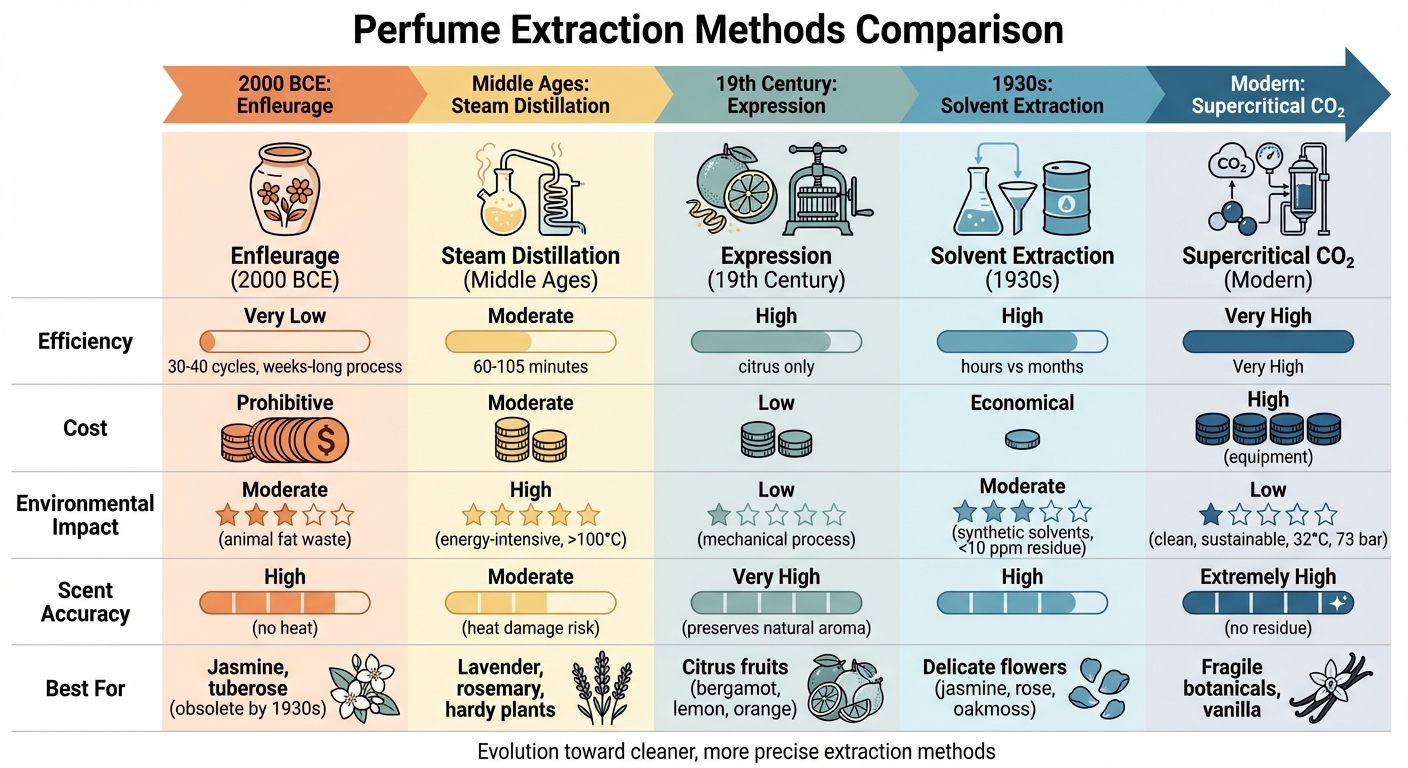
Confronto tra 5 metodi di estrazione del profumo: efficienza, costo e impatto ambientale
Punti di forza e limiti
Le tecniche moderne di estrazione in profumeria si fondano sulle pratiche storiche, perseguendo al contempo precisione e responsabilità ambientale. Ogni metodo comporta i propri compromessi. Prendiamo l’enfleurage, per esempio - una tecnica intrisa di storia ma in gran parte abbandonata dagli anni ’30. Perché? La sua natura ad alta intensità di manodopera e le basse rese la rendono oggi poco pratica per la produzione su larga scala.
La distillazione in corrente di vapore è un metodo collaudato, soprattutto per materiali robusti come lavanda o sandalo. Ma presenta uno svantaggio: il calore elevato può danneggiare gli aromi delicati degli ingredienti più sensibili. D’altra parte, la spremitura, utilizzata esclusivamente per gli oli agrumati, elimina del tutto il calore. Si affida invece alla pressione meccanica, risultando una scelta ecologica e conveniente che mantiene gli oli agrumati relativamente accessibili.
Per fiori e altri materiali sensibili al calore, l’estrazione con solvente è diventata il metodo di riferimento. Pur essendo efficace, può lasciare tracce di solventi residui nel prodotto finale. Entra in scena l’estrazione con CO₂ supercritica, un’alternativa moderna che elimina questa preoccupazione. Utilizzando CO₂ a 73 bar e 32°C, questo metodo evita completamente i residui, poiché la CO₂ si disperde naturalmente alla pressione normale. Tuttavia, le attrezzature ad alta pressione richieste rappresentano un investimento oneroso.
| Metodo | Efficienza | Costo | Impatto ambientale | Fedeltà olfattiva |
|---|---|---|---|---|
| Enfleurage | Molto bassa | Proibitivo | Moderato (scarto di grasso animale) | Alta (nessun calore coinvolto) |
| Distillazione in corrente di vapore | Moderata | Moderato | Alto (ad alta intensità energetica) | Moderata (danni da calore) |
| Spremitura | Alta (solo agrumi) | Basso | Basso (processo meccanico) | Molto alta |
| Estrazione con solvente | Alta | Economico | Moderato (solventi sintetici) | Alta |
| CO₂ supercritica | Molto alta | Alto (attrezzature) | Basso (pulito e sostenibile) | Estremamente alta |
Questa tabella mette in evidenza la spinta del settore verso metodi capaci di bilanciare efficienza, fedeltà olfattiva e attenzione ambientale. L’estrazione con CO₂ supercritica si distingue come esempio emblematico di questa evoluzione. Evitando solventi petrolchimici e non lasciando residui, offre un approccio più pulito e sostenibile per ottenere profili olfattivi puri e accurati. Questo continuo perfezionamento delle tecniche di estrazione riflette l’impegno dell’industria verso qualità e sostenibilità nella profumeria.
Cosa riserva il futuro all’estrazione del profumo
Verso una maggiore responsabilità ambientale
L’industria delle fragranze si sta gradualmente allontanando dai metodi basati sulla petrolchimica, abbracciando alternative più pulite e sostenibili. Un’innovazione di spicco è la distillazione molecolare (MD), una tecnica basata sul vuoto che raffina gli estratti a basse temperature. Questo metodo rimuove impurità e cere preservando le molecole delicate che conferiscono alle fragranze il loro carattere unico.
A differenza dei metodi tradizionali, la distillazione molecolare non si affida a solventi organici aggressivi. Per esempio, mentre l’estrazione con CO₂ supercritica è nota per il riciclo della CO₂, la MD ottiene la purificazione senza sostanze chimiche pericolose. Al contrario, l’estrazione a base di esano utilizza petrolchimici tossici e produce rifiuti nocivi, mentre la distillazione in corrente di vapore - pur essendo priva di solventi - richiede un notevole investimento energetico per riscaldare l’acqua oltre i 100°C. Adottando tecniche a bassa temperatura e prive di residui, l’industria sta riducendo il proprio impatto ambientale garantendo al contempo profili olfattivi di alta qualità.
Questi progressi eco-consapevoli stanno aprendo la strada a metodi di estrazione ancora più precisi e sostenibili.
Nuove frontiere nella scienza dell’estrazione
La spinta verso la sostenibilità ha anche sbloccato nuove possibilità nella scienza dell’estrazione, offrendo livelli di precisione un tempo ritenuti irraggiungibili. Tecniche avanzate operano oggi a temperature intorno ai 31–32°C, preservando composti sensibili al calore che altrimenti verrebbero distrutti da metodi tradizionali come la distillazione in corrente di vapore. Questa svolta consente ai profumieri di lavorare con botaniche delicate come lillà, sambuco e calendula, in precedenza troppo fragili per i processi convenzionali.
Fondandosi sulle meticolose tradizioni della profumeria francese, queste tecnologie offrono un modo per isolare specifiche molecole aromatiche con accuratezza impareggiabile. Attraverso la selettività molecolare, gli estrattori possono modulare finemente pressione e temperatura per separare i componenti chiave della fragranza lasciando indietro i lipidi più pesanti. Il risultato? Estratti quasi identici alla botanica originaria, che offrono ai profumieri una tavolozza più ricca e autentica per creare i loro capolavori. Inoltre, stanno emergendo unità di estrazione portatili, che consentono la lavorazione in loco di botaniche rare. Questa innovazione cattura immediatamente le note di testa volatili, prevenendo le perdite che spesso si verificano durante il trasporto.
Guardando al futuro, l’integrazione di sentori bioingegnerizzati e modellazione matematica guidata dall’IA è destinata a rivoluzionare il settore. Tecniche come la Response Surface Methodology ottimizzano le condizioni di estrazione, bilanciando resa massima e consumo energetico minimo. Questi progressi non solo elevano la precisione, ma promettono anche molecole olfattive sostenibili e prive di allergeni, rese possibili dalla biotecnologia e dalla fermentazione di precisione. Insieme, queste innovazioni stanno plasmando il prossimo capitolo della profumeria, fondendo tradizione e scienza d’avanguardia.
Conclusione
Il percorso dall’enfleurage tradizionale all’avanguardistica estrazione con CO₂ supercritica è più di un racconto di progresso tecnologico - è una storia di evoluzione nel modo in cui estraiamo e preserviamo il profumo. Questo progresso ha rimodellato la profumeria, fondendo l’arte antica con la precisione moderna. Mentre l’enfleurage un tempo si basava su metodi laboriosi, le tecniche odierne raggiungono un’accuratezza senza pari, mantenendo l’integrità delle botaniche delicate senza il rischio di danni da calore.
Per i profumieri, questi progressi offrono un controllo senza precedenti sulla creazione olfattiva. Metodi come il frazionamento rimuovono le indesiderate "note stonate", mentre la distillazione molecolare garantisce estratti puliti e vibranti, privi di cere che potrebbero alterarne il colore. Il risultato? Fragranze fedeli alle loro origini naturali, evitando al contempo residui nocivi. Per i consumatori, ciò significa che ogni spruzzo - che provenga da una fiala campione o da un flacone full size - offre un livello di qualità e autenticità che sarebbe stato inimmaginabile un secolo fa, il tutto con un’impronta ambientale ridotta.
Man mano che i metodi di estrazione continuano a evolversi, il confine tra ispirazione naturale e precisione scientifica diventa sempre più sottile. Questa armonia tra tradizione e innovazione sta plasmando il futuro della profumeria, permettendoci di godere di fragranze tanto raffinate quanto radicate nella storia. Comprendere questo viaggio aggiunge un apprezzamento più profondo per i profumi che indossiamo oggi e per i secoli di ingegno che li hanno resi possibili.
FAQ
Quale metodo di estrazione preserva meglio il vero profumo di un fiore?
L’enfleurage è un metodo consacrato dal tempo per preservare il profumo autentico dei fiori. Questa tecnica estrae delicatamente i composti aromatici più fragili senza ricorrere al calore o a solventi chimici, permettendo alla fragranza naturale del fiore di restare pura e inalterata.
Le assolute estratte con solvente sono sicure e cosa significano i limiti di residuo?
Le assolute estratte con solvente sono considerate sicure quando vengono lavorate correttamente. Per garantire sicurezza e qualità, sono in vigore limiti rigorosi sui solventi residui. Questi limiti regolano la rimozione di eventuali tracce residue di solvente, riducendo i potenziali rischi per la salute e preservando l’integrità del prodotto finale.
In che modo gli estratti di CO₂ hanno un odore diverso dagli oli distillati in corrente di vapore o dalle assolute?
Gli estratti di CO₂ sono noti per i loro profili aromatici più morbidi, più rotondi e stratificati rispetto agli oli distillati in corrente di vapore o alle assolute. Questa differenza nasce dal fatto che l’estrazione con CO₂ trattiene composti aromatici delicati che altrimenti potrebbero andare perduti. Al contrario, la distillazione in corrente di vapore, che opera a temperature più elevate, produce spesso sentori più incisivi e volatili.

