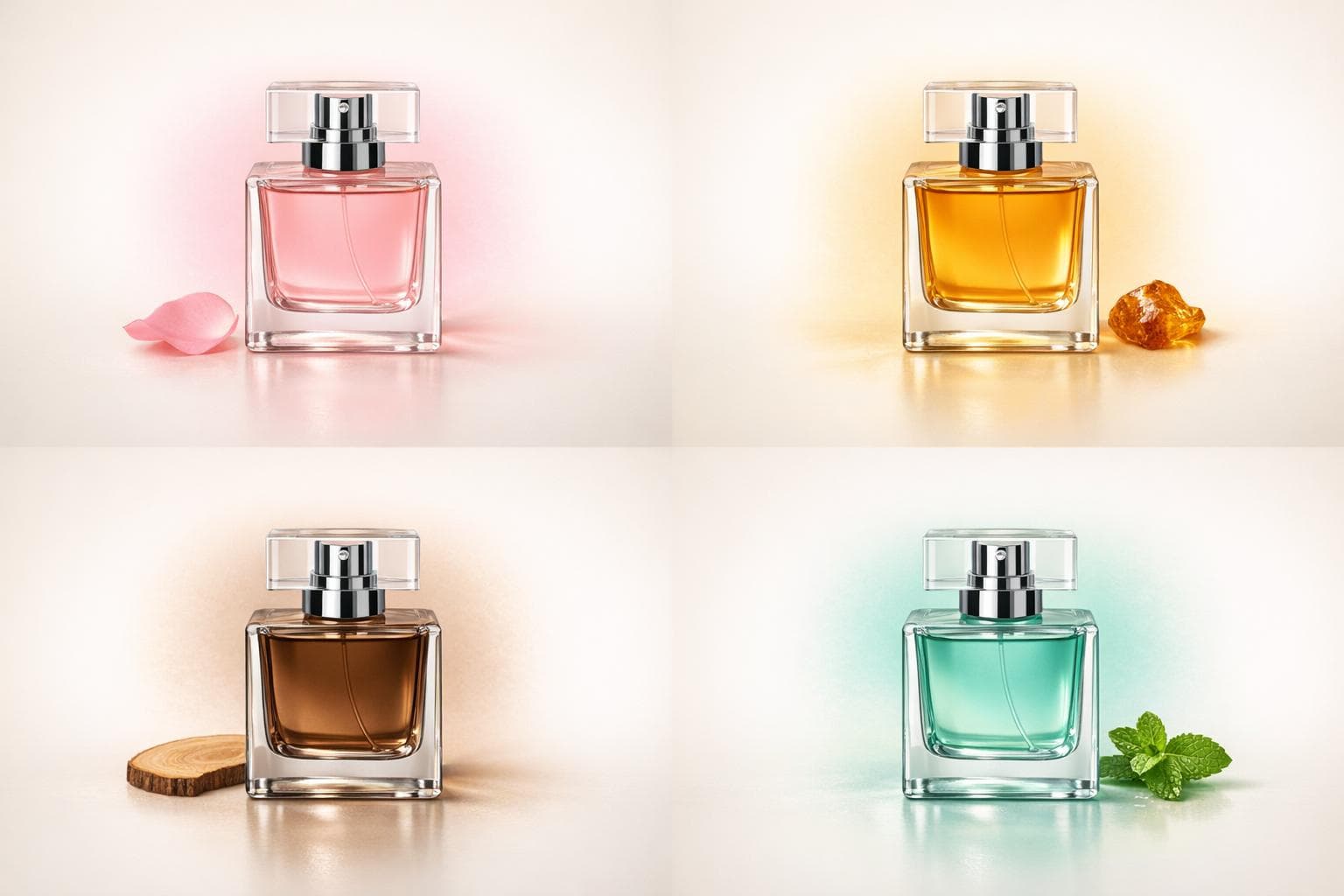
Entrare in una profumeria può sembrare travolgente, ma comprendere le famiglie olfattive rende molto più semplice individuare la fragranza ideale. I profumi sono raggruppati in quattro categorie principali in base alle loro caratteristiche condivise:
- Floreale: Fragranze dolci e fiorite con note come rosa e gelsomino. Perfette per il giorno e la primavera.
- Orientale/Ambrata: Calda, speziata e sensuale, con vaniglia, cannella e ambra. Ideale per le serate e le stagioni più fresche.
- Legnosa: Terrosa e avvolgente, con sandalo, legno di cedro e vetiver. Ideale per occasioni formali e da indossare tutto l’anno.
- Fresca: Leggera, frizzante e tonificante, con note agrumate, verdi e acquatiche. Perfetta per il giorno e il clima caldo.
Ogni famiglia si adatta a personalità, contesti e stagioni diverse. Che tu desideri qualcosa di romantico, audace, equilibrato o energizzante, conoscere queste categorie ti aiuta a restringere la scelta. Immergiti in questo mondo per scoprire quale famiglia risuona con il tuo stile e il tuo modo di vivere.
1. Famiglia Floreale
Profilo Aromatico
La famiglia floreale cattura l’essenza dei fiori appena recisi, offrendo uno spettro di aromi che spazia dal leggero e arioso al ricco e lussuoso. Queste fragranze spesso presentano sfumature talcate, dolci o cremose, creando un’esperienza olfattiva dinamica.
"Le fragranze floreali possono andare dal delicato e talcato al pungente, dolce e quasi commestibile." – Cranbourn
Immagina il profumo nitido di un giardino nelle prime ore del mattino, con la rugiada adagiata sui petali. Dall’altro lato, l’aroma sontuoso dei fiori bianchi durante un matrimonio estivo rivela un carattere più intenso e inebriante. Queste espressioni contrastanti sono create attraverso una miscela di note floreali selezionate con cura.
Note Comuni
Nel cuore della maggior parte delle fragranze floreali troviamo rosa e gelsomino, intramontabili e romantici. Fiori bianchi come tuberosa, gardenia e fiori d’arancio aggiungono un fascino esotico, mentre mughetto e giacinto donano un tocco fresco e verde. Per maggiore profondità, i profumieri includono spesso violetta e iris, che conferiscono una texture vellutata.
Le fragranze floreali si articolano anche in sottofamiglie. I floreali fruttati incorporano note come mela o pesca per un tocco giocoso. I floreali morbidi esaltano elementi cremosi ed eleganti, mentre i floreali orientali introducono spezie per calore e complessità.
Ideale Per (Personalità/Occasione)
Le fragranze floreali sono perfette per chi apprezza aromi dolci, femminili e immediatamente riconoscibili. Tradizionalmente associate alla primavera e all’estate, queste fragranze sono splendide per eventi diurni, anche se le composizioni floreali più intense possono risplendere anche la sera. Pur essendo state storicamente proposte al pubblico femminile, le moderne miscele floreali conquistano sempre più persone di ogni genere.
Per un inizio di giornata fresco, prova floreali leggeri come il mughetto nelle mattine primaverili. Opzioni più ricche, come gelsomino o tuberosa, sono ideali per le sere d’estate o le occasioni formali. Se cerchi qualcosa di più sfaccettato, i floreali orientali sono una scelta eccellente per le stagioni più fresche, quando una fragranza avvolgente e calda risulta perfetta.
Punti di Forza Rispetto alle Altre
Le fragranze floreali eccellono nel creare profumi romantici e accessibili, con una dolcezza morbida e una complessità in evoluzione. A differenza delle fragranze fresche, che si concentrano su note agrumate o acquatiche, i floreali offrono una ricchezza botanica che risulta personale e familiare. Sono più delicate delle fragranze orientali, spesso caratterizzate da spezie decise, e più calde delle fragranze legnose, che enfatizzano tonalità secche e terrose.
Uno dei maggiori punti di forza della famiglia floreale è la sua versatilità. Spesso costituendo il cuore di una fragranza, le note floreali si sviluppano magnificamente sulla pelle, rivelando nuove sfaccettature con il passare delle ore. Questa adattabilità le rende un elemento essenziale di qualsiasi guardaroba olfattivo.
2. Famiglia Orientale
Profilo Aromatico
La famiglia orientale (o ambrata) è tutta incentrata su calore e sensualità, offrendo fragranze che si svelano a strati nel tempo. A differenza della luminosità immediata dei profumi freschi o della morbida familiarità dei floreali, gli orientali rivelano gradualmente la loro complessità, risultando lussuosi e intriganti.
"Seduttive, voluttuose e con un effetto va-va-voom, le fragranze di questa famiglia tendono a sembrare ‘adulte’ – e molte possiedono una ricchezza calda, intensa e diffusiva, più adatta a essere indossata dopo il tramonto." – The Perfume Society
Negli ultimi anni, il settore si è spostato dall’uso del termine "Orientale" a "Ambrato", per riflettere meglio il profilo olfattivo e promuovere inclusività. Queste fragranze spesso si aprono con note di testa speziate o agrumate, evolvono verso cuori floreali o resinosi e si adagiano su una base di ambra, vaniglia o muschio. Il risultato? Un profumo audace e persistente, che cattura l’attenzione.
Di seguito, esploriamo le note che definiscono il fascino inconfondibile di questa famiglia.
Note Comuni
La vaniglia occupa un posto centrale in molte fragranze orientali, donando dolcezza e profondità. Vale la pena ricordare che la vaniglia è la seconda spezia più costosa al mondo dopo lo zafferano, con un prezzo elevatissimo a causa del processo di impollinazione manuale, intensivo e laborioso. La fava tonka aggiunge una dolcezza cremosa, mentre resine come benzoino e mirra apportano ricchezza. Spezie calde come cannella, cardamomo e chiodi di garofano completano il profilo.
Il termine "ambra" in profumeria si riferisce all’ambra grigia, un ingrediente raro e costoso di origine animale, non alla resina fossilizzata. Gli iconici Guerlain Jicky e Shalimar furono tra i primi a rendere celebre l’accordo ambrato. Le interpretazioni moderne degli orientali spesso includono muschio, oud e patchouli, aggiungendo note terrose e complessità.
Gli orientali sono molto sfaccettati e si dividono in sottofamiglie:
- Orientali speziati: Esaltano spezie decise come cannella e pepe.
- Orientali legnosi: Aggiungono note strutturanti come sandalo o patchouli.
- Orientali floreali (florientali): Fondono gelsomino o rosa con resine calde per un tocco più morbido.
- Orientali morbidi: Utilizzano incenso dolce e ambra per una composizione più delicata.
Ideale Per (Personalità/Occasione)
Con la loro natura ricca e in continua evoluzione, gli orientali sono perfetti per stati d’animo e contesti specifici. Rispecchiano persone sicure di sé e sofisticate, che desiderano emanare mistero e sensualità. Queste fragranze brillano soprattutto in contesti serali, occasioni speciali e stagioni più fresche come autunno e inverno. La loro intensità e il loro calore possono risultare troppo importanti per il clima caldo o l’uso casual diurno.
Ne basta poco: applicale con parsimonia sui punti di pulsazione. Sono ideali per appuntamenti serali, eventi formali o qualsiasi momento in cui desideri lasciare un’impressione duratura. Sebbene tradizionalmente proposte come unisex o maschili, le miscele orientali contemporanee seducono ogni pubblico.
Per chi ama il calore orientale ma desidera qualcosa di più leggero, sta crescendo la tendenza delle fragranze ambrate più fresche, pensate per l’uso diurno. Sono perfette per primavera ed estate.
Punti di Forza Rispetto alle Altre
Gli orientali sono noti per la loro eccezionale persistenza, con note di fondo che rimangono per ore. Le loro composizioni audaci e stratificate si distinguono rispetto alla luminosità dei profumi freschi, alla morbidezza dei floreali o alla componente terrosa delle fragranze legnose.
"Le fragranze orientali possono essere pungenti e speziate, ammorbidite e rese vellutate da note dolci e ricche come cannella o vaniglia." – Cranbourn
Per un approccio equilibrato, prova la sovrapposizione. Inizia con una fragranza floreale o agrumata più leggera, poi aggiungi il tuo profumo orientale sopra. Questo metodo evita che la composizione risulti troppo pesante, mantenendo comunque quel calore e quella profondità distintivi.
3. Famiglia Legnosa
Profilo Aromatico
Le fragranze legnose sono sinonimo di profondità, calore e sofisticazione terrosa. Portano con sé una sensazione naturale e radicata, dal fascino senza tempo ed elegante. A differenza della nitidezza dei profumi freschi, i profumi legnosi sviluppano sulla pelle una ricchezza secca e terrosa, persistendo per ore.
"Le fragranze legnose si muovono da note orientali simili all’incenso a sentori secchi, fumosi e simili al cuoio." – Cranbourn
Questa famiglia olfattiva è spesso suddivisa in tre gruppi distinti: legni opulenti, ricchi e morbidi; legni muschiati, con sfumature dolci e terrose spesso abbinate a muschio di quercia e ambra; e legni secchi, noti per le loro caratteristiche fumose e cuoiate. Poiché queste fragranze sono costruite attorno alle note di fondo, evolvono lentamente, raggiungendo il loro pieno potenziale durante la fase di dry-down. Osserviamo più da vicino gli ingredienti che definiscono questa famiglia.
Note Comuni
Le fragranze legnose si fondano su un nucleo di ingredienti che conferisce loro il carattere distintivo:
- Sandalo: Cremoso, levigato e caldo.
- Legno di cedro: Secco, con una sfumatura balsamica.
- Vetiver: Fumoso, con un sottotono erbaceo.
- Patchouli: Terroso e radicante.
- Muschio di quercia: Dolce e muschiato, dona profondità.
- Ambra: Aggiunge calore e migliora la persistenza.
- Cuoio e balsamo d’abete: Presenti nelle composizioni più fumose, aggiungono una texture resinosa, simile all’incenso.
Prendi ad esempio No. 89 di Floris London: mette in risalto sandalo, cedro e vetiver, con un tocco di noce moscata per un classico fascino da "gentiluomo inglese". Dall’altra parte, Clean Reserve Sueded Oud reinterpreta le fragranze legnose con una ricchezza moderna e vellutata.
Ideale Per (Personalità/Occasione)
Le fragranze legnose sono meravigliosamente versatili, offrendo una firma olfattiva che si abbina splendidamente allo stile personale e alle occasioni specifiche. Il loro fascino gender-neutral le rende amate da chi desidera una presenza discreta ma impeccabile. Perfette per la sera e per eventi formali come i matrimoni, queste fragranze emanano una sicurezza silenziosa e sofisticata.
Sebbene la loro intensità possa non essere ideale nelle calde giornate estive, le fragranze legnose brillano nei mesi più freschi, in particolare in autunno e inverno, quando il loro calore risulta più avvolgente. Sono anche eccellenti come profumazioni per la casa — pensa a diffusori o candele — per creare un’atmosfera accogliente e invitante.
Punti di Forza Rispetto alle Altre
Le fragranze legnose si distinguono per la loro straordinaria persistenza. Realizzate con note di fondo più corpose, evaporano lentamente, continuando a evolvere sulla pelle molto tempo dopo che profumi più leggeri, come agrumati o floreali, sono svaniti. Rispetto alle fragranze fresche, quelle legnose offrono un’esperienza più ricca e stratificata. E mentre le fragranze orientali puntano molto su dolcezza e spezie, i profumi legnosi sono più secchi, spesso con una qualità simile all’incenso.
"Le fragranze legnose si concentrano su note come sandalo, cedro e vetiver, creando profondità e calore. Terrose e radicanti, spesso risultano equilibrate e gender-neutral." – CLEAN Beauty
Quando provi una fragranza legnosa, la pazienza è fondamentale. Concedile qualche ora per aprirsi completamente e rivelare il suo vero carattere.
4. Famiglia Fresca
Profilo Aromatico
Le fragranze fresche sono tutta leggerezza ed energia. Portano un’immediata sensazione di ristoro grazie alla loro natura frizzante e rinfrescante. A differenza della profondità dei profumi legnosi o della ricchezza delle miscele orientali, le fragranze fresche risultano pulite e ariose: perfette per sollevare l’umore all’istante.
"Le fragranze fresche sono energizzanti, vivaci e rinfrescanti. Pensa allo slancio delle note agrumate come limone, bergamotto e arancia." – Suzy Nightingale, Esperta di Fragranze
Questa categoria si divide in quattro sottofamiglie: Agrumata (luminosa e acidula), Acquatica (marina e ariosa), Verde (naturale e fogliosa, come un prato appena tagliato) e Aromatica (erbacea e pulita, con lavanda e salvia). Poiché gli oli agrumati e acquatici evaporano rapidamente, le fragranze fresche sono spesso realizzate in concentrazioni più leggere, come l’Eau de Cologne, che contiene il 2–4% di olio profumato e dura 2–3 ore. Tuttavia, la profumeria moderna ha introdotto versioni Eau de Parfum che conservano la stessa vibrante freschezza ma durano più a lungo, fino a 6–8 ore. Esploriamo gli elementi chiave che definiscono questa famiglia tonificante.
Note Comuni
La famiglia Fresca vive di ingredienti capaci di donare luminosità immediata. Note agrumate come limone, bergamotto, mandarino, pompelmo e arancia creano un’apertura vivace ed energizzante. Gli accordi acquatici aggiungono una sensazione ariosa e oceanica, con accenni di spruzzi marini, sale e pioggia fresca. Le note verdi, che evocano foglie appena schiacciate o erba tagliata, apportano una vitalità netta e naturale. Infine, le erbe aromatiche come lavanda, rosmarino, basilico, salvia e menta contribuiscono con un tocco pulito ed energizzante.
Ideale Per (Personalità/Occasione)
Le fragranze fresche sono ideali per chi preferisce la semplicità e trova i profumi più intensi troppo invadenti. Risplendono durante il giorno, in particolare in contesti professionali o ambienti informali, offrendo una presenza sottile ma rinfrescante. La loro natura rinfrescante le rende una scelta amatissima per l’estate e le giornate di sole, anche se sono abbastanza versatili da essere utilizzate tutto l’anno quando hai bisogno di una rapida sferzata di energia.
Data la loro rapida evaporazione — soprattutto sulla pelle secca — spesso è necessario riapplicarle durante la giornata. Le fragranze fresche funzionano bene anche nella stratificazione, aggiungendo un inizio luminoso e vivace a profumi più profondi di altre famiglie olfattive.
Punti di Forza Rispetto alle Altre
Le fragranze fresche eccellono nel creare un’impressione immediata e pulita, senza risultare pesanti o intrusive. A differenza della ricchezza dei profumi orientali o legnosi, offrono una spinta delicata, ideale per chi preferisce la discrezione. Tuttavia, la loro natura più leggera comporta un compromesso in termini di persistenza. I profumi a base agrumata durano in genere 2–5 ore, rispetto alle 8–12 ore comuni negli Eau de Parfum legnosi o orientali. Sulla pelle secca possono svanire ancora più rapidamente, quindi scegliere concentrazioni più forti o riapplicarli spesso può aiutare. Nonostante ciò, la loro versatilità li rende amatissimi da molti: gender-neutral, facili da indossare e perfetti per un reset dell’umore all’insegna dell’energia.
Il tuo esperto di profumi personale ti aspetta
Fai il nostro veloce quiz olfattivo per scoprire autentici profumi di design e di nicchia scelti in base ai tuoi gusti: esplorali in decant e campioni da 2, 5, 8 e 30 ml, così puoi provarne ognuno prima di scegliere il flacone intero.
Trova il tuo profumoComparison: Pros and Cons
Confronto tra Famiglie Olfattive: Persistenza, Intensità e Migliori Occasioni d’Uso
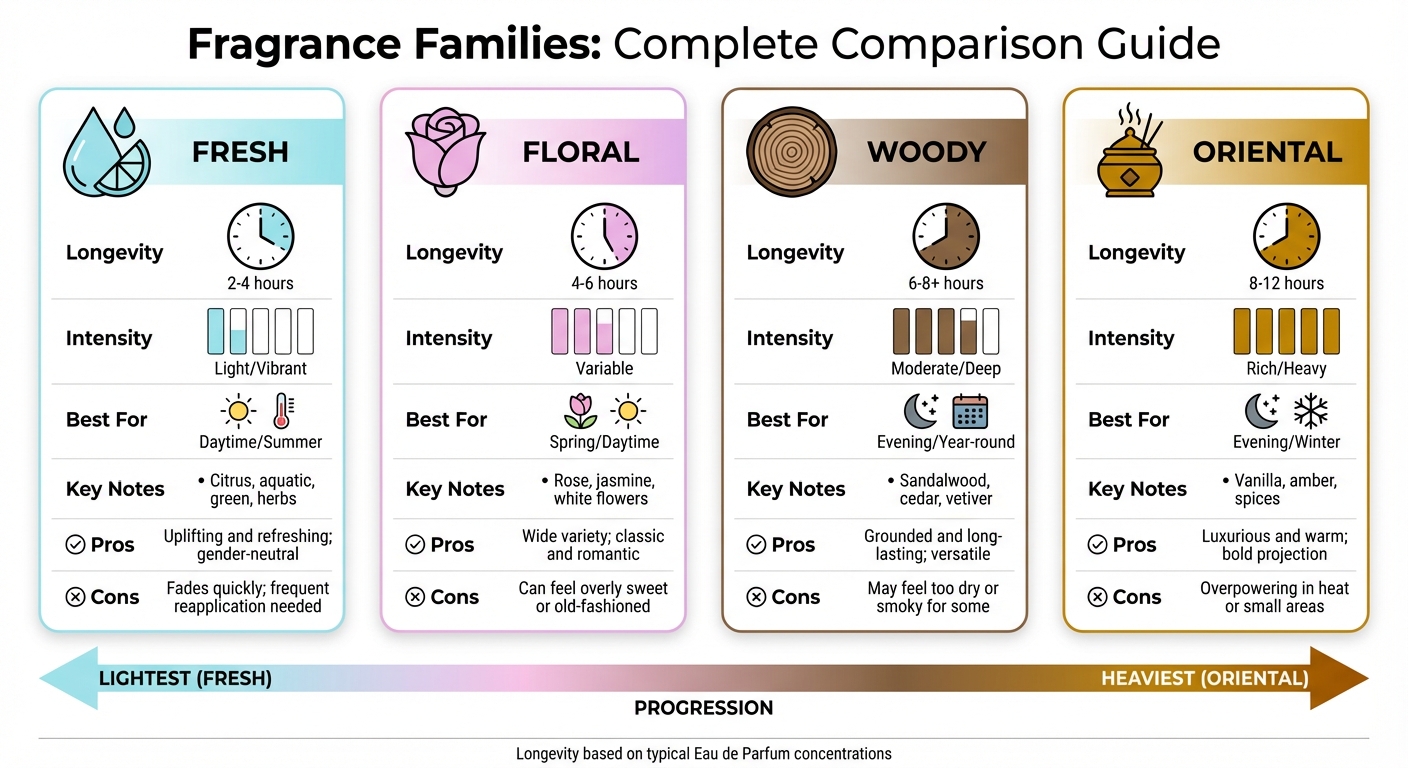
Dopo aver esplorato nel dettaglio le famiglie olfattive floreale, orientale, legnosa e fresca, ecco un confronto sintetico dei loro punti di forza e dei loro limiti.
La persistenza varia sensibilmente tra le famiglie olfattive. Le fragranze orientali spesso durano più a lungo, rimanendo per 8–12 ore, mentre le fragranze legnose tendono a permanere sulla pelle per circa 6–8 ore. Questo è dovuto alle loro ricche note di fondo, come resine, legni e muschi, che aderiscono bene alla pelle. Le fragranze floreali offrono una persistenza moderata, di circa 4–6 ore, mentre le fragranze fresche svaniscono più rapidamente, solitamente entro 2–4 ore, poiché le composizioni ricche di agrumi evaporano velocemente. Vale la pena notare che la concentrazione di una fragranza non determina sempre la sua proiezione. Ad esempio, il Parfum (20–40% di olio) tende a rimanere più vicino alla pelle, creando una sottile "bolla profumata", mentre l’Eau de Toilette (5–15% di olio) spesso si proietta più immediatamente grazie all’alcol, che aiuta le note di testa a diffondersi rapidamente.
Le fragranze fresche eccellono negli ambienti professionali e con il clima caldo, offrendo una presenza nitida e ariosa, anche se possono richiedere ritocchi frequenti. Le fragranze floreali sono incredibilmente versatili: i floreali più leggeri sono ideali per il giorno in primavera, mentre quelli più ricchi si addicono a eleganti occasioni serali. Le fragranze legnose offrono un fascino radicato e unisex, adatto sia al giorno sia alla sera durante tutto l’anno. Le fragranze orientali, con i loro profili caldi e opulenti, brillano nelle sere d’inverno o durante appuntamenti speciali, ma possono risultare eccessive in spazi chiusi o climi caldi.
| Famiglia Olfattiva | Persistenza | Intensità | Ideale Per | Pro | Contro |
|---|---|---|---|---|---|
| Fresca | 2–4 ore | Leggera/Vibrante | Giorno/estate | Energizzante e rinfrescante; gender-neutral | Svanisce rapidamente; richiede riapplicazioni frequenti |
| Floreale | 4–6 ore | Variabile | Primavera/giorno | Ampia varietà; classica e romantica | Può risultare troppo dolce o rétro |
| Legnosa | 6–8+ ore | Moderata/Profonda | Sera/tutto l’anno | Radicata e persistente; versatile | Può risultare troppo secca o fumosa per alcuni |
| Orientale | 8–12 ore | Ricca/Intensa | Sera/inverno | Lussuosa e calda; proiezione audace | Troppo dominante con il caldo o in spazi piccoli |
Questa tabella offre una guida pratica per selezionare fragranze in linea con il tuo stile di vita e le tue preferenze. Molti appassionati costruiscono un guardaroba olfattivo composto da profumi diversi: opzioni Fresche e leggere per il lavoro, fragranze Legnose o Orientali per la sera e Floreali per gli incontri sociali, così da adattarsi a ogni occasione. Usalo come punto di partenza per scoprire la famiglia olfattiva che completa il tuo stile personale.
Conclusione
Comprendere le quattro famiglie olfattive rende molto più semplice scegliere la tua prossima fragranza. Le fragranze Fresche offrono una sensazione vivace ed energizzante, perfetta per il giorno. I profumi Floreali portano un tocco romantico e versatile, mentre le note Legnose donano calore terroso e radicato. Per un accento di indulgente raffinatezza, le miscele Orientali sono ideali per serate lussuose.
La fragrance writer Suzy Nightingale osserva: "È interessante notare che molti di noi tendono a gravitare verso determinate famiglie senza nemmeno rendersene conto. Spesso ci innamoriamo della stessa famiglia più e più volte". Riconoscere le tue preferenze naturali può aiutarti a scoprire nuovi favoriti in sintonia con i tuoi gusti.
"Il modo migliore in assoluto per conoscere queste famiglie olfattive è semplicemente usare il naso ed esplorare quante più famiglie olfattive diverse possibile (e i loro apparentemente infiniti sottogeneri) attraverso campioni di profumo." – The Perfume Society
Il modello di decant di Scento rende questa esplorazione semplice e piacevole. Con opzioni come campioni da 2 ml, 5 ml e 8 ml, e un decant in flacone da 30 ml per la maggior parte dei profumi, puoi provare più fragranze senza impegnarti nell’acquisto di un flacone intero. Questo ti permette di confrontare profumi pensati per momenti diversi: fragranze Fresche e leggere per il lavoro, profumi Legnosi per la sera o scelte Floreali per le occasioni sociali, senza il prezzo importante di una bottiglia da oltre 300 €.
Inizia individuando quale famiglia si avvicina ai tuoi profumi preferiti attuali, poi esplora le sottofamiglie correlate sulla ruota olfattiva. Testa come ogni fragranza interagisce con la tua pelle per trovare il tuo abbinamento ideale — o anche più di uno, per diversi aspetti della tua vita. Questo approccio consapevole può aiutarti a creare una collezione olfattiva personale e versatile.
FAQ
Come scelgo la famiglia olfattiva giusta per la mia personalità e il mio stile di vita?
Trovare la famiglia olfattiva giusta inizia dal riconoscere le quattro categorie principali: floreale, orientale, legnosa e fresca. Ognuna definisce un tono distinto e si abbina magnificamente a personalità e stili diversi. Prendi le fragranze floreali, ad esempio: sono morbide, romantiche e ideali per chi è attratto da aromi leggeri e femminili. Le fragranze legnose, invece, sono calde e terrose, spesso apprezzate da chi ha un carattere sofisticato o radicato.
La tua personalità e il tuo stile di vita possono guidare la scelta. Se sei una persona vivace ed estroversa, le fragranze fresche o agrumate potrebbero essere una scelta naturale, offrendo una vibrazione luminosa ed energizzante. Preferisci qualcosa di sensuale o misterioso? Le fragranze orientali o ambrate potrebbero rispecchiare meglio il tuo stile. Provare piccoli campioni o decant è un modo semplice e piacevole per esplorare le opzioni, aiutandoti a trovare un profumo che sembri un’estensione naturale della tua vita quotidiana.
Come posso far durare più a lungo la fragranza sulla pelle?
Per far durare più a lungo la tua fragranza, prova ad applicarla subito dopo la doccia. Quando la pelle è calda e leggermente umida, assorbe il profumo in modo più efficace. Concentrati sui punti di pulsazione come polsi, collo e dietro le orecchie: queste aree generano calore, aiutando la fragranza a diffondersi e a persistere.
Un altro consiglio è applicare il profumo su una pelle ben idratata. Uno strato di lozione senza profumo o leggermente profumata può agire come base, aiutando la fragranza a rimanere più a lungo. Evita di strofinare il profumo sulla pelle, perché questo può rompere le molecole odorose e alterarne il carattere. Infine, conserva il profumo in un luogo fresco e buio per proteggerne la qualità e mantenerlo intenso nel tempo.
Posso mescolare fragranze di famiglie diverse per creare un profumo personalizzato?
Assolutamente sì! Combinare fragranze di famiglie diverse è un modo magnifico per creare un profumo interamente tuo. Per esempio, potresti sovrapporre un profumo floreale a una base legnosa per un effetto raffinato ed equilibrato. Oppure prova a fondere una fragranza fresca con una nota orientale per ottenere un risultato audace e dinamico.
Quando sovrapponi le fragranze, è meglio iniziare con i profumi più leggeri come base e poi aggiungere sopra note più ricche e intense. Usa piccole quantità all’inizio per sperimentare e scoprire combinazioni che risuonino davvero con il tuo stile. È un modo entusiasmante per esplorare nuove sfaccettature dei tuoi profumi preferiti!

